

What Toronto’s Castle-Style Mansions Reveal About the Ultra-Luxury Market
Five turreted, château-inspired estates scattered across Toronto’s wealthiest pockets have quietly become a useful case study for anyone serious about real estate as an asset class. On the surface they are storybook follies, stone facades, ivy-covered towers, grottoes and wine cellars built for people who want their homes to look like something out of the Loire Valley. Underneath that romanticism, though, sits a set of sale prices, relistings and price cuts that tell a much more sober story about how value actually moves at the top of a market.
Start with 85 The Bridle Path. It traded hands for 21 million dollars in September 2021 and is now back on the market at 27.5 million, itself already reduced from a prior ask of 28.9 million. That is roughly 31 percent of implied appreciation over five years on paper, but the repeated discounting tells investors something sharper: pricing power at the ultra-luxury tier is thin, and sellers routinely overreach before the market corrects them downward.
The pattern repeats across the set. 25 Tudor Gate moved from 3.05 million in 2005 to 5.535 million in 2020, a long hold with steady, unspectacular gains, and is now listed at 8.88 million. 221 Forest Hill Rd. sold at its full 6.995 million asking price in 2021 while still just drawings on paper, and the finished mansion is now asking 21.988 million, down more than 4 million from its original 26 million target. Meanwhile 45 Bayview Ridge has spent years cycling through relistings since 2022 and is currently bundled with its neighbouring lot for a combined 20.998 million, a sign that even trophy assets need creative packaging when buyer appetite softens.
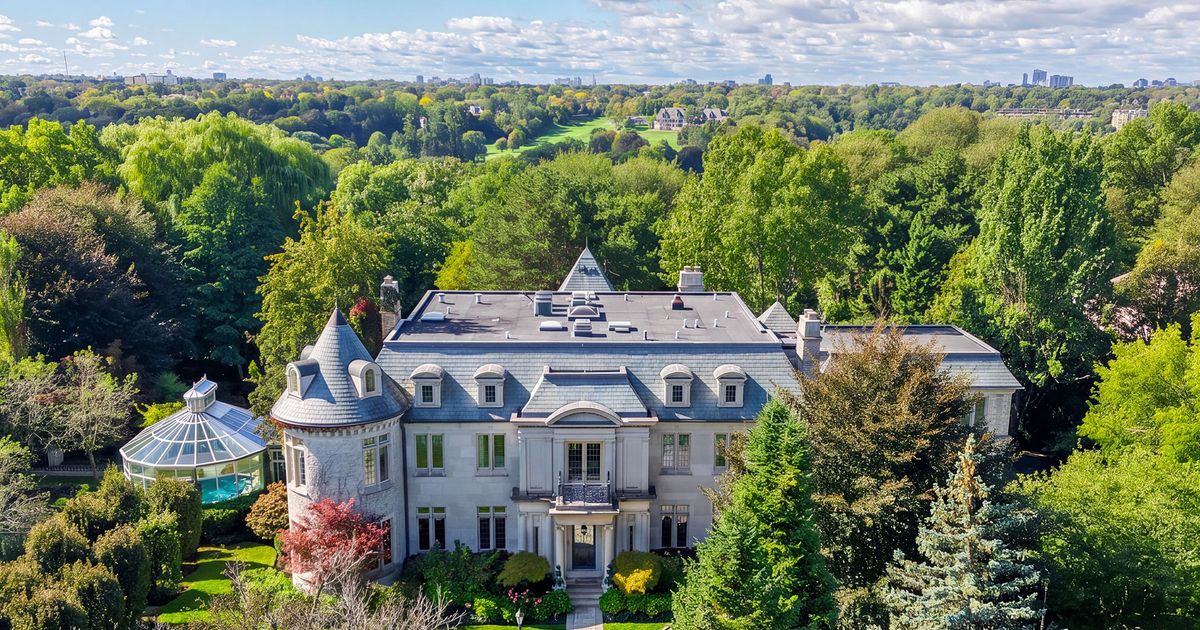
Even castles aren’t immune to price cuts, and that is precisely the lesson worth underwriting.
For investors, the takeaway is not that luxury real estate fails to appreciate, several of these properties have multiplied in value over a decade or two, but that headline list prices are aspirational marketing, not market truth. The gap between ask and eventual sale, and the willingness of owners to sit through multiple relistings, is exactly the kind of signal that should temper any assumption that trophy assets are simply a one way bet. Pricing at this tier is set as much by scarcity of qualified buyers as by bricks, stone and square footage, and that scarcity cuts both ways.
Anyone allocating capital toward Toronto’s top end should treat these five estates less as architectural curiosities and more as a reminder that even the most extraordinary properties are still subject to ordinary market discipline: timing, holding period and realistic pricing matter more than turrets.
Source: blogTO, “5 storybook castle-style Toronto homes and how much they last sold for”