

Why a $22-Million Bulk Buy in Midtown Toronto Signals a New Playbook for Condo Investors
When a fund with $1.3 billion behind it makes its very first move, smart investors pay attention to the terms, not just the headline. High Art Capital, an Ontario government-backed fund, has just closed on 43 unsold condo units at Line 5 in midtown Toronto for $22.3 million, working out to roughly $518,000 a unit. That is a meaningful discount to both pre-construction pricing and resale values in the area, and it tells us something important about where capital is finding its edge right now.
This is not a retail buyer story. It is a bulk acquisition play, and those deals rarely surface publicly because pricing and unit counts are almost always kept confidential. That High Art’s numbers became visible at all, through land transfer records reviewed by CoStar Group, gives investors a rare benchmark for what an institutional discount actually looks like in this market cycle.
The thesis here is straightforward. Developers such as Westdale Properties and Reserve Properties are sitting on inventory that was priced and sold in a very different demand environment, before the pandemic reset buyer appetite. Rather than let units sit empty, they are willing to move volume at a discount to a patient capital partner. Urbanation’s Shaun Hildebrand put it plainly: bulk buyers are acquiring at a notable discount to what an individual purchaser would pay. That gap between institutional and retail pricing is exactly the kind of inefficiency long term investors look for.
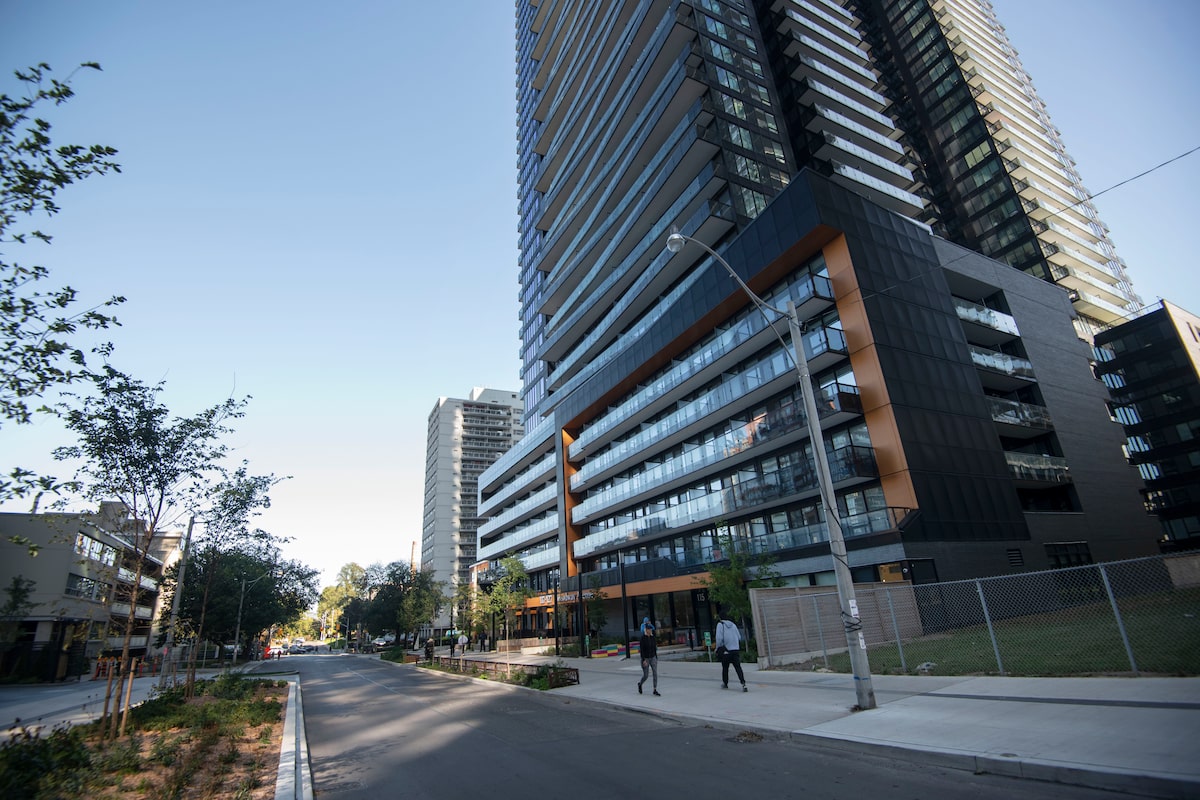
High Art’s stated strategy adds another layer worth tracking. The fund plans to acquire roughly 2,200 unsold condos across the region and hold most of them for a minimum of five years before selling, with 550 units designated as below-market rentals held in perpetuity. That is a hybrid model, part yield play, part policy vehicle, backed in part by the province’s Building Ontario Fund. For investors, it is a signal that patient, government-adjacent capital sees a five-year-plus horizon as the right window for this downturn to work itself out.
Bulk buyers are acquiring at a notable discount to an individual buyer.
Context matters too. New condo sales in the Toronto region remain 78 per cent below the 10-year average, even after the federal and Ontario governments introduced a temporary HST rebate this year of up to $130,000 on new homes priced under $1.5 million. That rebate has done more for new houses than condos so far, but developers say it is helping at the margins. Combine soft absorption with a temporary tax incentive and a well-capitalized buyer willing to move at scale, and you get precisely the conditions where deep-pocketed investors have historically found their best entry points.
For readers weighing exposure to Toronto real estate right now, the lesson is not to chase this specific deal, it is to recognize the pattern. When institutional capital starts buying unsold inventory below market and is willing to hold for years, it is often an early signal that a bottom is being priced in, well before retail sentiment catches up. Watching where funds like High Art deploy next, and at what basis, may prove more valuable than any single price point in today’s headlines.
Source: The Globe and Mail