


Transform Your Home With Smart Blinds: A Beginner’s DIY Guide to Comfort, Style, and Easy Automation
There are some home upgrades that feel impressive the moment they are installed, and then there are upgrades that slowly change the quality of everyday life in a quieter, deeper way. Smart blinds often belong to the second category. At first glance, they may seem like a purely technical convenience, something that opens and closes with an app or a voice command. In reality, they can shape the emotional rhythm of a home by softening wake-ups, creating privacy before nightfall, reducing harsh glare, and making rooms feel more intentional throughout the day.
Table Of Content
- Why Smart Blinds Feel Like More Than a Tech Upgrade
- What Smart Blinds Actually Are
- The Growing Importance of Compatibility and Matter
- How Smart Blinds Improve Daily Life
- Choosing the Right Smart Blinds for Your Home
- Questions to Ask Before You Buy
- Measuring Carefully Before Installation
- Tools and Preparation for a Beginner-Friendly Install
- Step-by-Step: How to Install Smart Blinds
- When Installation May Not Be Ideal for Beginners
- Setting Up the Best Smart Routines
- Easy Automation Ideas to Try First
- What Smart Blinds Can and Cannot Do for Energy Efficiency
- Common Misconceptions to Leave Behind
- Styling Smart Blinds So They Still Feel Warm and Personal
- Maintenance and Long-Term Care
- Final Thoughts: A Small Upgrade That Changes the Feeling of Home
For many homeowners, the appeal of smart blinds is not about turning a house into a gadget showroom. It is about making home life smoother, more comfortable, and more beautiful. Light has an enormous effect on mood, focus, rest, and atmosphere. When you can guide it gently and consistently, your home begins to feel more supportive. A bright bedroom can become a calmer place to wake up. A living room can feel cooler and more serene in the afternoon. A home office can become easier on the eyes during long work hours.
What makes this category especially exciting right now is how much more approachable it has become. You no longer need a full luxury renovation or a complicated electrical project to enjoy automated window coverings. Many products now come in retrofit motor options, battery-powered systems, or beginner-friendly kits designed for DIY installation. At the same time, smart-home interoperability has become a major buying factor, with more homeowners looking for blinds that work across platforms rather than locking them into one brand’s app.
This guide is designed to help beginners understand not just how to install smart blinds, but how to choose them thoughtfully and use them in a way that genuinely improves daily life. We will walk through the benefits, explain the product types, cover planning and measurement, and break down the installation process step by step. Most importantly, we will explore how smart blinds can support comfort, privacy, wellness, and a more effortless feeling at home.
Smart blinds are not only about convenience. They also influence light quality, privacy, glare control, room atmosphere, and the overall sense of comfort in a home.
Why Smart Blinds Feel Like More Than a Tech Upgrade
One of the most compelling things about smart blinds is that they work quietly in the background of your life. Unlike some smart devices that constantly ask for attention, blinds can simply do their job with elegance. They open when you want a room to feel fresh and alive. They close when the afternoon sun becomes too intense or when evening privacy matters. Instead of reacting to your windows all day long, you create a home that responds to your needs almost automatically.
This matters because windows affect so much more than how a room looks. The U.S. Department of Energy notes that window coverings are commonly used for glare, privacy, and aesthetic reasons, and they can also reduce solar heat gain. Comfort at home is often tied to those small moments when a room feels just right, neither too bright nor too exposed nor too warm. Smart blinds help create those moments with more consistency than manual use alone.
There is also a softer lifestyle benefit that many homeowners immediately notice. A home with well-managed light often feels more polished and more restful. Bedrooms benefit from gentler wake-up routines. Media rooms feel more cozy and controlled. Family spaces become easier to enjoy because sun glare does not interrupt movies, reading time, or conversation. The result is not only functional improvement, but emotional ease.
Energy awareness is part of the conversation too, although it helps to keep expectations realistic. Window performance has a major impact on household comfort and heating or cooling demands. ENERGY STAR states that replacing old windows with ENERGY STAR-certified windows can lower household heating and cooling bills by up to 13 percent nationwide when replacing single-pane windows, which shows how strongly windows and coverings affect home performance. At the same time, smart blinds should not be sold as a guaranteed dramatic savings tool in every home. Results depend on climate, window type, sun exposure, and how consistently the coverings are used.
What Smart Blinds Actually Are
The term smart blinds covers a few different product types, and understanding the distinction makes shopping far less confusing. In simple terms, smart blinds are window coverings that can be raised, lowered, tilted, or scheduled using a motorized system. Some connect directly to an app. Others work through a hub or bridge. Many can also be included in broader routines involving voice assistants, sensors, and scenes.
Some products are fully new motorized blinds or shades that replace your existing window treatment. Others are retrofit motors that can automate compatible blinds or shades you already own. This is one reason the category has become more accessible to renters and DIY homeowners. You may not need to replace every treatment in the house to get the benefits of automation. A retrofit approach can be especially appealing if you already love the look of your current shades and simply want them to move more easily.
Power source is another important difference. Smart blinds are often available as battery-powered units, rechargeable solutions, plug-in designs, or hardwired systems. For beginners, battery-powered and rechargeable options are usually the easiest place to start because they avoid electrical work and often involve simpler installation. Hardwired systems can offer a cleaner built-in look, but they may require planning during renovation or help from an electrician.
Another distinction is between blinds and shades. Traditional blinds usually have slats that tilt and sometimes raise. Shades tend to use a continuous panel of fabric or woven material that moves up and down. Both can be smart, and both can be beautiful. The right choice often depends on the room, the desired light quality, and your style preferences more than the technology itself.
The Growing Importance of Compatibility and Matter
One of the biggest recent shifts in smart-home shopping is the desire for interoperability. Homeowners increasingly want devices that work with the systems they already use rather than requiring a separate ecosystem for every category. This is especially relevant for smart blinds because they tend to feel most valuable when connected to daily routines, voice assistants, occupancy settings, and other smart-home scenes.
If you use Apple Home, Google Home, Amazon Alexa, Samsung SmartThings, or another platform, it is worth checking compatibility before you buy. Some blinds work directly with one or more major ecosystems. Others require a bridge or hub. Some support newer standards such as Matter, which has become an important trend because it can simplify cross-platform compatibility and reduce the feeling of being locked into one brand. Matter support does not erase every difference between products, but it is increasingly seen as a strong buying advantage.
This step is important because one of the most common misconceptions is that any smart blind works with every smart-home app. Compatibility varies widely. A product may work beautifully in one ecosystem and feel limited in another. Taking a few extra minutes to confirm app support, voice assistant integration, scheduling features, and bridge requirements can prevent disappointment later.
Think of compatibility as part of the overall comfort of the product. A blind that looks lovely but feels awkward to control may not become part of your daily routine. A blind that fits naturally into your existing smart-home setup is much more likely to deliver the emotional value people are actually seeking, which is less friction and a more harmonious home environment.
How Smart Blinds Improve Daily Life
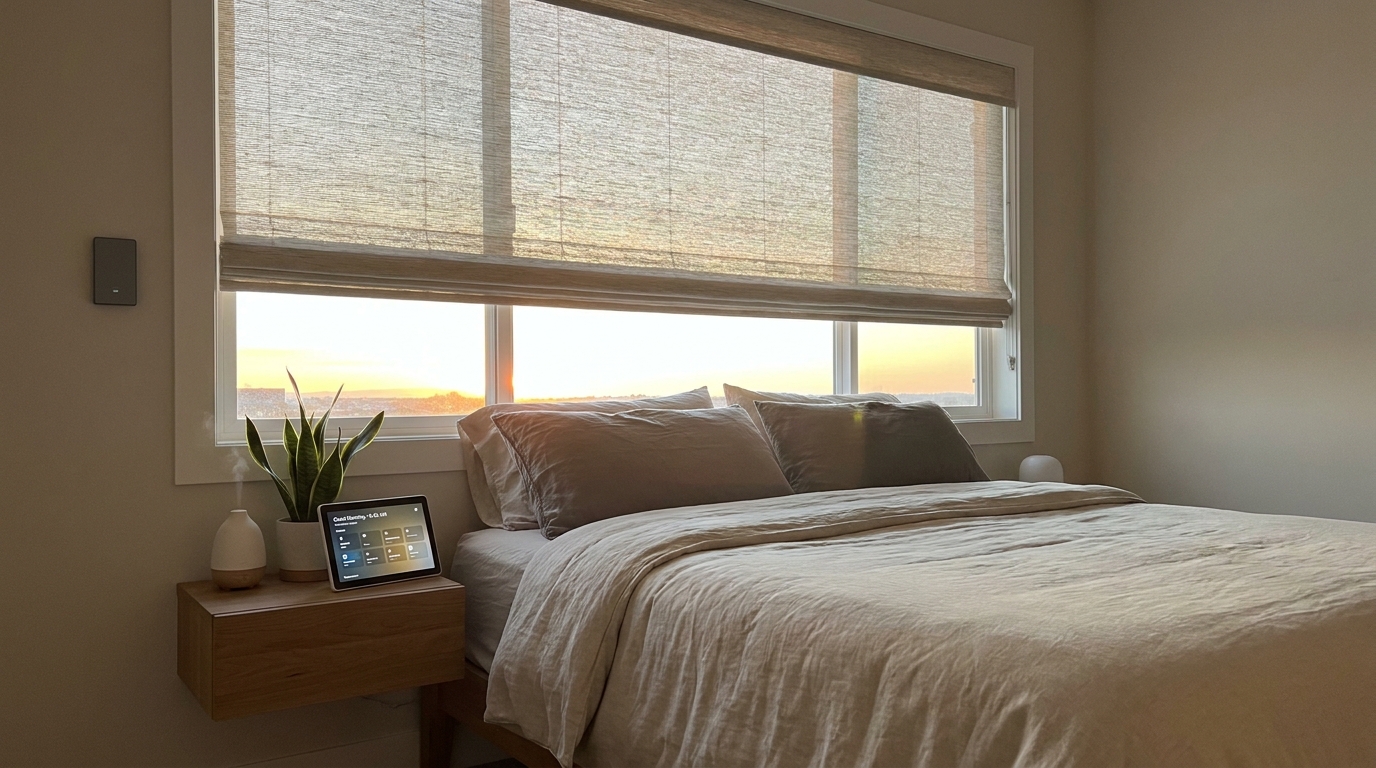
The easiest way to understand the value of smart blinds is to picture the specific moments they improve. Imagine waking up in a bedroom where soft morning light gradually enters instead of a harsh alarm forcing the day to begin all at once. That simple change can make mornings feel less abrupt and more grounded. It supports a gentler routine and adds a subtle wellness benefit that many homeowners end up appreciating more than expected.
In a living room or family room, smart blinds can lower during the brightest part of the afternoon to reduce heat and glare without making the room feel dark or shut off. The U.S. Department of Energy has reported that blinds are the most common window covering product in the country, accounting for 62 percent of the installed base. That familiarity is part of their appeal. You are not experimenting with a strange concept. You are simply taking a familiar part of the home and making it more responsive.
Home offices benefit in a very practical way. Anyone who has spent part of the day moving around a laptop screen to avoid glare knows how distracting unmanaged sunlight can be. Smart blinds can lower slightly during key work hours and then reopen later, helping the room stay bright but comfortable. This kind of automation supports both focus and visual ease without demanding constant manual adjustment.
Evening routines may be where the emotional payoff becomes most obvious. Privacy matters, especially in street-facing rooms, bathrooms, and bedrooms. Having blinds close automatically at sunset can make the home feel sheltered and complete, almost like a daily reset. It removes one more task from your mind while creating a calmer transition from daytime energy into nighttime rest.
Choosing the Right Smart Blinds for Your Home
Before you start shopping, it helps to think less like a tech buyer and more like a homeowner curating how each room should feel. Ask yourself what problem you are really solving. Are you trying to improve sleep in a bedroom, reduce glare in a home office, create better privacy in a front room, or make a large sunny space more comfortable in the afternoon? The answer will guide not only the level of automation you need, but also the style, opacity, and material that make the most sense.
Bedrooms often benefit from room-darkening or blackout options, especially if your priority is better rest or a smoother wake-up scene. Living rooms may call for light-filtering fabrics that soften brightness without closing the room down completely. Kitchens and breakfast areas often look best with treatments that feel airy and easy to clean. In offices, glare reduction and consistent screen comfort may matter more than total privacy during the day.
Next, consider whether you want a full replacement product or a retrofit motor. Full replacement systems can give you a more unified finished look and may include fabrics, valances, and controls designed to work together seamlessly. Retrofit options can be more affordable and less disruptive, especially for homeowners who already have window treatments they like. This is one of the clearest examples of how the category has become more beginner-friendly in recent years.
You should also think about how you want to power the blinds. Battery-powered products are often easiest for DIY installation and are especially appealing if you want a clean setup without visible cords. Rechargeable options can work well in hard-to-reach spots if battery life is strong. Plug-in units may be practical near outlets. Hardwired systems are often best reserved for larger renovations, premium custom installations, or homes where a very integrated look is the top priority.
Questions to Ask Before You Buy
- Will this product fit inside or outside the window frame I have now?
- Is it battery-powered, rechargeable, plug-in, or hardwired?
- Does it work with my preferred smart-home ecosystem or require a hub?
- Does it support schedules, scenes, and voice control?
- Would a retrofit motor work with my existing blind or shade style?
- Is the material right for privacy, glare reduction, or sleep in this room?
- Will the weight and size of the treatment still make this a beginner-friendly DIY project?
Measuring Carefully Before Installation
Good results begin with accurate measurements. This is one of those unglamorous steps that directly affects how polished the final room feels. If the blinds do not fit correctly, even the smartest motor will not make the treatment look elegant. Take your time here and follow the manufacturer’s measuring instructions exactly, since different products may have slightly different requirements.
For an inside mount, you usually need the width and height of the inside window frame, often measured at multiple points because older homes are not always perfectly square. For an outside mount, you will typically measure the area you want the blind to cover, including how far beyond the frame you want it to extend for better privacy and light blocking. Always write measurements down clearly and double-check them before ordering.
It is also smart to note any obstacles such as handles, trim depth, nearby molding, or furniture placement. If a blind projects too far or the bottom rail lands awkwardly against a window crank, that can affect function and appearance. Installation is much easier when these details are considered ahead of time instead of discovered halfway through the project.
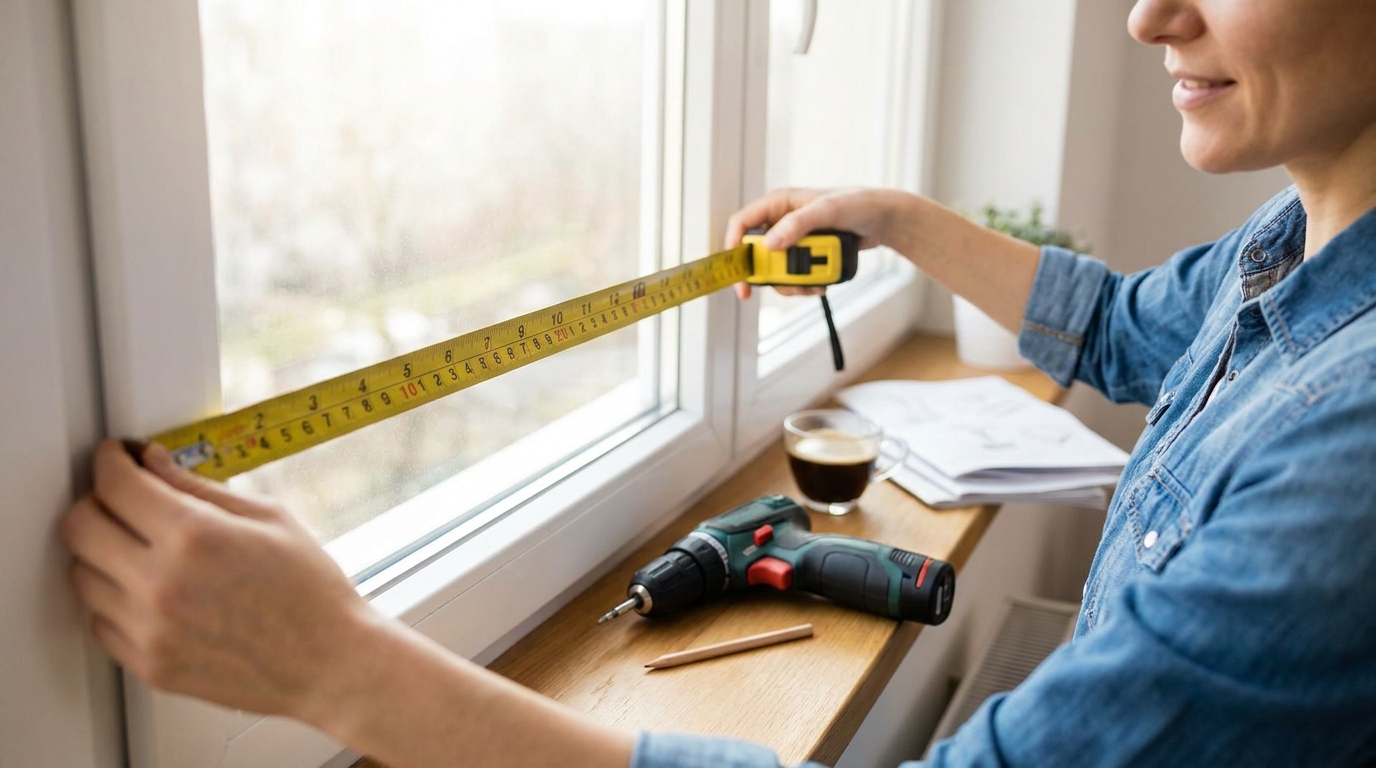
If you are feeling unsure, start with one window rather than the entire house. This is often the best approach for beginners. You gain confidence, learn how the product works, and see how the treatment feels in real life before making a larger commitment. A bedroom, office, or family room window can be a perfect first project.
Tools and Preparation for a Beginner-Friendly Install
Most DIY smart blind installations are surprisingly manageable, especially when you choose a battery-powered system or a retrofit motor designed for homeowners. In many cases, the tool list is short. You may need a drill, screwdriver, pencil, tape measure, level, step stool, and possibly wall anchors depending on the mounting surface. A clean work area and a little patience go a long way.
Before opening the box, read through the full instruction manual once from beginning to end. It is tempting to jump straight into mounting brackets, but understanding the sequence first can save time. Many beginner frustrations happen not because the project is difficult, but because steps are done out of order. Smart products also include app setup, charging, calibration, or pairing steps that may affect installation timing.
Lay out all parts and compare them to the included parts list. Make sure you have brackets, screws, charging accessories if applicable, the motor unit, the blind or shade, and any remote or hub that came with the kit. If the product requires charging before first use, do that early so you are not forced to pause halfway through. Small preparations help the entire project feel calmer and more satisfying.
If you live in a rental or simply prefer low-impact changes, look specifically for systems designed with minimal alteration in mind. The rise of retrofit and battery-based products has opened the door for many people who once assumed smart blinds were only for permanent high-end installations. That flexibility is a big part of their modern appeal.
Step-by-Step: How to Install Smart Blinds
The exact process will vary by manufacturer, but most beginner-friendly installations follow a similar rhythm. Start by marking your bracket placement carefully. Use a level so the treatment hangs straight, and confirm the spacing aligns with the product specifications. This part sets the tone for everything that follows, so it is worth slowing down and checking your work twice.
Next, pre-drill holes if required and secure the mounting brackets. If you are going into drywall rather than solid wood, use the correct anchors recommended by the manufacturer. Brackets should feel firm and stable, especially for wider or heavier treatments. A secure mount protects both the blind and the wall while helping the motor function more smoothly over time.
Once the brackets are in place, install the blind or shade body into the brackets according to the product directions. This often involves clicking or locking the headrail into position. Make sure it is fully seated before moving on. If your system includes a separate motor component, attach it exactly as directed and check that it is aligned properly.
For battery-powered systems, insert or connect the battery pack once the treatment is mounted. If the battery is rechargeable, confirm it has enough power for initial setup. Some products also require pairing a remote before app setup begins. Others are designed to go straight into the app. This is why reading the full instructions first is so helpful.
After the blind is physically installed, move to app connection and calibration. Download the recommended app, create an account if needed, and follow the pairing steps. This may include putting the blind in pairing mode, scanning a code, connecting through Bluetooth, or adding it through a hub. If the product supports Matter or a major ecosystem directly, this is often the stage where that integration begins.
Calibration is especially important because it teaches the blind its upper and lower limits. In practical terms, this means telling the system how far to open and close. A properly calibrated blind moves more elegantly, stops where it should, and feels more refined in daily use. Take a few extra moments to get this right. It is the difference between a system that feels custom and one that feels fussy.
When Installation May Not Be Ideal for Beginners
DIY does not mean every product suits every homeowner. Some projects become less beginner-friendly when the blinds are unusually large, the shades are heavy, the windows are hard to reach, or the system requires hardwiring. If your home has very tall windows, complex trim, or custom openings, hiring help may protect both your time and your final result.
This is also true if the product instructions call for electrical work. Hardwired systems can be beautiful, but they are often better suited to renovation settings or to homeowners already comfortable with more advanced installation. There is no shame in choosing a battery-powered system instead. Ease and confidence are part of making the project worthwhile.
Setting Up the Best Smart Routines
Once the blinds are installed, the real magic begins. The strongest benefit of smart blinds often comes from routines rather than manual control alone. You can absolutely open and close them with an app, but the home starts to feel more thoughtful when the blinds respond automatically to time, light, and everyday patterns.
A simple morning routine is often the most beloved. Schedule the bedroom blinds to open gradually around your normal wake-up time so daylight becomes part of the transition into the day. This can feel gentler than an abrupt alarm and supports a more pleasant start, especially in seasons when natural light is available early enough to help.
Another useful routine is afternoon glare control. In warmer, sunnier rooms, blinds can lower partway during peak afternoon hours and then reopen later. DOE research indicates that households in warmer Southern climate zones tend to keep coverings closed more often in summer, and optimized or automated operation can improve savings compared with typical manual use. Even if your main goal is not energy reduction, this kind of automation can make a room feel cooler, softer, and easier to enjoy.
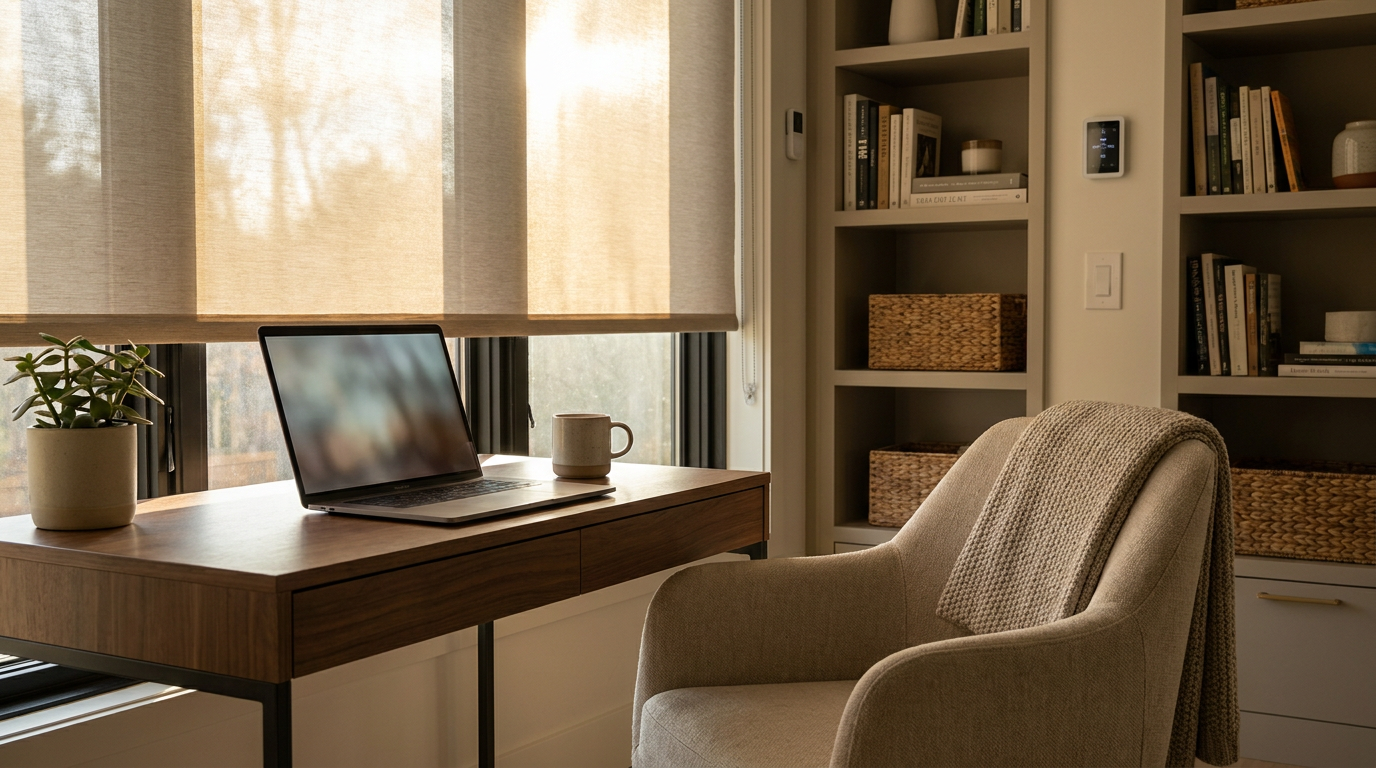
Sunset privacy routines are another excellent choice. Having blinds close automatically in street-facing rooms or bedrooms creates a feeling of completion and security at the end of the day. It is one less thing to remember, and it helps evening spaces feel cocooning instead of exposed. These are the moments where smart home technology begins to feel less like a novelty and more like a form of everyday care.
Easy Automation Ideas to Try First
- Set your bedroom blinds to open at sunrise or at a gentle fixed time each morning.
- Lower west-facing living room blinds during the brightest afternoon hours.
- Close front-facing room blinds automatically at sunset for privacy.
- Create a movie scene that lowers media room blinds with one tap or voice command.
- Pair office blinds with your workday schedule to reduce screen glare at key hours.
What Smart Blinds Can and Cannot Do for Energy Efficiency
It is worth having a balanced conversation about energy use because marketing can sometimes oversimplify the story. Smart blinds can support a more comfortable and energy-conscious home, particularly by helping reduce solar heat gain and by encouraging more consistent use than manual operation alone. They may be especially helpful in rooms with intense sun exposure or in climates where cooling loads are significant.
At the same time, savings are never one-size-fits-all. Climate, insulation quality, existing windows, orientation, blind material, and user behavior all matter. Some coverings can even perform poorly in heating-dominated conditions if used improperly. It is more accurate to think of smart blinds as a tool for comfort plus convenience, with potential efficiency benefits that vary depending on the home.
This balanced view is helpful for homeowners who want the upgrade to feel emotionally satisfying and financially sensible. You do not need to promise yourself dramatic bill reductions in order to justify the project. Better sleep, less glare, easier privacy, and more beautiful light are already meaningful returns. If you also gain some energy benefit through optimized use, that is an added advantage.
For Canadian readers, Natural Resources Canada is a relevant authority in this area because ENERGY STAR certification in Canada is administered and promoted by NRCan for applicable products. That can be useful when researching broader energy-efficient home upgrades and understanding how windows and coverings contribute to household comfort in different regions.
Common Misconceptions to Leave Behind
One common misconception is that smart blinds require replacing every window treatment in your home. In reality, many products are available as retrofit motors or add-on systems for existing blinds and shades. This makes the category more flexible than many people assume and allows homeowners to start small in the rooms that matter most.
Another misconception is that all smart blind installations are completely plug-and-play. Some are, but others involve more planning, especially if the windows are oversized or the system is hardwired. A beginner should choose with honesty and confidence, not pressure. The easiest project is often the best first project.
People also sometimes assume that smart blinds are only about convenience. Convenience is certainly part of the appeal, but it is not the whole story. The stronger value often lies in better mood, calmer routines, softer mornings, less visual stress, and a home that feels more private and polished. Those are quality-of-life benefits, not just technical features.
Finally, not every product works with every app, and not every ecosystem experience feels seamless. Cross-platform support and standards such as Matter are increasingly important because they align the technology with how people actually live. The goal is not to collect more apps. The goal is to create a home that feels easier and more coherent.
Styling Smart Blinds So They Still Feel Warm and Personal
Some homeowners worry that adding motorization will make their home feel too sleek or impersonal. Fortunately, the opposite is often true when the right materials and colors are chosen. Smart blinds can disappear into the design if you want a clean, minimal look, or they can add softness and richness through woven textures, linen-like fabrics, warm wood tones, or layered treatments.
If your style leans cozy and classic, choose finishes that echo the rest of the room. Soft whites, warm taupes, natural textures, and quiet patterns can blend beautifully into a layered home. If your room already has drapery, smart shades underneath can create a tailored effect that feels both luxurious and practical. The technology stays mostly hidden while the room simply feels more refined.
In modern homes, sleek roller shades or simple slatted blinds can support a lighter, more architectural aesthetic. In family homes, durability and easy cleaning may matter just as much as beauty. The good news is that smart functionality now exists across a much wider range of styles, which means you do not have to compromise the emotional tone of your home in order to gain convenience.
Think of smart blinds as part of the room’s atmosphere rather than a standalone device. Their real beauty is in how they shape the light and mood you experience every day.
Maintenance and Long-Term Care
One reason smart blinds appeal to busy households is that day-to-day maintenance is usually simple. Dust them gently according to the material type, keep tracks or moving parts clear if your product has them, and recharge or replace batteries on schedule. Many systems will alert you in the app when battery levels are low, which helps prevent inconvenient surprises.
It is also wise to revisit your automations seasonally. The light that feels perfect in July may not suit December in the same way. Small adjustments to timing can keep the routines feeling natural and useful throughout the year. This is especially true if you rely on sunlight patterns, work-from-home habits, or school-year family schedules.
If a blind starts behaving oddly, check the simplest causes first. Confirm the battery is charged, the app connection is active, and the motor limits are still calibrated correctly. In many cases, what looks like a major issue is actually a quick reset or reconnect. Keeping product manuals and setup information in an easy-to-find place makes future troubleshooting much less stressful.
As with any home upgrade, the easiest way to protect your investment is to use it consistently. Smart blinds deliver the most value when they become part of your home’s natural rhythm, not when they are treated like a one-time gadget experiment.
Final Thoughts: A Small Upgrade That Changes the Feeling of Home
There is something quietly luxurious about a home that seems to know what you need. Not in a flashy way, but in a gentle, supportive way. Smart blinds can open a bedroom to soft morning light, shield a living room from harsh afternoon sun, and close the house into privacy at dusk without asking for much effort from you. That kind of ease is not trivial. It affects how a home feels to live in.
For beginners, this is one of the most rewarding smart home projects because the results are both visible and deeply practical. The installation can be approachable when you choose the right product, especially with battery-powered or retrofit options. The daily benefits begin almost immediately, and they tend to touch several parts of life at once, including comfort, atmosphere, wellness, privacy, and convenience.
If you have been curious about bringing smart-home features into your space but want something that feels elegant rather than overly technical, smart blinds are a beautiful place to start. Begin with one room, choose compatibility carefully, and think about the routines that would genuinely support your day. The best smart home upgrades are the ones that help your house feel more like home. Smart blinds do exactly that.


No Comment! Be the first one.