

Montreal’s Metro at 60: What a Transit System Teaches Us About Building Cities for the Long Term
Sixty years ago this fall, Montreal opened a subway system built for a city that believed it was about to become the centre of the continent. That belief did not fully pay off the way planners expected, but the infrastructure it produced tells a bigger story than any single ride through its tunnels. The Société de transport de Montréal’s Metro, now marking its 60th anniversary, is a case study in how a single era of ambitious public investment can shape urban growth for generations, long after the political and economic conditions that produced it have changed.
The timeline matters here. Montreal’s first lines opened in 1966 and 1967, timed deliberately to Expo ’67, during the height of Quebec’s Quiet Revolution. At that moment, Montreal was Canada’s largest city, and civic leadership under Jean Drapeau was pouring capital into infrastructure meant to anchor decades of population growth. The Metro’s cavernous stations, heavy use of exposed concrete, and imported Art Nouveau details at Square-Victoria were not just design choices. They were a statement of confidence in where the city was headed.
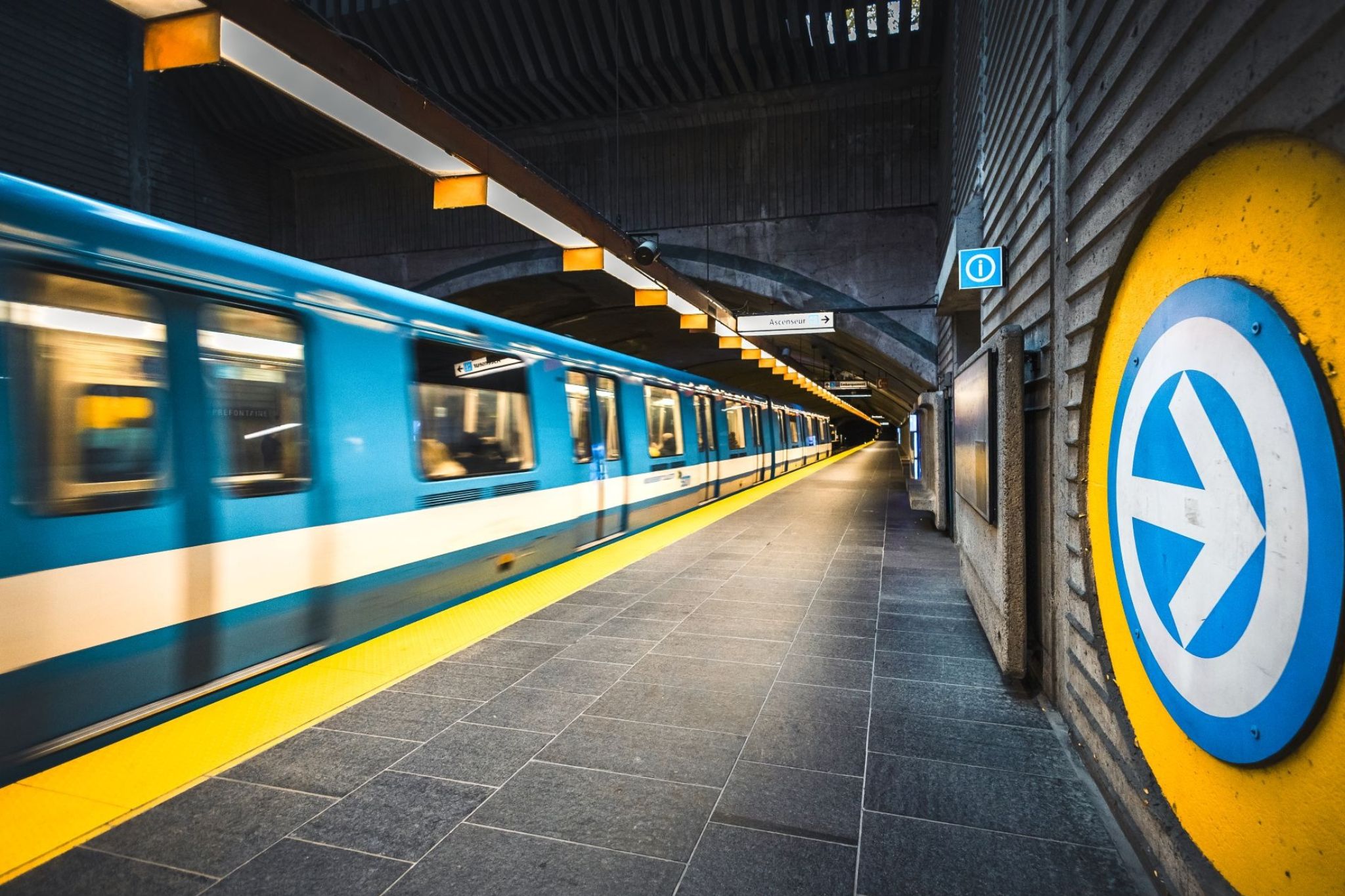
What happened next is the part developers and planners should pay closer attention to. Political shifts through the late 1960s and 1970s pushed investment capital southwest along Highway 401 toward Toronto, which overtook Montreal as the country’s primary economic engine. Yet the infrastructure Montreal built in that earlier window of optimism never stopped working. Stations like Place-Saint-Henri and Georges-Vanier, opened as late as 1980, still carry the same architectural intent as the original 1966 network. The capital was spent once, decades ago, and the city has been drawing on that investment ever since.
Infrastructure built during a window of civic ambition does not expire when that ambition fades. It becomes the foundation the next generation of growth has to work around, or with.
This is the lesson for anyone thinking about land value and transit-oriented growth today. The core of the STM network, still carrying roughly one million riders a day and ranking fourth busiest on the continent behind New York, Mexico City, and Toronto, was essentially locked in before most of the neighbourhoods around those stations took their current shape. Compare that to Montreal’s newer Réseau express métropolitain, opened in 2023, which is functionally efficient but was built under very different fiscal constraints, and the architectural ambition shows the difference. Infrastructure quality at the moment of construction sets a ceiling, or a floor, for everything built around it for decades afterward.
For developers and city builders, the takeaway is not nostalgia for Brutalism. It is a reminder that transit investment decisions made today, whether in Toronto, Vancouver, or any growing Canadian metro, are not just operational line items. They are long-horizon bets on which corridors become desirable, which neighbourhoods densify successfully, and which stations become genuine civic assets rather than purely functional through-points. Montreal happened to build at a moment when ambition and capital aligned, and the city has been living off that alignment for sixty years. The current wave of transit expansion across Canadian cities will be judged the same way, just on a longer clock than most budget cycles ever account for.
Source: Daily Hive