



Cities do not become major migration hubs by accident. They become magnets for people when economic opportunity, housing options, infrastructure capacity, and institutional competence line up at the same time. In the next decade, that alignment will matter even more. Population movement is accelerating across many regions, but the real story is not simply that more people are relocating. The more important question is which cities are ready to absorb that growth in a way that strengthens productivity, supports social stability, and increases long-term land value.
Table Of Content
- Why migration hubs matter in the next phase of urban growth
- Canada as a leading case study in migration-driven urbanization
- The core drivers of future migration hubs
- Housing supply and affordability
- Labour-market matching and credential recognition
- Transit-oriented development and complete communities
- Climate resilience as a competitive advantage
- Why secondary cities and corridor cities may be the next major winners
- What cities must do to become migration-friendly hubs
- The land value opportunity behind migration readiness
- Risks that can undermine a future migration hub
- What the next decade may look like
- Conclusion: the winning cities will be the ones that prepare
Canada offers one of the clearest current examples of this shift. Statistics Canada reported that the country’s population reached 41,465,298 on October 1, 2024, and that international migration accounted for 92% of population growth in the third quarter of 2024. For the full year 2024, the population grew by 744,324 people, or 1.8%. At the same time, 74.8% of Canadians lived in a census metropolitan area in 2025 estimates, which confirms that migration-led growth is overwhelmingly urban. These are not abstract demographic patterns. They are a direct signal to cities, developers, policymakers, and infrastructure planners that future competitiveness will depend on migration-readiness.
The strategic opportunity is significant. A city that can welcome and retain newcomers does more than add residents. It adds workers, consumers, entrepreneurs, taxpayers, students, and future homeowners or renters. It deepens labour pools, supports commercial corridors, boosts transit ridership, and justifies the next wave of infrastructure investment. But growth only becomes an advantage when it is managed well. Without housing supply, coordinated planning, and resilient systems, population inflows can overwhelm affordability, strain transportation networks, and undermine the very qualities that made a city attractive in the first place.
That is why the future migration hub will be defined less by raw population size and more by execution. Large metros will remain important, but they will no longer be the only winners. Secondary cities, corridor cities, and lower-cost metros with strong institutions and room to grow are increasingly well positioned to capture a larger share of migration-led growth. The places that succeed will be those that translate demographic demand into complete communities, better mobility, faster labour-market integration, and a durable urban value proposition.
The next generation of migration hubs will be built through strategy, not scale alone. Cities that pair housing, transit, resilience, and workforce integration will be better able to turn population growth into lasting prosperity.
Why migration hubs matter in the next phase of urban growth
Migration has always been a city-making force, but today it is becoming a sharper differentiator between places that expand productively and places that simply become more congested and expensive. Urbanization remains a long-run structural trend globally, and in advanced economies it increasingly intersects with aging populations, labour shortages, and uneven regional economic performance. That means migration is no longer just a social or demographic topic. It is central to economic development strategy, housing policy, and municipal finance.
In practical terms, a migration hub is a city or region that consistently attracts, absorbs, and retains newcomers while improving its economic performance over time. Attraction matters, but retention matters more. A city that draws migrants but fails to connect them to jobs, housing, transit, schools, healthcare, and community support will not convert growth into broad-based value. The most successful hubs are therefore not just entry points. They are places where newcomers can build stable lives and where employers can access talent quickly.
This is especially relevant in Canada, where immigration remains central to labour-force growth even as national policy shifts toward tighter capacity management. Canada admitted 483,640 permanent residents in 2024, consistent with its immigration levels plan, while also signaling that the non-permanent resident population should fall below 5% of the total population by 2027. That policy direction creates a more selective environment. Under tighter constraints, cities that can demonstrate readiness through housing supply, credential recognition, job matching, and service delivery become more competitive.
The lesson is straightforward. In a world where countries are balancing openness with capacity, local execution becomes a strategic asset. Cities that can prove they are able to absorb people effectively are more likely to attract investment, talent, and future growth allocations. This is where migration strategy intersects directly with land economics and urban planning.
Canada as a leading case study in migration-driven urbanization
Canada’s current growth pattern illustrates both the promise and the pressure of becoming migration-reliant. The headline numbers are striking, but the deeper story is spatial. Population growth is not evenly distributed across the country. It is concentrating in metropolitan regions, in certain high-performing secondary markets, and in areas that can still offer some combination of affordability, access, and economic momentum.
Major urban centres continue to capture a large share of newcomers because they offer labour-market depth, educational institutions, settlement networks, and established transit systems. Yet the country’s housing constraints have become impossible to ignore. According to CMHC, housing starts in Canada’s six largest cities rose 4% in the first half of 2024 to 68,639 units, but supply still lagged demographic demand. Nearly half of new apartments started in 2024 were purpose-built rentals, which reflects both weakened homeownership affordability and a growing need for flexible rental supply.
That shift matters because purpose-built rental is becoming one of the most important pieces of migration-ready urban growth. Newcomers often need access to rental housing first, not ownership products. If cities do not have enough professionally managed rental stock near jobs and transit, they will struggle to retain talent. High home prices can be tolerated for a time if rental supply is healthy and upward mobility remains credible. But when both ownership and rental markets become constrained, the city’s competitiveness erodes quickly.
Canada also demonstrates that migration growth is not limited to the largest, most expensive regions. Calgary and Edmonton have emerged as standout markets, supported by strong interprovincial migration, lower housing costs relative to Toronto and Vancouver, and favorable economic conditions. Their performance reinforces a key point often missed in public discussion. Future migration hubs are not simply the biggest cities. They are the cities that combine opportunity with a more manageable cost structure and enough room to scale.
The core drivers of future migration hubs
To identify future migration hubs, it helps to move beyond simple population rankings and focus on the ingredients that support durable growth. These ingredients are economic, physical, institutional, and environmental. When they align, cities gain a reinforcing advantage. When they are missing, growth becomes more fragile and politically difficult to sustain.
Housing supply and affordability
Housing is the first and most visible test of migration-readiness. A city can market itself as open and dynamic, but if newcomers cannot find attainable housing within a reasonable distance of work, education, and services, the offer is incomplete. Housing shortages are not just a social burden. They reduce labour mobility, raise business costs, delay household formation, and weaken long-term retention. In that sense, housing supply is economic infrastructure.
What matters is not only the quantity of housing but the type and location of it. Purpose-built rental, missing-middle forms, student housing, family-sized apartments, and higher-density mixed-use development near transit all play a role. A migration hub needs a housing ladder that allows people to enter the city, stabilize their finances, and eventually move through different life stages without being displaced to distant and poorly connected areas.
Land value rises sustainably when supply is directed into places where infrastructure can support it. That means underused corridors, station areas, aging commercial strips, large infill sites, and strategic redevelopment districts often hold the greatest long-term potential. Population growth alone does not guarantee land-value uplift. Zoning clarity, entitlement predictability, transit access, and amenity investment are what convert demand into durable value.
Labour-market matching and credential recognition
The economic case for becoming a migration hub is strongest when cities can connect incoming talent to real jobs quickly. The OECD and Canadian policy frameworks consistently point to immigration as a response to labour shortages, population aging, and long-term growth needs. Yet this potential is often diluted when foreign credentials are not recognized efficiently, when workers are underemployed, or when settlement systems are disconnected from employer demand.
The future migration hub will treat labour-market integration as core infrastructure. This includes faster credential pathways in healthcare and skilled trades, more effective employer partnerships, practical language support, targeted upskilling, and clear information systems for both workers and firms. Canada’s category-based selection and regional programs, which prioritize high-demand occupations such as healthcare, construction, STEM, and French-language communities outside Quebec, point directly to this model. Cities that align local systems with these national priorities will be more competitive.
A migration-friendly city therefore does not succeed merely by attracting people. It succeeds by accelerating upward mobility. The places that create faster pathways from arrival to stable employment are the places that will generate stronger productivity gains and more resilient household demand.
Transit-oriented development and complete communities
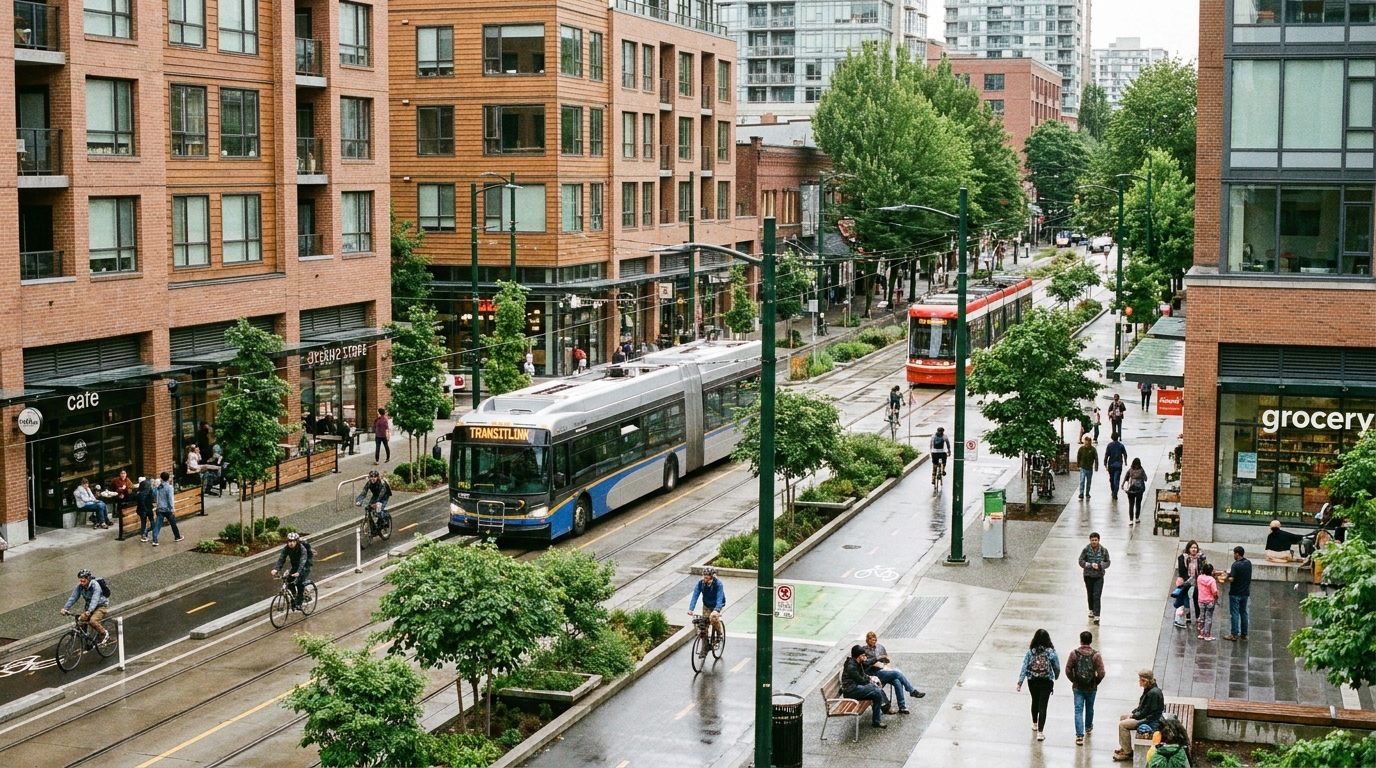
Mobility is a decisive variable in urban retention. Newcomers are often highly dependent on public transit in the early years of settlement, which means service quality, reliability, and geographic reach directly affect economic participation. If housing growth is pushed to peripheral areas without good transportation links, commute burdens rise and integration slows. By contrast, when cities focus on transit-oriented development, they improve access to jobs while using infrastructure more efficiently.
Federal housing and infrastructure planning in Canada increasingly emphasizes dense, transit-oriented, complete communities, and for good reason. Growth near higher-order transit supports ridership, lowers household transportation costs, and creates stronger conditions for mixed-use neighbourhoods. It also reinforces commercial vitality by clustering residents near retail, services, and civic spaces. This is one of the clearest examples of how migration strategy and urban form are linked.
Complete communities matter because people do not experience a city through policy documents. They experience it through daily convenience, safety, travel time, access to schools, parks, groceries, childcare, and healthcare. A city that gets these basics right becomes more than an arrival point. It becomes a place where households choose to stay and invest their future.
Climate resilience as a competitive advantage
Climate resilience is moving from a background planning issue to a central factor in city competitiveness. Across North America, climate-related risks such as flooding, heat, wildfire exposure, insurance pressures, and infrastructure vulnerability are shaping long-term location decisions. Brookings and other institutions have highlighted the possibility that climate migration could push people inland, northward, and toward cities with stronger institutional capacity and more stable environmental conditions.
For Canadian and northern North American metros, this creates both opportunity and responsibility. Cooler climates and water access may improve relative attractiveness, but they do not eliminate local risk. Wildfire smoke, flood-prone river systems, aging stormwater infrastructure, and extreme heat events are all real concerns. A future migration hub cannot rely on geography alone. It must actively invest in resilience.
That means flood protection, urban tree canopy, heat mitigation, resilient energy systems, stormwater management, and nature-based infrastructure need to be integrated into growth strategy. Resilience is not separate from land value. It supports insurability, protects public assets, lowers long-run disruption, and strengthens investor confidence. Cities that can show credible resilience planning will have a stronger claim on both population growth and capital.
Why secondary cities and corridor cities may be the next major winners
One of the biggest misconceptions about migration hubs is that they must be the largest global cities. In reality, some of the strongest opportunities may emerge in secondary cities and corridor markets that combine lower costs with institutional strength. These places often have underused land, scalable infrastructure, and more room for policy reform. They can move faster because the gap between current form and future potential is more manageable.
In Canada, this could include lower-cost metropolitan areas, fast-growing Prairie cities, and corridor communities linked to larger employment regions by rail or highway infrastructure. Their advantage is not just affordability in the narrow sense. It is their ability to offer a more balanced package of housing, mobility, and opportunity. If they can preserve that balance while upgrading urban quality, they may outperform larger peers on retention.
There is also a land development logic here. In high-cost cities, the barriers to adding supply can be severe, from land assembly challenges to entitlement delays and infrastructure constraints. Secondary cities may have more flexibility to intensify around transit, redevelop underused commercial land, and support purpose-built rental at viable price points. That makes them highly relevant to both public policy and private capital.
The broader lesson is that future migration hubs are likely to be distributed across a wider geography than in the past. The winners will include major metros, but also mid-sized and corridor cities that can execute well. This is an important strategic shift for governments and developers who still think of migration growth as something that only happens in a few dominant urban cores.
What cities must do to become migration-friendly hubs
If migration-readiness is a competitive advantage, then cities need a practical playbook. The challenge is not just to attract growth, but to shape it. That requires governance discipline and a clear understanding that housing, transportation, workforce development, and resilience are not isolated files. They are part of a single urban operating model.
Several strategies stand out as especially important for cities that want to position themselves for the next wave of population shifts.
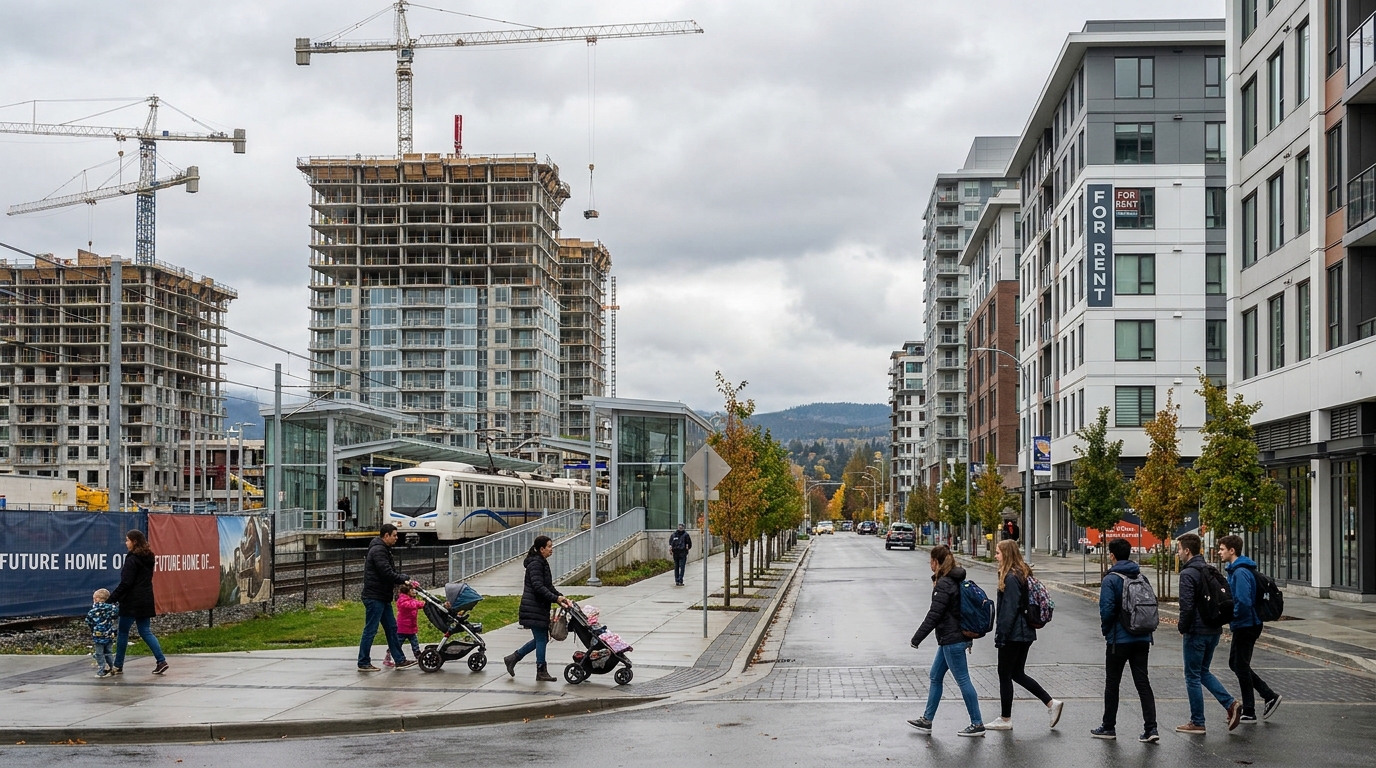
- Accelerate housing delivery. Cities need faster approvals, clearer zoning, more by-right density in strategic areas, and a stronger pipeline of purpose-built rental. Delays are costly because migration demand does not pause while entitlement systems catch up. Municipalities that reduce friction in well-serviced growth areas will be better placed to absorb newcomers without inflating prices as quickly.
- Focus growth around infrastructure. Transit stations, bus rapid transit corridors, and major employment nodes should be at the center of urban intensification. This is where cities can support density most effectively and where public investment can generate the highest return through land-value uplift and ridership gains.
- Build stronger newcomer integration systems. Settlement services, language support, credential pathways, job matching, and employer partnerships should be treated as economic development tools, not just social programs. A city that integrates talent faster improves both household outcomes and regional productivity.
- Plan for families, not just arrivals. Retention depends on whether people can see a future in the city. That means schools, childcare, parks, healthcare, safe public spaces, and housing that can support different household sizes all matter. A migration hub must function across life stages.
- Invest in resilience early. Climate adaptation should be embedded in growth planning from the start. Resilient infrastructure protects development value and helps ensure that growth remains insurable, financeable, and politically durable.
- Use data to manage capacity. Population growth should be tracked against housing completions, rental vacancy, transit crowding, school capacity, and healthcare demand. Strategic planning is strongest when it is iterative and evidence-based rather than reactive.
These actions reinforce one another. Housing near transit improves labour access. Better labour access supports economic growth. Economic growth strengthens the tax base. A stronger tax base improves the city’s ability to invest in public realm, resilience, and social infrastructure. The migration hub, when managed well, becomes a compounding model.
The land value opportunity behind migration readiness
For planners, landowners, and developers, one of the most important implications of future migration trends is where value creation will occur. Not all land benefits equally from population growth. The strongest uplift tends to happen where demand meets entitlement certainty, transportation access, and coordinated public investment. Migration-readiness therefore has a geography.
Underused sites near rapid transit, aging shopping centres, industrial transition areas, institutional edges, and arterial corridors are particularly important. These are often the places where additional density can be introduced with the least structural friction if policy supports it. As cities become more deliberate about directing growth to complete communities, these areas can shift from being marginal or transitional assets into core urban growth platforms.
But value creation requires discipline. A common misconception is that migration automatically drives land appreciation across the board. In practice, land only captures significant value when the city makes growth feasible. Zoning reform, servicing plans, public realm upgrades, school capacity, and transit investment are what give markets confidence. Where these ingredients are missing, speculation can rise without real delivery, which does little to improve affordability or long-term productivity.
The most strategic public and private actors will therefore focus less on chasing raw population numbers and more on identifying places where infrastructure, policy, and demographic demand are likely to align. That is where the next generation of development opportunity will concentrate.
Risks that can undermine a future migration hub
It is important to be realistic about the challenges. A city can have strong economic momentum and still fail as a migration hub if it underestimates the pressures of growth. The first major risk is housing undersupply. If supply persistently trails demand, affordability deteriorates, overcrowding rises, and public support for growth weakens. This can trigger a cycle of policy hesitation just when more delivery is needed.
The second risk is infrastructure lag. Transit, utilities, schools, and healthcare systems need lead time. If population growth outpaces capacity for too long, urban performance declines. Congestion worsens, service reliability drops, and quality of life erodes. These effects are often cumulative, which means a city can appear to be functioning until the strain becomes politically and economically obvious.
The third risk is weak retention. Attracting newcomers is only one step. If skilled workers cannot practice in their fields, if commute patterns are too costly, or if family supports are insufficient, people may relocate again. Secondary migration within a country is a powerful force. In Canada, the rise of markets such as Calgary and Edmonton shows that households and workers respond quickly to differences in affordability and opportunity.
The fourth risk is climate complacency. A city that grows rapidly without strengthening flood protection, heat resilience, and emergency capacity may face insurance shocks, asset damage, and public backlash. In a climate-sensitive era, resilience is not optional city beautification. It is foundational risk management.
What the next decade may look like
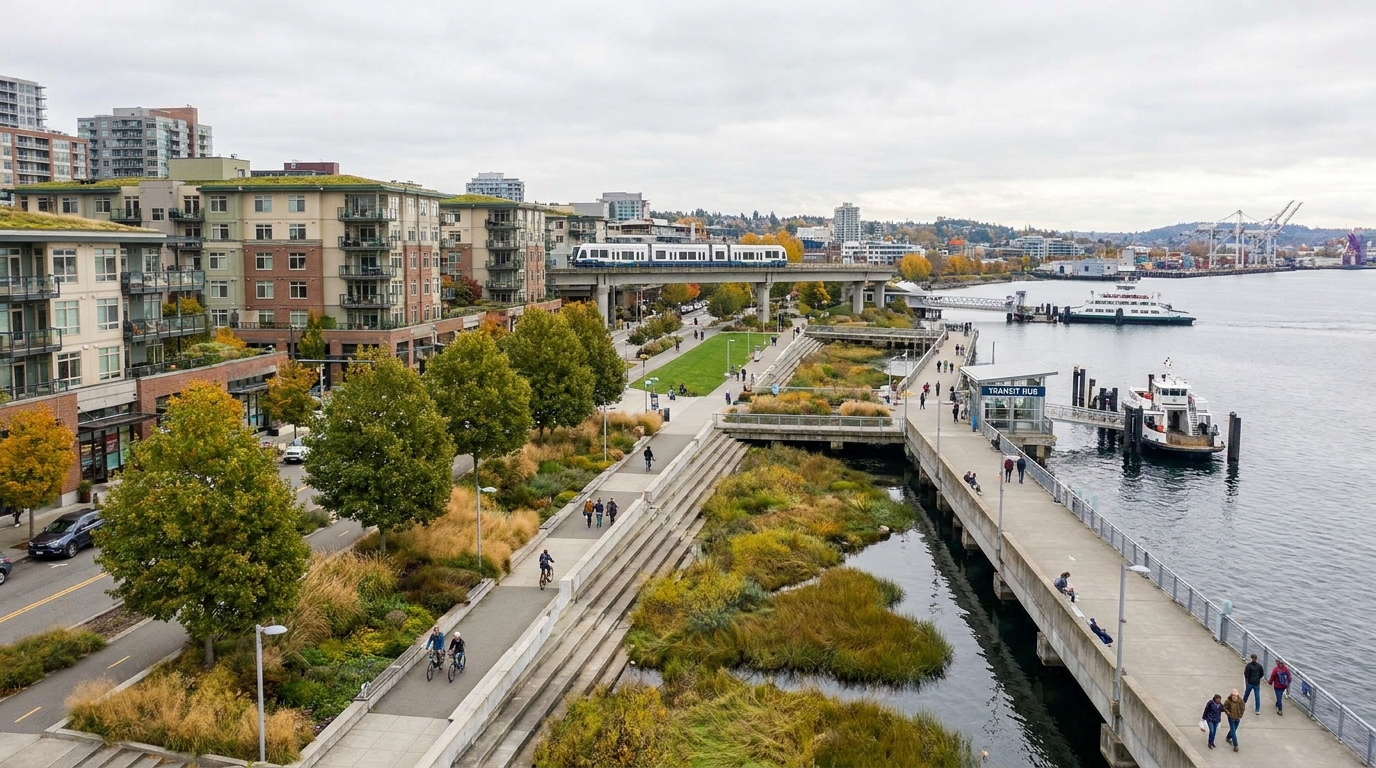
Looking ahead, the geography of migration-driven growth across North America is likely to broaden. Large gateway cities will remain essential because they offer deep labour markets, global connectivity, and institutional scale. But their dominance may become more contested as affordability constraints persist and as firms become more flexible about location. This opens the door for lower-cost metros, inland regions, and climate-advantaged cities to gain share.
In Canada, this likely means a more distributed pattern of winners. Some will be major metropolitan areas that finally align housing reform with infrastructure investment. Others will be secondary cities that can scale quickly without repeating the supply bottlenecks of larger peers. Corridor cities linked to larger regional economies may also emerge as significant growth nodes if they can intensify around transit and deliver complete communities.
Migration policy will continue to matter, but local readiness will matter more. National governments can set targets and create selection programs, yet the lived reality of migration is local. It depends on whether a worker can rent an apartment, get to a job site, enroll a child in school, access healthcare, and build social ties. The city that can deliver those outcomes reliably will become a stronger magnet over time.
There is also a broader economic implication. Cities that absorb migration effectively can increase agglomeration benefits, improve business formation, and strengthen fiscal capacity. Those gains are not guaranteed, but when they are captured, they support a more dynamic urban economy. This is why migration-readiness should be understood not as a narrow social service function, but as a core growth strategy.
Conclusion: the winning cities will be the ones that prepare
The future migration hub will not be defined by branding alone, and it will not be determined solely by size. It will be defined by whether a city can prepare for growth with seriousness and precision. That means building enough housing, directing density to infrastructure-rich locations, integrating talent into the labour market quickly, and investing in resilience before shocks become crises.
Canada’s recent population trends make the lesson clear. Migration is already reshaping urban demand, housing markets, and regional economic strategy. With international migration accounting for the overwhelming majority of recent growth and with nearly three quarters of Canadians living in metropolitan areas, the urban consequences are immediate. Cities that respond strategically can convert this moment into stronger productivity, healthier land economics, and more complete communities. Cities that do not may find themselves trapped between growth pressure and declining affordability.
For public leaders, the priority is to replace reactive planning with coordinated execution. For developers and landowners, the opportunity is to focus on places where policy, infrastructure, and demographic demand can reinforce one another. For residents, the stakes are about more than population totals. They are about whether growth improves daily life or undermines it.
That is the defining question of the next urban cycle. The places that answer it well will become the future migration hubs. They will not simply receive people. They will convert movement into momentum, and momentum into long-term urban value.



No Comment! Be the first one.