What a $1.8 Million Price Cut on a Vaughan Château Tells Investors About the Ultra-Luxury Market
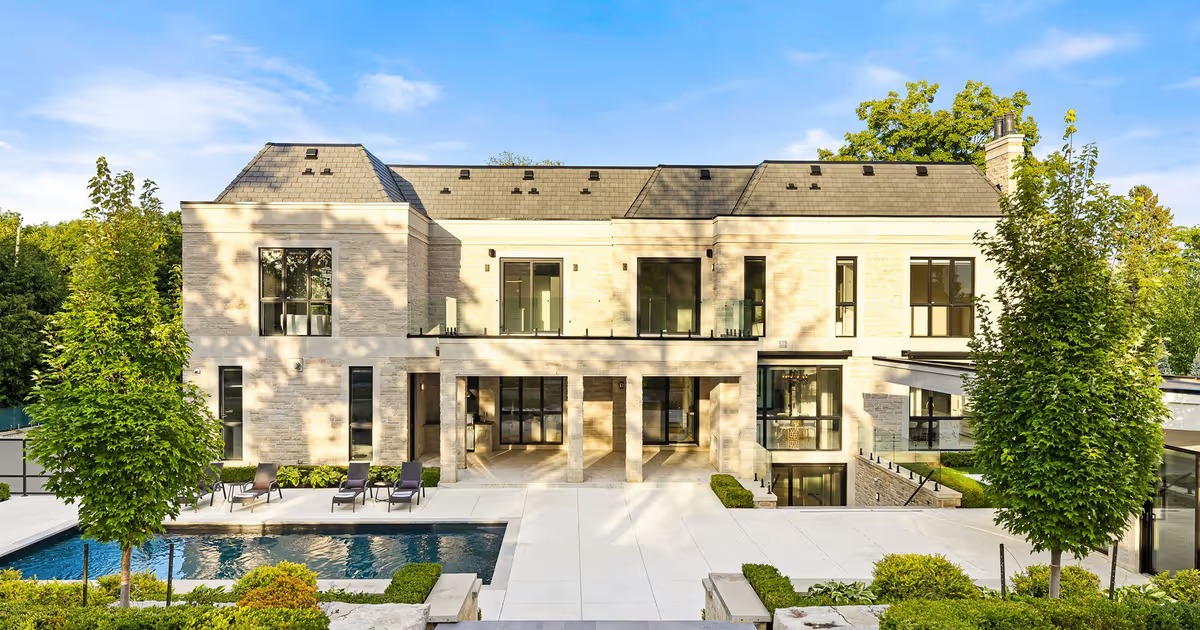
A nearly 10,000-square-foot limestone estate in Vaughan just dropped its asking price from $8,798,000 to $6,988,000, a reduction of almost $1.8 million. For readers focused on where capital should sit in this market, the number itself is less interesting than what it signals about liquidity, pricing discipline, and risk at the top of the housing pyramid.
This is not a first-time listing struggling to find its footing. The property, known as 36 Waymar Heights Blvd., has been marketed ten separate times since 2018, starting as raw land sold on the promise of a French château and ending, after completion in 2021, as a finished trophy home. It first sold as a completed build for $7,980,000 against an original ask of $8.5 million, already a meaningful discount. Since 2025 alone it has been relisted three times. That pattern, repeated relisting alongside repeated price cuts, is exactly the kind of signal I look for when assessing whether an asset class is overvalued relative to its actual buyer pool.
The fundamentals of the home are not in question. Five ensuite bedrooms, a walk-out lower level with a theatre and gym, a saltwater pool, a cabana, and smart home infrastructure represent genuine construction and design value. But value and price are not the same thing, and this is the distinction that separates disciplined investors from speculative buyers.
Context matters here. The average home price in Vaughan sits closer to $1.6 million, meaning this property competes for a fraction of a fraction of local buyers. Ultra-luxury real estate has always operated on a thinner demand curve, but in a market where even mid-tier two million dollar homes are sitting longer, that curve gets thinner still. Fewer qualified buyers means longer holding periods, and longer holding periods mean carrying costs, opportunity cost, and eventually, price concessions.
Repeated relistings and stacked price cuts are rarely about the asset. They are about the seller finally accepting where real demand sits.
What should investors take from this. First, trophy assets are not immune to correction, they are simply slower to correct because sellers resist repricing until the carrying cost becomes undeniable. Second, buyers with patience and liquidity in this segment now hold real negotiating leverage, something that was scarce during the run-up years. Third, this is a useful reminder that luxury development, no matter how well executed, still answers to the same demand fundamentals as the rest of the market. A four year old build now asking less than its 2021 sale price is a data point worth watching, not dismissing.
For those tracking the top end of Ontario’s housing market, this listing is a case study in how quickly sentiment can shift once supply outpaces the number of buyers willing to pay a premium for scarcity alone.
Source: blogTO