The Circle as Sanctuary: What Douglas Cardinal Teaches Us About Designing With Spirit
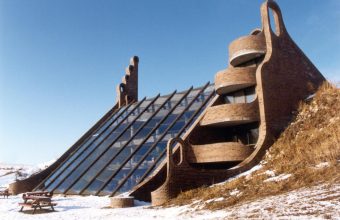
Some of the most enduring architecture is not born from a mood board or a material palette. It is born from a philosophy, one that the architect carries long before the first sketch is drawn. In a recent interview, the celebrated Indigenous architect Douglas Cardinal revisited one of his most quietly radical projects: a church built with Father Merx, shaped around the form of the circle. It is a story about approval processes and archbishops, yes, but underneath it is a masterclass in what organic architecture can mean when it is treated as an act of care rather than an act of ego.
Cardinal has long been associated with flowing, curvilinear forms that reject the rigid grid in favour of shapes drawn from nature and from Indigenous tradition. The circle, in this project, was not a stylistic flourish. It was structural philosophy, a way of organizing a sacred space so that people could gather, face one another, and feel held rather than directed. For a design audience accustomed to thinking of curves as an aesthetic choice, Cardinal’s account is a reminder that the most memorable spatial gestures usually begin as an idea about how people should relate to each other inside a room.
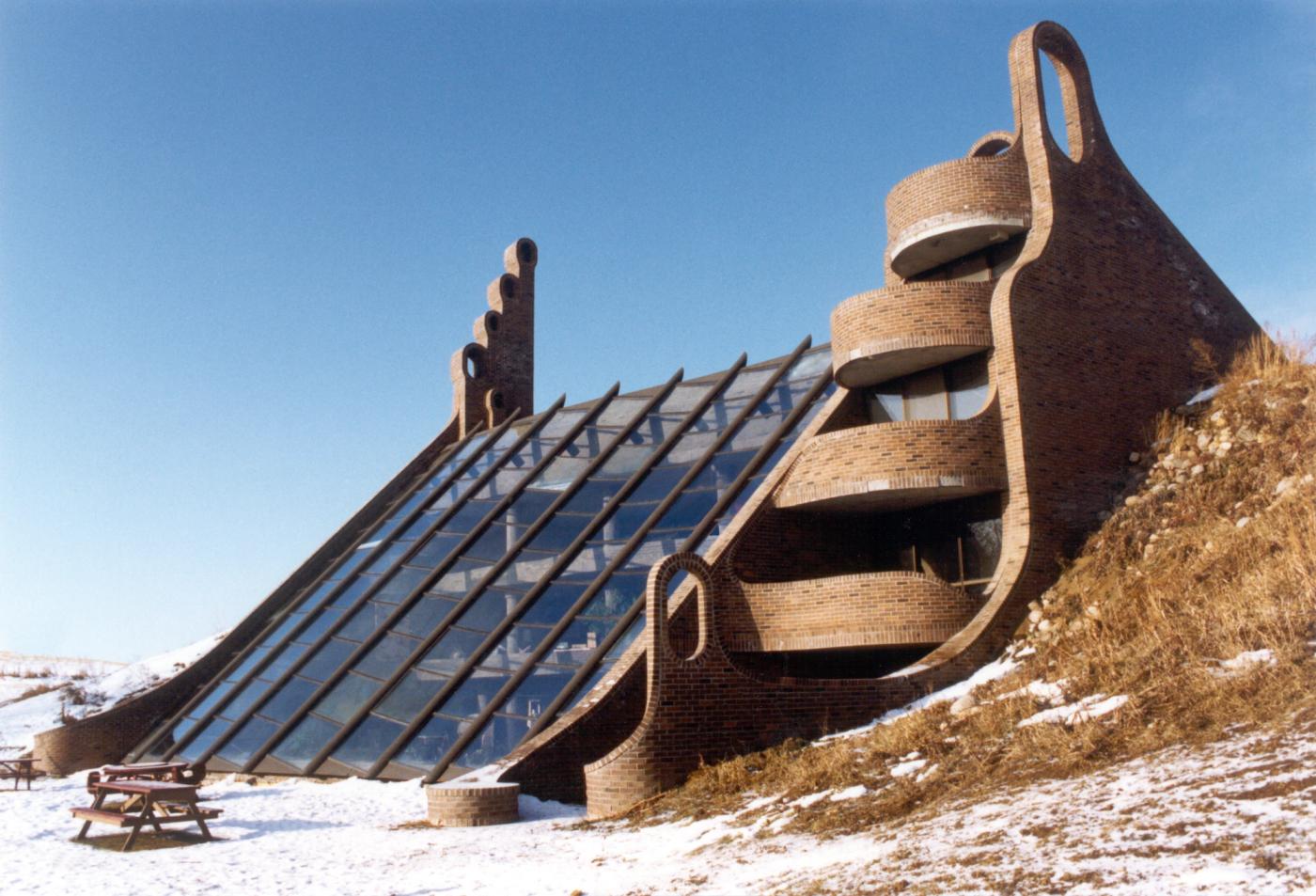
What struck me most in Cardinal’s telling was not the design itself but the resistance it had to move through, an archbishop to convince, a congregation to reassure, a history of conflict to set aside before creative work could even begin. Architecture rarely arrives cleanly. Every ambitious building carries the residue of the negotiations, compromises, and second-guessing that shaped it. Cardinal’s insistence on an avant-garde, organic form inside a traditionally rigid institutional typology is a lesson for anyone designing within constraint: the boldest spatial ideas often survive not because they are the easiest to approve, but because the architect refuses to let the vision soften.
If you can create something that generates more loving and caring, a place where people can communicate with each other and with the spirit in a good way, then you’ve done your job.
That line, offered to Cardinal by an elder before the project began, reads almost like a design brief, and a more honest one than most. It asks the architect to measure success not in square footage or material cost, but in the emotional register of the finished space. This is the same instinct behind the most compelling interiors and buildings being produced today, the recognition that atmosphere, light, and form shape how people feel long after the ribbon cutting is over. Cardinal’s circular church is a reminder that spiritual and emotional intention can be built directly into the bones of a structure, not layered on afterward through decoration.
For designers working today, whether on a place of worship, a family home, or a civic building, Cardinal’s approach offers a quiet challenge. Ask not only what a space will look like, but what kind of communication it will allow between the people inside it. Organic form, when it is chosen with intention rather than trend, has a way of outlasting the arguments it took to build.
Source: pinupmagazine.org