


How to Choose and Apply Mulch for Healthy Soil and Lower-Maintenance Gardening
Mulch is often treated as a finishing touch, something that makes a garden bed look tidy after planting is done. In reality, it is one of the most useful tools in sustainable garden care because it works quietly in the background every day. A good mulch layer helps the soil hold moisture, blocks many weeds before they start, softens temperature swings around roots, and, when the material is organic, gradually feeds the soil as it breaks down. That combination makes mulch one of the rare garden practices that improves plant health while also reducing the amount of routine maintenance needed over time.
Table Of Content
- Why Mulch Matters for Soil Health and Everyday Maintenance
- Understanding the Difference Between Organic and Inorganic Mulch
- Organic Mulch Options
- Inorganic Mulch Options
- How to Choose the Best Mulch for Different Garden Areas
- Mulch for Trees and Shrubs
- Mulch for Vegetable Gardens
- Mulch for Perennial Beds
- Mulch for Raised Beds and Containers
- How to Apply Mulch Correctly
- Step-by-Step Mulching Process
- Common Mulching Mistakes to Avoid
- Seasonal Mulch Care Through the Year
- Mulch as Part of a Sustainable Garden System
- Which Mulch Should You Choose?
- Final Takeaway
For home gardeners who want practical results, this is where mulch becomes especially compelling. A properly mulched bed usually needs less frequent watering, less hand weeding, and less soil disturbance from repeated hoeing or cultivation. Those savings add up through the growing season, especially in hot weather, in raised beds, around young shrubs and trees, and in places where the soil is exposed to wind or sun. Instead of working harder to compensate for drying soil and recurring weeds, mulch helps create a more stable growing environment from the start.
Mulch also fits naturally into a broader eco-friendly approach to gardening. Healthy soil is not just dirt that holds plants upright. It is a living system that stores water, cycles nutrients, supports roots and soil organisms, and plays a role in carbon storage. When mulch protects that system from erosion, overheating, and moisture loss, it contributes to long-term resilience in a very practical way. You do not need a large property or a perfect landscape to benefit from that. Even a few well-mulched beds can improve how a garden performs.
This guide explains how to choose the best mulch for your goals, how to use different mulch types around different plants, and how to apply mulch correctly so it helps rather than harms. The details matter. The right material, spread at the right depth, and kept away from trunks and stems can support healthier soil for years. The wrong material, or too much of it, can trap moisture where it should not, restrict airflow, and create avoidable plant problems.
Mulch is most effective when it is chosen for the plant and site, applied in a moderate layer, and maintained thoughtfully rather than piled on indiscriminately.
Why Mulch Matters for Soil Health and Everyday Maintenance
Extension guidance consistently highlights four main benefits of mulch: moisture retention, weed suppression, soil temperature moderation, and organic matter build-up when the mulch is organic. These are not minor improvements. They influence how roots grow, how often soil dries out, how quickly weeds invade, and how much stress plants experience during weather extremes. In a home garden, that can mean the difference between soil that crusts and dries quickly and soil that stays cooler, more evenly moist, and easier to manage.
Moisture retention is often the first benefit gardeners notice. Bare soil loses water quickly through evaporation, especially in summer or in windy sites. A mulch layer helps shade the soil surface so that moisture remains available longer after rain or irrigation. This can reduce watering frequency and make moisture levels more consistent, which is particularly useful for seedlings, vegetables, containers, young trees, and any planting that struggles in dry spells.
Weed suppression is the next major advantage, and it can save a surprising amount of labor. Most common garden weeds need light and open soil to germinate well. By covering the surface, mulch reduces the sunlight that reaches weed seeds and lowers the number of weeds that emerge. Fewer weeds means less pulling, less cultivation, and less disruption to the soil structure. That matters because repeated cultivation can break apart the soil surface, bring more weed seeds up, and accelerate moisture loss.
Temperature moderation is equally important, though it is sometimes less visible. In summer, mulch keeps the soil cooler and reduces heat stress around roots. In colder regions, it helps buffer rapid temperature changes and can reduce freeze thaw stress, especially around perennials and young woody plants. Soil that remains more stable is generally friendlier to roots and to the microbial life that helps break down organic matter and cycle nutrients.
When the mulch is organic, it brings a fourth benefit that inorganic materials cannot provide. As wood chips, leaves, compost, bark, and similar materials decompose, they contribute organic matter to the soil. Over time, this can improve soil structure, support beneficial organisms, increase water-holding capacity, and encourage the kind of crumbly tilth that gardeners value. This is one reason mulch is not just about appearance. It is part of long-term soil care.
Understanding the Difference Between Organic and Inorganic Mulch
Not all mulch serves the same purpose, and one of the most useful distinctions is whether a mulch is organic or inorganic. Organic mulches come from plant-based or natural materials that decompose over time. Inorganic mulches include stone, gravel, plastic, and some synthetic products. Both categories can reduce weeds and conserve moisture to some degree, but only organic mulches improve soil organic matter as they break down.
If your main goal is to build healthier soil, organic mulch is usually the better choice. It supports a more living, biologically active soil system and tends to fit better with sustainable gardening practices. If your goal is long service life, a very specific design look, or heavy-duty surface coverage in a non-planting area, inorganic mulch may have a role. The key is to be intentional. A decorative stone mulch around heat-sensitive plants, for example, can raise soil temperatures and offer no long-term soil improvement.
There is also a common misconception that all mulch should be judged in the same way. That leads to confusion. A layer of compost behaves differently from wood chips. Straw behaves differently from gravel. Landscape fabric is not the same as shredded leaves. When gardeners match material to purpose, the results are usually better and easier to maintain.
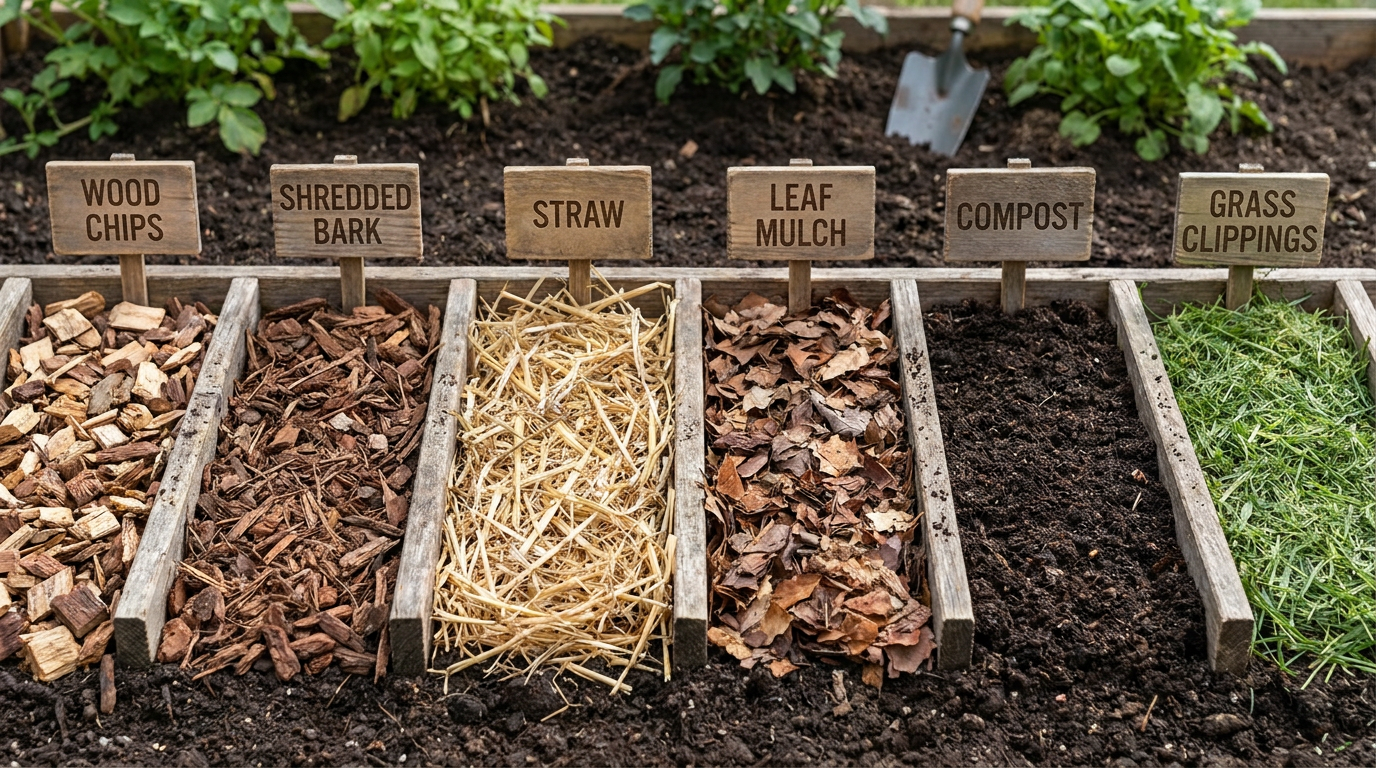
Organic Mulch Options
Wood chips are one of the most practical and widely used mulches for trees, shrubs, and larger landscape beds. They last relatively well, suppress weeds effectively, and gradually contribute organic matter as they decompose. Arborist wood chips, often available locally, can be a strong low-cost option and fit well within circular-economy landscaping because they make use of local tree waste. Their rough texture also helps them stay in place better than finer materials on slopes or in windy sites.
Shredded bark is commonly used in ornamental beds because it looks tidy and spreads evenly. It can be a good choice around shrubs and perennials, though it does break down over time and needs refreshing. Because fine bark can knit together, gardeners should avoid applying it too deeply. Moderate depth matters more than a thick decorative layer.
Straw is often used in vegetable gardens because it is light, easy to spread, and helps keep soil moisture steady around annual crops. It can reduce splashing during rain, which helps keep soil off leaves and some fruits. The main caution is to use clean straw rather than hay, since hay often contains many seeds that can turn a mulch layer into a weed source.
Shredded leaves are an excellent seasonal mulch and one of the most accessible options for home gardeners. They are cost effective, soil building, and well suited to perennial beds, vegetable gardens, and around shrubs when used in a moderate layer. Whole leaves can mat down and block airflow, so shredding them first usually improves performance. In many gardens, leaf mulch is one of the simplest ways to return nutrients and organic matter back to the soil.
Compost can work as a mulch, especially in vegetable beds and around plants that benefit from a nutrient-rich topdressing. It is not as long lasting as wood chips or bark, but it offers a gentler way to feed soil life and improve the surface layer. Some gardeners use compost as a thin base layer and then add a coarser mulch on top where longer coverage is needed. This can be a good strategy in beds where both fertility and weed suppression matter.
Grass clippings can also be used, though they require some care. They should be applied in thin layers and allowed to dry between additions so they do not form a slick, anaerobic mat. Clippings from lawns treated recently with herbicides should be avoided in food gardens or sensitive beds. Used properly, they are a convenient way to recycle garden nutrients.
Inorganic Mulch Options
Stone and gravel are durable and visually clean, and they can work well in pathways, around drainage areas, or in very specific low-water designs. However, they do not add organic matter, and they can absorb and radiate heat, which may not suit all plantings. In mixed beds where improving soil is part of the goal, they are usually less beneficial than organic options.
Plastic mulch has a role in some vegetable production systems because it suppresses weeds and warms the soil. For most home gardens, though, it is a specialized material rather than an all-purpose choice. It does not improve soil structure, and it can interfere with water and air movement if used poorly. It also creates removal and disposal considerations that do not fit every gardener’s sustainability goals.
Landscape fabric is often marketed as a permanent weed solution, but in practice it tends to be less permanent and less effective than promised. Weed seeds can still settle and germinate in debris that builds up on top. Over time, fabric can also complicate planting, soil improvement, and the natural integration of organic matter into the bed. In many home landscapes, a good organic mulch layer is simpler and more adaptable.
How to Choose the Best Mulch for Different Garden Areas
The best mulch depends on what you are growing and what you want the bed to do. A single material can work in many places, but gardens often perform better when mulch choices are slightly tailored to site conditions and plant needs. Looking at each area individually can help you avoid using a mulch that is either too heavy, too hot, too short-lived, or not useful enough for the task.
Mulch for Trees and Shrubs
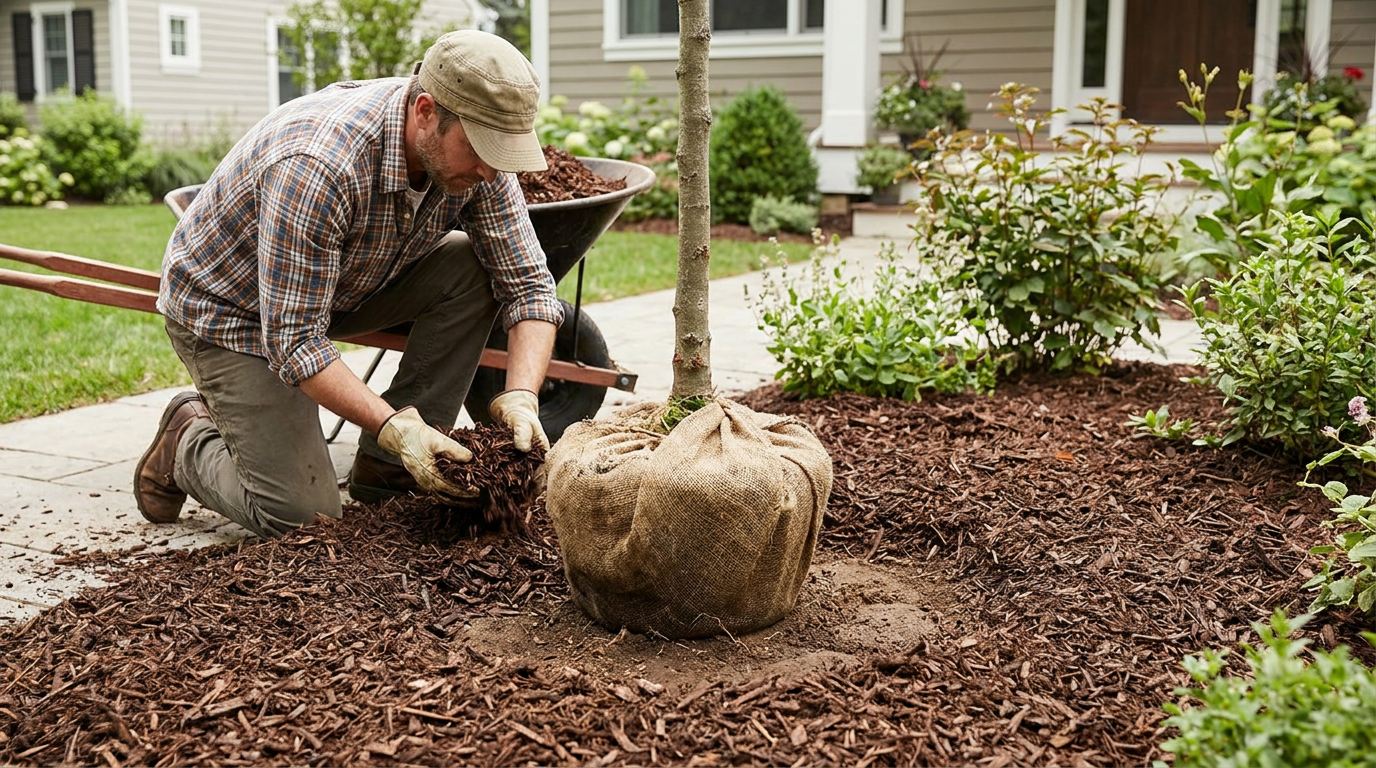
Trees and shrubs generally respond well to organic mulches like arborist wood chips, coarse shredded bark, or leaf mulch. These materials help conserve soil moisture over a broad root zone and reduce competition from grass and weeds. For young trees especially, mulch can make establishment easier by reducing water stress and minimizing mower or trimmer damage when used to create a clear bed around the base.
The most important rule around woody plants is to keep mulch away from the trunk. The root flare, where the trunk broadens at the base, should remain visible. Mulch piled against bark can hold moisture, invite pests, and contribute to trunk rot or root problems. This is why so-called mulch volcanos are so strongly discouraged. They may look neat from a distance, but they create an unhealthy environment at the point where the plant is most vulnerable.
For shrubs in foundation beds or mixed borders, shredded bark or wood chips are often a balanced choice because they look finished while still contributing to soil improvement over time. If the bed is densely planted, a moderate layer is usually enough. The goal is to cover the exposed soil, not bury the crowns or create a thick blanket over every stem.
Mulch for Vegetable Gardens
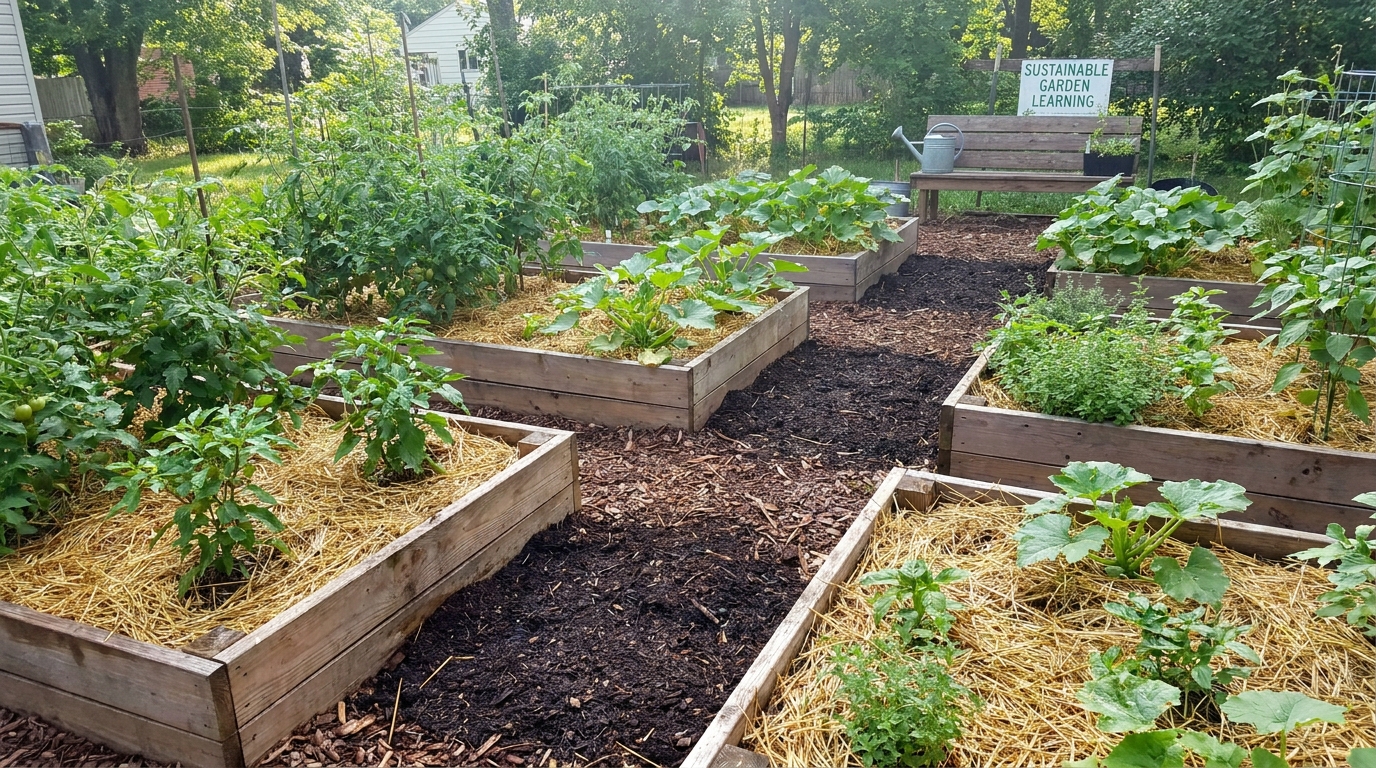
Vegetable beds benefit from mulch in slightly different ways because annual crops grow quickly, need regular access to nutrients, and are often watered more frequently than ornamental beds. Straw, shredded leaves, and compost are common choices. Straw is especially useful around tomatoes, peppers, squash, and strawberries because it keeps fruit cleaner and reduces soil splash. Compost works well in beds where you want both moisture retention and surface fertility.
For direct-seeded crops, timing matters. It is often easiest to let seedlings emerge and establish first, then apply mulch around them. If mulch is spread too early or too heavily over recently seeded rows, it can interfere with germination or make tiny seedlings harder to monitor. Once plants are a few inches tall, a moderate mulch layer can dramatically reduce weeding and help maintain more even moisture.
Vegetable gardens are also one of the places where temporary nitrogen tie-up deserves attention. Fresh wood chips, sawdust, and some high-carbon mulches can draw nitrogen into the decomposition process near the soil surface. This does not always harm plants, especially if the material stays on top rather than mixed into the soil, but nutrient-hungry crops may benefit from compost, aged mulch, or a balanced fertility plan instead of a very fresh woody layer directly over root zones.
Mulch for Perennial Beds
Perennial borders do well with mulches that are easy to tuck around established plants without smothering crowns. Shredded bark, leaf mulch, and fine wood chips are all workable options. These materials help control weeds between emerging spring growth and make the bed easier to maintain during summer. They also give beneficial soil organisms a more buffered surface environment.
In cold climates, mulch can be particularly useful around perennials heading into winter. A stable layer helps reduce rapid soil temperature swings that can push roots and crowns through repeated freeze and thaw cycles. The goal is not to bury the plants deeply, but to provide a protective, even blanket over the soil surface once temperatures have settled.
Some perennial beds also benefit from a seasonal approach. Gardeners may topdress with compost in spring and use leaf mulch or bark to hold that moisture and organic matter in place through summer. By autumn, some of that material will already be integrating into the upper soil layer. This is a gentle, practical way to build soil over time without intensive digging.
Mulch for Raised Beds and Containers
Raised beds and containers dry out faster than in-ground beds, so mulch can be surprisingly valuable in small spaces. A light layer of straw, shredded leaves, compost, or fine bark can reduce evaporation and help keep watering more consistent. In raised beds used for vegetables, this often translates directly into less stress during heat waves and fewer dramatic swings between dry and wet soil.
Containers require a little more restraint because their soil volume is limited. Too thick a mulch layer can trap too much moisture around crowns or make small pots look crowded. Still, even a modest surface covering can help reduce crusting and moisture loss. In warm, exposed locations, that small adjustment can have a meaningful effect on plant health.
How to Apply Mulch Correctly
Application technique is just as important as choosing the right material. Many mulch problems come from good intentions paired with too much depth or poor placement. A well-applied mulch layer looks natural, leaves room for stems and trunks to breathe, and covers the soil evenly without compacting it.
Before applying mulch, remove existing weeds and water the soil if it is dry. Starting with a clean, moist surface gives the mulch the best chance to suppress future weeds and conserve existing soil moisture. If weeds are left in place, especially perennial weeds, they often grow right through the new layer. Mulch is a suppressive tool, not a cure for established root systems.
The typical recommended depth is 2 to 4 inches. This range is enough to block light and slow evaporation without creating a dense, airless layer. Finer materials often need to stay closer to the lower end of that range, while coarser materials like wood chips can work well slightly deeper. More is not better. Excessive mulch can reduce airflow, keep the surface too wet, and encourage roots to stay in the mulch rather than growing properly into the soil.
Always keep mulch away from stems, crowns, and trunks. Around trees and shrubs, leave a visible mulch-free ring so the root flare remains exposed. Around perennials and vegetables, avoid pressing material directly against the stems. Plants need air circulation at their base, and bark or stem tissue should not sit in constant moisture.
Spread mulch evenly rather than creating hills and dips. Uneven mulch can lead to dry spots in one area and soggy pockets in another. If you are applying mulch in a large bed, it often helps to place small piles first and then rake them out into a consistent layer. This makes depth easier to control and reduces the temptation to over-apply near edges or around individual plants.
Step-by-Step Mulching Process
-
Clear the area of annual weeds, debris, and any problem growth that would push through the new layer. If needed, water the soil first so you are sealing in moisture rather than covering a dry surface.
-
Choose a mulch type that suits the plants and your main goal, whether that is soil building, weed suppression, moisture retention, or winter buffering.
-
Spread the mulch in a layer about 2 to 4 inches deep, adjusting slightly for finer or coarser materials. Check depth by hand rather than guessing from appearance.
-
Pull mulch back from stems, crowns, and trunks. Keep the base of trees and shrubs clear so the root flare is visible and bark stays dry.
-
Water lightly after application if the mulch is very dry or if you want to settle loose material in place. Then monitor the bed over the next few weeks and touch up any thin spots.
Common Mulching Mistakes to Avoid
The most common mistake is over-mulching. Thick layers may seem like extra insurance against weeds, but they can create a host of problems. Oxygen exchange at the soil surface can decrease, excess moisture can collect around stems, and roots may start growing into the mulch layer instead of establishing well in the soil below. If a bed already has several years of undecomposed mulch on top, adding yet another layer without checking the total depth can quietly worsen the issue.
Another mistake is assuming any mulch is fine anywhere. Fresh sawdust around heavy-feeding vegetables, dark rock around heat-sensitive plants, or seeded hay in a clean garden bed can all create frustration that could have been avoided with a better match. Material matters. So does texture, age, and how quickly the mulch breaks down in your climate.
Using landscape fabric as a universal fix is another frequent disappointment. Fabric may seem neat at first, but as organic debris accumulates on top, weeds often root into that layer. Meanwhile, the soil underneath is less accessible for amendment and biological improvement. For gardeners interested in healthier soil over time, fabric is rarely the most flexible long-term strategy.
A final mistake is treating mulch as permanent. Organic mulches naturally decompose, settle, and blend into the soil surface. That is part of their value. Instead of reapplying huge amounts every year, it is usually better to inspect beds seasonally and refresh only as needed to maintain the desired depth and coverage.
Seasonal Mulch Care Through the Year
Mulch is not a one-time task. It performs best when checked and adjusted as the seasons change. Spring is a good time to inspect winter beds, pull mulch back from any crowns that need extra airflow, and top up thin areas after the soil begins warming. In vegetable gardens, spring mulching often happens after seedlings are established or after transplants go in.
Summer is when mulch often proves its value most clearly. During heat and drought, watch how evenly the bed stays moist and whether weeds are emerging through thin spots. If irrigation is needed, mulch can help that water last longer in the root zone. It is also worth checking that mulch has not drifted against plant stems after heavy rain or watering.
Autumn brings one of the best opportunities to use seasonal materials, especially shredded leaves. Instead of bagging them away, many gardeners can recycle them back into the landscape as a soil-building mulch. Fall is also a smart time to mulch newly planted trees, shrubs, and perennials so roots are buffered going into winter. In colder regions, this can help reduce damage from rapid temperature shifts.
Winter mulch care is usually minimal, but this is when placement matters most around woody plants. Snow, wind, and freeze thaw cycles can shift material around the base of trunks. A quick check during a mild spell can prevent wet mulch from staying packed against bark for months. In exposed sites, mulch also helps hold the soil surface in place and reduces erosion from winter runoff.
Mulch as Part of a Sustainable Garden System
One of the most appealing things about mulch is how well it fits into a wider soil-health approach. Healthy soil is a living ecosystem that retains water, supports plant growth, and stores organic carbon. Mulch protects the soil surface, reduces erosion, and supports the gradual addition of organic matter where organic materials are used. That means mulching is not just about making beds easier to maintain this month. It is about steadily improving how the garden functions over time.
In water-wise landscapes, mulch reduces evaporation and lowers irrigation demand. In erosion-prone areas, it softens the impact of rain and helps stabilize the soil. In mixed home gardens, it can reduce the amount of fuel, water, plastic, and labor that would otherwise go into repetitive maintenance. These benefits are modest individually, but together they create a garden that is more resilient and less resource-intensive.
There is also a practical elegance to using local and recycled materials where appropriate. Arborist wood chips, shredded autumn leaves, and grass clippings used carefully can all become useful resources rather than waste streams. This kind of closed-loop thinking is often what makes sustainable gardening feel achievable. The goal is not perfection. It is choosing methods that improve the garden a little more each season while reducing unnecessary inputs.
Which Mulch Should You Choose?
If you want one simple rule, choose an organic mulch for most planted areas where soil improvement matters. Wood chips and bark are reliable around trees, shrubs, and ornamental beds. Straw and compost are especially useful in vegetable gardens. Shredded leaves are versatile, inexpensive, and excellent for building soil in many parts of the landscape. Inorganic mulches can have a place, but they are best reserved for situations where durability or design is more important than feeding the soil.
The second rule is to apply mulch with restraint and intention. A consistent layer of 2 to 4 inches is usually enough. Keep it off trunks and stems, refresh it when needed, and do not confuse thickness with effectiveness. Good mulching is less about quantity and more about balance.
When done well, mulch becomes one of the most efficient habits in the garden. It protects the soil, supports healthier root systems, and saves time on watering and weeding. That is why it remains such an essential practice for eco-friendly gardening. It helps the garden care for itself a little better, which is often the most sustainable result of all.
Final Takeaway
Choosing and applying mulch well is one of the clearest examples of a small decision producing long-lasting results. It improves the soil environment, reduces maintenance pressure, and supports a calmer, more resilient garden through heat, drought, rain, and winter stress. Whether you are caring for a few containers, a vegetable patch, or a full landscape bed, mulch can help you protect what is hardest to replace in a garden: healthy, living soil.
If you are just starting, begin with one bed and observe the difference. Notice how the soil feels after a warm week, how many fewer weeds emerge, and how much less often you need to water. In many gardens, that practical proof is what makes mulch go from optional to essential. It is a simple layer, but it does important work.


No Comment! Be the first one.