


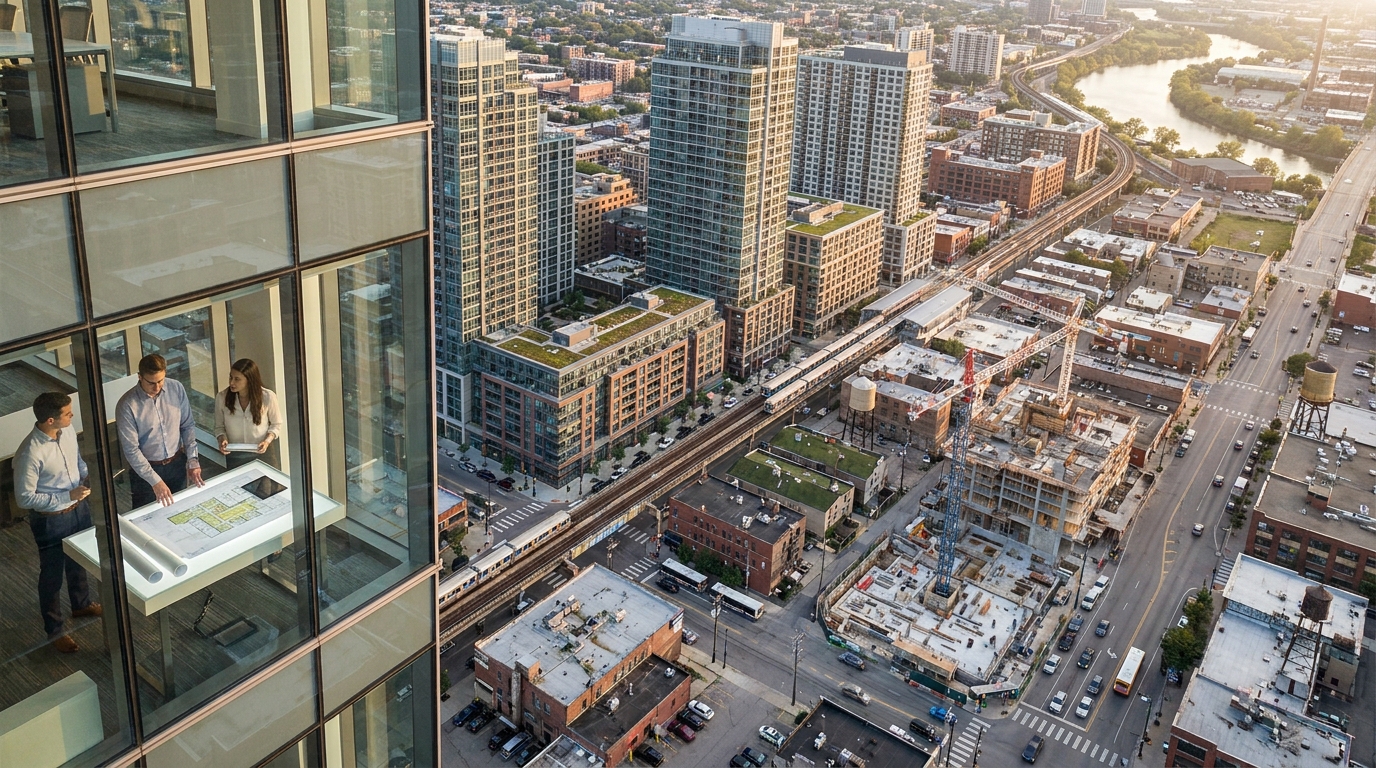
Walkable communities are often described in simple terms, but their value runs much deeper than the idea of being able to stroll to a cafe or take an evening walk around the block. At their best, they are places where daily life feels more connected, more convenient, and less dependent on constant driving. Homes, shops, schools, parks, services, and transit are close enough and linked well enough that walking becomes a practical part of everyday routines rather than an occasional extra. For many people, that shift can improve not only how they move, but also how they experience their neighborhood.
Table Of Content
- What a Walkable Community Actually Means
- Why Walkability Matters for Sustainable Living
- The Everyday Features That Make a Community Walkable
- Connected Streets and Direct Routes
- Safe Crossings and Comfortable Streets
- Nearby Destinations and Mixed Land Use
- Transit Access That Complements Walking
- Design That Works for Different Ages and Abilities
- Health Benefits That Fit Into Real Life
- Lower Costs and Greater Daily Convenience
- How Walkability Supports Local Economies and Stronger Main Streets
- Community Connection, Belonging, and Safety
- Common Misconceptions About Walkable Communities
- How to Recognize a Walkable Neighborhood in Practice
- Why Walkability Is Becoming More Important in Canada and North America
- A Practical Way to Think About the Future of Neighborhood Design
From a sustainability perspective, walkability matters because it changes the pattern of daily living. When a community makes it easy to walk to a grocery store, a bus stop, a library, or a child care centre, it reduces the need for short car trips that add congestion, fuel costs, and emissions. The result is not an abstract planning ideal. It is a practical improvement that can support climate goals while making ordinary tasks simpler and often less expensive.
Public health guidance in Canada highlights that people are generally more physically active when they live in neighborhoods with higher residential density, mixed land use, accessible transit, and streets that are safe and easy to use. That is an important distinction. Walkability is not only about recreation. It is about creating environments where movement is built naturally into daily life. Instead of needing to schedule every bit of activity, people can accumulate it through school runs, errands, transit connections, and visits to local destinations.
This article offers a practical look at what makes a community walkable and why that matters for sustainable living. Rather than treating walkability as a niche urban design concept, it helps to see it as part of a broader conversation about affordability, resilience, health, and quality of life. Whether you live in a city, a suburb, or a smaller town, understanding walkability can make it easier to recognize the features that support a better daily experience.
A walkable community is a neighborhood where homes, shops, schools, transit, and parks sit close enough together, and are connected well enough, that walking becomes a practical way to meet daily needs rather than just a recreational option. This kind of design supports sustainable living in several concrete ways. It reduces short car trips, which lowers fuel use, traffic congestion, and greenhouse gas emissions. It builds physical activity into ordinary routines, such as school runs, errands, and transit connections, instead of requiring separate exercise time. It lowers household transportation costs by cutting spending on gas, parking, and vehicle upkeep. And it strengthens local business districts by putting more people on foot past neighborhood shops. Walkability also tends to build stronger social connections, since residents who walk regularly get to know their neighbors and their surroundings more than those who mostly drive. Together, these effects make walkable communities one of the most practical, everyday expressions of sustainable living.
What a Walkable Community Actually Means
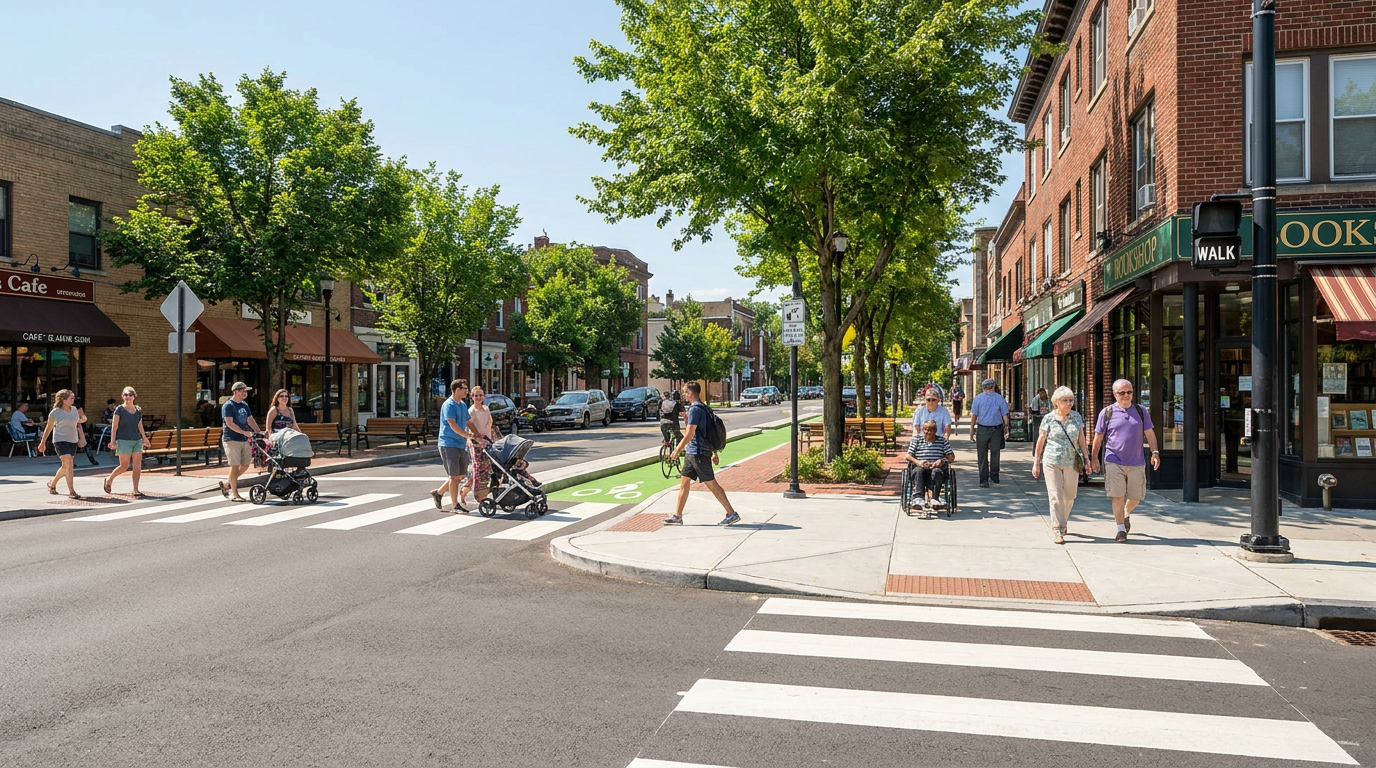
A walkable community is not simply a place with sidewalks. Sidewalks matter, of course, but they are only one part of the full experience. A truly walkable area allows people to reach common destinations comfortably and safely on foot. That means the routes need to be direct, the crossings need to feel secure, the streets need to work for different ages and abilities, and the destinations need to be close enough to make walking realistic.
Canadian public health guidance describes walkable, active transportation supportive neighborhoods as those with higher residential density, mixed land use, convenient transit access, and streets that are safe and easy to use. Each of those elements plays a different role. Higher density can place more homes within reach of amenities. Mixed land use helps ensure that shops, services, schools, and housing are not isolated from one another. Transit access extends the range of car free mobility. Safe street design makes the experience comfortable enough that people will actually choose to walk.
It is also useful to understand what walkability does not mean. It does not mean eliminating cars entirely, and it does not mean every neighborhood needs to look like a dense downtown core. Smaller towns and suburban districts can be walkable too if their daily destinations are connected by safe, direct, pleasant routes. In the same way, higher density alone does not guarantee walkability. If the street network is disconnected, crossings are unsafe, or destinations remain far apart, density by itself will not create a neighborhood that works on foot.
Walkability is best understood as a quality of everyday access. It asks a straightforward question: can people reasonably meet many of their daily needs without getting into a car every time? When the answer is yes, a neighborhood tends to feel more adaptable, more inclusive, and more resilient over time.
Why Walkability Matters for Sustainable Living
Sustainable living is often discussed in terms of energy systems, building materials, and home technology, all of which are important. Yet the structure of the neighborhood around a home can shape environmental impact just as powerfully. A highly efficient house located in a place where every errand requires a drive may still come with a substantial transportation footprint. By contrast, a well connected neighborhood can quietly reduce emissions every day by lowering the number and length of car trips.
The U.S. Environmental Protection Agency has consistently linked smart growth and compact, walkable development with lower air pollution and reduced greenhouse gas emissions. It notes that infill and compact development can help more people meet daily needs with less driving, and it cites modeled findings suggesting compact development could reduce carbon dioxide emissions by 7% to 10% in 2050. That kind of reduction is meaningful because it comes from the design of ordinary places rather than from a single technological breakthrough.
Canada’s public health guidance similarly notes that active transportation can reduce road congestion, save money on gas and parking, and contribute to lower greenhouse gas emissions. This is one reason walkability has become more central to climate planning in both Canada and the United States. It offers a practical pathway to lower impact living without asking people to overhaul every aspect of their routine. If a neighborhood is designed well, sustainable choices become easier by default.
There is also a resilience dimension to this conversation. Communities that offer multiple ways to get around are often better prepared for changing fuel prices, transportation disruptions, and the evolving needs of residents across different life stages. A teenager, an older adult, a family with one car, or a household trying to cut costs all benefit when walking is a real option. In that sense, walkability is not only about carbon. It is about building places that remain useful and supportive as circumstances change.
Walkability is sustainability made visible in everyday life. It appears in the short trip that does not require a car, the safe crossing that invites a child to walk to school, and the nearby transit stop that expands access without adding another parking lot.
The Everyday Features That Make a Community Walkable
Many people can recognize a pleasant street when they see one, but it helps to break walkability into specific features. This is especially true for homebuyers, renters, planners, and community advocates who want to evaluate a neighborhood in practical terms. The most useful approach is to look beyond appearance and focus on function. A beautiful street can still be difficult to navigate if crossings are long, destinations are far apart, or sidewalks suddenly end.
Connected Streets and Direct Routes
One of the most important ingredients in walkability is connectivity. A neighborhood with small blocks and multiple route choices usually feels easier to move through than one with long dead ends and winding roads that funnel everyone onto a few large arterials. Direct routes save time and reduce frustration. They also make walking feel like a realistic option for errands rather than a scenic detour.
Connected blocks can also improve access to parks, schools, and transit. When people do not have to take a long indirect route to reach a destination that is physically close, they are more likely to walk. This may seem like a subtle planning detail, but over time it has a major effect on behavior and convenience.
Safe Crossings and Comfortable Streets
Crossing the street is often where walkability succeeds or fails. Marked crosswalks, traffic calming, shorter crossing distances, curb ramps, visible signals, and slower vehicle speeds all contribute to a more comfortable experience. This matters for everyone, but especially for children, older adults, and people using mobility aids. A neighborhood can have many destinations nearby, yet still discourage walking if crossing a main road feels stressful or unsafe.
Comfort also includes details that are easy to overlook. Shade trees, benches, lighting, weather protection, and well maintained sidewalks all make a difference. A route that feels inviting in summer heat, rain, or winter conditions is more likely to be used regularly. Walkability is practical, but it is also sensory. People respond to places that feel human in scale and easy to navigate.
Nearby Destinations and Mixed Land Use
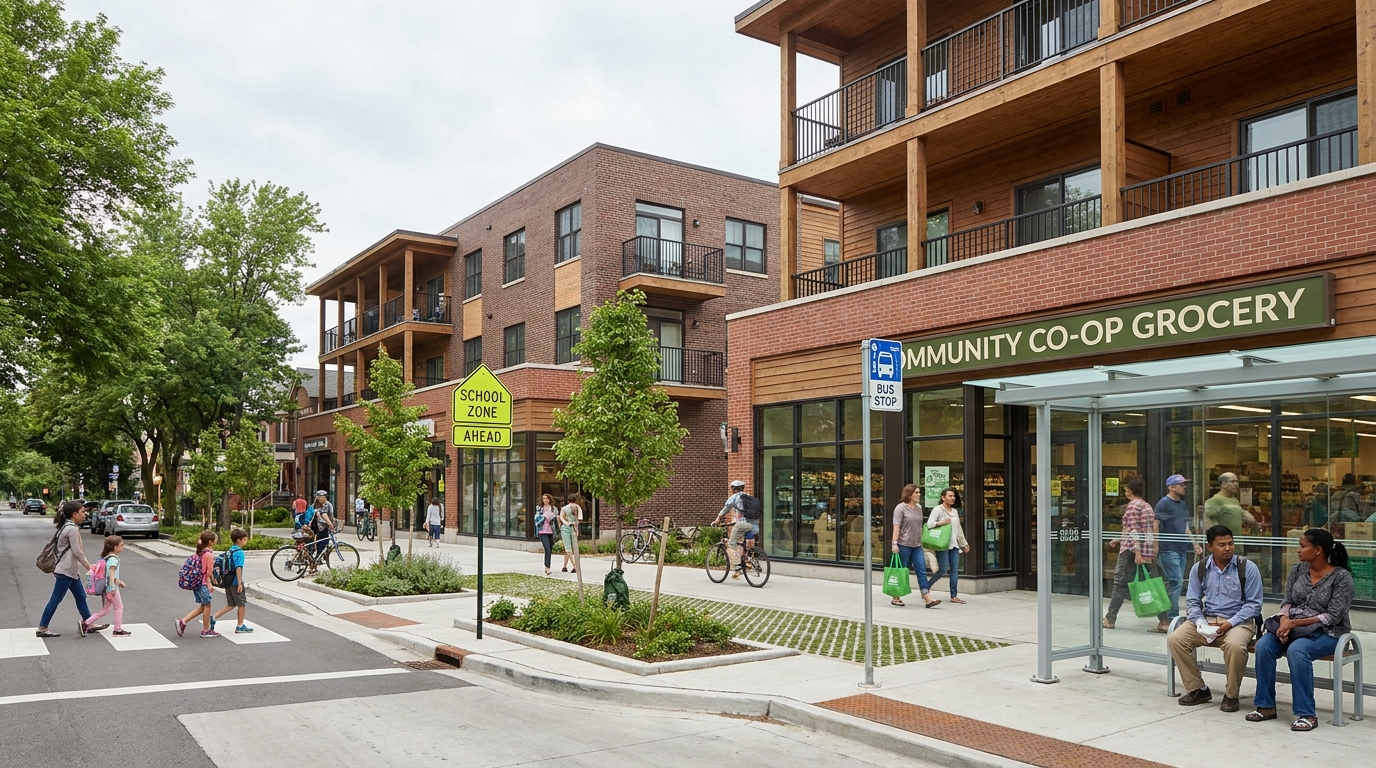
Proximity is essential. Walkability depends on having useful destinations close at hand, including grocery stores, pharmacies, schools, cafes, parks, clinics, libraries, and community services. This is where mixed land use becomes so important. If housing is separated too strictly from shops, workspaces, and public amenities, most trips will naturally become car trips.
EPA guidance notes that building housing near places like libraries, schools, transit, offices, and shops can help create neighborhoods that are safer, more walkable, and less expensive for commuting. That idea is simple, but powerful. When key destinations are woven into the fabric of a neighborhood, daily routines become more efficient and less resource intensive.
Transit Access That Complements Walking
Walkability and transit work best together. Walking extends the usefulness of transit by helping people reach stops safely and comfortably, while transit extends the practical range of walking by connecting residents to jobs, schools, and services beyond the immediate neighborhood. A bus stop or train station is much more valuable when the route to it feels direct, visible, and secure.
This combined system is especially important in larger urban regions, where not every destination can be reached on foot alone. Statistics Canada reported that in May 2025, 18.2% of Canadian commuters mainly used public transit or active transportation, with much higher shares in Toronto, Montréal, and Vancouver. That tells us two things at once: many people are already using alternatives to driving, and the strongest results tend to appear where transit and walkability reinforce each other.
Design That Works for Different Ages and Abilities
A walkable community should be usable by more than one kind of resident. Parents pushing strollers, children walking to school, older adults who prefer shorter and calmer routes, and people using wheelchairs or other mobility aids all need streets and public spaces that respect different ways of moving. Smooth surfaces, curb cuts, resting places, safe crossing times, and intuitive layouts are not extras. They are part of what makes walking a genuine option.
When design is inclusive, the whole community benefits. A curb ramp helps a wheelchair user, but it also helps someone with a stroller or grocery cart. Better lighting can support older adults, but it also makes evening travel more comfortable for everyone. This broader lens is one reason walkability is increasingly discussed alongside health equity and community livability rather than as a narrow design trend.
Health Benefits That Fit Into Real Life
One of the strongest arguments for walkable communities is that they support health in a way that feels ordinary rather than demanding. Not everyone has time for long workouts, and not every household can build a daily routine around structured exercise. But many people can incorporate more movement into the rhythm of everyday life if the environment makes that possible. Walking to a bus stop, school, store, or nearby park adds up over time.
Canadian government sources emphasize that people living in neighborhoods with higher density, mixed land use, convenient transit, and safe streets are more physically active. A 2025 Canada.ca review reported that 61.0% of youth and 41.7% of adults engaged in some form of active transportation to get to destinations. Those numbers suggest that active transportation is already a meaningful part of daily life for a significant share of the population. The design of communities can strengthen that pattern or make it harder to sustain.
Health benefits also extend beyond physical activity alone. Walking through a neighborhood can support mental well being by creating routine contact with daylight, fresh air, green space, and informal social interaction. These are modest experiences individually, but they contribute to a sense of grounding and belonging. In many communities, the ability to walk comfortably is part of what makes a place feel less isolating and more humane.
There is also a long term public health advantage in designing environments that support movement for more people. The built environment can influence health at a population level, which means walkability is relevant not only to those who already enjoy walking, but also to people who might become more active if the barriers were lower. A neighborhood that quietly encourages small daily movement can be one of the most practical health supports a community provides.
Lower Costs and Greater Daily Convenience
Walkable communities are sometimes framed as a lifestyle preference, but they also have clear economic value at the household level. Transportation is a major expense for many families, especially where driving is required for nearly every task. Fuel, insurance, maintenance, parking, and vehicle ownership costs can place steady pressure on monthly budgets. If a household can replace even some of those short car trips with walking or transit, the savings can be meaningful over time.
Canada’s public health guidance directly notes that active transportation helps save money on gas and parking while also reducing congestion and emissions. This practical financial benefit is often underappreciated. The ability to walk to school, pick up a few groceries nearby, or reach transit without driving can lower costs in a way that feels almost invisible because it is woven into routine decisions.
Convenience matters just as much as cost. In a walkable neighborhood, quick errands do not always require planning around traffic, parking, or long travel times. That can make daily life feel lighter and more flexible. For older adults who may prefer not to drive as often, for young people gaining independence, or for households sharing one vehicle, this flexibility is particularly valuable.
EPA guidance also highlights that housing located near schools, libraries, transit, offices, and shops can create neighborhoods that are safer and less expensive for commuting. That is one reason walkability is increasingly connected to affordability conversations. While home prices in desirable walkable areas can be high, the broader cost picture includes transportation, time, and access. A neighborhood that reduces car dependence can improve affordability in ways that are easy to overlook if housing is considered in isolation.
How Walkability Supports Local Economies and Stronger Main Streets
The economic case for walkable communities extends beyond individual households. Streets designed for people can also support local businesses by increasing visibility, foot traffic, and the amount of time people spend in a district. A person on foot is more likely to notice a bakery, bookstore, or cafe than someone passing quickly in a car. Over time, that pattern can strengthen neighborhood retail streets and encourage a more diverse local economy.
EPA notes that walkable retail districts can help businesses attract customers and increase sales, and that compact, walkable, mixed use development is often associated with higher property values. This does not mean every walkable place becomes expensive or overly commercial. It means that a neighborhood where people can comfortably circulate on foot often creates conditions where small businesses have a better chance to thrive.
There is also a social and economic multiplier effect when more daily needs can be met locally. Residents are more likely to support nearby businesses when they are part of regular walking routes. That can keep money circulating closer to home, strengthen neighborhood identity, and make local streets feel more active and cared for. In this way, walkability can help sustain not only environmental goals, but also the economic texture of a community.
Thoughtful planning is important here. Strong local business districts often rely on a balance of housing, public space, street design, and affordability for commercial tenants. Walkability alone does not guarantee economic success, but it creates a foundation that supports it by making local destinations easier to reach and more pleasant to visit.
Community Connection, Belonging, and Safety
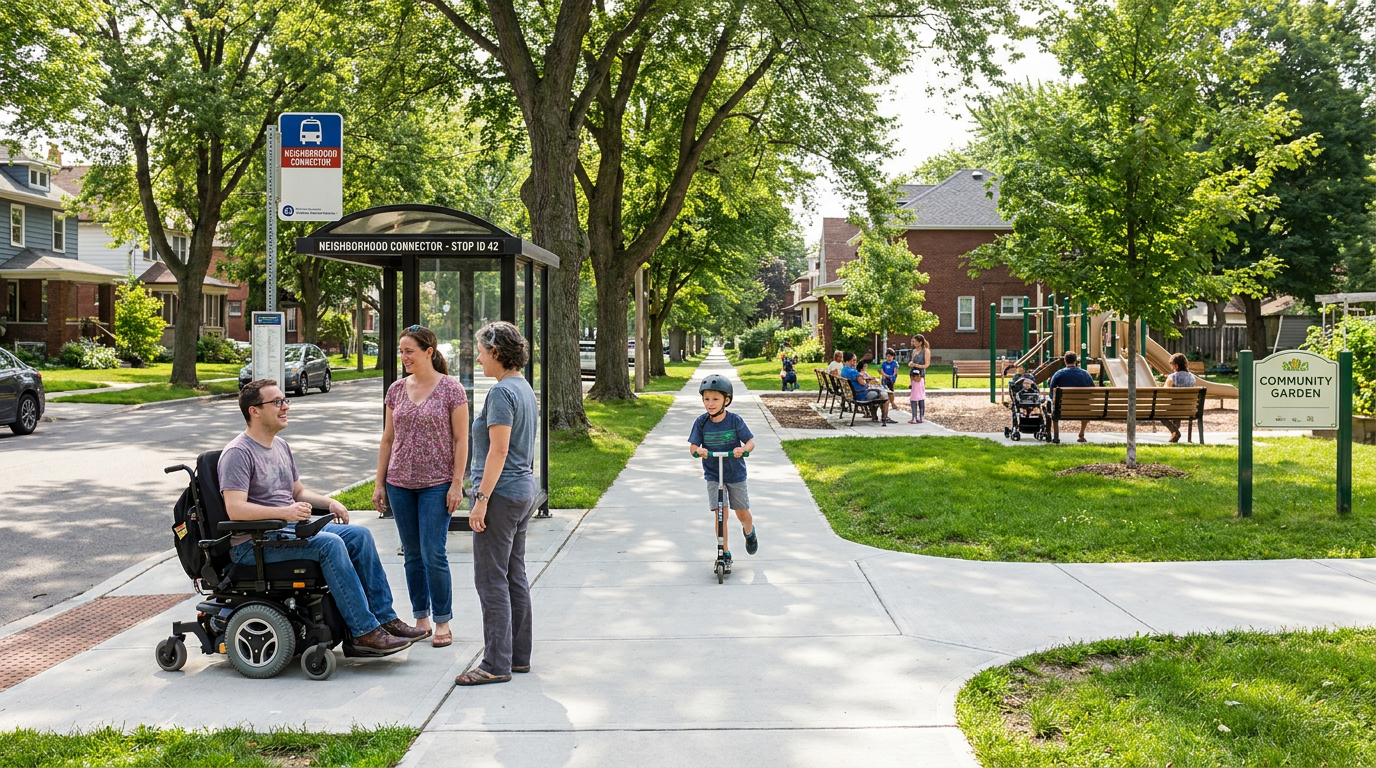
One of the quieter strengths of walkable neighborhoods is the way they increase everyday contact between residents and the places they share. When people walk rather than drive for at least some trips, they tend to encounter neighbors, recognize local shop owners, notice seasonal changes, and build familiarity with their surroundings. These small interactions may seem incidental, yet they are part of what gives a community social depth.
Canadian public health resources connect active transportation with stronger social connections, community belonging, and health equity. That connection is significant because sustainable living is not only about reducing impacts. It is also about creating places where people feel supported, included, and able to participate. A neighborhood that encourages people to be present in public space can help build trust and reduce isolation.
Walkability can also support a sense of safety in a broader way. Streets with regular pedestrian activity often feel more observed and more cared for. Local shops, visible public spaces, and steady movement throughout the day can contribute to a stronger sense of shared presence. Physical safety still depends on design details like crossings and traffic speeds, but social vitality matters too.
This becomes especially important when planning for children, seniors, and residents with limited mobility or access to a vehicle. A community that is easy to move through on foot can offer more independence and dignity. Being able to reach a park, a corner store, a transit stop, or a friend’s home without relying completely on a car or another driver expands daily freedom in ways that are both practical and deeply human.
Common Misconceptions About Walkable Communities
Because walkability is often associated with dense urban neighborhoods, it is sometimes misunderstood. One common misconception is that walkable communities are only possible in major cities. In reality, many smaller towns and suburban areas can become more walkable by improving street connectivity, adding safer crossings, clustering daily services, and strengthening access to transit or local main streets. The goal is not to recreate a downtown everywhere. It is to make short everyday trips easier and safer without always requiring a car.
Another misconception is that sidewalks alone are enough. Sidewalks are essential, but walkability also depends on land use, route directness, block size, traffic speed, destination proximity, accessibility, shade, lighting, and comfort. A sidewalk next to a high speed road leading nowhere useful does little to change daily behavior. A network that links homes to schools, parks, shops, and transit is what turns walking into a functional choice.
Some people also assume that walkability means rejecting cars altogether. Most walkable communities still include driving, deliveries, and parking. The difference is that they reduce dependence on cars by giving people more options. This flexibility can be especially valuable during different life stages or economic circumstances. Choice is the point, not elimination.
Finally, walkability is sometimes treated as a personal preference rather than a planning issue with measurable outcomes. Yet the evidence connects walkable design to health, emissions, transportation costs, congestion, and economic activity. In that sense, it is not simply about atmosphere. It is about how communities function and whom they serve well over time.
How to Recognize a Walkable Neighborhood in Practice
If you are evaluating a place to live, invest, or support, it helps to look at walkability through a practical lens. Instead of asking whether a neighborhood feels trendy or urban, ask what everyday life would actually require. Could you buy a few groceries without driving? Is there a safe route to a park or school? Can you reach a transit stop comfortably? Do the streets feel manageable for children, seniors, or someone using a mobility aid?
Here are some useful signs that a neighborhood is genuinely walkable:
- Daily destinations are nearby such as shops, schools, parks, services, and community spaces.
- Sidewalks are continuous and well maintained rather than fragmented or obstructed.
- Crossings feel safe and visible with markings, signals, curb ramps, and traffic speeds that support pedestrians.
- Routes are direct with connected blocks and minimal detours.
- Transit is accessible and easy to reach on foot.
- Streets feel comfortable because of shade, lighting, benches, trees, and human scale design.
- The area works for many users including children, older adults, and people with disabilities.
It can also help to test a neighborhood at different times of day. A place that seems pleasant on a quiet afternoon may feel very different during a morning school rush or after dark. Walkability is not only visual. It is experiential. The best assessments come from noticing how the place actually functions for people on foot.
Why Walkability Is Becoming More Important in Canada and North America
Across Canada and the United States, walkability is becoming part of larger conversations about climate action, housing, affordability, and health equity. This shift reflects a growing recognition that transportation and land use are deeply connected. It is difficult to reduce emissions or improve daily mobility if communities continue to spread out in ways that make every task car dependent.
Recent Canadian public health and Statistics Canada materials have added momentum to this discussion by highlighting both active transportation participation and commuting patterns. The fact that a notable share of commuters already rely mainly on public transit or active transportation, especially in cities such as Toronto, Montréal, and Vancouver, shows that alternatives to driving are not theoretical. They are already part of how many communities function. The challenge is to expand and improve that access more broadly.
At the same time, ideas such as complete streets, transit oriented development, infill, and 15 minute neighborhoods are gaining attention because they offer a framework for practical change. These approaches vary by region and political context, but they share a common principle: daily needs should be easier to reach, and streets should work safely for more than one mode of travel. Walkability fits naturally within this broader move toward healthier built environments.
Importantly, this does not need to be framed as an all or nothing transition. Many communities can make meaningful progress through incremental improvements. A safer crossing near a school, a missing sidewalk connection, better tree cover, or mixed use redevelopment near transit can all strengthen walkability over time. Sustainable change is often cumulative, and neighborhoods rarely transform through a single intervention alone.
A Practical Way to Think About the Future of Neighborhood Design
Walkable communities are sometimes presented as a trend, but they are better understood as a practical response to familiar challenges. They help reduce car dependence without demanding perfection. They support public health without making exercise feel like one more task. They can lower transportation costs, strengthen local business districts, and create more socially connected neighborhoods. Most importantly, they make sustainability feel tangible in ordinary life.
For residents, the value of walkability often appears in simple moments. It is the ability to walk a child to school, pick up dinner ingredients nearby, catch transit without stress, or enjoy a safer, calmer street. For planners and decision makers, the value lies in creating communities that are more resilient, equitable, and adaptable. These are not competing priorities. In many cases, they reinforce one another.
If sustainable living is about making long term choices that support both people and the planet, walkability deserves a central place in the conversation. It influences how much we drive, how we spend time, how neighborhoods function, and how inclusive public space can become. It is not only about sidewalks, and it is not only about cities. It is about designing communities around everyday human needs with clarity and care.
That is why walkable communities continue to matter. They offer a version of sustainability that feels grounded, achievable, and deeply relevant to daily life. In a time when many housing and climate conversations can become abstract or polarized, that practicality is part of their greatest strength.

No Comment! Be the first one.