


Transform Your Home: Easy DIY Home Automation Projects You Can Start Today
There is something deeply satisfying about a home that seems to understand your routines. The lights feel softer when evening comes, the coffee corner glows gently in the morning, and the temperature feels right when you walk through the door. For many people, that idea of a smart home can sound expensive or intimidating, as if it belongs only to brand-new houses or big renovation budgets. In reality, some of the most meaningful home automation upgrades are also the simplest ones to start with.
Table Of Content
- Why starting small is the smartest way to automate your home
- Before you buy anything, think about your daily friction points
- Project one: Use smart plugs to automate lamps, coffee stations, and everyday appliances
- Project two: Add motion-activated lighting for safer, easier evenings
- Project three: Install a smart thermostat for comfort and energy awareness
- Project four: Place leak sensors where peace of mind matters most
- Project five: Use door and window sensors to create simple awareness routines
- Project six: Build your first routines with voice control or app automations
- How to keep your smart home budget friendly and renter friendly
- Smart home privacy and security basics every beginner should know
- What a well-designed beginner smart home can look like
- Final thoughts: start with comfort, then let your smart home grow naturally
If you are budget conscious, renting, or simply not ready for a whole-home overhaul, the best approach is to think small. Home automation works beautifully when it grows around your real life instead of trying to replace everything at once. A few thoughtful projects can make your home feel more comfortable, more convenient, and more responsive to the way you live every day. You do not need to open walls or call in a crew to begin.
This guide focuses on manageable DIY home automation projects that offer high impact without a high barrier to entry. These are the kinds of upgrades that can be done in an afternoon and enjoyed immediately, whether you live in a city apartment, a suburban family home, or a rental where permanent changes are limited. The goal is not to fill your space with gadgets. The goal is to create a home that feels easier to live in.
As the smart home market evolves, interoperability has become a major conversation. Terms like Matter and Thread are increasingly relevant because they point toward a future where compatible devices work together more smoothly across brands and platforms. That matters for beginners because it means your first small purchase today can have a better chance of fitting into a more connected home later. You do not have to master every technical detail, but it helps to choose products with flexibility in mind.
It also helps to keep expectations grounded. A smart home should support comfort and simplicity, not add digital clutter. A few well-chosen automations often do more for your daily life than a long list of devices that rarely get used. With that in mind, here is how to begin thoughtfully, affordably, and with plenty of room to grow.
The best smart homes are not built all at once. They are layered in through small choices that save time, reduce friction, and make home life feel calmer.
Why starting small is the smartest way to automate your home
One of the biggest misconceptions about home automation is that it only makes sense as a major project. People imagine rewiring, built-in panels, and systems that require professional installation. While those options certainly exist, they are not the only path, and for many households they are not the best starting point. Beginning with small, independent projects allows you to test what genuinely improves your life before investing more deeply.
This approach is especially valuable for renters and first-time smart home users. Plug-in devices, battery-powered sensors, app-based routines, and voice assistants can offer impressive convenience without permanent alterations. You can often install them in minutes, take them with you when you move, and build around them gradually. That kind of flexibility makes smart home living more accessible and less stressful.
There is also a financial advantage to going step by step. When you start with one room or one routine, you are more likely to notice what creates value for your household. Maybe it is not automated blinds or a whole-home security network at all. Maybe the true game changer is a lamp that turns on before sunrise, a hallway light that responds to motion at night, or a thermostat that keeps your home comfortable without constant adjustment.
Small projects are easier to maintain, too. Every connected product has some degree of upkeep, from firmware updates to battery changes to app settings. If you bring in too many devices at once, it can quickly feel overwhelming. A smaller setup is easier to learn and easier to keep secure, which matters more than many people realize.
Research around consumer smart-home behavior has shown that many people willingly accept some privacy and security tradeoffs for convenience. That is understandable, but it is a good reminder to be selective. The smartest beginning is one where comfort and ease are balanced with practical habits such as strong passwords, update awareness, and thoughtful device choices.
Before you buy anything, think about your daily friction points
The most successful DIY home automation projects usually begin with one simple question: what feels slightly annoying in your home right now? Smart devices are at their best when they remove recurring friction from daily routines. Instead of starting with a gadget, start with a moment. Maybe your bedroom feels too cold in the morning, maybe lights get left on, or maybe you worry about a leak under the kitchen sink when you are away.
Walk through your home and notice the moments that repeat. Are there lamps you always switch on at the same time? Does your entryway feel dark when you come home with bags in hand? Do you leave for work and wonder whether you remembered to turn something off? Those are all excellent openings for beginner-friendly automation.
It can help to think in terms of comfort, convenience, awareness, and peace of mind. Comfort includes temperature and lighting. Convenience includes routines and voice control. Awareness includes energy use and occupancy. Peace of mind includes sensors that alert you to leaks or open doors. Once you identify which category matters most to your household, choosing your first project becomes much easier.
Another practical step is to check your internet reliability and your preferred ecosystem. Some households are already comfortable using Google Home, Amazon Alexa, or Apple Home. Others want devices that also support Matter for broader compatibility. If a product can work locally or offline for at least some features, that is worth noting as well. Canadian consumer guidance specifically recommends checking whether a connected device works without internet, how long security updates will be available, and how your data is collected and protected.
That may sound like a lot to consider, but it becomes simple when you keep your focus narrow. You are not building the final version of your smart home today. You are choosing one or two thoughtful upgrades that fit your life right now.
Project one: Use smart plugs to automate lamps, coffee stations, and everyday appliances
If you want the easiest possible entry into home automation, start with smart plugs. They are affordable, renter friendly, and useful in almost every room. A smart plug fits into a regular outlet and lets you control whatever is plugged into it through an app, voice assistant, schedule, or routine. It is one of the simplest ways to make ordinary items feel smarter without replacing them.
Living room lamps are a perfect place to begin. Instead of coming home to a dark house, you can set a lamp to turn on just before sunset or at the time you usually arrive home. In the morning, a bedroom lamp can switch on gradually to create a softer wake-up experience. In a family room, a reading light can automatically shut off at bedtime so no one has to go back downstairs to check it.
Smart plugs also work beautifully in little lifestyle corners that shape the rhythm of the day. Think of a coffee station light, a wax warmer, a seasonal decoration display, or a fan in a warm bedroom. These are not dramatic upgrades, but they create a surprising sense of ease. They also make a home feel more curated and more responsive, which is often the real emotional appeal of smart living.
For people who are energy conscious, some smart plugs add energy monitoring, helping you see which devices draw more power than expected. That kind of awareness can be useful, especially because connected devices can add standby energy use over time. Natural Resources Canada notes that many connected products, including smart bulbs and thermostats, can draw power even when not actively used. This does not mean you should avoid them. It simply means efficient choices and sensible setup matter.
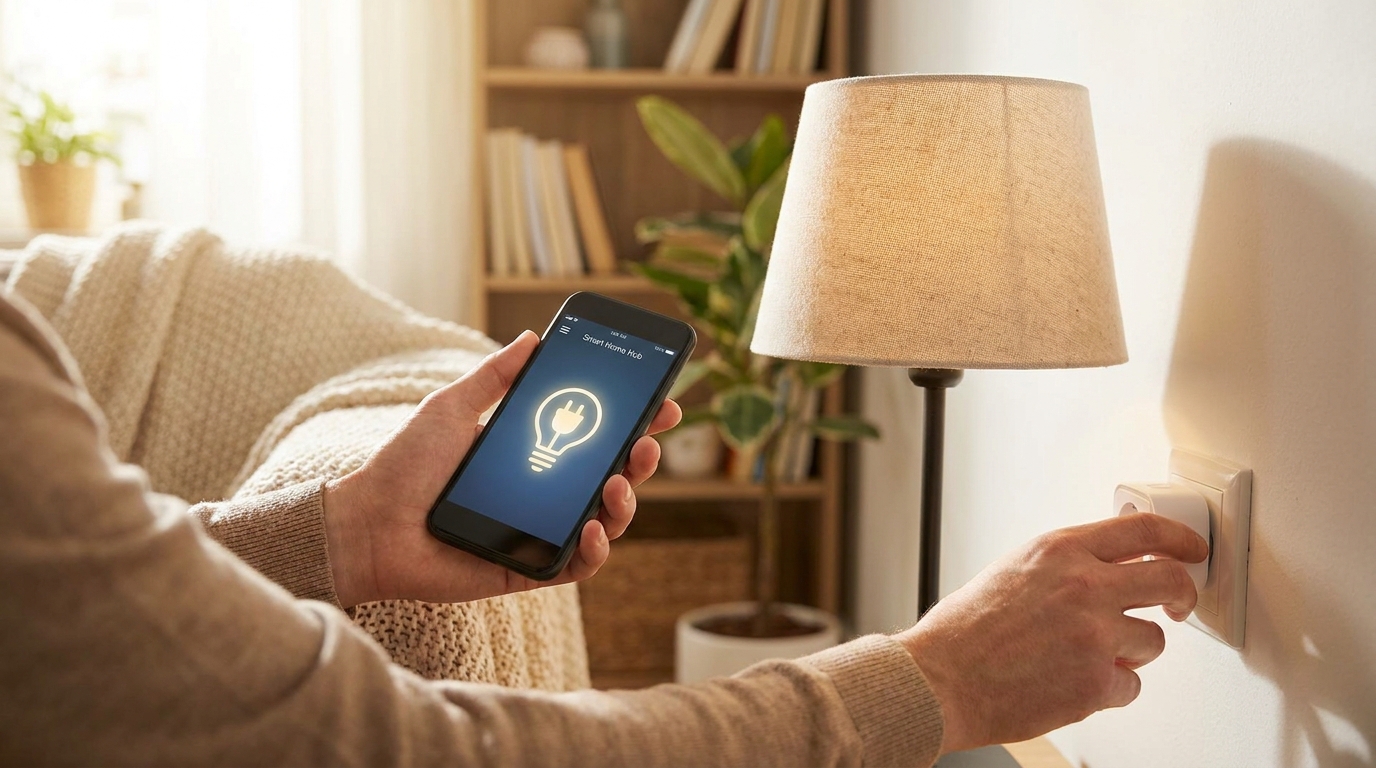
When shopping for smart plugs, look for models that fit your existing ecosystem, have a straightforward app, and are appropriately rated for the item you plan to control. Use them with lamps, small fans, and similar household items, but always follow the manufacturer guidance. The best first project is one you can set up quickly and enjoy right away, and smart plugs deliver exactly that kind of satisfaction.
Once you have one or two in place, you can build simple routines around them. A “good morning” routine might turn on a kitchen lamp and start a small appliance at a consistent time. An “evening wind-down” routine might turn off selected lights and switch on a bedside lamp. These are small gestures, but they make a home feel more intentional.
Project two: Add motion-activated lighting for safer, easier evenings
Motion-activated lighting is one of those upgrades that feels modest until you live with it. Then it quickly becomes hard to imagine going back. It solves an everyday problem in a very natural way, especially in hallways, bathrooms, closets, laundry areas, mudrooms, and stair landings. Instead of reaching for a switch in the dark, the light simply responds when needed.
This project is especially useful for families with children, older adults, and anyone who moves through the house at night. A softly lit hallway can help everyone navigate more comfortably without turning on harsh overhead lights. In a closet or pantry, motion lighting adds convenience and makes the space feel better designed. Near an entry door, it creates a welcoming effect that is both practical and inviting.
You can approach this in a few ways. Battery-powered motion sensor lights are often the easiest renter-friendly choice because they require no rewiring and can be mounted with removable adhesive. Smart bulbs paired with motion sensors offer more flexibility, especially if you want the light to behave differently at different times of day. For example, your hallway can glow gently at 20 percent brightness overnight but use full brightness in the early evening.
Another benefit of motion-based lighting is that it encourages lights to turn off when no one is around. That makes the home feel effortless and can support better energy habits. The point is not constant automation for its own sake. The point is to make the house work with your rhythms so you use less mental energy managing it.
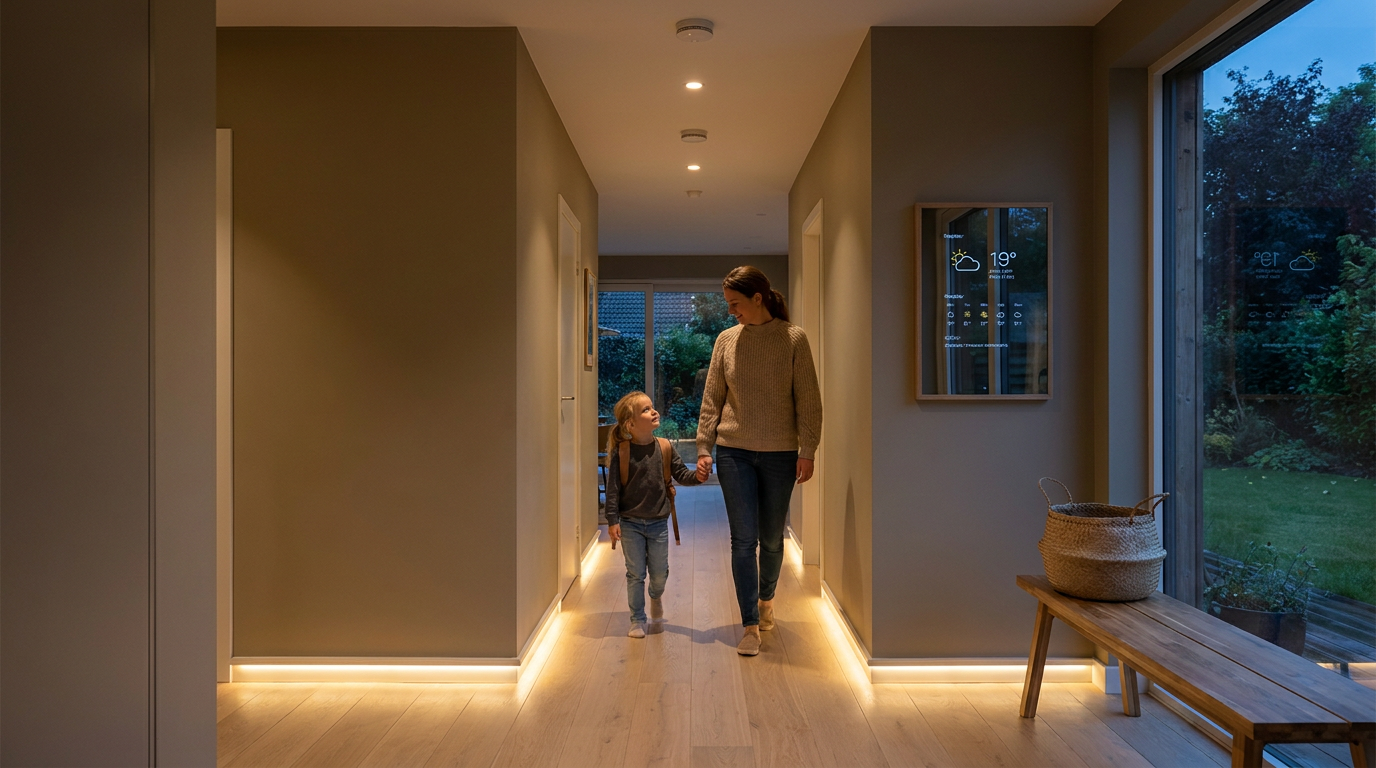
If you want this project to feel polished rather than gimmicky, pay attention to light quality. Choose warm bulbs for nighttime areas and think carefully about placement so motion detection feels natural. A well-placed light in a hallway or under a cabinet can add a quiet sense of luxury without calling attention to itself.
This is a lovely example of how smart home projects can support emotional comfort, not just technical convenience. Walking through a softly lit home at night feels calmer. It feels cared for. That subtle mood shift is often where smart living becomes truly worthwhile.
Project three: Install a smart thermostat for comfort and energy awareness
If there is one project that bridges comfort and long-term practicality, it is the smart thermostat. While setup can be slightly more involved than plugging in a device, many homeowners find it approachable as a DIY project, especially if the model is designed with guided installation and your HVAC system is compatible. For renters, this option depends on what changes are allowed, but some households can still use it with permission from a landlord.
The appeal is easy to understand. A smart thermostat helps the home feel comfortable when you need it and more efficient when you do not. Instead of manually adjusting temperatures throughout the day, you can create schedules, monitor settings from your phone, and often let the thermostat learn or adapt based on patterns. This is one of the clearest examples of technology supporting everyday ease rather than simply adding novelty.
ENERGY STAR says a certified smart thermostat can save about 8 percent of heating and cooling costs, roughly $50 per year on average, although the exact amount depends on your climate, occupancy, HVAC equipment, and habits. It is worth noting that ENERGY STAR certification for smart thermostats is based on real-world field data rather than only lab estimates, which gives those claims more credibility for general consumer guidance. In homes with significant heating or cooling use, the comfort and savings potential can be even more meaningful.
The lifestyle benefit is just as compelling as the efficiency side. Imagine waking up to a slightly warmer home in winter without touching the thermostat, or returning from a summer outing to a cooler interior that already feels settled and comfortable. You are not forcing yourself to remember another household task. The system is quietly supporting the atmosphere you want.
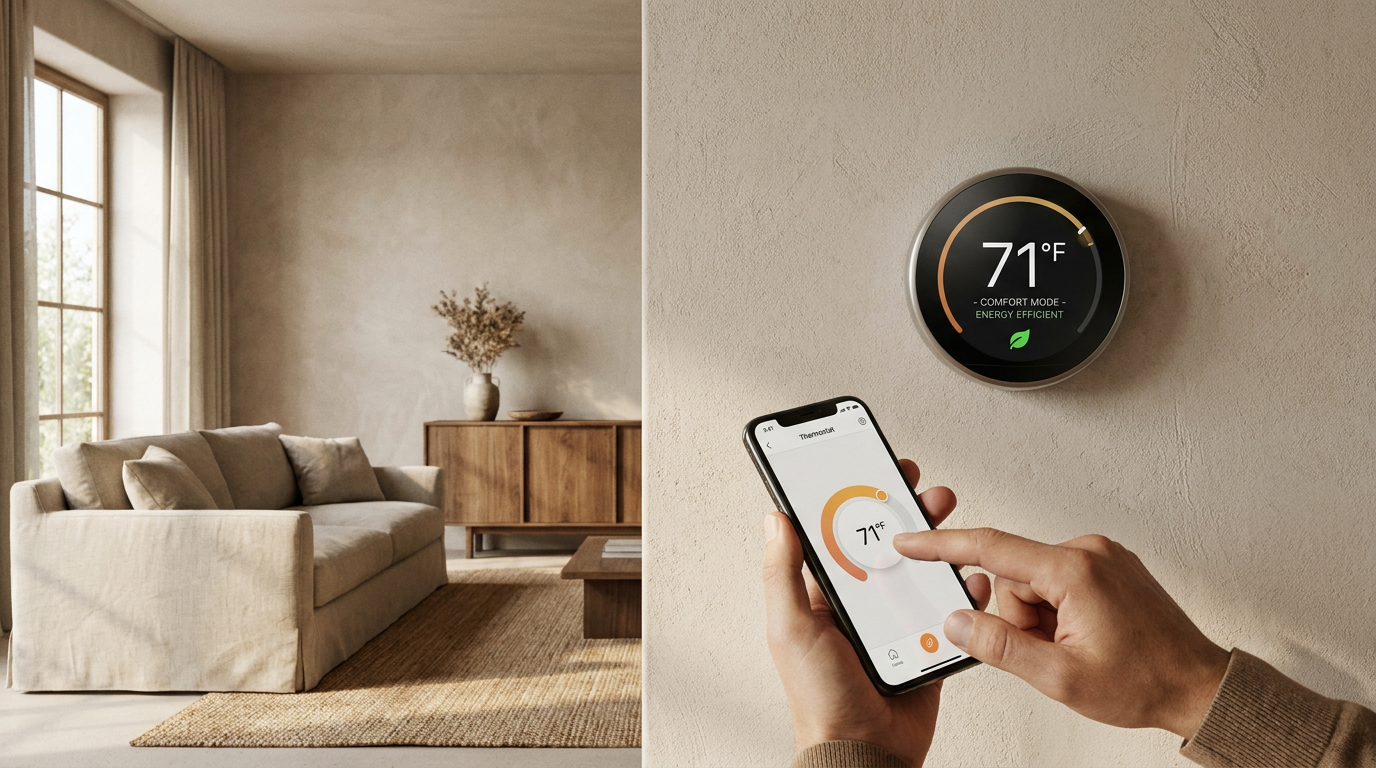
Before buying, confirm compatibility with your heating and cooling system and consider whether you want app control only or voice integration as well. Also check update support and privacy information. A thermostat is not just a wall accessory. It is a connected device that reflects occupancy patterns and household routines, so it deserves the same thoughtful consideration as any other part of your smart home.
For many households, a smart thermostat becomes the anchor of a broader comfort strategy. Once you have it in place, you can build routines around home, away, morning, and bedtime settings. It may begin as a practical purchase, but it often changes the day-to-day feel of the home in a very immediate way.
Project four: Place leak sensors where peace of mind matters most
Some smart home projects are about atmosphere. Others are about protecting the home itself. Leak sensors fall firmly into the second category, and they are one of the most underrated DIY upgrades available. These small battery-powered devices can be placed near washing machines, under sinks, by water heaters, around dishwashers, or in basement areas where moisture might go unnoticed until damage is already done.
The beauty of a leak sensor is that it does not need to do much to be valuable. It simply needs to alert you quickly when water is detected. If you are home, that means acting before a slow drip becomes a bigger repair. If you are away, a phone notification can give you the chance to ask a neighbor, building manager, or family member to check in. That speed can make a real difference.
For renters, this is especially helpful because water issues do not only affect your belongings. They can also impact the unit below or around you. A small sensor placed under a sink can offer a quiet layer of awareness that feels responsible and reassuring. For homeowners, it is a smart way to keep an eye on vulnerable areas without expensive monitoring systems.
This is also an example of why a better smart home is not necessarily the one with the most visible features. Leak sensors are not glamorous, but they support a more relaxed relationship with your space. Home feels easier when you know you have a little backup in the background, especially in the rooms where maintenance surprises tend to happen.
If you are creating a basic smart home plan, leak sensors deserve a place near the top of the list. They are easy to install, usually affordable, and deeply practical. In terms of real-world value, they often outperform more attention-grabbing gadgets.
Project five: Use door and window sensors to create simple awareness routines
Door and window sensors are often associated with security, but they can also support daily convenience in ways that feel surprisingly elegant. These sensors detect whether an entry point is open or closed, and they can trigger notifications or automations based on that status. Because they are small and often adhesive-mounted, they are particularly suitable for renters and for anyone who wants a low-commitment setup.
At the simplest level, a sensor can tell you if a back door was left open or if a child came home from school. That alone can bring a reassuring sense of awareness. But these devices become even more useful when tied into routines. For example, an entry light can turn on when the front door opens after sunset. A hallway lamp can switch on when you arrive home. A thermostat routine could remind you if a window is still open while heating or cooling is running.
These small links between actions and responses are where home automation starts to feel thoughtful instead of flashy. You are not creating complexity. You are reducing mental clutter. Your home becomes a little more communicative, a little more intuitive, and a little easier to trust.
If you are privacy conscious, remember that even simple sensors can reveal patterns about occupancy and movement. That does not mean they are a bad idea. It simply means you should treat them as connected devices with real data implications. Review the app permissions, account security, and update support before making them part of your home.
Used well, door and window sensors are subtle but powerful. They can help support both safety and comfort, and they fit beautifully into a gradual, well-curated smart home setup.
Project six: Build your first routines with voice control or app automations
Once you have a few devices in place, the next step is not necessarily to buy more. Often, it is to connect what you already have through routines. This is where a smart home begins to feel less like a collection of products and more like a cohesive living environment. A routine allows multiple actions to happen together based on time, voice command, occupancy, or another trigger.
A good beginner routine is simple and emotionally grounded. “Good morning” might turn on a bedside lamp, start the kitchen light, and adjust the thermostat slightly. “Leaving home” might switch off smart plugs, turn off nonessential lights, and send a reminder if a door is still open. “Movie night” might dim the living room lamp and switch on accent lighting. These are small transitions, but they shape the mood of home in a beautifully practical way.
Voice control can make these routines feel more natural, especially in busy households. It is helpful when your hands are full, when children are learning the rhythm of the home, or when you simply want less friction in common tasks. That said, not every household wants microphones in shared spaces. App-only routines are still very effective, and some people prefer that balance of control and privacy.
Geofencing is another option worth knowing about. This uses your phone location to trigger actions when you arrive or leave. It can be wonderfully convenient, but it also raises extra questions around battery use, app permissions, and data comfort levels. As with everything else in the smart home world, the best feature is the one that fits your actual lifestyle rather than what sounds impressive on paper.
As ecosystems continue to evolve, Matter support is becoming more appealing for DIY users because it can make future device choices more flexible across brands. Thread is also gaining attention because it is designed as a low-power mesh networking technology that can improve reliability for compatible devices, especially battery-powered ones. You do not need to become an engineer to benefit from those trends. It is enough to recognize that buying with compatibility in mind today can make expansion easier tomorrow.
How to keep your smart home budget friendly and renter friendly
The smartest homes are not always the most expensive. In fact, some of the best outcomes come from careful restraint. If your budget matters, focus on projects that solve repeated problems rather than buying multiple devices during a sale. One smart plug that improves your daily routine is more valuable than three products you never fully set up.
For renters, portability should be a top priority. Look for plug-in devices, battery-powered sensors, removable adhesive mounting options, and products that do not require drilling or rewiring. Smart bulbs, portable lamps on smart plugs, countertop speakers, and adhesive sensors all fit this approach well. If you do move, these upgrades can come with you and help the next place feel familiar more quickly.
It is also wise to think about device lifecycle. Ask whether the brand has a clear track record for firmware updates, whether the product still works in some form if the internet goes down, and whether it can function without a proprietary hub if your needs change later. These questions may seem less exciting than color temperature or app design, but they make a real difference in long-term value.
Another budget tip is to automate gradually by zone. Start with the bedroom, entryway, or living room instead of trying to address the whole house. Once you see which routines actually stick, you can extend the same logic elsewhere. This room-by-room method tends to feel calmer and more personal, and it prevents that common smart home mistake of buying too broadly before understanding your habits.
There is a lovely confidence in building a home this way. You are not chasing trends. You are shaping a space that supports your life with quiet intention.
Smart home privacy and security basics every beginner should know
A warm, functional smart home should also be a thoughtful one. Privacy and security are often treated as highly technical topics, but many of the most useful protections are simple and realistic for everyday households. Research from NIST has found that consumers often accept risk in exchange for convenience, and many of the steps they take to reduce that risk are basic rather than deeply technical. That is good news because it means better habits can go a long way.
Start with strong, unique passwords for your smart home accounts and enable two-factor authentication whenever it is offered. Keep device firmware and apps updated so security patches are not missed. Review the privacy settings in the device app, especially for data sharing, location access, and optional analytics. If a product collects more information than feels reasonable for its purpose, that is worth noticing.
It also helps to limit unnecessary complexity. Every added device is another account, another potential vulnerability, and another stream of data. This is one more reason why starting small is such a smart strategy. A tidy setup is easier to understand, easier to maintain, and often more reliable in daily use.
When evaluating new products, ask practical questions. Does the device work offline for any core functions? How long will security updates be provided? What happens if the company changes its service model or discontinues support? These are not dramatic concerns. They are part of caring for a connected home in a sensible way.
Privacy-aware choices do not take away from comfort. In many cases, they enhance it. It is easier to enjoy the convenience of automation when you trust the systems quietly running in the background.
What a well-designed beginner smart home can look like
By this point, you may notice a pattern. The most appealing smart home is not a showroom full of technology. It is a home where a few carefully selected tools support the rhythm of the day. The bedroom wakes gently. The hallway lights softly at night. The living room glows before you arrive. The thermostat keeps things comfortable without constant adjustment. A small sensor watches for leaks under the sink. None of it is flashy, but all of it adds up.
This kind of setup aligns with where the broader market is moving as well. ENERGY STAR has highlighted a growing shift from isolated gadgets toward coordinated smart home energy management, where devices such as thermostats, lights, and appliances can work together more intelligently. That bigger picture may sound ambitious, but it often begins with exactly the kind of small projects covered here.
The real transformation is not just technological. It is emotional. A more responsive home can feel calmer, more welcoming, and better attuned to everyday life. It can save a few minutes here, a bit of mental effort there, and a little energy over time. Most importantly, it can make the house feel more supportive of the people living inside it.
If you are just beginning, there is no need to aim for perfection. Start with the corner of home that asks for the most help. Choose one project that solves a real problem. Live with it for a few weeks. Notice how it feels. Then, if it truly adds value, build from there.
That is how comfortable smart homes are really made. Not through pressure or complexity, but through small, useful decisions that make daily life smoother and more enjoyable. When technology is chosen with care, even the simplest DIY project can change the way home feels.
Final thoughts: start with comfort, then let your smart home grow naturally
Home automation is most rewarding when it begins with real life rather than a wishlist. A lamp that turns on at the right time, a motion sensor that lights the hall at night, a thermostat that supports comfort more gracefully, or a leak sensor that brings peace of mind can all be enough to shift the tone of your home. These are manageable upgrades, but they create a strong foundation for something bigger if you choose to expand later.
For budget-conscious homeowners and renters, that is the beauty of DIY smart home projects. You can begin gently, spend carefully, and keep the process flexible. As standards like Matter and networking approaches like Thread become more common, it may become even easier to mix devices and build a home that feels cohesive without locking yourself into a single path. But even now, the essentials are already within reach.
If you take one idea from this guide, let it be this: the best smart home is the one that makes your everyday routines feel lighter. Start there, and you will create a space that is not only more functional, but also warmer, easier, and more enjoyable to live in every single day.



No Comment! Be the first one.