


Elevate Your Furniture: A Chic Guide to Hardware Upgrades for Elegant Interiors
There are moments in design when the smallest gesture creates the most memorable transformation. A dresser that once felt plain can become quietly distinguished with a set of antique brass knobs. A sideboard with heavy, dated pulls can regain its grace through slimmer silhouettes in polished nickel. A wardrobe that seemed merely practical can take on a more tailored, architectural presence when its hinges, handles, and backplates are selected with care. Hardware is often the finishing touch, yet it is also one of the first details the hand discovers, and in a beautiful interior, that tactile encounter matters.
Table Of Content
- Why Hardware Has Such a Powerful Effect
- The Language of French Elegance in Hardware
- Understanding the Main Types of Hardware
- Choosing the Right Finish for Beauty and Longevity
- How to Mix Hardware Without Losing Cohesion
- Sizing and Placement: The Difference Between Elegant and Awkward
- Quick placement principles to remember
- Safety, Quality, and the Case Against Cheap Decorative Hardware
- Matching Hardware to Furniture Style
- A Step by Step Approach to a Successful Hardware Upgrade
- Simple upgrade workflow
- Maintenance: Preserving Beauty Without Overpolishing
- Hardware as a Room Wide Design Strategy
- Common Mistakes to Avoid
- Final Thoughts: Small Details, Lasting Grace
For anyone drawn to refined, layered rooms, hardware upgrades offer an especially rewarding path. They are comparatively affordable, usually reversible, and capable of producing a dramatic visual effect without requiring a full renovation. This is part of their enduring charm. You do not need to replace a beloved chest, repaint an entire room, or commit to custom cabinetry to make your furniture feel more elevated. You only need to pay closer attention to the pieces that open, close, catch the light, and anchor the eye.
In recent years, designers and homeowners alike have begun to treat furniture and cabinet hardware as a design language rather than a purely functional necessity. Warm metals, sculptural forms, mixed finishes, and living patinas are all being embraced with renewed confidence. At the same time, classic options such as brushed nickel, simple bar pulls, and rounded knobs continue to prove their value for those who want versatility and longevity. The most beautiful results tend to come from understanding both worlds: the romance of style and the practicality of proportion, durability, and installation.
This guide explores how to use hardware upgrades to transform furniture with elegance and intention. Inspired by the softness of French interiors and grounded in practical North American considerations, it will help you choose knobs, pulls, hinges, and accents that improve not only how a piece looks, but also how it functions and ages over time. Whether you are refreshing a thrifted nightstand, refining a family heirloom, or simply bringing more polish to an everyday dresser, the right hardware can make the entire room feel more complete.
Why Hardware Has Such a Powerful Effect
Hardware occupies a surprisingly influential position in interior design because it sits at the intersection of sight, touch, and utility. We notice it visually because it punctuates flat surfaces and introduces contrast, shine, shadow, and rhythm. We register it physically because we use it constantly. Every drawer pull and cabinet knob becomes part of the daily choreography of a home. This repeated contact means that even subtle upgrades can alter the way a piece is experienced, not just the way it appears in a photograph.
There is also a compositional reason hardware matters so much. Furniture tends to consist of broad planes such as painted wood, stained oak, lacquered fronts, cane panels, or veneered surfaces. Hardware interrupts these planes with a point of detail. It can sharpen an otherwise soft silhouette, soften a severe shape, or add ornament to a restrained form. In a room composed with care, these accents act almost like jewelry. They catch light, echo other metals nearby, and give the piece a sense of finish.
From a practical perspective, hardware upgrades are among the most cost effective visual changes you can make. Compared with replacing a piece of furniture or commissioning a custom built-in, changing knobs, handles, hinges, or drawer slides is relatively inexpensive. It can also be undone if tastes change, which makes it a useful strategy for renters, decorators, home stagers, and anyone experimenting with a new aesthetic direction. Small changes can carry extraordinary design weight when they are made with intention.
Another advantage is that hardware upgrades can solve problems, not just beautify them. A difficult drawer may become easier to open with a longer pull. Visible wear around old holes can be concealed with backplates. New soft close hinges can make a door feel quieter and more substantial. When done thoughtfully, hardware transforms both the visual identity and the practical performance of furniture, which is why it deserves more consideration than it often receives.
The Language of French Elegance in Hardware
French inspired interiors have long understood the beauty of detail. Their appeal often lies not in excess, but in the measured arrangement of texture, curve, patina, and proportion. Hardware plays a subtle but essential role in creating that atmosphere. It is through a rounded knob, an oval backplate, an aged bronze pull, or a softly worn brass latch that a piece begins to feel collected rather than generic.
If you want to translate French elegance into your furniture choices, start by looking for shapes with softness and poise. Round and oval knobs, gently arched pulls, and hardware with a lightly sculpted profile tend to feel more classic than aggressively angular options. Satin and antique finishes often create more warmth than bright, mirror-like metals. Decorative backplates or escutcheons can lend a tailored formality that works beautifully on armoires, nightstands, writing desks, and sideboards.
One of the most appealing developments in current hardware trends is the return of tactile, lived in finishes. Unlacquered brass and certain bronze finishes are often described as living finishes because they develop a patina over time. Rather than remaining static, they darken, soften, and gather character through use and exposure. In a French elegant setting, this is not a flaw but a virtue. Patina introduces the sense that a room has matured gracefully, that it has been inhabited and loved.
French elegance also favors restraint. This does not mean your hardware must be invisible, but it should feel considered. A sculptural pull can be delightful, yet if it competes with every other decorative element in the room, the result may feel restless rather than refined. The most successful choices create harmony. They support the proportions of the furniture, converse with surrounding finishes, and contribute to an atmosphere of ease.
When hardware is chosen well, a piece of furniture feels resolved. It no longer looks assembled. It looks composed.
Understanding the Main Types of Hardware
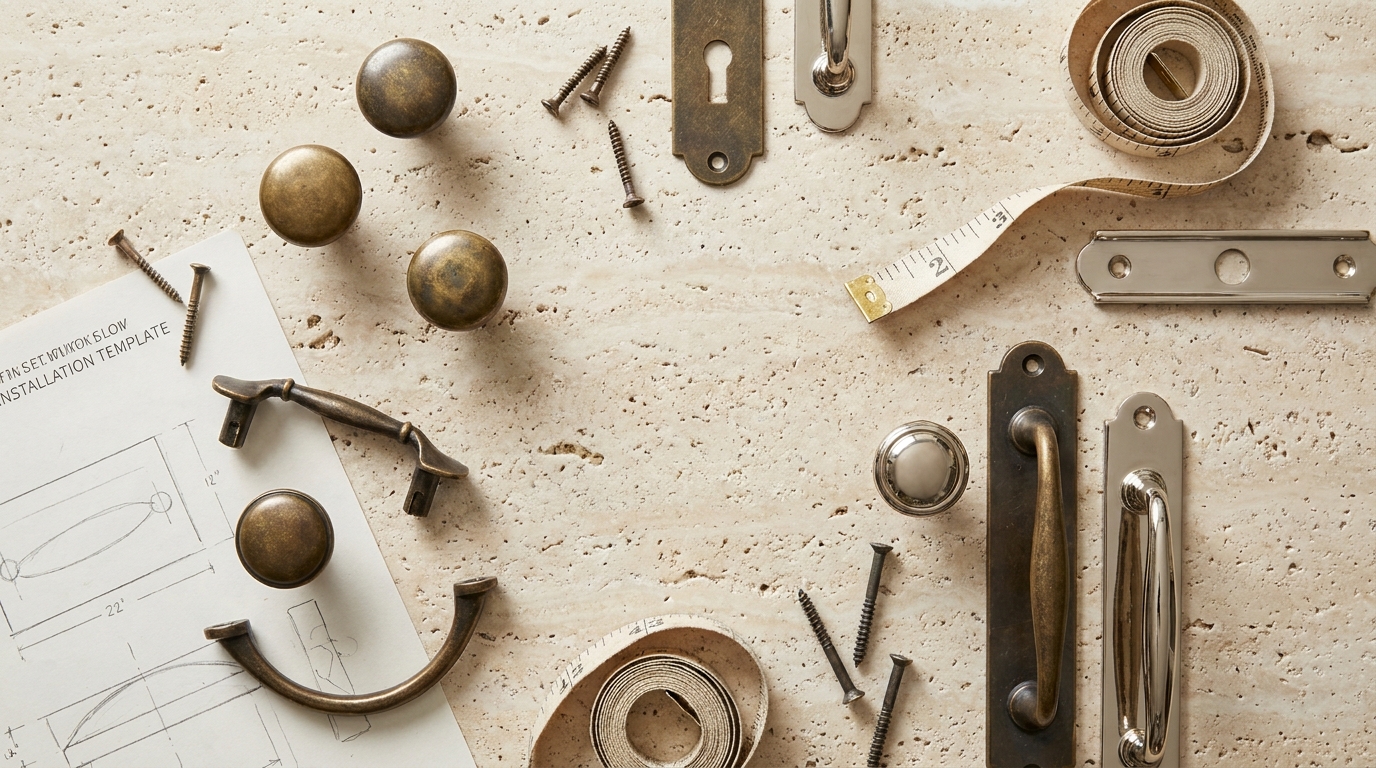
Before choosing finishes and styles, it helps to understand the primary hardware categories used in furniture makeovers. Knobs are the most compact option and often suit smaller drawers, bedside tables, delicate cabinets, and traditional pieces. Their simplicity makes them versatile, and they can shift dramatically in mood depending on material. A porcelain knob reads differently from an unlacquered brass one, and both tell a different story from carved wood or resin.
Pulls and handles provide a longer grip and often feel more substantial in the hand. They can be sleek and minimal, curved and decorative, or bold and architectural. Drawer pulls are especially useful on heavier or wider drawers where a small knob may not offer enough leverage. Bar pulls remain popular for their simplicity, but more sculptural and artisanal forms are increasingly sought after when homeowners want furniture to look more custom.
Edge pulls create a very clean profile because they attach discreetly to the top edge or side of a drawer front. They are often used in contemporary interiors, though in the right finish they can also complement transitional or elegant spaces. A common sizing guideline from hardware brands is that edge pulls should be no more than half the drawer width or one third of the door height. These ratios help preserve visual balance and prevent the hardware from overwhelming the furniture face.
Then there are hinges, catches, latches, and drawer slides, which are often overlooked because they are less decorative at first glance. Yet these elements matter greatly to the user experience. Exposed hinges can become part of the aesthetic on antique inspired furniture. Soft close hinges and updated slides can make old furniture feel fresh and expensive in use. A makeover that ignores these mechanisms may look improved from afar while still feeling awkward in practice.
Choosing the Right Finish for Beauty and Longevity
Finish selection is where style, maintenance, and aging all meet. It is also where many furniture makeovers either achieve nuance or lose it. The current preference for warm metals reflects a broader movement toward interiors that feel layered, tactile, and welcoming. Aged bronze, unlacquered brass, champagne gold, and polished nickel are all strongly favored, each offering a different expression of elegance.
Unlacquered brass is beloved for its warmth and evolving character. At first, it may appear glowing and golden, but with time it darkens and develops irregular tonal depth. This is why it suits rooms that embrace collected beauty and historical softness. It does require a change in mindset. If you want a finish to remain exactly as purchased, unlacquered brass may frustrate you. If you appreciate patina and variation, it can be exquisite.
Aged bronze offers richness and restraint. It tends to read deeper and moodier than brass, which makes it particularly appealing against painted furniture in cream, charcoal, olive, navy, mushroom, and blackened tones. Polished nickel, by contrast, is cooler and more luminous, with a gentleness that often feels more sophisticated than chrome. It reflects light beautifully and works especially well in interiors that balance tradition and freshness.
It is important to understand that a finish name does not guarantee identical appearance across all products. Different base metals and coating methods can produce visible variation, even when two items are sold under the same color description. If you are mixing old and new hardware, or sourcing pieces from multiple suppliers, expect some differences. In many cases, these slight variations add character. If you want a highly consistent result, it is best to order all visible hardware for one piece from the same manufacturer and finish family.
Climate and use also deserve consideration. In humid or coastal environments, finishes may behave differently than they do in dry inland homes. High touch pieces such as dressers, bathroom vanities, and kitchen sideboards will show wear more quickly than decorative cabinets opened only occasionally. The most elegant choice is not simply the one that looks beautiful on day one, but the one whose aging process suits the life of the piece.
How to Mix Hardware Without Losing Cohesion
One persistent misconception is that all hardware throughout a room or even on a single piece must match exactly. In reality, current design practice is much more nuanced. Mixing knobs and pulls, varying hardware sizes, or combining finishes intentionally can make furniture look more layered and custom. The key is not sameness, but coherence.
Consider beginning with a dominant finish, then introducing a secondary note. A dresser might feature antique brass drawer pulls while nearby lighting carries a softer bronze. A sideboard may pair knobs on doors with pulls on drawers, all in the same finish, which creates variation without visual conflict. In some cases, a mixed material detail such as leather wrapped hardware or stone insets can add artistry while still respecting the room’s palette.
To keep mixed hardware elegant, repeat at least one element. This might be the finish, the silhouette, the level of shine, or the overall design period. If every piece is different in every possible way, the composition begins to feel accidental. If there is a thread connecting them, the mix appears curated. French inspired rooms often excel at this kind of subtle coordination. Their beauty comes from conversation among elements, not from rigid uniformity.
It is also wise to think beyond the furniture itself. Designers increasingly coordinate hardware with lighting, plumbing, mirror frames, and decorative objects so that metal finishes feel part of a room wide palette. This does not mean every metal must match. It means the combination should feel intentional. When the brass on a side table echoes the warmth of a wall sconce, or polished nickel hardware reflects the cool shimmer of a nearby lamp, the room gains visual unity.
Sizing and Placement: The Difference Between Elegant and Awkward
Even the most beautiful hardware can look misplaced if its scale is wrong. Proportion is what makes an upgrade feel effortless. A tiny knob on an oversized drawer can appear timid and impractical, while an oversized pull on a delicate bedside cabinet may look heavy and disruptive. The art lies in matching the hardware to the visual weight and physical demands of the furniture.
One useful guideline is to choose edge pulls that are no more than half the drawer width or one third of the door height. This keeps the hardware legible without allowing it to dominate. For standard drawers, many homeowners prefer pulls that span roughly one third of the drawer width, though this is not an absolute rule. Wider and heavier drawers may benefit from longer pulls that improve grip and create stronger horizontal rhythm.
Oversized drawers over 18 inches wide can often carry two knobs instead of one, placed symmetrically about one third in from each edge. This arrangement can look especially charming on dressers and sideboards with a more classic or vintage sensibility. It also distributes pulling force more evenly, which may reduce strain on older drawer fronts. The visual effect is orderly, balanced, and quietly decorative.
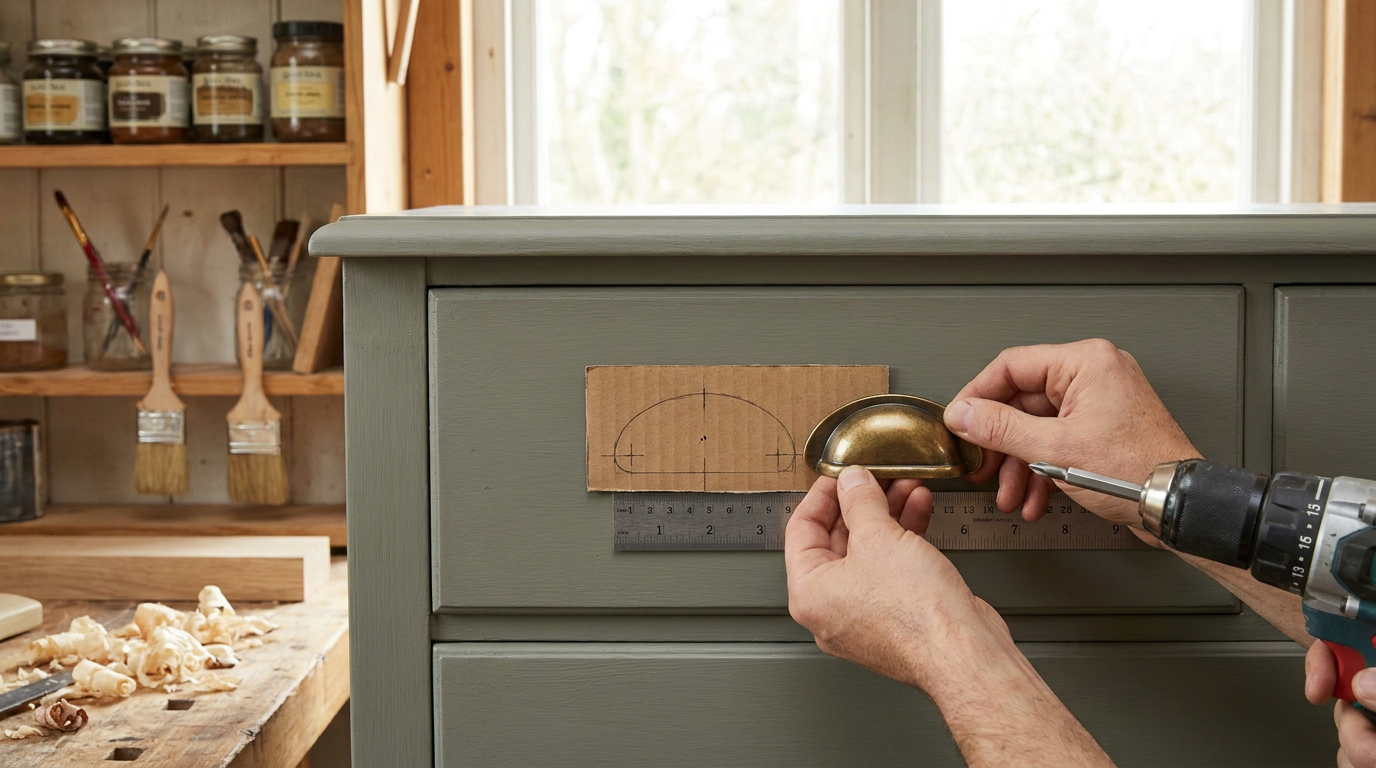
Templates are indispensable when installing hardware across multiple drawers or doors. A template helps maintain repeatable alignment, protects symmetry, and reduces the chance of costly drilling errors. Center to center measurement, often abbreviated as CTC, is another critical concept when replacing existing pulls. It refers to the distance between the screw holes. If you want to reuse existing holes, your new pull must have the same CTC measurement unless you plan to fill and redrill.
Backplates and escutcheons can be very useful in makeovers where old holes, chips, or wear marks need to be concealed. They also add formality and can visually enlarge the presence of a smaller knob. This is one of the most practical ways to refine older furniture without extensive surface repair. What appears decorative often performs an elegantly pragmatic function.
Quick placement principles to remember
- Measure every drawer and door before purchasing hardware, even if the furniture appears uniform.
- Check existing hole spacing carefully if you intend to avoid redrilling.
- Use a template for consistent alignment across the full piece.
- Match hardware scale to both visual proportion and drawer weight.
- Step back and assess the piece from a distance before final installation.
Safety, Quality, and the Case Against Cheap Decorative Hardware
Beautiful design should never come at the expense of safety or durability. This is especially important when choosing decorative knobs made of glass or fragile materials. Health Canada recalls have documented cases in which furniture and cabinet glass knobs broke during use or installation, creating laceration hazards. This is a serious reminder that not every charming detail is suitable for high use furniture.
If you love the sparkle or romance of translucent hardware, choose products from reputable manufacturers and verify whether the material is tempered or specially rated for furniture use. For frequently used pieces such as dressers, entry consoles, bathroom vanities, and children’s furniture, safer options often include metal, solid wood, high quality resin, or other durable materials less prone to dangerous breakage. Always inspect new hardware for chips, weak seams, or poorly finished edges before installation.
For readers in Canada and the United States, it is also wise to check recall databases before purchasing hardware, especially secondhand or discontinued decorative stock. In Canada, recalled consumer products cannot legally be redistributed or resold. This matters if you are refinishing a piece for sale, staging, donation, or a client project. A thoughtful makeover includes responsible sourcing.
Quality also affects longevity in more subtle ways. Thin plating may wear quickly, screws may strip, and poor casting can create uneven forms that cheapen the appearance of the piece. Because hardware is one of the most touched details in the home, it rewards investment. You do not always need the most expensive option, but you do need one that feels solid, well made, and appropriate for the demands of daily use.
Matching Hardware to Furniture Style
The most convincing makeovers honor the spirit of the furniture while gently editing or updating it. A mid century inspired dresser may suit simple elongated pulls in warm brass or bronze. A painted farmhouse chest might look lovely with round knobs and understated backplates. A French provincial piece can often carry more ornament, but even then, elegance comes from discipline. Too much flourish can make a piece feel theatrical rather than timeless.
When evaluating a furniture piece, study its lines before making any decision. Is it curving or linear, delicate or weighty, formal or casual, historic or contemporary? Hardware should either reinforce these qualities or provide a purposeful counterpoint. A sleek pull can modernize a traditional chest, but the contrast should appear deliberate. In most cases, a harmonious dialogue between the furniture’s shape and its hardware will create the most enduring result.
Paint color also affects the success of hardware. Soft whites, warm taupes, sage greens, dusty blues, charcoal grays, and rich black finishes all interact differently with metal tones. Antique brass can glow against chalky neutrals. Polished nickel can sharpen pale greige or navy. Aged bronze can add depth to creamy off white. When planning a makeover, consider the color and hardware together rather than as separate decisions.
Texture matters too. Matte painted surfaces often pair beautifully with satin or aged finishes. High gloss lacquer can support more reflective hardware. Natural wood may call for something quieter, allowing grain to remain central. The goal is balance. Hardware should contribute richness without stealing every moment of attention from the furniture itself.
A Step by Step Approach to a Successful Hardware Upgrade
If you are approaching a DIY furniture makeover, a clear process will help you avoid disappointment. Begin by assessing the piece honestly. Decide whether your goal is restoration, modernization, improved function, or a combination of all three. This will shape every later choice, from finish to size to the decision of whether to keep existing holes.
Next, take precise measurements. Record drawer widths, door heights, existing center to center spacing, and the diameter of any current knobs. Photograph the furniture in good light. It often helps to print or digitally mark possible hardware placements before ordering. A little planning can save patching, repainting, and frustration later.
Then gather samples if possible. Hardware is deeply tactile, and online images rarely capture undertone, weight, or sheen accurately. Compare options against your furniture finish, nearby lighting, and other metals in the room. This is especially important when working with brass, bronze, or nickel, which can vary more than many expect.
Before drilling, test placement with painter’s tape or removable adhesive. Stand back from the furniture. Open and close the drawers. Make sure the grip feels natural. Small adjustments in height or spacing can have a major effect on the final impression. Once satisfied, use a proper template and drill carefully. Tighten hardware firmly, but avoid overtightening delicate finishes or materials.
Simple upgrade workflow
- Define the style direction and functional goals.
- Measure all dimensions and existing hole spacing.
- Select finish, material, and scale with the room in mind.
- Test placement visually and physically before drilling.
- Install with a template and check alignment as you go.
- Reassess the piece in the room and adjust surrounding accents if needed.
Maintenance: Preserving Beauty Without Overpolishing
Once your furniture has been upgraded, maintenance becomes part of preserving its charm. Different finishes require different expectations. Lacquered hardware generally needs only light cleaning with a soft cloth and mild soap if necessary. Abrasive cleaners should be avoided because they can damage protective coatings and dull the finish.
Living finishes such as unlacquered brass and some bronzes deserve a gentler philosophy. These finishes are meant to change. Trying to keep them permanently bright can erase the very patina that makes them appealing. If you choose this route, embrace evolution. Wipe away grime, but allow time and touch to develop the surface naturally. The effect is often especially lovely in rooms that value warmth and history.
In homes with high humidity or salty coastal air, more regular cleaning may be needed to prevent buildup. Likewise, hardware in kitchens, bathrooms, and entryways tends to collect oils and moisture more quickly than pieces in formal living rooms or bedrooms. Maintenance should support the finish’s intended character. Clean enough to preserve health and function, but not so aggressively that you strip away depth and softness.
It is also wise to periodically check screws and mounting points. Drawers and doors shift slightly over time, and regular use can loosen fittings. A quick seasonal inspection helps maintain both safety and elegance. Nothing undermines a refined piece faster than a wobbly pull or a sagging hinge.
Hardware as a Room Wide Design Strategy
The most successful hardware upgrades do not stop at the furniture. They ripple outward into the room. Once a dresser has been updated with softly aged brass pulls, you may notice that a nearby lamp base now feels especially harmonious. A polished nickel knob may encourage a cooler metallic thread through a mirror frame or sconce. This is where a simple DIY project begins to influence the broader visual identity of the space.
Think of hardware as part of your interior palette. It can repeat tones found in lighting, plumbing fixtures, curtain rods, picture frames, or decorative objects. The room does not need to be matched rigidly, but it should feel fluent. French inspired interiors often achieve this with quiet confidence. Their metals converse rather than compete, creating an atmosphere that feels settled and complete.
This approach is also useful for resale, staging, or guest spaces. Updated hardware can make older furniture feel intentional and cared for, which elevates the impression of the entire room. It signals that details matter. For decorators working within a modest budget, few interventions offer such a strong return in terms of visual polish.
There is also an emotional dimension to these choices. Furniture is intimate. We store clothing in it, serve meals from it, write letters at it, and pass by it every day. When its details are thoughtfully chosen, the room feels more personal, more cultivated, and more deeply ours. The transformation may be modest in cost, but it can be profound in atmosphere.
Common Mistakes to Avoid
One common mistake is choosing hardware solely from a close-up product photo without considering scale. What looks elegant in the hand may disappear on a wide drawer front. Another is assuming all brass, bronze, or nickel finishes will match because they carry similar names. As noted earlier, base materials and manufacturing methods can create visible differences that surprise many homeowners.
A further mistake is treating hardware as purely cosmetic. Placement, comfort, and structural suitability matter just as much as beauty. A pull should feel natural in use. Screws should be the correct length. Hinges should suit the weight and swing of the door. Decorative choices become frustrating when practical needs are ignored.
Some people also become too cautious and select hardware so understated that the makeover has little impact. Restraint is wonderful, but it should not become timidity. If your furniture needs a moment of definition, allow the hardware to provide it. On the other hand, overstatement can be equally problematic. An ornate pull on every surface may overwhelm a modest piece. Balance remains the guiding principle.
Finally, avoid rushing installation. Few things draw the eye faster than misaligned knobs or uneven pulls. Templates, measurements, and patience are not glamorous, yet they are what give a finished piece its sense of professionalism. Elegance often depends on discipline behind the scenes.
Final Thoughts: Small Details, Lasting Grace
To upgrade furniture through hardware is to practice a particularly satisfying form of design attention. It asks you to notice scale, touch, finish, proportion, and aging. It invites you to think not only about what looks fashionable now, but about what will feel beautiful and right after months and years of use. In that sense, hardware is never just an accessory. It is part of how a piece lives in the home.
For those who admire French elegance, this is especially meaningful. So much of that aesthetic comes from subtlety, patina, and the quiet confidence of thoughtful composition. A softly rounded knob, a bronze pull with depth, a polished nickel handle that catches evening light, these are details that shape atmosphere with unusual power. They do not shout. They refine.
At the same time, practical considerations remain essential. Measure carefully. Respect safety warnings. Understand living finishes before bringing them home. Use templates. Invest in quality where touch and durability matter most. These are the habits that turn a simple refresh into a truly successful makeover.
If you have a piece of furniture that feels almost right but not quite finished, begin with the hardware. You may be surprised by how completely it changes the character of the piece and the room around it. In design, grace often enters through the smallest openings. A knob, a pull, a hinge, a gleam of brass at the fingertips. Sometimes that is all it takes to make the ordinary feel beautifully complete.



No Comment! Be the first one.