



A Practical Guide to Servicing Your HVAC System for Maximum Efficiency
Your HVAC system works quietly in the background for most of the year, but it has an outsized impact on comfort, energy bills, and even the overall environmental footprint of your home. When heating and cooling equipment is neglected, it often has to run longer to deliver the same result. That means more electricity or fuel use, more wear on components, and a greater chance of expensive breakdowns at inconvenient times. The good news is that the most important servicing habits are not overly technical, and many of them fit naturally into a simple household routine.
Table Of Content
- Why HVAC servicing matters more than many homeowners realize
- Know your system before you start
- What homeowners can safely do themselves
- Step 1: Inspect and change the air filter regularly
- Step 2: Keep supply and return vents clear
- Step 3: Check thermostat settings and schedules
- Step 4: Clean around the outdoor unit
- Step 5: Look for condensate drain issues
- Step 6: Listen and observe during normal operation
- What should always be left to a qualified HVAC technician
- The seasonal servicing routine that works best
- Spring HVAC servicing priorities
- Fall HVAC servicing priorities
- A practical room by room and system by system checklist
- How HVAC servicing supports sustainability in a real and practical way
- Common misconceptions that lead to poor HVAC performance
- Simple troubleshooting before you call for service
- When it may be time to think beyond servicing
- Creating an HVAC maintenance habit that lasts
- Final thoughts
For homeowners across Canada and North America, HVAC maintenance is one of the most practical forms of energy efficiency. According to ENERGY STAR, airflow problems can reduce system efficiency by up to 15 percent, and dirty filters can increase energy costs while also damaging equipment over time. Natural Resources Canada also emphasizes that a well tuned system can significantly reduce annual energy bills. Seen through that lens, servicing your HVAC system is not only a maintenance task. It is a small but meaningful sustainability action that supports lower energy use, lower emissions, and longer equipment life.
This guide is designed to be calm, practical, and realistic. You do not need to become an HVAC technician to take better care of your system. What you do need is a clear understanding of what you can safely handle yourself, what signs to watch for, and when to call a qualified professional. With a few consistent habits and one seasonal maintenance rhythm, you can make your home more comfortable while avoiding preventable waste.
It also helps to separate two ideas that are often mixed together. Maintenance is what keeps your system operating efficiently and helps prevent trouble before it starts. Repair is what happens after performance has already declined or a part has failed. A proactive approach is almost always more affordable, less stressful, and better for the long term health of your home.
Routine HVAC servicing is not just about preventing breakdowns. It is one of the simplest ways to improve comfort, reduce energy waste, and help your equipment last as long as possible.
Why HVAC servicing matters more than many homeowners realize
Most homes rely heavily on heating and cooling for day to day comfort, especially in climates with cold winters, humid summers, or both. Because HVAC systems use a significant share of household energy, even modest improvements in efficiency can have a noticeable impact on operating costs. When a filter is clogged, a coil is dirty, or a vent is blocked, the system has to work harder to push air and maintain set temperatures. That strain can shorten the lifespan of motors, blowers, compressors, and other essential parts.
Maintenance also supports healthier indoor conditions. Canada.ca notes that HVAC maintenance and cleaning are important for preventing indoor air quality hazards. In practical terms, that means keeping air moving properly, helping filtration work as intended, and reducing the risk of moisture related issues around cooling components and drains. For households with allergies, pets, or variable occupancy, these details matter even more.
There is also a sustainability benefit that is often overlooked. The greenest heating and cooling system is not simply the newest one. In many cases, it is the system that is operated well, maintained regularly, and replaced only when truly necessary. Good servicing reduces waste in two ways. It lowers day to day energy demand, and it helps avoid premature equipment replacement. Those may seem like small household decisions, but collectively they matter.
Know your system before you start
Before servicing anything, it helps to know what type of HVAC system you have. Many homes have a forced air furnace paired with central air conditioning. Others rely on a heat pump that provides both heating and cooling. Some systems include an indoor air handler, while others have a furnace cabinet with integrated components. You may also have add ons such as a humidifier, dehumidifier, HRV, ERV, or zoning controls. The exact layout changes by home, but the basic maintenance principles remain similar.
Spend a few minutes locating the main components. Find the thermostat, the electrical shutoff for the indoor unit, the filter access panel, the supply and return vents, and the outdoor condenser or heat pump. If you have the owner manuals, keep them in one folder or download digital copies from the manufacturer. The model number can also be useful later if you need replacement filters or professional service.
This simple orientation step often makes maintenance feel much less intimidating. Homeowners tend to avoid HVAC care because it seems technical, but much of what follows is really about observation, cleaning, and consistency. Once you know where the key parts are, servicing becomes easier to fit into everyday life.
What homeowners can safely do themselves
The most effective homeowner maintenance tasks are straightforward and low risk. They generally involve keeping air moving, keeping surfaces clean, and paying attention to early warning signs. These are not minor details. In fact, they are often the very things that determine whether a system operates efficiently between professional tune ups.
Step 1: Inspect and change the air filter regularly
If there is one HVAC servicing habit worth building, this is it. ENERGY STAR says homeowners should inspect, clean, or change HVAC air filters once a month. A dirty filter does more than affect dust levels. It can restrict airflow, raise energy costs, and even contribute to equipment damage and early failure. That makes filter care one of the highest value maintenance tasks in the home.
Start by turning off the system at the thermostat. Locate the filter slot, remove the existing filter, and check its condition. If the filter is visibly dusty, gray, or clogged with debris, replace it with the correct size and type. The new filter should match the airflow direction indicated by the arrow on the frame. Make sure it is seated properly so air does not bypass the filter.
Not every home needs the same replacement frequency. A lightly occupied home may get more time from a filter, while homes with pets, renovations, wildfire smoke exposure, or heavy system use may need more frequent changes. The safest routine is a monthly inspection, even if replacement happens less often. That rhythm helps you catch issues before they become performance problems.
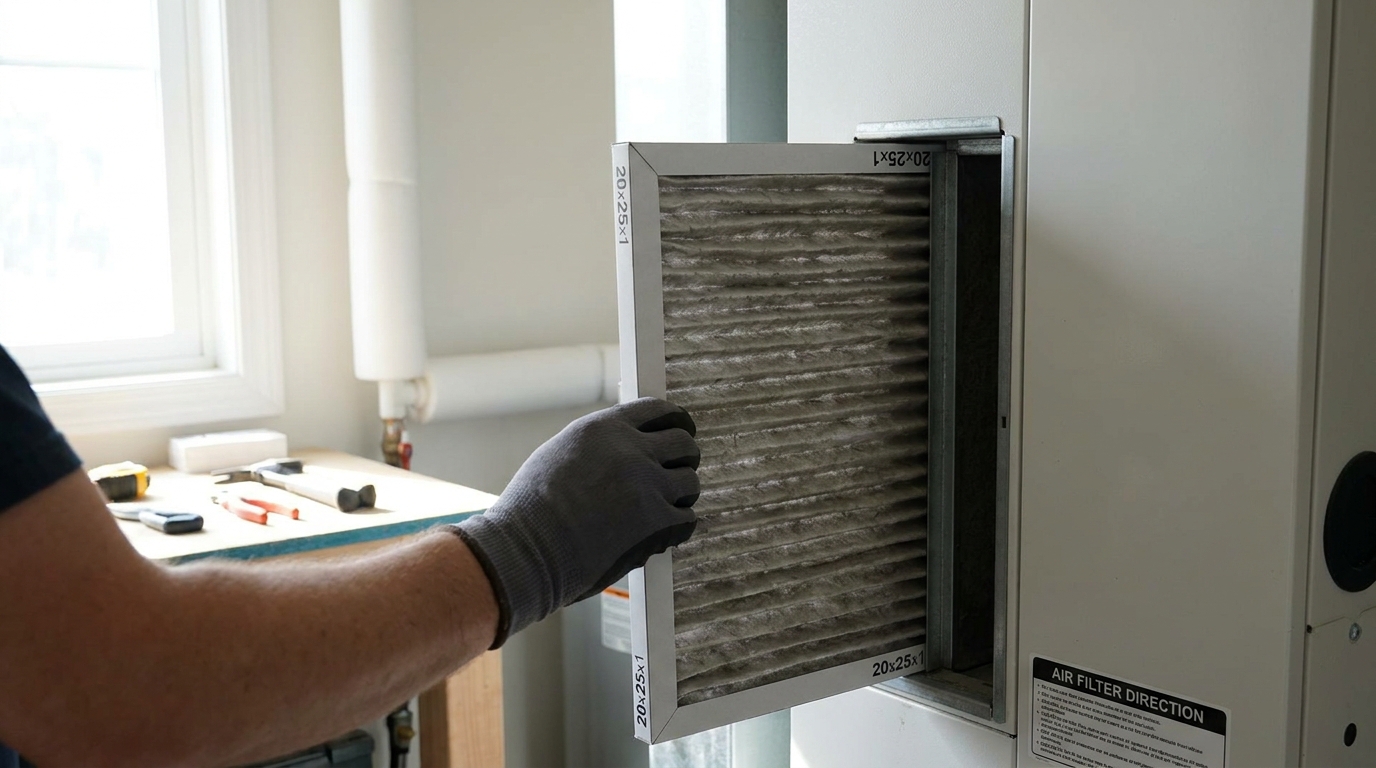
It is also worth noting that filter choice matters. Higher efficiency filters can improve particle capture, but if they are not compatible with your system, they may increase airflow resistance. If you are unsure what filter rating is appropriate, consult your system manual or ask a technician during your next service visit. The goal is balanced performance, not simply the highest number on the package.
Step 2: Keep supply and return vents clear
Airflow is the foundation of efficient HVAC operation. ENERGY STAR notes that airflow problems can reduce system efficiency by up to 15 percent, which is significant in any season. One of the simplest ways to protect airflow is to walk through your home and check that supply registers and return grilles are open and unobstructed. Furniture, rugs, curtains, storage bins, and even pet beds can interfere more than people realize.
Make this a visual habit whenever you clean the house or rearrange a room. Vacuum dust from vent covers as needed and ensure return air grilles are not blocked by decor or stacked items. In a forced air system, returns are especially important because they allow air to circulate back to the equipment. Restricting them can reduce comfort and place unnecessary strain on the system.
Some homeowners try to save energy by closing vents in unused rooms. In most central systems, that strategy can disrupt airflow balance rather than improve efficiency. Unless your system was specifically designed for zoning, it is usually better to keep vents open and manage comfort through proper thermostat settings and insulation improvements.
Step 3: Check thermostat settings and schedules
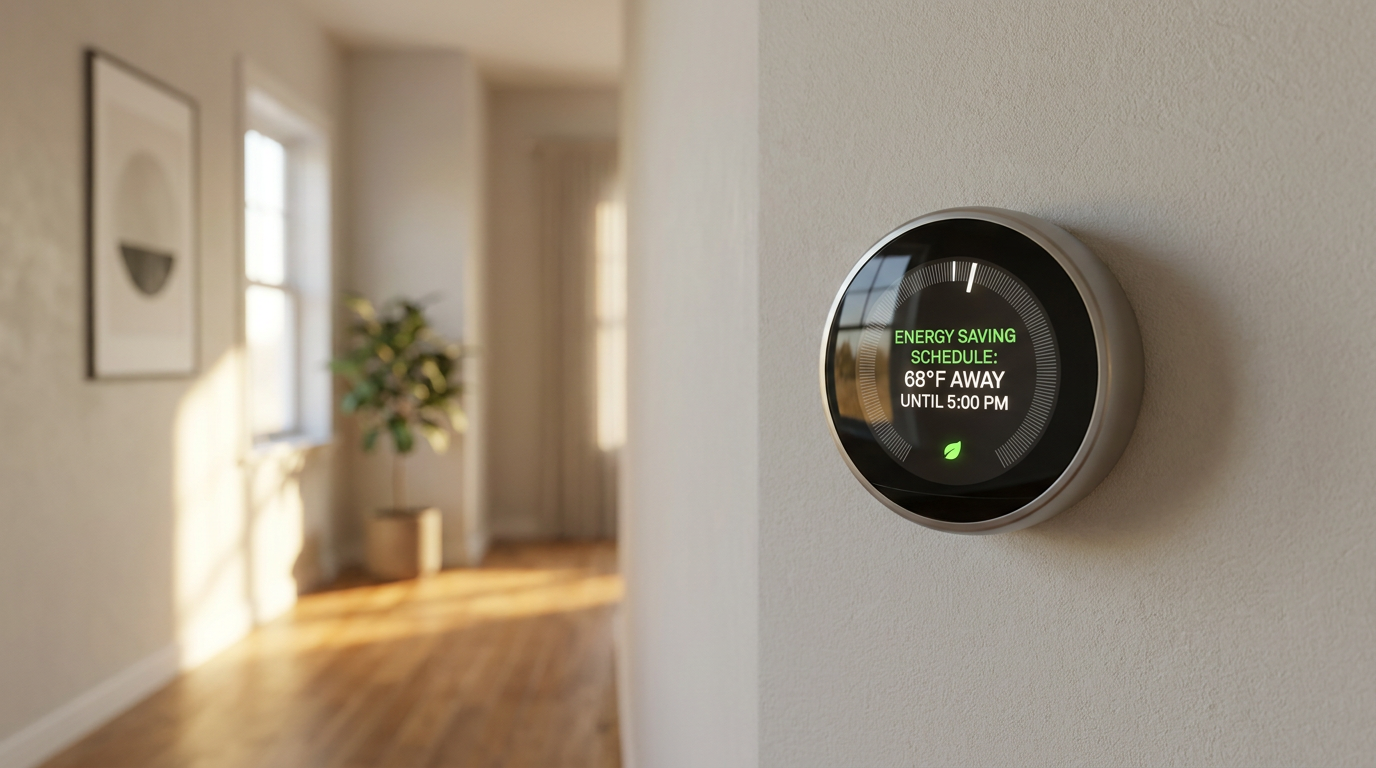
A thermostat is a control device, but it is also a maintenance ally. A poorly set thermostat can make a healthy HVAC system behave inefficiently. Start by confirming that your thermostat is in the correct mode, the temperature readings make sense, and programmed schedules still match how your household actually lives. If your routine has changed due to work from home schedules, school hours, or travel, your old settings may no longer be appropriate.
ENERGY STAR notes that a certified smart thermostat can save about $100 per year in homes with high heating and cooling bills or long daytime absences. That does not mean every household needs one, but it does highlight the value of thoughtful scheduling. Even a conventional programmable thermostat can reduce unnecessary runtime if used well.
Take time to set reasonable temperature setbacks when the house is empty or when everyone is asleep. Avoid making dramatic swings that lead to discomfort or repeated manual overrides. The most efficient schedule is one that feels easy to live with. Practical sustainability tends to succeed when it aligns with comfort rather than competing with it.
Step 4: Clean around the outdoor unit
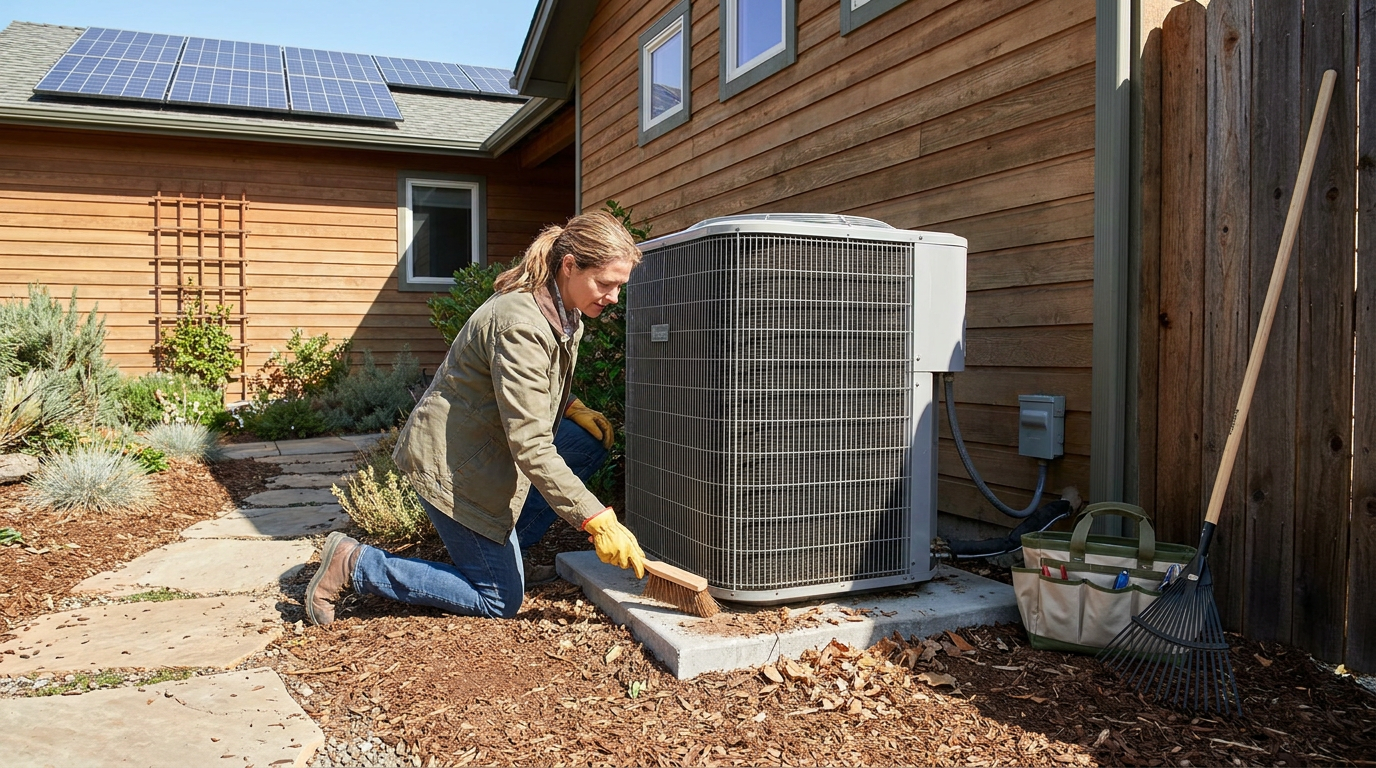
Your outdoor condenser or heat pump needs room to breathe. Leaves, grass clippings, weeds, and windblown debris can collect around the cabinet and interfere with heat transfer. Dirty condenser coils reduce cooling ability and can make the system run longer, increasing energy costs. A little outdoor upkeep can go a long way.
Turn off power to the unit before doing any cleaning. Remove leaves and debris from around the base, trim back vegetation, and maintain clear space around the unit according to manufacturer guidance. Gently clear the exterior fins with a soft brush or low pressure rinsing if the manual allows it. Avoid bending fins or spraying aggressively into the unit, as that can do more harm than good.
It is best to think of this as light stewardship rather than deep mechanical cleaning. Homeowners can safely keep the area tidy and improve airflow around the cabinet. Internal cleaning, coil disassembly, and any refrigerant related service should be left to a qualified technician.
Step 5: Look for condensate drain issues
During cooling season, air conditioners and heat pumps remove moisture from indoor air. That moisture drains away through a condensate line or drain system. If the drain becomes clogged, you may notice standing water, musty odors, elevated humidity, or water around the indoor unit. These signs should not be ignored, because moisture problems can spread beyond HVAC performance and affect surrounding materials.
Homeowners can visually inspect the drain area and watch for obvious blockage symptoms. If the system has a visible drain pan, check that it is not overflowing. If the line appears obstructed, or if you notice recurring water issues, it is wise to call a technician rather than experimenting with unfamiliar parts. The objective is to address the source before it becomes a repair, not just wipe up the symptom.
This is one of those maintenance points that is easy to overlook because it is not always visible. Yet it matters both for comfort and for indoor air quality. Humidity control is part of efficient cooling, and a healthy drain system helps the equipment do that job properly.
Step 6: Listen and observe during normal operation
One of the best homeowner skills is simply learning what normal sounds and performance look like. Does the system start smoothly, or has it begun making rattling, screeching, humming, or banging noises? Are some rooms suddenly less comfortable than others? Has the system started running much longer than usual under similar weather conditions? These changes can provide early clues long before a full breakdown occurs.
Pay attention to unusual cycling, weak airflow, odd smells, and temperature inconsistencies. Keep notes if something seems to be changing gradually. This information is helpful for professionals later because it creates a more complete performance picture than a one time service visit alone. In a way, homeowner observation is an informal version of ongoing commissioning. It helps prevent performance drift from going unnoticed.
What should always be left to a qualified HVAC technician
Good servicing includes knowing your limits. Natural Resources Canada is clear that while homeowners can handle some maintenance, annual maintenance and efficiency tune ups should be performed by a qualified service technician. That division of responsibility protects both safety and system performance.
Professional service typically includes tasks such as refrigerant checks, electrical testing, blower and motor inspection, burner inspection for combustion systems, heat exchanger evaluation, deeper coil cleaning, control verification, and confirmation that the system is operating within design parameters. These are not appropriate DIY tasks. Refrigerant handling, combustion safety, and electrical diagnostics require training, proper instruments, and an understanding of code and manufacturer specifications.
If your HVAC system still underperforms after basic homeowner maintenance such as filter replacement and outdoor cleaning, that is a strong signal that a professional evaluation may be needed. Natural Resources Canada notes that systems may require refrigerant checks or electrical and mechanical adjustments by a competent service contractor. It is far better to call early than to let a small issue evolve into compressor failure, heat exchanger damage, or chronic high energy use.
The seasonal servicing routine that works best
Many homeowners do better with maintenance when it is tied to the calendar. ENERGY STAR recommends annual pre season professional tune ups in spring for cooling systems and fall for heating systems. That timing makes sense because it allows issues to be identified before peak demand arrives. It also creates a simple rhythm that is easier to remember than waiting until comfort is already compromised.
Spring HVAC servicing priorities
In spring, the focus is on preparing for cooling season. Replace or inspect the filter, clear the outdoor unit, review thermostat settings, and watch the first few cooling cycles for proper operation. If you use a heat pump, this is also a good time to make sure the unit transitions smoothly into cooling mode. If there was heavy leaf buildup over winter, give extra attention to the outdoor cabinet area.
A spring professional tune up can include coil inspection, refrigerant performance checks, drain verification, and confirmation that electrical components are working properly. This is especially valuable if your system struggled last summer or if you noticed humidity control issues. Small inefficiencies are easier to correct before the hottest part of the year arrives.
Fall HVAC servicing priorities
In fall, turn your attention to heating readiness. Replace or inspect the filter again, make sure vents and returns are clear, and test the thermostat before colder weather sets in. If you have a gas furnace, this is the right moment for a professional combustion safety check. For heat pump owners, fall is also an important time to verify heating performance, defrost operation, and overall airflow.
Many households benefit from tying these checkups to daylight saving time changes or another recurring annual marker. The specific reminder does not matter as much as consistency. A simple calendar habit can prevent the far more stressful experience of discovering a problem during a cold snap or heat wave.
A practical room by room and system by system checklist
If you prefer a straightforward routine, this checklist can serve as a reliable baseline. It is intentionally practical and designed for ordinary homeowners rather than technical specialists.
- Monthly: Inspect the air filter and replace or clean it as needed. Check that vents and returns are open and unobstructed. Listen for unusual sounds and note any comfort changes.
- Every season: Review thermostat schedules, especially if household routines have shifted. Walk around the outdoor unit and remove debris or overgrowth. Look for signs of drain issues during cooling months.
- Spring: Arrange a cooling system or heat pump tune up if due. Observe early season cooling performance and address weak airflow or humidity issues promptly.
- Fall: Arrange a heating tune up, particularly for furnaces and hybrid systems. Test heating mode before the weather turns cold and monitor startup behavior.
- Any time: If you notice water leakage, burning odors, persistent noise, poor performance after filter changes, or unexplained bill increases, contact a qualified technician.
This kind of preventive rhythm can feel modest, but it is exactly the sort of steady care that keeps homes operating efficiently over time. In sustainability terms, the most effective actions are often not dramatic upgrades. They are maintenance choices that help existing systems perform closer to their intended potential.
How HVAC servicing supports sustainability in a real and practical way
Sustainability can sometimes sound abstract in the context of home maintenance, but HVAC care offers a very direct connection. When a system moves air easily, exchanges heat effectively, and follows an efficient schedule, it uses less energy to deliver the same comfort. That means lower utility demand and lower associated emissions, whether your home uses electricity, natural gas, or another fuel source.
There is also an equipment life cycle dimension. Extending the useful life of a furnace, heat pump, or air conditioner by even a few years helps reduce material waste and manufacturing demand. That does not mean holding onto inefficient equipment forever. It means avoiding unnecessary early replacement caused by neglected filters, chronic airflow problems, dirty coils, or missed tune ups. Well maintained systems age more gracefully and give homeowners more flexibility in planning future upgrades.
For people exploring electrification or heat pumps, maintenance remains just as important. A high efficiency heat pump still depends on clean filters, open airflow, sound controls, and periodic professional service. Better technology performs best when paired with better operation. In that sense, maintenance is the bridge between product efficiency on paper and actual performance in lived experience.
Common misconceptions that lead to poor HVAC performance
One common misconception is that HVAC servicing only matters when something breaks. In reality, most maintenance is preventive. The purpose is to avoid energy waste, preserve comfort, and reduce wear before damage occurs. Waiting for a visible failure is usually the least efficient and most expensive path.
Another misconception is that one annual service visit is enough by itself. Professional tune ups are important, but they do not replace homeowner care between visits. Filters still need regular attention, vents still need to stay clear, and thermostat schedules still need to reflect how the home is actually used. Think of professional service as one pillar and homeowner upkeep as the other.
It is also easy to assume that a dirty filter only affects air quality. Authoritative guidance shows it can increase energy costs and even damage equipment. Likewise, some homeowners believe refrigerant or electrical issues are manageable DIY problems because online tutorials make them seem simple. They are not. Those tasks should be left to qualified professionals for safety, code compliance, and proper diagnosis.
Simple troubleshooting before you call for service
There are times when your system seems to be acting up, but the cause is something straightforward. Before scheduling service, it is reasonable to check a short list of basics. Confirm that the thermostat is set correctly and has working batteries if required. Make sure the circuit breaker has not tripped, the system switch is on, and the filter is not clogged. Check that vents and returns are open, and look at the outdoor unit to confirm it is not choked by debris.
If these basic checks do not restore normal performance, do not keep cycling the system in the hope that it will resolve itself. Repeatedly forcing a struggling unit to run can worsen the underlying problem. Instead, describe the symptoms clearly when you contact a technician. Mention any recent filter changes, noise patterns, leaks, or rooms with uneven comfort. That context helps make service more efficient.
When it may be time to think beyond servicing
Maintenance is powerful, but it does have limits. If your HVAC system is aging, frequently needs repairs, or struggles to maintain comfort despite proper servicing, it may be time to evaluate bigger changes. In some homes, persistent inefficiency is connected not just to the equipment itself, but also to duct leakage, poor insulation, air sealing gaps, or outdated controls. The HVAC system is only one part of the building performance picture.
This is where a calm, long term approach is helpful. Rather than rushing into replacement, start with maintenance, then consider a professional assessment of overall performance. Sometimes the right answer is a repair and tune up. Sometimes it is duct sealing, better thermostat strategy, or envelope improvements. And sometimes, especially with older systems, replacement with a high efficiency furnace or heat pump becomes the most practical choice. The point is to let data and performance guide the decision.
Creating an HVAC maintenance habit that lasts
The most effective home maintenance routines are the ones that feel sustainable for real life. You do not need a perfect technical checklist taped to the furnace to take good care of your system. What helps most is a rhythm you can remember: inspect the filter monthly, keep vents open, check the thermostat seasonally, tidy the outdoor unit, and book professional service in spring and fall as appropriate for your system.
If you share responsibilities in the household, make HVAC care visible and simple. Keep replacement filters on hand. Add recurring reminders to your phone calendar. Save your technician’s contact information where it is easy to find. Small logistical decisions reduce friction, and lower friction makes consistency more likely.
There is something reassuring about this kind of maintenance. It does not require dramatic renovation or specialized knowledge to begin. It is simply a way of paying attention to how your home works and helping it perform with less waste. In a time when many sustainability conversations can feel large and abstract, servicing your HVAC system is refreshingly grounded. It is practical, achievable, and genuinely worthwhile.
Final thoughts
Servicing your HVAC system for maximum efficiency is less about mastering machinery and more about building a few steady habits. Clean filters, healthy airflow, thoughtful thermostat settings, and seasonal professional tune ups create a strong foundation for comfort and lower energy use. These actions are simple, but their effects compound over time in the form of lower bills, fewer surprises, improved indoor air quality, and longer equipment life.
Perhaps most importantly, this is a home care practice that meets people where they are. You do not need to overhaul your entire house to make meaningful progress. Start with the tasks you can do safely today, then support them with qualified annual service. In that balance between homeowner attention and professional expertise, HVAC efficiency becomes not just possible, but pleasantly manageable.



No Comment! Be the first one.