



Create a Weekly Cleaning Schedule for a Healthier, Calmer Home
There is something deeply comforting about walking into a home that feels cared for. The counters are clear enough to make breakfast without stress, the bathroom feels fresh instead of neglected, and the floors do not carry the visual weight of a busy week. A clean home is not about perfection, and it is certainly not about making every room look untouched. It is about creating an atmosphere that supports everyday life with a little more ease, a little more clarity, and a little more room to breathe.
Table Of Content
- Why a Weekly Cleaning Schedule Makes Life Feel Easier
- The Link Between Cleaning and a Healthier Home
- Start with the Right Mindset, Not a Perfect Template
- How to Build a Weekly Cleaning Schedule That Actually Works
- Step 1: Create a simple daily reset
- Step 2: Assign one focus area to each day
- Step 3: Keep each session limited
- A Sample Weekly Cleaning Schedule
- Monday: kitchen refresh
- Tuesday: bathrooms and moisture check
- Wednesday: bedrooms and linens
- Thursday: living areas and entryway
- Friday: laundry and flexible catch up
- Saturday: family reset or zone cleaning
- Sunday: rest, prepare, and reset your systems
- How to Adjust the Schedule for Your Household
- Healthier Cleaning Habits for Better Indoor Air
- When Motivation Is Low, Make the Routine Smaller
- How to Make Cleaning Feel Less Like a Chore
- A Simple Weekly Cleaning Checklist to Save
- Final Thoughts
That emotional side of cleaning matters more than many people realize. Research on housing conditions, clutter, and indoor environmental quality suggests that chaotic or poorly maintained spaces can contribute to more negative feelings and a lower sense of well-being in some situations. At the same time, public health guidance from Health Canada and the CDC makes it clear that regular cleaning, moisture control, ventilation, and better indoor air quality can support a healthier home environment. In other words, keeping up with your home is not only an aesthetic choice. It is also part of how a home feels to live in.
The challenge, of course, is that most people do not have endless time or energy. Statistics Canada data shows that housework is a significant part of daily life, and the amount of time people spend on it varies widely depending on household size, family structure, work schedules, and responsibilities. That is why the best weekly cleaning schedule is not an extreme one. It is a realistic framework that spreads recurring tasks across the week so your home stays manageable without asking too much from any single day.
In this guide, you will learn how to create a weekly cleaning schedule that works for your actual life. We will cover why a schedule helps, how to choose the right tasks, how to build a routine around your home and household, and how to clean in a way that supports healthier indoor air. You will also find a practical sample schedule you can adapt whether you live alone, with children, with roommates, or in a busy family home.
The goal is simple. Instead of cleaning only when things become overwhelming, you create a rhythm that keeps your space feeling tidy, welcoming, and easier to maintain. That shift alone can change the energy of a home in a very real way.
Why a Weekly Cleaning Schedule Makes Life Feel Easier
Many people think they need more motivation to clean, when what they really need is a better structure. Cleaning feels stressful when it lives in the back of your mind as an undefined list of everything that needs attention. A weekly schedule turns that mental clutter into a series of smaller decisions. Rather than waking up on Saturday dreading an entire house reset, you already know what belongs to Tuesday, what belongs to Thursday, and what can wait until next week.
There is also a meaningful difference between maintenance cleaning and deep cleaning. Weekly maintenance focuses on recurring tasks such as wiping kitchen surfaces, vacuuming high traffic areas, cleaning bathrooms, changing bed linens, and dealing with trash or recycling. These are the jobs that keep the home functional and pleasant. Deep cleaning, on the other hand, includes less frequent jobs like washing baseboards, cleaning behind appliances, or detailing light fixtures. When people confuse these two levels of cleaning, they often create routines that are impossible to sustain.
Organizations such as the American Cleaning Institute commonly group home care into daily, weekly, monthly, and yearly tasks for exactly this reason. A home does not need every surface scrubbed every week to feel well maintained. It needs a steady rhythm that addresses what gets used most often. Once you begin to think in layers instead of extremes, cleaning becomes far less intimidating.
Emotionally, this kind of structure can be surprisingly supportive. A tidier environment may reduce the sense of visual overload that makes a home feel restless or heavy. It can also create a stronger feeling of control, especially during busy seasons when work, school, family life, or hybrid schedules make everything else feel less predictable. The routine itself becomes part of the comfort of home.
The Link Between Cleaning and a Healthier Home
A weekly cleaning schedule is not just about appearances. It also supports the basic conditions that make a home feel fresher and healthier. Health Canada notes that regular cleaning can help improve indoor air quality, and it recommends source control, ventilation, and filtration as part of a healthier indoor environment. That means simple habits like dusting, vacuuming, wiping surfaces, and reducing buildup can do more than make a room look better. They can help cut down on particles that settle into everyday spaces.
The CDC also emphasizes the importance of airflow, humidity control, and mold prevention for respiratory health. Bathrooms, kitchens, entryways, basements, and laundry areas are all spaces where moisture can quietly build up if they are not checked regularly. A weekly schedule gives you regular moments to notice small issues before they become bigger ones, such as a damp bath mat, a musty corner, or condensation around windows.
At the same time, more product does not always mean a cleaner or healthier result. Some cleaners, especially heavily fragranced sprays or products with volatile organic compounds, may irritate sensitive airways or aggravate asthma for some people. That is why a modern cleaning routine should be thoughtful as well as thorough. Choosing lower irritant products, using sprays sparingly, cleaning with good ventilation, and tackling moisture promptly can help create a home that feels clean without introducing unnecessary irritants.
A healthier cleaning routine is not about using more chemicals. It is about cleaning consistently, ventilating well, and choosing products that support the way your home feels as much as the way it looks.
This is especially relevant now that many people spend more time at home than they once did. Shared living rooms can also be workspaces. Kitchens can become homework zones. Guest rooms may double as offices. The more your home is asked to do, the more valuable a simple weekly rhythm becomes.
Start with the Right Mindset, Not a Perfect Template
One of the biggest misconceptions about a weekly cleaning schedule is that it should look the same for everyone. In reality, the right routine depends on who lives in the home, how often they are there, whether there are pets, whether anyone has allergies or asthma, and how large or small the space is. A household with two dogs and young children will have very different cleaning needs than a one bedroom apartment with one adult who works outside the home most days.
It also helps to separate cleaning from decluttering. They are related, but they are not the same thing. Cleaning removes dust, dirt, grime, and buildup. Decluttering removes excess items and makes surfaces and floors easier to maintain. If your home feels difficult to clean, the problem is not always the cleaning itself. It may be that too many objects are in the way. Even a very light decluttering habit can dramatically reduce the time needed for weekly upkeep.
Instead of aiming for a magazine-ready result, aim for a home that feels supportive of your daily life. A good schedule should leave your kitchen functional, your bathroom fresh, your floors reasonably clear, your laundry under control, and your common spaces calm enough to relax in. That standard is both practical and meaningful. It also tends to be easier to maintain over time.

How to Build a Weekly Cleaning Schedule That Actually Works
The most effective cleaning schedules are built around real routines. That usually means combining a few very short daily resets with one focused task each day of the week. Short resets keep mess from snowballing, while the focused task gives each area regular attention without requiring an entire day of effort. For many households, 10 to 20 minute blocks are easier to sustain than long weekend cleaning sessions.
Before assigning tasks to specific days, walk through your home and identify the chores that recur most often. Think about what makes the biggest difference to how your space feels. In most homes, the kitchen and bathrooms top the list because they affect both hygiene and comfort. Floors matter too, especially in entryways, living rooms, and areas where pets or children spend time. Bedding, towels, and trash are also weekly essentials because they influence freshness in a very immediate way.
From there, divide tasks into four categories: daily, weekly, monthly, and seasonal. This article focuses on the weekly level, but the category system matters because it keeps expectations in proportion. If a task only truly needs to happen once a month, taking it out of your weekly plan instantly makes the routine more realistic. That is often the difference between a schedule you use once and a schedule you keep.
Step 1: Create a simple daily reset
Daily resets are the small habits that stop the home from drifting into disorder. They are not meant to be intense. In fact, the best ones are almost gentle. A quick evening kitchen wipe down, putting dishes away, clearing the coffee table, sorting mail, hanging up coats, and doing a five minute toy or shoe pickup can all make a home feel noticeably calmer by the end of the day.
These resets work especially well when paired with existing routines, a habit building approach often called habit stacking. You might wipe the bathroom sink after brushing your teeth at night, run the dishwasher after dinner, or do a living room reset while waiting for tea to steep. Linking one small task to something you already do makes cleaning feel less like an interruption and more like part of your home rhythm.
A simple daily reset might include the following:
- Make the bed or smooth linens in the morning
- Wash dishes or run the dishwasher
- Wipe kitchen counters and table
- Do a 10 minute evening tidy in the main living space
- Check trash or compost if needed
These are not glamorous tasks, but they create the baseline that makes weekly cleaning easier. When surfaces are not constantly buried and dishes are not piling up, your weekly tasks take less time and feel much less draining.
Step 2: Assign one focus area to each day
Once your daily reset is in place, choose one category of cleaning for each day of the week. Some people prefer room based cleaning, such as bathrooms on Tuesday and bedrooms on Wednesday. Others prefer task batching, such as all floors in one session and all laundry on another day. Neither method is universally better. The right choice depends on how your brain likes to organize work.
Room based schedules often feel intuitive because they let you finish one space completely before moving on. Task based schedules can feel faster because you stay in the same type of motion, such as dusting or vacuuming, without switching gears. If you are not sure which style suits you, start with room based cleaning. It tends to be simpler for most households.
Step 3: Keep each session limited
A weekly cleaning block should have a natural end point. If every cleaning session expands until you are reorganizing cabinets, washing windows, and pulling furniture away from the walls, the routine will quickly become exhausting. Try to give each day a realistic boundary, such as 20 minutes, 30 minutes, or one room plus one load of laundry. A home benefits more from consistency than occasional bursts of perfection.
This is especially important for busy families and renters balancing work, commuting, childcare, or shared household schedules. A cleaning routine should support your life, not dominate it. If your current system only works on your most energetic week of the year, it is not a sustainable system.
A Sample Weekly Cleaning Schedule
The following example is designed to feel manageable for an average household. It focuses on recurring maintenance rather than deep cleaning and can be adjusted for apartments, larger homes, pet households, and family life. If you need to lighten it further, split each day into two 15 minute blocks or rotate some tasks every other week.
Monday: kitchen refresh
Start the week with the kitchen because it is one of the highest use areas in most homes. Wipe countertops, cabinet pulls, and appliance fronts. Clean the sink thoroughly, empty old food from the refrigerator, and sweep or vacuum the floor. If needed, mop the main kitchen path and wash reusable cloths or sponges.
This early week reset helps the entire house feel more in order. The kitchen often sets the tone for how the home feels because it is where meals, conversation, and daily motion naturally gather. Even a modest refresh here can create an immediate sense of relief.
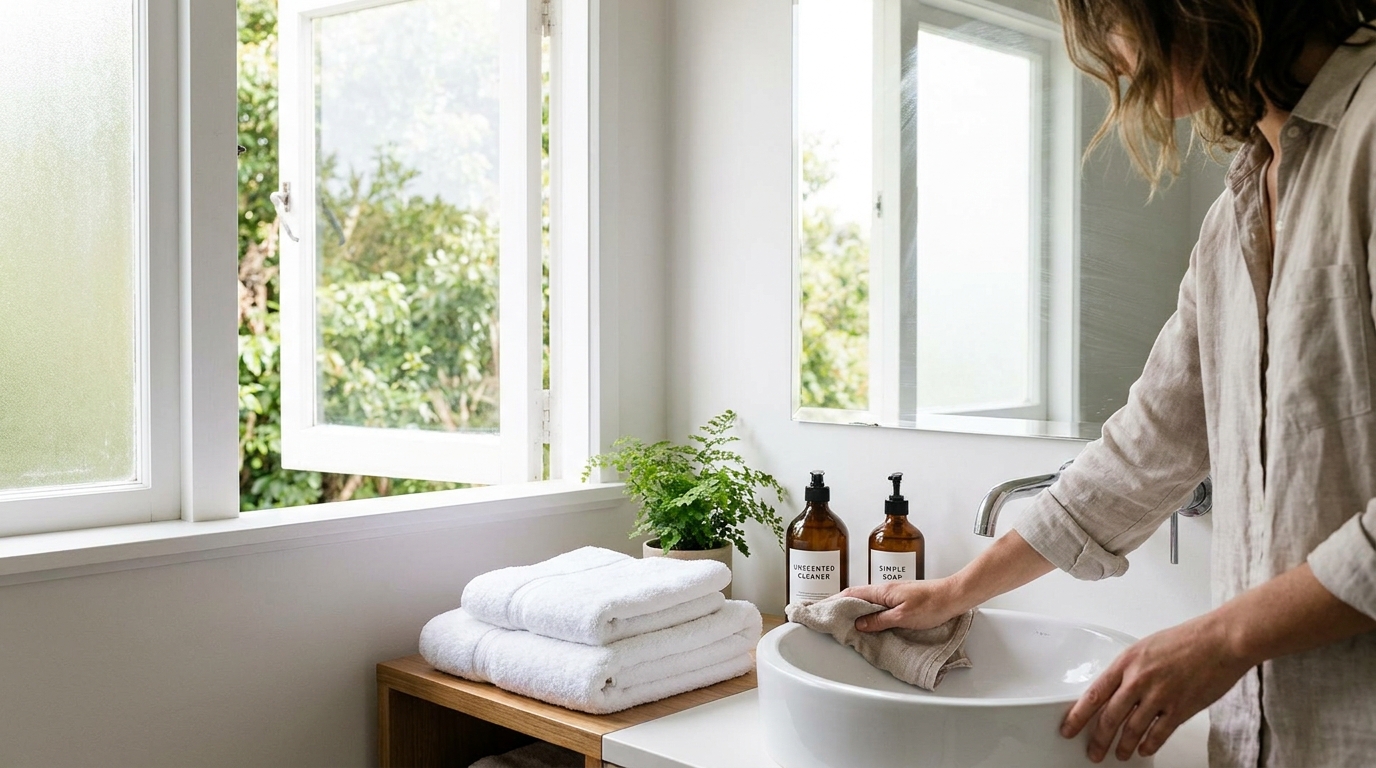
Tuesday: bathrooms and moisture check
Bathrooms benefit from weekly attention because they combine moisture, high touch surfaces, and daily use. Clean the sink, mirror, toilet, tub or shower surfaces, and bathroom floor. Replace towels as needed and check bath mats for dampness. Open a window if possible or run the exhaust fan during and after cleaning to support airflow.
Take a moment to notice signs of moisture buildup or mold risk while you are there. Look around caulking, corners, shower curtains, under the sink, and near windows. This kind of small awareness is part of what makes a schedule healthier, not just tidier.
Wednesday: bedrooms and linens
Midweek is a lovely time to focus on the spaces that restore you. Change bed linens, fluff pillows, dust surfaces, and vacuum or sweep the floors. If you use your bedroom as a part time workspace, clear papers or devices that have drifted into rest areas. The goal is to let the room feel restful again.
Fresh bedding has an outsized emotional impact. It is one of those simple home care rituals that can make the entire week feel softer. If a full linen change every week feels too frequent for your household, adjust as needed, but keep some regular rhythm that maintains freshness.
Thursday: living areas and entryway
On Thursday, focus on the rooms that absorb everyday movement. Dust coffee tables, shelves, and visible surfaces. Vacuum rugs or high traffic flooring, tidy blankets and cushions, and clear the entryway of shoes, bags, and everyday clutter. If you have pets, this is a good day to target fur on upholstery or corners.
Shared spaces affect the emotional tone of a home more than almost any other room category. When they feel looked after, the home tends to feel more welcoming and less chaotic. This is especially true if your living room also functions as a playroom, office, or gathering space.
Friday: laundry and flexible catch up
Friday works well as a lighter but practical day. Fold and put away laundry, wash towels, empty smaller trash bins, and catch up on anything skipped earlier in the week. If your weekday routine is full, this can also be the day for a more complete floor clean in the rooms that need it most.
Keeping Friday flexible helps your schedule feel forgiving. Life is rarely perfectly symmetrical, and a routine that allows for catching up is more likely to last. It also prevents the weekend from starting with a long list of neglected basics.
Saturday: family reset or zone cleaning
Saturday can be your shared household reset if you live with a partner, children, or roommates. This might include decluttering the family room, sorting toys, cleaning out the car, watering plants, refreshing the home office, or doing a full floor pass through the house. If you prefer a quieter weekend, keep this very light and use it only for whatever will help the next week begin smoothly.
In family homes, a Saturday reset often works best when everyone has a small role. Children can sort books, return shoes, or wipe reachable surfaces. Roommates can divide zones. A shared home feels better when care for it feels shared too.
Sunday: rest, prepare, and reset your systems
Sunday does not need to be a heavy cleaning day. In fact, many people do better emotionally when it is not. Instead, use it to prepare for the week ahead. Restock toilet paper, refill hand soap, lay out fresh towels, review your supplies, and do a 10 to 15 minute whole house tidy. If you meal prep or organize lunches, clean as you go so the kitchen starts Monday in good shape.
This kind of Sunday maintenance protects the feeling of ease that your weekly schedule is meant to create. You are not trying to spend the day scrubbing. You are simply setting the stage for a calmer Monday morning.
How to Adjust the Schedule for Your Household
No weekly cleaning schedule should be treated like a fixed rulebook. A useful routine should respond to the actual conditions in your home. If you have pets, floors and upholstery may need more attention. If someone in your household has allergies or asthma, dust control, low fragrance products, and regular ventilation may matter more. If you work from home, your desk area, dining table, or shared living room may need more frequent resetting than a formal guest room.
For smaller apartments, you may be able to combine categories and clean the whole home in shorter sessions. For larger homes, it may help to split floors or zones across separate days. Parents with young children often benefit from a stronger evening reset because toys, crumbs, and paper clutter can accumulate quickly. Shared homes may need a more explicit chore division to avoid cleaning becoming invisible labor for one person.
You can also alternate tasks weekly rather than trying to fit every job into every week. For example, one week you clean inside the microwave and wipe the refrigerator shelves, and the next week you clean light switches and wash the dog bed. Alternating tasks keeps your schedule fresh and your workload realistic.
Healthier Cleaning Habits for Better Indoor Air
Because the goal is a healthier home, it is worth paying attention to how you clean, not just how often you clean. Public health guidance points to ventilation, filtration, humidity control, and source reduction as important parts of indoor air quality. That means your cleaning routine should help remove dust and grime without adding unnecessary airborne irritants.
A few habits can make a real difference. Open windows when weather and conditions allow, especially while cleaning bathrooms or kitchens. Use an exhaust fan where available. Choose low fragrance or fragrance free products if scents tend to linger or irritate. Instead of spraying product directly into the air or onto large surfaces, apply it to a cloth when possible. This simple shift can reduce the amount of mist circulating in the room.
Vacuuming with a quality filter, washing cloths regularly, and keeping moisture under control are also valuable. If you notice persistent dampness, visible mold, or a musty smell, that issue deserves attention beyond cosmetic cleaning. Weekly schedules are helpful because they bring you into regular contact with the conditions of your home. You begin to see what needs maintenance before it becomes a larger problem.
Here are a few cleaner air habits worth including in your routine:
- Ventilate while cleaning bathrooms and kitchens
- Use lower irritant or lower fragrance products when possible
- Avoid excessive use of aerosol sprays
- Wash or replace sponges and cloths regularly
- Check for moisture buildup around tubs, sinks, and windows
- Keep entry floors clean to reduce dirt and outdoor particles indoors
- Change or clean filters according to the needs of your home systems
These are quiet, practical habits, but they support the larger purpose of creating a home that feels genuinely fresh and comfortable to live in.
When Motivation Is Low, Make the Routine Smaller
Every household has weeks when energy is low. Illness, deadlines, school events, travel, and emotional fatigue can all make regular cleaning feel harder than usual. In those moments, the answer is not to abandon the schedule completely. It is to scale it down temporarily. A lighter routine can preserve the feeling of order without demanding too much.
Think of your tasks in levels. Level one might be absolute essentials such as dishes, trash, a bathroom wipe down, and a floor sweep in the kitchen. Level two adds vacuuming, linens, and laundry. Level three includes extras like organizing drawers or cleaning inside appliances. On difficult weeks, stay with level one and let that be enough. This keeps the home from tipping into chaos while respecting your capacity.
There is wisdom in a schedule that bends. Home care should support you, not become another source of pressure. A realistic cleaning rhythm leaves room for life to be full, imperfect, and human.
How to Make Cleaning Feel Less Like a Chore
Cleaning becomes easier to maintain when it is woven into the sensory comfort of home. Light matters. Music matters. Good tools matter. A basket that holds your cloths, a vacuum that is easy to grab, a laundry routine you do not dread, and products with a subtle or neutral scent can all change how the process feels. These details may seem small, but they shape your willingness to return to the routine week after week.
It also helps to focus on the outcome you care about most. For some people, that is waking up to a clear kitchen. For others, it is getting into a bed with fresh sheets or ending the evening in a living room that feels reset. When your cleaning routine is connected to a feeling you genuinely want, it tends to feel more meaningful and less mechanical.
You may even find that some parts of cleaning become grounding. Not every task will be enjoyable, but many people appreciate the result enough that the routine itself gains value. The key is not to romanticize endless housework. It is to create a system that gives back more peace than it takes energy.
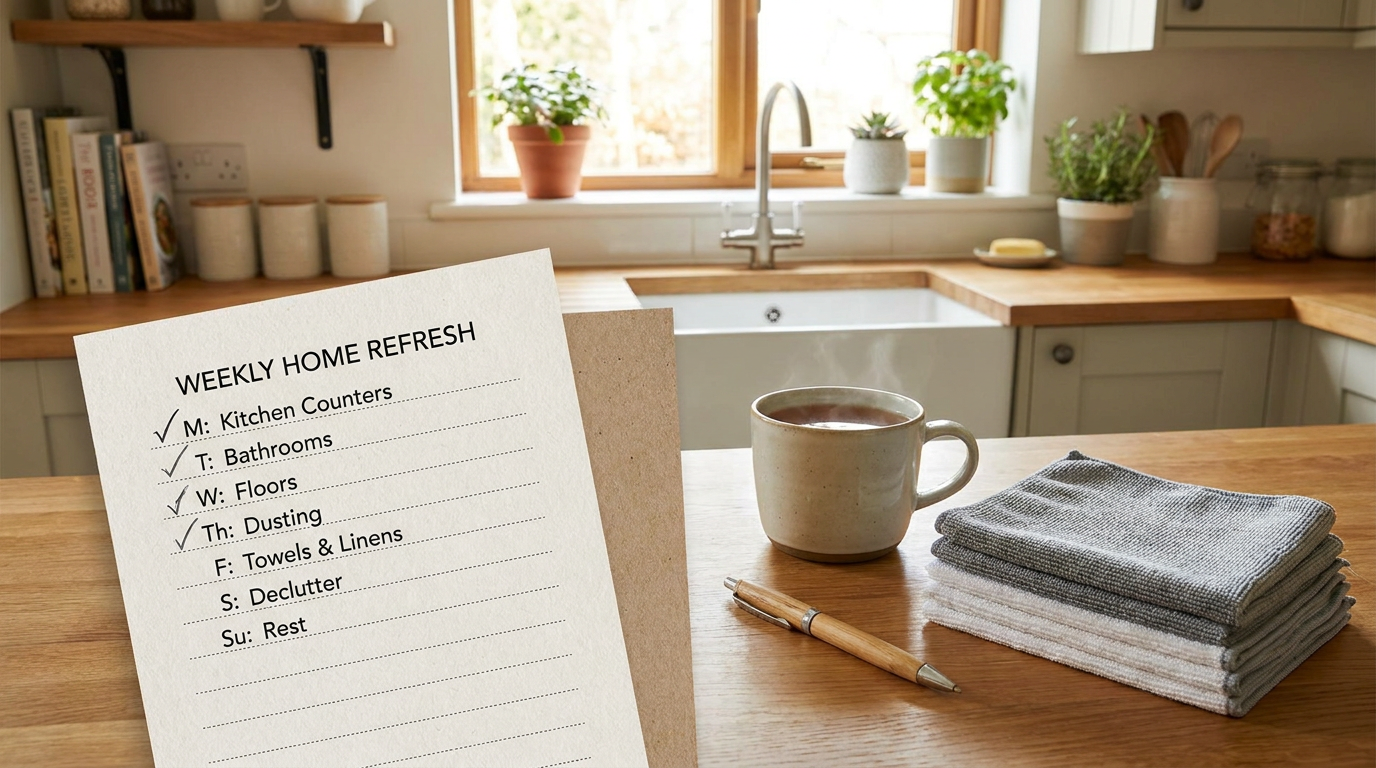
A Simple Weekly Cleaning Checklist to Save
If you want a quick reference, this checklist captures the core of a healthy weekly cleaning routine:
- Do a short daily reset of dishes, counters, clutter, and visible mess
- Clean the kitchen once a week, including sink, surfaces, and floors
- Clean bathrooms weekly and check for moisture or mold risk
- Change bed linens and refresh bedrooms
- Vacuum or sweep high traffic living areas and entryways
- Keep laundry, towels, and trash on a regular rhythm
- Ventilate during cleaning and avoid overusing strong sprays
- Adjust frequency based on pets, allergies, children, and work from home needs
- Use a catch up day so one missed task does not derail the week
- Keep the goal focused on comfort, health, and ease rather than perfection
That final point matters most. A weekly cleaning schedule is not a test of discipline or a measure of how polished your life looks from the outside. It is a tool for making your home feel better to live in.
Final Thoughts
A clean home has a quiet emotional power. It can soften the start of a busy morning, make it easier to focus in the afternoon, and create a more restful feeling at the end of the day. Regular cleaning will not solve every stressor in life, but it can shape the environment that holds you through them. And often, that matters more than we give it credit for.
The best weekly cleaning schedule is the one that fits your energy, your layout, and your season of life. It is structured enough to keep things from slipping too far, but gentle enough that you can continue using it even when life becomes busy. It respects health, supports comfort, and helps your home stay welcoming without demanding constant effort.
If you have been waiting to feel motivated before creating a cleaning routine, consider this your reminder that routine often comes first. Start small. Choose a few tasks that make the biggest difference. Let your home become easier one week at a time. The result is not just a cleaner space. It is a home that feels calmer, lighter, and more deeply lived in.



No Comment! Be the first one.