


Mastering Moisture Control: Essential Tips for a Sustainable Home
Moisture control rarely gets the same attention as insulation, solar panels, or efficient appliances, yet it is one of the most important foundations of a sustainable home. A house can be beautifully renovated and highly efficient on paper, but if water is getting into the wrong places or indoor humidity stays too high, the home can quickly become less healthy, less durable, and more expensive to maintain. Dampness affects air quality, comfort, finishes, and structural materials, often in ways that are gradual enough to be missed until the damage is significant.
Table Of Content
- Why Moisture Control Matters in a Sustainable Home
- Understanding Where Moisture Comes From
- The Best First Step: Source Control
- Finding the Right Indoor Humidity Balance
- Ventilation: The Quiet Workhorse of Moisture Control
- Air Sealing, Insulation, and Condensation Control
- Wet Rooms and Damp Areas Need Smarter Material Choices
- Basements, Crawl Spaces, and Foundations: The Hidden Moisture Frontier
- What to Do When You See Mold or Dampness
- Climate Resilience and the New Moisture Reality
- A Practical Moisture Control Routine for Everyday Homeowners
- Common Misconceptions That Can Undermine Moisture Control
- Conclusion: Dry Homes Are Durable, Healthy, and More Sustainable
In practical terms, moisture control is about managing water in all its forms. That includes rain and snow outside, plumbing leaks inside, water vapour generated by everyday living, and condensation that forms when warm humid air meets a cold surface. In a well-maintained green home, these forces are anticipated and managed through a combination of source control, ventilation, air sealing, insulation, drainage, and routine observation. The goal is not to create a sterile environment. It is to create a resilient one.
Health Canada has been very clear that dampness and visible mold should be addressed promptly, and that the problem will return unless the moisture source is fixed. This is an especially important message now, as homes are becoming more airtight for energy efficiency and climate change is bringing stronger storms, heavier rainfall, and greater flooding risk in many areas. A tighter home can be a better home, but only if ventilation and moisture management keep pace with that performance.
When moisture is controlled well, sustainability becomes more than an abstract principle. Materials last longer, repair cycles are reduced, indoor air stays cleaner, and energy systems do not have to work harder than necessary. A dry, balanced home is also simply more comfortable to live in. Windows stay clearer, odours are reduced, surfaces feel healthier, and rooms maintain a steadier sense of calm. Moisture control supports living well in a very immediate way.
This guide looks at moisture control through the lens of green building envelope maintenance. It focuses on practical, eco-friendly steps that homeowners can understand and apply, whether they live in a newer high-performance home or an older house being improved over time. The key idea throughout is simple: fix sources first, manage humidity consistently, and think of moisture, air, and heat as connected rather than separate issues.
Why Moisture Control Matters in a Sustainable Home
A sustainable home is designed to reduce waste, improve efficiency, and protect occupant health over the long term. Moisture problems work against each of those goals. When water enters walls, roofs, basements, or crawl spaces, it can shorten the life of wood framing, drywall, insulation, flooring, paint, and finishes. That means more replacement, more material use, and more cost. Durability is one of the most underappreciated aspects of sustainability, and moisture is one of the biggest threats to it.
Moisture also has a direct relationship with indoor air quality. Damp environments support mold growth and can contribute to musty odours, allergen buildup, and a general sense that indoor spaces are stale or unhealthy. Health Canada notes that infants, children, seniors, pregnant people, and those with respiratory conditions such as asthma may be more vulnerable to mold exposure. From a healthy homes perspective, preventing dampness is not cosmetic maintenance. It is a core part of providing a safe and supportive environment.
There is also an energy dimension. Wet materials often perform worse thermally than dry ones, and excess humidity can make a home feel warmer in summer and colder in winter, pushing people to adjust heating and cooling systems more aggressively. Condensation on windows can signal heat loss, air leakage, and imbalanced humidity all at once. Moisture control often improves comfort and efficiency together, which is exactly the kind of overlap good green maintenance aims for.
Practical benchmark: Health Canada recommends keeping indoor relative humidity between 30% and 50%. EPA guidance similarly advises staying below 60%, with an ideal range of 30% to 50% to reduce mold growth risk.
One useful mindset is to see moisture control as preventive care for the home. It is easier, cheaper, and more sustainable to keep building materials dry than to remove moldy drywall, replace rotted sheathing, or rebuild a damaged basement. A little attention at the right moment often prevents a much larger intervention later.
Understanding Where Moisture Comes From
To manage moisture effectively, it helps to understand that water enters or forms in homes through several different pathways. Some are obvious, such as a roof leak or burst pipe. Others are quieter, such as humid indoor air drifting into a cold cavity through small air leaks and condensing over time. Natural Resources Canada explains that moisture, air, and heat move together in the building envelope, and that much more moisture can travel through small air leaks than through simple vapour diffusion across materials. That is why moisture control is rarely just about one product or one repair.
Outdoor water is the first major category. Rain, melting snow, wind-driven storms, poor grading, overflowing gutters, clogged drains, and foundation seepage can all bring water into contact with parts of the home that are meant to stay dry. As climate resilience becomes a bigger part of housing conversations, this outside moisture load matters more. A home that performed adequately under past weather patterns may need upgrades to handle more intense rain or longer wet seasons.
Indoor moisture generation is the second category, and it is often underestimated because it comes from ordinary daily life. Showering, cooking, washing clothes, drying laundry, mopping floors, storing firewood indoors, and even breathing all add moisture to the air. In a leaky older home, some of that humidity used to escape naturally, though at an energy cost. In a tighter energy-efficient home, that same humidity may linger unless ventilation is designed and used properly.
Condensation is the third category, and it is where many homeowners first notice that something is not balanced. If you see persistent fogging on windows, droplets on cold pipes, damp corners behind furniture, or moisture on basement surfaces, warm humid air is likely meeting a cooler surface and turning into liquid water. Surface condensation is not just a visual nuisance. It is a sign that temperature, insulation, air leakage, ventilation, or humidity levels need closer attention.
Finally, there are hidden moisture sources such as slow plumbing leaks, poorly vented appliances, disconnected ductwork, wet crawl spaces, and roof or wall leaks that stay out of sight for months. These are often the most damaging because they continue quietly. Sustainable home maintenance depends on noticing small clues early rather than waiting for a large visible failure.
The Best First Step: Source Control
When people discover mold or dampness, there can be a strong temptation to focus first on cleaning products, odour treatments, or cosmetic repair. Those may have a place later, but the most effective and sustainable strategy is always source control first. If water is entering the home or humidity remains elevated, cleanup alone will not solve the problem. Health Canada emphasizes that visible mold should be cleaned regardless of type, but the real priority is controlling the moisture source so the issue does not return.
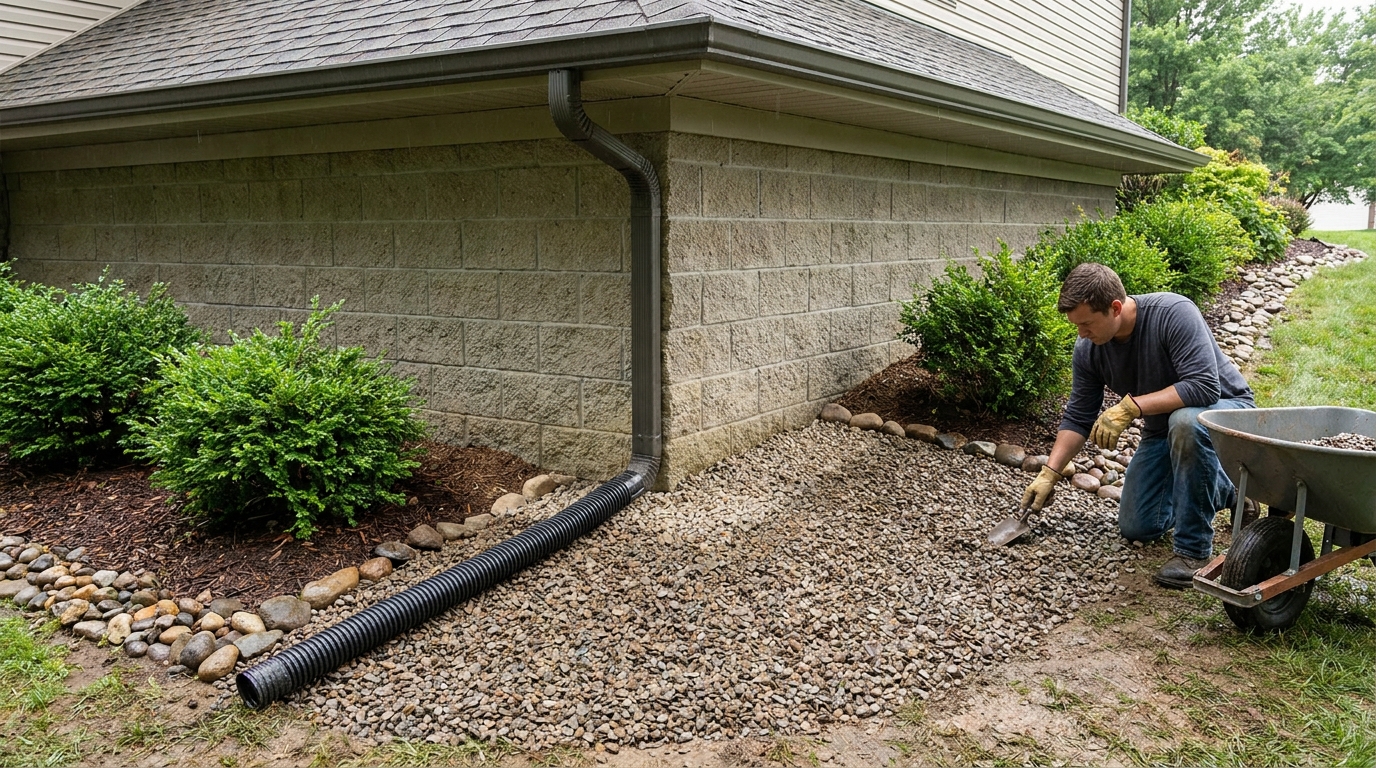
Source control starts outside. Walk around the home during or shortly after rainfall if possible. Look at how water moves off the roof and where it lands. Gutters should be intact and clear. Downspouts should direct water well away from the foundation. The soil around the house should slope gently away rather than toward the walls. Hard surfaces such as patios or walkways should not trap water against the building. If water regularly pools near the foundation, moisture pressure can build over time and find a path indoors.
Inside the home, source control means acting quickly on leaks and damp materials. A dripping supply line under a sink, a cracked tile joint around a tub, a failing caulk line at a shower enclosure, or a pinhole in a washing machine hose can all sustain chronic moisture. EPA guidance says wet materials should be thoroughly dried as soon as possible, ideally within 24 to 48 hours, to help prevent mold growth. That short window matters because many common building materials are absorbent.
It also helps to think in terms of systems instead of isolated incidents. If a bathroom ceiling repeatedly develops spotting, the issue may not be the paint itself. It may be poor fan performance, inadequate insulation above, or air leakage carrying humidity into a colder cavity. If a basement smells musty every summer, the problem may not simply be that basements are naturally damp. It may involve grading, foundation moisture, cool surfaces, and humid outdoor air entering the space. Sustainable maintenance asks what is driving the symptom, not just how to conceal it.
Finding the Right Indoor Humidity Balance
Humidity is one of the simplest moisture factors to monitor and one of the most useful to understand. Relative humidity measures how much moisture is in the air compared with what the air can hold at a given temperature. When humidity rises too high indoors, mold risk increases, condensation becomes more likely, and the home may start to feel stuffy. When humidity is too low, people may experience dry skin, irritation, or static, especially during winter heating seasons. The goal is a healthy middle range rather than an extreme.
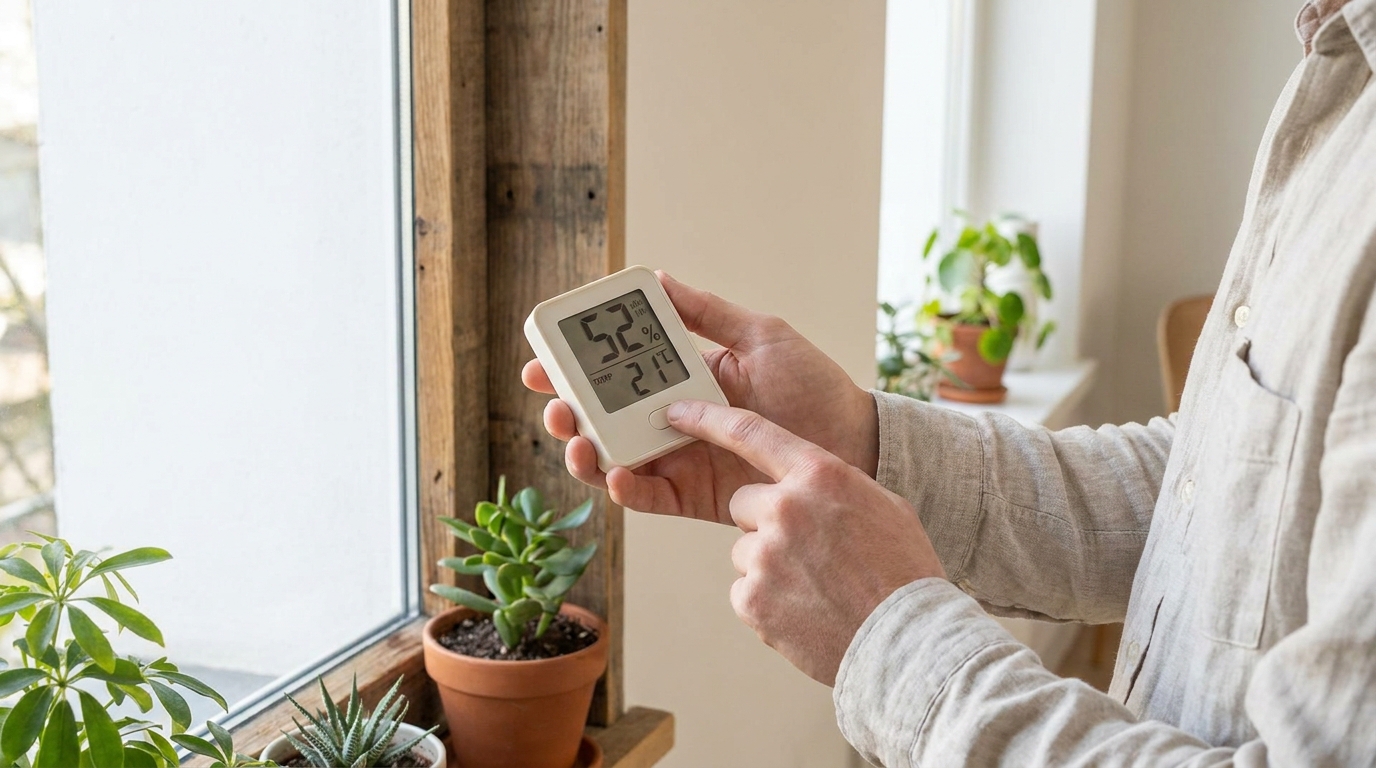
For most homes, an indoor relative humidity range of 30% to 50% is a practical target. This aligns with guidance from Health Canada and EPA. In winter, the ideal number may shift toward the lower end if windows are prone to condensation during very cold weather. In summer or in damp basements, controlling humidity may require more active ventilation or dehumidification. The right target is not only about comfort. It is also about reducing the conditions that support mold and material damage.
A small digital hygrometer is an inexpensive tool that can make moisture management far more precise. Instead of guessing whether the air feels humid, you can check actual readings in bedrooms, bathrooms, basements, and other trouble spots. Homes with recurring condensation or damp odours benefit from regular tracking because patterns often emerge. Humidity may spike after showers, while cooking, during shoulder seasons when windows stay closed, or in basements during muggy summer periods.
If relative humidity consistently rises above 50% in a damp area such as a basement, Health Canada advises using a dehumidifier, especially if condensation is forming on cold surfaces. This is a practical measure rather than a failure of sustainability. The most sustainable approach is to use the smallest effective intervention after addressing source issues and ventilation. A well-maintained, appropriately sized dehumidifier in a chronically damp area can prevent material damage and improve air quality with relatively modest energy use compared with repeated repairs.
Ventilation: The Quiet Workhorse of Moisture Control
Ventilation is one of the most important tools for moisture control because it helps remove water vapour at the point where it is produced. In a sustainable home, good ventilation reduces reliance on reactive measures and supports healthier indoor air more broadly. It is especially valuable in tighter homes, where natural leakage can no longer be expected to carry moisture out of the building in an acceptable or efficient way.
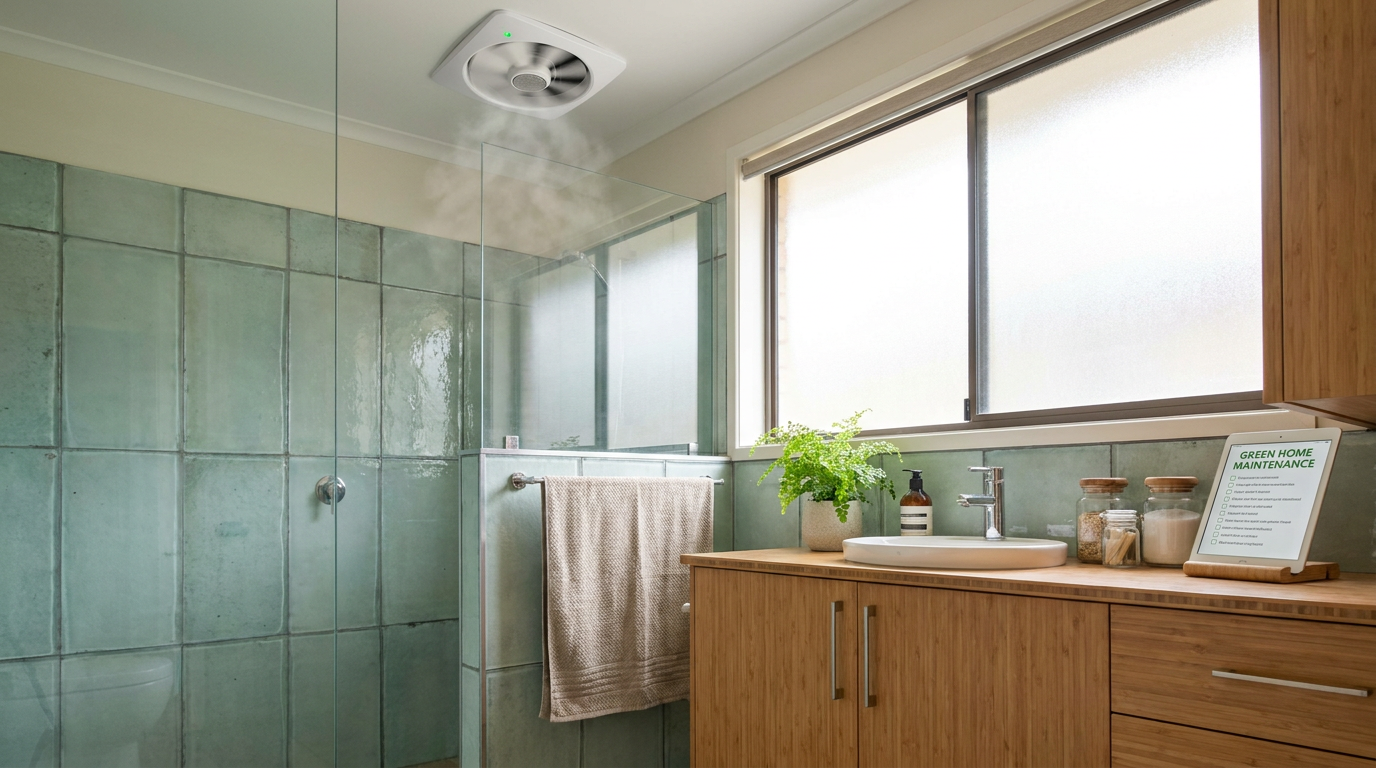
Bathrooms are a classic example. A shower can release a surprising amount of moisture into a relatively small space. Without a functioning exhaust fan, that humidity spreads into adjacent rooms and often lingers on cooler surfaces. A good bathroom fan should vent outdoors, not into an attic or wall cavity, and it should continue running long enough after a shower to clear remaining moisture. If your bathroom mirror stays fogged for a long time after bathing, ventilation likely needs attention.
Kitchens also generate substantial moisture, especially when boiling water, simmering food, or using multiple burners. A range hood that exhausts outdoors helps remove both humidity and cooking pollutants. Recirculating units with filters may help with grease and odour, but they do not remove moisture from the house. Laundry areas matter too. Clothes dryers should be vented outdoors, and lint buildup should be cleaned regularly to maintain airflow and reduce safety risks.
Whole-home ventilation becomes even more important in high-performance homes and major retrofits. Balanced systems such as heat recovery ventilators and energy recovery ventilators can bring in fresh air while reducing energy penalties associated with simple exhaust-only ventilation. These systems are especially useful in colder climates where homes are tightly sealed for efficiency. They work best, however, when they are properly designed, commissioned, and maintained. A ventilation system that is noisy, difficult to use, or rarely serviced is unlikely to deliver the moisture control benefits it was meant to provide.
ASHRAE guidance has continued to evolve with greater attention to humidity control in residential ventilation, which reflects a broader understanding that energy efficiency and healthy indoor environments must be considered together. A well-sealed home without adequate ventilation can trap moisture. A very ventilated home without thoughtful air sealing can waste energy and still have cold surfaces that encourage condensation. Balance is what matters.
Air Sealing, Insulation, and Condensation Control
One of the most misunderstood moisture issues is the assumption that condensation is simply a cleaning problem. In many cases, visible moisture on windows, walls, or pipes is actually evidence of a building envelope imbalance. Warm air carries moisture, and when that air reaches a cold enough surface, water condenses. If this happens repeatedly in concealed spaces such as wall cavities or attics, damage can accumulate before anyone notices.
Air sealing and insulation help reduce condensation risk in different but connected ways. Air sealing limits the movement of warm moist indoor air into colder parts of the envelope. Insulation keeps interior-facing surfaces warmer so they are less likely to attract condensation. Neither strategy works as well in isolation. A wall that is well insulated but full of air leaks can still accumulate hidden moisture. A tightly sealed area with inadequate insulation can still create cold spots.
Windows often reveal this relationship first. Repeated winter condensation on the inside of glazing may indicate high indoor humidity, but it can also point to older low-performance windows, air leakage around frames, or poor circulation at the perimeter. Heavy curtains kept tightly closed all day can sometimes worsen the problem by cooling the glass surface further. Improving window performance, reducing humidity, and ensuring air can circulate near the glazing often works better than focusing on one variable alone.
Attics are another common trouble zone. Warm moist air escaping from living spaces below can travel through ceiling penetrations around light fixtures, plumbing stacks, attic hatches, and duct chases. Once in the attic, that air can condense on cold roof sheathing during winter. Over time, this may lead to staining, mold, or material decay. Good attic moisture control often requires a combination of ceiling air sealing, insulation continuity, and proper ventilation rather than simply adding more insulation over an existing problem.
This is where a sustainable approach becomes especially helpful. Instead of treating moisture, heat loss, and comfort as separate maintenance topics, it recognizes that they are intertwined. Solving condensation well often improves energy performance at the same time.
Wet Rooms and Damp Areas Need Smarter Material Choices
Some parts of a home face more regular moisture exposure than others. Bathrooms, laundry rooms, mudrooms, basements, and entry areas all benefit from materials that tolerate occasional dampness and dry effectively. Choosing moisture-resistant finishes in these zones is not about creating a harder, less livable home. It is about making normal wear easier to manage and reducing the chance that small moisture events turn into material failures.
Paint, sealants, flooring, and backing materials should be selected with the space in mind. In a bathroom, for example, a low-VOC paint formulated for higher humidity environments can support indoor air quality while also resisting surface degradation. In basements, flooring systems that allow some drying potential or resist intermittent moisture are often more durable than highly absorbent finishes installed directly on cool concrete. Around tubs and showers, intact sealant lines matter as much as the visible finish because they help keep water from entering hidden assemblies.
That said, moisture-resistant materials are not substitutes for moisture control. Installing water-tolerant finishes over a damp wall or floor without solving the cause is simply a way of delaying the next visible symptom. The best results come when material selection is paired with sound ventilation, drainage, and humidity management. Sustainable material use is not just about what something is made of. It is also about whether it can perform well in the conditions where it is installed.
Basements, Crawl Spaces, and Foundations: The Hidden Moisture Frontier
Basements and crawl spaces often challenge even careful homeowners because they are naturally cooler than upper floors and in close contact with the ground. That makes them more vulnerable to both bulk water intrusion and condensation. A basement can become damp from seepage through foundation walls, capillary moisture from slabs, humid outdoor air entering in summer, plumbing leaks, or a combination of all four. Because these areas are often partly out of sight, problems can continue for a long time before action is taken.
The first priority is always exterior water management. Gutters and downspouts should move water away from the foundation, and the grade around the home should direct surface runoff outward. If downspouts discharge too close to the wall, even a well-built foundation can be overwhelmed during heavy rain. In some homes, adding extensions or splash blocks is a simple low-cost improvement with significant moisture benefits.
Inside the basement, a dehumidifier is often one of the most effective tools if relative humidity stays high. This is especially true in summer, when warm outdoor air enters a cool basement and moisture condenses on cooler surfaces or simply drives humidity upward. Health Canada specifically notes that damp areas such as basements may need dehumidification when humidity is above 50% or condensation is forming on cold surfaces. If a dehumidifier is used, it should be maintained regularly, drained properly, and sized for the space.
Crawl spaces deserve similar attention. Bare earth, poor drainage, plumbing leaks, and inadequate air or vapour control can all make crawl spaces chronically damp. Since air from crawl spaces can affect living areas above, moisture issues here are not isolated. Depending on the home and climate, solutions may include ground covers, drainage improvements, insulation upgrades, air sealing, and sometimes conditioned or controlled ventilation approaches. Because crawl spaces vary widely, targeted professional advice can be especially useful in more complex cases.
What to Do When You See Mold or Dampness
Visible mold can feel alarming, but the right response is usually more methodical than dramatic. The first step is not to identify the species. Health Canada notes that visible mold should be cleaned regardless of type because the practical issue is moisture control and prevention of recurrence. In most typical home situations, spending energy on moisture source correction is far more useful than chasing laboratory identification.
Start by asking a few grounded questions. What got wet or stays damp here. Is the area near a plumbing line, exterior wall, window, roof junction, or poorly ventilated room. Has there been a recent leak, flood, condensation pattern, or long period of high humidity. Once the source is identified, stop it if possible and begin drying affected materials immediately. EPA guidance stresses that rapid drying, ideally within 24 to 48 hours, helps reduce mold growth risk.
Small surface areas of mold can often be cleaned safely with appropriate caution, but porous materials that are deeply affected may need removal. If contamination is extensive, if the moisture source is unknown, or if sensitive occupants are involved, professional assessment is wise. The key point for a sustainable home is not to patch over damage or paint across staining without understanding why it happened. Covering wet or moldy materials traps the problem and often increases eventual waste.
It also helps to avoid one common misconception: that a little mold is harmless. Guidance consistently emphasizes that any visible mold indicates a moisture issue. Not every small patch means major structural damage, but it does mean the home is telling you something about its moisture balance. Listening early is the more practical path.
Climate Resilience and the New Moisture Reality
Moisture control has always mattered, but it is becoming more important as weather patterns shift. Heavier rainfall, more intense storms, flooding events, and longer humid periods are changing how buildings experience moisture stress. Research and code-related work in Canada increasingly reflects this focus on resilient building structures and climate adaptation. For homeowners, that means envelope maintenance should be thought of not only as upkeep, but also as preparation.
A roof and gutter system that once handled local weather adequately may now need more frequent inspection. Grading that was acceptable years ago may no longer be enough if surrounding landscapes have settled and rainfall events are more intense. High-performance retrofits that significantly improve airtightness may need updated ventilation strategies to avoid trapping indoor-generated moisture. These are not reasons to avoid efficiency improvements. They are reasons to integrate them with a fuller understanding of building science.
There is also growing interest in smart monitoring tools. Humidity sensors, connected thermostats, leak detectors, and dehumidifiers with automatic controls can help homeowners catch patterns earlier and respond more precisely. Technology is not a substitute for maintenance, but it can support a more proactive, lower-waste approach. In a sustainable home, early information often leads to smaller interventions.
A Practical Moisture Control Routine for Everyday Homeowners
The most effective moisture management habits are usually the least dramatic. They are small, repeatable checks that keep a home in balance over time. Instead of waiting for a major event, homeowners can build moisture awareness into seasonal maintenance and normal routines. This approach tends to be calmer, less costly, and much more sustainable than reactive repair cycles.
A practical routine might include the following steps:
- Check indoor humidity regularly, especially in winter and in basements during summer.
- Run bathroom fans during and after showers, and use a vented range hood when cooking.
- Inspect under sinks, around toilets, behind washing machines, and near water heaters for slow leaks.
- Clean gutters and ensure downspouts discharge away from the foundation.
- Watch for window condensation, musty odours, peeling paint, staining, or warped finishes.
- Dry spills and wet materials promptly, especially on absorbent surfaces.
- Review basement and crawl space conditions during wet seasons and after major storms.
- Maintain caulking and seals in showers, tubs, and around exterior penetrations where needed.
For homeowners who prefer an even more structured process, seasonal check-ins can be useful. Spring is a good time to assess drainage, roof runoff, and any signs of winter condensation damage. Summer is ideal for basement humidity checks and dehumidifier maintenance. Fall is a good time to prepare gutters and downspouts for wetter weather. Winter is the season to monitor indoor humidity closely, especially when outdoor temperatures drop and condensation risk rises.
None of these tasks are particularly glamorous, but together they support almost every larger goal associated with sustainable housing. They protect materials, reduce waste, improve air quality, support comfort, and help homes stay resilient through changing weather conditions and daily use.
Common Misconceptions That Can Undermine Moisture Control
Several common beliefs can make moisture problems harder to solve. One is the idea that cleaning visible mold is enough. In reality, if the source of moisture remains, mold often returns. Another is the assumption that energy-efficient homes are automatically healthier. A tighter building envelope can absolutely improve comfort and reduce energy use, but without adequate ventilation and humidity control, it can also trap moisture indoors.
It is also easy to assume moisture issues are limited to bathrooms and basements. Those rooms are important, but attics, crawl spaces, windows, laundry areas, mechanical rooms, and wall assemblies can all be involved. Similarly, people sometimes believe mold species must be identified before action can be taken. For typical household situations, the more useful question is not what exact mold it is, but why it was able to grow there in the first place.
Perhaps the most important misconception is that moisture problems are purely cosmetic until they become severe. In fact, subtle signs often appear early. A recurring fogged window, a persistent musty smell, flaking paint, discoloured grout, or damp cardboard in a basement can all be meaningful clues. Homes tend to communicate gently at first. Paying attention at that stage is the more elegant and practical form of sustainability.
Conclusion: Dry Homes Are Durable, Healthy, and More Sustainable
Moisture control is one of those housing topics that becomes more compelling the closer you look at it. It touches durability, indoor air quality, comfort, resilience, maintenance costs, and energy performance all at once. For green building envelope maintenance, that makes it central rather than secondary. A sustainable home is not only one that uses less energy. It is one that stays sound, healthy, and adaptable over time.
The reassuring part is that good moisture control is usually built from practical decisions rather than complicated ones. Keep indoor humidity in a healthy range. Vent moisture where it is generated. Fix leaks promptly. Direct water away from the building. Use materials suited to damp-prone areas. Treat condensation as a building performance signal, not just a nuisance. Dry wet materials quickly and avoid covering problems before they are resolved.
If there is one idea worth keeping, it is this: moisture problems rarely improve on their own, but they are often very manageable when addressed early and thoughtfully. In that sense, moisture control is not just maintenance. It is stewardship. It helps a home last longer, feel better, and support the people living in it with less waste and more confidence.
That is a quiet kind of sustainability, but it may be one of the most valuable kinds there is.



No Comment! Be the first one.