


Essential Guide to Caring for Your Air Purifier for Cleaner, Healthier Indoor Air
There is something deeply reassuring about walking into a home that feels fresh, calm, and easy to breathe in. We often notice beautiful light, comfortable furniture, and thoughtful design first, but the atmosphere of a room is shaped just as much by what we cannot see. Indoor air has a quiet influence on daily life, affecting sleep, focus, comfort, and the sense of ease we want our homes to offer. When your air purifier is cared for properly, it becomes part of that gentle support system that helps your space feel healthier and more peaceful every day.
Table Of Content
- Why air purifier care matters more than many homeowners realize
- What an air purifier can and cannot do
- Start with the right setup before you focus on cleaning
- How often should you maintain your air purifier
- The basic parts you should know
- How to clean your air purifier safely and effectively
- A simple cleaning checklist
- When and how to replace the filter
- The comfort benefits of a well-maintained purifier
- Air purifier care during wildfire smoke events
- Do not forget your HVAC filtration
- Common mistakes that reduce air purifier performance
- Quick signs your purifier may need attention
- Creating a simple air purifier routine that lasts
- What to do if you do not have a purifier in every room
- How clean indoor air supports the feeling of home
- Frequently asked questions about air purifier care
- How often should I replace my air purifier filter?
- Can I wash a HEPA filter?
- Is one air purifier enough for the whole house?
- Why does my purifier seem to run but not help much?
- Should I use an ozone-generating air cleaner?
- Final thoughts
For many families, air purifier care sounds like a technical chore, but in reality it is a simple wellness habit. It is less about machinery and more about creating a home that supports easier breathing during allergy season, smoke events, winter months, and times when windows stay closed. Research from the U.S. EPA, Health Canada, and CDC consistently shows that air cleaners can help reduce indoor particles when they are correctly sized, placed well, and maintained on schedule. That means the small routine of checking filters, cleaning the unit, and keeping airflow clear can make a meaningful difference in how your home feels to live in.
This guide is designed to make air purifier care feel practical, approachable, and worth doing. You will learn how to clean your purifier, when to replace filters, how to optimize performance, and which common mistakes to avoid. Just as important, you will see how this maintenance connects to something larger than upkeep alone. It supports a healthier indoor environment, greater peace of mind, and a home that feels more nurturing for children, older adults, guests, and anyone sensitive to dust, pollen, or smoke.
Good air purifier care is not just maintenance. It is a small, steady act of prevention that can help your home feel cleaner, calmer, and more comfortable in every season.
Why air purifier care matters more than many homeowners realize
According to the EPA, most people spend about 90 percent of their time indoors. That simple fact changes the way we should think about home wellness. Even if your interior looks tidy, the air inside can still hold fine particles from cooking, dust, pet dander, seasonal allergens, and in some regions, wildfire smoke. A well-maintained air purifier helps reduce some of those particles, which can contribute to a more comfortable everyday environment.
The important detail is that an air purifier can only do its job well if it is maintained properly. Dirty or overloaded filters reduce performance, and a neglected unit may move less air than you expect. In other words, the device may still be running, but not effectively supporting your space. This is one of the most common reasons people feel disappointed with an air purifier that might actually work quite well once it is cleaned and fitted with a fresh filter.
There is also an emotional side to this topic that deserves attention. When the outdoor air quality drops, or when allergy symptoms start creeping in, many people feel an immediate sense of worry inside their own homes. Caring for your purifier turns that worry into action. It gives you a simple routine that supports your family’s comfort and helps your home feel more prepared, especially during smoke events or heavy pollen days.
What an air purifier can and cannot do
Before getting into maintenance, it helps to understand the role your purifier actually plays. Portable air cleaners are designed to clean the air in a single room or a defined area, not the entire house. That means a purifier in the bedroom may improve conditions in the bedroom, but it will not clean the upstairs, downstairs, and kitchen equally. This is not a flaw. It is simply how portable filtration works.
It is also important to know that no air cleaner removes every pollutant. Official guidance from the EPA and Health Canada emphasizes that source control and ventilation remain the primary strategies for improving indoor air quality. Source control means reducing the pollutant at its origin, such as venting cooking fumes, managing moisture, avoiding indoor smoking, and keeping dust under control. Ventilation means bringing in clean outdoor air when conditions allow.
Your air purifier is best viewed as a valuable supplement to those habits, not a whole-home cure. It can help reduce particles in the air that passes through it, especially fine particulate matter, but it does not cancel out every indoor air problem. This perspective is useful because it keeps expectations realistic and helps you use the purifier more effectively as part of a complete indoor air strategy.
Another misconception worth clearing up is the idea that any machine marketed as an air cleaner is safe or equally effective. Ozone-generating devices should be approached with caution because ozone can be harmful to health. Safer, evidence-based options focus on proven particle filtration and appropriate room sizing rather than dramatic marketing claims.
Start with the right setup before you focus on cleaning
Maintenance begins with good setup. Even a high-quality purifier may underperform if it is too small for the room, hidden behind furniture, or installed with a poorly fitted filter. The EPA recommends choosing a portable air cleaner with a Clean Air Delivery Rate, or CADR, matched to the room size. That number matters because it reflects how effectively the unit can remove certain particles from the air in a specific amount of time.
If your purifier is undersized, it may run constantly without giving you the results you hoped for. A larger bedroom, open-plan living room, or family area may need a stronger unit than a compact purifier designed for a nursery or office. Matching the purifier to the space is one of the most important ways to support comfort and reduce frustration. Maintenance works best when the product itself is capable of handling the room in the first place.
Placement matters just as much. A purifier needs room to draw in air and release clean air back into the space. If it is pushed tightly into a corner, covered by curtains, or blocked by side tables, airflow is restricted and performance can drop. In most rooms, keeping the unit in an open area with clear space around the intake and outlet helps it work more efficiently and more quietly.
How often should you maintain your air purifier
One of the easiest ways to care for your purifier is to stop waiting until it looks obviously dirty. Performance can decline before visible buildup appears, which means a filter may already be less effective even if it seems acceptable at a glance. This is why manufacturer instructions matter so much. They provide the most reliable schedule for cleaning washable parts and replacing disposable filters.
The frequency depends on your home and your season of life. A purifier in a home with pets, nearby traffic, high pollen exposure, or wildfire smoke may need more frequent attention than the same model in a low-dust guest room. If your purifier runs all day in a busy family space, it is naturally collecting more airborne particles than one that is used only overnight in a lightly occupied bedroom.
As a practical rhythm, it helps to do a quick visual and airflow check every few weeks, clean the exterior and prefilter as recommended, and replace the main filter according to the manufacturer’s schedule or indicator. During smoke events or heavy allergy periods, expect maintenance needs to increase. Health Canada notes that clogged filters become less effective at removing smoke, which is an especially important reminder when outdoor conditions are challenging.
The basic parts you should know
Most portable air purifiers are quite simple once you know the parts. Many models include an outer body, an air intake area, an air outlet, a washable or vacuumable prefilter, and a main filter that may be HEPA or HEPA-type depending on the product. Some also include an activated carbon layer to help with certain odors and gases, though particle filtration remains the core function discussed in most public guidance.
The prefilter catches larger debris such as hair and visible dust, helping protect the main filter and extend its life. The main filter captures finer particles and is often the component that must be replaced on schedule. Some units also include indicator lights that estimate when a filter change is due, but those should be treated as a guide rather than a reason to ignore the written maintenance instructions.
Understanding these parts can make air purifier care feel less mysterious. You do not need to become highly technical to maintain your unit well. You simply need to know which parts can be cleaned, which parts must be replaced, and how to put everything back in place securely so air does not bypass the filter.
How to clean your air purifier safely and effectively
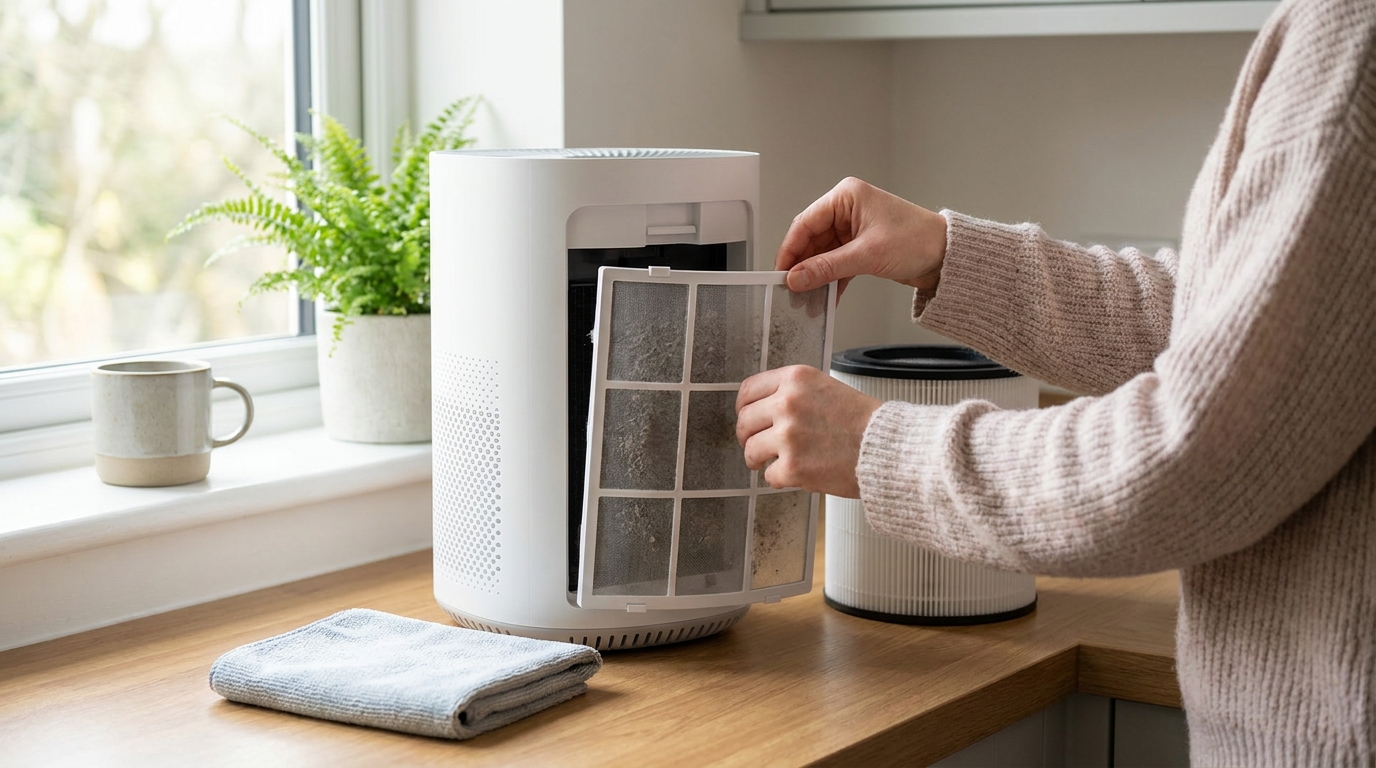
Cleaning your purifier is one of the simplest ways to support performance. Start by turning the unit off and unplugging it. Open the housing according to the manufacturer’s instructions, then remove any washable or vacuumable prefilter if your model includes one. Be gentle during this process, because forcing panels or pulling at the filter can damage the fit and affect future performance.
For many units, the exterior and intake grilles can be wiped with a soft, dry or lightly damp cloth to remove dust. The prefilter may be vacuumed or rinsed if the instructions specifically allow it. The main filter usually should not be washed unless the manufacturer clearly says it is washable. Washing a non-washable HEPA-style filter can ruin its structure and reduce its effectiveness.
As you clean, look for anything that could obstruct airflow. Dust on vents, pet hair gathered near the intake, and furniture pressed too closely against the unit are all small issues that can affect how well your purifier works. Once everything is dry and clean, reassemble the unit carefully. Make sure the filter is seated properly and that all covers close snugly.
CDC guidance highlights the importance of proper sizing, service life, and minimizing bypass airflow around the filter. In practical terms, that means the filter should fit as intended, without gaps that let air slip around instead of through the filter material. A quick but careful reassembly matters more than many people realize.
A simple cleaning checklist
- Turn off and unplug the air purifier before opening it.
- Check the manufacturer instructions for which parts are washable, vacuumable, or replaceable.
- Wipe the exterior, intake, and visible vents to remove dust.
- Clean the prefilter if your unit has one and if the instructions permit it.
- Inspect the main filter for age, condition, and fit.
- Reinstall every component securely so air flows through the filter, not around it.
- Reset the filter indicator if your model requires it after replacement.
When and how to replace the filter
Replacing the filter on time is the heart of good air purifier care. A filter that has reached the end of its service life may still look only lightly dusty, but that does not mean it is performing well. Overloaded filters can restrict airflow and lower the purifier’s ability to remove particles. This is why official guidance repeatedly emphasizes regular replacement according to the manufacturer’s directions.
Before you buy a replacement, check your exact model number and order the correct filter type. Using the wrong size or shape can create gaps that reduce efficiency. Once the replacement arrives, keep it sealed until you are ready to install it so it stays clean. Then remove the old filter, place the new one exactly as directed, and confirm the arrows or orientation labels line up correctly.
There is a practical comfort in keeping a replacement filter at home before you need it. During wildfire season, severe allergy periods, or winter months when people rely more heavily on indoor air cleaning, filters may be harder to find or may arrive late. Having one ready is a small preparedness step that can make your home feel calmer when conditions outside are less predictable.
If your purifier includes a carbon filter or another secondary layer, replace that on schedule as well. These layers do not all last the same amount of time. Reading the care guide for your exact machine is the best way to build a maintenance routine that is accurate rather than generic.
The comfort benefits of a well-maintained purifier
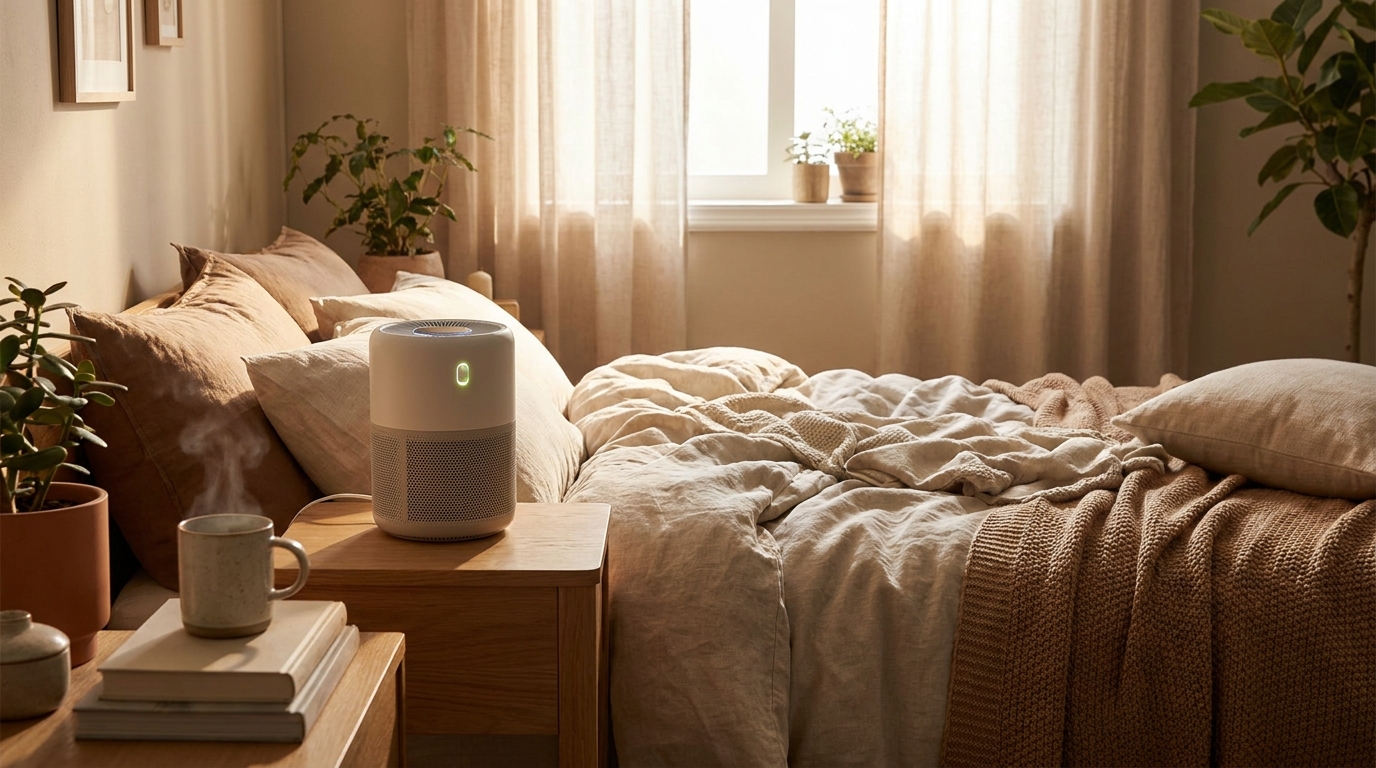
When an air purifier is working well, the benefits are often subtle but meaningful. A bedroom may feel easier to sleep in during spring pollen season. A family room may seem less stuffy after a day of cooking, pets, and closed windows. Children may wake less congested, and adults who are sensitive to dust may notice the room feels gentler on the lungs. These are quiet improvements, but they shape everyday wellbeing in real ways.
There is also a psychological benefit to maintenance. Homes are where we rest, gather, recover, and try to feel protected from what is happening outside. During periods of poor outdoor air quality, a properly maintained purifier can be part of what restores that feeling of refuge. It does not solve everything, but it helps create a cleaner-air zone that supports both physical comfort and peace of mind.
For people with asthma, allergies, or smoke sensitivity, this can feel especially valuable. Even guests may notice the difference in a home that feels fresh rather than heavy. While the purifier itself may be a modest appliance, its effect on atmosphere is part of what makes modern home care feel so closely connected to wellness.
Air purifier care during wildfire smoke events
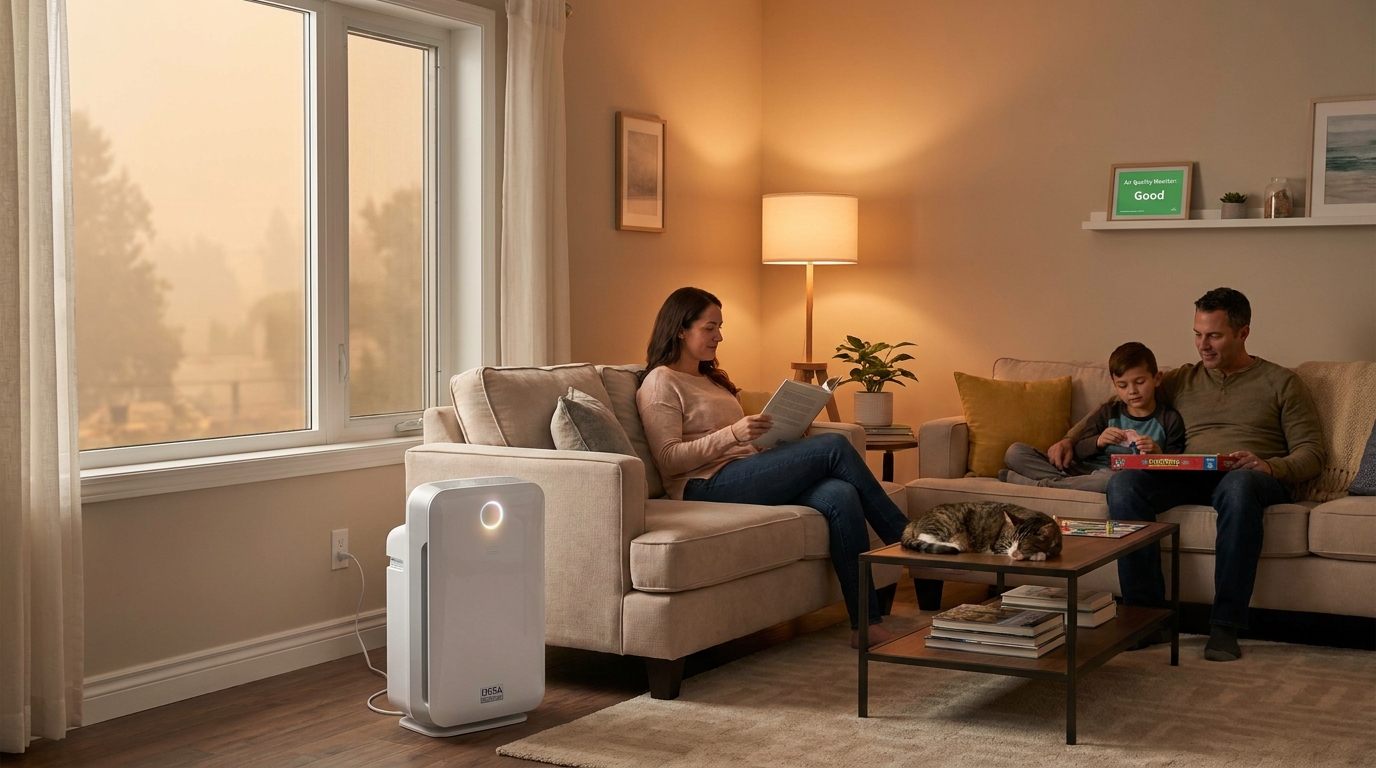
Wildfire smoke has become a growing concern across Canada and the United States, and it has changed how many households think about indoor air. Health Canada recommends certified portable air cleaners for wildfire smoke and notes that filters should be changed regularly because clogged filters are less effective at removing smoke particles. This is one area where maintenance becomes more than routine. It becomes part of your home’s resilience plan.
During smoky periods, keep windows and doors closed when outdoor air quality is poor, and use your purifier in the room where your household spends the most time or sleeps. If you have more than one unit, place them strategically in occupied rooms rather than scattering them where they will be least used. Because smoke particles are very fine, a clean, properly functioning filter matters even more than usual.
Check the filter more often during these events. If the purifier is running continuously for days, the filter may load faster than normal. This is also a good time to reduce indoor sources of particles by avoiding candles, limiting frying or broiling if possible, and using kitchen or bathroom ventilation appropriately when it helps without bringing in smoky air. The goal is to make the purifier’s job easier, not harder.
Do not forget your HVAC filtration
Portable air purifiers get most of the attention because they are visible and easy to buy, but whole-home comfort also depends on HVAC filtration. The EPA recommends using HVAC filters rated MERV 13 or higher if the system can accommodate them. This matters because central systems move air through a much larger portion of the home, though they only filter effectively when the system is operating.
Just as with portable units, a better label alone is not enough. Fit matters. CDC guidance notes that filters should be properly sized, within service life, and installed to minimize bypass airflow around the filter. If air slips around the edges of the filter, performance suffers, no matter how efficient the filter media may be on paper.
For homeowners, this means replacing HVAC filters on schedule, checking that the filter fits snugly in its housing, and confirming your system can handle the recommended filter rating. If you are unsure, an HVAC professional can help you choose a filter that balances efficiency with system airflow. A thoughtful setup protects both indoor air quality and the comfort of your heating and cooling system.
Common mistakes that reduce air purifier performance
Many air purifier problems come down to a handful of avoidable habits. One common mistake is buying a purifier based only on a HEPA label without checking whether it is appropriate for the room size. Another is placing the unit where it cannot breathe, such as behind furniture or in a tight corner. A third is delaying filter replacement because the old filter does not look especially dirty yet.
People also sometimes assume that once a purifier is running, source control no longer matters. In reality, reducing indoor particle sources remains essential. If the home is filled with smoke from cooking, excessive dust, or other preventable pollutants, the purifier has to work harder to keep up. Filtration is supportive, but it cannot fully compensate for ongoing indoor pollution.
A final mistake is forgetting seasonal changes. The maintenance routine that feels sufficient in a mild month may not be enough during spring pollen peaks, wildfire smoke, or winter periods when windows stay closed. Your purifier needs may shift with the environment, and your care routine should shift too.
Quick signs your purifier may need attention
- The airflow feels weaker than usual.
- The unit sounds louder or strained.
- A filter replacement light appears.
- The room feels stuffier despite regular use.
- You cannot remember the last time the filter was changed.
- There is visible dust or pet hair blocking the intake.
Creating a simple air purifier routine that lasts
The best home routines are the ones that feel light enough to maintain. Rather than treating air purifier care as a large seasonal project, build it into the natural rhythm of your home. You might check the unit at the start of each month, wipe it when you dust the room, and note the filter replacement date on your phone calendar. Small reminders prevent the purifier from becoming invisible until a problem appears.
It also helps to keep the manufacturer guide accessible instead of burying it in a drawer. Many homeowners forget which parts are washable, how to reset the indicator light, or which replacement filter number to order. Having that information close by removes friction and makes maintenance easier to follow through on.
If your household includes children, older adults, or anyone with respiratory sensitivities, a simple routine can feel especially worthwhile. The work itself takes little time, but the result is a home that better supports rest, play, work, and recovery. Wellness often lives in these ordinary choices more than in dramatic upgrades.
What to do if you do not have a purifier in every room
You do not need a purifier in every room to benefit from better indoor air habits. If you have one unit, place it where the household spends the most time or where the most sensitive person sleeps. In many homes, that means a bedroom at night and a living space during the day, though constantly moving a unit is less ideal than keeping it in the room where it is needed most consistently.
Think in terms of creating a cleaner-air priority zone rather than trying to perfect every square foot at once. During allergy season, that may be the bedroom. During wildfire smoke, it may be the main family room if everyone is gathered there for long periods. This approach makes air purifier care feel more achievable and more strategic.
There is also growing public interest in low-cost filtration strategies, including DIY air cleaners for short-term emergencies when commercial units are unavailable or unaffordable. If someone is considering that route, it is wise to review current public guidance carefully and follow safety recommendations. For long-term daily living, many households still prefer certified portable air cleaners because they are easier to maintain and integrate into home routines.
How clean indoor air supports the feeling of home
A comfortable home is never just about what we can see. It is about how a room welcomes us at the end of a long day, how restful a bedroom feels at night, and how confidently we invite others into our space. Clean indoor air contributes to that feeling in a quiet but powerful way. It supports the background ease that allows design, routine, and family life to shine.
Caring for your air purifier is one of those small acts that reflects a larger intention. It says that your home is not only meant to look beautiful, but also to help people feel well inside it. In a time when so many households are paying closer attention to smoke events, allergens, and year-round indoor living, that intention matters more than ever.
You do not need a perfect routine to make a difference. You simply need a consistent one. Wipe the unit, check the filter, replace it on time, keep airflow clear, and make sure the purifier is right for the room. Those modest steps can support easier breathing, better comfort, and a greater sense of calm in the place that matters most.
Frequently asked questions about air purifier care
How often should I replace my air purifier filter?
The correct timing depends on the model, how often the purifier runs, and the conditions in your home. Always follow the manufacturer’s instructions first. If you live with pets, high pollen, or wildfire smoke, you may need to replace filters more often than the standard schedule.
Can I wash a HEPA filter?
Usually no, unless the manufacturer specifically says the filter is washable. Many main filters are damaged by water, which can reduce their ability to capture particles properly. Wash only those components clearly labeled as washable, such as some prefilters.
Is one air purifier enough for the whole house?
In most cases, no. Portable air cleaners are designed to clean one room or one area, not an entire home. Whole-home support comes from a mix of strategies, including portable units in key spaces, good source control, ventilation when outdoor air is clean, and properly maintained HVAC filtration.
Why does my purifier seem to run but not help much?
This can happen if the filter is old, the room is too large for the unit, the purifier is blocked by furniture, or the filter is installed incorrectly. It can also happen when indoor particle sources are overwhelming the machine. Checking setup and maintenance often improves performance quickly.
Should I use an ozone-generating air cleaner?
Use caution with devices that intentionally produce ozone. Public health guidance warns that ozone can be harmful to health. For home comfort and cleaner indoor air, proven filtration methods are the safer choice.
Final thoughts
Air purifier care is easy to overlook because it happens behind the scenes, but that is exactly why it matters. The quiet systems in our homes often shape our wellbeing more than the visible ones do. When you maintain your purifier with care, you are supporting a space that feels fresher, safer, and more restorative for everyday life.
Think of it as a form of homekeeping with real emotional and physical value. It helps protect the atmosphere of your rooms, especially when the outside world feels less predictable. And in a home that is meant to shelter, soothe, and sustain the people inside it, that is a beautiful kind of maintenance to prioritize.


No Comment! Be the first one.