


Effective Ways to Reduce VOCs in Your Home for Healthier Indoor Air
Creating a home that feels fresh, calm, and comfortable is about more than beautiful furniture or soft lighting. The air inside your home shapes how that space feels every day, from the way you sleep to how comfortable your family feels during dinner, homework, or a quiet evening on the sofa. One of the less visible parts of indoor comfort is the presence of volatile organic compounds, often called VOCs, which can come from many ordinary products and materials around us.
Table Of Content
- What VOCs Are and Why They Matter Indoors
- The Most Common VOC Sources in Everyday Homes
- Start With Source Control, the Strategy That Matters Most
- How to Shop for Lower-Emission Products Without Overcomplicating It
- Build Better Ventilation Into Your Routine
- Rethink Cleaning Products and Fragrance Habits
- Kitchen Habits That Lower VOC Exposure Every Day
- Be Careful With Renovations, Painting, and New Furnishings
- Do Portable Air Cleaners Help?
- Simple VOC Reduction Tips for Renters
- Protecting Children, Seniors, and Sensitive Family Members
- Room-by-Room Ways to Reduce VOCs
- Living Room
- Bedroom
- Kitchen
- Bathroom
- Laundry Area
- What Not to Do When Trying to Reduce VOCs
- A Realistic Low-VOC Home Routine You Can Actually Maintain
- Final Thoughts on Creating a Healthier Indoor Atmosphere
- Quick Action Checklist for Reducing VOCs at Home
VOCs are a broad group of carbon-based chemicals that evaporate into the air from common indoor sources. Paints, cleaning products, adhesives, air fresheners, new furniture, insecticides, and even certain cooking habits can all contribute. Government guidance in both the United States and Canada emphasizes that indoor sources are often the main concern because people spend so much time inside, and because indoor levels of some organic pollutants can actually be higher than outdoor levels.
The U.S. Environmental Protection Agency has reported that in one major study, levels of about a dozen common organic pollutants were 2 to 5 times higher inside homes than outside, regardless of whether the homes were in rural or industrial areas. That is a surprisingly important reminder that healthier air is not only an outdoor conversation. It is also a home routine conversation, a shopping conversation, and often a storage and ventilation conversation.
The good news is that reducing VOCs does not have to mean turning your home into a laboratory or replacing everything you own. In many cases, the most effective changes are simple and realistic. Choosing lower-emission products, using your kitchen fan consistently, storing chemicals carefully, opening windows at the right times, and avoiding unnecessary fragrance can fit naturally into everyday life. Whether you own your home or rent an apartment, these habits can help create a cleaner and more inviting atmosphere.
This guide focuses on practical strategies that feel manageable, not overwhelming. It is designed for real homes, busy households, and everyday routines. If you want your space to support wellness in a quiet, lasting way, reducing VOCs is one of the smartest places to begin.
Important perspective: Experts from EPA and Health Canada consistently point to source control as the most effective way to reduce VOC exposure indoors. In simple terms, the best approach is to bring fewer VOC-emitting products into your home and to manage their use carefully.
What VOCs Are and Why They Matter Indoors
VOCs are released as gases from certain solids and liquids, often during use, storage, or the period after a product is newly installed or opened. You may hear this described as off-gassing, which is the release of chemicals into the air over time. Some VOCs fade quickly while others can linger for weeks or months, depending on the product and the conditions in the home.
Health Canada notes that most people are not affected by short-term exposure to the low levels of VOCs typically found in many homes. At the same time, some VOCs can cause symptoms such as headaches, fatigue, nausea, dizziness, breathing problems, and irritation of the eyes, nose, and throat. Effects depend on the type of VOC, the amount in the air, and how long someone is exposed.
For some households, this matters even more. Health Canada identifies children, seniors, pregnant people, and people with asthma, chronic pulmonary disease, or bronchitis as groups that may be at greater risk from VOC exposure. If anyone in your home is more sensitive to indoor air, reducing VOCs becomes not just a wellness upgrade, but a meaningful comfort and health priority.
One important misconception is that smell tells you everything. A strong odor can certainly be a clue that a product is releasing chemicals, but little or no odor does not necessarily mean there are no VOCs present. In the same way, masking odors with sprays or plug-ins does not remove the underlying problem. It can actually add more chemicals into the air rather than improving it.
The Most Common VOC Sources in Everyday Homes
Many people assume VOCs are mostly tied to big renovation projects, but they often come from ordinary daily choices. Household cleaning products are one of the most common examples. Multi-surface sprays, disinfectants, aerosol products, bleach mixtures, polish, and heavily fragranced products can all contribute to indoor chemical emissions, especially when used in enclosed spaces.
Paints, sealants, adhesives, and flooring materials are another major category. Fresh paint smell is a familiar sign of off-gassing, but newer flooring, cabinets, pressed wood furniture, and some textiles can also release chemicals after installation. This matters because even stylish home updates that look clean and polished can temporarily worsen indoor air if materials are chosen without attention to emissions.
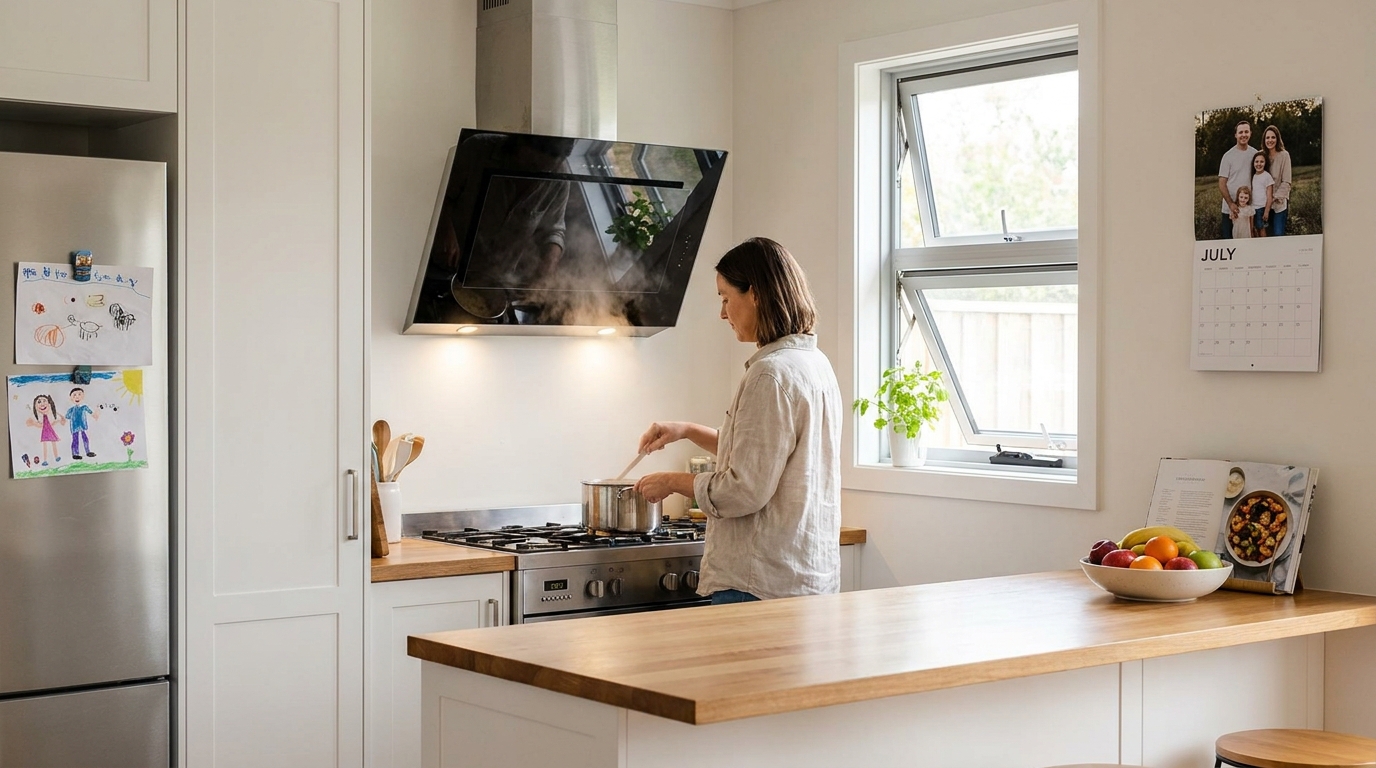
The kitchen is another important source. Health Canada specifically highlights cooking, especially frying, as a contributor to indoor VOCs. That means indoor air quality is not only about what you buy, but also about how you live. A beautiful kitchen can absolutely support better air, but only if ventilation becomes part of the routine.
Laundry and storage areas often go overlooked as well. Detergents, stain removers, dry cleaning residue on clothes, solvents, hobby supplies, and stored home improvement products can quietly add to VOC levels. In smaller homes or apartments, these sources can have an even bigger impact because the air volume is lower and ventilation may be limited.
Home fragrance products deserve special attention. Candles, room sprays, diffusers, plug-ins, and scented cleaning products are often used to make a home feel welcoming. Yet they can introduce additional chemicals into the air. If your goal is a fresher-feeling home, reducing the causes of stale or unpleasant air is usually much more effective than covering it up with fragrance.
Start With Source Control, the Strategy That Matters Most
If you remember only one idea from this article, let it be this: the best way to reduce VOCs is to reduce the sources. This is the central recommendation from public health guidance, and it is also the most realistic long-term approach for families. Air cleaners and open windows can help, but they work best when they support a home with fewer emissions to begin with.
Source control starts while shopping. When you buy paint, adhesives, furnishings, flooring, mattresses, cleaning products, and home décor, take a few extra moments to look for low-VOC, no-VOC, unscented, or low-emission labeling where appropriate. Many brands now provide clearer emissions information than they once did, which makes it easier to choose with confidence.
It also helps to pause before bringing a product home at all. Ask yourself whether you truly need a stronger chemical product, a fragranced spray, or a solvent-heavy cleaner. In many cases, a simpler product can handle the task while being easier on your indoor environment. This kind of editing is not about perfection. It is about gradually shaping a home where the baseline air quality feels lighter and cleaner.
Renters sometimes feel limited here, but source control is still very powerful in a rental. You may not be able to replace flooring or cabinets, but you can choose unscented laundry products, skip aerosol sprays, ventilate when cleaning, and avoid storing unnecessary chemicals indoors. Small decisions really do add up, especially in compact spaces.
How to Shop for Lower-Emission Products Without Overcomplicating It
Reading product labels can feel confusing, especially when packaging is full of marketing language. A useful approach is to look for practical clues rather than trying to decode every ingredient. Terms like low-VOC, no added VOCs, unscented, and low-emission can be a helpful starting point, particularly for paints, finishes, adhesives, and cleaning products.
That said, low-VOC does not always mean completely harmless, and unscented does not automatically mean emission-free. The goal is not to find a perfect label. The goal is to choose products that are generally less likely to release large amounts of chemicals into your air. Comparing options within the same category is often the most realistic way to make progress.
For furniture and décor, be especially mindful of pressed wood products, strong-smelling finishes, and newly unpacked synthetic materials. If something smells intense when you unwrap it, treat that as a sign to air it out before placing it in a tightly closed bedroom or nursery. Whenever possible, allow new items to off-gas in a garage, on a covered balcony, or in a well-ventilated room before they become part of your everyday living space.
A helpful mindset is to think in layers. One new rug may not seem significant, and one cleaning spray may not seem significant either. But when fresh paint, a new dresser, scented detergent, and regular room spray are all part of the same home, their combined effect can be more noticeable. Shopping with indoor air in mind is really about lowering the total load.
Build Better Ventilation Into Your Routine
Ventilation is one of the easiest and most effective ways to reduce indoor pollutant buildup, especially during activities that release VOCs. This means bringing in outdoor air when conditions allow and exhausting indoor air during cleaning, cooking, painting, or other chemical-use tasks. Ventilation is not glamorous, but it is one of the habits that can change how a home feels almost immediately.
The kitchen is a perfect place to start. If you have a range hood that vents outdoors, use it every time you cook, especially when frying, searing, or using high heat. If your fan recirculates rather than vents outdoors, open a nearby window when practical to increase air exchange. Even a few minutes of purposeful ventilation before, during, and after cooking can make a real difference.
Bathrooms also benefit from reliable exhaust use. Cleaning products, hair sprays, polishes, and other personal care items can contribute to indoor emissions in small enclosed spaces. Run the fan while using stronger products and keep it running for a short time afterward if possible. This habit helps remove both chemical emissions and humidity, which supports overall indoor air quality.
For households in cold climates or during poor outdoor air days, opening windows constantly is not always practical. In those cases, timing matters. Ventilate when outdoor conditions are better, and use local exhaust fans during higher-emission activities. A home does not need to be wide open all day to benefit from more intentional air exchange.
Rethink Cleaning Products and Fragrance Habits
Many people begin their air quality journey in the cleaning aisle, and that is a smart place to start. Cleaning products can be useful, but more is not always better. Using multiple scented products in one session, especially in small spaces, can increase indoor chemical exposure without making your home meaningfully cleaner.
Choose fewer products, and favor simpler formulas when they meet your needs. Unscented or fragrance-free options can be helpful because added fragrance may contribute extra VOCs. It is also wise to avoid mixing products unless label instructions specifically say it is safe. Beyond emissions, some chemical combinations can be dangerous.
Another important shift is to stop relying on air fresheners as a solution. Air fresheners often aim to cover odors rather than address their source. If a room smells stale, the better response is usually to improve airflow, clean the cause of the odor, empty trash, wash fabrics, or remove dampness. A home that is genuinely fresh feels different from one that is heavily perfumed.
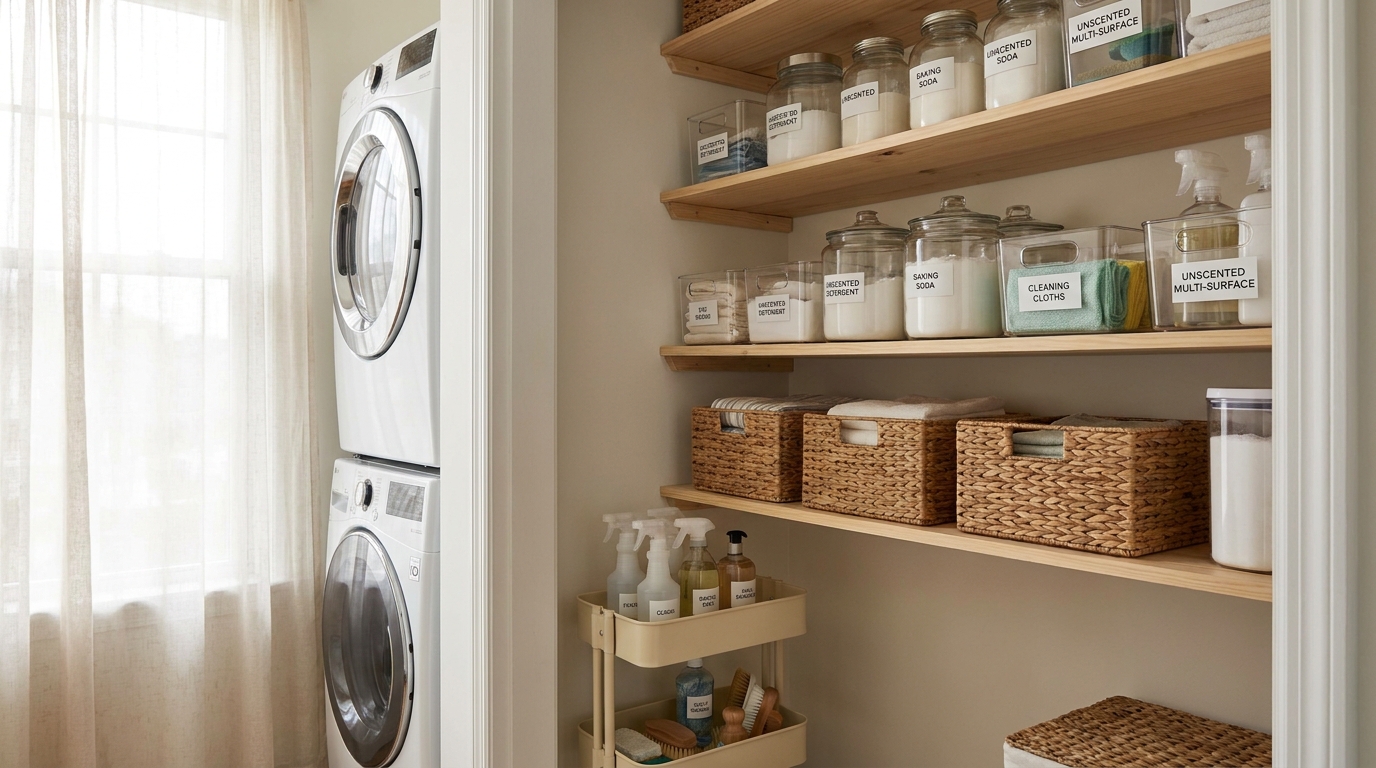
Storage matters just as much as use. Keep chemical products tightly sealed and stored away from main living areas whenever possible. A half-closed bottle of solvent or a leaky cleaner tucked into a warm closet can quietly affect indoor air over time. If you do not use a product regularly, consider whether it belongs in your home at all.
Kitchen Habits That Lower VOC Exposure Every Day
Because cooking is a routine activity, small kitchen changes can have an outsized impact. Health Canada specifically points to cooking, especially frying, as a VOC source. That does not mean you need to avoid flavorful meals or become overly cautious in your own kitchen. It simply means that better cooking ventilation should be treated as part of everyday home care.
Use the range hood consistently, not just when smoke is visible. Put lids on pans when appropriate to reduce splatter and emissions. If weather and outdoor air conditions are good, crack a window while cooking and for a little while afterward. These habits help move emissions out rather than letting them drift into adjoining rooms and fabrics.
It also helps to keep burners and ovens clean. Residue and grease can burn off and contribute to indoor air problems over time. A cleaner cooking area not only looks better, but often supports a fresher home environment overall. This is one of those satisfying overlaps where practical maintenance and comfort work together beautifully.
If you cook frequently in a small apartment, be especially intentional. Soft items like curtains, upholstered chairs, and rugs can hold onto odors and byproducts from cooking. Regular ventilation, occasional fabric cleaning, and a tidy stovetop can go a long way toward keeping the whole home feeling lighter.
Be Careful With Renovations, Painting, and New Furnishings
Home improvement projects often deliver the biggest short-term VOC spikes because they introduce multiple fresh materials at once. Paint, caulk, adhesives, flooring, cabinetry, and finishes can all off-gas during and after installation. If you are planning a renovation, indoor air quality should be part of the design conversation from the beginning.
Choose lower-emission materials whenever possible and ask questions before purchasing. If contractors are involved, let them know that low-VOC or low-emission products matter to you. This small step can influence the product choices made on your behalf and help avoid defaulting to more chemical-heavy options.
Timing can also make a difference. If possible, schedule painting or flooring projects when windows can be opened and when the home can be ventilated more easily. After the work is done, continue airing out the space as practical before fully settling back into it. Bedrooms, nurseries, and other heavily occupied rooms deserve extra caution because people spend long stretches of time there.

New furniture deserves some of the same attention. If a sofa, rug, dresser, or mattress has a strong chemical smell, allow it to air out before using it in a closed space. This can be challenging for renters and families without extra rooms, but even temporary steps help. Open windows, run fans, and avoid stacking multiple newly purchased items into one room at the same time if you can help it.
Do Portable Air Cleaners Help?
Portable air cleaners can be a helpful supporting tool, but they are not a complete answer to VOCs. This is one of the most common misunderstandings in home wellness conversations. Air cleaners may help with some indoor pollutants, depending on the technology and the specific contaminant, but experts emphasize that they are a supplement to source control and ventilation, not a replacement.
If you already use a portable air cleaner, think of it as one layer in a broader strategy. It can be especially useful when paired with reducing fragranced products, improving cooking ventilation, and choosing lower-emission furnishings. In other words, it works best when the home is already moving in a cleaner direction.
For many households, maintaining HVAC systems and changing filters on schedule also supports overall indoor air quality. While filtration alone does not solve VOC issues, a well-maintained system contributes to a cleaner-feeling home environment. The goal is balance, not dependence on a single device.
Simple VOC Reduction Tips for Renters
Renters often have less control over building materials, paint choices, and ventilation systems, but that does not mean they are powerless. In fact, some of the most effective VOC-reducing habits are completely renter-friendly. The first is to minimize what you bring in. Avoid unnecessary fragrances, choose simpler cleaning products, and be selective about new furniture made with strong-smelling materials.
Use every built-in ventilation tool you have. Run bathroom fans, use the kitchen fan whenever you cook, and open windows strategically when weather and outdoor air quality allow. If your apartment has very limited airflow, even short daily airing-out periods can be worthwhile.
Be intentional about storage. Try not to keep paint cans, solvents, hobby chemicals, or extra cleaning products in bedroom closets or under beds. If the lease and space allow, store them in a less occupied area and keep all containers tightly sealed. Small square footage means pollutants can circulate quickly, so tidy storage matters more than many people realize.
If you move into a newly renovated rental unit and notice odors from fresh paint, flooring, or cabinets, ventilate as much as possible during the first days and weeks. Wash surfaces, launder curtains if applicable, and give the space time to settle. Even when you cannot choose the materials, you can still help the home recover more comfortably.
Protecting Children, Seniors, and Sensitive Family Members
Some people feel the effects of indoor pollutants more than others, and home routines should reflect that. Children breathe more air relative to their body size than adults and often spend more time close to floors and soft surfaces where indoor pollutants can accumulate. Seniors and people with respiratory conditions may also be more sensitive to indoor air challenges.
For families with babies or young children, be especially careful with nursery setup. Avoid placing brand-new, strongly scented furniture and freshly painted surfaces into immediate use without ventilation. Wash new textiles before use when appropriate, and keep fragrance products out of sleeping spaces. A nursery should feel calm and clean, not newly manufactured.
If someone in the home has asthma or another chronic respiratory condition, review your strongest chemical products first. Reducing exposure often begins with cleaning supplies, fragrances, and poorly ventilated cooking. These are everyday sources that can usually be improved without a major expense.
A comforting reminder: healthier air does not require a perfect home. A few consistent choices, especially in the rooms you use most, can make the space feel gentler and easier to live in.
Room-by-Room Ways to Reduce VOCs
Living Room
The living room often holds upholstered furniture, rugs, electronics, and decorative products that can all contribute to the overall indoor load. Focus on keeping the room well ventilated, avoiding heavy fragrance use, and allowing new furnishings time to air out. If you repaint or update shelving, choose lower-emission finishes and give them breathing time before closing the room up tightly.
Bedroom
Because you spend so many hours sleeping there, the bedroom deserves special care. Avoid storing cleaning products, paints, or hobby supplies in bedroom closets. Be selective about candles, diffusers, and strongly scented laundry products used on bedding. A bedroom with clean fabrics, gentle airflow, and fewer chemical inputs often feels noticeably more restful.
Kitchen
Ventilation is the star here. Use your exhaust fan, especially during frying or high-heat cooking, and clean up grease regularly. Store cleaning products carefully and avoid layering the room with additional scent from sprays or plug-ins. A kitchen that smells neutral and clean is often a sign that its air routine is working well.
Bathroom
Bathrooms can trap emissions quickly because they are small and often closed off. Use the exhaust fan when cleaning or grooming with stronger products, and choose simpler personal care products when possible. Fragrance-heavy sprays may make the room smell sharp rather than fresh, so focus on airflow and cleanliness instead.
Laundry Area
Laundry spaces often contain concentrated product storage. Choose detergents and stain products thoughtfully, keep caps secure, and clean up spills promptly. Clothing from dry cleaning can also release chemicals, so let those items air out before tucking them into crowded closets when possible.
What Not to Do When Trying to Reduce VOCs
One common mistake is trying to solve everything with scent. If a room feels stale, adding fragrance usually treats the symptom rather than the cause. Another mistake is assuming that if a product does not smell strong, it is not contributing to VOCs. Odor and chemical presence do not always match.
It is also easy to overestimate what a single product can do. A portable air cleaner, a houseplant, or one open window may help in certain moments, but none of these can cancel out ongoing heavy indoor sources by themselves. Real improvement usually comes from combining a few strategies and repeating them consistently.
Finally, do not underestimate the value of timing. If you must use stronger products, do it when ventilation is possible. If you are buying multiple new items, stagger them rather than introducing everything at once. Indoor air quality tends to improve most when you reduce peak exposure moments, not just average conditions.
A Realistic Low-VOC Home Routine You Can Actually Maintain
The most successful home wellness habits are the ones that feel natural enough to repeat. Instead of chasing a perfect standard, create a rhythm that supports cleaner air without stress. Turn on the kitchen fan as soon as cooking begins. Crack a window during a cleaning session if conditions allow. Keep product storage tidy, sealed, and out of sleeping areas. Choose lower-emission replacements as current products run out.
You can also create a simple shopping rule for the household. Before buying a new cleaner, paint, furnishing, or scent product, pause and ask whether there is a lower-emission or fragrance-free option. This one question can gently shift your home over time without requiring an expensive overhaul.
Seasonal resets can help too. A few times a year, check storage areas for old chemicals, dried paint, or half-used products you no longer need. Safely dispose of them according to local guidance rather than letting them linger. This kind of quiet editing can make a home feel physically and emotionally lighter.
What often surprises people is how these changes improve more than air. Homes with fewer harsh products and better ventilation tend to feel calmer, less cluttered, and more genuinely fresh. There is a softness to that kind of environment, and it supports the kind of daily comfort many people are really looking for.
Final Thoughts on Creating a Healthier Indoor Atmosphere
Reducing VOCs is not about fear, and it does not require drastic living. It is about becoming a little more intentional with the products you use, the way you ventilate your rooms, and the things you choose to bring into your home. Public health guidance is clear that source control matters most, and that is actually empowering because it means small daily decisions can have a meaningful effect.
For homeowners, this may look like choosing lower-emission paint before a refresh or planning a renovation with indoor air in mind. For renters, it may mean switching to unscented cleaning products, cooking with better ventilation, and being more careful about storage. Both paths are valuable, and both can make a home feel cleaner and easier to breathe in.
If you have been wanting your home to feel fresher, more balanced, and more supportive of your family’s well-being, this is a gentle place to begin. Start with one room, one habit, or one product category. Open the window, run the fan, skip the extra fragrance, and let your space become healthier in ways that feel seamless and sustainable.
Quick Action Checklist for Reducing VOCs at Home
- Choose low-VOC, no-VOC, low-emission, or unscented products when possible.
- Use kitchen and bathroom exhaust fans during cooking, cleaning, and grooming.
- Open windows strategically when weather and outdoor air quality allow.
- Avoid relying on air fresheners to solve odor problems.
- Store chemicals tightly sealed and away from bedrooms and main living areas.
- Air out new furniture, rugs, and freshly painted rooms before heavy use.
- Reduce frying and high-smoke cooking without ventilation.
- Maintain HVAC systems and use portable air cleaners as support, not as the only solution.
- Be extra cautious in homes with children, seniors, pregnant people, or family members with asthma.
- Make gradual swaps rather than trying to change everything at once.
When these habits become part of your normal routine, a healthier indoor environment stops feeling like a project and starts feeling like home.



No Comment! Be the first one.