

How to Choose and Install Surge Protectors for Your Home
Most homeowners think about electrical damage only after something stops working. A television goes dark after a storm. A refrigerator control board fails without warning. A modem, router, or garage door opener starts acting strangely and no one can quite explain why. In many cases, the problem is not one dramatic lightning strike. It is the result of power surges, some large and some small, building up damage over time until expensive equipment finally gives out.
Table Of Content
- Why surge protection matters more than many homeowners realize
- What surge protectors actually do
- The two main layers of home surge protection
- Whole-home surge protection
- Point-of-use surge protection
- Step one: identify what you actually need to protect
- Step two: understand the surge protector types you will see
- Step three: focus on the ratings that actually matter
- VPR or voltage protection rating
- SCCR or short-circuit current rating
- Safety listing
- Joule rating in context
- Step four: decide whether your home needs a whole-home SPD
- Step five: know what you can do yourself and what belongs to an electrician
- How whole-home surge protector installation typically works
- How to choose point-of-use surge protectors for electronics
- Where surge protection should go in a typical home
- Common mistakes homeowners make
- Maintenance and replacement expectations
- Cost versus value
- A practical buying and installation checklist
- Final thoughts
If you want a practical way to protect your home, surge protection belongs on the list. It helps defend the appliances and electronics you already paid for, and it can reduce the chance of sudden failures tied to weather, utility switching, faults, or electrical activity inside the house. It is also becoming more important as homes add smart thermostats, networking gear, EV chargers, heat pumps, solar equipment, battery systems, and more sensitive electronic controls in everyday appliances.
This guide explains how to choose and install surge protectors for your home in a way that actually makes sense. We will cover what a surge is, why a simple outlet strip is not always enough, what ratings matter when you shop, when a whole-home surge protective device is worth it, and how to combine panel protection with point-of-use protection for the best results. The goal is not hype. The goal is to help you make a solid decision that protects your equipment and avoids avoidable replacement costs.
Good surge protection is not just about lightning. It is about managing the normal electrical stress a house sees over time and protecting the equipment that now runs nearly every part of daily life.
Why surge protection matters more than many homeowners realize
A power surge is a brief rise in voltage above the normal level your home electrical system is designed to handle. Some surges are strong enough to cause immediate damage. Others are smaller and more frequent. Those smaller events may not trip a breaker or destroy a device on the spot, but they can slowly degrade sensitive components. That is especially true for electronics with circuit boards, microprocessors, communication modules, and electronic control systems.
People often connect surges only with lightning, but that is only part of the picture. Surges can also come from utility switching, power restoration after outages, line faults, and large motors or loads cycling on and off. Inside the home, HVAC equipment, well pumps, compressors, and other motor-driven devices can contribute to power quality issues. Even if your area does not get frequent lightning, your house can still see voltage events worth protecting against.
The practical benefit is not only avoiding one catastrophic event. It is also preserving the life of expensive equipment over years of use. Refrigerators, dishwashers, washing machines, dryers, furnaces, air handlers, and modern ranges all rely on electronics now. Your home office, Wi-Fi network, entertainment system, smart security equipment, and connected devices do too. When you add up replacement costs, the value of surge protection becomes easier to understand.
There is also a code and standards side to this. The National Electrical Code introduced a requirement in the 2020 NEC for surge protection on services supplying dwelling units, with the installed device required to be a Type 1 or Type 2 surge protective device. Homeowners do not need to become code experts, but it is worth knowing that surge protection is no longer treated as an optional luxury in many contexts. The direction of modern electrical practice is clearly toward more protection, not less.
What surge protectors actually do
A surge protector, more formally called a surge protective device or SPD, is designed to limit transient overvoltage by diverting excess energy away from the equipment it protects. In simple terms, when voltage rises above a safe threshold, the SPD helps clamp that rise and route the surge energy where it can do less harm. That does not make your system invincible, and it does not replace proper grounding and bonding, but it gives the electrical system a planned way to respond to abnormal voltage events.
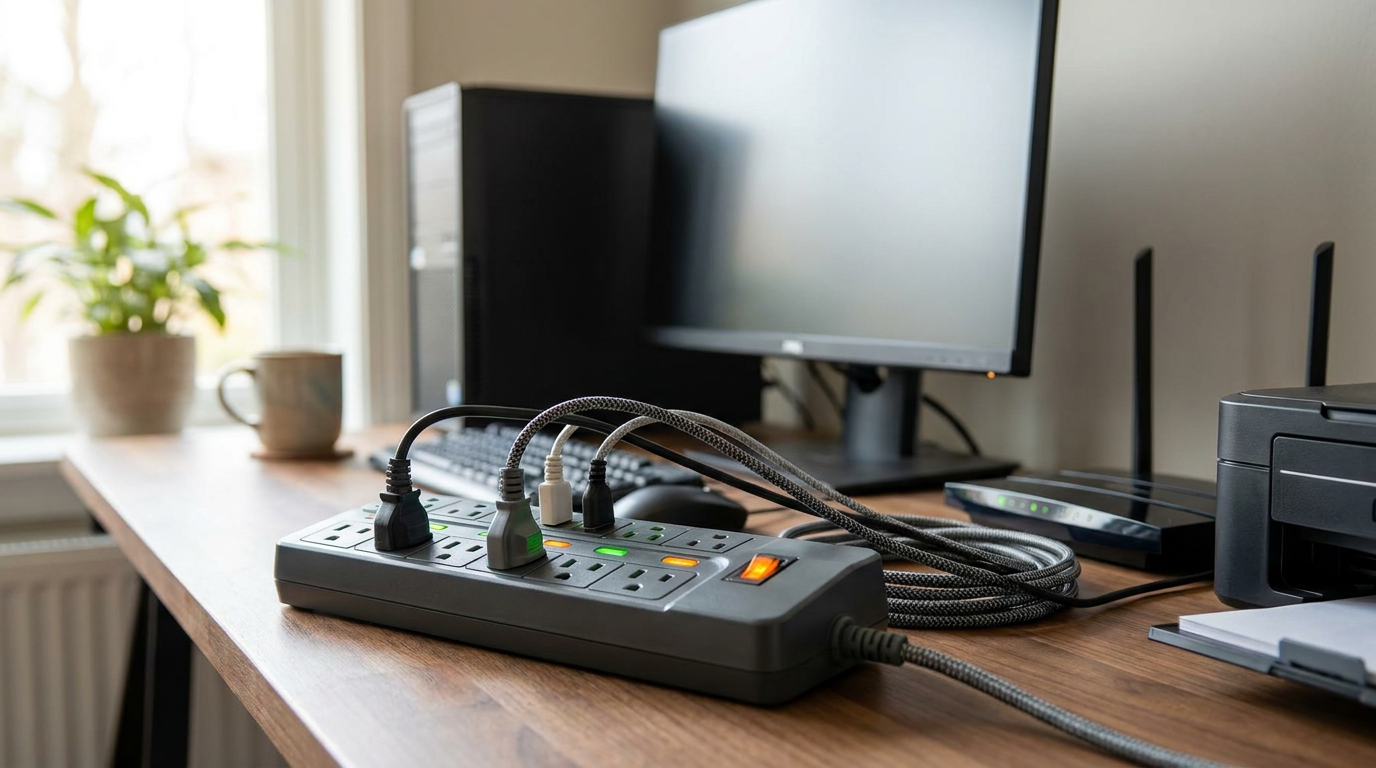
This is where many homeowners get tripped up. A power strip is not automatically a surge protector. Some outlet strips only provide additional receptacles and a switch. They may offer no meaningful surge suppression at all. If you assume every strip protects your electronics, you can easily end up with expensive devices plugged into something that only acts as an extension of the wall outlet.
Another common misunderstanding is that the joule rating tells the whole story. Joules matter, but they are not enough on their own to judge quality. Product selection should also consider the device type, the voltage protection rating or VPR, the short-circuit current rating or SCCR, and whether the device is properly listed to recognized safety standards such as UL 1449. In Canada, certified product listings may also reference CSA C22.2 No. 269.3. The point is simple. Buy based on the complete rating picture, not one number on the box.
The two main layers of home surge protection
The best home setup uses layered protection. That means protecting the house at the service or panel level and also protecting sensitive devices at the point of use. These two layers do different jobs, and one should not be treated as a complete replacement for the other.
Whole-home surge protection
A whole-home SPD is installed at or near the main service equipment or distribution panel. Its purpose is to intercept larger surges that enter through the electrical service before they spread through branch circuits to the rest of the house. This kind of protection helps with broader electrical events and gives a first line of defense for the entire home.
Whole-home protection is especially useful if you have expensive appliances, HVAC systems with electronic boards, workshop equipment, a home office, or any collection of smart devices that would be expensive or disruptive to replace. It is also a strong choice in areas with frequent storms, utility interruptions, rural service exposure, or overhead lines. For many homes, it is the most practical upgrade because it protects many circuits at once.
Point-of-use surge protection
Point-of-use protection is what you use at individual receptacles, usually in the form of a surge protector strip or a wall-mounted SPD. This layer is important for televisions, computers, gaming consoles, routers, modems, streaming equipment, printers, sound systems, and other electronics with sensitive internal components. It can also be useful for select appliances if the product and receptacle arrangement allow for it.
Point-of-use devices help deal with residual surges that make it past the whole-home SPD and can provide a finer level of protection for the most sensitive loads. This is why the best practice is not choosing one or the other. It is combining both. Think of the whole-home SPD as broad system protection and the point-of-use devices as close-up protection where the equipment is most vulnerable.
Step one: identify what you actually need to protect
Before you buy anything, walk through your home and make a list of the equipment that matters most. Start with replacement cost, then think about inconvenience and downtime. A desktop computer used for work may be worth protecting even if it costs less than a refrigerator because losing access for two days can create a bigger real-world problem. A modem and router might be relatively inexpensive, but they support work, security cameras, streaming, and smart devices throughout the home.
Most homeowners should think in categories. The first category is major appliances and home systems such as HVAC equipment, refrigerators, freezers, dishwashers, ovens with electronic controls, washing machines, dryers, garage door openers, and sump pumps. The second category is electronics and communications equipment such as TVs, computers, printers, gaming systems, network equipment, speakers, and charging stations. The third category is specialty or high-value equipment such as workshop tools with digital controls, medical devices, aquarium systems, or home automation hardware.
Once you write this down, your buying strategy gets clearer. If the list includes costly appliances throughout the house, a whole-home SPD becomes much easier to justify. If the list is concentrated around office and entertainment equipment, point-of-use protection matters immediately. In most homes, the answer ends up being both.
Step two: understand the surge protector types you will see
When shopping for a whole-home SPD, you will commonly see references to Type 1 and Type 2 devices. For homeowners, the main point is that these are the device categories typically used for dwelling-unit surge protection at the service or distribution level. They are installed in different ways depending on the product and the electrical system design, and the selection should be made based on the panel arrangement and manufacturer instructions.
A Type 1 SPD is generally intended for installation between the utility secondary and the line side of the service disconnect, though exact permitted applications should always be verified by the product listing and local code requirements. A Type 2 SPD is generally installed on the load side of the service disconnect, often at the main panel or a subpanel. In practice, many homeowners end up with a Type 2 unit at the main panel because that is a common and practical arrangement for retrofit work. The right choice should be confirmed by a qualified electrician.
For plug-in devices, the terminology is usually simpler. You are looking at point-of-use surge protectors designed for receptacles and electronics. The key is to confirm that the product is a real surge protector, not just a multi-outlet strip, and that it carries an appropriate safety listing.
Step three: focus on the ratings that actually matter
Marketing on surge protectors can be noisy. Boxes often highlight one large number and make broad claims that sound impressive. A better approach is to look for the ratings professionals actually use to compare products. Three of the most important are VPR, SCCR, and the device type. You should also confirm the safety listing.
VPR or voltage protection rating
VPR is closely tied to what many homeowners call clamping performance. In plain language, it tells you the voltage level at which the device limits the surge under defined test conditions. Lower is generally better when comparing similar listed products because it indicates a tighter protective response. You still need to compare products appropriately, but this rating is far more useful than assuming the highest joule number wins.
SCCR or short-circuit current rating
SCCR indicates the current the SPD can safely withstand under short-circuit conditions when installed as intended. This matters for safe application in the electrical system. The device must be suitable for the available fault current at the installation point. This is one reason panel-mounted SPDs are not a casual do-it-yourself product. Their suitability depends on the panel, the service, and the installation details.
Safety listing
Look for products evaluated to UL 1449, which is the principal safety standard used to evaluate surge protective devices in the United States. In Canadian contexts, certified product listings may also reference CSA C22.2 No. 269.3. If a product is vague about listing, skip it. Proper certification is one of the clearest signs you are buying something built and tested for the job.
Joule rating in context
Joule rating still has value, especially for point-of-use devices, because it gives some indication of the energy the device can absorb. The mistake is treating it as the only number that matters. A flashy joule rating does not erase poor VPR, weak build quality, questionable certification, or an application that does not fit your electrical system. Use it as one factor, not the deciding factor.
Step four: decide whether your home needs a whole-home SPD
For many homes, the answer is yes. If your house contains multiple expensive appliances, modern HVAC equipment, or a significant amount of electronics, the cost of a panel-mounted SPD is often easy to justify against the cost of replacing just one or two damaged control boards. It also makes sense if your area sees regular thunderstorms, utility disturbances, or power restoration events. The same goes for homes in rural locations, homes with overhead service, or homes with added electrical investments such as EV chargers, solar inverters, batteries, and smart home systems.
Even if you already use surge strips at TVs and computers, that does not mean you are fully covered. Plug-in protectors do not protect hardwired equipment throughout the home the way a panel-mounted SPD does. They also do not eliminate the value of stopping larger surges closer to the point where power enters the house. A whole-home SPD is often the missing layer that makes your overall protection strategy make sense.
There is another practical angle here. Homeowners sometimes only notice the value of surge protection when a claim is denied, a warranty excludes surge damage, or multiple devices fail at once after a storm. Insurance, appliance longevity, and avoided replacement costs are often the real benefits. You are not buying a gadget. You are reducing risk to systems you rely on every day.
Step five: know what you can do yourself and what belongs to an electrician
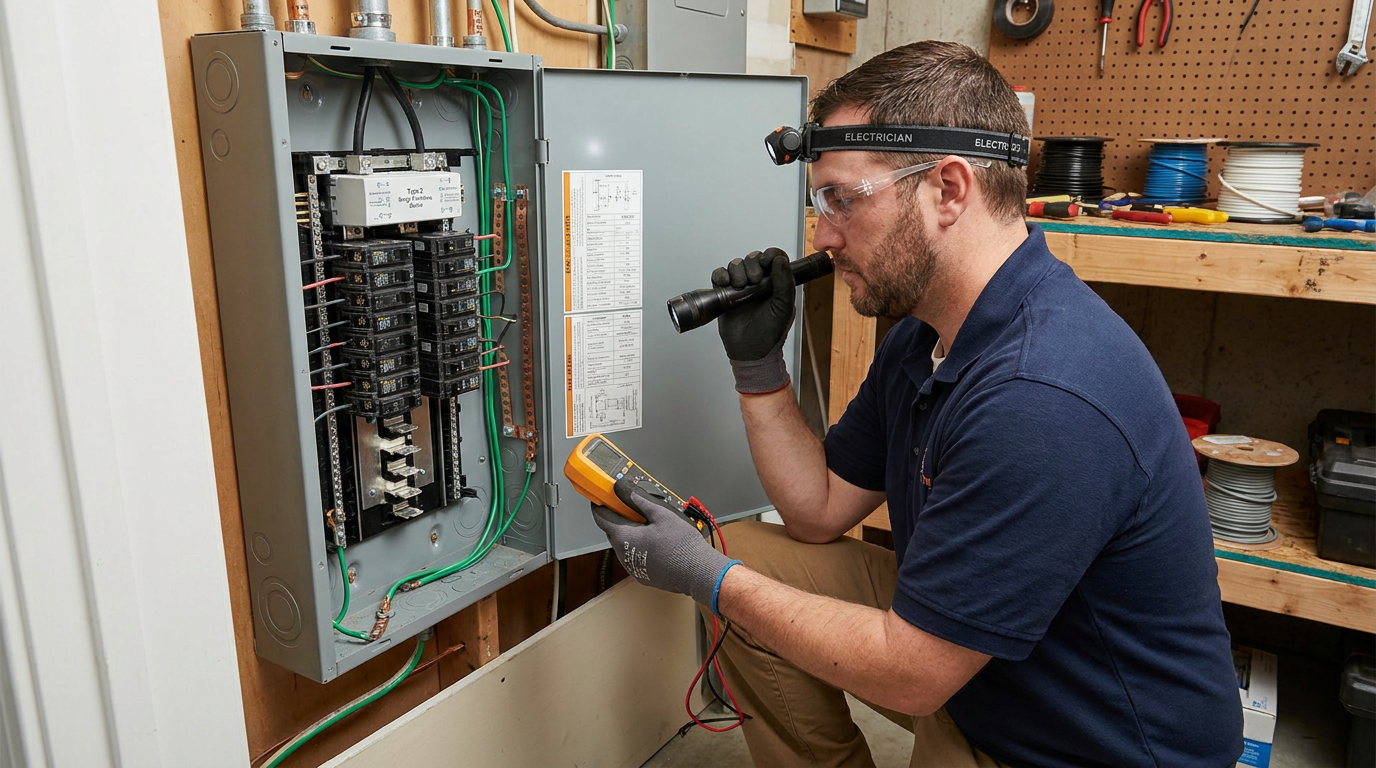
This is the point where practical advice matters most. Point-of-use surge protectors are generally straightforward for homeowners to select and use. Whole-home SPDs are different. They are installed at the service equipment or distribution panel and involve live electrical system components, code requirements, overcurrent protection coordination, grounding, bonding, and manufacturer-specific installation instructions. That is electrician work.
If you are comfortable selecting and setting up surge strips for a home office or entertainment center, that is one thing. Opening a panel and installing a Type 1 or Type 2 SPD is another. The risk is not just personal injury. Incorrect installation can reduce the effectiveness of the SPD, create code issues, or damage the electrical system. There is no prize for treating service equipment as a weekend experiment.
Grounding and bonding are especially important. Surge protection depends on a sound electrical grounding and bonding system to perform properly. If the grounding electrode system is compromised or connections are poor, the SPD cannot do its best work. An electrician can assess that condition while planning the installation. In older homes, that inspection can be just as valuable as the SPD itself.
How whole-home surge protector installation typically works
While the exact installation depends on the product and the electrical panel, the process usually starts with an electrician evaluating the service equipment, panel space, grounding, bonding, and the available fault current at the location. They will verify whether a Type 1 or Type 2 SPD is appropriate for your setup and choose a listed device with suitable ratings. If the home has subpanels or specialty equipment, they may also discuss whether additional protection points make sense.
The SPD is typically mounted at or inside the main panel according to the product design. Conductors are kept as short and direct as possible because excess lead length can reduce surge protection performance. This detail matters. In electrical work, neat and compact routing is not just about appearance. It affects how well the device responds during a surge event.
Once installed, the electrician should verify proper connection, breaker arrangement if applicable, and device status indicators. Many SPDs have visual indicators that show whether protection is still active. Some advanced units offer monitoring or alarms. The homeowner should be shown how to check these indicators during routine maintenance, especially after major storms or known power events.
How to choose point-of-use surge protectors for electronics
For outlet-level protection, start by matching the product to the equipment. A home office may need a surge protector with enough spacing for transformer plugs, data line considerations if relevant, and a form factor that does not create cable clutter or stress on cords. An entertainment center may need more outlets, coax or network protection depending on the setup, and better cord management. A router or modem location may benefit from a compact protector that fits a tight space without becoming a tangle behind furniture.
As you compare products, confirm that the unit is listed and labeled as a surge protective device, not merely a relocatable power tap. Look at VPR and other available technical information rather than focusing only on packaging claims. If the product includes status lights, understand what they mean. An indicator can show whether surge protection is still functioning, but it does not mean the device lasts forever.
Quality point-of-use protectors can degrade over time, especially after absorbing repeated surges. If the protection indicator shows failure, replace the unit. If the device took a known major hit during a severe electrical event, replacement is often the prudent move even if the outlets still seem to work. Remember, the strip can continue to pass power after the surge protection components are spent. That is one of the easiest ways homeowners end up with a false sense of protection.
Where surge protection should go in a typical home
In most houses, the strongest plan is to place a whole-home SPD at the main service panel and then add point-of-use surge protectors at the locations where sensitive electronics are concentrated. The living room is usually one. A modern television setup often includes the TV, sound bar or receiver, gaming console, streaming box, and sometimes networking gear. The home office is another clear target with computers, monitors, printers, routers, and chargers all in one place.
Bedrooms can matter too, especially where you have smart TVs, workstations, adjustable bed controls, medical devices, or charging hubs. Utility areas are often overlooked, but if you have expensive laundry appliances or garage systems with electronic controls, whole-home protection helps there. The kitchen also benefits indirectly because so many major appliances now contain boards and displays that are more sensitive than older mechanical systems.
If your home has a sump pump, well pump, heat pump, air handler, mini split, or other mission-critical equipment, talk with your electrician about whether any additional protective strategy makes sense for those specific loads. The answer depends on the equipment, circuit arrangement, and product options available.
Common mistakes homeowners make
The first mistake is assuming any power strip equals surge protection. It does not. The second is buying based on joules alone. As noted earlier, VPR, SCCR, device type, and listing matter too. The third mistake is assuming surge protection is only necessary in lightning-prone areas. Utility switching, faults, outages, and internal load cycling can all produce surge conditions worth addressing.
The fourth mistake is thinking a whole-home SPD replaces point-of-use protection. It does not. The best practice is layered protection. The fifth is ignoring grounding and bonding. Proper grounding is not optional if you want an SPD to perform correctly. The sixth is forgetting that surge protectors age. A strip with dead protection components can still power your equipment, which makes it easy to miss that the protection is gone.
Another mistake is protecting the obvious devices while overlooking the hidden expensive ones. Homeowners often buy a surge strip for the TV and computer but forget about the furnace control board, refrigerator electronics, garage opener, dishwasher, and connected appliances. Those hidden boards can be costly, and they are exactly why whole-home protection has become more relevant in modern houses.
Maintenance and replacement expectations
Surge protectors are not install-and-forget equipment forever. They should be checked periodically. For panel-mounted SPDs, review the status indicators a few times a year and after major storms or unusual power events. If the device shows loss of protection, have it evaluated and replaced as needed. Keep the installation paperwork and model information with your electrical records so replacement is straightforward if required.
For point-of-use protectors, inspect the condition of the cord, body, and indicator lights. If the protector has been in service for many years, especially in an area with frequent storms or power disturbances, replacement may be wise even before obvious failure. Use common sense with the environment too. Do not bury surge strips under rugs, overload them, or place them in damp locations unless they are specifically rated for that use.
It is also smart to revisit your setup when you add new equipment. If you install a new television, gaming system, workstation, EV charger, heat pump, or solar equipment, ask whether your current surge protection plan still fits the house. Electrical systems evolve. Protection should keep up.
Cost versus value
Homeowners naturally want to know whether surge protection is worth the cost. In practical terms, it usually is. A quality point-of-use surge protector costs far less than replacing a computer, TV, or router setup. A whole-home SPD installed by an electrician costs more, but it protects a much larger share of the house and can pay for itself by helping avoid damage to a single major appliance or HVAC control board.
The value is not always visible because good protection often means nothing dramatic happens. That is the nature of preventive work. You spend money to avoid a problem, not to create a visible upgrade. But in electrical maintenance, invisible prevention is often the best kind. You may never know how many small surges your equipment did not have to absorb because the protection system handled them first.
When evaluating value, think beyond purchase price. Consider replacement cost, deductible exposure, inconvenience, downtime, service-call fees, lost work time, spoiled food from appliance failure, and the difficulty of replacing specialty equipment quickly. Surge protection is one of those upgrades that makes more sense the more realistic you are about what equipment failure actually costs.
A practical buying and installation checklist
-
Make a room-by-room list of the appliances, electronics, and systems you want to protect, paying attention to both replacement cost and daily importance.
-
Decide on a layered strategy that combines a whole-home SPD with point-of-use protection for sensitive electronics.
-
For whole-home protection, look for a properly listed Type 1 or Type 2 SPD as appropriate for the installation and have a qualified electrician confirm the correct product for your service and panel.
-
Compare whole-home products using recognized criteria such as VPR, SCCR, device type, and listing, rather than relying on marketing language.
-
For plug-in protectors, confirm that the device is a real surge protector and not just a power strip, then check the listing and technical information.
-
Have the electrician inspect grounding and bonding during the whole-home installation because SPD performance depends on the overall electrical system being in good order.
-
Install point-of-use devices at TVs, computers, routers, office equipment, and entertainment systems, especially where several sensitive devices share one location.
-
Check status indicators after major storms or unusual electrical events and replace any protector that shows failure or has likely reached the end of its useful protective life.
Final thoughts
Choosing and installing surge protectors for your home does not need to be complicated, but it does need to be done with the right priorities. First, understand that surges come from more than lightning. Second, recognize that modern homes contain far more sensitive electronics than they did a generation ago. Third, use a layered protection plan that pairs a whole-home SPD with point-of-use protection where your electronics live.
If you take one thing from this guide, let it be this: the best surge protection decisions are not based on hype or one oversized number on the package. They are based on using listed equipment, paying attention to ratings that matter, respecting the importance of grounding and bonding, and having panel-mounted devices installed by a qualified electrician. That approach protects your investment in a way that is practical, code-aware, and built around how homes actually work.
In the end, surge protection is basic risk management for a house full of electronics and appliance controls. It is not glamorous, but neither is replacing damaged equipment after a storm or unexplained power event. A solid protection plan is one of those upgrades you hope you never have to think about again, which is usually a sign it is doing its job.



No Comment! Be the first one.