


Essential Generator Care: A Homeowner’s Maintenance Guide for Reliable Backup Power
A generator is one of those pieces of equipment that gets judged on one moment only: the moment the power goes out. If it starts, carries the load, and keeps your house functioning, it feels like money well spent. If it refuses to start, surges, trips, or shuts down under load, every skipped maintenance task suddenly matters. That is why generator care is less about reacting to a problem and more about building a simple routine that keeps the machine ready before the next storm, outage, or emergency.
Table Of Content
- Why regular generator maintenance matters
- Know your generator type before you build a maintenance routine
- The homeowner maintenance tasks that make the biggest difference
- Keep the generator clean, dry, and clear around the unit
- Check engine oil and follow the correct oil-change interval
- Inspect the air filter and replace it when needed
- Monitor the battery and charging condition
- Use fresh fuel and manage storage correctly
- Run the generator before you need it
- Standby generator maintenance basics for homeowners
- Pay attention to leaks, corrosion, and enclosure condition
- Do not ignore the transfer equipment
- Portable generator maintenance basics for homeowners
- Safety is part of maintenance, not a separate topic
- Electrical safety checks homeowners should not skip
- Seasonal generator care and winter preparedness
- Common generator problems and what homeowners can check first
- Generator will not start
- Generator starts but runs poorly
- Generator runs but does not power expected loads
- When to call a qualified technician
- Do not forget registration, recalls, and recordkeeping
- A simple generator maintenance routine homeowners can follow
- Final thoughts
For most homeowners, generator maintenance does not need to be complicated. The basics are practical and repetitive. You keep the unit clean, check fluid levels, watch for leaks, run it on schedule, and replace normal wear items before they turn into breakdowns. The exact timing depends on the type of generator, the model, the climate, and how many hours it runs, but the idea is the same across the board: preventive care is cheaper than emergency repair.
This guide focuses on homeowner-friendly maintenance tasks you can actually do. It also explains where the line is between safe DIY work and technician-only service. If you own a portable generator or a permanently installed standby generator, the principles overlap, but the details are different enough that it helps to look at each type clearly. The owner’s manual for your specific model still comes first, but if you want a grounded overview of what matters and why, this is a good place to start.
One thing is worth saying up front. Generator care is not only mechanical. It is also about safety, storage, fuel condition, electrical connections, and operating habits. Many common generator failures come from stale fuel, dead batteries, clogged filters, neglected test runs, overloaded circuits, or units left sitting in poor conditions for months at a time. The good news is that those are exactly the problems homeowners can often prevent.
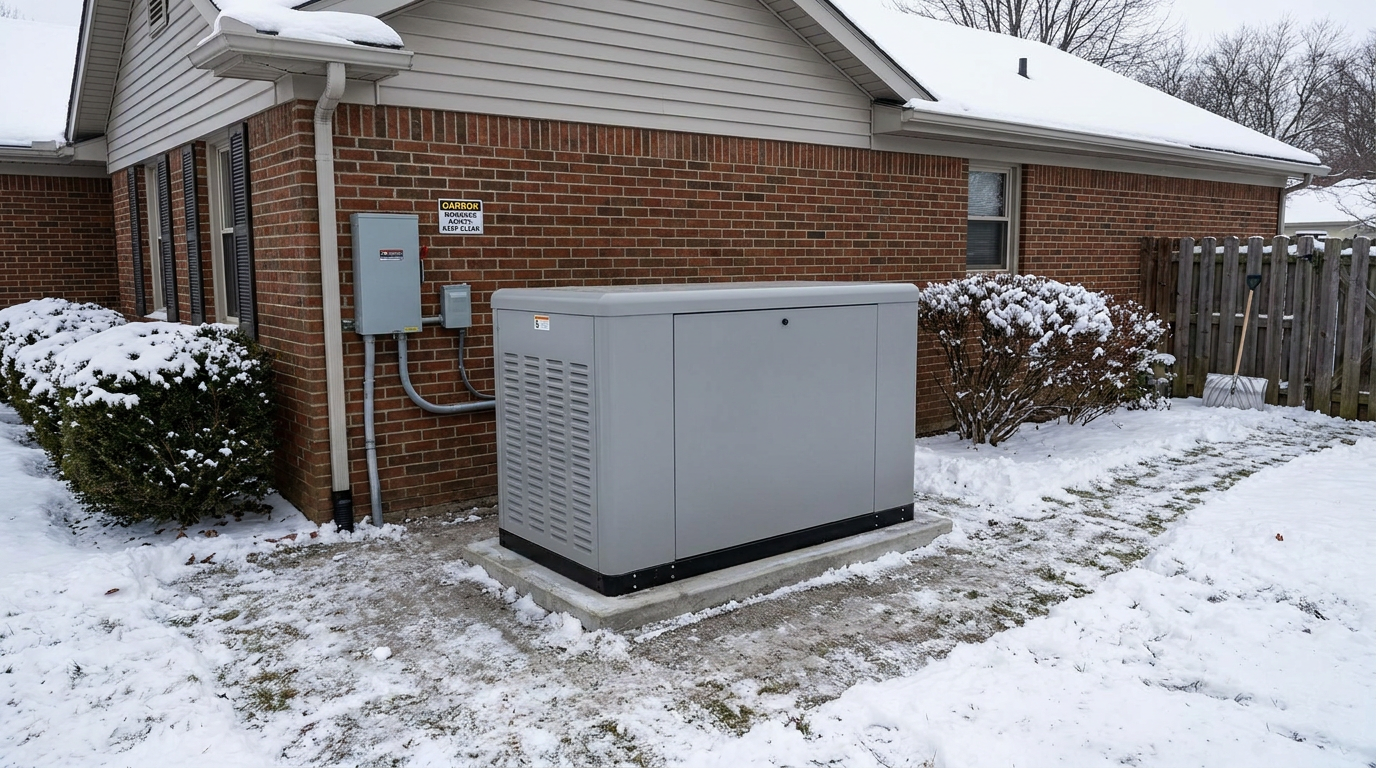
Featured image: A well-maintained standby generator beside a home, prepared for storm season and inspected as part of a regular maintenance routine.
Why regular generator maintenance matters
Generators are not like decorative appliances that can sit untouched for years and still perform perfectly on demand. They are working machines with engines, electrical components, batteries, fuel systems, filters, and moving parts. Even if your generator rarely runs, time still affects it. Fuel degrades, oil ages, batteries discharge, moisture causes corrosion, and dirt or nests can build up in places that should stay clean.
That is why a generator that sees very little use can still fail when you need it. Infrequent use does not eliminate maintenance. In many cases, it increases the need for preventive care because problems go unnoticed longer. A neglected portable generator often develops stale-fuel issues or carburetor deposits. A neglected standby generator may still self-exercise, but if the battery is weak, the oil is overdue, or the area around the unit is full of debris, that automatic exercise routine does not guarantee real reliability during an outage.
Regular maintenance also protects the parts that are most expensive to replace. An engine that runs low on oil can be damaged quickly. A clogged air filter can affect performance and fuel efficiency. A weak battery can stop an otherwise healthy generator from starting. Electrical issues such as worn cords, poor transfer equipment, or improper loading can create shock and fire risks on top of equipment damage. Staying ahead of those issues is simply good ownership.
There is also the practical reality of scheduling. It is easier to replace a filter, top up fluids, or book annual service during calm weather than it is during a regional outage when everyone is suddenly trying to get emergency repairs. Homeowners who keep a written maintenance log tend to have fewer surprises because they are not guessing when the oil was last changed or when the battery was last tested.
A generator should not be treated like emergency luck. It should be treated like any other critical home system: checked, tested, cleaned, and serviced before failure has a chance to show up.
Know your generator type before you build a maintenance routine
Before you get into schedules and service tasks, identify which kind of generator you own and how it is used. The maintenance priorities for a portable gasoline unit are not the same as those for a permanently installed home standby generator running on natural gas or propane. Homeowners often assume all generators need the same care, but that leads to missed tasks and bad habits.
Portable generators are usually moved out for temporary use during outages, jobsite work, or remote power needs. They often use gasoline, though some are dual-fuel or propane-capable. Their biggest maintenance issues usually involve stale fuel, carburetor problems, manual or electric starting issues, dirty storage conditions, and wear from being moved in and out of storage. Because many sit unused for long stretches, exercising them and managing fuel properly matters a lot.
Standby generators are fixed installations tied into the home through a transfer switch or approved switching arrangement. They are designed to start automatically during outages and often run regular self-tests. These units usually have more structured maintenance schedules, and manufacturers commonly specify service intervals by both run hours and elapsed time. That means a generator may still require annual service even if it has not accumulated many operating hours.
If you are unsure what schedule applies to your unit, start with the model number and the owner’s manual. Generac, for example, publishes maintenance schedules for home standby models that may include a break-in service after the first 25 hours of runtime, yearly service every 100 hours or one year, Schedule A every 200 hours or two years, and Schedule B every 400 hours or four years. Those are examples, not universal rules. Exact intervals vary by model and environment, which is why the manual always outranks general advice.
The homeowner maintenance tasks that make the biggest difference
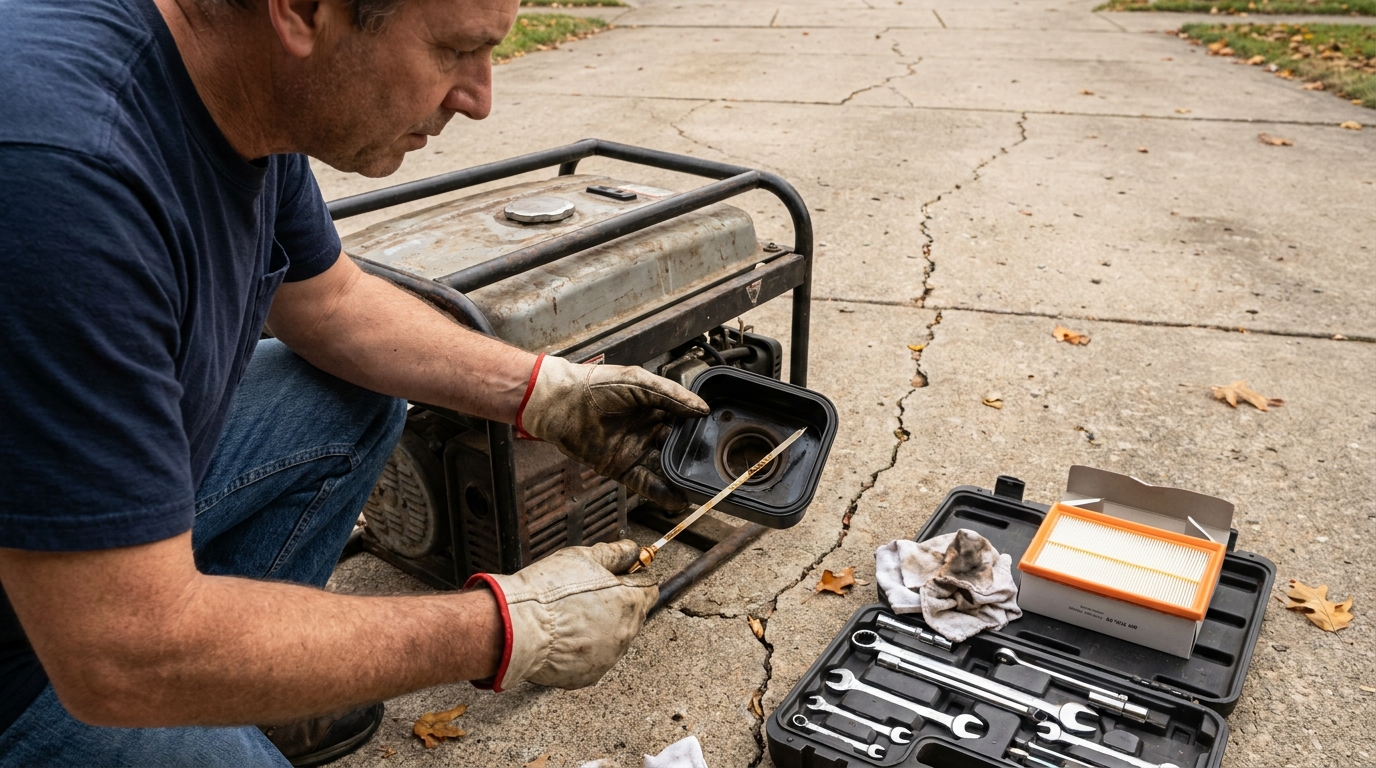
The most useful generator maintenance plan is one you will actually follow. For that reason, it helps to focus on tasks that are simple, repeatable, and tied directly to reliability. Most homeowners can safely handle visual checks, basic cleaning, battery monitoring, fuel management, light testing, and some routine replacement items if the manufacturer allows it. The key is to do them consistently and with the generator off, cool, and safely isolated as required.
Keep the generator clean, dry, and clear around the unit
Dirt, leaves, dust, grass clippings, snow buildup, and rodent activity all work against reliable operation. A standby generator should have clear airflow around the enclosure and should not be crowded by shrubs, fencing, or stored items. A portable generator should be stored in a clean, dry place after it has cooled completely. Moisture and debris are slow problems that often become fast failures when a machine is finally put under load.
During regular checks, look around and underneath the unit. Remove leaves, spider webs, nests, or anything that could block ventilation or attract moisture. Check that the enclosure vents are clear and that there is no visible mud, corrosion, or standing water nearby. If the unit sits on a pad, make sure the area drains properly and does not stay wet for long periods.
This kind of cleaning sounds minor, but it helps with cooling, reduces corrosion, and makes it easier to spot leaks or loose parts. A machine hidden by overgrowth or covered in dust is harder to inspect properly. Clean equipment tells you more about its condition because problems have fewer places to hide.
Check engine oil and follow the correct oil-change interval
Oil is one of the first places to look because it directly affects engine life. Low oil, dirty oil, or old oil can lead to poor lubrication, overheating, and accelerated wear. Homeowners should know where the dipstick is, how to check the level correctly, and what oil type the manufacturer requires. Do not guess on viscosity, especially in cold climates where winter operation can change what the engine needs.
Standby generator schedules often include oil changes based on runtime or annual intervals, whichever comes first. Portable generators also need routine oil changes, especially after initial break-in and then on the ongoing interval in the manual. If your generator has recently run for a long outage, move the oil change to the top of the list rather than waiting until next season.
When checking oil, pay attention to more than the level. If it looks excessively dark, smells burnt, or appears contaminated, that is useful information. Also look for drips under the engine or wet areas around seals and fittings. A small leak noticed early is usually much easier to fix than an engine run low by surprise.
Inspect the air filter and replace it when needed
An engine needs clean air to run properly. A clogged air filter restricts airflow, which can affect power output, fuel use, and starting. In dusty areas, near construction, or in homes with lots of yard debris, air filters can load up faster than owners expect. Some filters can be visually inspected easily, while others are tucked behind covers that require a few basic steps to access.
If the filter is dirty, damaged, oily beyond what is normal for the design, or visibly deteriorated, replace it with the correct part. Do not try to stretch a cheap filter beyond its useful life. Also avoid improvising with non-approved materials. Generators are not complicated in this area. They simply need a clean filter that fits and seals properly.
Filter maintenance is especially important after storm cleanup periods or heavy seasonal use. If the generator has been running during windy, smoky, or dusty conditions, the filter may be carrying more load than your normal calendar would suggest. That is why visual inspection matters as much as the schedule.
Monitor the battery and charging condition
A battery problem is one of the most common reasons a generator will not start, especially on standby units and electric-start portable models. Batteries age whether you notice them or not. Terminals can corrode, connections can loosen, and the charge can drop over time. A standby generator may have built-in charging and monitoring, but that does not mean the battery is healthy forever.
Look for corrosion on terminals, damaged cables, swelling, or signs of leakage. Make sure connections are secure and clean. If your unit uses a battery tender or integrated charger, verify that it is functioning. On a portable electric-start unit, Briggs & Stratton and other manufacturers commonly stress keeping the battery charged so the machine is actually ready when needed.
Battery replacement is normal maintenance, not a surprise defect. If a battery is near the end of its service life, replace it before storm season. Waiting for it to fail during an outage is the expensive way to learn the lesson.
Use fresh fuel and manage storage correctly
Fuel quality is a major reliability issue for portable generators. Gasoline does not stay fresh indefinitely, and stale fuel is one of the fastest ways to end up with hard starts, rough running, or carburetor trouble. If your generator sits for extended periods, use a fuel stabilizer as recommended and rotate stored fuel so it does not age out in cans. For longer storage, follow the manufacturer’s instructions on draining or treating the fuel system.
Briggs & Stratton specifically advises homeowners to use fresh fuel, add fuel stabilizer for storage, and run the generator occasionally to keep the engine lubricated and ready. That is practical advice because fuel problems usually show up at the worst time. You do not want to discover that your emergency machine has become a stale-fuel project when the refrigerator is already warming up.
Propane and natural gas standby systems avoid some of the stale-gasoline issues, but they still require attention. Check for obvious signs of damage to accessible fuel supply components, keep the service area clear, and report any suspected leak or fuel delivery issue immediately. Deeper fuel-system diagnosis should be left to trained professionals.
Run the generator before you need it
One of the most practical maintenance steps is simply exercising the generator on a routine basis. Machines that sit idle too long tend to reveal problems only when they are finally asked to work. Running the unit occasionally helps circulate oil, confirms that the engine can start, and gives you a chance to hear changes in operation before they become failures.
Many standby generators perform automatic exercise cycles, but homeowners should still verify that those exercises are occurring and pay attention to how the unit sounds and behaves. A self-test that is regularly skipped or interrupted is a warning sign. Some newer units also support app-based monitoring and service reminders, which can help track run hours and maintenance timing. Those tools are useful, but they are not a substitute for physically checking the machine.
Portable generators should also be started periodically according to the manufacturer’s guidance. During a test run, check for smooth starting, stable idle, unusual smoke, vibration, warning lights, and proper output. If the unit struggles to start, stalls, hunts, or smells strongly of old fuel, do not ignore it just because it eventually catches. That small issue has a habit of becoming a no-start event later.
Testing also helps you remember your setup. You can confirm extension cords are in good condition, know where the fuel is stored, verify your transfer method, and make sure the household loads you intend to power are realistic. A calm-weather test is always better than troubleshooting by flashlight in freezing rain.
Standby generator maintenance basics for homeowners
Standby generators are convenient because they automate backup power, but that convenience can make owners assume the machine takes care of itself. It does not. A standby unit still needs inspection, cleaning, battery checks, and regular service based on both time and runtime. The difference is that the maintenance schedule is usually more formal and often tied closely to the manufacturer’s service program.
Generac notes that maintenance requirements vary by model, but common standby-generator tasks include cleaning debris, checking for leaks, checking battery condition, and replacing oil, filters, and spark plugs at the prescribed intervals. Published examples include a break-in service after 25 hours of runtime, yearly service every 100 hours or one year, Schedule A every 200 hours or two years, and Schedule B every 400 hours or four years. Those benchmarks give homeowners a sense of what structured maintenance looks like, even if their exact model differs.
What homeowners can usually handle is the visual and housekeeping side of standby care. You can keep vegetation trimmed back, make sure vents are clear, inspect the exterior for damage, check for visible oil or coolant issues if applicable, verify the battery looks healthy, and confirm the unit’s indicators or app status do not show a fault. You can also review the service log and make sure annual maintenance does not quietly slip by.
What homeowners usually should not do is deeper internal service unless they are specifically trained and the manufacturer permits it. Valve clearance, internal electrical diagnosis, major fuel-system work, transfer switch repairs, and complex control-board issues are technician jobs. Standby generators are integrated home systems, not just engines sitting on a pad. Treat them with that level of respect.
Pay attention to leaks, corrosion, and enclosure condition
Leaks are one of the most useful warning signs a homeowner can catch early. During a routine walk-around, look under the unit and around accessible seams or fittings for fresh staining, wet spots, or residue. Corrosion on the enclosure, fasteners, or electrical areas should also be noted. In coastal climates or snowy regions where salt exposure is possible, corrosion can move faster than expected.
A damaged enclosure can let in water, pests, or debris, all of which shorten component life. Hinges, latches, and seals should close properly. If the unit has been bumped by a mower, hit by yard equipment, or exposed to falling branches, inspect it right away rather than assuming the outer shell took no real damage. The enclosure is part of the generator’s protection system, not just a cover.
Do not ignore the transfer equipment
A standby generator is only as useful as the equipment that safely transfers power to the home. The transfer switch or approved interconnection arrangement has to be installed correctly and remain in good working order. Homeowners are not expected to do internal electrical repairs here, but they should know that the switching equipment deserves periodic professional inspection and should never be treated casually.
Health Canada notes that electrical products can pose shock and fire risks if used incorrectly and advises checking for recognized certification marks such as CSA, cUL, or cETL on electrical products sold in Canada. In practical homeowner terms, that means using properly certified components, avoiding improvised connections, and respecting local electrical code. If anything about the transfer arrangement seems unclear, ask a licensed electrician rather than guessing.
Portable generator maintenance basics for homeowners
Portable generators tend to fail for simple reasons. The fuel went stale. The battery went dead. The carburetor got gummed up. The extension cord was damaged. The unit was put away wet or dirty. These are not glamorous problems, but they are common, and they are very preventable. For homeowners, portable generator care is mostly about disciplined storage and occasional exercise.
Start with fuel management, because it affects everything else. Use fresh gasoline, store fuel in proper containers, add stabilizer when the fuel may sit for a while, and rotate your supply. Run the generator occasionally so the engine stays lubricated and the system stays functional. If the model has electric start, keep the battery charged. Briggs & Stratton also emphasizes allowing the unit to cool before storing it, which helps prevent heat-related storage issues and lowers fire risk.
Keep the machine physically protected, but do not trap moisture around it. A portable generator should be covered from dirt and debris during storage, yet kept in a dry space where condensation is less likely to cause corrosion. Before each use, inspect the frame, outlets, controls, fuel cap, recoil starter if present, and all visible fasteners. If anything is cracked, loose, or obviously worn, address it before the next outage exposes it.
Load handling matters too. Avoid overloading the generator, and use heavy-duty cords rated for the intended use. Damaged cords are not just annoying. They are shock and fire hazards. Inspect for cuts, crushed sections, exposed conductors, and loose ends. Replace questionable cords rather than trying to squeeze one more season out of them.
Safety is part of maintenance, not a separate topic
Many generator problems are not mechanical at all. They come from unsafe setup, poor ventilation, bad cord choices, or misuse during stressful outage conditions. That is why a maintenance guide has to include safety as a working part of ownership. A generator in perfect mechanical condition can still injure people or damage property if it is used incorrectly.
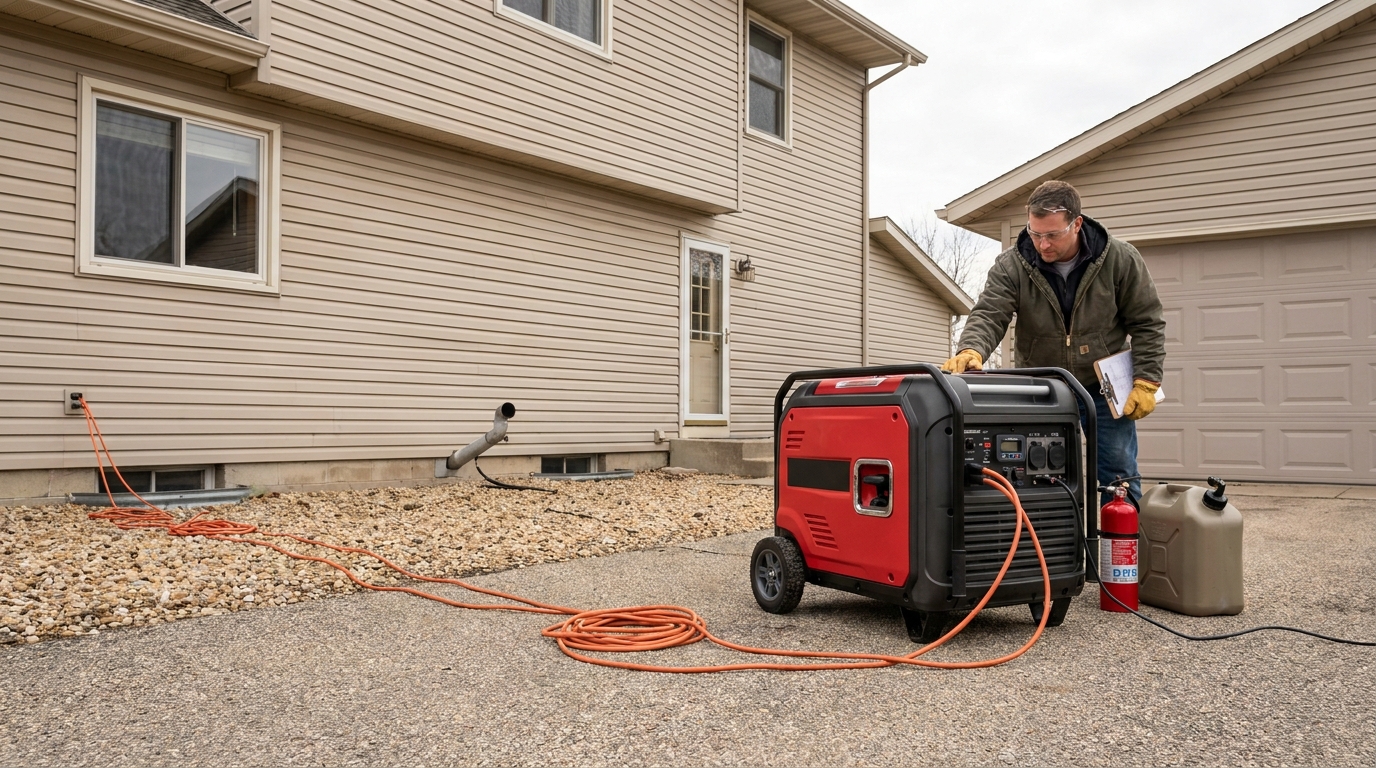
The biggest portable generator hazard is carbon monoxide. Health Canada states that fuel-burning portable generators produce carbon monoxide, which has no smell and no color, and can cause serious illness or death. The guidance is clear: never run a portable generator indoors, in a garage, or in a shed, even if a door is open. Operate it at least 6 metres from buildings and keep the exhaust directed away from doors, windows, and other openings.
This point needs repeating because one of the most dangerous misconceptions is that a garage with the door open is good enough. It is not. Carbon monoxide can build up quickly and move into the home. Even units with carbon monoxide sensing features do not make indoor use safe. Outdoor-only operation with proper distance is still the rule.
Homes that use generators should also have working carbon monoxide alarms installed according to applicable safety guidance. If you depend on fuel-burning equipment during outages, alarm maintenance matters just as much as generator maintenance. Replace batteries, test alarms regularly, and do not assume the system is fine because the unit worked last year.
Electrical safety checks homeowners should not skip
Look over all cords, plugs, and receptacles before each use. If a cord has cuts, tears, missing ground pins, or signs of overheating, retire it. Use cords sized for the electrical load and outdoor conditions. Do not improvise with undersized household cords for major appliances or long runs. Voltage drop and overheating can become real problems fast.
If you connect a portable generator to home circuits through a transfer switch or interlock system, make sure that system was installed properly and is used exactly as intended. Never backfeed a house through a dryer outlet or any similar shortcut. That is dangerous for the home, the occupants, and utility workers. Proper transfer equipment is not an optional accessory. It is the correct way to connect backup power to fixed wiring.
Also look for certification marks such as CSA, cUL, or cETL on electrical products and accessories used in Canada. Certified equipment gives you a baseline level of compliance and safety that improvised or dubious products do not. In generator ownership, buying the correct cord, adapter, and switching equipment is part of maintenance because poor electrical accessories often become the weak link.
Seasonal generator care and winter preparedness
Generator maintenance should follow the calendar as well as the hour meter. In many parts of North America, winter storm season is when generator reliability matters most. That makes fall an ideal time to inspect, test, service, and restock anything the system needs. Waiting until the first ice storm is too late.
Cold weather changes how engines start, how batteries perform, and how outdoor equipment handles moisture. Check that the recommended oil is suitable for the temperatures you expect. A battery that seems acceptable in mild weather can struggle badly in the cold. Snow and drifting ice can also block access or airflow around outdoor equipment, so keep the area around standby generators clear and visible.
For portable generators, winter readiness also means planning the safe operating location in advance. Know exactly where the unit will go so it remains dry, level, and at least 6 metres from the house while still allowing practical cord runs. Think through extension cord routing before a storm, not during one. If you need a generator tent, cover, or weather-protection setup approved for operation, sort that out ahead of time.
Seasonal checks should also include supplies. Make sure you have fresh stabilized fuel if your unit uses gasoline, enough oil for a service top-up or change, spare spark plugs if appropriate, the right filters, and a flashlight or headlamp stored with the generator gear. Preparedness is part maintenance and part logistics. Both matter.
Common generator problems and what homeowners can check first
When a generator acts up, the first goal is not to take it apart. It is to check the simple causes in a logical order. Many no-start or poor-running complaints are tied to basic issues such as old fuel, low oil shutdown, a dead battery, a dirty filter, a closed fuel valve, a tripped breaker, or overload. Homeowners can often narrow the problem quickly without stepping into unsafe repair territory.
Generator will not start
Start with the basics. Is there fresh fuel if the model needs it? Is the fuel valve open? Is the battery charged on electric-start units? Is the oil level correct? Is the choke set properly if the design uses one? Has the unit been sitting for a long period with untreated fuel in the system? Those questions solve a surprising number of starting problems.
If the engine cranks but does not catch, stale fuel and ignition-related maintenance items become likely suspects. If there is no crank at all on an electric-start model, check battery condition and visible connections first. If the unit still does not respond after basic checks, that is usually the point to stop and consult a technician or service manual rather than randomly replacing parts.
Generator starts but runs poorly
Rough operation can point to dirty fuel, a clogged air filter, spark plug wear, or overload. First reduce the load and see whether the engine stabilizes. Then inspect the air filter and review how old the fuel is. If the problem started after long storage, fuel-system varnish or carburetor fouling may be involved, which often moves the repair beyond standard homeowner maintenance.
Also listen for changes rather than only watching for failure. Surging, hunting, sputtering, or unusual vibration all matter. These signs may seem minor during a test run, but they usually get worse when the generator is under real demand during an outage.
Generator runs but does not power expected loads
Check the obvious first: output breakers, cord condition, plug fit, and load size. Homeowners often ask too much from a generator without realizing how startup wattage affects motors, pumps, refrigerators, and other equipment. Load management is part of care because overloading stresses the generator and can trip protection devices repeatedly.
If the problem involves a standby unit and home circuits are not transferring correctly, do not attempt internal transfer switch repair yourself. That is licensed electrical territory. Safe diagnosis matters more than speed when fixed wiring is involved.
When to call a qualified technician
There is a clear line between preventive homeowner maintenance and technical repair. A good owner respects that line. DIY care makes sense for cleaning, visual inspections, battery observation, fuel management, routine exercising, and some basic replacement tasks that the manufacturer specifically allows. Beyond that, there is real value in using a trained technician.
Call for service if you find fuel leaks, repeated starting failures, warning codes you cannot clear through normal procedures, persistent rough operation, output problems, suspected transfer switch issues, damaged wiring, or signs of overheating. Also call if your generator is due for scheduled service involving internal adjustments or multi-point inspections beyond normal homeowner checks. Annual professional inspection is a smart baseline, especially for standby systems that protect the whole house.
In many cases, paying for proper service saves money because it prevents parts swapping and secondary damage. It also gives you documentation of what was done and when. If the generator is under warranty, unauthorized repairs may complicate coverage, so check that before doing anything beyond routine owner maintenance.
Do not forget registration, recalls, and recordkeeping
One of the newer realities of equipment ownership is recall awareness. Health Canada has issued recall notices for certain portable generators due to fire hazard, which is a good reminder that maintenance is not just about wear and tear. It is also about knowing whether your exact model has a safety update, recall repair, or manufacturer notice attached to it. Checking recall databases should be part of routine generator ownership.
Register your generator with the manufacturer if you have not already done so. That makes it easier to receive service notices, software updates where relevant, and recall information. It also helps with warranty support and part identification. If the manufacturer offers an app or online portal for monitoring and service reminders, use it. A simple digital prompt is often enough to keep annual maintenance from slipping through the cracks.
Keep a paper or digital log with the model number, serial number, purchase date, service dates, oil changes, filter replacements, battery changes, exercise checks, and any symptoms you notice. Good records make troubleshooting easier and help technicians spot patterns. They also keep you from doing everything by memory, which is how maintenance gets postponed indefinitely.
A simple generator maintenance routine homeowners can follow
If you want a workable plan, keep it simple and repeatable. Once a month, do a quick walk-around and visual inspection, check for debris, look for leaks, review the battery condition, and confirm the unit can test or exercise normally. Before storm season, do a more complete check that includes oil status, air filter condition, cord inspection, fuel review, carbon monoxide alarm testing, and safe operating setup. Then follow the manufacturer’s hour-based and annual maintenance schedule for deeper service items.
That routine may not sound impressive, but it covers the causes behind a large share of generator failures. It catches low oil, dead batteries, stale fuel, clogged airflow, damaged cords, unsafe storage conditions, and overdue service before they turn into emergencies. Most importantly, it turns generator ownership from guesswork into a system.
- Read the owner’s manual and identify the exact maintenance schedule for your model.
- Inspect the generator monthly for debris, leaks, corrosion, and physical damage.
- Check oil level and condition, and change oil on the required hour or time interval.
- Inspect and replace air filters and spark plugs as scheduled.
- Monitor battery charge and terminal condition, and replace aging batteries proactively.
- Use fresh fuel, add stabilizer when needed, and rotate stored gasoline.
- Run or verify exercise cycles regularly so problems show up before an outage.
- Inspect cords, plugs, and transfer equipment for safe, code-compliant operation.
- Check carbon monoxide alarms and review safe generator placement.
- Track recalls, register the product, and keep a maintenance log.
Final thoughts
Good generator care is not about doing complicated work. It is about doing the ordinary work on time. Clean the unit. Check the oil. Watch the battery. Manage the fuel. Test it regularly. Replace wear items before they fail. Keep the electrical side safe and properly installed. Then bring in a qualified technician for the work that belongs to a professional.
That approach keeps costs down because it stops small problems from becoming major repairs. It also gives you something more valuable than a lower repair bill: confidence. When the lights go out, you want a backup power system that feels predictable, not one that depends on luck. A generator that is maintained with patience and routine is far more likely to do its job when it counts.
If you treat your generator like a critical part of the house instead of a forgotten machine in the corner, it will usually return the favor. Reliability is built long before the outage starts.



No Comment! Be the first one.