


The Art of Caring for Your Rugs: Practical Tips for Lasting Beauty and Elegance
A rug is rarely a minor detail. In a well considered room, it gathers furniture into a coherent composition, softens sound, warms the atmosphere, and introduces color, pattern, and tactility in ways that paint and upholstery alone cannot achieve. Whether it is a hand knotted heirloom, a flatwoven cotton layer, a sculptural wool statement piece, or a practical washable rug in a busy family home, its presence quietly shapes the experience of the space. Caring for a rug, then, is not simply a household task. It is part of preserving a room’s beauty and the artistic intention behind it.
Table Of Content
- Why Rug Care Matters Beyond Cleanliness
- Seeing Rugs as Functional Art in Interior Design
- The First Principle: Know Your Rug Before You Clean It
- Common Rug Fibers and What They Need
- Daily and Weekly Habits That Preserve Beauty
- How to Handle Spills Without Causing More Damage
- A Simple Spill Response Sequence
- Why Residue Is the Enemy of Refinement
- Rotation, Rug Pads, and the Hidden Architecture of Preservation
- Sunlight, Humidity, and the Climate of Care
- Washable Rugs and the Rise of Practical Luxury
- When Professional Cleaning Is the Best Decision
- Storage and Seasonal Protection
- Ethical Care Begins With Ethical Choice
- Misconceptions That Deserve to Be Left Behind
- Creating a Personal Rug Care Routine at Home
- The Elegance of Preservation
Across North America, area rugs remain one of the most important categories in home decor, and their popularity reflects something deeper than trend. Rugs answer practical needs while also acting as visual anchors, especially in open plan interiors where they define living, dining, and conversation zones with elegance. Yet the more central a rug becomes to daily life, the more vulnerable it is to wear from footsteps, sunlight, pets, spills, furniture pressure, and the almost invisible abrasion caused by dust and grit. This is why thoughtful maintenance matters so much. Good rug care protects both function and form.
There is also a quiet pleasure in this care. To tend to a rug properly is to notice the direction of its pile, the clarity of its pattern, the softness of its fiber, and the way its tones shift with light throughout the day. It invites appreciation of craftsmanship, material, and use. A rug that is maintained with knowledge does not merely stay cleaner. It retains its character, supports the design language of the room, and continues to age with grace rather than fatigue.
This guide brings together practical advice and aesthetic understanding. It explains why preventive care matters, how to respond to everyday accidents, what different fibers need, when professional cleaning is wise, and how to preserve both handmade and machine made rugs with discernment. The goal is simple: to help you keep your rugs looking elegant, enduring, and fully at home within the life of your interiors.
Why Rug Care Matters Beyond Cleanliness
It is easy to think of rug care in narrow terms, as something that begins only when a stain appears or when a rug starts to look dull. In reality, rug care begins much earlier. It starts with understanding that a rug is under constant pressure from daily life, even when that pressure is not visible. Fine dust settles into fibers, shoes track in abrasive particles, sunlight slowly fades dyes, and furniture legs compress pile in concentrated points. Over time, these quiet forces can alter both the appearance and structure of the rug.
The Canadian Conservation Institute has noted that dust and gritty particles trapped in fibers can abrade them over time. This is one of the clearest reminders that maintenance is preventive as much as corrective. A rug may appear relatively clean on the surface while still holding the very particles that cause it to age prematurely. Regular, careful vacuuming is therefore not cosmetic. It is one of the most important preservation steps available in ordinary home care.
There is also the matter of design continuity. Rugs often tie together the tones of wood, stone, upholstery, and art. They can make a room feel grounded and complete, or airy and layered, depending on their scale and texture. When neglected, a rug loses not only cleanliness but visual clarity. Colors become muted by residue, pile lies unevenly, and the room itself can feel less composed. When maintained properly, the rug continues to perform its spatial and aesthetic role with quiet confidence.
Rug care is not only about removing dirt. It is about preserving craftsmanship, protecting materials, and sustaining the atmosphere a rug brings to the room.
Seeing Rugs as Functional Art in Interior Design
In refined interiors, rugs are often the element that balances the practical and the poetic. They protect hard flooring from wear, reduce echo, and create comfort underfoot. At the same time, they lend rhythm through pattern, depth through texture, and warmth through color. An antique Persian rug may bring gravity and patina to a contemporary room. A pale wool rug may soften modern architecture. A striped flatweave can sharpen the geometry of a casual family space.
Designers increasingly use rugs as space defining tools rather than decorative afterthoughts. In open plan homes, a rug can establish a living area without walls, frame a dining arrangement, or signal a reading corner with subtle clarity. This makes upkeep especially important. A neglected rug weakens the visual boundaries it was meant to establish, while a well preserved one reinforces order, proportion, and harmony throughout the home.
This is also why choosing care methods should never be detached from the nature of the rug itself. A thick synthetic rug in a playroom will accept different maintenance than a hand woven wool rug in a formal sitting room. A jute layer in a sunroom behaves differently from a silk blend in a bedroom. To care well for a rug is to understand its role in the room and its tolerance as a material object. That awareness is part of design literacy.
The First Principle: Know Your Rug Before You Clean It
One of the most common mistakes in rug care is assuming all rugs can be cleaned the way wall to wall carpet is cleaned. They cannot. Fiber content, backing, dye stability, weave type, construction method, and age all affect how a rug should be maintained. A machine made polypropylene rug can often handle much more moisture and agitation than a handmade wool or silk piece. Viscose can be especially sensitive to water marks and texture distortion. Natural plant fibers such as jute and sisal may darken, shrink, or become misshapen if over wetted.
Before attempting any treatment, identify what the rug is made from and whether the maker has given care instructions. If the rug is labeled machine washable, those instructions should guide water temperature, cycle settings, drying, and handling. If it is dry clean only, antique, handmade, or unusually delicate, professional cleaning is generally the safer choice. The Carpet and Rug Institute strongly supports using approved cleaning products and qualified professionals when needed, especially when uncertainty exists.
It is also wise to test any cleaning product in an inconspicuous area first. This small act can reveal color transfer, pile change, or surface dulling before damage becomes visible in a central location. Colorfastness testing is not reserved for conservators. It is a practical habit for any homeowner who values caution over guesswork.
Common Rug Fibers and What They Need
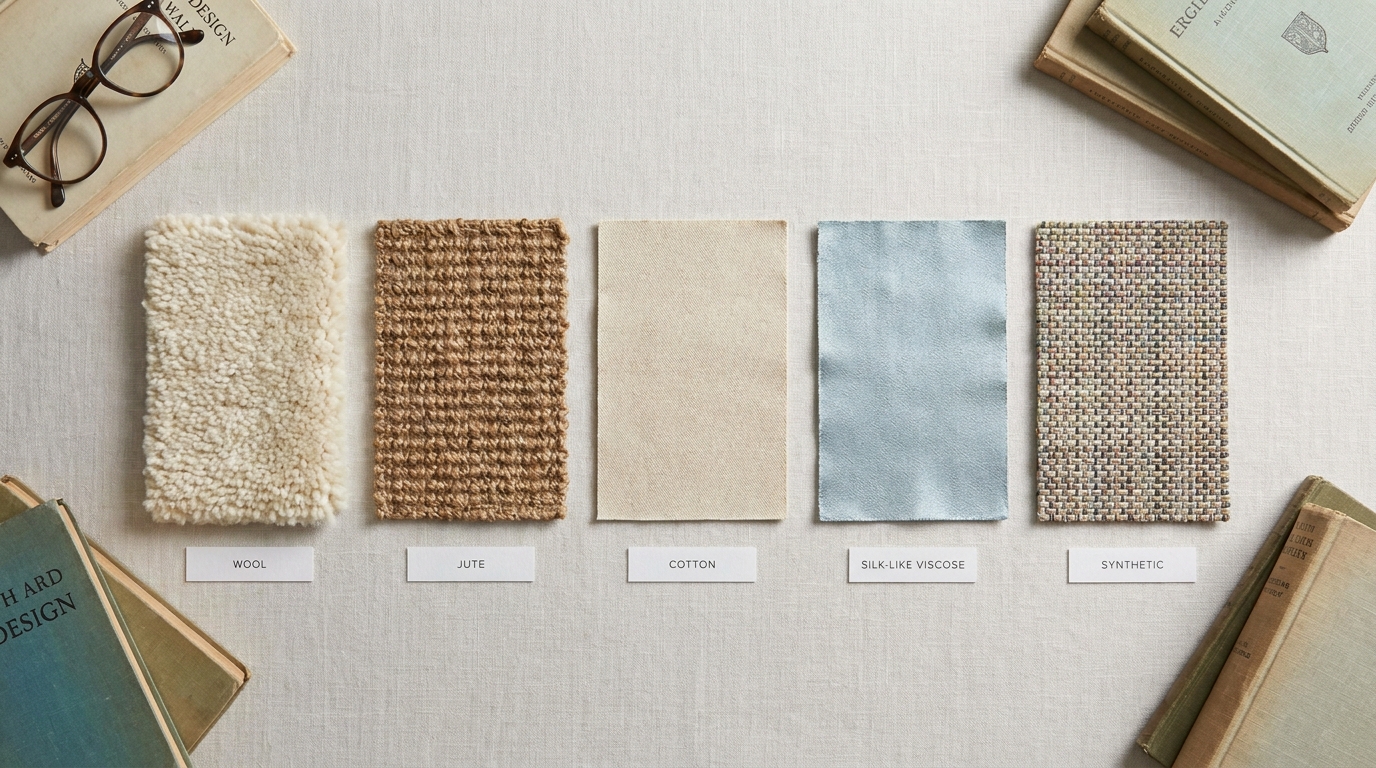
Wool is beloved for good reason. It is resilient, naturally insulating, and beautifully receptive to dye. It also tends to hide soil better than many fibers, which can be deceptive. Wool benefits from regular vacuuming and prompt spill treatment, but it should not be saturated casually. Harsh shampoos and excessive alkalinity can disturb its finish and leave residue behind.
Cotton rugs are often lighter in weight and may be easier to clean, especially if the manufacturer labels them washable. Even so, shrinkage, warping, and color bleed can occur if they are handled carelessly. Follow instructions rather than improvising. If the cotton rug includes decorative dyes or handwoven details, a gentler path is often best.
Synthetic fibers such as polypropylene, polyester, and nylon are generally more stain resistant and practical for active households. They are often chosen for pet and child friendly interiors because they tolerate wear well and may be easier to spot clean. Still, more detergent is not better. Residue left in synthetic pile can attract future soil and make the rug feel dull faster.
Jute, sisal, and other plant fibers have a beautiful dry texture that lends interiors a natural calm. They are, however, more vulnerable to water. Moisture can distort their weave, deepen staining, and contribute to odor if not dried quickly and completely. These rugs benefit especially from prevention, light vacuuming, and restrained treatment.
Silk and viscose require the greatest delicacy. Silk is luxurious and luminous, but highly sensitive. Viscose, often used to imitate that sheen, can mat, yellow, or mark easily with moisture. Rugs made with either should be approached conservatively and cleaned professionally whenever possible.
Daily and Weekly Habits That Preserve Beauty
The most elegant rug care often appears unremarkable. It lives in consistent habits rather than dramatic interventions. Vacuuming is the clearest example. Many homeowners fear that vacuuming will ruin a rug, but the greater risk often lies in avoiding it. As conservation guidance makes clear, fine grit trapped in the rug can abrade fibers over time. Removing that grit carefully is one of the most protective things you can do.
The key word is carefully. Use suction appropriate to the rug’s construction, and be cautious with aggressive beater bars or brush rolls, especially on delicate pile, fringes, looped constructions, and flatweaves. If your vacuum has adjustable settings, lower the intensity for more fragile rugs. Vacuum in the direction of the pile where possible, and do not drag a heavy machine harshly across decorative edges or fringe.
Entry habits also matter. Shoes track in the particles most likely to scratch and dull fibers. A well placed doormat, a shoe free interior policy, or a simple pause at the threshold can reduce wear significantly. In homes with pets, more frequent vacuuming may be needed, not because pet hair alone is harmful, but because it traps and holds additional dust near the rug surface.
Another often overlooked habit is simple visual attention. Straightening a rug before a corner curls, lifting furniture pressure with pads or glides, and noticing a damp area before it settles into the backing are small acts of care that prevent larger problems. Beauty lasts longest when maintenance becomes part of the rhythm of living, not a delayed emergency.
How to Handle Spills Without Causing More Damage
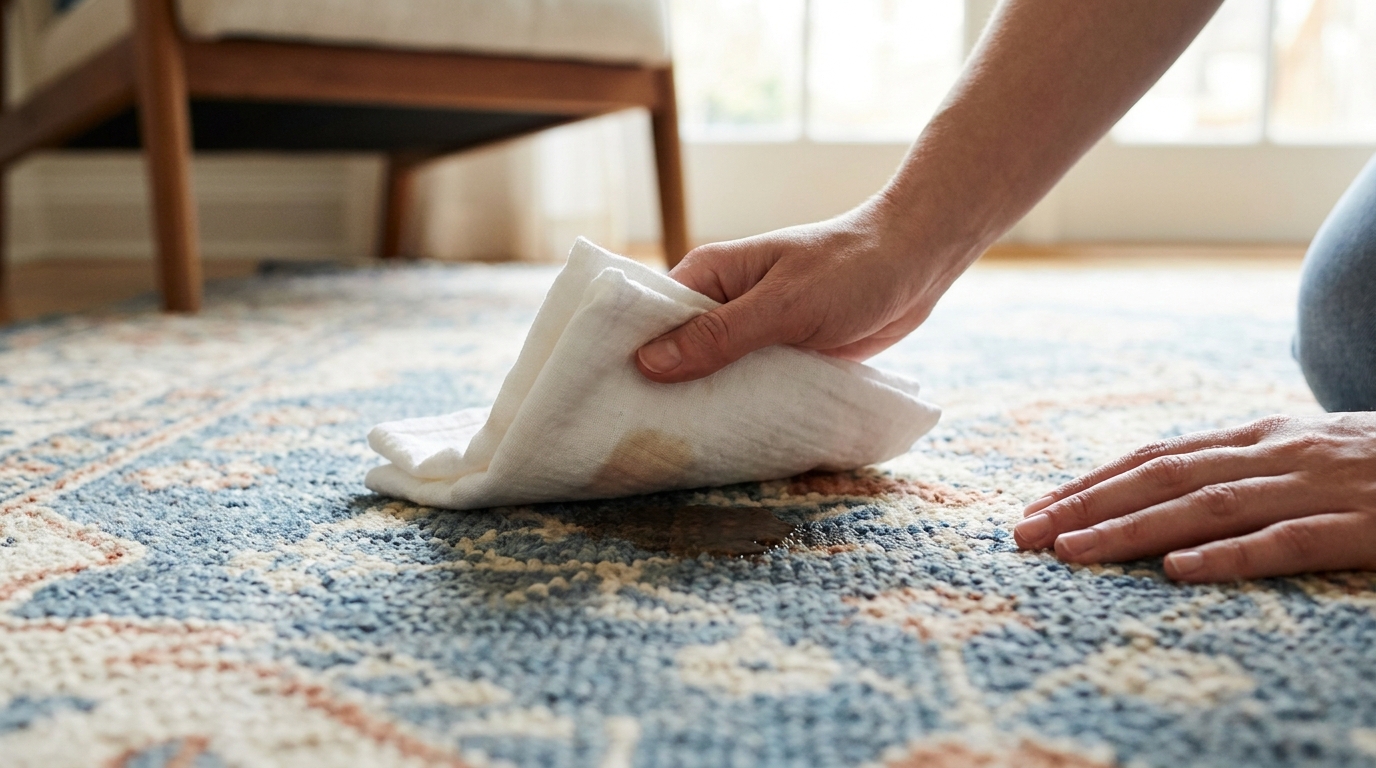
When a spill happens, speed matters, but composure matters just as much. The instinct to scrub is strong and almost always unhelpful. The Carpet and Rug Institute recommends treating spills immediately and blotting rather than scrubbing, and this distinction is crucial. Scrubbing pushes material deeper into the rug, roughens the pile, and can spread the stain outward. Blotting lifts moisture and residue without forcing them further into the structure.
Use a clean white cloth or plain white paper towel so no dye transfers to the rug. Press gently to absorb as much liquid as possible, replacing the cloth as it becomes damp. Work from the outside of the affected area toward the center to reduce spreading. If a suitable cleaning solution is recommended for that rug type, apply it sparingly and test it first in a hidden area.
It is also important to understand the limits of home treatment. Surface cleaning can remove loose soil and some fresh residue, but according to the Canadian Conservation Institute, stains bound by fats, oils, or grease often require professional intervention. This is where many well meaning attempts go wrong. Repeated household treatments can set a stain more deeply, leave sticky residue, or alter the rug’s texture long before the original mark is improved.
A Simple Spill Response Sequence
-
Remove solids carefully with a spoon or dull edge, lifting rather than scraping them through the fibers.
-
Blot liquids immediately with a white absorbent cloth.
-
Avoid rubbing, scrubbing, or over wetting the area.
-
Test any cleaner first in an inconspicuous area.
-
Use only a small amount of an appropriate product if needed.
-
Blot again to remove moisture and residue.
-
If the stain is oily, persistent, or on a valuable rug, contact a professional.
One of the biggest misconceptions in home cleaning is that stronger effort guarantees better results. In rug care, force often creates the very distortion that later feels impossible to undo. Patience, restraint, and material awareness are almost always more effective than intensity.
Why Residue Is the Enemy of Refinement
A rug may look clean immediately after a heavy shampoo or strongly soapy treatment, yet begin attracting dirt faster in the weeks that follow. This is one reason conservation professionals caution against commercial carpet shampoos on important rugs. The Canadian Conservation Institute advises against using such products for valuable pieces because residues can remain in the fibers and attract more dirt after cleaning. The result is not true freshness but a cycle of temporary brightness followed by accelerated dullness.
Low residue care is increasingly recognized as one of the foundations of preventive conservation. It respects the material rather than overwhelming it. This applies not only to handmade and antique rugs but also to many modern pieces that benefit from gentler maintenance. A rug should feel clean, not coated. It should recover its texture and visual depth, not hold a film that captures new soil.
For homeowners, this means resisting the urge to over apply detergent, spot remover, or deodorizing powder. More product does not equal more cleanliness. It often means more rinsing difficulty, more sticky fiber surfaces, and more long term wear. In elegant interiors, good maintenance is usually quiet and measured. It leaves little behind except renewed clarity.
Rotation, Rug Pads, and the Hidden Architecture of Preservation
Some of the most effective rug care techniques are invisible once complete. Rotation is one of them. Rooms rarely distribute wear evenly. One side of a rug may face a bright window while another remains shaded. A coffee table may leave the perimeter exposed to traffic while the center stays protected. Turning the rug periodically helps balance this pattern of stress so fading and wear develop more evenly over time.
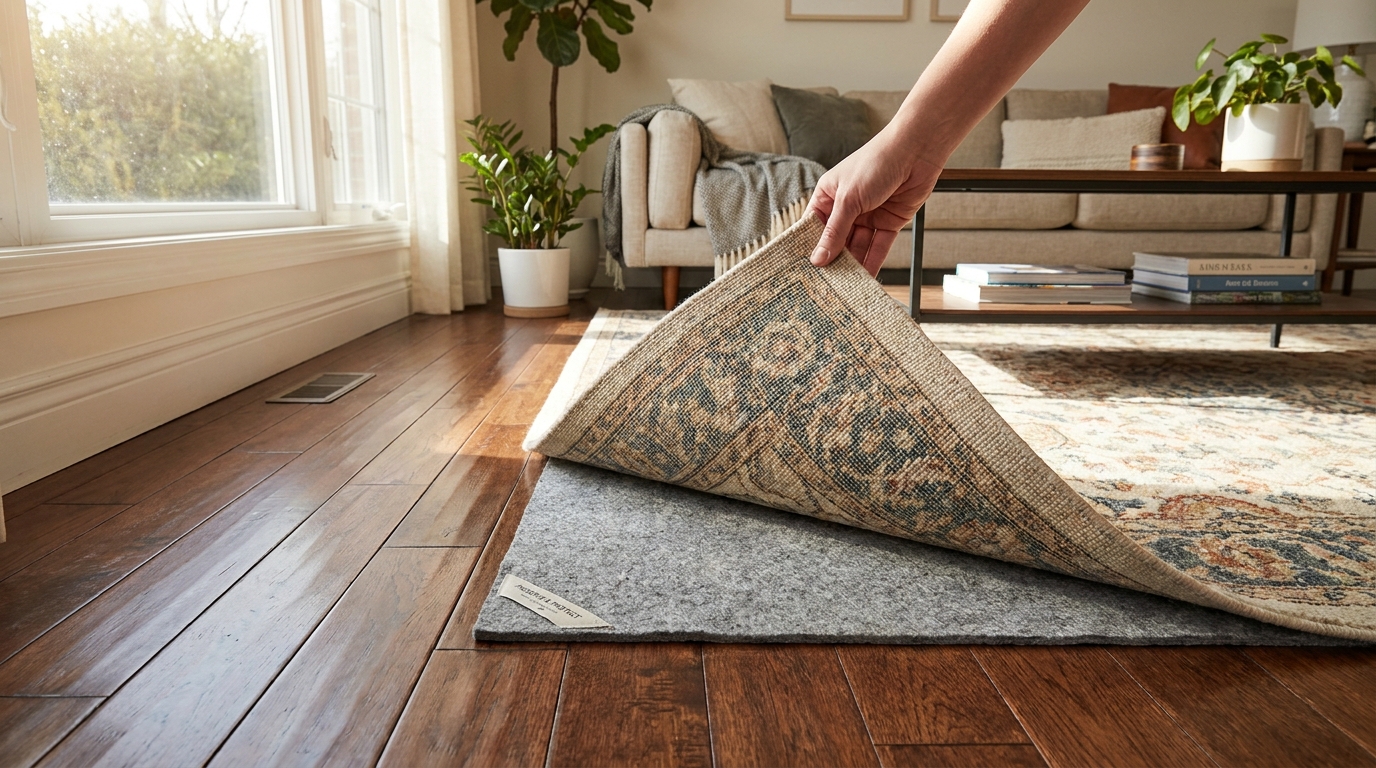
Rug pads are equally important and too often undervalued. A quality pad reduces slipping, softens impact, and limits friction between the rug and the floor beneath it. This matters for safety, of course, but also for longevity. Repeated micro movement can wear the underside of a rug, strain its structure, and gradually distort its placement. A pad also helps support the pile and can improve the way the rug sits and performs in the room.
Think of these measures as the hidden architecture of preservation. They do not shout for attention, yet they sustain the rug’s ability to look composed and feel intentional. In the same way that lining drapery protects fabric or felt pads preserve wood finishes beneath furniture, the rug pad and rotation schedule support elegance through foresight.
Sunlight, Humidity, and the Climate of Care
Every rug lives within an environmental story. Light, moisture, and air quality all influence how it ages. Sunlight is particularly powerful. It can flatter a rug beautifully in the morning and fade it quietly over the years. Natural dyes and deep saturated tones may be especially vulnerable. If one area receives strong daily exposure, uneven fading can develop long before the eye notices the transition.
Window treatments, filtered light, and periodic rug rotation can help moderate this effect. In some rooms, simply shifting the rug’s orientation or adjusting the timing of direct sun can make a meaningful difference. The aim is not to hide rugs from life but to keep that life from concentrating too harshly in one zone.
Humidity also matters. Excess moisture can encourage odor, dye migration, mildew in certain conditions, and instability in natural fibers. Overly dry environments, on the other hand, may leave some fibers feeling brittle over time. While most homes do not require museum level climate control, a stable indoor environment supports all textiles, including rugs. If a rug becomes wet from a leak or major spill, rapid and thorough drying is essential.
Washable Rugs and the Rise of Practical Luxury
One of the most visible recent shifts in rug design has been the rise of washable rugs and other low maintenance constructions. Their popularity speaks to a contemporary reality. Many households want interiors that remain beautiful while accommodating children, pets, frequent entertaining, and fast paced schedules. In this context, easy care does not mean design has been abandoned. It means practicality is being woven into aesthetic choices more deliberately.
Washable rugs can be an excellent option in kitchens, playrooms, entry areas, and other hard working spaces, especially when manufacturer instructions are followed carefully. Temperature, detergent type, and drying method all matter. A rug labeled machine washable should still not be treated casually or overloaded with product. Respecting the maker’s guidance remains part of proper care.
Even here, nuance is essential. Not every low maintenance rug is truly suited to every kind of cleaning, and not every beautiful rug belongs in the highest traffic zone of the house. The elegance of a room often depends on matching material to lifestyle. A washable rug may be the intelligent choice for daily family life, while a handcrafted wool or vintage piece may belong in a calmer room where its subtleties can be enjoyed and protected.
When Professional Cleaning Is the Best Decision
Professional rug cleaning should not be viewed as a last resort or an admission of failure. In many cases, it is simply the appropriate level of care. Valuable handmade rugs, dry clean only pieces, silk or viscose constructions, stubborn oily stains, odor issues, and rugs that have not been cleaned deeply for years may all benefit from expert handling. Professionals can evaluate backing, dye stability, fiber sensitivity, and the difference between surface soiling and embedded contamination in ways that household methods cannot.
There is no single schedule that suits every home. Cleaning frequency depends on traffic, pets, allergies, indoor air quality, fiber type, and whether the rug occupies a formal or everyday zone. A bedroom rug may need much less intervention than one in the center of a family living room. A home with shedding pets and open windows may generate different care needs than a quieter apartment with fewer environmental variables.
It is also wise to seek professionals who understand rugs specifically, not only wall to wall carpet systems. The methods appropriate for installed carpet are not automatically suitable for a hand knotted wool rug or an older flatweave. Ask how the rug will be assessed, what products will be used, whether residues are minimized, and how drying will be managed. Thoughtful questions are part of thoughtful ownership.
Storage and Seasonal Protection
Some rugs are not used year round. Seasonal layering, renovations, moves, and design updates may require a rug to be stored for a period of time. Proper storage helps ensure that a rug emerges with its structure and beauty intact. The first rule is simple: never store a rug while it is dirty or damp. Soil left in fibers during storage can attract pests and contribute to staining over time, while moisture invites mildew and odor.
Rugs should generally be rolled rather than folded to avoid hard creases. Use breathable wrapping materials rather than airtight plastic that can trap moisture, unless a professional gives more specific guidance for the rug’s material and environment. Store the rug in a dry, stable space away from direct sunlight and temperature extremes. Periodic inspection is sensible for long term storage, especially for natural fibers.
Fringe, edges, and decorative finishes deserve protection as well. A rug is often most vulnerable at the places where structure begins to loosen subtly. Addressing those details before storage can prevent small weaknesses from becoming larger repair issues later.
Ethical Care Begins With Ethical Choice
To appreciate the artistry of rugs fully is also to consider the conditions under which they were made. Ethical sourcing has become increasingly important in the rug market, and that concern aligns beautifully with the values of preservation and respect. Certifications such as GoodWeave help identify carpets and rugs produced without child, forced, or bonded labor. For many buyers, this is now part of what it means for a piece to be truly beautiful.
There is a meaningful continuity between buying thoughtfully and caring thoughtfully. When a rug is chosen with attention to craftsmanship, origin, and integrity, maintenance naturally feels less disposable. It becomes an act of stewardship rather than mere upkeep. In an era that often celebrates quick replacement, caring well for a rug can be a quiet expression of permanence and responsibility.
Misconceptions That Deserve to Be Left Behind
Several myths continue to circulate in rug care, and they often lead to costly mistakes. One is the idea that vacuuming damages rugs and should be avoided. In truth, careful vacuuming is a central preventive measure because it removes the gritty particles that abrade fibers. Another is that all rugs can be steam cleaned. Many cannot, especially if they are delicate, handmade, moisture sensitive, or constructed with materials that react poorly to heat and saturation.
A third misconception is that spot cleaning means rubbing harder until the stain gives way. Usually the opposite is true. Scrubbing spreads the stain, roughens the texture, and can weaken the pile. There is also the persistent belief that if a little detergent works, more must work better. Yet excessive product often leaves behind exactly the residue that attracts more dirt later.
Perhaps the subtlest misconception is that a rug is purely decorative. In reality, a rug shapes how a room functions and feels. It can influence acoustics, circulation, zoning, warmth, comfort, and visual proportion. Its care therefore has consequences for the entire interior. To neglect a rug is often to compromise the room around it as well.
Creating a Personal Rug Care Routine at Home
The most successful maintenance plans are realistic. They respond to the life a rug actually lives, not the life imagined in a perfectly untouched room. A practical care routine might include gentle weekly or biweekly vacuuming in active zones, immediate blotting of spills, seasonal rotation, periodic checks beneath furniture, and occasional professional assessment for more valuable or heavily used pieces. Simplicity is often what makes care sustainable.
You might begin by classifying the rugs in your home according to both material and use. Which are decorative but delicate, and which are robust enough for family traffic. Which sit in direct sun, and which remain sheltered. Which are washable, and which should never be treated without greater caution. This small inventory creates clarity and makes future decisions easier when accidents happen.
It can also be helpful to keep a small, sensible rug care kit at home. White cloths, a spoon for lifting solids, approved cleaner for suitable materials, and the contact information for a trusted professional can reduce panic when spills occur. Care feels more graceful when it is prepared in advance.
The Elegance of Preservation
There is a special beauty in objects that have been lived with attentively. Rugs, perhaps more than many furnishings, reveal this truth. They hold memory, routine, and movement within their fibers, yet they can remain composed and radiant when treated with knowledge and respect. Their longevity is not accidental. It is the result of repeated small choices made well.
To care for a rug is to recognize its dual identity as both utility and art. It is there to be used, but not used carelessly. It is there to support life, but also to elevate it through texture, craft, and atmosphere. The reward for such care is not merely a cleaner surface. It is the continued presence of warmth, structure, and beauty in the spaces where daily life unfolds.
In the end, rug care is a design practice as much as a cleaning practice. It protects investment, honors craftsmanship, and preserves the visual soul of a room. When approached with patience and discernment, it allows rugs to do what they do best for many years: soften our homes, anchor our interiors, and bring enduring elegance underfoot.



No Comment! Be the first one.