


How to Properly Test GFCI Outlets for Safety at Home
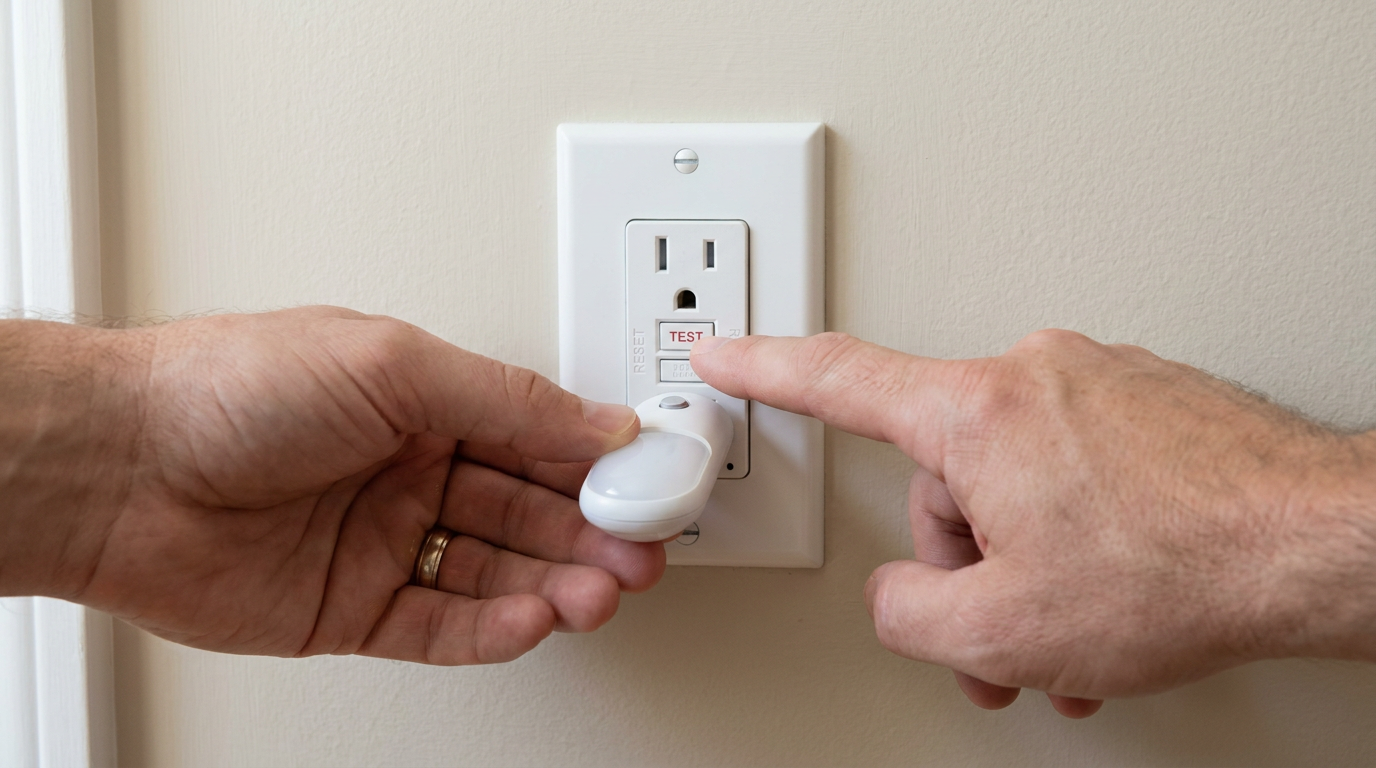
Ground Fault Circuit Interrupter outlets, usually called GFCI outlets, are one of the most important electrical safety devices in a home. They are built to shut off power quickly when they sense an imbalance in electrical current that could mean electricity is flowing through water, metal, or a person instead of staying on its intended path. That fast shutoff can reduce the risk of serious electric shock, which is why these outlets are required in many high risk areas of modern homes. If you have ever seen the small TEST and RESET buttons on an outlet in a bathroom, kitchen, garage, or outdoor space, you have already seen one at work.
Table Of Content
- Why Regular GFCI Testing Matters More Than Most Homeowners Realize
- Where You Are Most Likely to Find GFCI Protection
- How Often Should You Test a GFCI Outlet?
- What You Need Before You Start
- Step by Step: How to Properly Test a GFCI Outlet
- Step 1: Plug in a small lamp or night light
- Step 2: Press the TEST button
- Step 3: Confirm power is actually off
- Step 4: Press the RESET button
- Step 5: Repeat as needed on all GFCI outlets in the home
- How to Tell the Difference Between a Pass and a Failure
- Common Misconceptions That Lead Homeowners Astray
- What to Do If a GFCI Outlet Fails the Test
- When to Call a Licensed Electrician
- GFCI Receptacles, GFCI Breakers, and AFCI Protection
- Building a Simple Monthly Safety Routine
- Practical Tips for Homeowners in Older Homes
- Final Thoughts: A Small Habit That Carries Real Safety Value
- Quick Reference: Monthly GFCI Testing Checklist
The part many homeowners miss is that a GFCI outlet only helps if it is still functioning properly. A device can still appear to work when plugged into a failed or improperly wired GFCI, which means the outlet may deliver power without providing the shock protection it was installed for. That is why safety guidance in both the United States and Canada commonly recommends testing permanently installed GFCIs every month. It is a simple maintenance habit, it costs almost nothing, and it gives you a practical way to confirm that the outlet can still trip and reset as intended.
This article walks through how to properly test GFCI outlets for safety, why monthly testing matters, what to look for if something is wrong, and when it is time to stop troubleshooting and call a licensed electrician. The goal here is not to turn homeowners into electricians. It is to give you a clear, reliable process so you can check a key safety device in your home with confidence.
A GFCI outlet is not judged by whether it still has power alone. It is judged by whether it can interrupt power when a fault occurs and then safely reset.
Before getting into the steps, it helps to understand the basic job of a GFCI. Unlike a standard outlet, a GFCI monitors the current leaving on the hot conductor and returning on the neutral conductor. If it detects even a small difference, it assumes that electricity may be leaking somewhere unsafe and trips off. That is why these outlets are especially important anywhere moisture, damp surfaces, concrete floors, plumbing, or grounded metal increase shock risk.
Why Regular GFCI Testing Matters More Than Most Homeowners Realize
Most homeowners think about electrical safety only when something stops working. That is understandable, but it is not the best way to approach GFCI outlets. These devices are preventive safety equipment. Their purpose is to act during an abnormal condition, often before a person has time to react. Waiting until there is a problem defeats the point. A regular monthly test helps confirm that the outlet is still able to do the job it was installed to do.
There is also a common misconception that if a phone charger, lamp, or hair dryer still powers on, the GFCI must be fine. That is not true. A GFCI can sometimes continue passing power while its protective trip function is no longer working properly. In that situation, the outlet may look normal in daily use while no longer giving you the shock protection you are counting on. That is why the test has to involve the outlet’s own TEST and RESET buttons rather than a quick glance or a casual assumption.
Regular testing matters even more in homes with children, older wiring, unfinished basements, garages, outdoor receptacles, or areas exposed to humidity and water. Bathrooms and kitchens are obvious places for GFCI protection, but they are not the only ones. Laundry rooms, crawl spaces, utility rooms, bar sinks, wet bars, workshops, and exterior outlets all deserve attention. If your home has had renovations over time, there may also be downstream outlets protected by a single upstream GFCI, which means one outlet can affect several others.
GFCIs have played a major role in reducing electrocution incidents since they became more common in residential construction. That is one reason electrical codes and safety guidance have steadily expanded where they are used. In practical terms, this is one of those rare home safety devices that gives you a lot of value for very little effort. A one minute test each month is a good trade for another layer of protection around water, appliances, and daily family routines.
Where You Are Most Likely to Find GFCI Protection
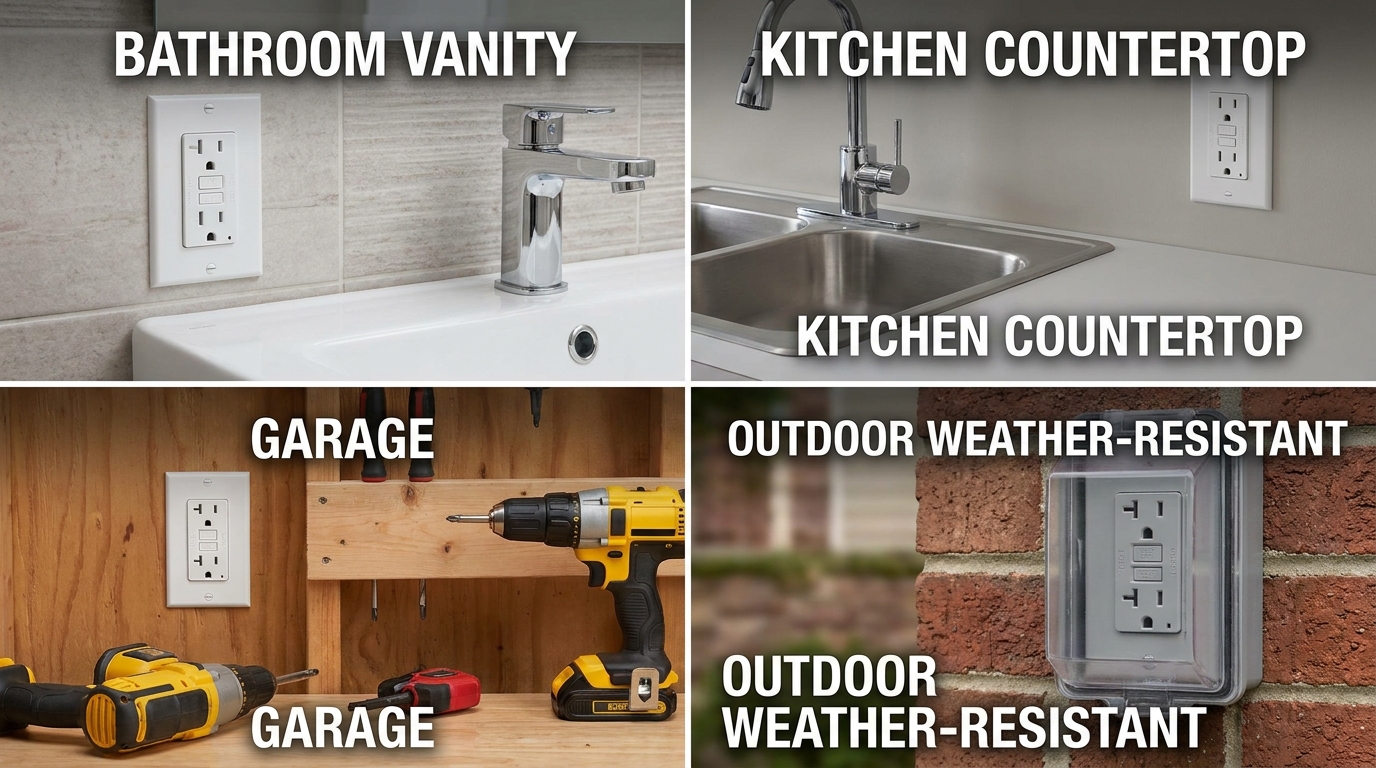
In North American homes, GFCI protection is most commonly installed in areas where electricity and moisture may meet. Bathrooms are usually the first place people notice them because the outlet face is visible near the vanity. Kitchens often have GFCI outlets along the countertop, especially near sinks. Garages, unfinished basements, laundry rooms, crawl spaces, and outdoor receptacles are also common locations. The basic principle is simple. If the area has greater shock risk, GFCI protection is more likely to be required.
It is also worth knowing that GFCI protection does not always look the same from one house to another. In some homes, the protection is built into a wall receptacle with the familiar TEST and RESET buttons. In other homes, the protection may be provided by a GFCI breaker in the electrical panel. Either setup can provide the same basic kind of protection, but the testing method is slightly different. This article focuses on receptacle style GFCIs because that is what most homeowners interact with directly.
If you live in Canada, electrical requirements are enforced by provincial and territorial authorities, while federally sold electrical products are expected to meet Canadian safety standards and certification requirements. For homeowners, the practical takeaway is straightforward. Use certified products, follow the manufacturer’s instructions, and if something fails testing or seems questionable, bring in a qualified electrician rather than guessing. The testing habit itself is still widely supported by safety guidance across North America.
How Often Should You Test a GFCI Outlet?
The practical recommendation is simple. Test permanently installed GFCI outlets once a month. That monthly interval shows up repeatedly in electrical safety guidance because it is frequent enough to catch problems without becoming burdensome. If you already have a home maintenance routine for smoke alarms, HVAC filters, or checking under sinks for leaks, add GFCI testing to the same schedule. It fits naturally into a preventive safety checklist.
There are also a few moments when an extra test makes sense even if it is not yet time for your monthly check. If a GFCI outlet has just been installed or replaced, test it right away. If your home has had a power failure, storm related electrical issue, renovation work, or water exposure near an outlet, testing is also smart. In older homes, especially those with patchwork updates over the years, a regular check gives you a better chance of catching wiring or device problems early.
The point is not to create anxiety or turn routine maintenance into a technical project. The point is to treat GFCIs the same way you treat any other life safety device. Smoke alarms need testing. Carbon monoxide alarms need testing. GFCI outlets deserve the same respect because they are protecting people, not just equipment.
What You Need Before You Start
The good news is that the basic homeowner test does not require special tools. The simplest and most reliable setup is a small lamp or night light that you know works properly. You plug it into the GFCI outlet and use it as a visible load, which lets you clearly see when power is interrupted and when it is restored. A night light works especially well because it is lightweight, easy to move from outlet to outlet, and gives a quick visual signal.
You do not need to overcomplicate this with a lot of equipment. In fact, one mistake homeowners make is relying entirely on a cheap plug in outlet tester instead of the built in test function. Plug in testers can be useful for some checks, but they are not a complete substitute for pressing the GFCI’s own TEST button. Official guidance commonly emphasizes using the outlet’s actual trip mechanism and confirming it cuts power to a live load.
Before you begin, make sure your hands are dry and the area around the outlet is dry as well. Do not test an outlet if there are signs of active water intrusion, sparking, burn marks, cracked plastic, loose mounting, or unusual heat. Those are signs to stop and call an electrician. A normal monthly GFCI test is simple, but you still want to approach anything electrical with basic care and good judgment.
Step by Step: How to Properly Test a GFCI Outlet
This is the part most homeowners are really looking for. The process is short, but it matters that you do it in the right order. The goal is to confirm two things. First, the outlet must actually trip and cut power when tested. Second, it must reset properly and restore power after the test.
Step 1: Plug in a small lamp or night light
Take a lamp, task light, or night light that you know is working and plug it into the GFCI outlet. Turn the lamp on so there is a visible indication that the outlet currently has power. If you are testing a bathroom receptacle where space is limited, a compact night light is usually the easiest option. The point is to create a simple visual check rather than relying on memory or guessing.
If the lamp does not turn on at the beginning, do not assume the GFCI has failed yet. It may already be tripped, there may be a switched circuit involved, or the outlet may be controlled by another upstream device. Press the RESET button first and check again. If it still does not power the lamp, you may have a wiring issue, a tripped breaker, or a failed device that needs closer investigation.
Step 2: Press the TEST button
With the lamp on, press the TEST button on the GFCI outlet. A properly functioning outlet should trip immediately. When it trips, the lamp or night light should turn off because the outlet has interrupted power. On most receptacles, the RESET button will also pop outward or visibly change position, which is another sign that the outlet has tripped.
This is the key moment in the whole process. If you press TEST and the lamp stays on, that is a problem. It means the outlet did not trip as it should. At that point, the GFCI may be defective, miswired, or otherwise unable to provide proper protection. Do not ignore that result just because the outlet still has power. The safety function is the whole reason the device is there.
Step 3: Confirm power is actually off
After pressing TEST, check that the lamp is fully off and that any other outlets downstream, if applicable, have also lost power. Some GFCIs protect additional standard receptacles connected on the same branch circuit. If you know a bathroom, garage, or outdoor outlet is fed through the same GFCI, this is a good time to notice whether those outlets also lost power. That can help you understand what the device is protecting.
If the lamp goes dim but not fully off, flickers strangely, or behaves inconsistently, do not treat that as a pass. The expected result is a clear loss of power. Anything ambiguous deserves more attention. Electrical safety is not the place to accept maybe. You want a clean trip and a clean reset.
Step 4: Press the RESET button
Once you have confirmed the outlet tripped, press the RESET button firmly until it sets. A properly functioning GFCI should restore power to the receptacle, and the lamp or night light should turn back on. Some outlets require a firm push to reset, especially if they are newer or if the mechanism is stiff. That alone is not unusual, but the button should still engage cleanly.
If pressing RESET does not bring the power back, there may be several causes. The device may be bad, the line and load conductors may be miswired, the circuit breaker may be tripped, or there may be an actual ground fault on the circuit that is preventing the GFCI from resetting. Whatever the cause, a reset failure means the outlet is not passing a basic functional check and should not be ignored.
Step 5: Repeat as needed on all GFCI outlets in the home
One of the easiest mistakes is testing one bathroom outlet and assuming the whole house is covered. Go room by room and test each GFCI receptacle you can identify. If you are not sure which outlets are GFCI protected, look for TEST and RESET buttons first. Then note any standard outlets nearby that lose power when the GFCI trips, because those may be protected downstream by the same device.
It helps to make a simple list of locations as you go. Bathrooms, kitchen counters, garage walls, basement utility spaces, laundry areas, exterior receptacles, and crawl space outlets are the usual places to start. Once you know where your GFCIs are, the monthly check becomes much faster.
How to Tell the Difference Between a Pass and a Failure
A passing result is straightforward. The lamp starts on, the outlet trips when you press TEST, the lamp turns fully off, and pressing RESET restores power. That is what you want. It shows the mechanism can interrupt and restore power in a controlled way. It does not mean the outlet will last forever, but it does mean the basic function appears to be working at the time of the test.
A failing result can show up in several forms. If pressing TEST does nothing, that is a fail. If the lamp stays on after pressing TEST, that is a fail. If the RESET button will not stay in or power does not return after resetting, that is also a fail. If the outlet feels warm, shows visible damage, has discoloration, makes buzzing sounds, or trips repeatedly without an obvious explanation, treat that as a warning sign as well.
One important point is that a tripped GFCI is not automatically a bad GFCI. Sometimes it is doing exactly what it should by responding to a real fault. Portable appliances with damaged cords, moisture intrusion, worn outdoor equipment, garage refrigerators, and older tools can all cause trips. The outlet’s job is to react when something is unsafe. Your job is to pay attention to the pattern and decide whether it points to a real appliance issue or a failing device.
Common Misconceptions That Lead Homeowners Astray
There are a few recurring misunderstandings around GFCI testing, and they are worth clearing up because they cause people to miss real safety problems. The first is the idea that power equals protection. It does not. An outlet can energize a lamp or charger while still failing to provide proper ground fault protection. That is why the built in TEST function matters so much.
The second misconception is that a plug in outlet tester is all you need. Those little testers can be useful, but they do not replace the outlet’s own internal trip test. If you use one, use it as an extra tool, not the main method. Start with the actual TEST and RESET buttons and a live load such as a lamp or night light. That is the direct functional check homeowners should rely on first.
The third misconception is that if a GFCI trips, it must be defective. In reality, the trip may be a sign that the device is protecting you from a real ground fault. If one appliance causes the trip repeatedly, unplug that appliance and test the GFCI again. The problem may be with the appliance, extension cord, or moisture exposure rather than the receptacle itself. Patterns matter more than one isolated event.
The fourth misconception is that older homes do not benefit from GFCI protection unless the whole electrical system is rewired. That is not generally true. GFCI protection can often be added at the receptacle or breaker level, and it can provide a meaningful safety upgrade even in homes with older wiring. That said, work involving installation, replacement, or system diagnosis belongs with a qualified electrician if you are not experienced and certain of the conditions.
What to Do If a GFCI Outlet Fails the Test
If the outlet fails any part of the test, the first step is simple. Do not keep using it as though nothing happened. A failed test means the safety function may not be reliable. If this is in a bathroom, kitchen, or outdoor area, that matters even more because those are exactly the places where shock protection is most critical.
Start with a few practical checks that do not involve taking anything apart. Make sure the circuit breaker for that area has not tripped. Unplug appliances on the same circuit, especially anything exposed to moisture or anything with a heating element or motor. Then try pressing RESET again. If the GFCI still will not reset, or if it resets but fails to trip when tested, the device needs professional attention and likely replacement.
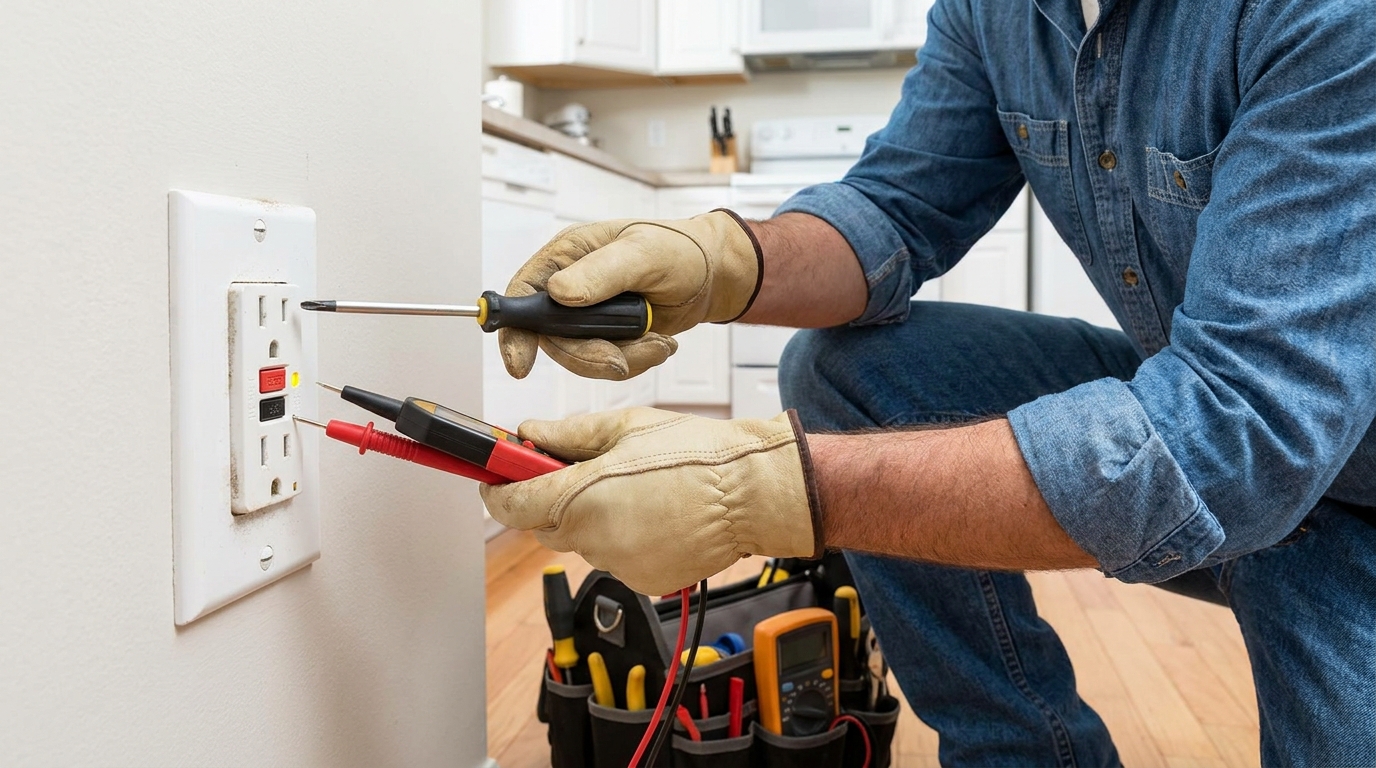
Do not remove the outlet cover or attempt wiring repairs unless you are qualified and fully comfortable working safely around electrical systems. A nonfunctional GFCI may be defective, but it may also be miswired, installed incorrectly on line and load terminals, or reacting to a fault farther down the circuit. From a homeowner standpoint, once the simple external checks are done, the smart move is to get an electrician involved.
When to Call a Licensed Electrician
There is a clean line between routine maintenance and diagnosis. Testing a GFCI with its built in buttons is routine homeowner maintenance. Figuring out why it failed is often electrical diagnosis, which is where a licensed electrician earns their keep. If the TEST button does not trip the outlet, if RESET does not restore power, or if the outlet is damaged, hot, loose, or making noise, call a professional. Those are not symptoms to talk yourself out of.
You should also call an electrician if the outlet trips frequently with no obvious pattern, if multiple nearby outlets are acting strangely, or if your home has older wiring and you are unsure what is protected by what. In some houses, one GFCI protects several downstream receptacles, and the layout is not always intuitive. A good electrician can sort that out, verify proper wiring, identify whether a breaker based GFCI or AFCI is involved, and replace failed devices with the right rated products.
Older homes, recent renovations, water damage events, and outdoor circuits deserve extra caution. If a receptacle has been exposed to flooding, heavy condensation, or chronic dampness, replacement may be the safer answer than trying to nurse along an old device. Electrical components age, and in a high risk location, replacement is often more practical than chasing intermittent faults.
GFCI Receptacles, GFCI Breakers, and AFCI Protection
Homeowners often hear related terms and are not sure how they connect. A GFCI receptacle is the outlet with TEST and RESET buttons on the face. A GFCI breaker does the same type of ground fault protection at the electrical panel level for the entire circuit. The practical safety goal is similar, but the device location is different. If your home uses GFCI breakers, your electrician or panel labeling may help identify which circuits are protected that way.
You may also hear about AFCI protection, which stands for Arc Fault Circuit Interrupter. That is a different safety function aimed more at reducing fire risk from arcing faults in wiring or cords. In modern homes, it is increasingly common to see both kinds of protection in the overall electrical system. GFCI addresses shock risk. AFCI addresses arc related fire risk. Both are worth understanding, and both benefit from regular testing according to manufacturer and safety guidance.
If you come across the term RCD, that is commonly used in other countries for residual current protection. The broad concept is similar, even if the terminology differs by region. For North American homeowners, GFCI is the term you will see most often on receptacles, breakers, and home inspection reports.
Building a Simple Monthly Safety Routine
The easiest way to stay on top of GFCI testing is to make it part of a repeating home maintenance routine rather than relying on memory. Pick one day each month. Some people use the first weekend of the month. Others tie it to another recurring task, like checking smoke alarms or changing a furnace filter. The exact date matters less than consistency.
A good routine is simple enough that you will actually keep doing it. Walk the house with a night light, test each visible GFCI outlet, and note any that are hard to reset or behave differently than expected. If you discover that one bathroom GFCI also controls an outdoor outlet and a garage outlet, write that down. Over time you build a practical map of your home’s protective devices, which makes troubleshooting easier and maintenance more organized.
This kind of routine is especially useful after renovations or appliance changes. A new freezer in the garage, a pressure washer used outdoors, a dehumidifier in the basement, or a bathroom remodel can all change the demands on a circuit. A one minute test now and then is cheap insurance against discovering a failed safety device at the wrong time.
Practical Tips for Homeowners in Older Homes
Older homes often come with a mix of original wiring, later updates, and a few surprises behind the walls. That does not mean GFCI testing is less important. If anything, it makes the monthly check more valuable. A house that has seen decades of changes may have older receptacles, replacement devices installed over time, or unusual branch circuit layouts that are not obvious from the room alone.
In these homes, do not assume the nearest GFCI protects only the outlet it occupies. It may protect a bathroom on the other side of the wall, an exterior outlet, or a basement receptacle. If pressing TEST kills power somewhere unexpected, that is useful information. Make a note of it and consider labeling protected outlets if the arrangement is confusing. Clear labeling helps everyone in the house understand what is happening when a device trips.
If your older home has two prong outlets, no equipment grounding conductors in some areas, or signs of amateur electrical work from the past, use extra caution. GFCI protection can often improve safety without a full rewire, but installation and diagnosis should be handled properly. Testing what is already there is good homeowner practice. Reworking older wiring without clear knowledge is not.
Final Thoughts: A Small Habit That Carries Real Safety Value
Testing a GFCI outlet is not difficult, but it is meaningful. You are checking a device that stands between everyday electrical use and a potentially dangerous shock hazard. That matters in bathrooms, kitchens, garages, basements, laundry rooms, outdoor spaces, and anywhere moisture or grounded surfaces increase risk. The process is simple enough for most homeowners to handle, and that is exactly why it should not be overlooked.
The core routine is easy to remember. Plug in a small lamp or night light. Turn it on. Press the TEST button and confirm the light goes out. Press RESET and confirm the light comes back on. If anything in that sequence fails, take it seriously. A GFCI that does not trip or reset correctly is not giving you the protection you expect, and that is the point where a licensed electrician should step in.
Home safety is usually built from ordinary habits rather than dramatic projects. Monthly GFCI testing belongs in that category. It is quick, low cost, and grounded in practical safety guidance across North America. If you want a straight answer on whether this is worth doing, it is. Make it part of your routine, keep an eye on anything that behaves oddly, and treat failed tests as a repair priority rather than a someday task.
Quick Reference: Monthly GFCI Testing Checklist
-
Use a small lamp or night light that you know works.
-
Plug it into the GFCI outlet and turn it on.
-
Press the TEST button and confirm the light turns fully off.
-
Check that the RESET button has popped or changed position.
-
Press RESET and confirm power returns.
-
If the outlet does not trip, does not reset, feels warm, looks damaged, or trips repeatedly, stop using it and call a licensed electrician.
That short checklist is all most homeowners need. Keep it practical, stay consistent, and let the device prove that it can still do its job.



No Comment! Be the first one.