


Essential Tips for Keeping Your Refrigerator in Top Shape
Your refrigerator is one of the quiet heroes of daily life. It protects your groceries, supports your routines, and helps your kitchen feel calm and dependable from breakfast through late night snacks. Because it works all day and all night, it is easy to forget it needs regular care. Yet the smallest maintenance habits can make a meaningful difference in how well it cools, how much energy it uses, and how long it lasts.
Table Of Content
- Why Refrigerator Care Matters More Than People Realize
- Start With the Most Important Habit: Check the Temperature
- How to tell if the temperature is off
- Give Your Refrigerator Room to Breathe
- Clean the Condenser Coils and Reduce Daily Strain
- Do not ignore where the fridge sits
- Check the Door Seals Before They Cost You
- Organize Your Refrigerator for Safety and Better Cooling
- Simple organization rules that protect both food and performance
- Clean the Inside Regularly Without Turning It Into a Major Project
- A low stress cleaning rhythm
- Be Smart About Leftovers and Warm Food
- Notice the Early Warning Signs of Trouble
- Common symptoms and what they can mean
- Prepare for Power Outages Before They Happen
- Think About Energy Use and the Bigger Household Picture
- Know When It Is Time to Replace an Old Refrigerator
- Create a Realistic Refrigerator Maintenance Routine
- Easy refrigerator care checklist
- The Lasting Value of Small Habits
Keeping a refrigerator in top shape is not only about avoiding breakdowns. It is also about creating a healthier, more efficient home. A fridge that runs at the right temperature helps reduce food waste, protects your family from foodborne illness, and supports lower utility bills. In a time when more households are thinking about resilience, sustainability, and smarter routines, refrigerator care feels less like a chore and more like a practical form of home wellness.
This guide focuses on the simple actions that have the biggest impact. You do not need a technical background or a complicated maintenance plan. What matters most is regular attention to temperature, airflow, cleanliness, organization, and a few warning signs that tell you when your refrigerator needs help. When these habits become part of your rhythm, your refrigerator can stay reliable, efficient, and ready for everyday life.
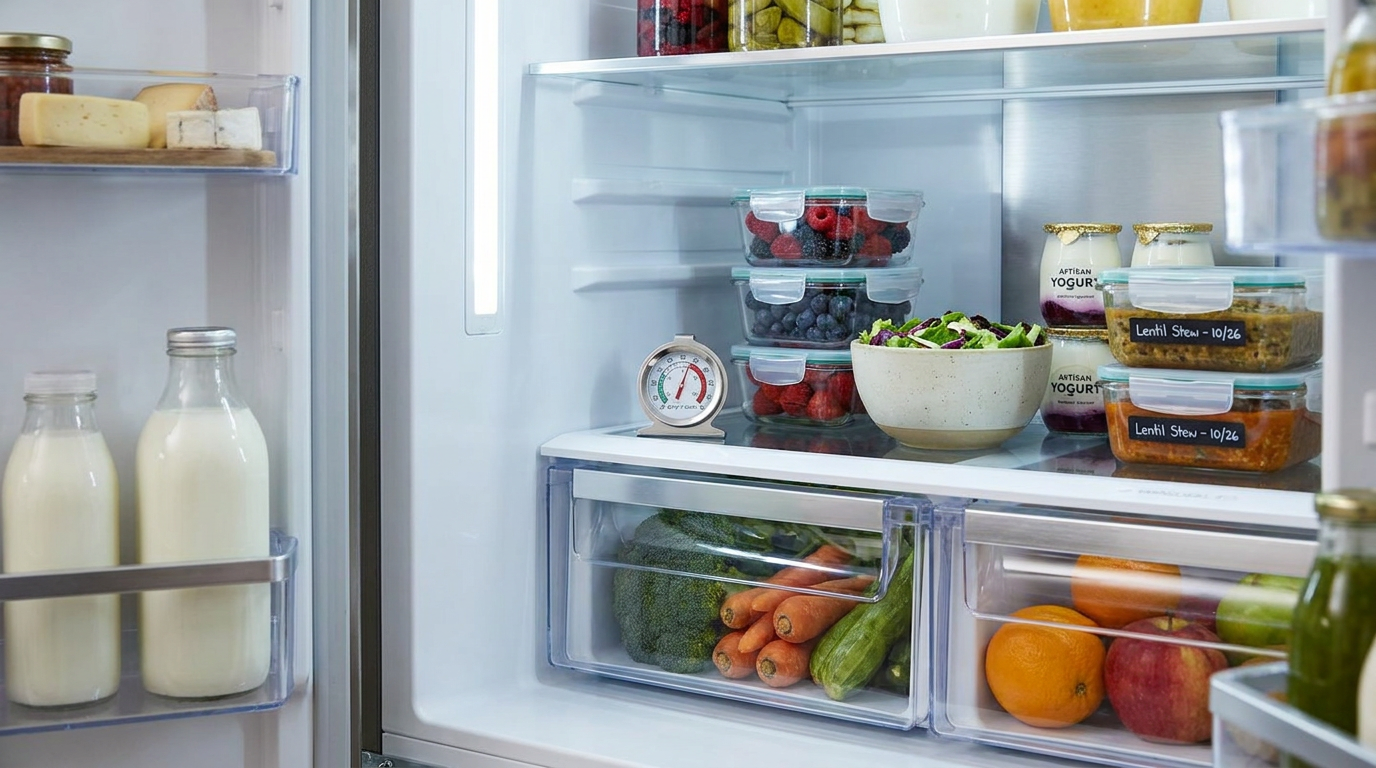
Why Refrigerator Care Matters More Than People Realize
A refrigerator does much more than keep food cold. It helps maintain the safety of milk, eggs, produce, leftovers, sauces, and all the ingredients that shape everyday meals. Health guidance in Canada and the United States recommends keeping a refrigerator at 4°C or 40°F or below, with a freezer at -18°C or 0°F or below. Staying within that range matters because bacteria grow faster in the temperature danger zone, which spans 4°C to 60°C, or 40°F to 140°F.
When a refrigerator struggles due to warm settings, blocked airflow, dirty coils, or a weak door seal, food quality can decline before you notice an obvious problem. Produce softens too quickly, dairy turns sooner than expected, leftovers become questionable, and condensation starts showing up in places it should not. Many homeowners assume these are small annoyances, but they are often signals that the appliance is working harder than it should.
There is also a comfort and cost angle. A refrigerator that runs efficiently tends to cycle more smoothly and place less strain on its compressor. That can help reduce electricity use and support a longer appliance lifespan. ENERGY STAR notes that certified refrigerators are about 9 percent more energy efficient than federal minimum standards, and older refrigerators can use significantly more electricity than newer, efficient models. Even if you are not replacing your fridge right now, proper maintenance helps you get the best performance from the one you already have.
A refrigerator that quietly holds the right temperature is doing more than preserving food. It is protecting your budget, supporting your routines, and adding a layer of confidence to daily life.
Start With the Most Important Habit: Check the Temperature
If there is one refrigerator care habit that deserves a permanent place in your kitchen, it is checking the temperature with a dedicated thermometer. Many built in dials are not precise, and the cold feeling you notice when you open the door is not a reliable measure of food safety. A refrigerator can feel chilly and still have warm spots that put food at risk.
Place a refrigerator thermometer on a middle shelf and let it sit long enough to give a stable reading. In most homes, the sweet spot is cool enough to keep food safe without overworking the appliance. The official recommendation is 4°C or 40°F or below, and many households find that a range in the mid 30s to 38°F works well as long as food is not freezing unintentionally. If lettuce, herbs, or milk are freezing near vents, your setting may be too cold or your airflow may be uneven.
Get into the habit of checking the thermometer weekly, especially after large grocery trips, power interruptions, or seasonal weather changes. Kitchens can become warmer in summer, and a heavily loaded refrigerator may need time to return to a stable temperature after you put everything away. This simple visual check keeps you grounded in reality instead of guesswork.
How to tell if the temperature is off
Several clues can point to a fridge that is not staying cold enough. Food may spoil faster than usual, dairy may smell off early, or leftovers may feel only lightly chilled. You might also notice condensation on shelves, soft produce, or drinks that never seem fully cold. On the opposite end, a refrigerator that is too cold can freeze greens, create icy patches, and dry out delicate foods.
If the thermometer shows temperatures above 4°C or 40°F, begin with the simplest fixes. Check whether the door is sealing well, whether warm food has been placed inside recently, and whether crowded shelves are blocking air movement. These issues are common, and correcting them often improves performance without any repair call.
Give Your Refrigerator Room to Breathe
Airflow is one of the most overlooked parts of refrigerator maintenance. Your fridge needs space both inside and outside the appliance. Inside, cool air must circulate around food to keep temperatures even. Outside, the appliance needs room around it so heat can dissipate properly. Without that breathing room, the compressor may run longer and use more energy.
ENERGY STAR recommends leaving a few inches between the refrigerator and the wall. That spacing allows heat to escape and helps the system run more efficiently. If your refrigerator is pushed tightly into a niche or installed beside a heat source like an oven or direct sunlit window, it may struggle more than necessary. Sometimes a small layout adjustment has a surprisingly big effect on performance.
Inside the refrigerator, overpacking is a common mistake. People often assume a full fridge stays colder, but excessive crowding can block vents and create warm pockets. Those warm pockets can make some foods less safe while other areas become too cold. The goal is a stocked but breathable refrigerator where containers are visible, practical, and not stacked in a way that prevents air circulation.
Clean the Condenser Coils and Reduce Daily Strain
One of the most valuable maintenance tasks is also one of the least glamorous. Cleaning the condenser coils helps your refrigerator release heat more effectively, which reduces strain on the compressor and can improve efficiency. ENERGY STAR specifically points to coil cleaning as a helpful habit, especially for older models. Dust, pet hair, and kitchen debris can build up slowly, and once they do, your fridge may have to work much harder to maintain the same temperature.
The location of the coils depends on the model. They may be behind the unit or underneath it behind a removable grille. Before cleaning, unplug the refrigerator or follow the manufacturer instructions for safe maintenance. Use a soft brush or vacuum attachment to remove dust carefully, taking your time around delicate areas. If you have pets or a busy kitchen with a lot of airflow and lint, this task may need to happen more often.
A practical rule for many households is to check the coils every six months. For homes with shedding pets, quarterly checks may make more sense. This is one of those invisible habits that pays you back quietly through smoother performance and potentially lower energy use over time.

Do not ignore where the fridge sits
Placement shapes efficiency more than many people expect. A refrigerator positioned beside a hot oven, close to a dishwasher vent, or in direct afternoon sun has to fight against extra heat every day. If moving the appliance is realistic, choose a cooler location with proper clearance. If moving it is not possible, be extra consistent about keeping coils clean and avoiding long stretches with the door open.
In family kitchens, placement also affects how often the door gets opened. If the refrigerator is the main landing zone during homework, after school snacking, and meal prep, frequent opening can contribute to temperature swings. Better organization, clear bins, and easy to find staples can cut down on browsing and help the appliance recover faster.
Check the Door Seals Before They Cost You
The door gasket is a soft but powerful part of refrigerator performance. If it is cracked, dirty, warped, or loose, cold air can escape and warm air can seep in. That forces the refrigerator to cycle more often, which can raise energy use and create uneven cooling. It can also shorten the appliance lifespan over time because the compressor has to work harder than necessary.
A simple way to test the seal is the dollar bill test. Close the door on a dollar bill and gently pull. If it slips out too easily in several places, the seal may not be tight enough. You can also look for visible crumbs, sticky residue, or mold around the gasket folds, which can prevent a proper seal even if the material itself is still in decent shape.
Clean the gasket with mild soap, warm water, and a soft cloth. Dry it fully so moisture does not sit in the folds. If the gasket is damaged or no longer sealing well after cleaning, replacement may be worthwhile. This is a small repair compared with the cost of ongoing inefficiency or spoiled food.
Organize Your Refrigerator for Safety and Better Cooling
A beautiful refrigerator is nice to look at, but a functional one is what truly supports daily life. Smart organization improves visibility, reduces waste, and helps the appliance cool more evenly. It also makes dinner prep easier because you can find what you need quickly without standing with the door open.
Health Canada recommends storing raw meat, poultry, fish, and seafood on the bottom shelf. This reduces the chance of drips contaminating ready to eat foods below. Use sealed containers whenever possible, especially for raw proteins and leftovers. This creates a cleaner environment, contains odors, and helps protect other foods from moisture and bacteria.
Try to group similar items together in zones. Keep breakfast items in one area, cooking ingredients in another, and lunch essentials in an easy reach section. This kind of gentle organization makes the fridge easier to use well. It is less about perfection and more about reducing friction in everyday routines.
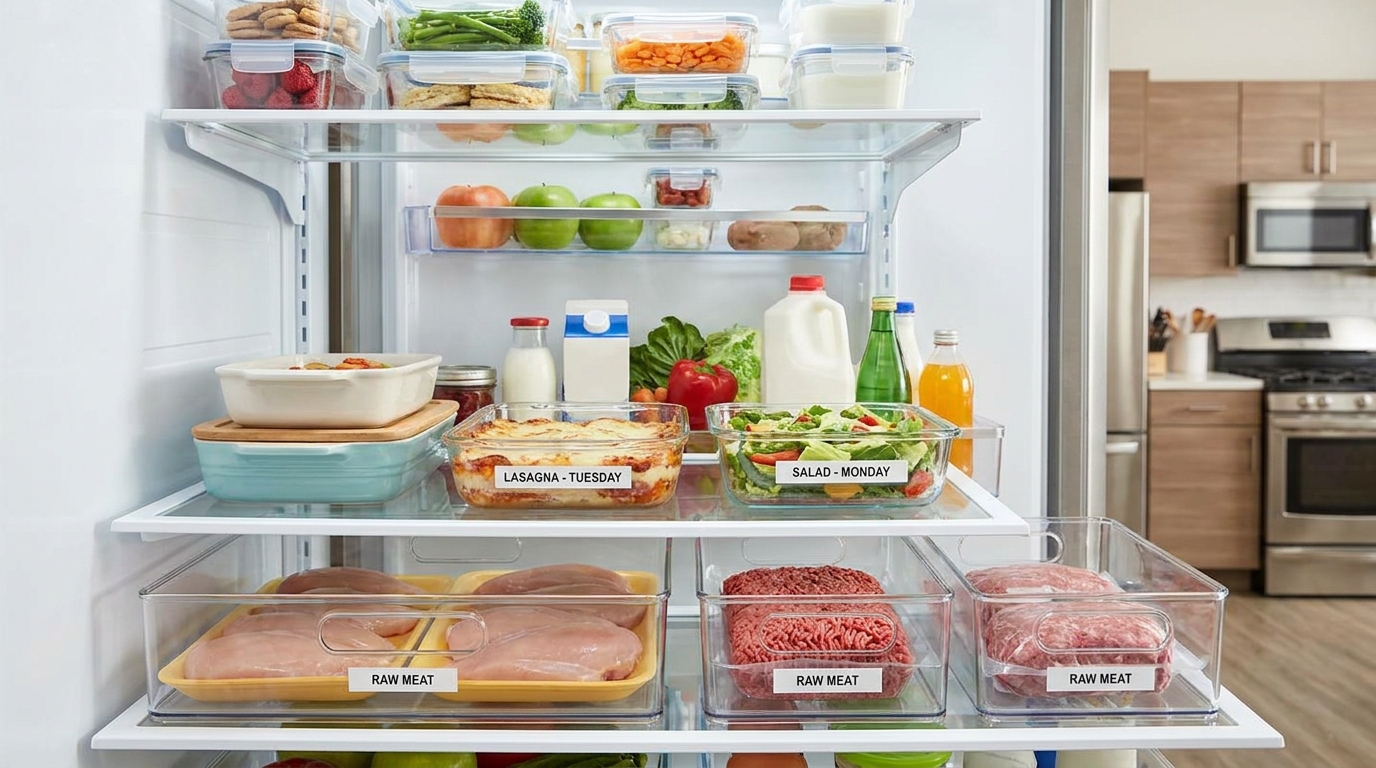
Simple organization rules that protect both food and performance
- Keep raw meat and seafood on the bottom shelf in sealed containers so drips cannot reach other foods.
- Leave a little space between larger items so cold air can move around them.
- Store leftovers in shallow containers so they cool faster and more evenly.
- Avoid hiding older food behind newer groceries, which leads to waste and overcrowding.
- Use clear bins or labels if your household tends to lose track of what is inside.
These habits support both food safety and convenience. When food is visible and arranged with intention, it is easier to use it in time and easier for the refrigerator to maintain a stable internal climate. In a busy household, that balance can make the whole kitchen feel more manageable.
Clean the Inside Regularly Without Turning It Into a Major Project
Interior cleaning is most effective when it is light and regular rather than rare and overwhelming. A weekly wipe of obvious spills and a monthly reset of shelves and drawers can prevent odors, sticky buildup, and contamination. It also gives you a natural moment to notice expired foods, cracked containers, or forgotten leftovers before they become a bigger issue.
Start by removing a manageable section at a time. Use warm water with a little mild dish soap, or a gentle food safe cleaner, to wipe shelves, bins, and walls. Dry surfaces before returning food. Glass shelves often hide sticky rings or drips near the edges, and crispers benefit from a full rinse now and then because they collect more debris than people realize.
This is also a good time to check for moisture. Pools of water, repeated condensation, or damp produce drawers can indicate blocked airflow, overfilled compartments, or a drain issue. A clean refrigerator is easier to monitor because changes stand out faster against a fresh baseline.
A low stress cleaning rhythm
If deep cleaning tends to get postponed, attach refrigerator care to routines you already have. Wipe the door handles and front once a week when you reset the kitchen. Clear old leftovers the night before trash collection. Remove and wash bins once a month. This kind of rhythm feels less demanding than waiting until the refrigerator is visibly messy and emotionally annoying.
The front exterior matters too, especially on stainless steel finishes that show fingerprints. A clean exterior contributes to the visual calm of the kitchen and can encourage better overall maintenance. We tend to take more consistent care of appliances that feel nice to use and pleasant to look at.
Be Smart About Leftovers and Warm Food
One of the most common misconceptions in home kitchens is that hot food should sit on the counter for a long time before going into the refrigerator. In reality, leftovers should be chilled promptly, ideally in shallow containers, and refrigerated within two hours. Letting food linger too long at room temperature raises food safety concerns and can put it squarely in the danger zone where bacteria grow quickly.
Shallow containers are especially helpful because they allow heat to escape faster. A giant pot of soup placed directly into the fridge may stay warm in the center for too long and can also raise the temperature around it. Dividing food into smaller portions helps both the food and the appliance. It cools more efficiently and puts less sudden strain on the refrigerator.
If you cook in large batches, plan your cooling process before dinner is even over. Having storage containers ready can turn a chaotic cleanup into an easier, safer routine. This is one of those small domestic systems that creates a surprising amount of peace during the week.
Notice the Early Warning Signs of Trouble
Refrigerators usually offer clues before a complete failure. Learning to spot those clues can help you address issues while they are still small. Common warning signs include food spoiling too quickly, uneven temperatures, warm spots, frost buildup, excessive condensation, or unusual noises. Some issues are simple and maintenance related, while others may point to a part that needs repair.
Frost buildup deserves attention even if it seems cosmetic. It can signal a problem with airflow, the door seal, or the defrost system. Likewise, persistent moisture can suggest warm air intrusion or a blocked drain. A noisier than usual refrigerator may be dealing with dirty coils, vibration from poor leveling, or a motor related issue.
When something feels off, do not solve it only by turning the setting colder. This is a very common response, but it does not fix blocked vents, dirty coils, or a failing seal. In some cases, lowering the setting just increases energy use while the underlying problem continues. Start by checking the thermometer, seal, organization, and coil condition before assuming the answer is more cold.
Common symptoms and what they can mean
- Condensation inside the fridge may point to a weak door seal, frequent door opening, or humid air entering the appliance.
- Frozen vegetables in the fresh food section can mean the setting is too cold or items are blocking vents.
- Food spoiling quickly may indicate the internal temperature is above 4°C or 40°F even if the fridge feels cool.
- Motor noise that seems louder than usual can be a sign the appliance is working harder due to heat, dust, or airflow problems.
- Visible frost or ice where it should not be may signal a seal issue or trouble with defrosting.
If these checks do not solve the issue, it may be time to call a technician. Thoughtful maintenance goes a long way, but it also helps you know when a professional repair makes more sense than repeated trial and error.
Prepare for Power Outages Before They Happen
Refrigerator care is not just about normal days. It is also about household resilience when life gets interrupted. Power outages are more than an inconvenience because they can quickly become a food safety issue. According to U.S. food safety guidance, an unopened refrigerator keeps food safe for about four hours during an outage. A full freezer may hold temperature for about 48 hours if it stays closed.
The most useful preparation step is knowing your actual fridge temperature before an outage occurs, which is another reason a thermometer matters. During a power interruption, keep the refrigerator and freezer doors closed as much as possible. Every unnecessary opening lets cold air escape and shortens the safe window for food.
It also helps to have a simple plan. Keep a few ice packs in the freezer, know where a cooler is stored, and understand which foods are more perishable. If the power returns and your refrigerator temperature has gone above 4°C or 40°F for too long, food safety decisions become more important than thrift. Throwing away questionable food is frustrating, but foodborne illness is worse.
Everyday maintenance is a form of emergency readiness. A thermometer, an organized fridge, and a few calm habits can make a stressful outage much easier to navigate.
Think About Energy Use and the Bigger Household Picture
It is easy to see refrigerator maintenance as one more task on a long list, but it connects to broader goals many households already care about. Better efficiency can support lower utility bills, less food waste, and reduced environmental impact. In that sense, taking care of your fridge is one of the quieter sustainability practices in the home.
ENERGY STAR reports that certified refrigerators are about 9 percent more energy efficient than federal minimum standards. It also notes that replacing an old refrigerator with a certified model can save roughly $150 to $160 over a 12 year lifetime. Depending on the age of your current unit, the difference can be meaningful because older refrigerators may use around 20 percent to 35 percent more energy than newer efficient models.
That does not mean everyone should replace a functioning refrigerator immediately. It does mean that maintenance and replacement timing both matter. If your current unit is older, noisy, warm, and costly to run, better care may improve it for now while also helping you decide whether a future upgrade is worthwhile. A home runs best when maintenance and long term planning work together.
Know When It Is Time to Replace an Old Refrigerator
Even well maintained appliances do not last forever. If your refrigerator needs frequent repairs, struggles to hold safe temperatures, or shows signs of compressor stress despite clean coils and good seals, replacement may be the wiser path. Efficiency is one factor, but reliability matters just as much. A refrigerator that leaves you guessing about food safety is not offering real value.
When you do replace an appliance, responsible disposal matters. EPA guidance highlights that almost all refrigerator materials can be recycled and that proper disposal helps recover valuable materials while preventing harmful emissions from refrigerants and insulating foam. This is an important part of the process, especially for households trying to make more climate conscious choices.
Ask your local municipality, retailer, or utility about appliance recycling or haul away programs. Some areas offer specific guidance for refrigerator pickup and refrigerant recovery. Responsible disposal turns an upgrade into a more complete act of care for both your home and the wider environment.
Create a Realistic Refrigerator Maintenance Routine
The best maintenance plan is the one you will actually follow. Most people do not need a complicated schedule. What works better is a realistic rhythm built around small repeatable actions. Once these habits become familiar, they take very little effort and can save time, money, and stress later.
Here is a practical approach that fits easily into a normal month. Check the thermometer once a week, wipe spills as they happen, and clear out old leftovers before grocery day. Clean seals and do a more thorough interior wipe monthly. Check wall clearance and visible dust around vents as part of seasonal cleaning. Vacuum the condenser coils every six months, or more often if you have pets.
These tasks are modest on their own, but together they support a refrigerator that cools more evenly, wastes less energy, and feels better to use. Home care is often less about dramatic overhauls and more about small systems that quietly improve everyday life.
Easy refrigerator care checklist
- Keep the refrigerator at 4°C or 40°F or below and the freezer at -18°C or 0°F or below.
- Use a refrigerator thermometer instead of relying only on the built in dial.
- Leave a few inches between the appliance and the wall.
- Do not overcrowd shelves or block air vents.
- Store raw meat, poultry, fish, and seafood on the bottom shelf in sealed containers.
- Refrigerate leftovers within two hours in shallow containers.
- Wipe spills promptly and clean shelves and drawers regularly.
- Inspect and clean door gaskets so they seal tightly.
- Vacuum condenser coils on a regular schedule.
- Keep refrigerator and freezer doors closed during outages as much as possible.
The Lasting Value of Small Habits
There is something reassuring about an appliance that simply does its job well. A refrigerator in top shape keeps ingredients fresh, supports healthier meals, and removes a layer of uncertainty from the day. It helps your kitchen feel more functional and your home feel more cared for. These are small comforts, but they add up.
What makes refrigerator maintenance so worthwhile is that the payoff is both immediate and long term. You may notice cleaner shelves, fewer odors, and better organized groceries this week. Over time, you may also see lower energy waste, a steadier appliance, and a longer service life. Those gains come not from one dramatic fix, but from simple habits repeated with consistency.
If you have been meaning to take better care of your refrigerator, start with the easiest win. Add a thermometer, clear a little airflow, wipe the seal, or vacuum the coils. Each small step strengthens the performance of one of the most important appliances in your kitchen. And in a well lived home, those practical choices are often the ones that make everyday life feel smoother, safer, and more beautifully supported.



No Comment! Be the first one.