


Essential Steps for Effective HVAC Ventilation Care at Home
Ventilation is one of those parts of a house that people rarely think about until something starts going wrong. The air feels stale, bathroom mirrors stay wet for too long, dust builds up faster than usual, or the house smells musty even after cleaning. In many cases, the problem is not one dramatic failure. It is a collection of small maintenance issues that slowly reduce airflow, trap moisture, and make the HVAC system work harder than it should.
Table Of Content
- Why ventilation care matters more than many homeowners realize
- Start with the filter because it affects almost everything
- What to look for during a filter inspection
- Keep supply and return vents clear and working
- Pay close attention to bathroom and kitchen exhaust fans
- Watch humidity because moisture problems often hide in plain sight
- Common household moisture sources to manage
- Understand HRV and ERV maintenance if your home has one
- Do not overestimate the value of routine duct cleaning
- Check for airflow problems before they turn into equipment problems
- Warning signs that deserve prompt attention
- Use seasonal maintenance to stay ahead of repairs
- Know when portable air cleaners help and when they do not
- A practical ventilation care routine for homeowners
- When it is time to call a professional
- Final thoughts on effective HVAC ventilation care
Good HVAC ventilation care is really about keeping the system able to do its basic job every day. That means moving air where it needs to go, pulling out moisture and odors where they are created, and filtering airborne particles without choking the equipment. Agencies such as the EPA, Health Canada, and Natural Resources Canada all point in the same direction on this issue. When ventilation is inadequate, indoor pollutant levels can rise because there is not enough fresh air coming in and not enough contaminated air going out.
For homeowners, the practical takeaway is straightforward. You do not need to treat ventilation care like a mystery or assume every problem calls for expensive duct work or a full equipment replacement. Most of the important work comes down to regular checks, cleaning, filter changes, moisture control, and knowing when a system is showing signs of trouble. If you stay on top of those basics, you can often avoid costly repairs while improving comfort and indoor air quality at the same time.
This guide covers the maintenance tasks that matter most. It focuses on actionable work homeowners can understand and, in many cases, handle themselves. It also explains where people often get misled, especially around filters, duct cleaning, and the idea that a comfortable house automatically has healthy ventilation.
Why ventilation care matters more than many homeowners realize
A heating and cooling system does more than control temperature. It also affects how air circulates through living spaces, how moisture behaves indoors, and how effectively pollutants are diluted or removed. Dust, cooking particles, cleaning chemicals, pet dander, and humidity all interact with the ventilation system. If the system is neglected, those things do not just disappear. They stay in the home longer, settle in rooms, and can stress both occupants and equipment.
One common mistake is assuming that if the house feels comfortable, the ventilation must be doing its job. That is not always true. A home can hold a steady temperature and still have poor air exchange, weak exhaust, or hidden humidity problems. This is especially important in tighter, more energy efficient homes, where less natural leakage means moisture and indoor pollutants can build up faster when ventilation is insufficient.
Health Canada has pointed out that poor ventilation is a major cause of poor indoor air quality, and excessive moisture is one of the most common contributors to bad indoor air in homes. That matters because moisture does not stay harmless for long. It can support mold growth, increase condensation on windows and cold surfaces, and affect insulation, drywall, and wood framing over time. In short, ventilation care protects both the people in the home and the building itself.
Practical truth: ventilation problems usually show up as everyday annoyances before they become expensive repairs. Musty odors, lingering steam, uneven airflow, and excess dust are often early warning signs worth acting on.
Start with the filter because it affects almost everything
If there is one maintenance step that gives homeowners the most value for the least effort, it is proper filter care. The HVAC filter helps capture particles before they circulate through the system and living spaces. When the filter is loaded with dust, airflow can drop, the blower has to work harder, and heating or cooling performance can suffer. Over time, that extra strain can lead to higher operating costs and more wear on equipment.
Many systems use a default MERV 8 filter, which is common and acceptable in a lot of homes. The EPA has noted that a filter with at least MERV 13 can provide better particle capture if the system fan and filter slot can handle it. That last part matters. A higher rated filter is not automatically better if it is too restrictive for the equipment. Airflow has to remain within the system’s design range or you can create a new problem while trying to solve another one.
Before upgrading filter efficiency, check the equipment manual or ask a qualified technician what the blower can support. Look at filter size, thickness, and recommended static pressure limits. A deeper media filter cabinet often performs better than simply forcing a denser one inch filter into an existing slot. The goal is balanced performance, not the highest number on the packaging.
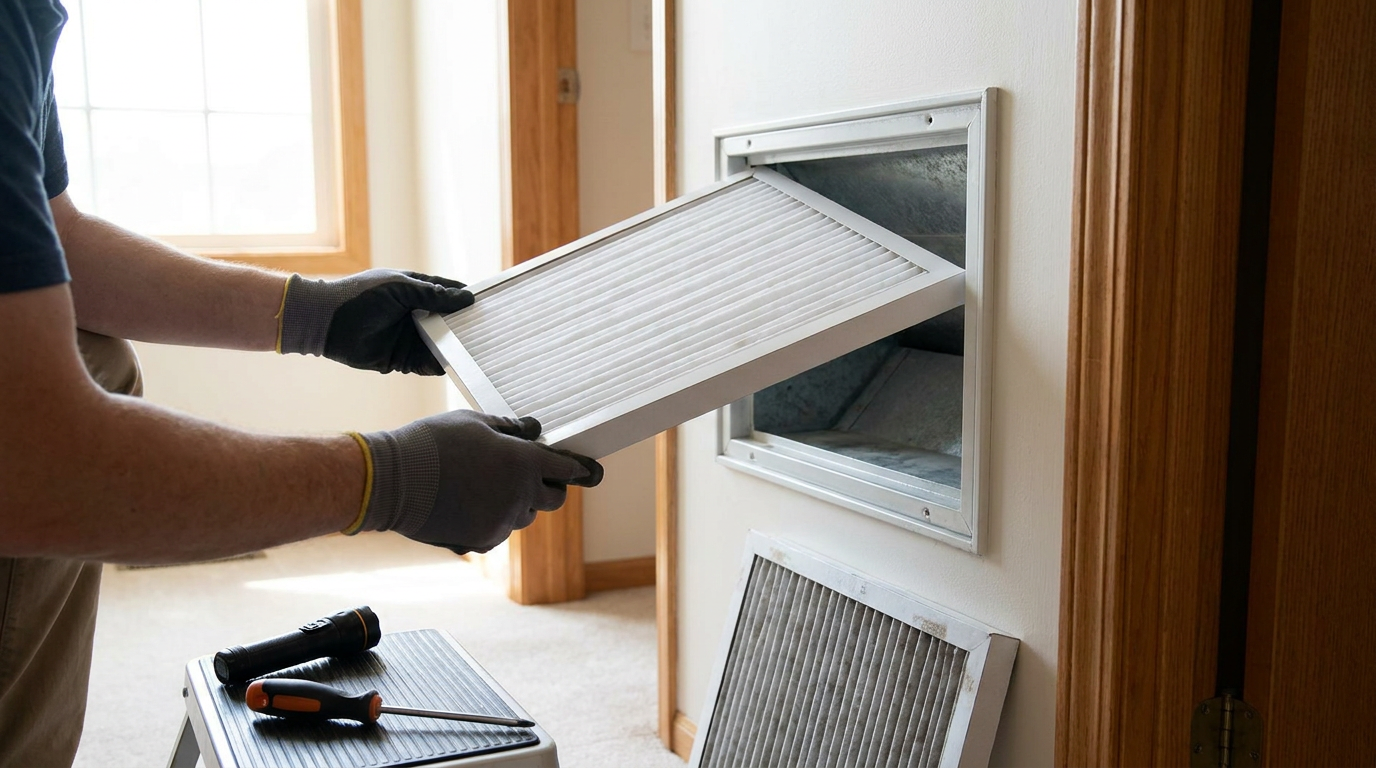
As for timing, do not rely on a generic rule that says every filter should be changed every three months no matter what. Some homes need changes more often because of pets, renovation dust, allergies, wildfire smoke, or high occupancy. Others with larger media filters may have longer service intervals. The practical method is to inspect the filter regularly and replace it when it is visibly loaded or according to manufacturer guidance, whichever comes first.
When replacing a filter, pay attention to the airflow arrow on the frame and make sure the filter is seated properly without gaps around the edges. A poor fit can let dirty air bypass the media entirely. It is a simple step, but it is one of the easiest ways to protect both air quality and system efficiency.
What to look for during a filter inspection
A useful filter check takes less than a minute, but it should be done carefully. Pull the filter out fully and inspect both the upstream and downstream sides. If the pleats are matted with dust, gray throughout, or visibly clogged with pet hair and debris, replacement is due. If the filter looks collapsed, damp, or warped, there may also be an airflow or moisture issue that needs attention.
Take note of how the home has been used since the last change. Have windows stayed closed through heavy pollen season. Has there been drywall sanding or floor refinishing. Has anyone been running a portable air cleaner more often because of smoke. These conditions affect filter loading, and they help explain why one house may go through filters faster than another even with the same HVAC equipment.
Keep supply and return vents clear and working
Ventilation is only as good as the pathways that let air move through the house. Supply registers deliver conditioned air into rooms, and return grilles allow air to make its way back to the system. If those pathways are blocked, airflow becomes uneven and certain rooms can become stuffy, humid, or harder to heat and cool. This is a common issue in everyday homes because furniture, rugs, drapes, and stored items often end up covering vents without anyone noticing the effect.
Walk through the house and check every visible register and grille. Make sure supply vents are open and not covered by sofas, beds, or cabinets. Check return grilles for heavy dust buildup that can restrict air movement. Vacuum the face of grilles as needed and wipe them down if they are collecting grime. This is not glamorous maintenance, but it matters.
It is also worth checking whether too many vents have been intentionally closed by occupants trying to force air into certain rooms. That approach usually backfires. Closing multiple supplies can upset system balance, reduce overall airflow, and increase pressure in the duct system. In some setups, that can contribute to comfort issues and unnecessary strain on the blower. If one room is always too hot or too cold, the answer is usually not to shut the rest of the house off. It is better to find the real cause.
Listen for clues while the system is running. A whistling grille, weak airflow from one room, or a return that seems noisier than usual can point to restrictions or imbalance. These are the sorts of subtle signs that homeowners can catch early before a technician is needed for deeper diagnosis.
Pay close attention to bathroom and kitchen exhaust fans
Spot ventilation is a critical part of whole home ventilation care. Bathrooms and kitchens are where a lot of indoor moisture, odors, and airborne contaminants are created. A bathroom fan should remove humid air after showers. A kitchen exhaust fan should help remove cooking moisture, grease, and particles. If these fans are weak, dirty, or used inconsistently, the rest of the home has to deal with the load they leave behind.
Bathroom fans deserve regular testing because they often seem to run even when they are not actually moving enough air. A simple tissue test can help. Hold a small piece of tissue near the fan grille while it is operating. If the tissue is pulled up and held in place, suction is present. If it barely moves or falls away, the fan may be dirty, blocked, undersized, or suffering from duct restrictions.
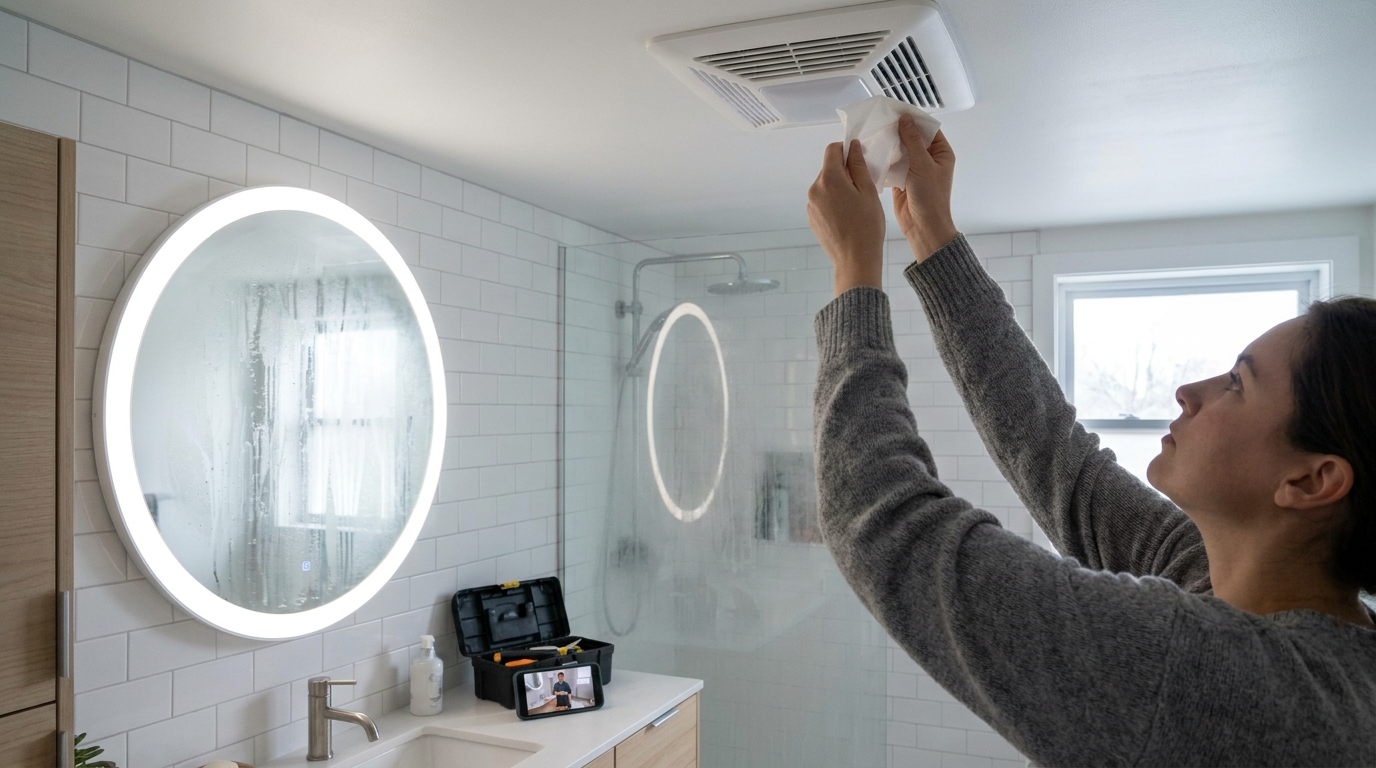
Take the grille down and clean it, along with any accessible dust on the fan housing. Dust buildup on fan blades and motor components can reduce performance over time. Also make sure the duct termination outside is not blocked by lint, debris, snow, or a stuck damper. In cold climates, exterior terminations need extra attention because ice and weather can interfere with proper exhaust.
Kitchen ventilation needs similar care, though range hoods often collect grease in addition to dust. Wash or replace the grease filters according to the manufacturer’s instructions. If the hood vents outdoors, inspect visible duct sections and the exterior cap where possible. If it is a recirculating unit, understand that it does not replace true exhaust. It may filter some grease and odors, but it does not remove moisture and combustion byproducts from the home the way an outdoor vented hood does.
Usage habits matter too. Run the bathroom fan during showers and for a period afterward if needed. Run the kitchen exhaust during cooking, especially when boiling, frying, or using gas burners. Good equipment cannot help much if it stays off at the very moments when moisture and pollutants are being generated.
Watch humidity because moisture problems often hide in plain sight
Humidity is one of the clearest indicators of whether ventilation is doing its job. When too much moisture stays indoors, it shows up as condensation on windows, damp smells, slow drying towels, staining around vents, or mold growth in corners and closets. In tighter homes, this issue is especially important because less natural air leakage means everyday activities can raise indoor humidity quickly.
Health Canada has emphasized that excessive moisture is one of the most common causes of poor indoor air in homes. That is not just a comfort issue. Moisture can damage finishes, support biological growth, and make the house feel clammy even when the temperature looks normal on the thermostat. A home that is warm but damp is not a healthy or efficient environment.
A simple indoor hygrometer can give homeowners useful information. Check humidity levels in bathrooms, bedrooms, basements, and living areas during different seasons. You are looking for patterns rather than a single number taken once. If humidity regularly stays high, or if condensation appears in winter despite normal heating, the house may not be exhausting moisture effectively or may need better balanced ventilation.
Do not assume that if you cannot see mold, there is no moisture problem. Moisture can collect behind furniture placed against exterior walls, around poorly insulated ductwork, inside cabinets on outside walls, or within hidden building cavities. Addressing humidity early is much cheaper than dealing with mold remediation or damaged finishes later.
Common household moisture sources to manage
Many moisture problems come from ordinary daily living rather than any dramatic leak. Long showers, cooking without exhaust, drying wet gear indoors, aquariums, humidifiers, and basements with poor drainage all add moisture to indoor air. In some homes, occupants are surprised by how much simple habits can affect condensation levels. That is why ventilation care has to include both equipment maintenance and source control.
Keep lids on simmering pots when practical, use exhaust during and after cooking, and avoid letting bathroom steam spread through the house. If a humidifier is being used, make sure it is actually needed and properly adjusted for the season. Overusing humidification in cold weather often makes window condensation worse and can create moisture issues around walls and ceilings.
Understand HRV and ERV maintenance if your home has one
Many newer or tighter homes use an HRV, which is a Heat Recovery Ventilator, or an ERV, which is an Energy Recovery Ventilator. These systems are designed to bring in fresh outdoor air while exhausting stale indoor air in a more controlled and energy conscious way. In colder climates, they are especially valuable because they help balance ventilation while limiting unnecessary heat loss.
Homeowners sometimes treat HRV and ERV units as set and forget appliances. That is a mistake. Natural Resources Canada recommends annual maintenance to ensure peak efficiency, and routine tasks such as cleaning filters and the core are typically within the ability of homeowners. If these units are neglected, airflow can drop, frost management can be affected, and the system may no longer provide the ventilation the house depends on.
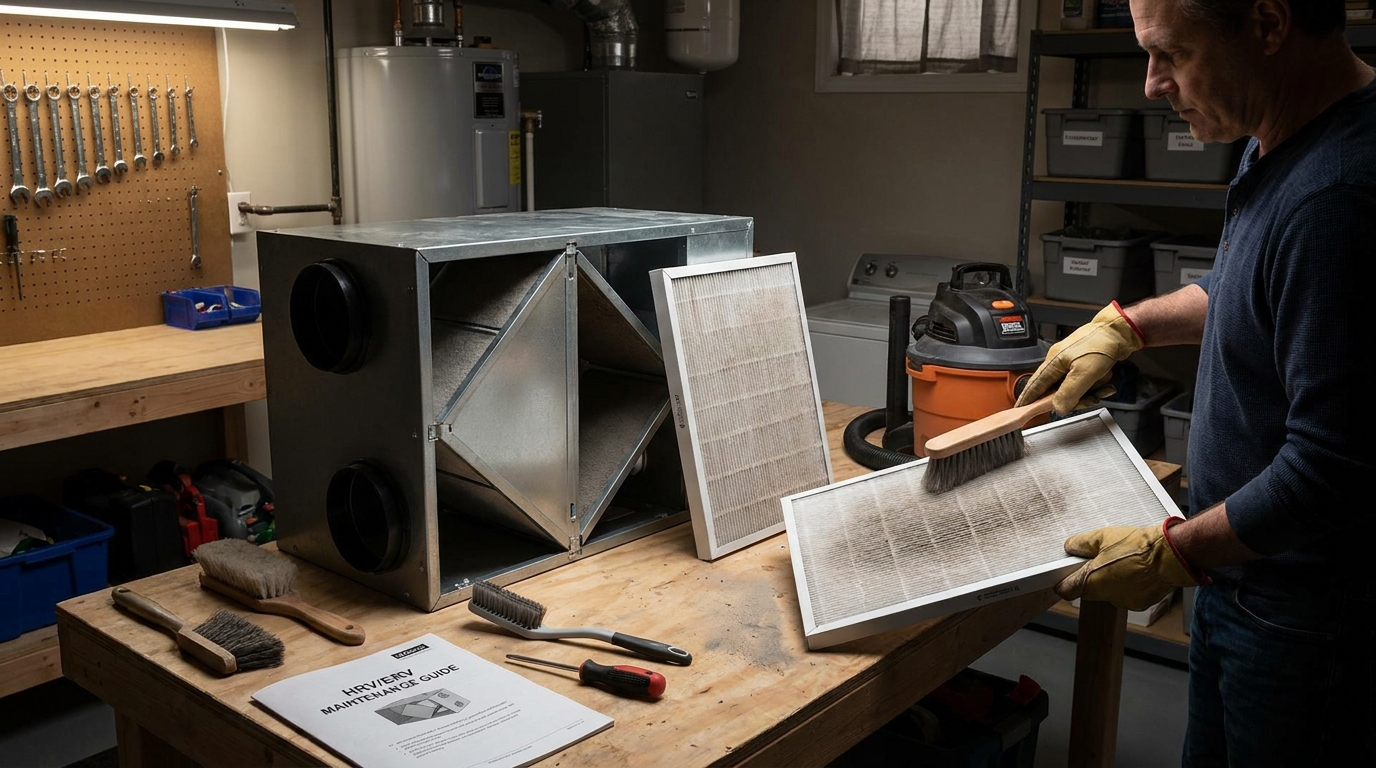
Start by reading the manufacturer’s instructions because service access and cleaning methods vary by model. In general, the homeowner maintenance routine often includes turning off power, opening the access panel, removing and cleaning or replacing filters, and carefully cleaning the heat or energy recovery core if the model allows it. Some components can be washed, while others require gentler care. Reinstall everything correctly before restarting the unit.
Check the condensate drain if the system has one, and inspect exterior intake and exhaust hoods for obstructions. Leaves, insects, lint, and snow can interfere with airflow. Also listen to the unit while running. Changes in sound, vibration, or airflow can signal a maintenance need or mechanical issue. A clean HRV or ERV should operate steadily without obvious strain.
These systems also need sensible control settings. Running at the wrong speed for the season or ignoring humidity control features can undermine performance. If your home has recurring condensation or stale air despite an HRV or ERV, the answer may be maintenance, balancing, control adjustments, or all three. A technician can help verify that the system is moving the intended amount of air.
Do not overestimate the value of routine duct cleaning
Duct cleaning is one of the most misunderstood topics in home ventilation care. Many homeowners assume it should be part of regular annual service no matter what. The EPA does not recommend duct cleaning as a routine maintenance requirement. In most homes, dirty ducts are not the main driver of indoor air quality problems, and cleaning them on a schedule does not automatically improve system performance or health outcomes.
That does not mean duct cleaning is never useful. It can make sense on an as needed basis after visible mold contamination, pest infestation, major renovation dust, or other specific events that have clearly affected the duct system. The key is to solve real problems, not to buy unnecessary service because dust exists somewhere in the home. Ordinary household dust on return grilles or in living spaces often has more to do with filtration, cleaning habits, leakage, and source control than with ducts needing aggressive cleaning.
If duct cleaning is recommended, ask why. Look for clear evidence such as contamination inside accessible sections, debris from recent construction, or specific signs of pests. Also ask whether the contractor will address the underlying cause, such as poor filter fit, return leaks, or moisture problems. Cleaning without correcting the source just means the issue is likely to return.
Check for airflow problems before they turn into equipment problems
Airflow issues are one of the most common roots of HVAC trouble. When airflow drops, comfort suffers first, but the equipment often feels the strain soon after. Evaporator coils can freeze in cooling mode, heat exchangers can run hotter than intended in heating mode, and the blower may have to work harder than necessary. Over time, that can contribute to service calls that might have been avoidable.
Homeowners can do a lot just by staying alert. Notice whether one room is always stuffy while others feel normal. Pay attention to whether airflow from registers seems weaker than it used to be. Watch for signs like frequent cycling, unusual odors at startup, or a utility bill that climbs without a clear weather related reason. These clues do not diagnose the problem, but they do tell you not to ignore it.
Sometimes the cause is simple, such as a clogged filter or blocked return. Other times it involves duct leakage, blower performance, dirty coils, damper issues, or poor balancing. The point is that ventilation care is not separate from system reliability. Air has to move properly for heating, cooling, and filtration to work the way the system was built to work.
Warning signs that deserve prompt attention
-
Persistent condensation on windows or cold surfaces, especially in winter, which may indicate excess indoor humidity or insufficient ventilation.
-
Bathrooms that stay fogged long after showers, suggesting weak exhaust fan performance or blocked ducting.
-
Rooms with noticeably weak airflow from supply vents, which can point to filter restrictions, blocked ducts, or balancing issues.
-
Musty or stale odors that return quickly after cleaning, often a sign that moisture or poor air exchange is not being addressed.
-
Dust buildup that seems unusually fast despite regular housekeeping, which can be linked to filtration, leakage, or low quality air movement.
-
HVAC equipment that seems louder than usual, including whistling vents, rattling fans, or blower strain.
Use seasonal maintenance to stay ahead of repairs
One of the best ways to avoid costly HVAC problems is to stop thinking about maintenance as a reaction to failure. A seasonal schedule works better because it catches small issues before extreme weather makes them urgent. Natural Resources Canada recommends annual pre season HVAC checkups, with cooling maintenance in spring and heating maintenance in fall. That timing makes sense because it gives a technician a chance to inspect the system before it enters heavy use.
For homeowners, the practical side of seasonal care includes checking filters, clearing registers, testing exhaust fans, inspecting visible insulation on ducts, and watching humidity trends as the weather changes. Spring is a good time to prepare for higher cooling loads and to make sure filters and blowers are not heading into summer already restricted. Fall is a good time to confirm safe operation, steady airflow, and proper ventilation before windows stay closed more often.
Seasonal habits also help you notice patterns. If condensation appears every winter, if allergies worsen every spring, or if a basement smells damp every summer, those are not random events. They are recurring conditions that the ventilation system may need help managing through better maintenance, better control settings, or targeted improvements.
Know when portable air cleaners help and when they do not
Portable air cleaners have become more common, especially during wildfire smoke events or in homes where occupants are trying to reduce fine particles indoors. They can be useful as a supplemental strategy, particularly in specific rooms. But they should not be confused with ventilation. A portable cleaner can filter air within a space, yet it does not bring in fresh outdoor air or remove moisture from bathrooms and kitchens.
That distinction matters because homeowners sometimes try to solve a ventilation problem with a filtration only tool. If the issue is stale air, humidity, or poor exhaust during cooking and bathing, an air cleaner alone will not fix it. It may reduce some particulate load, but it will not replace balanced air exchange. Use these devices for what they are good at, and maintain the main ventilation system properly for the rest.
A practical ventilation care routine for homeowners
The most effective maintenance plan is one that is simple enough to repeat. You do not need a complicated spreadsheet unless that helps you stay organized. What matters is consistency. A homeowner who checks a few key things regularly usually catches more meaningful issues than someone who waits for a once a year panic response.
-
Inspect the HVAC filter on a regular schedule and replace it when loaded or according to the manufacturer’s guidance.
-
Keep supply registers and return grilles clean, open, and unobstructed by furniture, rugs, or storage.
-
Test bathroom exhaust fans for real suction and clean the grille and accessible fan parts when dust builds up.
-
Clean kitchen range hood filters and confirm the fan is used during cooking.
-
Monitor indoor humidity with a basic hygrometer and respond early to condensation or musty odors.
-
Maintain HRV or ERV components yearly if your home has one, following the manufacturer’s instructions.
-
Schedule professional HVAC service before heating and cooling seasons, not after breakdowns.
This kind of routine is not expensive or overly technical, but it goes a long way. It supports better indoor air quality, steadier comfort, and more reliable equipment performance. Most importantly, it reduces the chance that a small airflow or moisture issue quietly becomes a major repair.
When it is time to call a professional
Some ventilation care is well within the reach of a careful homeowner. Other issues call for trained eyes and proper tools. If the house has persistent humidity problems, if certain rooms never seem to get enough airflow, if an HRV or ERV is not performing as expected, or if you suspect duct leakage or hidden mold, it is time to bring in a qualified HVAC professional. A good technician can measure airflow, static pressure, ventilation rates, and system performance rather than guessing.
You should also call for service if the equipment is short cycling, if cooling coils are freezing, if motors sound strained, or if there are safety concerns around combustion appliances. Ventilation problems can overlap with heating and cooling faults, and a professional should sort out which is causing what. The earlier that happens, the less likely you are to pay for bigger damage later.
When choosing a contractor, look for someone who talks about the whole system. Good ventilation care is not just about swapping parts. It is about airflow, filtration, moisture control, exhaust, fresh air, and how the home actually behaves in real use. The best service providers understand that buildings are systems, not isolated pieces of equipment.
Final thoughts on effective HVAC ventilation care
Effective HVAC ventilation care is mostly steady, practical work. Change filters on time, keep vents clear, use and maintain exhaust fans, manage humidity, and do not ignore the signs of weak airflow. If your home has an HRV or ERV, treat it like the important ventilation equipment it is and maintain it every year. These habits are not complicated, but they are what prevent stale air, moisture buildup, unnecessary equipment strain, and many avoidable repairs.
The bigger point is that indoor air quality and system efficiency are closely tied together. A ventilation system that moves air properly, removes moisture where it is created, and filters effectively does more than make the house feel better. It protects finishes, supports healthier living conditions, and helps your HVAC equipment last longer. That is the kind of maintenance that pays off quietly over time.
If you want the best results, do not wait for obvious failure. Treat ventilation care as part of regular home upkeep, the same way you would treat roof drainage or plumbing leaks. Small checks done consistently are what keep the hidden parts of a house working the way they should.


No Comment! Be the first one.