


Essential Care Tips for Keeping Your Kitchen Backsplash Sparkling
In a well considered kitchen, the backsplash is never merely practical. It catches the shimmer of morning light, anchors the palette of the room, and quietly absorbs the drama of daily cooking. Steam, oil, splashes of tomato sauce, soap residue, and airborne seasoning all settle here first, which means this beautiful surface lives a double life as both adornment and shield. To keep it luminous over time, care must be intentional, material aware, and consistent.
Table Of Content
- Why backsplash care matters more than most homeowners realize
- The golden rules of backsplash maintenance
- Daily upkeep for a backsplash that always looks polished
- Understanding backsplash materials and their care needs
- Ceramic and porcelain tile
- Natural stone backsplashes
- Quartz and engineered slab backsplashes
- Glass tile backsplashes
- Stainless steel and metal backsplashes
- The truth about grout and why it deserves special attention
- How to tell when grout may need resealing
- How to deep clean without damaging the finish
- Spot treating common backsplash stains
- Moisture control, mold prevention, and caulk maintenance
- Design trends that make maintenance easier
- Common backsplash care mistakes to avoid
- A simple weekly and seasonal care rhythm
- How to preserve both function and visual elegance
- Final thoughts
For home cooks and design enthusiasts alike, backsplash maintenance is less about harsh scrubbing and more about understanding what the surface needs. Glazed ceramic and porcelain usually ask for little beyond gentle routine cleaning. Natural stone demands more sensitivity, especially when the material is marble or limestone, because acids can etch the finish and alter its polished grace. Grout, too, deserves attention, since cementitious grout is porous and can absorb stains unless properly sealed and maintained.
The good news is that preserving a backsplash is entirely manageable when care is approached with elegance rather than force. Mild cleaners, quick post cooking wipe downs, thoughtful moisture control, and a little knowledge about sealers can dramatically extend the life and beauty of the installation. In the sections ahead, we will explore how to care for different backsplash materials, how to clean without dulling the finish, and how to prevent the subtle issues that slowly undermine a kitchen’s most eye catching vertical surface.
Whether your kitchen features handmade zellige, crisp porcelain subway tile, an expansive quartz slab, mirrored glass, or softly veined marble, the same principle applies. A backsplash remains stunning when it is treated according to its composition, not according to generic cleaning myths. The reward is not only cleanliness, but a kitchen that continues to feel polished, inviting, and beautifully composed every single day.
Why backsplash care matters more than most homeowners realize
A backsplash stands in one of the most active zones in the home. Around the stove, airborne grease settles invisibly before becoming tacky and difficult to remove. Near the sink, water droplets can collect around seams, caulk lines, and grout joints, creating ideal conditions for staining or persistent dampness. If these small accumulations are ignored, the backsplash gradually loses clarity, sheen, and freshness even if the rest of the kitchen appears tidy.
There is also a design reason to care for this surface well. In many kitchens, the backsplash is the room’s jewelry. It may introduce texture, color, pattern, or veining that elevates otherwise simple cabinetry. When residue dulls a glossy tile or etching clouds a marble surface, the loss is not just hygienic. It alters the visual identity of the kitchen and weakens the intended atmosphere.
Proper care also protects installation longevity. According to tile and stone industry guidance, cleaners should be matched to material and used with restraint. Overly harsh formulas can break down sealers, weaken grout, leave films behind, or damage delicate finishes. A backsplash that looks harder to clean over time often suffers not from age, but from incorrect products and habits.
Finally, there is the issue of moisture management. Health agencies such as the CDC and EPA consistently note that mold grows where moisture persists. In kitchen terms, that means leaks, splashing, trapped humidity, or poorly ventilated cooking can encourage mold around edges and joints. Cleaning visible spots is not enough if the dampness remains. Care, then, must include both cleaning and prevention.
The golden rules of backsplash maintenance
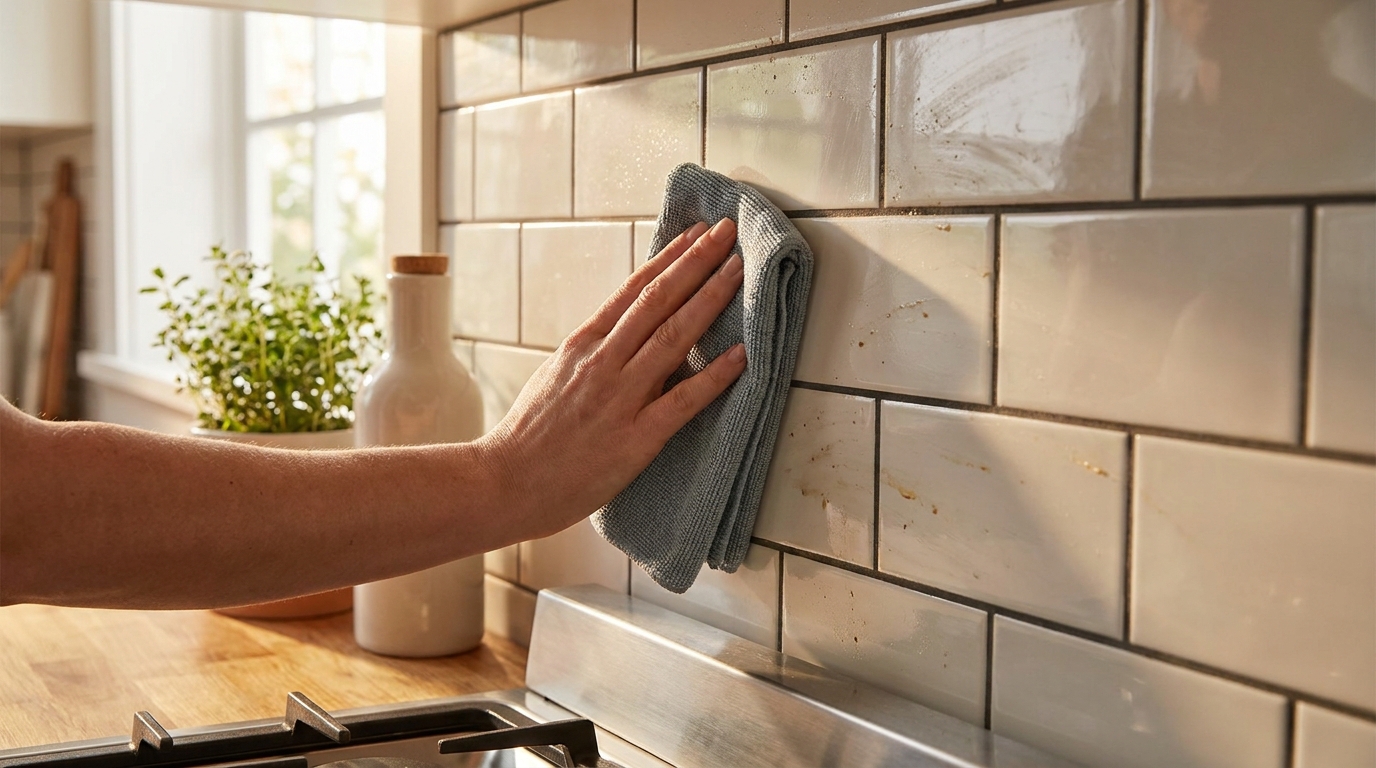
Before turning to each material individually, it helps to understand the core principles that apply to almost every backsplash. The first is beautifully simple: clean sooner, not harder. Fresh splatter wipes away with ease, while old grease hardens into a film that demands stronger intervention. A quick wipe after cooking often spares you a laborious deep clean later.
The second principle is to favor mild, non abrasive, non acidic cleaners unless the material manufacturer specifically recommends something else. This matters especially for natural stone, quartz, polished surfaces, and grout. Harsh chemicals can etch, scratch, discolor, or leave a residue that makes the surface appear dirtier over time. More product does not mean a better result. In fact, excess detergent frequently creates streaks and a dulling film.
The third principle is one many people skip: rinse and dry. Even a gentle cleaner can leave behind residue if it is not removed thoroughly. On glossy tile, glass, polished stone, and metal, this leftover film is often what causes haze or streaking. A final pass with clean water followed by a dry microfiber cloth restores clarity and helps preserve the finish.
The fourth principle is to test products in a discreet spot first. This is especially important when trying a new cleaner on stone, quartz, glass coatings, specialty glazes, or metallic finishes. Not all surfaces react the same way, and testing prevents an unfortunate surprise in the most visible part of the kitchen.
Care should preserve beauty, not challenge it. The best backsplash routine is gentle, regular, and tailored to the material rather than driven by harsh all purpose solutions.
Daily upkeep for a backsplash that always looks polished
Daily care need not be elaborate. The most effective routine takes only a few minutes and fits naturally into the rhythm of cooking. After preparing a meal, allow the cooking area to cool, then wipe the backsplash with a soft microfiber cloth lightly dampened with warm water or a pH neutral cleaner suited to the surface. Focus especially on the area behind the range, around the prep zone, and near the sink where droplets and splatter accumulate quickly.
If your kitchen sees frequent frying, sautéing, or simmering, gentle degreasing after each cooking session is ideal. Grease is easiest to remove when it is fresh and has not yet bonded to the surface texture or grout joints. This is particularly important for artisanal tile, matte finishes, or heavily textured surfaces where oils can settle into subtle crevices. A soft cloth is usually enough. Abrasive pads should be avoided unless the manufacturer confirms they are safe.
Drying the surface is an often overlooked finishing touch that makes a visible difference. A dry microfiber cloth removes moisture, prevents streaks, and keeps minerals from water spots from collecting around the sink or on glossy tile. In kitchens with hard water, this step is especially valuable because repeated spotting can diminish the crisp appearance of light colored surfaces.
Ventilation belongs to daily maintenance as well. Running the kitchen exhaust during and after cooking helps reduce airborne grease and moisture before they settle onto the backsplash. The EPA recommends using kitchen exhaust fans and controlling indoor humidity to limit moisture related mold growth. In practical terms, that means the hood is not only for odor control. It is also an important tool for preserving your kitchen finishes.
Understanding backsplash materials and their care needs
Not every backsplash can be treated the same way, and this is where the most expensive mistakes often begin. A porcelain tile that tolerates common household cleaning may sit in the same kitchen as a marble slab that would be etched by the exact same product. Knowing what you have is the beginning of proper care. If you inherited the kitchen and are unsure, it is wise to ask the installer, check renovation records, or consult a stone or tile professional before using any specialized cleaner.
Material knowledge also helps set realistic expectations. Some surfaces are prized for their resilience and ease. Others are chosen for their nuanced beauty and naturally ask for gentler maintenance. Neither category is better. Each simply requires a different relationship between practicality and preservation.
Ceramic and porcelain tile
Glazed ceramic and porcelain are among the most forgiving backsplash materials. Their surfaces are generally dense, easy to wipe clean, and resistant to everyday staining when maintained with gentle products. For routine care, warm water and a mild pH neutral cleaner are usually sufficient. Because the glaze is the protective barrier, there is rarely a need for aggressive scrubbing.
The primary issue with ceramic and porcelain installations is often not the tile itself, but the grout between the tiles. Splatter and steam can darken grout lines over time, especially near cooking zones. Prompt wipe downs and periodic gentle cleaning help keep the tile field crisp and bright. Avoid oil or wax based cleaners, as industry guidance warns that they can leave a sticky film that attracts dirt and undermines the clean appearance you are trying to create.
Natural stone backsplashes
Marble, limestone, travertine, and other natural stone backsplashes lend a kitchen incomparable depth and softness. They also require discernment. The Natural Stone Institute advises against acidic cleaners such as vinegar or lemon on calcareous stones like marble and limestone because these acids can etch the surface. Etching is not a stain that can simply be wiped away. It is a physical change in the finish that often appears as dull spots or marks.
For natural stone, use only non acidic, non abrasive cleaners formulated for stone care or specifically approved by the manufacturer. Wipe spills promptly, especially tomato sauce, citrus, wine, coffee, and other reactive substances. It is also important to remember that sealer improves stain resistance but does not make the stone stain proof. A sealed marble backsplash still deserves immediate attention when splashes occur.
Stone also benefits from a soft hand during cleaning. Rough pads, scouring powders, and aggressive homemade solutions can all damage the finish. In a luxury kitchen, stone should be treated less like an indestructible utility surface and more like a crafted material with living beauty. The care is not difficult, but it must be respectful.
Quartz and engineered slab backsplashes
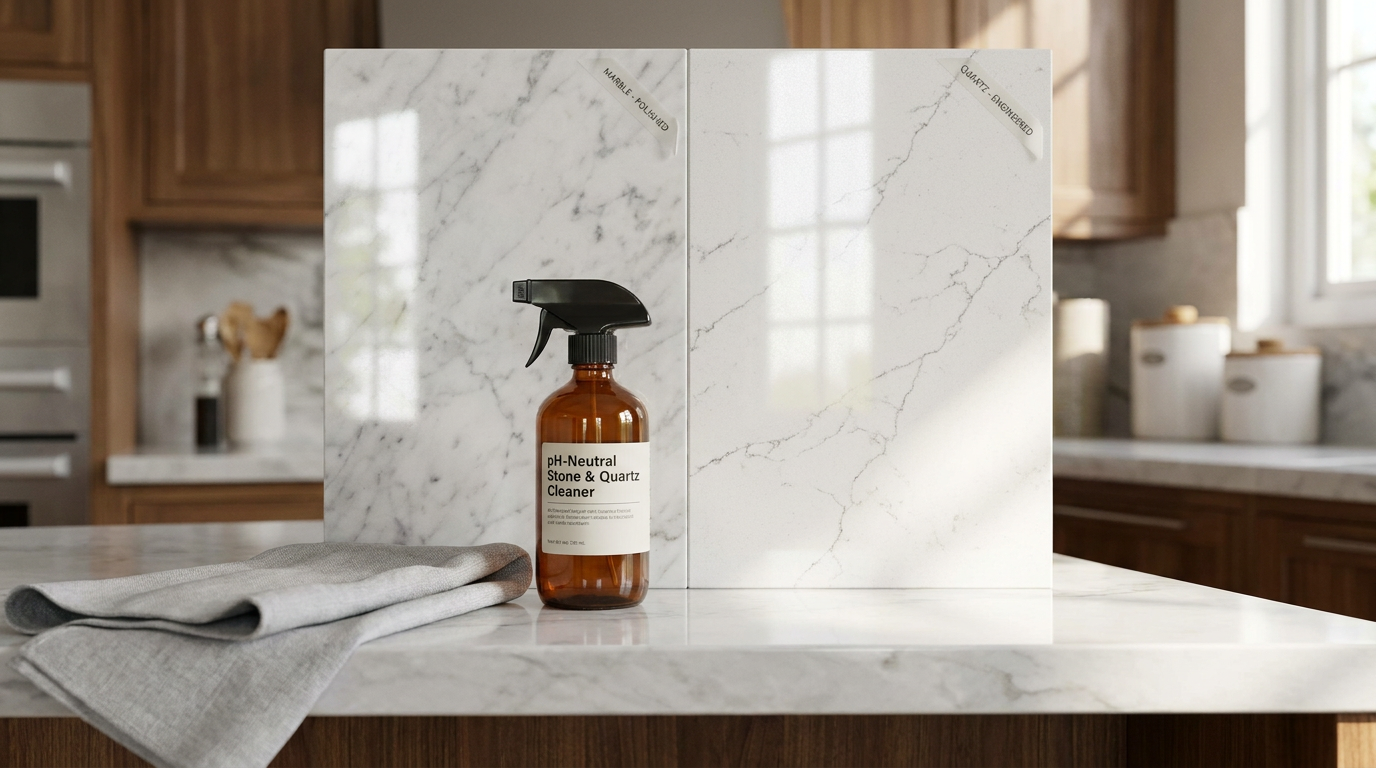
Quartz slab backsplashes have become increasingly popular, particularly in full height applications that extend from countertop to upper cabinets or even to the ceiling. This trend is as practical as it is elegant. Fewer grout lines mean fewer places for grease and discoloration to gather. Cambria and other manufacturers note that thin material such as 1 cm quartz is often used vertically in backsplash applications, reflecting the broader preference for seamless slab aesthetics.
Quartz should still be cleaned thoughtfully. Most manufacturer care guides recommend mild, non abrasive, non acidic cleaners and encourage testing products in an inconspicuous area first. Avoid strong solvents, abrasives, and highly alkaline or acidic products unless specifically approved. While quartz is often lower maintenance than stone tile with grout, it is still a designed surface whose finish can be compromised by the wrong chemistry.
One of the great pleasures of slab backsplashes is visual continuity. When the same material carries up the wall, the kitchen feels calmer, more expansive, and easier to maintain. In practical terms, these surfaces often need little more than regular wipe downs and a final dry buff to preserve their polished clarity.
Glass tile backsplashes
Glass tile is loved for its luminosity and crisp, light reflecting surface. It resists staining well, but it can reveal every fingerprint, water mark, and cleaning streak. That means technique matters as much as product selection. Use a soft cloth and a cleaner appropriate for glass tile, then rinse and dry thoroughly to prevent haze.
Because the surface is so visually revealing, glass often appears dirty when the real issue is residue rather than soil. Too much cleaner can leave a film that catches the light and diminishes the sparkle. For that reason, restraint is key. A small amount of suitable cleaner followed by careful drying usually yields the most refined result.
Stainless steel and metal backsplashes
Stainless steel is durable, hygienic, and beautifully suited to contemporary kitchens. It handles cooking splatter well, but it readily shows smudges, fingerprints, and directional wipe marks. Soft cloths and non scratching cleaners are essential. Many metal finishes also look best when wiped with the grain rather than against it.
As with other surfaces, abrasive products are best avoided unless approved by the manufacturer. Scratches can alter the visual uniformity of metal and are difficult to reverse. A thoughtful cleaning routine keeps steel elegant rather than industrially worn.
The truth about grout and why it deserves special attention
Grout may seem secondary beside beautifully selected tile, but it has a disproportionate effect on how clean and finished the backsplash appears. Cementitious grout is porous, and according to TCNA guidance, sealing it is generally a very good idea because sealers help reduce staining. This is especially important in a kitchen where oils, sauces, and colored splashes are part of everyday life.
Epoxy grout is a different story. It is far more stain resistant and generally easier to maintain, which makes it attractive for homeowners seeking lower upkeep. However, many existing kitchens feature cement based grout, so understanding how to care for it remains essential. The goal is not to saturate it with product or scrub it aggressively, but to keep residue from becoming embedded and to maintain sealer performance over time.
One common misconception is that grout can be cleaned with anything strong because it is rough and utilitarian. In reality, acidic products can weaken cement based grout, and oil or wax based cleaners can leave behind a tacky residue that collects more dirt. Alkaline cleaners are typically preferred when deeper cleaning is necessary for grease or buildup, but even then, they should be used according to product instructions and followed by rinsing.
Another important distinction is between penetrating sealers and topical sealers. Penetrating sealers work below the surface to improve resistance while allowing the grout to breathe, while topical sealers create a film on the surface. The appropriate choice depends on the installation and product recommendations. What matters most for homeowners is this: sealing is a layer of protection, not immunity. Spills still need prompt attention, and resealing may be needed periodically.
How to tell when grout may need resealing
If water darkens the grout quickly instead of beading lightly on the surface, the sealer may be wearing thin. Increased staining, uneven discoloration, or difficulty removing cooking residue can also be subtle clues. Since resealing intervals vary based on the grout type, product used, and the intensity of kitchen activity, it is wise to follow the sealer manufacturer’s guidance rather than relying on a fixed calendar rule.
When in doubt, a professional tile installer or stone care specialist can evaluate the condition of the grout and recommend the proper sealer. This small maintenance step can dramatically improve cleanability and preserve the visual crispness of the tile layout.
How to deep clean without damaging the finish
Even a well loved kitchen eventually needs more than a quick wipe. Deep cleaning is best approached occasionally and carefully, not as a harsh corrective ritual. The purpose is to remove embedded grease, residue film, or early grime in grout lines while protecting the surface and preserving any sealer present.
Begin by dusting or dry wiping the backsplash to remove loose particles. Then use a cleaner appropriate to the material. For many tile and slab surfaces, a pH neutral or manufacturer approved cleaner is sufficient. For grease accumulation on ceramic or porcelain tile and compatible grout, a suitable alkaline cleaner can be more effective than acidic household shortcuts. This matters because vinegar is not a universal cleaner. It is a poor choice for many stone surfaces and can also be unsuitable for cement based grout.
Allow the cleaner its recommended dwell time instead of compensating with force. Gentle agitation with a soft cloth or non scratching sponge is usually enough. For grout lines, a soft brush may help, but aggressive scrubbing should be avoided. After cleaning, rinse thoroughly with clean water and dry the surface completely to prevent haze and residue.
Steam cleaning deserves a cautious note. It is not automatically safe for every backsplash material or grout system. Heat and pressure may affect certain sealers, adhesives, finishes, or delicate grout lines. Before using steam, check manufacturer guidance for both the tile or slab and the grout or setting system. In a kitchen finished with premium materials, assumptions are rarely worth the risk.
Spot treating common backsplash stains
Not every mark has the same origin, and identifying the stain helps you respond elegantly. Greasy haze near the stove usually calls for a gentle degreasing approach appropriate to the surface. White spotting near the sink may be mineral residue from water and often improves with prompt drying habits moving forward. Darkened grout around a prep area may indicate absorbed oils, suggesting that deeper cleaning and possible resealing are needed.
For stone, any unusual dark spot should be treated carefully and promptly. Since stone can absorb oils and pigments, letting a stain sit often worsens the issue. Use only stone safe products and avoid improvised acidic treatments. When a stain persists on a high value material, professional advice is often the smartest and most economical next step.
Moisture control, mold prevention, and caulk maintenance
One of the quietest threats to backsplash beauty is not grease but moisture. Around sinks, faucet penetrations, countertop joints, and the edges where materials meet, repeated dampness can soften caulk, encourage discoloration, and create conditions in which mold may develop. The CDC and EPA both emphasize that mold grows where moisture persists, which means prevention depends on removing the source of moisture, not just cleaning the visible effect.
In practical kitchen care, this means wiping dry around the sink area after heavy use, checking for small leaks under or behind the faucet, and ensuring that splash prone corners do not remain wet for hours. It also means evaluating whether your exhaust fan truly removes humid cooking air effectively. If a range hood is present but rarely used, grease and moisture are likely settling onto surfaces throughout the kitchen, including the backsplash.
Caulk lines at change of plane joints, such as where the backsplash meets the countertop or a side wall, deserve routine inspection. Cracks, gaps, peeling, or discoloration suggest the seal may be failing. Replacing deteriorated caulk promptly helps prevent water intrusion behind the surface, where hidden damage can become much more serious. A backsplash may look pristine on the face and still conceal moisture issues at its edges if caulk maintenance is neglected.
Design trends that make maintenance easier
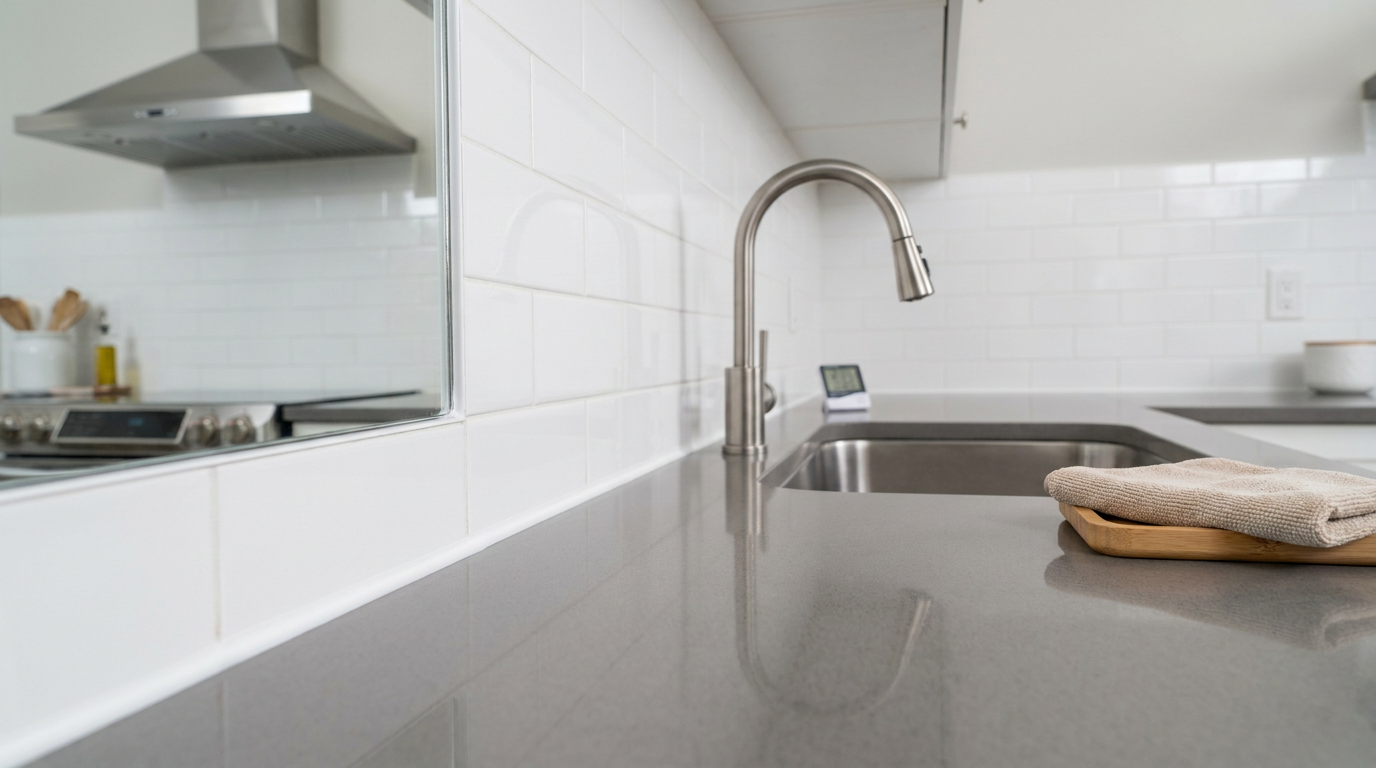
Today’s most compelling backsplash trends are not only beautiful. Many are quietly practical. Full height slab backsplashes in quartz, porcelain, and sintered surfaces have become especially desirable because they reduce grout lines and create a calm, continuous vertical plane. The aesthetic is seamless and architectural, but the maintenance appeal is equally strong. Fewer joints mean fewer areas where grease, soap residue, and moisture can gather.
Designers are also increasingly pairing backsplashes with coordinated vertical surfaces to achieve a waterfall like sense of continuity. This approach simplifies visual clutter and can make cleaning more intuitive. A broad slab can often be wiped in long, fluid motions, while highly segmented tile installations demand more attention to grout lines and edges. Neither choice is inherently better. The decision is one of lifestyle as much as style.
At the same time, handcrafted tile remains deeply appealing because of its warmth, variation, and artistry. If you love pattern, texture, or a more expressive wall treatment, tile offers possibilities that slab surfaces cannot replicate. The maintenance tradeoff is simply that grout care becomes part of the beauty routine. For many homeowners, that is a completely worthwhile exchange.
Common backsplash care mistakes to avoid
Many backsplash problems begin with good intentions and poor assumptions. One of the most common is believing vinegar cleans everything safely. In reality, vinegar can etch marble and limestone and is not a wise choice for cement based grout in many situations. Another mistake is using too much soap, which can leave a cloudy film that makes glossy and polished surfaces look perpetually dull.
Harsh scrubbing tools are another frequent error. Abrasive pads and powders may seem efficient, but they can scratch glass, metal, glossy tile, and certain stone finishes. Ignoring the rinse step is equally problematic. A backsplash may be technically clean yet still look smeared or hazy because cleaner residue has been left behind.
Homeowners also tend to overestimate what sealer can do. Sealed stone and grout are more stain resistant, not immune. Prompt cleanup remains essential. Finally, there is the mistaken belief that visible mold or mildew can be solved with surface cleaning alone. If moisture continues due to leaks, humidity, or failing caulk, the issue will return.
A simple weekly and seasonal care rhythm
The easiest way to keep a backsplash sparkling is to create a light but regular rhythm of care. Daily wipe downs after cooking handle fresh splatter before it hardens. Once a week, take a slightly more thorough pass over the full backsplash, including edges, corners, outlets, and the area beneath upper cabinets where grease can accumulate subtly. Use a material appropriate cleaner, rinse if needed, and dry fully.
Every few months, inspect grout, caulk, and areas exposed to frequent moisture. Look for darkened grout, cracked joints, or early signs of buildup near the range. Seasonal checks are also an excellent time to confirm that the range hood is functioning well, filters are clean, and no sink side moisture is lingering where it should not. This gentle discipline prevents the kind of neglect that later requires intensive intervention.
For natural stone or cementitious grout, use these check ins to evaluate whether resealing may be due. If the kitchen has been especially active, or if the backsplash sits behind a heavily used cooktop, maintenance intervals may be shorter than in a lighter use household. Paying attention to how the surface behaves is often more helpful than rigidly following a generic schedule.
How to preserve both function and visual elegance
A backsplash succeeds when it feels effortless. It should withstand the animation of cooking while still appearing composed and luminous at the end of the day. Achieving that balance is not about perfectionism. It is about understanding the character of the material and caring for it in a way that respects both beauty and performance.
Ceramic and porcelain reward consistency with very little demand. Natural stone asks for gentleness and pH appropriate products. Quartz and slab style backsplashes offer a seamless ease that suits modern kitchens beautifully. Glass and stainless steel need a precise finishing touch to avoid streaks and smudges. Grout, humble though it may seem, benefits enormously from sealing, suitable cleaning, and quick attention to splashes.
Most of all, a sparkling backsplash reflects thoughtful living. It suggests a kitchen that is used, enjoyed, and maintained with quiet care. Instead of waiting for buildup to become a problem, a few intentional habits preserve the original design vision and protect the finish for years to come. In this way, maintenance becomes part of the artistry of the home.
Final thoughts
The kitchen backsplash is one of those surfaces that reveals the difference between cleaning and caring. Cleaning removes what does not belong. Caring protects what makes the material beautiful in the first place. With mild products, prompt wipe downs, occasional deep cleaning, proper grout and sealer awareness, and vigilant moisture control, your backsplash can remain both radiant and resilient.
If there is one idea to carry forward, let it be this: the right method matters more than the strongest product. Match care to the material, treat residue early, keep moisture in check, and allow the backsplash to continue doing what it does best. It protects the kitchen quietly while contributing elegance every single day.
- Daily: Wipe away fresh splatter, especially near the stove and sink, then dry the surface.
- Weekly: Clean the full backsplash with a gentle, material appropriate product and check for streaks or residue.
- Seasonally: Inspect grout, caulk, ventilation, and signs of moisture or sealer wear.
- As needed: Deep clean gently, spot treat carefully, and reseal compatible grout or stone according to product guidance.
When these habits become part of the household rhythm, the backsplash remains what it was always meant to be: a practical surface, certainly, but also a polished and enduring focal point in the heart of the home.

No Comment! Be the first one.