


Expert Tips for Keeping Your Coffee Machine in Perfect Shape
For many people, the coffee machine is not just another kitchen appliance. It is part of a cherished routine that helps the day begin with comfort, clarity, and a familiar sense of ease. The sound of brewing coffee, the warmth of a mug in your hands, and the first sip of a favorite blend can feel grounding in a world that often moves too fast. When your machine is working beautifully, that ritual feels effortless. When it starts producing weak coffee, strange noises, or bitter flavors, the whole experience can feel slightly off.
Table Of Content
- Why Coffee Machine Care Matters More Than Most People Realize
- Know Your Machine Before You Clean It
- Daily Habits That Keep Problems from Building Up
- Weekly Cleaning for Better Flavor and a Fresher Machine
- Descaling: The Step That Makes a Huge Difference
- How to Descale Safely
- How to Clean Different Types of Coffee Machines
- Drip Coffee Makers
- Pod and Capsule Machines
- Espresso Machines
- Bean to Cup Machines
- When Coffee Tastes Off, Check These Common Causes
- Simple Troubleshooting Before You Assume the Worst
- The Best Cleaning Rhythm for Busy Households
- Products and Tools That Help Without Overcomplicating Things
- Water Quality Matters More Than You Think
- How to Make Maintenance Feel Like Part of a Beautiful Routine
- Signs It May Be Time for Professional Service or Replacement Parts
- Final Thoughts: Better Coffee Begins with Better Care
Keeping your coffee machine in perfect shape is really about protecting that daily pleasure. Good maintenance improves flavor, supports hygiene, prevents frustrating breakdowns, and extends the life of a machine you likely rely on every day. It also helps you avoid the slow decline that often happens when residue, mineral buildup, and old oils collect inside hard to see places. The good news is that caring for a coffee machine is usually far simpler than people expect once you understand the basics.
This guide takes a practical, hands on approach to coffee machine care. Whether you use a drip coffee maker, a pod machine, a bean to cup model, or an espresso machine, the core ideas are the same. Clean often, descale on schedule, pay attention to flavor and performance changes, and build a few easy habits into your weekly rhythm. With a little regular care, your machine can keep delivering fresh, flavorful coffee while making your kitchen feel calm, cared for, and ready for the day.
A coffee machine lasts longer and tastes better when it is treated like part of your daily ritual, not just a tool on the counter.
Why Coffee Machine Care Matters More Than Most People Realize
It is easy to assume that if a coffee machine still turns on and produces coffee, everything is fine. In reality, coffee quality often begins to decline long before a machine fully stops working. Oils from coffee beans cling to internal parts, old moisture can create unpleasant odors, and minerals from water gradually form scale that restricts flow and stresses the heating system. These changes happen quietly, which is why they are easy to overlook until the coffee tastes flat or the machine becomes unreliable.
Maintenance also matters because coffee is sensitive. Even excellent beans can taste dull, bitter, or oddly sour when brewed through a dirty machine. If you have ever bought better coffee and wondered why it still tasted disappointing, the machine itself may have been part of the problem. A clean machine gives your beans a fair chance to shine, allowing the true aroma and flavor of the coffee to come through with more clarity and balance.
There is also a practical financial reason to stay consistent. Coffee machines can be a significant investment, especially if you own an espresso machine or an advanced automatic model. Replacing parts, booking repairs, or buying a whole new machine can be costly. Regular care does not just preserve performance. It often prevents the very issues that shorten the life of the appliance in the first place.
On a more personal level, a clean and reliable coffee machine contributes to how your kitchen feels. Small systems around the home affect daily comfort more than we sometimes admit. A machine that is sticky, stained, or unpredictable creates friction in the morning. A machine that is clean, smooth, and dependable supports a routine that feels more pleasant and more intentional.
Know Your Machine Before You Clean It
The first step in proper coffee machine care is knowing what kind of machine you have and how it is designed to work. A simple drip coffee maker has different needs than a manual espresso machine, and a pod machine will require different cleaning steps than a grinder based bean to cup model. Before starting any deep cleaning routine, it helps to revisit the manual or look up the model online so you know which parts are removable, which products are safe, and whether the manufacturer recommends a specific descaling process.
Even if you no longer have the printed manual, most brands provide digital versions on their websites. This can save you from damaging sensitive parts or overlooking features such as built in cleaning cycles. Some machines have removable brew groups, hidden filters, or alerts that indicate when descaling is due. Others need manual care in key places that users often forget, such as the steam wand, water reservoir lid, or drip tray housing.
It is also helpful to identify the materials involved. Stainless steel, plastic, glass, rubber seals, and internal tubing all respond a little differently to heat, cleaners, and wear. A gentle approach is usually best. Harsh scrubbing or strong chemicals can do more harm than good, especially on machines with glossy finishes or delicate internal components.
Daily Habits That Keep Problems from Building Up
The easiest way to keep a coffee machine in excellent condition is to make small cleaning steps part of your regular routine. Daily maintenance is less about deep cleaning and more about preventing coffee residue, milk buildup, and standing water from lingering. These habits take only a few minutes, but they make a noticeable difference in both cleanliness and flavor over time.
Start by emptying used grounds or capsules promptly after brewing. Damp coffee residue becomes stale quickly and can create a sour smell if left sitting in the machine. If your machine uses a brew basket, portafilter, pod container, or puck bin, empty it once it has cooled and give it a quick rinse. This simple habit keeps old coffee from affecting the next brew and reduces the chance of mold or residue buildup in hidden corners.
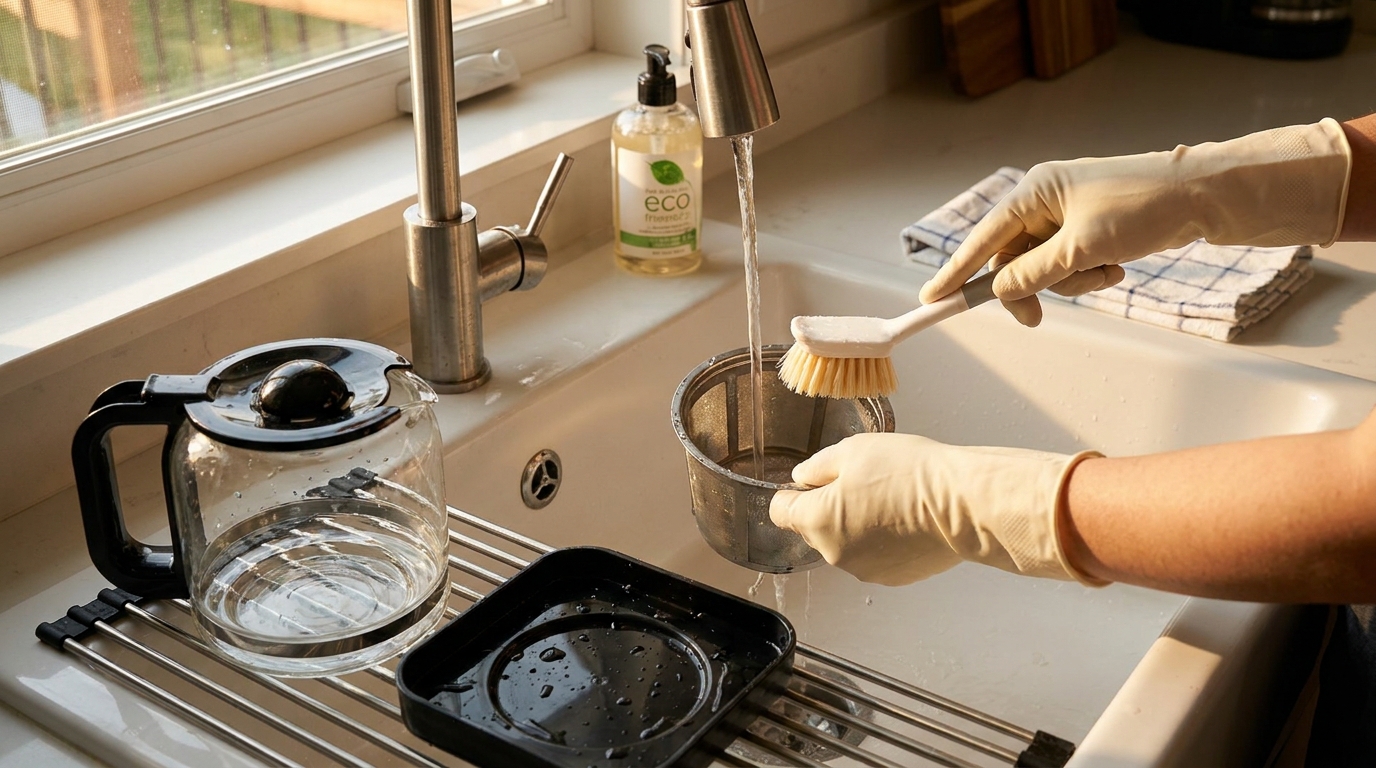
The drip tray deserves attention too. It is one of the most overlooked parts of any coffee machine, yet it collects splashes, condensation, stray grounds, and sometimes milk. Left unattended, it can become unpleasant surprisingly fast. Emptying and rinsing the tray daily or every couple of days helps your machine feel cleaner overall and prevents sticky buildup around the base.
If your machine has a steam wand or milk frothing component, clean it immediately after each use. Milk residue hardens quickly and is much harder to remove once it dries. Wipe the exterior with a damp cloth while it is still warm and run a brief purge of steam if the manufacturer recommends it. This one step is essential for both hygiene and frothing performance.
It also helps to refresh the water in the reservoir regularly rather than letting the same water sit for days. Fresh water supports better tasting coffee and reduces the chance of stale odors. If your home tends to be warm or sunny, this matters even more. A clean reservoir with fresh water is a small detail that influences the whole cup.
Weekly Cleaning for Better Flavor and a Fresher Machine
While daily habits keep the surface level routine in order, weekly cleaning goes a little deeper. This is the time to wash removable components, wipe exterior surfaces thoroughly, and check for any residue collecting around seals, lids, spouts, or internal holders. A short weekly reset helps the machine feel maintained instead of merely managed.
Begin by unplugging the machine and allowing it to cool fully. Remove any detachable parts such as the carafe, brew basket, water tank, drip tray, pod bin, and milk container if your model has one. Wash these in warm water with mild dish soap unless the manufacturer specifically says they are dishwasher safe. A soft sponge or brush is usually enough to remove residue without scratching the surfaces.
Pay special attention to places where coffee oils tend to gather. The underside of lids, the area around the filter holder, and the coffee outlet or spout often develop a thin film that can turn rancid over time. You may not notice it at first, but these oils can have a real effect on flavor. Cleaning them away helps restore a fresher, cleaner taste.
Wipe down the machine exterior with a soft damp cloth. This is partly about appearance, but it is also about noticing changes. When you clean the exterior regularly, you are more likely to spot mineral spots, small leaks, cracks, or loose parts before they become bigger issues. A machine that looks cared for tends to be cared for more consistently, which often improves its longevity.
If your machine includes a grinder, weekly care is especially important. Ground coffee particles can collect in the hopper and chute, affecting both freshness and performance. Follow your machine instructions for safe cleaning, since some grinders should not be washed with water. In many cases, a dry brush and careful wiping are the right approach.
Descaling: The Step That Makes a Huge Difference
Descaling is one of the most important parts of coffee machine maintenance, and it is often the one people postpone the longest. Scale is the chalky mineral buildup that develops when water is heated repeatedly inside the machine. If you live in an area with hard water, scale can form surprisingly quickly. Over time, it narrows internal pathways, slows heating, reduces brewing efficiency, and can even damage the machine if ignored.
One of the clearest signs that descaling is overdue is a change in performance. Your machine may brew more slowly, make unusual sounds, fail to reach the right temperature, or produce less coffee than expected. Espresso machines may struggle with pressure, and steam wands may become weaker. Sometimes the only clue is a flavor shift, with coffee tasting flatter or less vibrant than usual.
The exact descaling schedule depends on your machine, your water, and how often you brew. Some households need to descale every month or two, while others can go longer. Machines with built in reminders make this easier, but even without one, it helps to set a repeating calendar note. Staying ahead of scale is much easier than correcting heavy buildup later.
How to Descale Safely
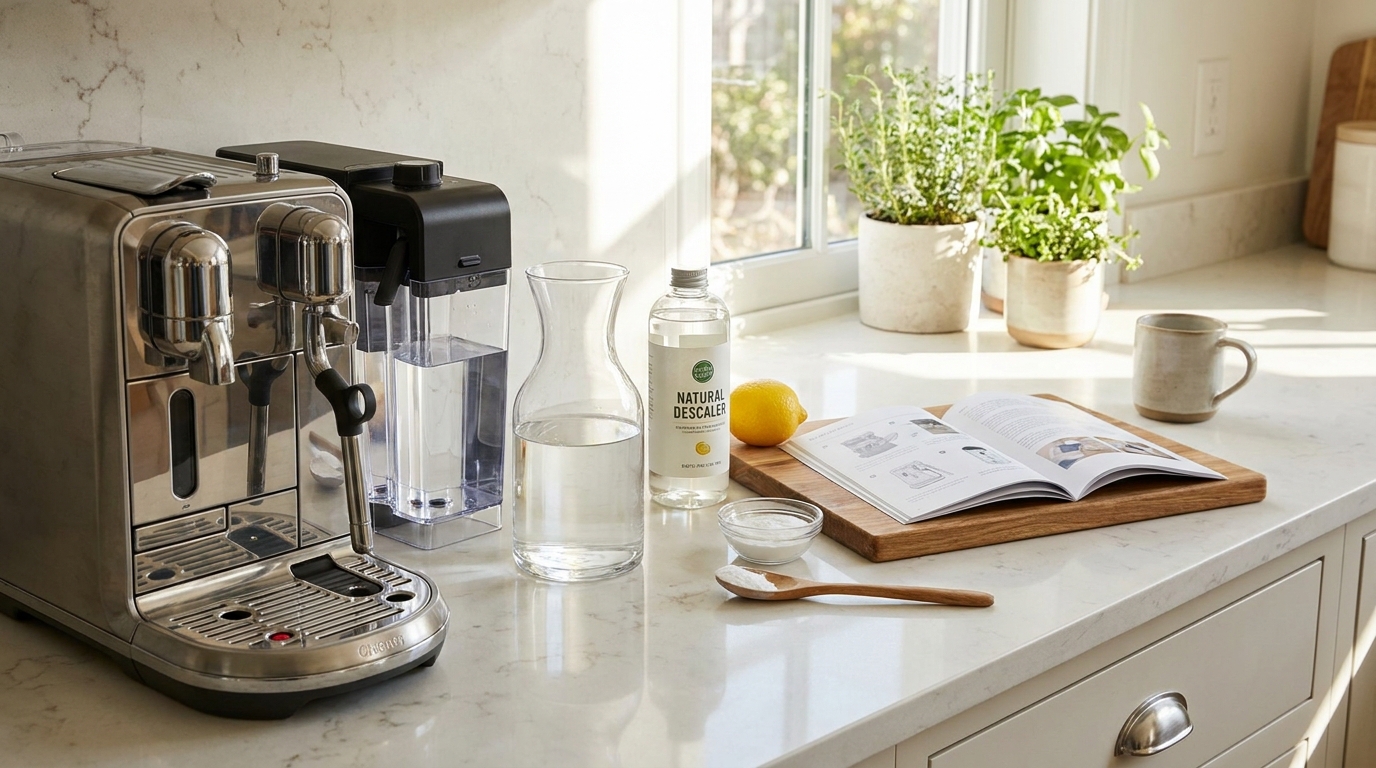
Always begin with the instructions recommended for your machine model. Some brands suggest a proprietary descaling solution, while others allow specific alternatives. Using the wrong product can affect internal components, especially in high end machines. If you are ever unsure, the manufacturer guidance is the safest place to start.
In general, descaling involves filling the reservoir with the solution and water mixture, running it through the machine according to instructions, then flushing the system with fresh water several times. The most important part is not rushing the rinse cycle. Any leftover descaling solution can affect the taste of future coffee, so a thorough flush matters just as much as the descaling itself.
It is a good idea to descale at a time when you are not in a hurry. This task is more pleasant when treated as a quiet kitchen reset rather than a rushed chore between appointments. Put on music, open a window, and let it become part of caring for the home. That shift in mindset often makes household maintenance feel less draining and more satisfying.
How to Clean Different Types of Coffee Machines
Although the basic principles of coffee machine care are universal, different types of machines have slightly different priorities. Understanding the needs of your specific setup helps you clean more effectively and avoid unnecessary wear. Most households can improve both flavor and function just by tailoring care to the kind of machine they use every day.
Drip Coffee Makers
Drip coffee makers are among the simplest to maintain, but they still need regular attention. The carafe, brew basket, and lid should be washed frequently to remove oils and residue. The water reservoir should be rinsed and wiped when possible, especially if you notice spots or film. Descaling is particularly important because the internal heating element can accumulate mineral buildup without obvious external signs.
If your machine uses a reusable filter, wash it thoroughly after each use and inspect it for trapped grounds. Metal filters can hold onto oils if not cleaned well, which can affect flavor over time. If you use paper filters, make sure no wet paper is left behind in the basket after brewing.
Pod and Capsule Machines
Pod machines are convenient, but they are not maintenance free. The pod holder, used capsule container, drip tray, and water tank all need regular cleaning. Because these machines often brew in small concentrated bursts, residue can collect around the puncture area and spout. Wiping these zones regularly helps keep the coffee tasting fresh.
Pod machines also need descaling on schedule, especially because users may not notice scale until the flow becomes visibly weaker. If your machine has a needle or piercing mechanism, check whether the brand provides a special cleaning tool. A blocked opening can create uneven brewing and disappointing flavor.
Espresso Machines
Espresso machines require a little more consistency, but the reward is a better tasting shot and smoother performance. The portafilter and basket should be emptied and rinsed after each use, and the group head area should be kept clean. Milk systems need immediate care, since dried milk is one of the fastest ways to create hygiene problems and clogged parts.
Some espresso machines benefit from backflushing if the manufacturer recommends it. This process helps clean internal pathways and remove coffee oils that standard rinsing does not reach. If your machine allows it, making backflushing part of your regular routine can improve extraction and keep the machine running more smoothly.
Bean to Cup Machines
Automatic bean to cup machines combine brewing, grinding, and often milk frothing, which means they need attention in several areas. Emptying the grounds container and drip tray often is essential. The brew unit, if removable, usually needs periodic rinsing and drying. The grinder and bean hopper should be kept dry and free of oily residue.
Because these machines do so much internally, users sometimes forget that hidden buildup can still affect flavor. Follow all programmed cleaning cycles, and do not skip prompts for rinsing or descaling. A machine that automates brewing still relies on regular human care behind the scenes.
When Coffee Tastes Off, Check These Common Causes
If your coffee suddenly tastes bitter, sour, weak, or just not as satisfying, the machine may be trying to tell you something. Flavor issues often appear before mechanical failure, which makes them a useful early warning sign. Instead of immediately blaming the beans, consider whether the machine needs attention first.
Bitter or stale tasting coffee often points to old oils and residue inside the brewing components. This is especially common in parts that are rinsed quickly but not washed thoroughly. A deep clean of the brew basket, carafe, portafilter, spouts, and any removable pathways can make a surprisingly dramatic difference.
Weak coffee may mean the machine is not heating properly due to scale buildup. It can also happen when water flow is partially restricted. If the machine seems slower than usual or the volume is inconsistent, descaling is a smart first step. Fresh coffee and clean filters matter too, but internal buildup is often the hidden issue.
Sour or flat flavors can come from stale water, dirty parts, or a machine that is not brewing at the correct temperature. Refresh the reservoir, clean all contact surfaces, and make sure the machine has been allowed to complete its preheating if applicable. Sometimes the fix is remarkably simple once you rule out the obvious sources of buildup.
Simple Troubleshooting Before You Assume the Worst
Coffee machines often show small signs of stress before a real breakdown. Paying attention early can save you money and help you avoid waking up to a machine that suddenly refuses to cooperate. Many common issues have straightforward causes that homeowners can handle on their own with a calm, methodical approach.
If the machine is brewing slowly, start with descaling and a full cleaning of removable components. Slowness is often tied to mineral buildup or clogged paths. If coffee is leaking, check whether the water tank, drip tray, carafe lid, or seals are properly seated and clean. Even a small piece of trapped residue can prevent parts from fitting correctly.
If the machine will not turn on, confirm the simplest possibilities first. Check the outlet, cord connection, water reservoir placement, and any safety locks that must be engaged before brewing. Some machines will not operate if a component is missing or misaligned. It sounds basic, but many service calls begin with something surprisingly minor.
Unusual noises can signal scale, air in the system, or a blocked line depending on the machine type. If the grinder sounds strained, it may be dealing with oily beans, trapped fragments, or a buildup of grounds. Follow the model specific cleaning guidance before forcing anything. Gentle troubleshooting is always better than aggressive tinkering.
The Best Cleaning Rhythm for Busy Households
One reason maintenance gets delayed is that people imagine it as a complicated deep cleaning project. In reality, coffee machine care works best when it is broken into a rhythm that feels manageable. A few minutes daily, a slightly deeper clean weekly, and descaling when scheduled is usually enough to keep a household machine in excellent condition.
For many homes, this rhythm works well:
- After each use, empty grounds or capsules, rinse the brew component, and wipe any milk parts.
- Every day or two, empty and rinse the drip tray and refresh the water reservoir.
- Once a week, wash removable parts with mild soap and wipe down the exterior thoroughly.
- Every one to three months, descale based on your water hardness and machine use.
- Seasonally, inspect the machine carefully for wear, residue in hidden areas, or parts that may need replacement.
This schedule is not rigid, and that is part of why it works. A household that brews several times a day may need more frequent attention than one that uses the machine only on weekends. The goal is not perfection for its own sake. The goal is consistency that supports better coffee and a smoother daily routine.
Products and Tools That Help Without Overcomplicating Things
You do not need a drawer full of specialty products to maintain a coffee machine well. In most cases, a few gentle and practical tools are enough. A soft cloth, a nonabrasive sponge, a small brush for tight areas, mild dish soap, and a suitable descaling solution will take care of most maintenance needs.
If your machine has a milk system, a small cleaning brush can be particularly useful for reaching narrow openings. A microfiber cloth is ideal for wiping down exterior surfaces without leaving lint or scratching finishes. For grinders, a dry brush designed for food appliances can help remove grounds safely without introducing moisture where it should not go.
It is wise to avoid harsh chemicals, rough scrubbers, or heavily fragranced cleaners on any part that comes into contact with coffee or water. These can leave residue, alter taste, or damage components. When in doubt, simpler is better. Clean water, mild soap, and the correct descaler are usually all you need.
Water Quality Matters More Than You Think
Because coffee is mostly water, the quality of that water has a direct effect on both taste and maintenance. Hard water creates scale faster, while water with off flavors can flatten or distort the taste of even a great coffee. If your coffee machine seems to need frequent descaling or your coffee never tastes quite as clean as you want, your water may be part of the story.
Filtered water can help reduce mineral buildup and improve flavor, though the best choice depends on your machine and local supply. Some high end machines are designed with water filters built in, while others benefit from filtered water added to the tank. It is important not to use distilled water unless your manufacturer specifically allows it, since some machines rely on a certain mineral content to function correctly.
Thinking about water quality is one of those small home choices that pays off quietly over time. Better water can mean less scale, more consistent brewing, and coffee that tastes brighter and more balanced. It is a subtle shift, but one that many coffee lovers notice quickly.
How to Make Maintenance Feel Like Part of a Beautiful Routine
One of the best ways to stay consistent with coffee machine care is to stop seeing it as an interruption. Instead, let it become part of the rhythm that supports your home. Wiping the machine after breakfast, rinsing the milk pitcher before leaving the kitchen, or descaling on the first weekend of the month can feel less like a burden and more like a quiet act of care.
There is something satisfying about tending to the objects that support your daily life. We often talk about comfort in terms of decor, lighting, or furniture, but comfort also comes from things working properly. A clean coffee machine that performs beautifully each morning adds ease to the day in a very real way. It becomes part of the atmosphere of the kitchen, and by extension, part of the atmosphere of the home.
If it helps, store your cleaning cloth and brush nearby so the process feels convenient. Set a recurring reminder for descaling and keep the right solution on hand. When maintenance is easy to begin, it is much more likely to happen. The smallest systems are often the ones that protect a routine best.
Signs It May Be Time for Professional Service or Replacement Parts
Even with excellent maintenance, some issues eventually require more than home care. If your machine continues to leak, fail to heat, lose pressure, or show error codes after a full cleaning and descale, it may need professional attention. The same is true if you notice damaged seals, cracks in the reservoir, or parts that no longer fit securely.
Replacing small parts can sometimes bring a machine back to life without the cost of a full replacement. Water filters, gaskets, baskets, carafes, and milk tubes are all examples of components that wear over time. If the machine is otherwise in good shape, replacing these items can be a smart and satisfying choice.
When deciding whether to repair or replace, consider not just the age of the machine but how well it has served your routine. A machine that still suits your coffee habits and your kitchen may be worth restoring. A machine that has become unreliable, inconvenient, or difficult to clean may be a sign that it is time for something new. Either way, regular care gives you more control over that decision by helping the machine last as long as possible.
Final Thoughts: Better Coffee Begins with Better Care
Keeping your coffee machine in perfect shape is not about being fussy. It is about preserving one of the most comforting moments of the day. When your machine is clean, descaled, and working smoothly, every cup has a better chance of tasting the way it should. The ritual feels calmer, the kitchen feels more cared for, and the machine itself becomes a more dependable part of home life.
The most effective maintenance is rarely dramatic. It is the small rinse after brewing, the weekly wash of removable parts, the timely descale before buildup gets out of hand, and the willingness to notice when flavor or performance begins to shift. These steady habits protect both the machine and the experience it creates.
If coffee is part of how you ease into the morning, welcome guests, or carve out a quiet pause in the afternoon, then caring for your coffee machine is well worth it. Treat it with consistency, keep the routine simple, and let maintenance support the kind of kitchen life that feels warm, smooth, and deeply lived in. Sometimes a better home really does begin with a better cup of coffee.


No Comment! Be the first one.