



A Complete Guide to Winterizing Your Outdoor Spaces for a Cozy, Safe Season
There is something especially comforting about a home that feels cared for in winter. Even when the garden has quieted down and the patio is no longer in full summer use, outdoor spaces still shape the way your home feels every day. They welcome you at the front door, frame the view from your windows, and create small moments of beauty during a season that can otherwise feel stark. Winterizing those spaces is not only practical maintenance. It is also a thoughtful way to protect what you love while keeping your home warm, inviting, and easy to enjoy.
Table Of Content
- Why Winterizing Matters More Than Many Homeowners Realize
- Start with a Full Outdoor Inspection
- Clean Before You Protect
- How to Winterize Gardens and Container Plantings
- Garden Winterizing Priorities
- Protecting Patios from Freeze Thaw Damage
- Winterizing Decks for Safety and Longevity
- Deck and Patio Checklist Before the First Hard Freeze
- Do Not Forget Outdoor Faucets, Hoses, and Irrigation
- Creating a Cozy Winter Atmosphere Without Sacrificing Practicality
- Designing for Safety, Visibility, and Ease
- Common Winterizing Mistakes to Avoid
- A Simple Winterizing Routine You Can Follow Each Year
- When to Adjust for Your Climate and Exposure
- The Long Term Reward of a Winter Ready Outdoor Space
The idea of winter preparation sometimes sounds purely functional, but in real life it is deeply tied to comfort. When your deck is clear, your planters are protected, your pathways are safe, and your outdoor seating area still looks intentional, your home feels calmer and better prepared. You are also making life easier for yourself later. A winter-ready outdoor area is simpler to maintain during storms, safer for family and guests, and far easier to refresh when spring finally arrives.
At the center of all good winterizing is one important truth. Cold weather damage is often caused less by cold alone and more by the cycle of moisture, freezing, thawing, and refreezing. Water slips into tiny cracks in stone, masonry, wood, or concrete, then expands when it freezes. Over time, this process can turn a small flaw into a much larger problem. That is why an effective outdoor winter plan follows a sequence that works beautifully for homeowners: inspect, clean, drain, protect, light, and style.
This guide walks through that full process in a way that is practical and easy to live with. We will cover gardens, containers, patios, decks, pathways, furniture, lighting, and the details that make an outdoor area feel welcoming even on the coldest days. The goal is not to create extra work. It is to help you protect your home and preserve the quiet charm of outdoor living through winter.
A beautiful winter outdoor space is not one that looks untouched by the season. It is one that has been thoughtfully prepared for it.
Why Winterizing Matters More Than Many Homeowners Realize
It is easy to think of winterizing as a task for people with large gardens or harsh climates, but nearly every outdoor space benefits from seasonal preparation. Patios, decks, porches, balconies, entryways, raised beds, and even small container gardens are exposed to changing moisture levels, wind, ice, and fluctuating temperatures. Those changes can shorten the life of surfaces and outdoor furnishings if they are ignored. A few preventive steps in late fall can save money, protect materials, and prevent an untidy or unsafe setup later in the season.
One of the biggest risks is the freeze thaw cycle. This is especially hard on porous materials like natural stone, concrete, brick, terracotta, and unsealed wood. When water sits on or inside these materials and then freezes, it expands. Repeated cycles can worsen cracks, loosen joints, and encourage long-term deterioration. The same principle affects planters, steps, pavers, edging, and decorative features, which is why drainage and cleaning are so important before colder temperatures settle in.
Winterizing also improves safety in a very immediate way. Slippery stairs, hidden cracks, cluttered walkways, loose railings, and poor lighting are all more dangerous once snow and ice arrive. Outdoor maintenance in winter is not just about appearance. It is about making sure family members, visitors, delivery drivers, and even pets can move through your space with more confidence. A well-kept entry path in January is one of those small acts of home care that you appreciate every single day.
There is also a lifestyle benefit that should not be overlooked. Many homeowners now want to use their outdoor areas beyond summer, whether that means sipping coffee on a protected porch, decorating the front steps, or enjoying a mild winter afternoon on the patio. With the right preparation, your outdoor spaces can feel less abandoned and more like an extension of your home. That feeling matters, especially in a season when comfort becomes such a central part of daily life.
Start with a Full Outdoor Inspection
The most useful first step is a slow walk around your property before winter arrives in full. Try to see each area with fresh eyes. Look at your deck boards, patio joints, garden edges, planters, steps, railings, outdoor faucets, hoses, lighting, and furniture. Notice where water tends to collect after rain and where leaves gather in corners. These details might seem minor in autumn, but they often become the trouble spots of winter.
Pay special attention to surfaces that already show signs of wear. Small cracks in stone, loose pavers, crumbling mortar, rusted fasteners, and peeling finishes are all worth addressing early. If water can enter a weak spot, winter conditions can magnify the damage. The goal does not have to be a major renovation. Even simple repairs or temporary protection can make a real difference in preserving your outdoor features through the season.
This inspection is also the right time to think about how you move through the space. Consider whether pathways are obvious and well lit, whether stairs feel stable, and whether anything might become hidden under snow. If there is a chair, planter, hose, or decorative piece that narrows a walkway now, it will be even more inconvenient once boots, darkness, and icy conditions are added to the mix. A good winter layout is clear, open, and easy to maintain.
Many homeowners find it helpful to make a simple checklist as they go. That can include structural maintenance, plant care, storage needs, drainage concerns, and design updates. When outdoor work is broken into a sequence, it feels far more manageable. Instead of approaching winterizing as one overwhelming chore, you can move through it in small, satisfying stages.
Clean Before You Protect
Cleaning may not feel as charming as decorating with evergreen arrangements, but it is one of the most important parts of winter preparation. Leaves, soil, seed heads, pollen residue, standing water, and general outdoor grime all hold moisture. That moisture can stain surfaces, encourage mildew, clog drainage paths, and add to freeze-related damage. Starting winter with a clean base gives your outdoor materials a much better chance of lasting beautifully.
Sweep decks, patios, stairs, and walkways thoroughly. Remove leaves from corners, between boards, and from any joints or drainage gaps. If your patio has pavers or stone, clear debris from the spaces where water needs to move freely. Wash surfaces gently if needed, but make sure they have enough time to dry before temperatures drop. Trapped moisture right before a freeze can undo the benefit of cleaning if it is not given space to evaporate.
Garden beds also benefit from selective cleanup. Cut back only what truly needs removing, and leave what offers winter structure or supports wildlife where appropriate. What matters most from a winterizing perspective is taking away anything diseased, mushy, collapsed, or likely to trap excess moisture against hardscape and containers. The result is a garden that looks tidier, handles winter weather better, and still retains some seasonal character.
Outdoor textiles and decor should be cleaned before storage as well. Cushions, planters, tables, and decorative accessories last much longer when dirt is not left sitting on them all winter. Clean items are also much more pleasant to bring out again in spring. There is a real emotional benefit in opening a storage bin or uncovering furniture and finding things fresh, dry, and ready to enjoy.
How to Winterize Gardens and Container Plantings
Gardens often receive the most seasonal attention, and for good reason. Plants, containers, and soil are all affected by cold temperatures, drying winds, and fluctuating moisture. Still, one of the most common misconceptions is that winter plant care is only about frost sensitive flowers. In reality, hardy shrubs, perennials, and even trees benefit from a thoughtful transition into winter, especially in exposed locations or unusually dry autumns.
A key step is deep watering before the ground freezes. Moist soil cools more slowly than dry soil, which helps plants enter winter in stronger condition. Trees and shrubs in particular can suffer when they go into winter already stressed by drought. If fall has been dry, give them a slow, thorough watering before the soil hardens. This is especially helpful for evergreens, which continue to lose moisture through their needles even in cold weather.
Container plants require special attention because their roots are much more exposed than those of in-ground plants. A plant that is hardy in your zone when planted in the ground may struggle in a pot because the soil mass freezes more quickly. Tender containers should be moved indoors or into sheltered spaces if possible. Garages, enclosed porches, unheated sheds, and protected corners can all offer a gentler environment than open exposure to wind and repeated freezing.
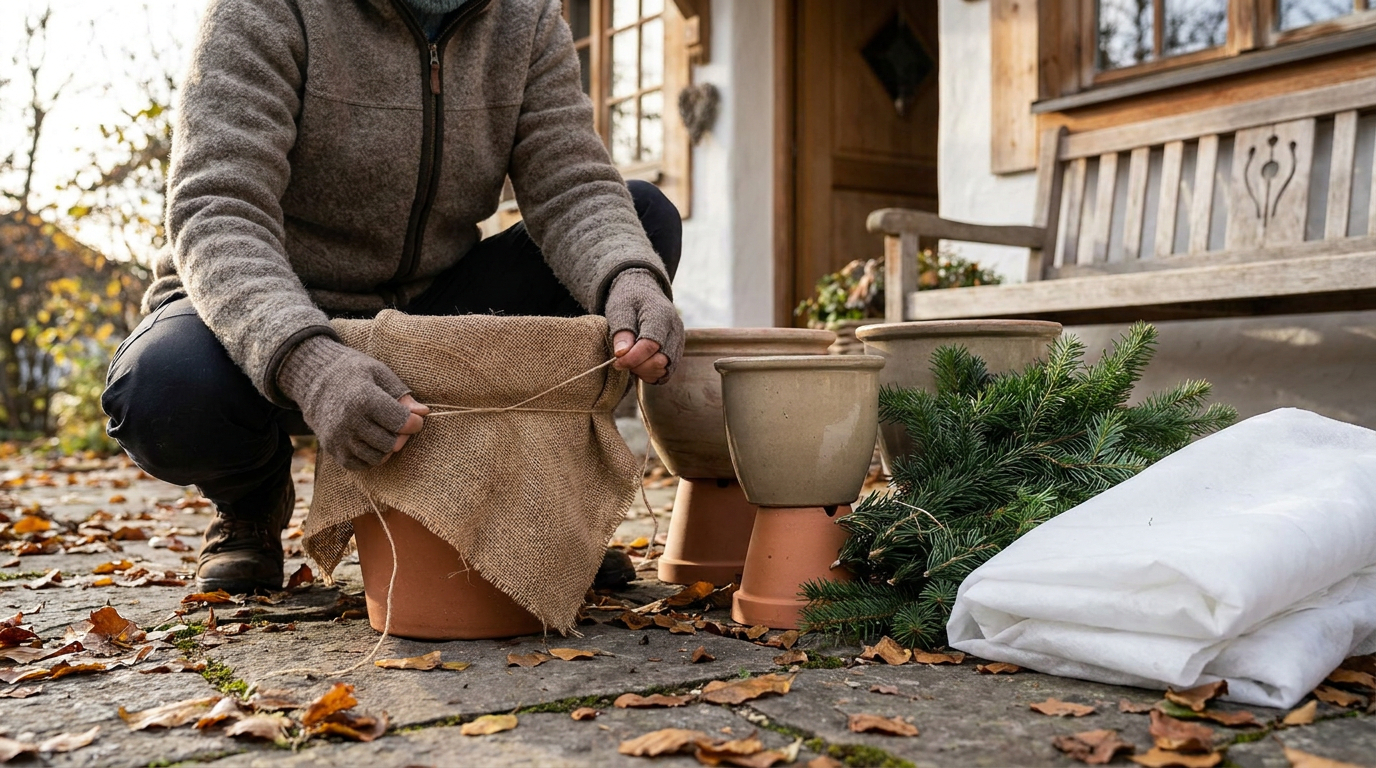
If large pots must stay outside, protect them carefully. Lift them off wet ground using pot feet, bricks, or another stable support so they do not sit in pooled water. Remove saucers that can trap moisture and freeze. Wrap containers with breathable or insulating materials such as burlap, frost cloth, straw, or layers that help moderate temperature changes. Some homeowners also use bubble wrap beneath an outer natural covering when appropriate, especially for pots that are vulnerable to cracking. What matters most is reducing direct exposure to saturation and severe temperature swings.
Choose plant protection with care rather than assuming every covering works for every item. Plastic is not always the best option because it can trap moisture and reduce airflow, leading to rot or stress for some plants and materials. Breathable coverings are often safer, especially for living plant material. The same thoughtful approach applies to mulching. A protective layer around root zones can help regulate soil temperature, but it should not be piled carelessly against stems or trunks where moisture buildup can cause problems.
Winter arrangements can keep containers attractive even after flowers have faded. Evergreen boughs, berried stems, seed pods, twigs, and weather-tolerant branches give porches and patios life throughout the season. These displays work especially well near doors, steps, and seating areas because they add beauty without creating extra maintenance. They also bridge the emotional gap between the lushness of summer and the stillness of winter in a very graceful way.
Garden Winterizing Priorities
- Water trees, shrubs, and evergreens deeply before the ground freezes if autumn has been dry.
- Move tender container plants indoors or into a sheltered location.
- Lift outdoor pots off the ground and remove saucers to prevent trapped water from freezing.
- Use breathable insulation for vulnerable containers and exposed roots.
- Clear away diseased plant material and anything that will collapse into soggy debris.
- Refresh seasonal planters with durable winter materials that can handle snow, wind, and moisture.
Protecting Patios from Freeze Thaw Damage
Patios are often the quiet workhorses of outdoor living. They hold furniture, connect the house to the garden, and carry daily foot traffic through every season. Because they are horizontal surfaces exposed directly to rain, sleet, and melting snow, they are also highly vulnerable to moisture related wear. Winterizing a patio begins with understanding how water moves across it and where it tends to settle.
Inspect the patio for cracks, uneven pavers, loose stones, eroded joints, and low spots that collect water. Even a slight dip can become problematic once freezing temperatures arrive. If the issue is minor, clearing debris and improving drainage may be enough to reduce winter stress. If you notice larger structural concerns, address them before deep winter if possible or make a note to avoid worsening the problem with heavy loads and neglected ice buildup.
Patio furniture should be part of this process too. Clean and store what you can, especially lightweight, porous, or fragile pieces. If furniture remains outside, use fitted protective covers that can handle winter weather without trapping too much moisture underneath. Sheltered patios have an advantage here because covered spaces reduce direct exposure to rain, snow, wind, and ice. That often means less deterioration and easier upkeep all season long.
If you enjoy using your patio during winter, think about function as well as durability. Keep a clear route from the door to any seating or feature you still plan to use. Make sure water can drain away from that area and that rugs, mats, and accessories are rated for outdoor winter conditions. A patio that is lightly used in winter can still feel cared for and welcoming when its layout remains intentional.
Winterizing Decks for Safety and Longevity
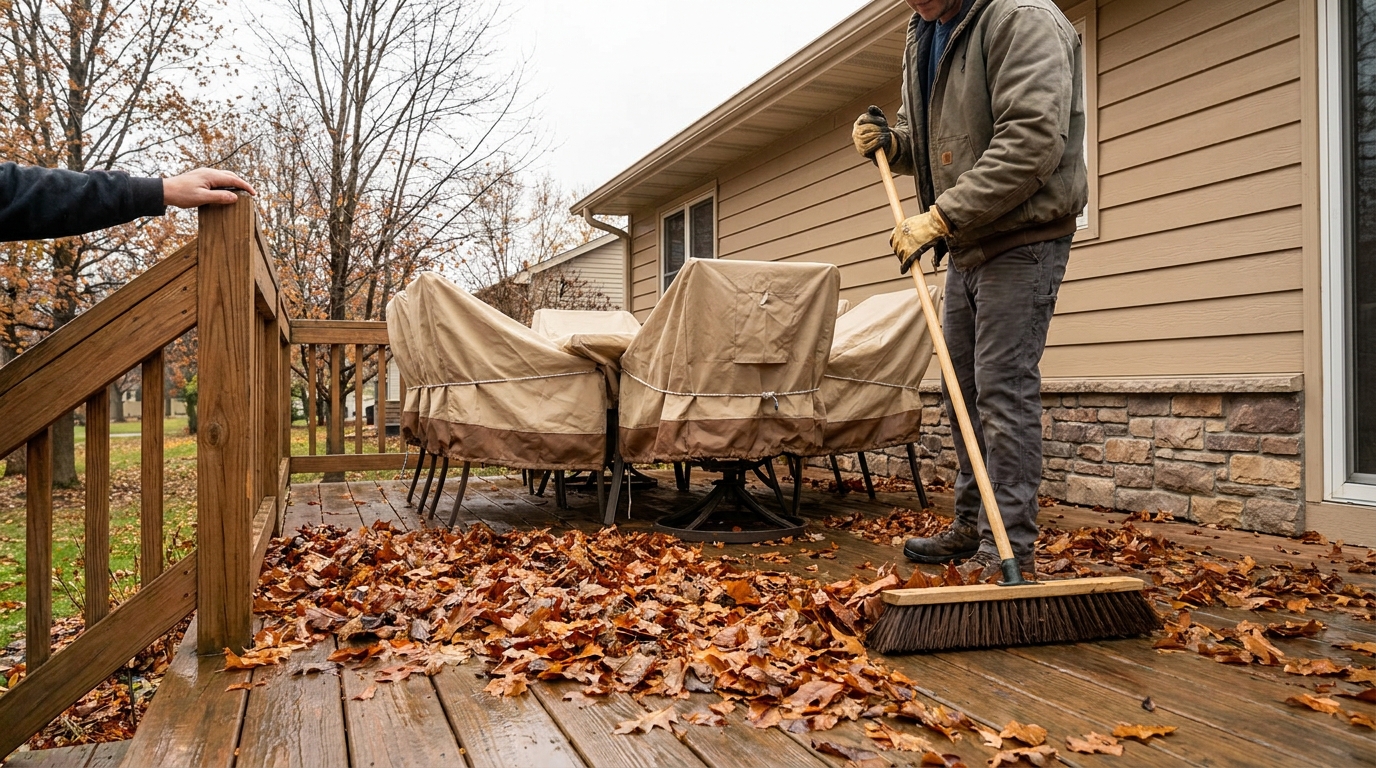
Decks deserve especially close attention because they combine exposure, foot traffic, and structural elements in one space. Winter moisture can seep into wood, freeze around fasteners, and settle between boards if drainage is poor. Before the season changes fully, sweep the deck well and check the gaps between boards to make sure water can escape. A clean, dry surface is much safer than one layered with wet leaves and debris.
Look carefully at the deck structure itself. Loose boards, popped nails, rusted hardware, wobbling railings, and worn stair treads are all issues best handled before snow obscures them. If boards have splintered or railings feel less stable than they should, repairs are worth making now. Winter conditions tend to magnify small weaknesses, especially in places where people are stepping carefully in boots or carrying packages.
Snow and ice management is essential once winter begins. Regular removal is far easier than waiting for heavy accumulation. Snow adds weight, traps moisture, and can turn into dangerous icy layers when partially melted and refrozen. Keeping up with clearing work makes the space safer and also reduces stress on surfaces over time. This is especially important on stairs, near doors, and around transitions from indoor to outdoor flooring where slips are more likely.
Be thoughtful about the products and tools you use. Gentle methods are usually best for preserving finishes and preventing scratches. The right snow removal routine depends on your deck material and local climate, but the guiding principle is always the same: remove buildup promptly, protect traction, and avoid creating unnecessary surface damage. A deck that is maintained little and often through winter tends to stay in much better shape than one left buried for weeks.
Deck and Patio Checklist Before the First Hard Freeze
- Remove leaves, dirt, and anything that blocks drainage.
- Inspect for cracks, loose boards, shifting pavers, and unstable railings.
- Store or cover furniture after cleaning it thoroughly.
- Move decorative items that could crack, rust, or blow away.
- Create a plan for regular snow and ice clearing.
- Check lighting near stairs, doors, and pathways.
Do Not Forget Outdoor Faucets, Hoses, and Irrigation
One of the simplest winterizing jobs is also one of the most valuable. Water left in hoses, irrigation lines, and outdoor faucets can freeze and expand, leading to split hoses, damaged fittings, or plumbing issues that reveal themselves at the worst possible moment. Disconnect and drain hoses fully, then store them somewhere dry. This small step protects both the hose and the connection point at the house.
If your home has outdoor faucets that require seasonal shutoff or insulation, take care of that before freezing nights become consistent. The exact method depends on your plumbing setup, but the principle is straightforward. You want to reduce the chance of trapped water freezing inside exposed components. This is one of those quiet maintenance tasks that does not transform the look of your outdoor space, but it contributes enormously to peace of mind.
Irrigation systems need seasonal attention too. If you use drip lines, hoses, or built-in watering systems in garden beds or patio containers, drain them according to local recommendations. Winterizing irrigation is an important part of caring for the landscape as a whole. It helps avoid leaks, prolongs equipment life, and ensures the system is ready to restart smoothly when warm weather returns.
Creating a Cozy Winter Atmosphere Without Sacrificing Practicality
This is where winterizing becomes especially rewarding. Once you have cleaned, protected, and repaired what needs attention, you can shift into the more visual part of the season. A winter outdoor space does not need to be full of delicate decor to feel lovely. In fact, the most successful winter styling tends to be simple, durable, and rooted in natural materials that handle cold weather gracefully.
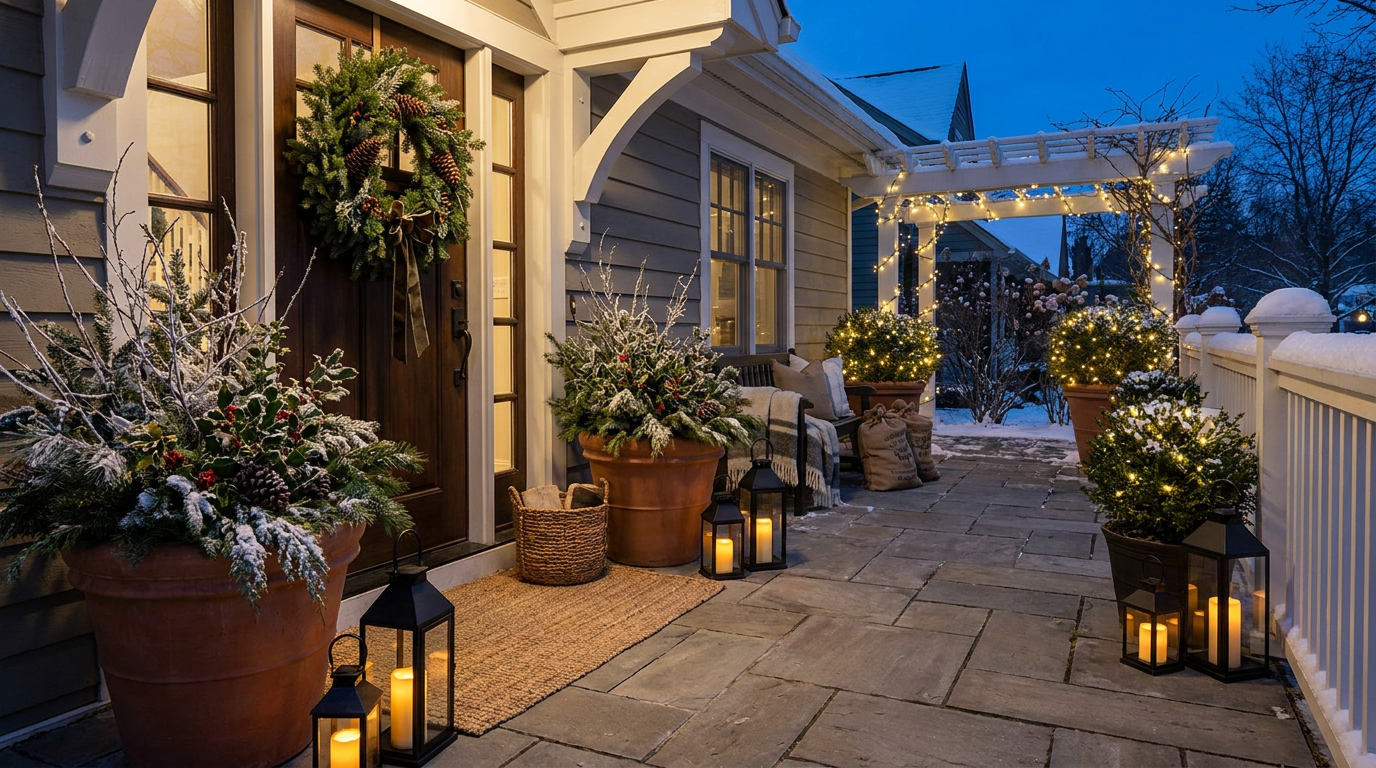
Evergreen planters are one of the easiest ways to make outdoor areas feel alive in winter. They add color, shape, and texture at a time when gardens can otherwise look flat. Cedar boughs, pine, fir, eucalyptus, dogwood stems, birch branches, and weather-resistant accents all create fullness without demanding maintenance. These arrangements are especially effective at entryways, on deck corners, beside garage doors, and near seating areas where they frame the space beautifully.
Lighting is another transformative element. Warm weatherproof string lights, lanterns, and subtle pathway illumination make outdoor areas feel intentional and safer at the same time. Place lighting where it helps with visibility first, especially near steps, railings, and transitions. Then think about atmosphere. A gentle glow in the early evening can make even a simple porch or patio feel welcoming in a season that often brings long hours of darkness.
Textural layering also matters, but it should be handled practically. Covered seating can be softened with durable outdoor throws or cushions that are stored in a dry box when not in use. A wreath on the door, a neatly placed doormat, and a pair of evergreen-filled pots can create an impression of warmth without adding clutter. The mood should feel calm and composed rather than overfilled. Winter spaces are at their best when they feel simple, resilient, and quietly beautiful.
The loveliest winter styling often comes from using fewer pieces, choosing them well, and making sure each one can truly withstand the season.
Designing for Safety, Visibility, and Ease
When people imagine a cozy outdoor winter setup, they often think first of blankets, heaters, and lights. Those are lovely elements, but true comfort begins with safety. A beautiful arrangement loses its charm quickly if it blocks the path to the front door or becomes awkward to maintain after snowfall. Winter design should support the way you actually live by making movement intuitive and upkeep simple.
Keep walkways open and obvious. Avoid low decor that disappears under snow, and place planters where they frame the path rather than narrow it. Make sure railings remain easy to grasp and not hidden behind decorative layers. If you use lighting, confirm that it does not create glare or cast confusing shadows on stairs. These details may sound small, but together they shape how relaxed and secure your home feels on dark winter evenings.
Wind exposure is another practical design consideration. Entryways, balconies, and elevated decks can feel much colder and harsher than sheltered corners of the yard. Choose decor and furnishings that stay stable in those conditions. Weighted planters, secured lanterns, and tightly fitted covers are often better choices than lightweight accessories that need constant adjustment. A winter-ready design should stay composed even after a windy night.
If you have a covered porch or a sheltered patio, lean into that advantage. These spaces are ideal for extending outdoor living a little longer with weather-resistant seating, a small table, and warm light. Because they are less exposed to precipitation, they usually require less maintenance and experience less wear. A protected outdoor room in winter can feel incredibly comforting, especially when the rest of the landscape is quiet and still.
Common Winterizing Mistakes to Avoid
One of the most frequent mistakes is assuming that snow is always protective. In some garden situations, a light insulating snow cover can be helpful, but that does not mean heavy snow is harmless. On structures, containers, and certain plants, extra weight and trapped moisture can create real problems. It is better to monitor conditions and respond thoughtfully than to assume winter weather will somehow preserve everything on its own.
Another common mistake is stopping watering too early in fall. Once the air cools, many homeowners mentally move on from plant care, yet trees, shrubs, and evergreens may still need moisture before the ground freezes. Dry roots heading into winter are often more vulnerable than people realize. Deep fall watering can be one of the most beneficial and most overlooked steps in the whole process.
Overcovering can also backfire. Wrapping everything tightly in plastic or sealing items without airflow may trap condensation and encourage rot, mildew, or material damage. The safer approach is to use breathable, climate-appropriate protection based on what each item truly needs. Some things should be stored indoors, some should be covered loosely but securely, and others do best with no covering at all once they are properly cleaned and drained.
Finally, many people focus only on plants and forget the hardscape. Winterizing is not just a gardening task. It includes paths, drainage, railings, steps, outdoor lighting, furniture, and water systems. When the whole space is considered together, the result is not only better protection but a much more harmonious winter atmosphere.
A Simple Winterizing Routine You Can Follow Each Year
Seasonal maintenance feels easier when it becomes a rhythm instead of a scramble. If you approach winterizing in stages over several weekends, the work is much more enjoyable. Begin with inspection and repair while the weather is still mild. Then move into cleaning and drainage. After that, protect plants, containers, faucets, and furniture. Finish with lighting and styling once the practical foundation is complete.
Here is what that rhythm can look like in everyday life. In early fall, assess surfaces, make minor repairs, and decide what to store. In mid fall, clean everything thoroughly and handle your garden preparation. In late fall, disconnect hoses, winterize water systems, cover or move furniture, and set up your snow tools where they are easy to reach. As winter begins, add lighting, evergreen decor, and any sheltered seating you want to keep using.
The beauty of this routine is that it supports both resilience and enjoyment. You are not simply shutting the outdoors down. You are reshaping it for the season ahead. That shift in mindset can make winter feel less like a period of loss and more like a time for calm, simplicity, and intentional care at home.
When to Adjust for Your Climate and Exposure
No calendar date works perfectly for every home, which is why local conditions matter as much as the season itself. Hardiness zone, first frost timing, wind exposure, elevation, and the amount of shelter around your home all influence what winterizing should look like. A sunny protected courtyard behaves very differently from an open deck on a windy hillside. The same is true for a city balcony compared with a rural backyard exposed to drifting snow.
Pay attention to how your specific outdoor spaces behave during weather changes. Which containers dry out fastest. Which patio corner stays wet. Which entry steps become icy first. Where does snow collect. These patterns give you the best clues for future planning. Over time, your winterizing routine becomes more precise and more efficient because it is based on the realities of your home rather than generic advice alone.
If you live in a colder part of North America, especially where freeze thaw cycles are frequent, be extra attentive to drainage, material choice, and container protection. If your climate is milder but still wet, moisture management may matter more than deep freeze protection. Either way, the principle stays the same. Prepare for the conditions your home actually experiences, not just the season written on the calendar.
The Long Term Reward of a Winter Ready Outdoor Space
There is a quiet luxury in stepping outside on a cold morning and finding that everything feels orderly, safe, and cared for. The path is clear. The deck feels steady underfoot. The planters still have life. The porch light casts a warm glow. These are not dramatic design gestures, but they shape daily experience in meaningful ways. They make home feel more supportive during a demanding season.
Winterizing also protects future beauty. A patio that drains properly, a deck that is checked before storms, and containers that are insulated or stored well will all be easier to enjoy again in spring. You are preserving not just materials but momentum. Instead of facing repairs, replacements, and a discouraging mess later, you give yourself a smoother transition into the next season of outdoor living.
If there is one message to take from this guide, let it be this: winter care and winter beauty do not compete with each other. In the most successful outdoor spaces, they work together. The same choices that protect your home from moisture, ice, and wear can also make it feel more welcoming and serene. When you inspect, clean, drain, protect, light, and style with intention, your outdoor spaces can carry their charm through winter with real grace.
And that may be the loveliest part of all. Even in the coldest months, your home can still offer a sense of invitation before you ever step inside.



No Comment! Be the first one.