



The Essential Guide to Eco-Friendly Mulch and Soil Care for a Healthier, Carbon-Smart Garden
A healthy garden starts below the surface. Leaves, flowers, vegetables, shrubs, and trees all depend on the quiet work happening in the soil, where water moves, roots expand, organic matter breaks down, and beneficial organisms turn dead material into new life. When gardeners focus only on what is visible above ground, they often miss the most powerful opportunity to create resilience. Eco-friendly mulch and soil care offer a more complete approach, one that supports plant health while also improving water retention, reducing erosion, and helping the garden store more carbon over time.
Table Of Content
- Why mulch and soil care matter more than most gardeners realize
- How sustainable mulch supports a healthier garden ecosystem
- Compost as both mulch and soil amendment
- How to tell if compost is ready
- Choosing the right eco-friendly mulch for different parts of the garden
- What to avoid in sustainable mulching
- The connection between mulch, soil organic matter, and carbon capture
- How to apply mulch and compost properly
- A simple seasonal rhythm
- Soil health beyond mulch: compaction, tillage, and water
- Urban gardens, contamination awareness, and soil testing
- Common misconceptions about mulch and soil care
- A practical low-impact routine for homeowners
- Final thoughts: build soil first, and the garden follows
- Quick reference: eco-friendly mulch and soil care basics
This matters because soil is not just dirt. Healthy soils provide ecosystem services that are essential to a functioning landscape, including nutrient cycling, water regulation, biodiversity support, and carbon sequestration. Federal guidance in both Canada and the United States emphasizes that better soil management improves far more than crop growth alone. In a home garden, the same principles apply on a smaller scale. If you keep the soil covered, add organic matter regularly, and avoid unnecessary disturbance, you create conditions that support a richer, more stable garden ecosystem.
For many households, this is also one of the most practical forms of sustainable living. Mulch and compost can often be made or sourced locally from leaves, yard trimmings, arborist wood chips, and finished municipal compost. That means less waste going to landfill, fewer purchased inputs, and a garden that becomes easier to maintain over time. Sustainability here does not need to feel abstract or complicated. It can be as simple as protecting bare soil, feeding it with natural materials, and letting biology do more of the work.
This guide explores how to choose, apply, and maintain mulch and soil in a way that is kind to the environment and useful in everyday life. We will look at the role of organic matter, how mulch supports moisture and temperature balance, why compost is one of the most valuable tools in the garden, and how these practices help support carbon capture in the soil. We will also cover contamination awareness in urban areas, common mistakes to avoid, and a realistic seasonal routine you can follow without turning garden care into a full-time project.
At its best, sustainable mulch and soil care is not about perfection. It is about building a garden system that holds water better, needs fewer inputs, protects life in the soil, and grows stronger year after year.
Why mulch and soil care matter more than most gardeners realize
Many people think of mulch as a finishing touch, something added after planting to make beds look tidy. In reality, mulch is one of the most useful soil-management tools available to home gardeners. Organic mulches such as shredded leaves, compost, bark, straw, and wood chips help reduce evaporation, buffer temperature swings, suppress weed growth, and protect soil from erosion. Covered soil is simply more stable than bare soil. It is less likely to crust over in heat, wash away in storms, or dry out after a few sunny days.
That stability affects everything else in the garden. When soil remains evenly moist, roots can grow with less stress and soil organisms can stay active for longer periods. Earthworms move more easily through soils with organic matter, fungi have food to feed on, and bacteria continue the slow work of decomposition and nutrient cycling. Gardeners often notice the visible benefits first, such as fewer weeds or less frequent watering, but below-ground improvements are just as important. Better structure, improved infiltration, and a more active soil food web lead to stronger plants over time.
Mulch and soil care also matter because they reduce dependence on quick fixes. A garden with depleted soil often becomes locked into a pattern of extra watering, repeated fertilizer applications, and constant weed control. By contrast, a garden managed with compost, cover, and low disturbance gradually becomes more self-regulating. Water soaks in more effectively, nutrients stay available for longer, and exposed soil is less vulnerable to degradation. The result is not only healthier planting beds but also lower maintenance in the long run.
There is another layer to this story that has gained deserved attention in recent years. Soil is a major carbon reservoir, and practices that build soil organic matter can help store carbon in the ground rather than releasing it quickly back into the atmosphere. Home gardens will not solve climate change on their own, but they are still meaningful spaces. Across millions of yards, balconies, raised beds, and community plots, climate-smart gardening choices can add up while delivering immediate local benefits.
How sustainable mulch supports a healthier garden ecosystem
Organic mulch does several jobs at once, which is why it is so valuable in ecological gardening. First, it acts as a protective blanket over the soil surface. This reduces direct sun exposure and slows water loss from evaporation, which is especially helpful during summer heat and dry spells. In practical terms, a mulched bed often stays moist longer after rain or irrigation than a bare bed beside it. That can translate into lower water use and less stress on plants.
Second, mulch softens the impact of heavy rain. When raindrops hit uncovered soil, they can break apart aggregates, compact the surface, and start erosion. A layer of leaves, wood chips, straw, or compost helps absorb that impact. Water can then move into the soil more gently, rather than running off with fine particles and nutrients. This matters in home landscapes where compacted paths, sloped beds, and exposed edges often create small but persistent erosion problems.
Third, organic mulch feeds the soil as it decomposes. Unlike synthetic landscape coverings that mainly separate soil from the air, natural mulches become part of the soil-building process. They break down slowly, adding carbon-rich material that improves structure and supports microbial life. This is one reason replenishment is not a failure of mulch. It is part of the point. When mulch shrinks over time, it is contributing organic matter to the ground beneath it.
Finally, mulch creates habitat conditions that support life in the soil. Beneficial fungi, insects, worms, and microorganisms all prefer moderated conditions over repeated drying and overheating. A healthier soil food web improves nutrient cycling and can help plants access what they need more efficiently. In a well-managed garden, mulch is less a decorative topping and more an interface between the living soil and the changing weather above it.
Compost as both mulch and soil amendment
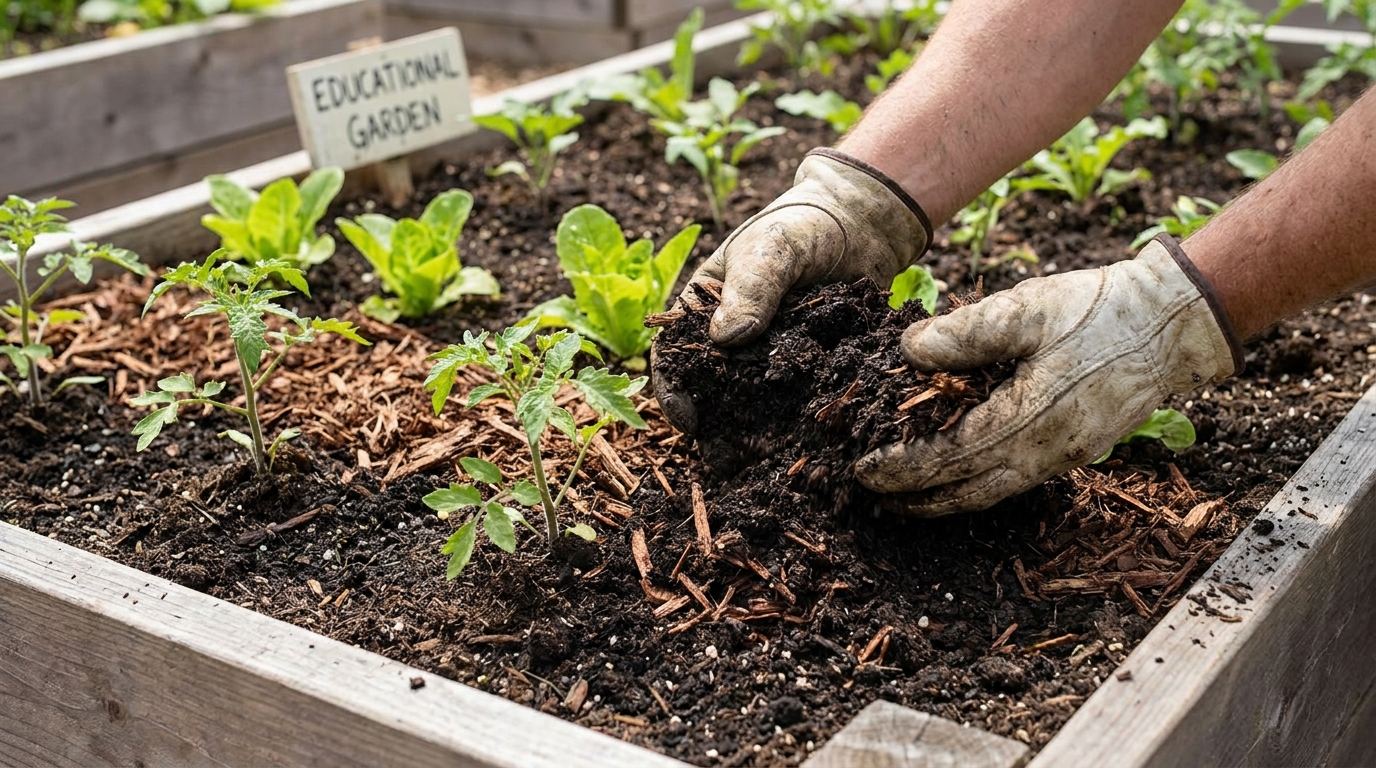
Compost is one of the most flexible and effective materials a gardener can use. Finished compost can improve soil as an amendment, and it can also serve as a mulch when spread over the surface. According to U.S. EPA guidance, finished compost can be mixed into the top 6 to 9 inches of soil at a rate of about 2 to 4 inches when you are improving a bed, or applied as a 3-inch surface layer when used as mulch. In either case, it should be kept a few inches away from stems and trunks to avoid excess moisture against sensitive plant tissue.
As an amendment, compost improves soil structure, which is especially helpful in both sandy and clay-heavy soils. Sandy soils tend to drain quickly and struggle to hold nutrients, while clay soils can become dense and slow to absorb water. Compost helps moderate both extremes by increasing organic matter and improving aggregation. Better aggregation means soil particles form more stable clusters with spaces for air and water, which creates a healthier root environment.
As a mulch, compost offers a gentler, finer-textured option than chunky wood chips or bark. It works particularly well in vegetable beds, annual flower beds, and around plants that benefit from regular nutrient cycling close to the soil surface. Since compost is biologically active and relatively rich compared with some other mulches, it supports microbial processes while protecting the surface. It can be especially useful at the start of the growing season, when beds need both nutrient support and moisture retention.
There is also a circular economy benefit to compost that makes it especially appealing from a sustainability perspective. Composting yard waste and kitchen organics closes a loop that would otherwise send valuable material into the waste stream. Instead of treating leaves, plant trimmings, and vegetable scraps as garbage, gardeners can convert them into a resource that improves fertility, increases moisture retention, and contributes to soil carbon storage. It is a grounded, practical example of how low-impact living can begin right at home.
How to tell if compost is ready
Finished compost should look dark, crumbly, and relatively uniform, with an earthy smell rather than a sour or rotting odor. You should not see large amounts of recognizable food scraps unless they are very slow to break down, such as small twigs or bits of eggshell. Compost that is still hot, slimy, or strongly odorous is usually not finished. Applying unfinished compost directly around plants can temporarily tie up nitrogen or introduce instability into the bed, so patience is worthwhile.
If you make compost at home, allow enough curing time after the active hot phase. Turning, moisture balance, and an appropriate mix of greens and browns all help the process, but maturity matters just as much as decomposition speed. Municipal compost can be convenient and effective as well, especially where local programs divert yard waste into finished landscaping products. The most sustainable option is often the one that uses recovered local organics and is well processed.
Choosing the right eco-friendly mulch for different parts of the garden
Not every mulch belongs everywhere, and making thoughtful choices can improve both garden health and visual coherence. Compost is excellent for vegetable beds and for feeding planting areas that need a fertility boost. Shredded leaves are often ideal for perennial borders, shrub beds, and around trees because they are locally available, inexpensive, and easy for soil organisms to break down. Wood chips tend to work well on paths, around established shrubs, and in tree guilds where slower decomposition and longer-lasting cover are useful.
Straw can be effective in vegetable gardens, particularly around strawberries, garlic, and sprawling crops that benefit from a clean, buffered surface. It is best to choose clean straw rather than hay, since hay may carry more weed seeds. Bark mulch is often used in ornamental landscapes because it looks polished and lasts reasonably well, though from a soil-building perspective it is usually most helpful when used in moderate layers and topped up over time rather than left to compact into a dry crust.
Leaf mold deserves more attention than it often gets. Made from partially or fully decomposed leaves, it has excellent moisture-holding capacity and supports fungal-rich soil conditions that many woodland and ornamental plants appreciate. For gardeners with autumn leaf drop, it is also one of the most practical no-cost mulches available. Rather than bagging leaves for disposal, you can shred them and use them as mulch or allow them to age into leaf mold for later application.
If you are considering biochar because of its reputation as a long-lived carbon material, it is best to see it as a potential soil-health supplement rather than a replacement for compost or mulch. Biochar is increasingly discussed in climate-smart gardening, but in most home gardens it works best when charged with nutrients and used alongside organic matter management. Compost, mulch, and reduced disturbance remain the core practices. Biochar may be useful, but it is not the whole system.
What to avoid in sustainable mulching
Try to be selective about source materials. Mulches made from contaminated waste streams, pressure-treated wood residue, or heavily dyed products with unclear ingredients may not align with a low-impact garden approach. In most cases, locally sourced leaves, arborist wood chips, bark, straw, and finished compost are more transparent choices. The goal is not to make perfect purity tests for every material, but to prefer clean, natural, and recovered organics wherever possible.
Another common problem is overapplication. Thick piles against trunks, often called mulch volcanoes, can trap moisture, encourage rot, and create conditions that invite pests. Even good materials can become harmful if applied carelessly. Sustainable gardening is not just about what you use. It is also about how you use it.
The connection between mulch, soil organic matter, and carbon capture
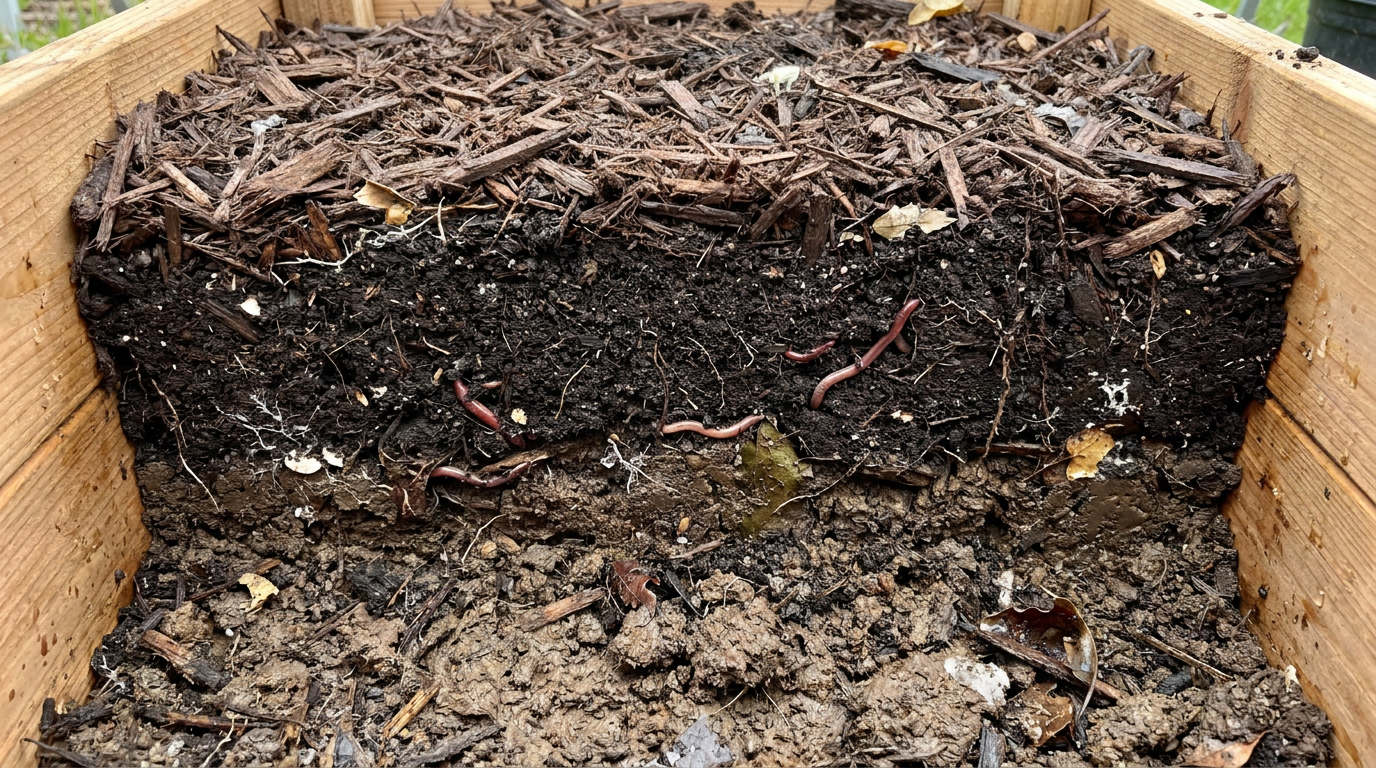
One of the most compelling reasons to care for soil gently is that healthy soil functions as a carbon store. Plants pull carbon dioxide from the atmosphere through photosynthesis, then send part of that carbon below ground through roots and plant residues. When leaves, stems, compost, and other organic materials are added to soil, some of that carbon becomes part of the soil organic matter pool. The amount stored depends on climate, soil type, disturbance, and ongoing management, but the principle is well established. Better soil cover and organic matter management support carbon sequestration.
Mulch contributes to this process in several ways. It adds carbon-containing material to the soil as it breaks down, reduces erosion that would otherwise carry organic matter away, and creates more favorable conditions for root growth and microbial activity. Compost contributes as well by increasing soil organic matter and supporting stable structure. Together, these practices help keep the carbon cycle in the garden moving in a constructive direction, where more biological material is retained and transformed in the soil rather than lost quickly through runoff, exposure, or excessive disturbance.
Low-disturbance gardening is an important part of this picture. Frequent tilling can break apart soil structure and accelerate the decomposition of organic matter, releasing carbon more rapidly and leaving the surface vulnerable to erosion and drying. That does not mean a gardener must never dig. It means disturbance should be used thoughtfully. Incorporate compost when starting or renewing a bed, but avoid turning the soil repeatedly without a clear purpose. Let roots, earthworms, and microbial processes do more of the long-term structuring work.
It helps to keep expectations realistic. A home garden will not store carbon at industrial or agricultural scales, and carbon capture should not be marketed as a miracle. Still, the claim that garden soil can store carbon is not a myth. It is a measurable function of organic matter inputs, surface cover, and management over time. Just as important, the same practices that support carbon storage also improve plant performance, moisture regulation, and biodiversity. The climate benefit is linked to immediate garden benefits, which makes it one of the more satisfying areas of sustainable maintenance.
How to apply mulch and compost properly
Application technique matters almost as much as material choice. A thin, patchy layer will not perform well, while an overly deep, compacted layer can limit airflow and create moisture issues. In general, a continuous layer of organic mulch around 2 to 4 inches deep works well for many garden beds, though the ideal depth depends on texture. Compost used as a surface mulch is often applied at about 3 inches, while chunkier materials such as wood chips may settle differently and can be adjusted as needed.
Always keep mulch and compost a few inches away from stems, crowns, and tree trunks. This simple step reduces the risk of rot, fungal problems, and pest activity near the base of the plant. The soil should remain protected, but the plant itself should not be smothered. If you have inherited a bed where mulch has been piled directly against woody plants, gently pull it back to create breathing room.
Apply mulch after watering or after rainfall when the soil has adequate moisture. Mulch helps conserve moisture that is already present, but it cannot fully compensate for dry soil underneath. Weed the bed first if needed, then spread mulch evenly rather than in mounds. If you are using compost as an amendment in a new or depleted bed, mix 2 to 4 inches into the top 6 to 9 inches of soil as recommended by the EPA, then top the surface with additional mulch if appropriate for the planting style.
Replenishment is part of the maintenance cycle. Organic mulches break down over time, and that is beneficial. Check beds once or twice a year and top up only where needed. The goal is to maintain a functional layer, not to accumulate excessive depth year after year. Paying attention to texture and decomposition helps you make better decisions than relying on a single universal rule.
A simple seasonal rhythm
In spring, clear only what is necessary, add finished compost where beds need feeding, and refresh mulch once the soil has warmed slightly. In summer, monitor moisture under the mulch rather than assuming the surface tells the full story. In autumn, use fallen leaves as a resource by shredding and spreading them in planting beds or storing them for leaf mold. In winter, leave protective cover in place wherever possible so the soil is not exposed to cold wind, pounding rain, or freeze-thaw stress.
This seasonal rhythm is one reason sustainable soil care becomes easier over time. Instead of repeatedly stripping beds down and rebuilding them from scratch, you are gently maintaining living systems. The work becomes more observational and less reactive. You start to notice how moisture lingers, where decomposition is fastest, and which parts of the garden need a little more organic matter each year.
Soil health beyond mulch: compaction, tillage, and water
Mulch works best when it is part of a wider soil-care strategy. Compaction is one of the main problems that can undermine even well-mulched beds. If people regularly walk through planting areas or if heavy equipment has compressed the soil, roots may struggle to penetrate and water may run off instead of soaking in. Defining paths clearly, using stepping stones where access is needed, and avoiding unnecessary traffic in wet beds can protect structure and reduce long-term damage.
Minimizing tillage is another important principle. Tilling can seem like a quick way to loosen soil, but repeated disturbance often breaks down aggregates and disrupts fungal networks and soil habitats. In many home gardens, a broadfork, hand fork, or careful one-time bed preparation is enough. After that, top-dressing with compost and maintaining mulch can do much of the ongoing work. This approach is often described as low-disturbance or no-till gardening, though in practice most home gardeners adapt it flexibly rather than following a rigid rule.
Water management is closely tied to soil health as well. Organic matter improves infiltration and moisture retention, but poor watering habits can still create stress. Deep, less frequent watering is often more effective than shallow daily sprinkling because it encourages deeper rooting and makes better use of mulched soil. If your garden struggles with runoff, puddling, or dry pockets, the answer may be less about fertilizer and more about structure, surface cover, and gradual rebuilding of soil organic matter.
Healthy soils tend to become more forgiving. They buffer weather swings better, support more balanced nutrient cycling, and recover more easily from stress. This is one of the reasons federal soil-health resources consistently connect good soil management to ecosystem services. In a garden setting, those services show up as practical advantages. Plants establish more reliably, beds stay usable after rain, and overall maintenance becomes steadier and less wasteful.
Urban gardens, contamination awareness, and soil testing
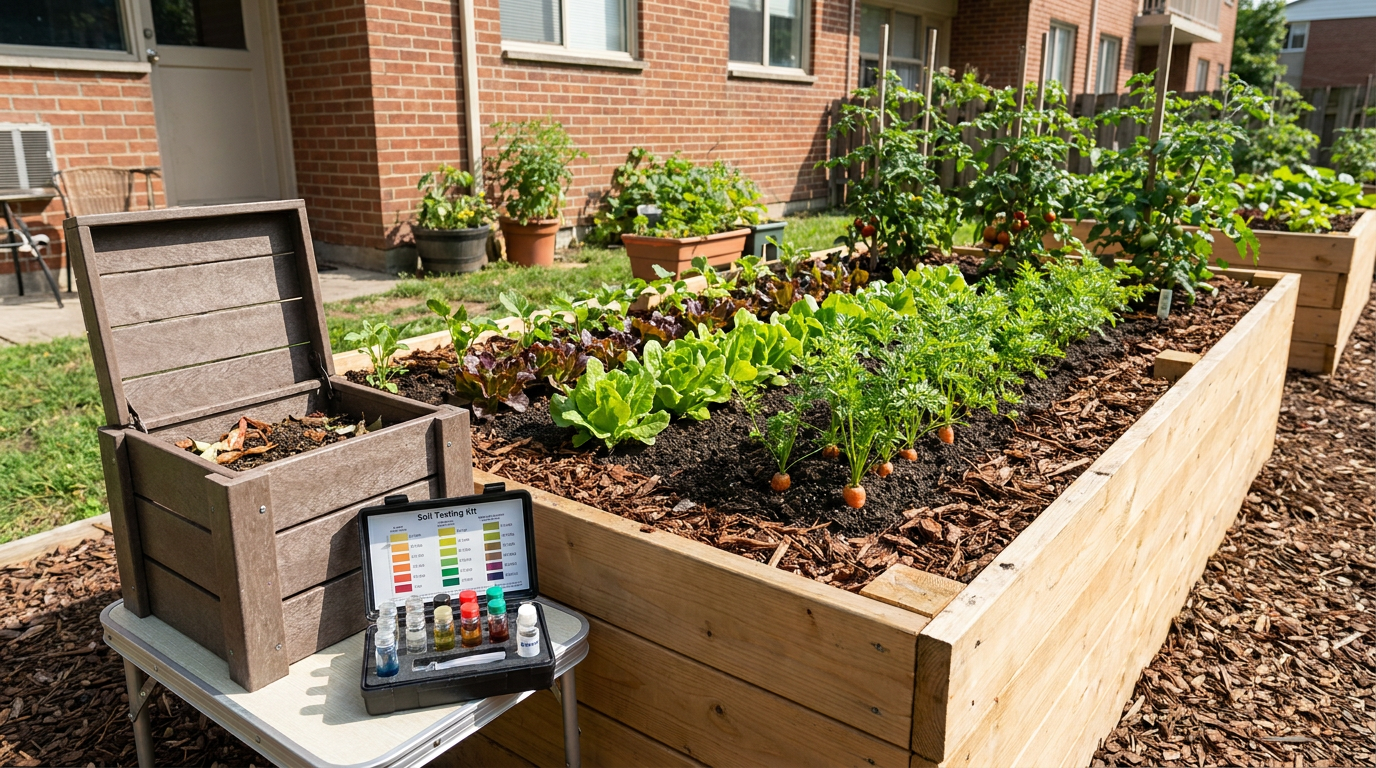
In urban and older residential areas, sustainable soil care should include contamination awareness. Gardens near roads, older painted structures, former industrial sites, or heavily altered lots may contain elevated levels of contaminants such as lead or arsenic. This does not mean you should avoid gardening in cities. It means you should approach soil with informed care. Soil testing is a practical first step if you are growing food or working in a site with an uncertain history.
EPA guidance for urban soils recommends the use of thick layers of organic material such as compost or mulch to reduce direct soil contact and dust exposure. In some conditions, compost may also help immobilize certain contaminants, making them less likely to move or become available. While this is not a substitute for proper remediation where serious contamination exists, it is an important reminder that mulch and compost can play a protective role beyond moisture and fertility. Covering exposed soil matters for human health as well as plant health.
Raised beds can be a helpful option in these contexts, especially when filled with clean soil and compost from reliable sources. Even then, mulching the surface remains valuable because it reduces splashing, conserves moisture, and protects soil structure. Gloves, hand washing, and careful produce washing are wise habits in any edible garden, but particularly where urban soil conditions are uncertain. Sustainability works best when it includes health, practicality, and context.
If you are unsure whether testing is necessary, consider the age and history of the site. Older homes with legacy paint, lots near busy roads, and spaces built on fill deserve extra caution. A basic soil test for nutrients and pH is useful almost everywhere, while contaminant testing is especially important for food gardens in questionable sites. Good soil care begins with understanding what you are working with.
Common misconceptions about mulch and soil care
One of the most persistent misconceptions is that mulch is mainly aesthetic. While a neat mulch layer can certainly make a garden look finished, its functional role is much more important. Organic mulch helps regulate moisture, reduce erosion, moderate temperature extremes, and support soil biology. When gardeners view it only as decoration, they may choose materials or application styles that look polished but do little for soil health.
Another misconception is that any organic material can be piled thickly around plants without consequence. In reality, placement and depth matter. Too much mulch, especially when pressed against stems or trunks, can create excess moisture and pest problems. Sustainable gardening relies on measured, informed use of natural materials, not simply using more of them.
People also often assume that compost and mulch are interchangeable in every situation. Compost can function as either a soil amendment or a mulch, but the method depends on your goal. If you are building a new bed or correcting poor structure, incorporating compost into the top layer of soil may make sense. If you are protecting the surface and feeding the soil gently over time, using compost or another organic material as surface mulch may be the better approach.
Finally, there is occasional skepticism about whether gardens can truly support carbon capture. The answer is yes, though modestly and under the right conditions. Soils store carbon, and better management supports that function. The key is consistency. Organic matter inputs, reduced disturbance, and continuous cover need to happen over time for the benefits to accumulate.
A practical low-impact routine for homeowners
If you want a manageable starting point, think in terms of habits rather than products. Begin by identifying every place in your garden where soil is bare for long periods. Those are your priority areas for mulch. Next, start adding organic matter regularly through compost, leaf mold, or well-sourced natural mulch. Then reduce disturbance by avoiding unnecessary digging and preventing compaction where possible.
It can also help to source materials more thoughtfully. Ask local tree services about arborist wood chips, save autumn leaves, and explore municipal compost programs if your area offers them. These recovered-organics pathways are becoming more common in many regions, and they align well with a circular approach to landscape care. Instead of importing every input in bags, you use local material streams that would otherwise be discarded.
Pay attention to results over time rather than expecting instant transformation. Soil improvement is cumulative. After one season, you may notice fewer weeds and slower drying. After several seasons, you may see richer texture, better infiltration, and stronger plant performance with fewer inputs. This gradual progress is part of what makes soil care feel so reassuring. You are not forcing the garden into health. You are creating conditions in which health becomes easier to sustain.
For homeowners who want to garden more sustainably but do not want a complicated checklist, this is good news. You do not need a perfect zero-waste system or a highly technical soil lab in your backyard. You need a practical routine that values cover, compost, observation, and patience. Those decisions, repeated over time, can make your garden noticeably more resilient and environmentally responsible.
Final thoughts: build soil first, and the garden follows
Eco-friendly mulch and soil care offer one of the clearest examples of how sustainability can be both elegant and useful. By keeping the soil covered, adding organic matter, choosing local or recovered materials where possible, and minimizing disturbance, you support a healthier garden ecosystem from the ground up. The visible rewards include better moisture retention, fewer weeds, and stronger plants. The less visible rewards may be even more important, including improved soil biology, reduced erosion, and modest but meaningful carbon storage.
In a time when climate resilience can feel like a large and distant challenge, caring for soil is refreshingly tangible. It turns everyday maintenance into a form of stewardship that benefits your own garden while aligning with larger ecological goals. The beauty of this approach is that it does not require drama. It asks only for consistency, attention, and a willingness to see soil as a living resource worth protecting.
If you remember just one principle, let it be this: bare soil is a missed opportunity. Cover it, feed it, and disturb it less. Over time, that simple shift can change the way your garden performs, how much water and input it needs, and how connected it feels to the natural cycles that sustain it. A healthier, more vibrant garden often begins not with buying more, but with caring better for what is already underfoot.
Quick reference: eco-friendly mulch and soil care basics
-
Keep soil covered year-round whenever possible with organic mulch, living cover, or both.
-
Use finished compost as either an amendment or a mulch, depending on the needs of the bed.
-
As a soil amendment, mix about 2 to 4 inches of finished compost into the top 6 to 9 inches of soil when establishing or renewing beds.
-
As a surface mulch, apply about 3 inches of compost or an appropriate layer of other organic mulch.
-
Keep mulch a few inches away from stems, crowns, and trunks.
-
Replenish mulch as it breaks down, since decomposition is part of how it builds soil organic matter.
-
Reduce compaction by protecting planting beds from repeated foot traffic.
-
Limit unnecessary tillage and let organic matter and soil biology do more of the long-term work.
-
In urban gardens, test soil when site history is uncertain and use compost or mulch to reduce direct contact with exposed soil.
-
Choose locally sourced or recovered organic materials when possible to reduce waste and support a circular approach to landscaping.
When gardeners adopt these basics, mulch becomes more than a layer on top and soil becomes more than a planting medium. Together, they become the foundation of a garden that is healthier, more resilient, and better aligned with the living systems around it.


No Comment! Be the first one.