



Essential Tips for Preserving the Beauty of Marble in Your Home
Marble has long held a special place in the language of interiors. It carries the quiet authority of historic architecture, the softness of natural veining, and the unmistakable glow of a material shaped by time rather than manufactured uniformity. In a home, marble can transform an ordinary surface into something atmospheric and memorable, whether it appears on a kitchen island, a bathroom vanity, a fireplace surround, or an entry floor that catches the light with gentle drama.
Table Of Content
- Why Marble Requires a Different Kind of Care
- Understanding Marble Finishes and Why They Matter
- Daily Marble Care That Actually Works
- A Gentle Daily Routine
- What to Avoid on Marble at All Costs
- Products and Habits to Keep Away from Marble
- Stains Versus Etches: The Distinction Every Homeowner Needs
- How to Respond to Each Type of Damage
- The Truth About Sealing Marble
- How Often Should Marble Be Sealed?
- Protective Habits That Preserve Marble Beautifully
- Protective Accessories Worth Using Every Day
- How to Treat Common Marble Problems at Home
- When DIY Is Reasonable and When to Call a Professional
- Marble in Kitchens: How to Balance Beauty and Practicality
- Marble in Bathrooms: The Overlooked Care Challenges
- Honed Marble, Protective Systems, and Current Design Thinking
- A Room by Room Marble Preservation Mindset
- Common Misconceptions That Lead to Damage
- Final Thoughts: Preserving Luxury Through Routine
Yet the very qualities that make marble so exquisite are also the reason it asks for thoughtful care. It is not a decorative surface that can be treated carelessly and expected to remain unchanged. Marble is a calcium based natural stone, and that means it responds differently from quartz, porcelain, or laminate when it encounters citrus juice, wine, hair products, hard water, or abrasive cleaning tools. Preserving its beauty is not about making it indestructible. It is about understanding its nature and adapting your home routines with elegance and intention.
This guide explores how to protect marble in a way that respects both luxury and function. You will learn the difference between staining and etching, how daily cleaning should be approached, what sealers can and cannot do, and how to make sensible design choices that allow marble to thrive in active homes. With the right habits, marble can remain beautiful for years, not because it resists life completely, but because it is cared for with intelligence, restraint, and consistency.
Why Marble Requires a Different Kind of Care
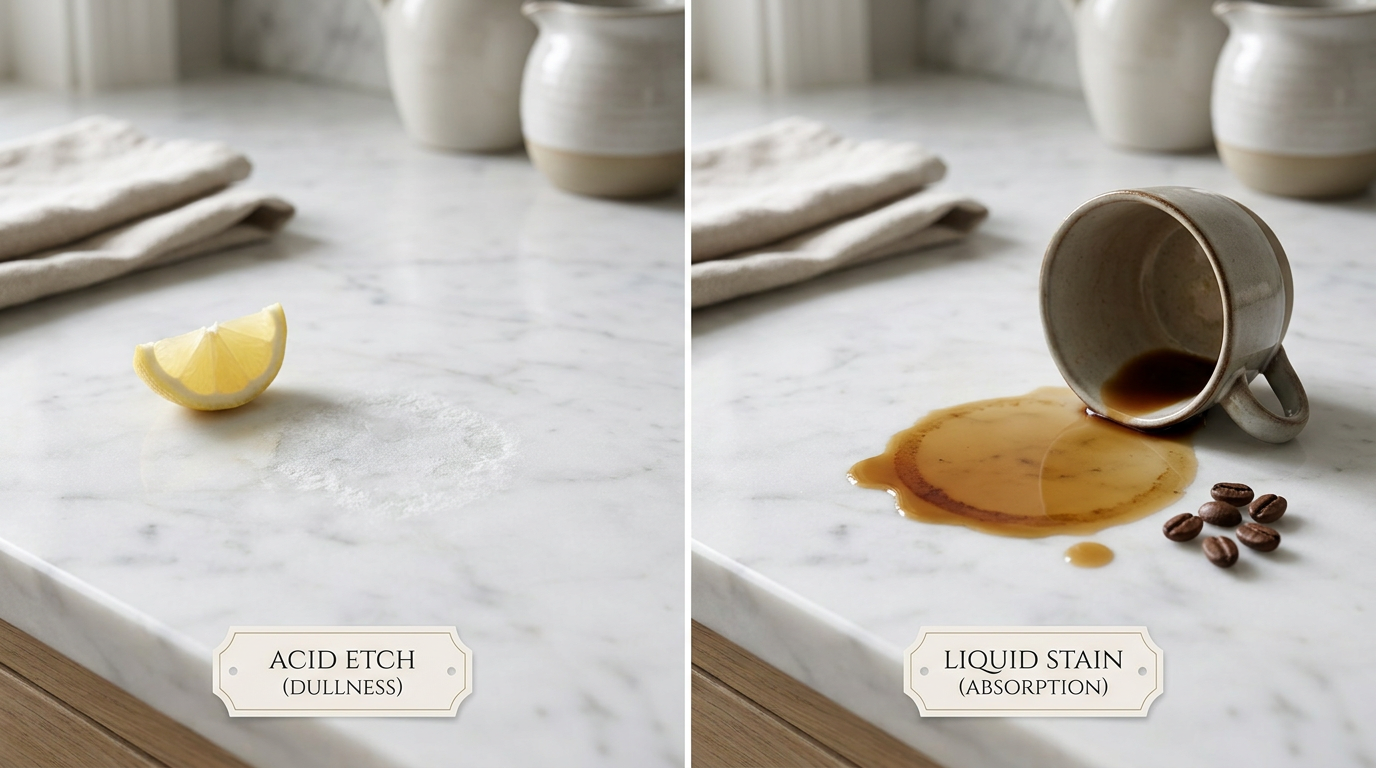
One of the most important things to understand about marble is that it is a natural stone composed largely of calcium carbonate. This is precisely why it reacts readily to acidic substances. When lemon juice, vinegar, wine, coffee, or certain bathroom and kitchen cleaners come into contact with the surface, they may do more than leave a mark. They can chemically dull the finish itself. This reaction is known as etching, and it is one of the most common reasons marble loses its original luster.
Because marble is porous to varying degrees, it can also absorb liquids and develop stains. The distinction matters. A stain is a discoloration caused by something entering the stone. An etch is surface damage, often a pale or dull mark, caused by acid reacting with the stone. Many homeowners mistake one for the other and reach for the wrong solution. A cleaner formulated to remove stains will not reverse an etch, and an abrasive attempt to polish a stain away can make the finish worse.
The Natural Stone Institute emphasizes that maintenance should begin with identifying the stone type and finish. This guidance is particularly relevant in homes where polished marble, honed marble, or resin treated stone may each behave a little differently. A polished slab tends to show etching as a visible loss of shine, while a honed finish may disguise that change more gently. Neither finish is immune. Each simply reveals wear in a different visual language.
The first rule of marble care is clarity. Know whether you are dealing with absorption, acid reaction, surface abrasion, or simple residue before you attempt treatment.
Understanding Marble Finishes and Why They Matter
Not all marble surfaces perform the same way in daily life. A glossy polished marble countertop has a mirror like refinement that feels unmistakably luxurious, yet it can make etching more apparent because any loss of reflectivity becomes visible in certain light. Honed marble, by contrast, has a softer matte or satin character. It is increasingly favored in active households because etching tends to blend into the lower sheen more discreetly, even though the stone remains vulnerable to the same acidic triggers.
Some marble is also filled, resin treated, or otherwise finished to improve appearance and performance. These treatments can influence how the surface reacts to sealers, cleaning products, and restorative methods. That is why a universal maintenance formula rarely serves every installation well. A dramatic polished Calacatta island in a formal kitchen and a honed Carrara vanity in a family bathroom may both be marble, but they should not automatically be treated as identical surfaces.
For homeowners, this means observation is part of preservation. If a product leaves streaks, haze, or a sticky film, the issue may not be dirt at all but incompatibility with the finish. If one section near a sink looks duller than another, repeated etching or mineral buildup could be the cause. The more precisely you read the surface, the more effectively you can care for it without unnecessary experimentation.
Daily Marble Care That Actually Works
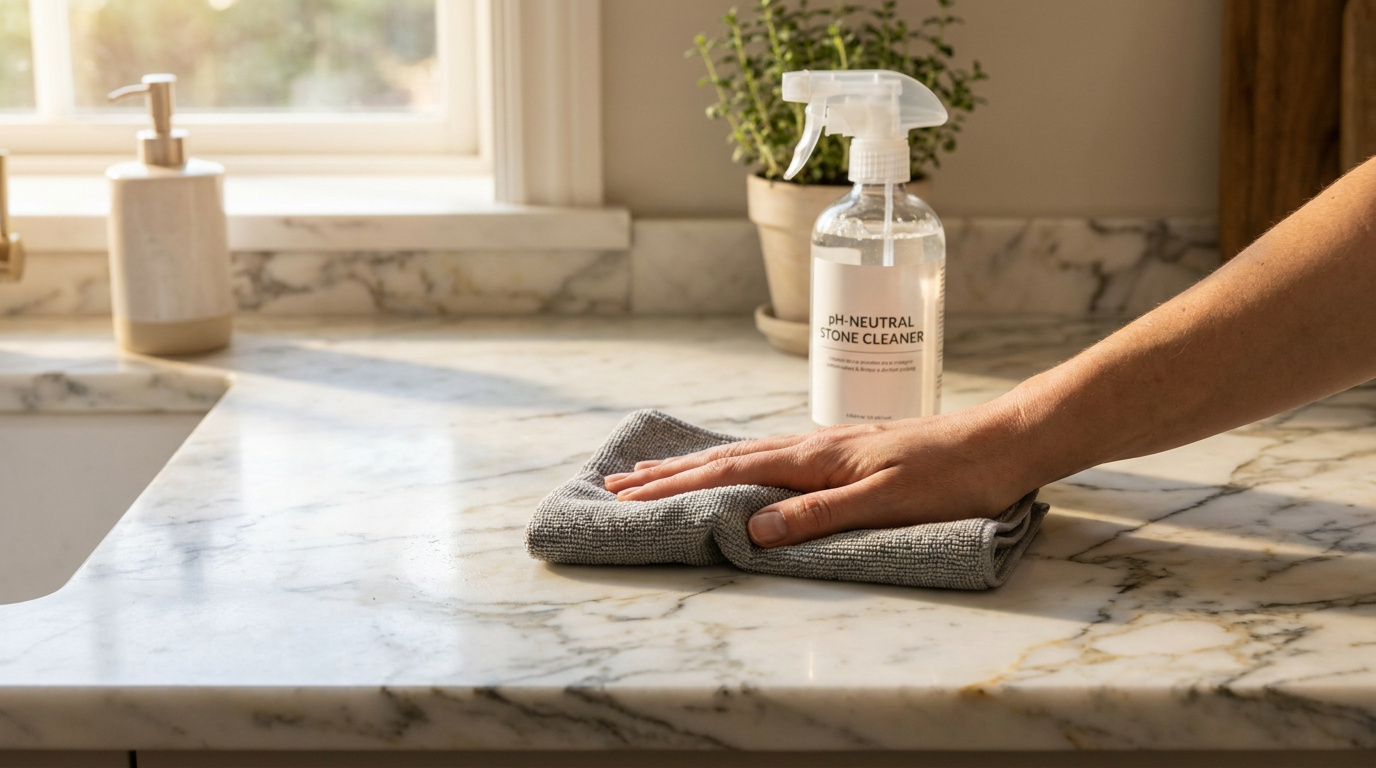
The finest marble care routines are simple rather than elaborate. They rely on quick response, gentle products, and consistency. In practical terms, that means wiping spills immediately, cleaning with a soft microfiber cloth, and using a pH neutral stone cleaner or mild soap diluted in water. This approach removes ordinary residue without exposing the stone to harsh chemistry or abrasive friction.
Consumer guidance has repeatedly noted that even sealed marble can stain or etch if spills are allowed to linger. Sealing should never be understood as permission to delay cleanup. Red wine, coffee, citrus juice, tomato sauces, cosmetics, toothpaste, perfume, and hair products all deserve prompt attention. The beauty of marble is best preserved through small daily habits rather than occasional rescue efforts.
Water matters too, especially in bathrooms and around kitchen sinks. Hard water can leave mineral deposits that tempt homeowners to use aggressive limescale removers, yet many of those products can permanently mark marble. The safer approach is to dry wet areas regularly, reduce standing water, and use only stone safe products when residue begins to appear. In this sense, prevention is not merely aesthetic. It is protective chemistry.
A Gentle Daily Routine
A reliable care rhythm for marble is remarkably graceful. Begin by clearing away crumbs, dust, or grit with a dry soft cloth, since tiny abrasive particles can create fine scratches when rubbed across the surface. Follow with a damp microfiber cloth and a stone safe neutral cleaner if needed. Finish by buffing dry with a clean cloth so water spots do not remain behind, especially on vanity tops, shower ledges, and polished counters exposed to natural light.
In busy kitchens, this routine may be needed more than once a day, but it should never feel severe. Marble responds best to calm, repetitive maintenance. The goal is not aggressive sanitizing with strong chemicals. It is preserving the finish while keeping the surface fresh, clean, and visually luminous.
What to Avoid on Marble at All Costs
Many of the products people instinctively trust for general household cleaning are exactly what marble does not want. Vinegar, lemon based cleaners, bleach heavy sprays, abrasive powders, and rough scrub pads can all compromise the stone. Even products marketed as natural can be harmful if they are acidic. Marble does not distinguish between culinary acid and cleaning acid. It reacts to both.
Another common mistake is using magic eraser style abrasion or stiff scouring pads to chase away marks. While these may seem effective in the moment, they can wear down the finish, enlarge dull patches, and make the surface more uneven in appearance. The same caution applies to hard water removers designed for ceramic or glass. What works brilliantly on one surface may permanently damage marble.
If you want a concise household rule, it is this: if a cleaner promises heavy degreasing, scale removal, bleaching power, or abrasive scrubbing action, it should not touch marble until its suitability for natural stone has been verified. Luxury materials reward precision. They do not tolerate improvisation with universal products.
Products and Habits to Keep Away from Marble
- Acidic cleaners containing vinegar, lemon, or citrus extracts
- Bleach based sprays and disinfectants not approved for natural stone
- Abrasive powders, cream cleansers, and rough scrub sponges
- Hard water removers intended for tile, porcelain, or glass
- Leaving cosmetics, perfumes, oils, and styling products directly on bathroom marble
- Cutting directly on marble or dragging ceramic, metal, or gritty objects across the surface
Stains Versus Etches: The Distinction Every Homeowner Needs
This is perhaps the single most useful concept in marble care. A stain is typically darker or discolored because something has penetrated the stone. An etch is usually lighter, duller, or less reflective because acid has altered the surface itself. The two can coexist, but they are not the same problem and they do not respond to the same remedy.
Imagine a ring left by a wine glass. If the area appears darker, the wine may have been absorbed, resulting in a stain. If the area looks chalky or less glossy than the surrounding stone, the wine may have etched the finish. Coffee, citrus, vinegar, and some skincare products can do the same. The visual clues matter because they guide your next step. Cleaning alone may lift residue, but it will not restore lost polish caused by acid.
For many households, misidentifying etching leads to the most frustration. People clean harder, try multiple products, and gradually worsen the appearance. Marble rewards patience and diagnosis. If the mark changes texture or sheen rather than color alone, there is a strong chance you are looking at an etch rather than a stain.
How to Respond to Each Type of Damage
- For fresh spills, blot immediately rather than wiping forcefully across the surface. Blotting reduces spread and limits absorption.
- For suspected stains, clean with a pH neutral stone cleaner first. If discoloration remains, a stone safe poultice may be appropriate depending on the substance involved.
- For suspected etches, avoid experimenting with acidic or abrasive remedies. Light etching may sometimes be improved with marble polishing products designed for the finish, but many etched areas need professional honing or polishing.
- For uncertain damage, test any treatment in a discreet area first and stop if the surface changes in sheen, color, or texture.
The Truth About Sealing Marble
Sealing is one of the most misunderstood aspects of marble maintenance. Many homeowners hear that marble should be sealed and assume the process will make the stone stain proof, etch proof, or effectively maintenance free. In reality, sealers mainly help slow liquid absorption. They can improve stain resistance, but they do not create an invisible shield against acids, scratches, or neglect.
The Natural Stone Institute is clear on this point, and it is an important reality for anyone selecting marble in kitchens or bathrooms. A sealed marble vanity can still be marked by cosmetics. A sealed marble island can still etch from lemon juice or wine. A sealed backsplash can still suffer if an incompatible cleaner is sprayed onto it regularly. Sealer is a useful layer of support, not a total solution.
That does not mean sealing lacks value. On the contrary, the right penetrating or impregnating sealer can buy time when spills occur and can reduce the likelihood of deep absorption. It is part of a broader preservation strategy that includes quick cleanup, preventive accessories, and occasional reassessment. The most successful homes treat sealing as one instrument in a larger composition.
How Often Should Marble Be Sealed?
There is no universal calendar that suits every marble installation. Reapplication depends on the type of marble, the finish, how heavily the area is used, the quality of the existing sealer, and how the surface is cleaned. A guest bathroom vanity may go much longer between applications than a frequently used kitchen perimeter counter near the coffee station.
A practical way to monitor sealer performance is through simple observation and professional guidance. If water darkens the stone quickly rather than beading or lingering briefly on the surface, it may be time to discuss resealing. Still, this should never become a DIY ritual without understanding the product already in place. Over application or incompatible products can create residue, haze, or unevenness. When in doubt, consult a stone care professional or the supplier of the original slab.
Sealing slows absorption. It does not stop etching, prevent scratches, or replace disciplined maintenance.
Protective Habits That Preserve Marble Beautifully
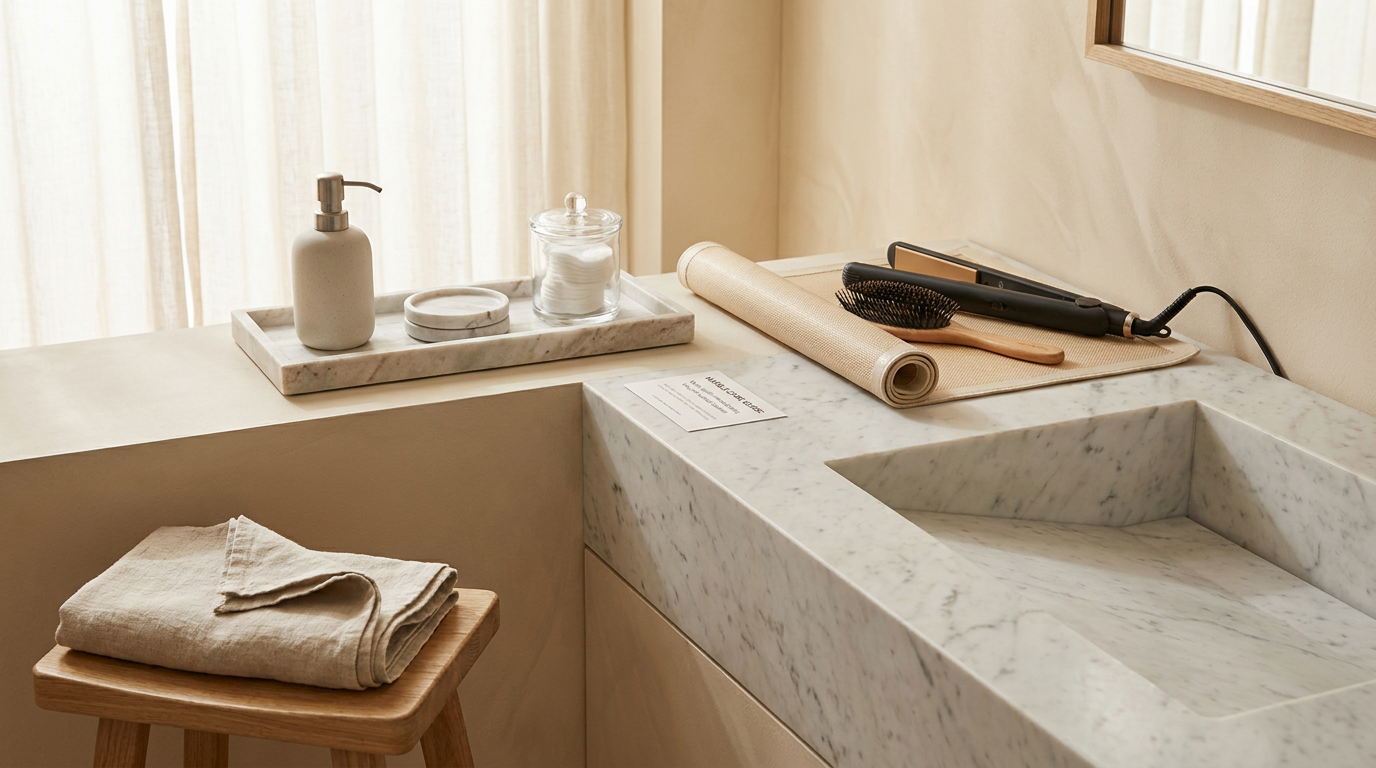
If marble is to live gracefully in a real household, prevention must become part of the visual rhythm of the space. Fortunately, the most effective protective tools do not diminish luxury. They often enhance it. A tray beneath perfumes on a vanity, coasters in a bar area, a handsome cutting board beside a marble backsplash, and a discreet mat at a sink are all signs of a home that understands material intelligence.
These small barriers are not optional accessories for marble heavy rooms. They are practical essentials. In kitchens, cutting boards prevent knife damage and reduce exposure to oils, juices, and acids. Coasters protect against water rings, wine drips, and coffee splashes. In bathrooms, trays keep cosmetics and skincare products from sitting directly on the stone, while regular drying helps reduce hard water buildup around taps and basins.
There are also seasonal and regional considerations, especially in North America and Canada. Tracked in grit near exterior entries or sunrooms can scratch marble floors. Winter slush and mineral residue may create cleanup challenges. Temperature fluctuations and strong sunlight can highlight wear patterns over time. The answer is not to avoid marble entirely. It is to place it thoughtfully and support it with routines suited to the climate and the household.
Protective Accessories Worth Using Every Day
- Coasters for drinks in kitchens, lounges, and bar areas
- Cutting boards for all chopping and food preparation
- Trays beneath perfumes, soap dispensers, and cosmetics
- Sink mats or drying areas that limit standing water exposure
- Soft felt pads beneath decorative objects and small appliances
- Entry rugs and regular sweeping to reduce grit on marble floors
How to Treat Common Marble Problems at Home
Even a beautifully maintained marble surface will occasionally encounter trouble. A coffee spill that sat too long, a patch of residue near a faucet, or a dull ring beneath a bottle are all common scenarios. What matters is choosing a response that respects the stone. Start with the gentlest possible method and increase intervention only when the problem is clearly understood.
For ordinary residue, fingerprints, or surface dust, a damp microfiber cloth and neutral stone cleaner are usually enough. If the issue appears to be a stain rather than residue, a stone safe poultice may help draw out absorbed discoloration. Poultices are often effective for oil based, organic, or other localized stains, but they should always be selected according to the source of the mark and the manufacturer guidance for natural stone.
Etch marks require a different mindset. Because they are a change to the finish itself, they often need re honing or polishing. Mild marble polishing powders and kits exist, but they must match the finish and be used with caution. A polished marble top with scattered etching usually looks best after professional restoration because the sheen can be rebalanced across the whole surface rather than improved in isolated patches that remain visually inconsistent.
When DIY Is Reasonable and When to Call a Professional
DIY care is appropriate for routine cleaning, prompt spill response, and some stain removal methods that are explicitly designed for natural stone. It can also be suitable for testing whether residue or soap film is causing a visual issue. However, when the surface has become dull, unevenly reflective, scratched, or chemically marked in multiple areas, professional restoration is often the more elegant and economical choice.
A professional can identify whether the stone needs honing, polishing, spot treatment, resealing, or simply product correction. This expertise matters because one wrong cleaner or abrasive attempt can enlarge the damage. In luxury interiors, restoration is not a sign of failure. It is part of stewardship. Like wood floor refinishing or upholstery care, it acknowledges that fine materials occasionally need expert renewal.
Marble in Kitchens: How to Balance Beauty and Practicality
The kitchen is where marble inspires the most desire and the most hesitation. There is no denying the romance of a marble island or backsplash, especially when the veining becomes a central visual identity for the room. At the same time, kitchens are highly active environments filled with acids, oils, heat, moisture, metal tools, and hurried routines. This contrast is exactly why marble succeeds best when paired with realistic habits.
If you love marble in the kitchen, zoning is a wise strategy. Some designers and stone professionals recommend reserving marble for lower risk areas such as an island used more for serving than heavy prep, a baking station, a backsplash, or a selective perimeter zone. In homes with energetic cooking routines, pairing marble with more durable work surfaces elsewhere can preserve both the beauty of the stone and the ease of daily use.
For households determined to use marble broadly, discipline becomes nonnegotiable. Spills must be cleaned quickly. Cutting boards and trays should live permanently on the surface, not appear only for guests. Neutral cleaners should replace generic all purpose sprays. Once these habits are embedded, marble can function successfully in kitchens, but it will always be a luxury material that rewards attention rather than indifference.
Marble in Bathrooms: The Overlooked Care Challenges
Bathrooms may seem gentler than kitchens, yet they present their own complex risks for marble. Toothpaste, mouthwash, perfumes, hair products, self tanners, cosmetics, and skin care formulas can all leave residue, staining, or acid based damage. Add hard water around faucets and basins, and bathroom marble often faces a daily sequence of subtle threats that are easy to underestimate.
Vanity tops benefit enormously from trays and disciplined storage. Instead of allowing bottles and jars to stand directly on the stone, contain them on elegant accessories that can be lifted and cleaned easily. Wipe splashes near taps each day, and dry the area to discourage mineral buildup. If a product leaks, clean it immediately rather than waiting until the next full bathroom tidy. Marble is most vulnerable to the ordinary neglect of repeated small exposures.
Honed marble is especially popular in bathrooms because it offers a calm, velvety finish that can make etching less visually dramatic. This growing preference reflects a practical shift in design thinking. Homeowners still want the beauty of natural stone, but they are becoming more realistic about how finishes age. A honed surface often feels more forgiving in intimate spaces where water, steam, and personal care products are part of the daily atmosphere.
Honed Marble, Protective Systems, and Current Design Thinking
Recent conversations around marble care increasingly reflect a more nuanced attitude toward luxury surfaces. Rather than asking whether marble is practical in absolute terms, homeowners and designers are asking where it works best, which finish supports daily life more gracefully, and what protective systems genuinely help. This has led to greater interest in honed finishes, advanced penetrating sealers, and specialty products created specifically for natural stone.
There is also a growing market for protective surface systems and films intended to reduce wear in vulnerable zones. While these may offer value in some settings, they should be approached carefully so they do not compromise the visual or tactile beauty that drew you to marble in the first place. Any added system should be evaluated for compatibility, appearance, maintenance requirements, and reversibility.
The most enduring trend, however, is not a product but a mindset. More homeowners now understand that marble is a high maintenance luxury material that can still work beautifully when used with intention. This perspective is more honest, more sophisticated, and ultimately more successful than treating marble as if it should behave like a synthetic surface with no adaptation required.
A Room by Room Marble Preservation Mindset
To care for marble elegantly, it helps to think room by room rather than adopting one rigid formula. In an entry, focus on grit control, rugs, and regular dry dusting. In a kitchen, prioritize spill response, cutting protection, and neutral cleaners. In a bathroom, control hard water, store cosmetics on trays, and dry around basins daily. At a fireplace surround or accent wall, dust gently and avoid decorative objects that scratch.
This tailored approach makes marble feel less intimidating because it turns maintenance into a set of situational habits. You are not trying to memorize a strict doctrine. You are simply respecting the specific risks each space presents. The result is a home in which marble remains expressive and refined without becoming a constant source of anxiety.
It is also worth remembering that patina means different things to different people. Some homeowners prefer pristine polish, while others appreciate the softened history that naturally develops over time. There is no single correct aesthetic response, provided the surface is cared for properly and damage is not allowed to escalate unnecessarily. Marble is a living finish in the emotional sense. It reflects use, light, ritual, and attention.
Common Misconceptions That Lead to Damage
Several persistent myths continue to shorten the life of beautiful marble surfaces. The first is the belief that sealing makes marble immune to damage. It does not. Sealer helps with stain resistance, not acid resistance. The second is assuming every mark is a stain. Many dull spots are actually etches, which means more cleaning will not resolve them. The third is trusting so called natural cleaners such as vinegar and lemon because they sound gentle, even though they are chemically wrong for calcium based stone.
Another misconception is that polished marble is somehow tougher because it looks more finished. Shine is not protection. Polished marble can still stain, etch, and scratch, and its reflective surface may reveal damage more readily than a honed one. Finally, some people believe intense scrubbing is the fastest route to correction. On marble, force often creates a larger problem than the original mark.
Removing these misunderstandings is essential because preservation begins with informed restraint. Marble rarely asks for heroic effort. It asks for appropriate products, measured action, and the willingness to stop before a questionable treatment turns minor wear into lasting damage.
Final Thoughts: Preserving Luxury Through Routine
Marble remains one of the most captivating materials in interior design because it offers something beyond function alone. It gives depth, movement, heritage, and atmosphere to a room. It can feel cool and sculptural in daylight, then almost candlelit in the evening. To live with marble is to live with a material that is sensuous, expressive, and slightly demanding, which is part of its enduring allure.
Preserving that allure does not require perfection. It requires knowledge. Clean with pH neutral products or mild soap and water. Wipe spills quickly. Understand the difference between stains and etches. Use coasters, trays, sink mats, and cutting boards as integral tools rather than afterthoughts. Treat sealers as supportive rather than magical, and call on professional restoration when the finish needs expert renewal.
In the end, the beauty of marble is sustained not by one dramatic intervention but by a sequence of graceful habits. When luxury is paired with discipline, marble can remain not only stunning, but deeply livable. It will continue to lend your home its quiet opulence, its softness of veining, and its timeless architectural poise for many years to come.

No Comment! Be the first one.