



Prepare Your Home for Storm Season: A Step-by-Step Guide to Safety, Comfort, and Peace of Mind
Storm season has a way of changing the mood of a home long before the first warning appears on your phone. The sky darkens earlier, the wind picks up, and suddenly the little routines that make everyday life feel steady can feel more fragile. Preparing your home in advance is one of the most reassuring things you can do, not only because it helps protect people and property, but because it replaces last-minute panic with a sense of calm readiness.
Table Of Content
- Start With Your Local Storm Risks
- Create a Household Storm Plan Before You Need It
- Questions Your Plan Should Answer
- Build a 72-Hour Emergency Kit That Fits Your Home
- What to Keep in Your Main Emergency Kit
- Choose and Prepare the Safest Shelter Space
- Protect the Outside of Your Home Before the Forecast Turns
- Exterior Checklist to Review Each Season
- Protect Windows, Doors, and the Spaces Where Storms Enter
- Prepare for Power Outages in a Way That Supports Daily Life
- Back Up Documents, Insurance Details, and Essential Information
- Learn Utility Shutoffs and Basic Home Safety Procedures
- Make a Pet and Family Comfort Plan
- Create a Storm Comfort Kit for Calmer Sheltering
- Know the Differences Between Storm Types
- Practice the Plan So It Feels Natural
- What to Do When a Storm Is Actually Approaching
- After the Storm: Return Carefully and Recover Thoughtfully
- Why Storm Preparation Belongs in Your Seasonal Home Routine
Across Canada and the United States, official emergency guidance follows a simple foundation: understand the hazards in your area, create a household plan, and build the right supplies before severe weather arrives. That advice matters more than ever. The Insurance Bureau of Canada reported that 2024 was the costliest year on record for insured severe-weather losses in Canada at $8.5 billion, and NOAA reported 27 billion-dollar weather and climate disasters in the United States in the same year. Storm preparation is no longer something to think about only if you live on the coast. It is a practical and increasingly essential part of seasonal home maintenance.
The good news is that storm preparation does not have to feel intimidating. It can be approached the same way you would approach any thoughtful home care ritual, with a bit of planning, a bit of organization, and attention to the people who live there. In this guide, we will walk through the steps that help protect your household, support comfort during outages or sheltering, and make your home feel more secure when the weather outside is anything but predictable.
Start With Your Local Storm Risks
The first step is understanding what storm season actually means where you live. For one household, the greatest concern may be summer thunderstorms with hail and power outages. For another, it may be basement flooding, tornado risk, hurricane remnants, storm surge, or winter storms that leave families without heat. Canadian guidance highlights weather-related hazards such as floods, hurricanes, tornadoes, hailstorms, thunderstorms, storm surge, and winter storms, and each one asks something slightly different from a home and the people inside it.
This is where preparation becomes personal. A family in a flood-prone neighborhood may need a sharper focus on evacuation routes, document protection, sump pump checks, and insurance details. A family in a region where tornado warnings occur needs to know the safest interior room on the lowest level of the home and be ready to move there quickly. If long winter outages are common, backup warmth, extra clothing, and food that does not require cooking become especially important.
Take time to review municipal alerts, local emergency management information, and your province or state guidance before the season begins. If your community has flood maps, storm surge zones, or evacuation zones, save them somewhere easy to access and talk through them with your household. Knowing the likely risks changes preparation from vague worry into useful action, which is always more comforting.
Create a Household Storm Plan Before You Need It
Once you understand your local risks, the next step is making a household emergency plan. This is one of the most overlooked parts of storm readiness because people often assume they will simply stay home and figure it out when the time comes. In reality, severe weather can interrupt communications, force quick sheltering, or require sudden evacuation. A clear plan helps everyone move with less confusion and much more confidence.
The Canadian Red Cross recommends having both a nearby meeting place and an out-of-neighbourhood meeting place, along with an out-of-town contact. That advice is simple, but very effective. If family members are separated when a storm warning is issued, they should know where to go, who to call, and how to reconnect if local phone networks are unreliable. Children also feel more secure when they know there is a plan, especially if the plan has been discussed in a calm moment rather than during an emergency.
Your household plan should include where to shelter inside the home, where emergency supplies are stored, how to receive weather alerts, and what to do if evacuation is ordered. It should also include responsibilities. One person may gather pets, another may bring medication and documents, and another may make sure devices and power banks are packed. These small decisions are much easier to make ahead of time than in the middle of a fast-moving storm.
Preparedness is a form of care. A written plan does more than organize logistics. It lowers stress, preserves routines, and helps your home feel steadier when the weather turns unpredictable.
Questions Your Plan Should Answer
A useful household plan answers the practical questions that tend to create the most stress in a storm. Where is the safest shelter space in the house? If one person is at work and another is at school, how will everyone communicate? If the power goes out for a day or two, what will you use for light, food, phone charging, and comfort? If authorities issue an evacuation order, what will you take and where will you go?
It is also wise to think about people who may need extra support. Older adults, young children, and anyone with mobility, sensory, or medical needs may require additional time, supplies, or transport planning. Inclusive planning is not a luxury. It is part of making a home genuinely ready for real life.
Build a 72-Hour Emergency Kit That Fits Your Home
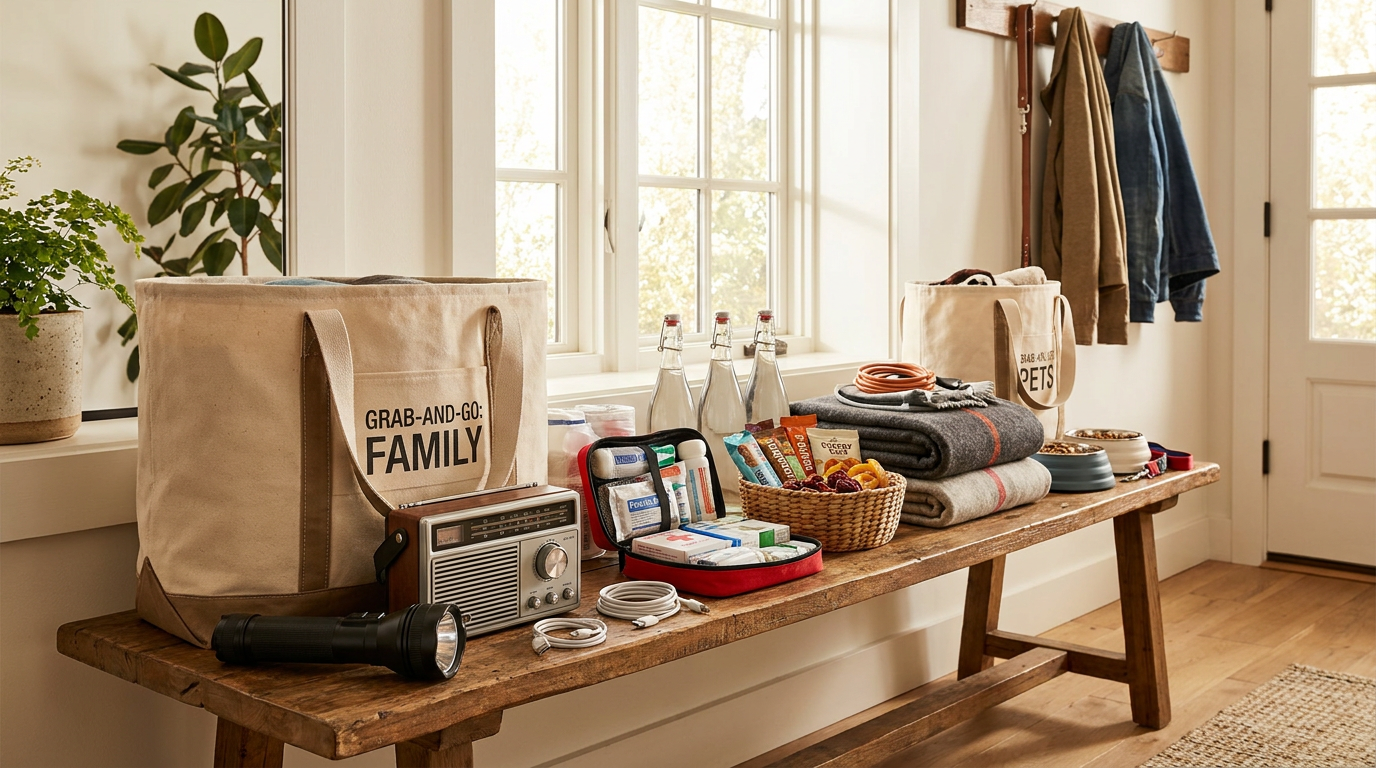
Official Canadian guidance says emergency kits should be portable, easy to find, and tailored to your household’s needs, with enough supplies for at least 72 hours. That means your kit should not be a random collection of leftovers stuffed in a closet. It should be intentional, organized, and packed in a way that allows you to use it quickly whether you are sheltering at home or leaving in a hurry.
Environment and Climate Change Canada recommends including a battery-powered flashlight, a radio, tools for emergency repair, food, a first aid kit, blankets, and extra clothing. You will also want water, medications, toiletries, charging cables, extra batteries, and copies of important personal information. If anyone in your household relies on medical equipment, make sure backup power planning and extra supplies are part of the kit. If you have pets, they need food, water, medication, leashes, carriers, and comfort items too.
Many households benefit from thinking in layers. One layer is the main home emergency kit. A second layer is a smaller grab-and-go bag for each person in case evacuation is needed. A third layer is a comfort kit, which is not a substitute for safety basics, but can make sheltering feel less distressing. This layered approach keeps your preparation practical while still making room for the emotional reality of waiting out a storm.
What to Keep in Your Main Emergency Kit
- Light and information: flashlights, extra batteries, battery-powered or crank radio, backup weather alerts
- Water and food: bottled water, shelf-stable foods, manual can opener, snacks that are easy for children and older adults to eat
- Health and safety: first aid kit, prescription medication, basic pain relievers, masks, hand sanitizer, personal hygiene supplies
- Warmth and shelter: blankets, extra clothing, rain gear, sturdy shoes
- Power and communication: fully charged power banks, charging cables, car charger, printed contact list
- Household essentials: cash, copies of important documents, spare keys, multipurpose tool, work gloves
- Pet and child needs: formula, diapers, comfort toys, pet food, leashes, waste bags, carriers
Store the kit in a place that is easy to access and easy to remember. A tidy mudroom shelf, hall closet, or utility area often works better than a deep basement corner. The goal is not to hide it away. The goal is to make it part of the home’s readiness, visible enough that everyone knows where it is and what is inside.
Choose and Prepare the Safest Shelter Space
Every home should have a designated shelter space, and everyone in the household should know where it is. Official guidance across Canada and the United States stresses sheltering away from windows during severe storms. In the case of tornadoes or violent thunderstorms, the safest place is usually on the lowest level of the home in an interior room, hallway, or basement area away from glass. If you live in a condo or apartment, look for an interior space without windows, such as a bathroom or corridor, and follow building guidance where available.
Think of this space as more than an emergency location. Think of it as a place that can be made functional and reassuring. If possible, keep a flashlight, blanket, shoes, phone charger, bottled water, and a small tote of essentials there during storm season. If your shelter area feels bare and disorienting, it can intensify stress. A little preparation can make it feel calmer without taking away from safety.
Children, especially, tend to respond well to familiarity. If they know there is a specific spot where the family goes and where a flashlight, games, and blankets are always kept, sheltering feels less chaotic. Adults benefit from this too. In stressful moments, familiar surroundings and organized supplies help people think more clearly.
Protect the Outside of Your Home Before the Forecast Turns
One of the simplest ways to reduce storm damage is to look at your property from the outside in. Wind turns ordinary objects into hazards, and heavy rain quickly finds weaknesses in gutters, grading, and drains. Walking your property before storm season gives you the chance to fix small issues before they become expensive or dangerous ones.
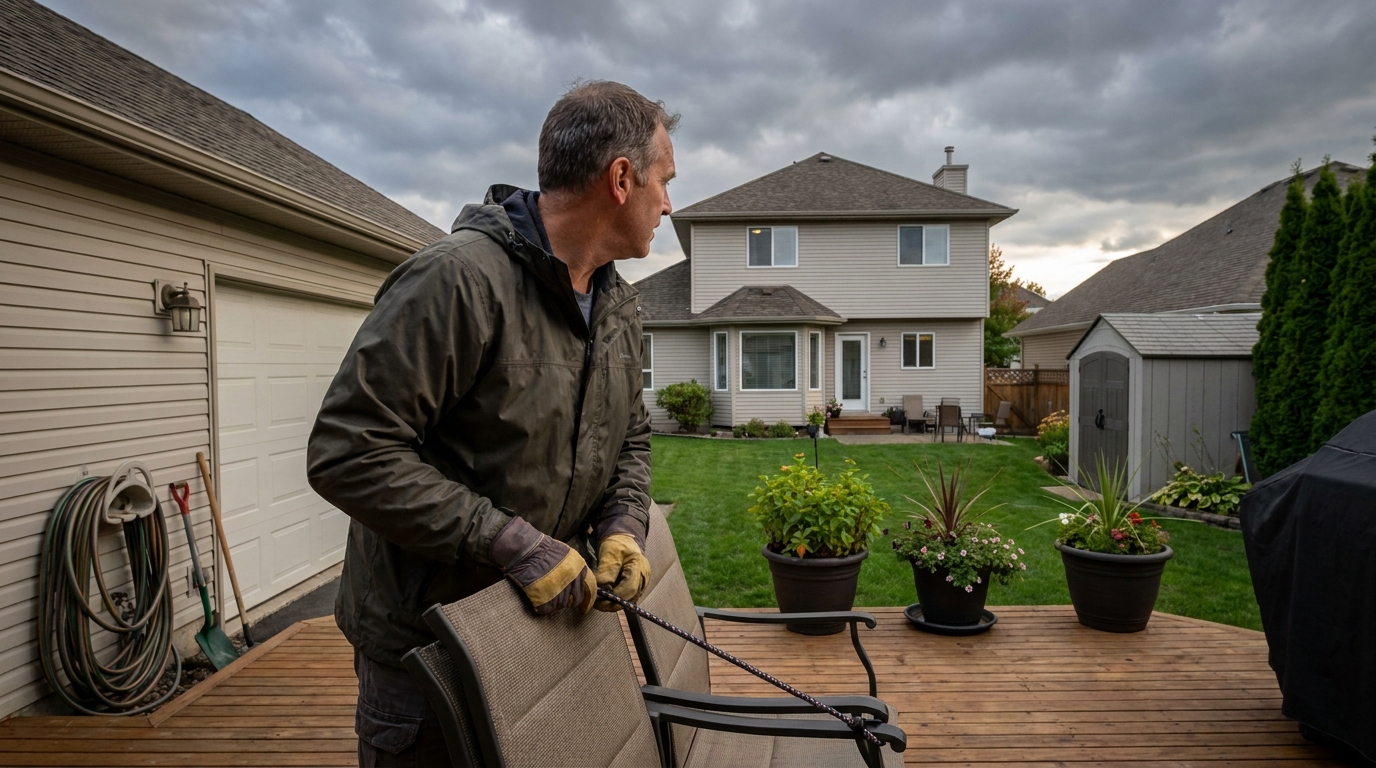
Start with loose outdoor items. Patio cushions, umbrellas, lightweight planters, toys, garden decor, and folding furniture should be brought inside or secured when severe weather is possible. Trim weak tree branches near the house, clear yard debris, and inspect fences and gates for loose hardware. If you have outdoor structures such as sheds or pergolas, make sure they are in good condition and safely anchored.
Pay close attention to how water moves around your home. Clean gutters and downspouts, check that downspouts direct water away from the foundation, and make sure drains are not clogged with leaves or sediment. If your basement has a sump pump, test it before the season starts and consider what backup options are available if the power fails. Small maintenance tasks may not feel dramatic, but they are often the difference between a manageable storm and a major home repair.
Exterior Checklist to Review Each Season
- Inspect the roof visually for missing shingles, damaged flashing, or signs of wear.
- Clean gutters and downspouts so rainwater can move away from the home.
- Trim branches that overhang the roof, driveway, or power lines if safe and permitted.
- Check windows and doors for worn seals, leaks, or loose hardware.
- Secure or store patio furniture, grills, toys, and decor before storms arrive.
- Test drainage around the foundation and look for pooling water.
- Confirm that garage doors, sheds, and gates close securely.
If your area is prone to hurricanes, severe wind, or hail, you may also want to explore resilient-home upgrades over time. Impact-resistant materials, stronger garage door bracing, and professional drainage improvements can be worthwhile depending on your local risk. You do not need to do everything at once. The important thing is to begin, assess honestly, and improve season by season.
Protect Windows, Doors, and the Spaces Where Storms Enter
Windows and doors deserve special attention because they are common points of vulnerability during wind-driven rain and high winds. Check for cracks in caulking, damaged weather stripping, or spots where water has previously entered. If there are leaks around frames, address them before the weather intensifies. Even modest improvements can help reduce drafts, moisture intrusion, and damage during storms.
If you live in a region that faces stronger wind events or hurricanes, it may be worth reviewing storm shutters or other protective solutions recommended in your area. The right option depends on climate, building type, and local code considerations. The most important thing is not to improvise at the last minute with unsafe materials or rushed methods. Preparedness works best when it is calm and deliberate.
Garage doors are another important weak point that people often overlook. Because of their size, they can be vulnerable to strong wind pressure if not properly maintained. Make sure tracks, seals, and openers are in good condition. If your region frequently experiences severe wind, ask a professional whether additional reinforcement is appropriate for your home.
Prepare for Power Outages in a Way That Supports Daily Life
For many families, the most disruptive part of storm season is not structural damage but the sudden loss of power. A dark home can feel unsettling very quickly, especially if outages stretch into the evening or overnight. Preparing for outages is partly about safety and partly about preserving as much ease and normalcy as possible.
Start with lighting. Place flashlights where you can reach them without searching, such as beside beds, in the kitchen, near the main shelter area, and by exits. Battery lanterns often create a softer, more usable light for shared spaces and feel less harsh than individual flashlights. Power banks should be charged in advance when storms are forecast, and household members should know which chargers belong with which devices.
If you use a generator or backup power source, treat safety as non-negotiable. A generator does not automatically make a home safe. It must be used according to manufacturer guidance and local safety rules, especially regarding ventilation and placement. Never use fuel-burning equipment in enclosed or partially enclosed spaces. If you do not have a generator, consider simpler backup options such as rechargeable lanterns, battery banks, coolers with ice, and meal planning for no-cook or low-cook foods.
Power outage planning should also include food, temperature, and routine. Think about what you will eat if the stove is unavailable, how you will stay warm in winter or cooler in summer, and which items in your fridge or freezer need the most protection. Keep a small written list of outage priorities on the fridge or inside a kitchen drawer. When the lights go out, decision fatigue sets in quickly, and a plan helps the whole household respond more calmly.
Back Up Documents, Insurance Details, and Essential Information
Some of the most important storm preparation happens on paper and on your phone rather than in the yard. Copies of identification, insurance policies, home inventory photos, medical information, and key account numbers can save an enormous amount of stress after a storm. If your home experiences flooding, wind damage, or an evacuation, being able to access this information quickly can make recovery far smoother.
Store important documents in a waterproof and portable folder, and keep digital backups in a secure cloud service or encrypted drive. Take updated photos or video of major rooms, furniture, electronics, and valuables at least once or twice a year. This is especially useful if you ever need to document a claim after damage. It also gives you a reason to review whether your coverage still reflects your current home and belongings.
It is worth understanding your insurance before storm season begins, not after an event. Review deductibles, flood-related gaps, additional living expense coverage, and the steps required if you need to make a claim. If you live in a flood-prone area, ask specifically what is and is not covered. Rising severe-weather costs have made these details more important than ever.
Learn Utility Shutoffs and Basic Home Safety Procedures
Another quiet but important step is knowing how to shut off water, gas, and electricity when appropriate and safe. Every homeowner should understand the basics of their home’s utility systems, and ideally more than one adult in the household should know where shutoff points are located. This does not mean taking risks during a storm. It means being informed ahead of time so that if authorities or emergency responders advise action, you are not figuring it out under pressure.
If you are unsure how your home’s systems work, schedule time on a calm weekend to review them. Label shutoffs clearly if needed, and keep any necessary tools nearby. If your home has a sump pump, water alarms, or a backflow valve, include those in your seasonal review. Storm preparation is often about reducing the chance that a small issue grows larger once weather conditions worsen.
Basic safety also includes keeping sturdy shoes accessible, having gloves for cleanup, and avoiding risky tasks during active weather. If a line is down, water is rising, or a structure is damaged, the right response is caution, not urgency. Official guidance consistently reminds households to follow evacuation orders immediately and not return home until authorities say it is safe.
Make a Pet and Family Comfort Plan
Preparedness becomes much more realistic when it includes the emotional needs of the household. Pets often react strongly to wind, thunder, unusual smells, and changes in routine. Young children may become anxious if they sense adult stress or hear weather alerts sounding repeatedly. A comfort plan does not replace practical readiness, but it supports resilience in a very real way.
For pets, gather food, water, medication, leashes, carriers, identification, and a comfort item such as a blanket or toy. Keep these supplies in one container so they are easy to grab quickly. For children, consider a small pouch with familiar snacks, books, card games, headphones, and one or two comforting objects. Adults benefit from comfort cues too, whether that means tea bags for a thermos, a favorite sweater, downloaded playlists, or a notebook.
Disasters can affect people physically and emotionally, and official preparedness messaging increasingly acknowledges that resilience matters. One of the gentlest ways to support that is to create a rhythm for storm days. Charge devices in the morning, tidy key rooms, set out flashlights, check updates at specific intervals, and keep mealtimes as normal as possible. Routine helps a home feel emotionally anchored even when the forecast is uncertain.
Create a Storm Comfort Kit for Calmer Sheltering
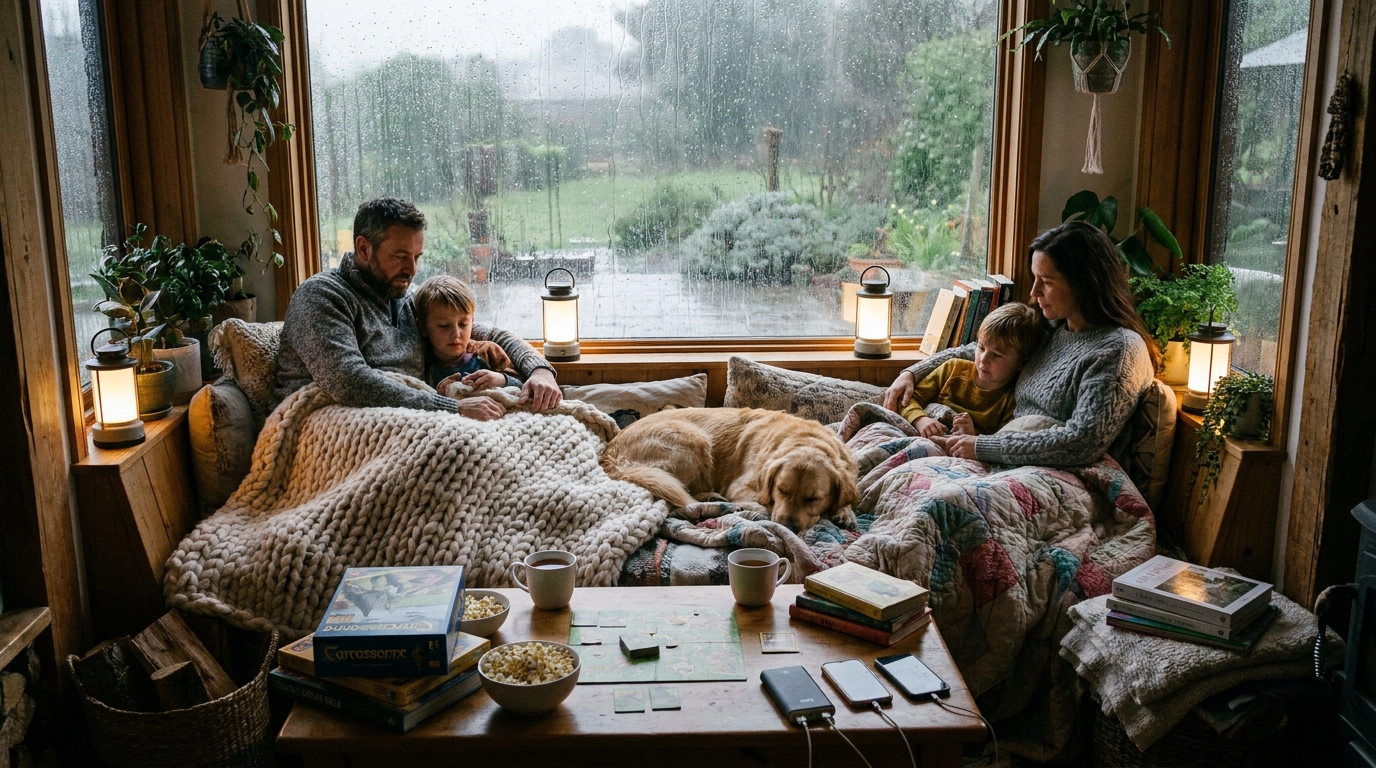
There is something deeply reassuring about preparing not just to endure a storm, but to live through it more gently. Once your safety basics are covered, put together a storm comfort kit for the hours you may spend sheltering or waiting through an outage. This can be as simple as a basket or tote stored near your shelter area or living room.
Include soft blankets, battery lanterns, shelf-stable snacks, books, simple games, wet wipes, extra chargers, and a power bank that stays topped up during storm season. If you have room, add water bottles, a deck of cards, and a small speaker for downloaded music. If anyone in the family is soothed by sensory comforts, include those too. A storm comfort kit may sound minor compared with structural prep, but it can completely change the mood inside the home.
Comfort does not mean ignoring danger. It means recognizing that preparedness works best when people can stay regulated, informed, and connected. A calm household responds more clearly to changing weather and makes better decisions if the situation escalates.
Know the Differences Between Storm Types
Not every storm calls for the same response, and this is one of the most important details to understand. Thunderstorms and tornado threats generally call for immediate shelter in an interior room on the lowest level and away from windows. Hurricanes and major wind events may require early outdoor securing, close attention to evacuation orders, and an understanding of storm surge or coastal flooding if relevant to your location.
Flooding presents its own distinct risk. If you live in a flood-prone area, know your routes and leave when advised rather than waiting to see how conditions develop. Water can rise quickly, roads can become dangerous, and returning home too soon can expose you to contaminated water, hidden damage, or electrical hazards. Winter storms, meanwhile, require longer-duration planning around heat, food, medications, and staying indoors safely for an extended period.
Official guidance across North America consistently emphasizes weather alerts, radios, and fast response to instructions from local authorities. This is why a battery-powered or crank radio still matters even in a phone-centered world. Alerts can fail, batteries can die, and reception can become unreliable. A second source of information is not old-fashioned. It is wise.
Practice the Plan So It Feels Natural
A plan is only helpful if people remember it under stress. That is why practicing matters. You do not need to turn it into a dramatic drill. Instead, walk through it once or twice each season. Ask everyone where they would go, what they would take, and who they would contact. Let children practice moving to the shelter area with a flashlight. Check whether adults can quickly locate the document folder, pet carrier, and medication bag.
Practicing reveals small gaps that are much easier to fix ahead of time. Maybe the flashlight batteries are dead, the power bank is missing, or no one agrees on the meeting place after an evacuation. These are exactly the kinds of details that can unravel calm during a real event. A ten-minute seasonal review can solve them.
If you have older relatives nearby or neighbors who may need support, your practice can also include checking in on them. Community resilience begins at the household level, but it does not end there. Knowing who may need help and who can offer it brings a different kind of strength to storm season.
What to Do When a Storm Is Actually Approaching
When severe weather is in the forecast, shift from seasonal preparation to active readiness. Charge phones and power banks, fill water bottles, review alerts, and move outdoor items inside or secure them. Refuel vehicles if evacuation is possible in your area, and make sure grab-and-go bags are placed near the exit. If there is time, do a quick laundry load, wash dishes, and tidy key spaces so the home is easier to manage if the power goes out.
Keep calm, but do not delay the important things. If local authorities issue an evacuation order, follow it immediately. If the advice is to shelter, move to your designated safe space with essentials close at hand. During the storm itself, stay away from windows, monitor reliable updates, and avoid unnecessary movement around the property.
This is where all your earlier preparation pays off. The atmosphere inside the home feels different when flashlights are ready, blankets are folded nearby, pets are settled, and everyone knows the plan. Even in a tense moment, readiness creates a little more steadiness.
After the Storm: Return Carefully and Recover Thoughtfully
When the storm has passed, the instinct to immediately clean up and return to normal can be strong. Move slowly. Follow official guidance about when it is safe to go outside or return home if you evacuated. Watch for downed power lines, broken glass, unstable branches, standing water, and hidden structural damage. If your home has taken on water, be cautious around electrical systems and soaked materials.
Document damage with photos before beginning major cleanup if it is safe to do so. Contact your insurance provider as needed and keep notes about conversations, expenses, and repairs. Wear sturdy shoes and gloves during cleanup, and do not use generators, grills, or other fuel-burning equipment indoors or in attached garages. Safety after the storm matters just as much as safety during it.
Emotionally, give your household a little time to settle too. Disrupted sleep, stress, and uncertainty can linger after the skies clear. Reestablishing familiar routines, opening curtains, making a simple meal, and restoring favorite corners of the home can all help the space feel like itself again. Recovery is practical, but it is also personal.
Why Storm Preparation Belongs in Your Seasonal Home Routine
The most effective storm preparation is not frantic or fear-based. It is seasonal, steady, and folded into the way you care for your home year after year. Just as you might clean gutters in autumn or refresh outdoor spaces in spring, storm readiness deserves a place on the calendar. It protects your investment, supports your family’s well-being, and gives your home a stronger sense of resilience.
There is also a larger truth that many homeowners are feeling now. Severe weather is becoming more disruptive and more expensive, and preparation can no longer be treated as optional. Yet there is something quietly empowering about that reality too. We may not control the forecast, but we can control the way we respond to it, the systems we put in place, and the atmosphere we create inside our walls.
Preparing your home for storm season is, in many ways, an act of love. It says that safety matters, comfort matters, and peace of mind matters. When the next storm arrives, that preparation will not stop the rain or silence the wind, but it will help your household meet the moment with more confidence, more calm, and a home that feels ready to hold you through it.

No Comment! Be the first one.