



Essential Guide to Caring for Native Plants in Your Garden
Native plants have earned a strong reputation for being lower maintenance, climate adapted, and beneficial to local wildlife. That reputation is well deserved, but it can also be misunderstood. The most successful native gardens are not created by planting at random and walking away. They thrive when gardeners understand a simple truth: native plants tend to need less intervention after they are established, especially when they are matched carefully to local light, soil, and moisture conditions.
Table Of Content
- Why Native Plants Matter in a Home Garden
- The Most Important Principle: Match the Plant to the Site
- Questions to Ask Before You Plant
- What Native Plants Need in the First Year
- Watering New Native Plants
- Mulching Without Smothering
- Managing Weeds and Invasive Pressure
- How Much Fertilizer and Pruning Do Native Plants Need?
- Leave Some Structure for Wildlife
- Seasonal Native Plant Care Through the Year
- Spring Care
- Summer Care
- Fall Care
- Winter Care
- Common Mistakes to Avoid
- Designing a Native Garden That Looks Intentional
- Native Plant Care as a Sustainable Maintenance Strategy
- A Simple Native Plant Care Checklist
- Final Thoughts
For homeowners in Canada and across North America, native plants offer a practical way to build a landscape that feels grounded in place. They evolved alongside local rainfall patterns, regional soils, insects, birds, and temperature swings. That means they can often handle periods of drought, seasonal change, and natural pest pressure better than many conventional ornamentals. It also means they can help reduce irrigation needs, limit fertilizer use, and support biodiversity in a way that ornamental landscapes often do not.
This guide focuses on the day to day and season to season practicalities of native plant care. You will learn what matters most in the first year, how to avoid common maintenance mistakes, and how to shape a garden that looks intentional while still supporting pollinators and habitat. If you have been curious about adding native plants but are unsure how to care for them, the good news is that the process is usually simpler than many people expect. It starts with choosing the right plant for the right place, then giving that plant consistent support while it settles in.
Native plants are often low maintenance, but they are not no maintenance. The first year is where thoughtful care makes the biggest difference.
Why Native Plants Matter in a Home Garden
There is a practical reason native plants are becoming central to sustainable landscaping conversations. They support the ecological relationships that local environments depend on. Canada has more than 800 native bee species, and bees are the most common pollinators in the country. Across North America, USDA NRCS notes that more than 3,500 species of native bees help increase crop yields. When home gardens include regionally appropriate native plants, they can become part of a much larger support system for pollinators, birds, and beneficial insects.
The value of native planting goes beyond pollination, although that is an important starting point. Three fourths of the world’s flowering plants and about 35 percent of the world’s food crops depend on animal pollinators to reproduce. Native gardens can provide nectar and pollen, but they also offer nesting resources, larval host plants, cover from predators, and seasonal shelter. Many insects need very specific plant relationships to complete their life cycle, which means a garden filled only with attractive flowers may still provide less ecological value than one designed with local native species in mind.
Native grasses deserve special attention here. They are often overlooked in favor of flowering plants, yet they are essential ecological infrastructure in many landscapes. Their root systems can improve soil stability, slow erosion, help with stormwater absorption, and create shelter at ground level. They also host insect species that birds and other wildlife rely on. In design terms, they add movement, texture, and winter structure, making them useful both ecologically and visually.
For many homeowners, one of the most appealing benefits of native plants is that they align environmental value with practical maintenance. Once well established, many native species need less frequent watering and fewer added inputs than conventional garden plants. They can fit naturally into pollinator gardens, rain gardens, lawn reduction projects, meadow conversions, and formal foundation beds. This is one reason native landscaping is increasingly seen not just as an aesthetic preference but as a durable, ecosystem based maintenance strategy.
The Most Important Principle: Match the Plant to the Site
If there is one idea that determines whether a native planting succeeds, it is site matching. Native plants are adapted to local conditions, but not every native plant belongs in every local space. North America contains an enormous range of ecosystems, and even within one city, a front yard can differ dramatically from a backyard in terms of sun exposure, wind, drainage, and soil composition. A plant that naturally thrives in a dry prairie setting may fail in a damp clay bed. A woodland species may struggle in baking afternoon sun.
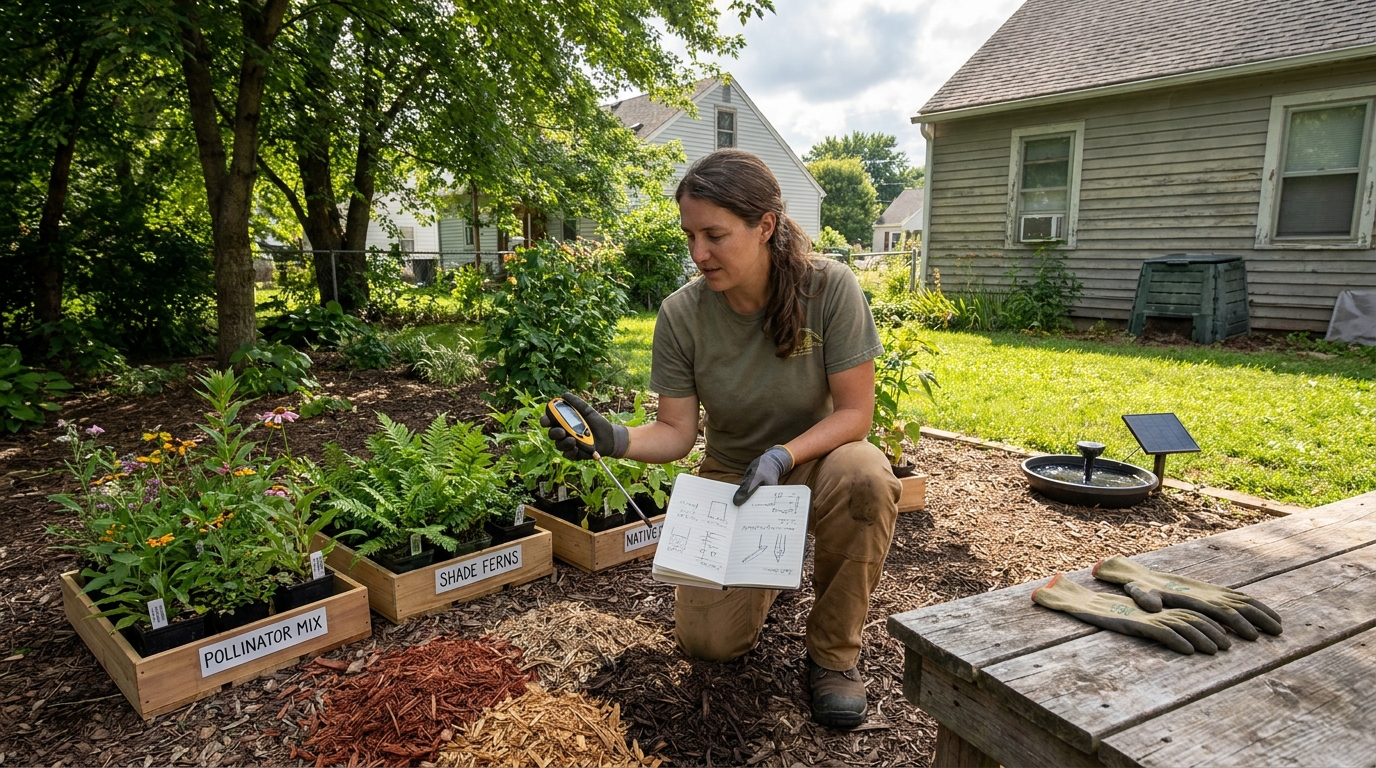
This is why broad labels can be misleading. A plant may be native to your province or state but still not suitable for your exact garden conditions. Before you plant, it helps to assess a few basics carefully. Observe how many hours of sun a space receives, whether water drains quickly or slowly after rain, whether the soil is sandy, loamy, or clay heavy, and whether the site tends to stay cool, exposed, moist, or dry. These details matter more than trying to force a desirable species into the wrong location.
Good site matching also helps preserve the low maintenance promise of native gardening. Many problems that people later interpret as pest issues, disease, or plant weakness are actually site stress. A moisture loving plant in dry gravel soil will demand attention. A drought tolerant species in a low spot may decline from excess water. When the conditions are right from the beginning, maintenance becomes gentler and more seasonal rather than reactive and constant.
Questions to Ask Before You Plant
A short planning process can prevent a great deal of work later. Ask whether the site is sunny, partially shaded, or shaded for most of the day. Check whether the soil stays wet after rain or dries quickly. Notice whether the area receives reflected heat from pavement or walls. Think about the mature size of the plants, how close they will be to walkways, and whether the area should look formal, naturalistic, or somewhere in between.
It is also worth asking what role you want the planting to play. Some gardeners want a pollinator patch near vegetables. Others want a low water front yard, a bird friendly border, a rain garden for stormwater, or a reduced lawn area that still looks neat. Your maintenance style matters too. If you prefer clear edges and structure, choose species that respond well to repeated planting patterns and layered design. Native gardens can be highly organized and refined when they are designed intentionally.
What Native Plants Need in the First Year
The first year is the establishment year, and it is the period when native plants need the most attention. This is the stage where roots are extending into surrounding soil, plants are adjusting to a new environment, and competition from weeds can easily slow growth. Many of the most common disappointments with native plantings happen because the early months were treated too casually. Even drought tolerant species need regular watering while roots are getting established.
Think of the first year as an investment phase. During this period, a little consistency can save a lot of maintenance later. You are not trying to keep the soil constantly wet, but you do want to water deeply enough to encourage roots to move downward. Deep watering is more useful than frequent shallow sprinkles because it helps build resilience. Once roots are established, many native plants become noticeably more self sufficient and less dependent on supplemental irrigation.
Weed pressure is another major issue in year one. Young native plants can be outcompeted by aggressive annual weeds or invasive species before they have had time to bulk up. Mulch can help reduce this pressure, but hand weeding and regular observation are still important. A planting that looks a little sparse in the beginning often fills in over time, so patience matters. Avoid the temptation to overplant with fast growing fillers that may later crowd the native species you are trying to establish.
Watering New Native Plants
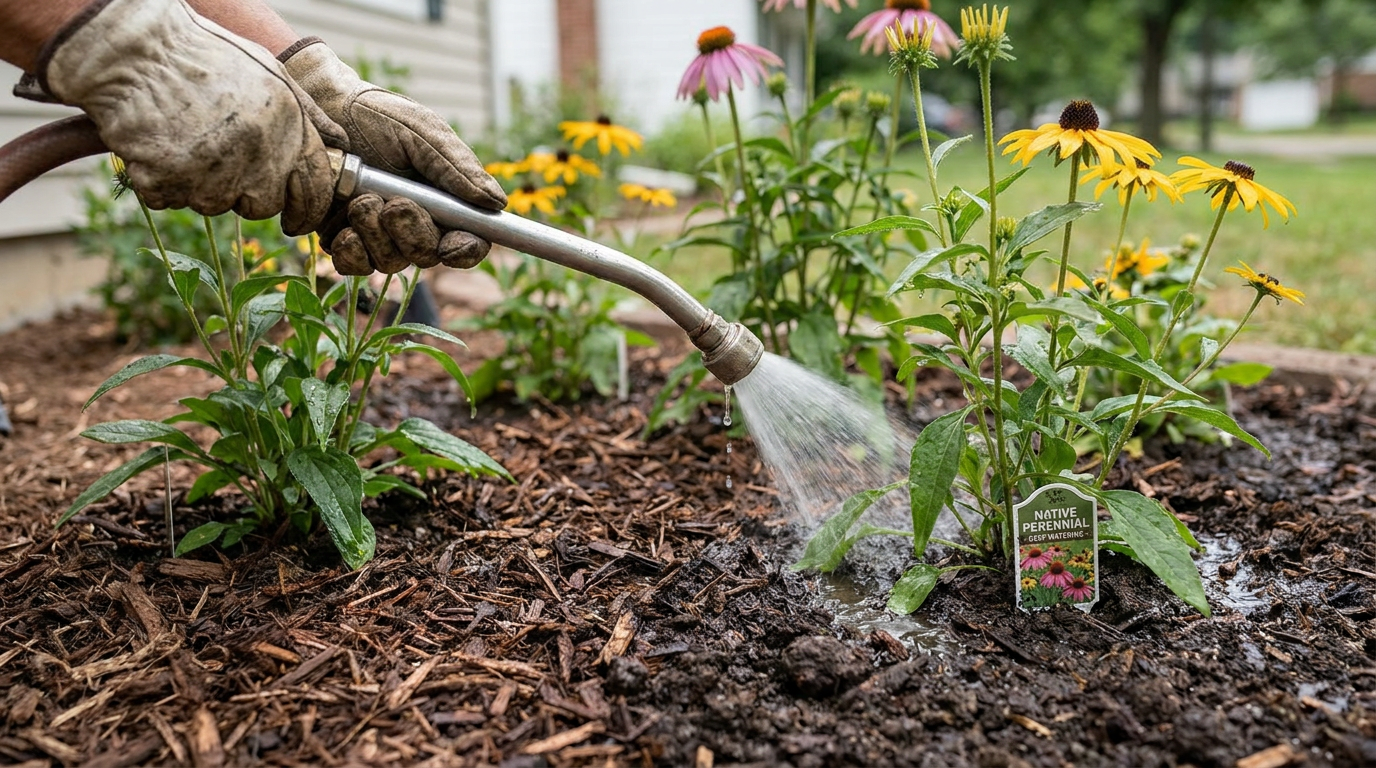
New native plantings usually need regular watering through their first growing season, especially during dry spells or summer heat. The goal is to keep the root zone evenly moist but not soggy. Exact frequency depends on your soil and weather, but a deep soak at the base is generally more effective than daily surface misting. Clay soils hold water longer than sandy soils, so your schedule should reflect how quickly the site dries out.
Watch the plants rather than relying only on a fixed routine. Wilting in extreme heat does not always mean the plant needs water immediately, but persistent drooping, crisping leaf edges, or stalled growth can signal stress. Digging a finger a few inches into the soil is often more reliable than judging from the surface. If it is dry down in the root zone, it is time to water. If the soil is still moist, hold off and let the roots continue adapting.
One of the most common mistakes with native plants is overwatering after establishment. Many species adapted to local rainfall patterns can decline if they remain too wet for too long. Once the first year passes and the plants are growing well, begin reducing irrigation and let natural conditions do more of the work where appropriate. This shift is part of what makes native planting genuinely lower maintenance over time.
Mulching Without Smothering
Mulch is one of the simplest and most effective tools for successful native plant establishment. A moderate layer helps regulate soil temperature, slow evaporation, reduce weed competition, and protect young roots. Shredded leaf mulch or other natural mulches often work well because they break down gradually and support soil life. In many gardens, mulch also gives a younger planting a more finished and intentional appearance.
That said, more mulch is not always better. Piling mulch too thickly can trap excess moisture around crowns, reduce oxygen to the root zone, and create conditions that favor rot. Keep mulch slightly back from stems and crowns rather than packing it tightly against the plant. As the native planting matures and begins filling in, the living plant canopy itself often becomes part of the weed suppression system, reducing the need for heavy mulch over time.
Managing Weeds and Invasive Pressure
Weed control is especially important early on because native seedlings and young transplants may not yet dominate the space. Regular, light maintenance is usually easier than waiting for weeds to spread. Hand pulling, spot removal, and close observation are often enough in a home garden setting. If invasive species are present, prompt control is important because they can quickly undo the balance you are trying to create.
A helpful mindset is to treat weed management as part of habitat stewardship rather than only cosmetic maintenance. Keeping invasive and aggressive weeds in check allows the planted community to mature into a more stable system. Once well rooted, many native plants become surprisingly competitive on their own, especially when they are grouped in drifts or repeated communities instead of scattered as single specimens.
How Much Fertilizer and Pruning Do Native Plants Need?
Many gardeners assume fertilizer is always a helpful boost, but native plants often perform best with minimal inputs. Because they evolved in local conditions, many species are adapted to leaner soils than conventional ornamental plants. Excess fertilizer can lead to weak, floppy growth, reduce flowering in some species, and create imbalances that make plants more vulnerable to stress. In practical terms, over fertilizing is often more problematic than under fertilizing.
If your soil is extremely poor or disturbed, a soil test can help you decide whether any amendment is necessary. Even then, a restrained approach is usually best. Compost may be useful in some situations, but it should support soil health rather than force lush top growth. Healthy native gardens are often built on ecological fit, not on repeated feeding. This is one of the clearest ways native gardening can simplify long term maintenance.
Pruning also tends to be lighter with native plants, though it still has a role. Remove dead, broken, or diseased material as needed, and shape plants if they are encroaching on paths or neighboring species. Some gardeners choose to cut back certain perennials in early summer to keep them shorter and fuller, but this is optional and depends on the look you want. In many cases, selective editing is better than aggressive cutting.
Leave Some Structure for Wildlife
One of the most useful shifts in native plant maintenance is rethinking what a tidy garden looks like. Old stems, seed heads, and standing grasses can support overwintering insects, provide seeds for birds, and add texture through the colder months. Extension guidance increasingly recommends leaving at least some of this material standing through winter rather than doing a complete fall cleanup. That restraint can make a real difference to wildlife.
This does not mean a native garden must look neglected. You can leave habitat intentionally while still maintaining clear edges, visible paths, and balanced structure. Many of the most appealing native gardens combine ecological generosity with visual order. A layer of neat mulch, defined borders, repeated plant groupings, and selective cleanup can make a habitat focused garden feel elegant rather than unruly.
Seasonal Native Plant Care Through the Year
Once a native garden is established, care usually becomes more seasonal and less intensive. Instead of constant feeding, watering, and replacement, the rhythm shifts toward observation and timely interventions. Each season brings a different set of tasks, and understanding those rhythms makes native gardening feel straightforward. The goal is not to control every detail but to support health and resilience over time.
Spring Care
Spring is a time for assessment and gentle cleanup. Look for winter damage, check which plants have returned strongly, and identify any gaps where replacements might be needed. This is also a good season to divide certain perennials if they have become crowded or to add new plants where you want denser coverage. If you left stems standing through winter, wait until temperatures are consistently milder before cutting back some material, as insects may still be using it.
Spring also offers a chance to refresh mulch lightly, especially around newer plantings where weed control still matters. Remove early weeds before they set seed and monitor drainage patterns after spring rains. If some plants struggled through winter, ask whether the issue was site fit rather than weather alone. A small adjustment now can improve the entire planting long term.
Summer Care
Summer maintenance centers mainly on watering, observation, and selective editing. New plantings often need deep watering during hot spells, while established plantings may need little or none except in prolonged drought. Watch for signs of stress, but avoid reflexively adding water if the soil remains moist. Summer is also a good time to note which plants are thriving and which may need to be moved or replaced in fall.
Deadheading can be useful if you want a tidier appearance or a longer bloom period in some species, but it is not always necessary. In pollinator focused gardens, leaving flowers and later seed heads often adds more ecological value than constant trimming. If plants become too floppy in richer soil or after heavy rain, discreet staking or earlier seasonal pinching can help preserve a more formal look.
Fall Care
Fall is often an excellent planting season in many climates because cooler air and warming soil can support root growth with less heat stress. It is a good time to expand native beds, add grasses, or introduce shrubs and perennials that will settle in before winter. Mulch can be topped up lightly to stabilize soil moisture and reduce erosion. Water new additions well until the ground begins to freeze.
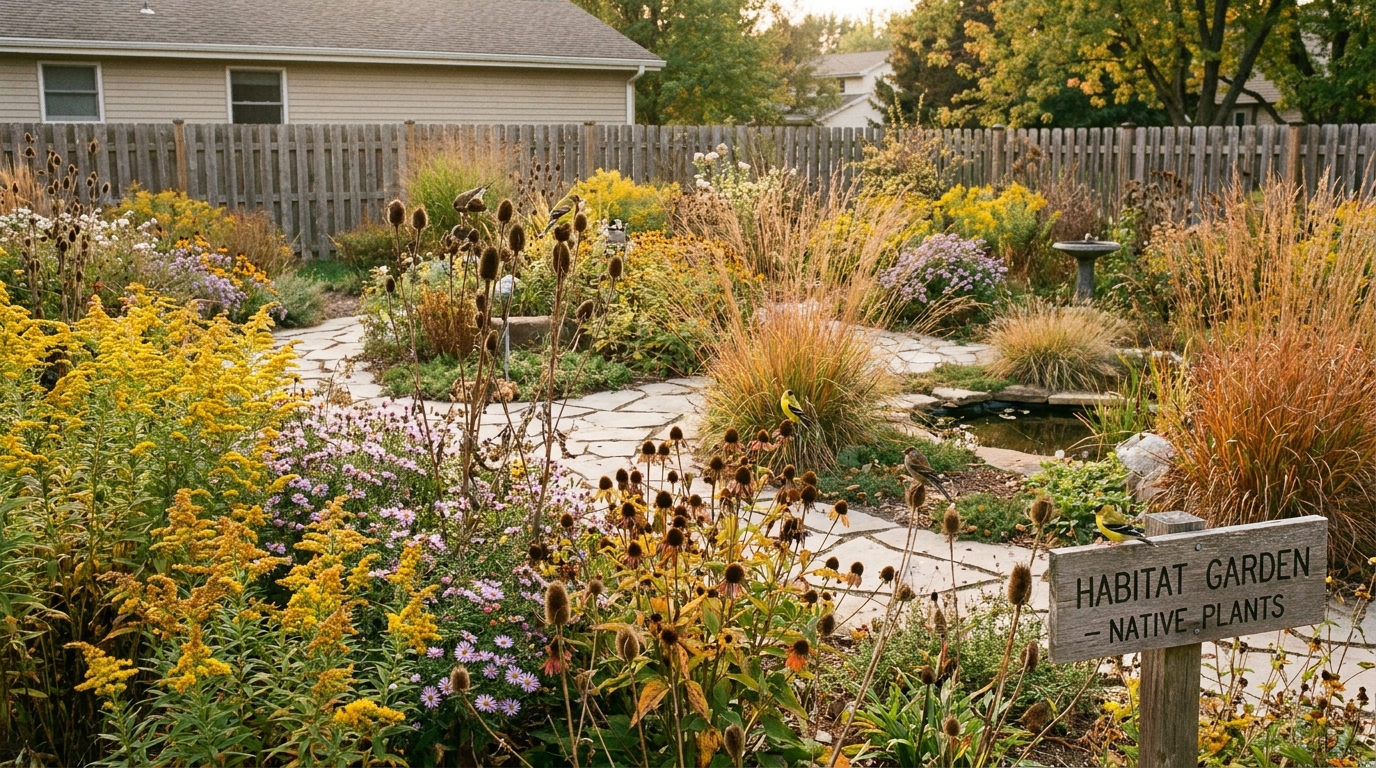
Fall is also when maintenance choices can begin supporting winter habitat. Instead of cutting everything to the ground, consider leaving sturdy stems and seed heads in place where they will not create access problems. You might save seed from some species, allow birds to feed naturally from others, and simply remove only what is diseased, hazardous, or clearly out of place. This approach supports biodiversity while still keeping the garden intentional.
Winter Care
Winter is often the season of doing less, and that is a meaningful part of native garden care. Standing stems and grasses can catch snow, protect crowns, and provide shelter for insects and birds. Seed heads bring texture and movement to the landscape when many other garden elements have disappeared. A winter native garden can feel quiet and architectural rather than empty.
This season is also useful for observation and planning. Notice where snow accumulates, where meltwater moves, and which areas remain exposed to wind. Those patterns can inform future plant choices and design changes. Winter is often when people recognize that maintenance does not always mean action. Sometimes it means preserving structure, allowing ecological processes to continue, and preparing for smarter choices in the seasons ahead.
Common Mistakes to Avoid
One of the biggest misconceptions about native plants is that they are maintenance free. In reality, they are often lower maintenance once established, but they still need proper planting, watering, and weed control early on. Ignoring the first year is one of the fastest ways to lose plants or end up with weak growth. A native garden becomes easier over time because of early care, not because care is unnecessary.
Another common mistake is choosing plants based only on the fact that they are native somewhere in North America. Native gardening works best when the species are regionally appropriate and suited to the exact site. Local ecotypes and local provenance can matter, especially in habitat focused plantings. A plant that is ecologically meaningful in one region may be less suitable in another, even if both are in the same country.
Overwatering and over fertilizing also deserve special mention. Because many native species evolved in conditions that are less rich or less consistently moist than ornamental beds, too much attention can actually cause problems. Weak growth, rot, and poor performance may come from trying to improve conditions that were already good enough. Native gardens often reward restraint more than intervention.
Aesthetic assumptions can get in the way as well. Some people worry that native gardens must look wild or messy. In truth, design choices matter more than plant origin. Repetition, edging, layered height, and strategic spacing can make a native planting look highly polished. You do not have to choose between ecological function and beauty. In many gardens, the two strengthen each other.
Designing a Native Garden That Looks Intentional
For many homeowners, confidence grows when maintenance and design are considered together from the beginning. A well designed native garden usually needs less corrective work because the planting layout already anticipates mature size, seasonal interest, and how people move through the space. Formality can come from shape and repetition even when the plant palette is ecologically rich. A curving bed edge, repeating masses of grasses, or drifts of one flowering species can create calm visual order.
Layering is especially useful. Place taller plants toward the back or center of an island bed, medium plants in front, and lower groundcovers or edging species near paths. This not only improves appearance but also reduces weed opportunities by filling space efficiently. Native grasses can anchor the design year round, while flowering perennials carry the seasonal color. Shrubs can add backbone, privacy, and bird habitat.
If you are converting lawn to native planting, start with a manageable area and make the edges clear. Crisp borders, mown strips, stepping paths, or stone lines help communicate intention to neighbors and visitors. This matters socially as much as visually. A sustainable garden often performs best when it feels easy to understand and easy to care for. Design can help people see habitat as something purposeful rather than accidental.
Native Plant Care as a Sustainable Maintenance Strategy
Native plant care fits naturally into broader sustainable living goals because it tends to reduce the need for inputs over time. A well established native garden can use less irrigation, require fewer fertilizers, and often support a more balanced relationship with insects than a heavily managed ornamental bed. In practical terms, that can mean lower water use, less time spent replacing stressed plants, and fewer reasons to reach for chemical controls. It is a maintenance strategy built around adaptation rather than constant correction.
There are also broader landscape benefits that matter increasingly in urban and suburban settings. Native roots can improve infiltration and help slow runoff, especially when paired with rain garden design or lawn reduction projects. Deeper rooted species may be better able to handle weather extremes, making them relevant in discussions about climate resilience. Habitat friendly plantings can also reduce fragmentation by creating stepping stones for pollinators and birds across neighborhoods.
This is one reason native gardening continues to gain momentum. It sits at the intersection of beauty, practicality, and ecological responsibility. Pollinator gardens, meadow conversions, native grasses, and biodiversity friendly front yards are not just trends for their own sake. They reflect a shift toward landscapes that ask less from homeowners while offering more back to the surrounding environment. That is a compelling balance, especially for people who want sustainable choices to feel realistic in everyday life.
A Simple Native Plant Care Checklist
-
Choose plants that match your site’s sun, soil, moisture, and drainage conditions.
-
Water consistently and deeply during the first year, especially during dry periods.
-
Use a moderate mulch layer to hold moisture and suppress weeds, but keep it away from crowns and stems.
-
Control weeds regularly while plants establish, with extra attention to invasive species.
-
Avoid routine fertilizing unless a soil test shows a clear need.
-
Prune selectively rather than heavily, focusing on health, access, and shape.
-
Leave some stems, grasses, and seed heads through fall and winter to support wildlife.
-
Observe the garden through the seasons and adjust plant choices if site conditions prove different than expected.
Final Thoughts
Caring for native plants is less about doing more and more about doing the right things at the right time. If you match species to site conditions, support them well in the first year, and avoid overmanaging them later, native plants often reward you with a garden that becomes easier to maintain as it matures. That balance is part of their appeal. They ask for attention early, then return it in resilience, habitat value, and seasonal beauty.
They also offer a way to make everyday gardening decisions feel more connected and purposeful. A native planting can support local bees, birds, and beneficial insects while lowering water demand and reducing maintenance inputs. It can look formal or natural, compact or expansive, understated or richly layered. Most importantly, it can fit real life. Sustainable gardening works best when it is practical, attractive, and achievable, and native plants are one of the clearest ways to bring those qualities together in a home landscape.


No Comment! Be the first one.