


How to Install Smart Lighting to Enhance Your Home’s Atmosphere
Lighting changes more than what we can see. It shapes how a room feels at the end of a long day, how gently a morning begins, and how comfortably a home supports real life. Smart lighting has become popular because it is convenient, but its deeper appeal is emotional. It gives homeowners a way to soften harsh rooms, create a sense of calm, and make everyday routines feel more personal without taking on a major renovation.
Table Of Content
- Why smart lighting feels so transformative
- Understanding the three layers of smart lighting
- Start with atmosphere, not gadgets
- Smart bulbs or smart switches: which should you install?
- When smart bulbs are the better choice
- When smart switches are the better choice
- What to check before you buy
- Tools and materials you may need
- How to install smart bulbs step by step
- How to install a smart switch step by step
- Creating your first scenes and schedules
- Scene ideas that support real life
- Using color temperature well
- Room by room smart lighting ideas
- Living room
- Kitchen
- Bedroom
- Entry and hallway
- Energy savings and the bigger picture
- Common smart lighting mistakes to avoid
- How interoperability affects your choices
- When to call a professional
- Bringing it all together
One of the reasons this upgrade matters now is that modern lighting has already shifted dramatically toward LEDs. The U.S. Department of Energy notes that LEDs are inherently dimmable and can work with advanced controls such as occupancy sensing, daylight harvesting, and local control. That matters for more than efficiency. It means the average home can now use light in a more thoughtful way, adjusting brightness and tone based on time of day, activity, and mood.
If you have ever felt that a room looked perfectly nice but still did not feel right, lighting may be the missing layer. A kitchen can seem clinical when it is too bright late at night. A bedroom can feel less restful under cool overhead light. A family room can feel much more welcoming when several softer light sources work together instead of one central fixture doing all the work. Smart lighting helps solve those atmosphere problems in a practical, approachable way.
This guide walks through how to install smart lighting at home, what to buy, what to avoid, and how to create scenes that feel genuinely supportive of your lifestyle. The goal is not just a more high tech house. It is a home that responds more gracefully to quiet mornings, work hours, dinner with family, and evenings when all you want is a softer glow and a little peace.
Good smart lighting is not only about automation. It is about creating the right light at the right time so your home feels more comfortable, more useful, and more like your own.
Why smart lighting feels so transformative
Many home upgrades are visible immediately, but smart lighting has a subtler kind of impact. You may not always notice the technology itself. What you notice is that a room feels easier to be in. You stop squinting under glare in the evening. You no longer need to walk through a dark hallway with your hands full. You begin to associate certain lighting scenes with relaxing, focusing, cooking, or getting ready for bed. These are small changes, yet they can significantly affect how cared for a home feels.
The Department of Energy has connected better lighting controls with more precise delivery of suitable light at the appropriate time, with relevance to health, productivity, and well being. For homeowners, that translates beautifully into daily life. Brighter, clearer lighting can support work and cooking tasks during the day, while warmer dimmed light can make evenings feel slower and more settled. Rather than treating every hour the same, smart lighting lets your home move with your routine.
There is also a powerful sense of control that comes with this kind of upgrade. You do not need to knock down walls or rewire your entire house to improve atmosphere. In many homes, replacing a few bulbs, adding a compatible switch, and setting a couple of scenes can completely change the emotional tone of the most-used rooms. It is one of the rare DIY projects that can feel both technical and deeply personal at the same time.
Understanding the three layers of smart lighting
The easiest way to understand smart lighting is to think of it in three layers. The first layer is the light source itself, usually LED bulbs or LED fixtures. The second layer is the control method, such as a smart bulb, smart switch, dimmer, sensor, or hub. The third layer is the system that ties it together, usually an app, voice assistant, or smart home platform that lets you create scenes, schedules, and automations. When those three layers work together well, lighting starts to feel seamless instead of complicated.
LEDs are the foundation because they are efficient, long lasting, and naturally suited to dimming and digital control. Natural Resources Canada has highlighted that high efficiency lighting is now mainstream and that efficient products can still save homeowners meaningful energy and money. The largest savings typically happen when efficient LEDs are paired with better control habits, rather than from smart features alone. In other words, replacing wasteful bulbs and reducing unnecessary usage matter just as much as buying connected products.
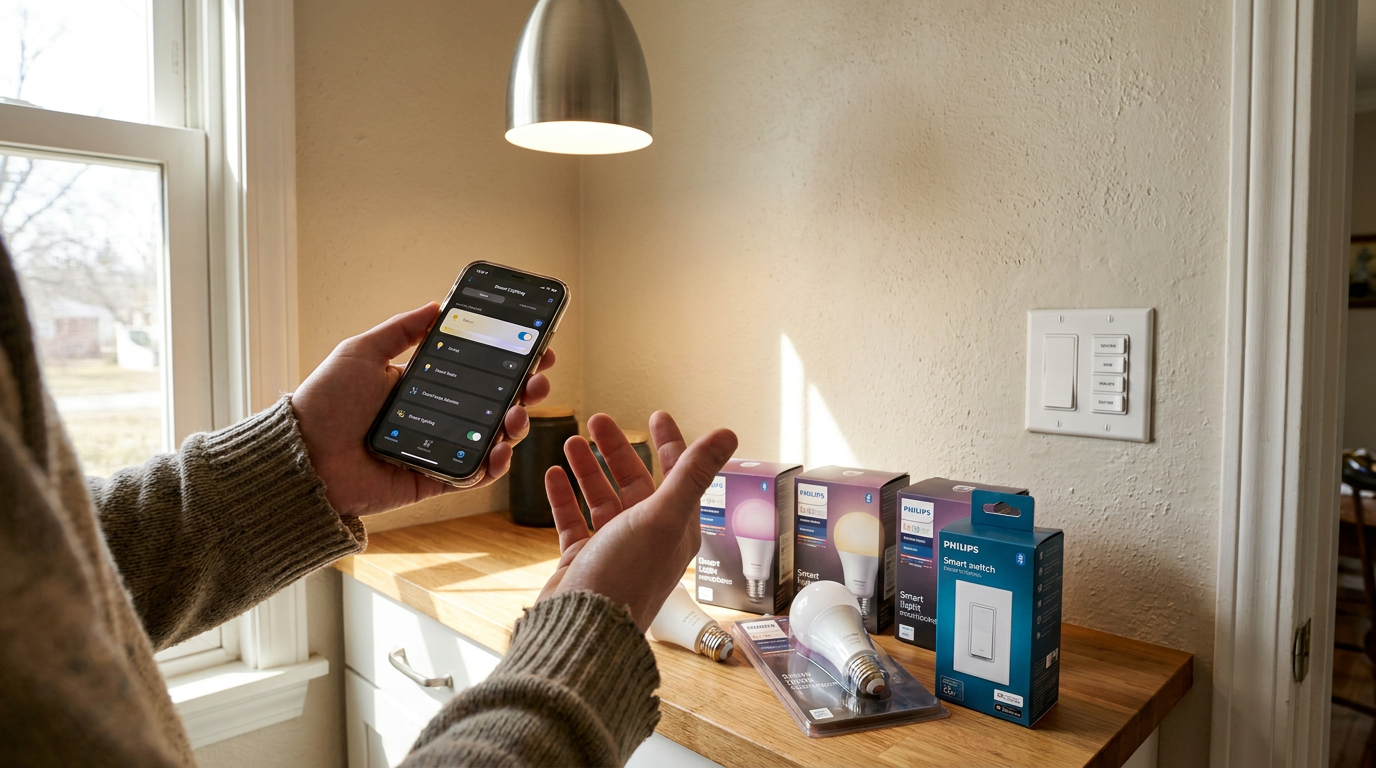
The control layer is where many homeowners need to make their first real decision. Do you want smart bulbs, smart switches, or both? Smart bulbs are often the simplest entry point because installation can be as easy as screwing in a bulb and connecting it in an app. Smart switches can feel more polished for whole room control, but they may require neutral wires, compatible loads, and more careful installation. The best choice depends on the room, the fixture, and how you actually live in the space.
Start with atmosphere, not gadgets
Before buying anything, pause and think about how you want each room to feel. This is the most important design step, and it is often skipped because product listings make people focus on specifications first. A family room may need a bright daytime setting for homework and play, a softer entertaining scene for guests, and a low warm scene for movie nights. A bedroom may need only enough light for dressing and reading, then a gradual dimmed setting that supports a slower wind down.
Walk through your home at different times of day and pay attention to discomfort. Notice where light feels too sharp, too cool, too dim, or simply mismatched to what is happening in the room. Maybe your kitchen island is excellent for prep work at 5 p.m. but too intense when someone comes down for water at midnight. Maybe your entry feels cold and dark in winter. Smart lighting works best when it solves these emotional and practical friction points instead of being installed just for novelty.
As you think through each room, it helps to consider layered lighting. Ambient lighting provides the main overall glow. Task lighting supports activities like reading, cooking, and grooming. Accent lighting adds dimension and softness by highlighting shelves, art, or architectural details. Smart controls become much more useful when they shape these layers into scenes rather than simply turning one fixture on and off.
Smart bulbs or smart switches: which should you install?
Smart bulbs are often the easiest DIY path, especially for table lamps, floor lamps, bedrooms, and rooms where you want flexible color temperature or tunable white light. They are ideal when you want to adjust individual lamps separately or experiment with ambiance without opening an electrical box. Many people start here because the process feels low pressure and immediate. If the bulb fits the fixture and the app setup goes smoothly, you can see the transformation within minutes.
Smart switches make more sense when you want to control a hardwired ceiling fixture or a full group of lights from the wall in a natural way. They are often better for kitchens, hallways, entryways, and busy family spaces where someone may still instinctively press a physical switch. In those areas, a smart bulb can become frustrating if the wall switch gets turned off and cuts power to the bulb. A smart switch preserves normal behavior while adding schedules, remote control, and scenes in the background.
There is no rule that says you must choose only one approach for the entire house. In fact, the most comfortable homes often mix both. A living room might use a smart switch for recessed ceiling lights and smart bulbs for table lamps. A bedroom might use smart bulbs for bedside lamps and a standard dimmer or compatible smart switch for the overhead fixture. The key is compatibility, consistency, and choosing what feels intuitive in each space.
When smart bulbs are the better choice
Choose smart bulbs when the fixture is simple to access, the room benefits from tunable white or color changing options, and the household can reliably leave power on at the switch. They are especially lovely in bedside lamps, reading corners, nurseries, and decorative sconces where the goal is softness and flexibility. They also work well for renters or anyone who wants minimal electrical work. If comfort and experimentation are the priority, this route is often the gentlest introduction to smart lighting.
When smart switches are the better choice
Choose smart switches when you want dependable whole room control, when multiple bulbs are on one circuit, or when household members expect the wall switch to work normally every time. They are often the cleaner long term solution in common areas. However, they require more planning because some models need a neutral wire, some dimmers need compatible loads, and not every switch works with every fixture. If you are unsure about wiring, this is the point where calling an electrician is a wise and confident choice, not a failure of DIY spirit.
What to check before you buy
Compatibility matters as much as efficiency. This is one of the most important truths in smart lighting, and it saves people from disappointment. DOE and NRCan both emphasize that performance and compatibility deserve close attention. A bulb may be labeled warm white, dimmable, or smart, but that does not guarantee it will perform beautifully in your specific fixture or with your existing controls.
Check the bulb base type, fixture size, enclosure rating if relevant, and recommended use. Look at brightness in lumens rather than assuming watt equivalents tell the whole story. Pay attention to color temperature, especially if you care about atmosphere. Warmer light often sits around 2200K to 3000K, while cooler light rises above that. If you want flexibility, tunable white products can shift from energizing daylight tones to evening friendly warm tones depending on the hour.
It is also smart to look for recognized safety and compliance markings, including UL or equivalent certifications relevant to your market. Price alone does not guarantee quality or safety. If you are in Canada, it is worth knowing that ENERGY STAR certification for most new lighting products was formally retired at the end of 2024 because efficient lighting is now mainstream. That means shoppers should look beyond a single label and evaluate product quality, control features, compatibility, and certification as a full picture.
Tools and materials you may need
The exact materials depend on whether you are installing smart bulbs, a smart plug, a smart switch, or a combination of devices. For a bulb based setup, you may only need the bulbs themselves, your phone, a stable Wi Fi network if required, and perhaps a small step stool. For a switch installation, you may need a screwdriver, voltage tester, wire connectors if supplied or recommended, the manufacturer instructions, and patience for labeling wires carefully.
Keep your lighting project emotionally realistic as well as technically realistic. If you are tired, rushed, or trying to upgrade three rooms in one evening, mistakes become more likely. Smart home projects go more smoothly when you take them room by room and test each change fully before moving on. There is something wonderfully satisfying about seeing one space transformed before you continue to the next.
How to install smart bulbs step by step
Installing smart bulbs is the simplest path, but taking a thoughtful approach helps you avoid glitches. Start by turning off the fixture at the switch and letting any hot bulbs cool down completely. Remove the old bulb and confirm that the new smart bulb matches the fixture requirements for base type, size, and any enclosure limitations. Then install the bulb securely, turn the fixture back on, and wait for the bulb to enter pairing mode according to the manufacturer’s instructions.
Next, download the relevant app and add the device. Most systems will ask you to connect the bulb to your home network or bridge, give it a name, and assign it to a room. Be intentional with naming. Clear names like “Living Room Lamp Left” or “Primary Bedroom Bedside Right” make future routines much easier to build. If you plan to use a voice assistant, good names also prevent awkward commands later.
Once the bulb is connected, test dimming, scheduling, and any color temperature features right away. Do not assume the default settings will be the most flattering. Many bulbs initially appear brighter or cooler than you may want for a cozy home. Spend a few minutes adjusting the warmth and brightness until the room feels comfortable to your eye. This is the moment when technology starts becoming atmosphere.
How to install a smart switch step by step
Installing a smart switch takes more care because you are working with household wiring. Before you begin, turn off power to the circuit at the breaker, not just at the wall switch. Use a voltage tester to verify that power is truly off. Remove the switch plate and gently pull the existing switch forward so you can inspect the wiring. Take a clear photo before disconnecting anything. That single step can save a great deal of confusion later.
Read the smart switch instructions fully before disconnecting wires. Different models vary, especially around neutral wire requirements, line and load identification, grounding, and multi way circuits. If your home has older wiring, crowded electrical boxes, or anything that does not match the instructions exactly, it is best to pause and bring in a licensed electrician. There is no stylish atmosphere worth compromising electrical safety.
If the wiring is compatible and you are comfortable proceeding, label the wires, disconnect the old switch, and connect the new smart switch according to the manufacturer diagram. Secure the wires carefully, mount the switch, replace the wall plate, and restore power at the breaker. Then follow the app setup process to add the switch to your home network and test all functions. Check that manual operation, app control, dimming, and any automations work as expected before considering the job complete.
One of the most common mistakes is pairing a smart dimmer with bulbs or fixtures that are not fully compatible. This can lead to flicker, buzzing, poor dimming range, or inconsistent performance. If you experience any of these problems, review the product compatibility list rather than assuming the device is defective. Successful smart lighting feels effortless, but it usually depends on careful matching behind the scenes.
Creating your first scenes and schedules
Once the hardware is installed, the real magic begins. Scenes allow multiple lights to shift together into a mood that supports a specific moment. This is where smart lighting becomes less about novelty and more about daily ease. Instead of adjusting three or four lamps separately, you can create one setting called “Quiet Evening” or “Dinner” and have the whole room respond at once. These small rituals can make a home feel beautifully intentional.
A useful way to begin is by building just three scenes for your most used room. The first can be a bright practical scene for cleaning, cooking, or working. The second can be an everyday comfort scene with moderate brightness and warm white light. The third can be a low evening scene that signals rest. Keeping the first setup simple helps you learn your preferences before adding more elaborate automations.
Schedules are equally powerful because they reduce the feeling that you must manage everything manually. Morning lights can gently turn on at a soft level instead of shocking you awake. Entry lights can come on near sunset so the house feels welcoming when you arrive. Bedroom lamps can dim gradually in the evening, helping the whole room feel slower and quieter. Thoughtful lighting schedules often improve a home’s emotional rhythm more than dramatic color effects ever do.
Scene ideas that support real life
- Morning Ease: A gentle warm white scene in the kitchen, hallway, and bathroom that comes on gradually rather than instantly at full brightness.
- Focus Time: A brighter neutral white setting for home offices, homework tables, laundry rooms, or kitchen prep zones.
- Family Dinner: Moderate warm light over the dining table with softer surrounding ambient light to make the room feel intimate but still practical.
- Movie Night: Dimmed ambient light with lamp based glow and minimal overhead brightness to reduce glare and increase comfort.
- Wind Down: Very warm low lighting in bedrooms, hallways, and living areas to support a calmer evening routine.
Using color temperature well
Color temperature has a surprisingly strong influence on the emotional experience of a room. Many people think of brightness first, but warmth often matters even more. A cool white bulb can make a space feel crisp and energetic, which may be useful in a laundry room or work area. In a bedroom or living room at night, that same tone can feel harsh and slightly unsettling. Smart lighting gives you the ability to adapt instead of settling for one fixed feeling all day long.
If your bulbs or fixtures offer tunable white, use it to mirror the natural arc of the day in a simple way. Earlier hours often benefit from brighter, cleaner light that supports activity and focus. Evenings usually feel better with warmer, dimmer light that invites slower transitions. You do not need extreme settings or complicated wellness claims to enjoy this benefit. Often the best result is simply choosing light that feels more suitable to the moment.
Be cautious about marketing terms like circadian, wellness, or perfect warm white. Not every product delivers the same quality of light or the same smooth control range. Independent testing, good reviews, proper lumen output, and compatibility with your fixtures matter more than idealistic packaging language. A beautiful atmosphere comes from thoughtful use, not from buzzwords alone.
Room by room smart lighting ideas
Living room
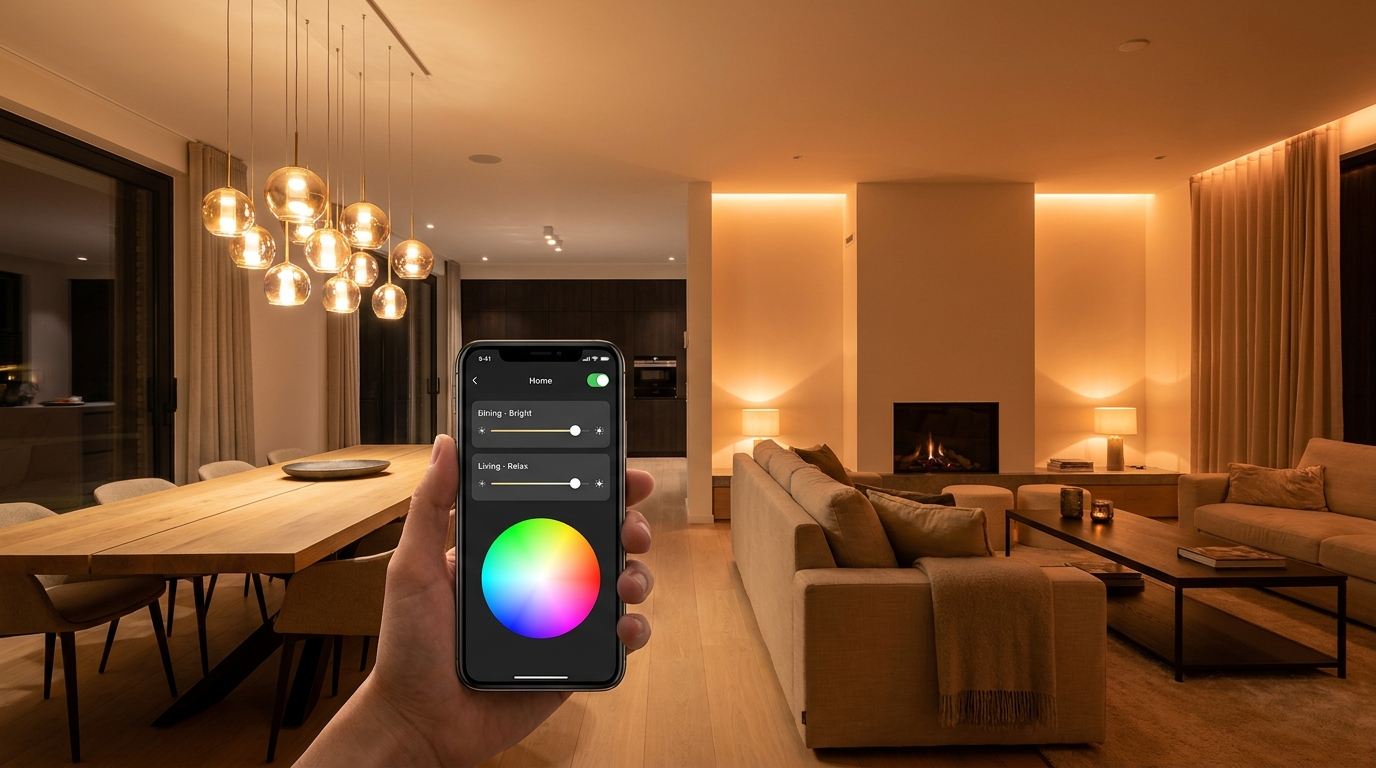
The living room is often where smart lighting feels most immediately rewarding because it hosts so many different moods. This one room may need to support conversation, reading, television, children’s play, quiet weekends, and entertaining. Layering is especially useful here. Try using a smart switch for overhead lighting and smart bulbs in table lamps or sconces for softness. This gives you a practical base layer and a more emotional layer at the same time.
For evening comfort, lower the overhead brightness and let side lighting do more of the work. It tends to feel less exposing and more flattering to both people and the room itself. Shelving or art lighting can add depth without requiring much brightness at all. The result is a room that feels less flat and much more welcoming.
Kitchen
The kitchen needs to work hard, but it does not need to feel clinical. Bright task lighting is helpful for prep, cleanup, and school projects, yet after dinner the same intensity can make the room feel overstimulating. Smart dimmers or smart bulbs in pendants and under cabinet lighting can help the kitchen shift into a softer evening mode. This is one of the easiest ways to make the whole home feel calmer at night.
If your kitchen connects to a dining or family area, coordinated scenes become especially helpful. You can brighten work surfaces while keeping nearby seating areas slightly warmer and softer. This balance supports real life beautifully because different people often use connected spaces in different ways at the same time.
Bedroom
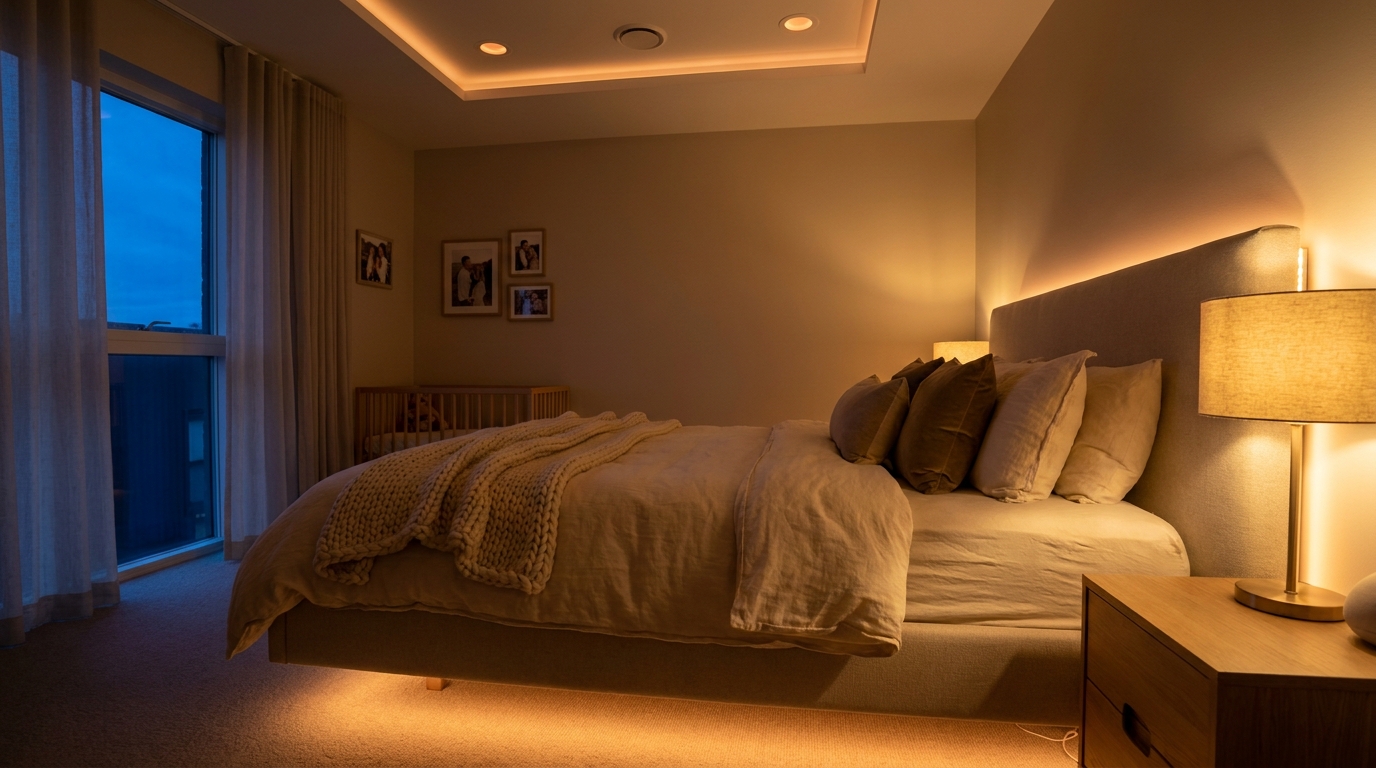
The bedroom benefits deeply from warmer, lower light levels. Smart bulbs in bedside lamps are a lovely first step because they let each side of the bed operate independently. You can create a reading scene, a getting dressed scene, and a gentle wind down scene without adding visual clutter or changing the room’s decor. In many homes, this one upgrade makes the bedroom feel instantly more restful.
Consider using schedules here more than anywhere else. A very low warm glow in the evening can help transition the room into a quieter mode. In the morning, a gradual rise in brightness can feel kinder than a sudden overhead burst. These are not dramatic changes, but they often make daily routines feel noticeably better.
Entry and hallway
These spaces are easy to overlook, yet they shape the emotional first impression of home. A softly lit entry feels welcoming at the end of the day and reassuring when guests arrive. Hallways benefit from scheduled lighting, motion based lighting, or sunset automations because they improve comfort and reduce fumbling in the dark. This is a practical upgrade, but it also gives the home a cared for feeling that people sense immediately.
Energy savings and the bigger picture
Smart lighting often gets marketed as an energy saver, and it certainly can be, but it helps to understand where the biggest payoff really comes from. Natural Resources Canada says ENERGY STAR certified lighting can use up to 90 percent less energy than incandescent bulbs, and the Department of Energy has documented major savings from LED adoption at the national level. DOE estimated annual U.S. energy savings of 1.3 quadrillion Btu from LED adoption in 2018, worth about $14.7 billion in consumer savings. Those numbers are significant, but the key lesson for homeowners is simple. Efficient LEDs do much of the heavy lifting.
Smart controls improve that efficiency by reducing wasted usage and matching light to actual need. Schedules prevent forgotten lights from staying on all day. Dimming can reduce output when full brightness is unnecessary. Occupancy sensing can keep transitional areas lit only when needed. In a thoughtful setup, efficiency and comfort support each other instead of competing.
It is also worth remembering that many homes still have meaningful upgrade potential. NRCan has reported that nearly 60 percent of light bulb sockets in Canada still contain inefficient bulbs. If your home still includes older incandescent or halogen bulbs, replacing them first will usually make the greatest difference in both savings and performance. Then the smart features can build on that stronger foundation.
Common smart lighting mistakes to avoid
- Buying without checking compatibility. Not every smart bulb works well with every fixture or dimmer, and not every smart switch works with every wiring setup.
- Using smart bulbs on circuits that people keep switching off. If power gets cut at the wall, the bulb cannot stay connected and responsive.
- Choosing brightness or coolness over comfort. Brighter is not always better, especially in the evening or in restful rooms.
- Overcomplicating scenes too early. Start with a few reliable scenes that support real routines, then build gradually.
- Ignoring certification and product quality. Safety, verified performance, and reliable support matter more than flashy marketing claims.
How interoperability affects your choices
As smart homes become more connected, platform compatibility matters more than ever. Many homeowners already use a voice assistant, a home app, or a broader ecosystem for locks, thermostats, and speakers. Lighting should fit naturally into that world rather than becoming its own isolated system. Increasing interest in interoperability standards such as Matter reflects a broader desire for whole home compatibility and easier setup across brands.
If you are starting from scratch, choose products that fit the ecosystem you are most likely to keep using. If you already have a platform in place, look for lighting that integrates smoothly with it. This does not mean every device in the house must come from one brand, but it does mean your choices should feel coherent. The emotional payoff of smart lighting is strongest when the technology fades into the background and your routines feel seamless.
When to call a professional
There is absolutely room for DIY confidence in smart lighting, but there is also wisdom in knowing when a project has gone beyond a comfortable limit. If you open a switch box and the wiring is unfamiliar, if your home is older, if you are dealing with three way switches, or if the instructions and reality do not clearly align, call a licensed electrician. The cost is often worthwhile for peace of mind and proper performance.
A professional can also help if you want recessed fixtures updated, hardwired dimmers installed throughout a room, or lighting zones rethought more strategically. Sometimes the best version of DIY is doing the planning yourself and bringing in expert help for the more technical parts. That combination often leads to the most beautiful and dependable result.
Bringing it all together
Smart lighting is one of the rare home upgrades that can be both practical and quietly emotional. It can save energy, make routines easier, and help every room support the way you actually live. Yet its true magic is often in the feeling it creates. A home lit with more intention can feel softer, steadier, and more deeply personal. It can welcome you in the door, support your concentration, and gently signal that the day is coming to a close.
If you are beginning this project, start small and stay thoughtful. Choose one room that feels slightly off right now and ask what kind of light would make it feel better. Maybe that means warm dimmed bedside lamps. Maybe it means a smarter kitchen switch that tones down the glare after dinner. Maybe it means a living room scene that makes movie nights feel a little more special. The technology matters, but the comfort matters more.
In the end, installing smart lighting is not really about chasing the newest gadget. It is about using light in a more humane way. With the right LEDs, the right controls, and a little care around compatibility and safety, you can create a home that responds to your routines with grace. And that kind of atmosphere is more than a feature. It is a form of everyday well being built right into the rooms you live in most.


No Comment! Be the first one.