


Maximizing Value Appreciation in Real Estate Investments
Value appreciation is one of the most powerful drivers of wealth creation in real estate, yet it is also one of the most misunderstood. Maximizing it requires treating appreciation as the outcome of disciplined decisions rather than passive luck. Appreciation results from a layered interaction between local market conditions, property-specific decisions, financing environments, neighborhood perception, and timing. Investors who outperform buy in supply-constrained, demand-resilient locations, then improve the asset in ways that increase functional appeal without exceeding neighborhood value ceilings. That means prioritizing job growth, migration trends, and limited new supply when choosing a market, then favoring functional upgrades such as updated kitchens, improved layouts, and better systems over purely decorative spending. It also means protecting gains after purchase through consistent maintenance and periodically refreshing the property to match neighborhood standards. Appreciation is not simply the market rising over time. It is the product of strategic asset management and smart positioning within the right micro-market.
Table Of Content
- Why Real Estate Appreciation Is Highly Local
- The Core Drivers of Property Value Appreciation
- Tangible factors that directly influence value
- Intangible factors that shape pricing power
- How to Evaluate Appreciation Potential Before You Buy
- Forced Appreciation Versus Market Appreciation
- Strategic Improvements That Tend to Support Appreciation
- Location Intelligence: The Real Edge in Appreciation Strategy
- Common Misconceptions That Can Undermine Returns
- Market Trends Shaping Appreciation in the United States and Canada
- Protecting Appreciation After Acquisition
- Appreciation, Taxes, and the Reality of Realized ROI
- A Strategic Framework for Maximizing Appreciation
- Conclusion: Appreciation Favors Strategy, Not Assumption
That matters even more in today’s environment. Across North America, price growth has become more uneven after the rapid post-pandemic surge. Affordability pressure, mortgage rates, inventory constraints, migration patterns, and local job creation now shape outcomes differently from one region to another. Broad national headlines can be useful for context, but they are not enough to build a high-quality investment strategy. The Federal Housing Finance Agency has made this clear through a House Price Index built from tens of millions of home sales, showing appreciation patterns not only nationally but also by state, metro, county, ZIP code, and census tract. The implication for investors is straightforward. Appreciation is local, and strategy must be local as well.
This article takes a strategic view of how to maximize value appreciation in real estate investments. It examines the tangible factors that directly affect property value, the intangible factors that shape buyer demand and pricing momentum, the role of renovations and forced appreciation, and the practical discipline required before and after acquisition. It also addresses common misconceptions, recent market trends in the United States and Canada, and the important reality that appreciation alone does not determine realized return. Financing, taxes, maintenance, and exit planning all influence the outcome. For serious investors, the objective is not just to own property that rises in value. The objective is to acquire and manage assets positioned for durable, risk-adjusted growth.
Why Real Estate Appreciation Is Highly Local
One of the biggest mistakes investors make is relying too heavily on national housing narratives. A headline that national prices are up or down says very little about the exact neighborhood where an asset is located. The FHFA’s data structure reinforces this point because it tracks house price movement across multiple geographic levels. That kind of granularity matters because local inventory, employer growth, migration trends, zoning constraints, commute patterns, and development pipelines can produce outcomes that differ sharply even within the same metro area.
Recent FHFA data also illustrate how uneven appreciation can be. Its 2026Q1 purchase-only index shows one-year U.S. appreciation of 1.65 percent and five-year appreciation of 38.87 percent. Those numbers tell two different stories at once. First, long-term gains can remain substantial even when short-term growth slows materially. Second, appreciation does not move in a straight line. Short phases of deceleration are normal, particularly when affordability and financing conditions tighten. For investors, that means underwriting should never assume a smooth annual rise in value.
State-level variation reinforces the same point. FHFA’s 2026Q1 state data showed large dispersion in annual appreciation, with Illinois at 7.31 percent while several other states were near 4 percent or lower. That spread is significant. It shows why choosing the right market can have as much impact on long-term returns as choosing the right property. In Canada, similar caution applies. Statistics Canada’s New Housing Price Index has shown periods of negative year-over-year movement, including a recent national reading of negative 2.4 percent in May. Long-run appreciation can still be strong, but the path is far from uniform.
Smart investors treat appreciation analysis like market intelligence rather than broad optimism. They look for evidence of durable demand, constrained supply, and pricing resilience at the neighborhood level. They also pay attention to whether recent growth was driven by sustainable fundamentals or by short-lived momentum. Markets supported by employment expansion, diversified economic bases, transportation access, and manageable supply tend to provide better long-term appreciation prospects than markets driven only by speculative enthusiasm.
The Core Drivers of Property Value Appreciation
Appreciation is influenced by both tangible and intangible factors. FHFA explicitly notes that actual home value depends on local market conditions, house condition and age, home improvements made and needed, and many other factors. That statement captures an important truth. Property value is not determined by market movement alone. It is shaped by what the asset is, what condition it is in, how it compares to surrounding homes, and how buyers perceive its position within the area.
Tangible factors that directly influence value
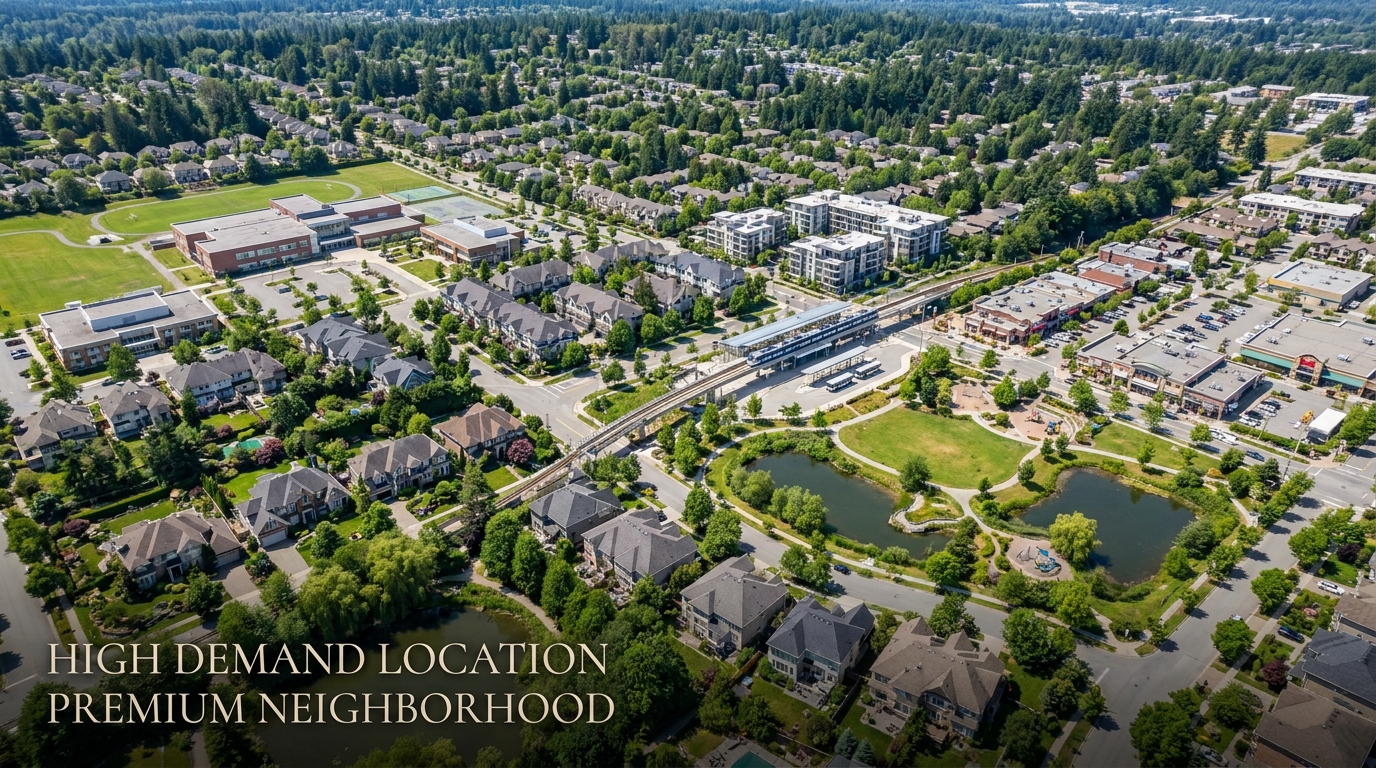
Tangible drivers are the most visible and easiest to evaluate. Location quality remains the first and most durable factor. Properties in strong school catchments, near reliable transit, close to employment nodes, and within established amenities generally command more resilient demand. Lot size, layout efficiency, parking, storage, natural light, and overall condition also matter because they influence day-to-day utility. Buyers and tenants may forgive cosmetic imperfections more easily than functional limitations that reduce convenience or livability.
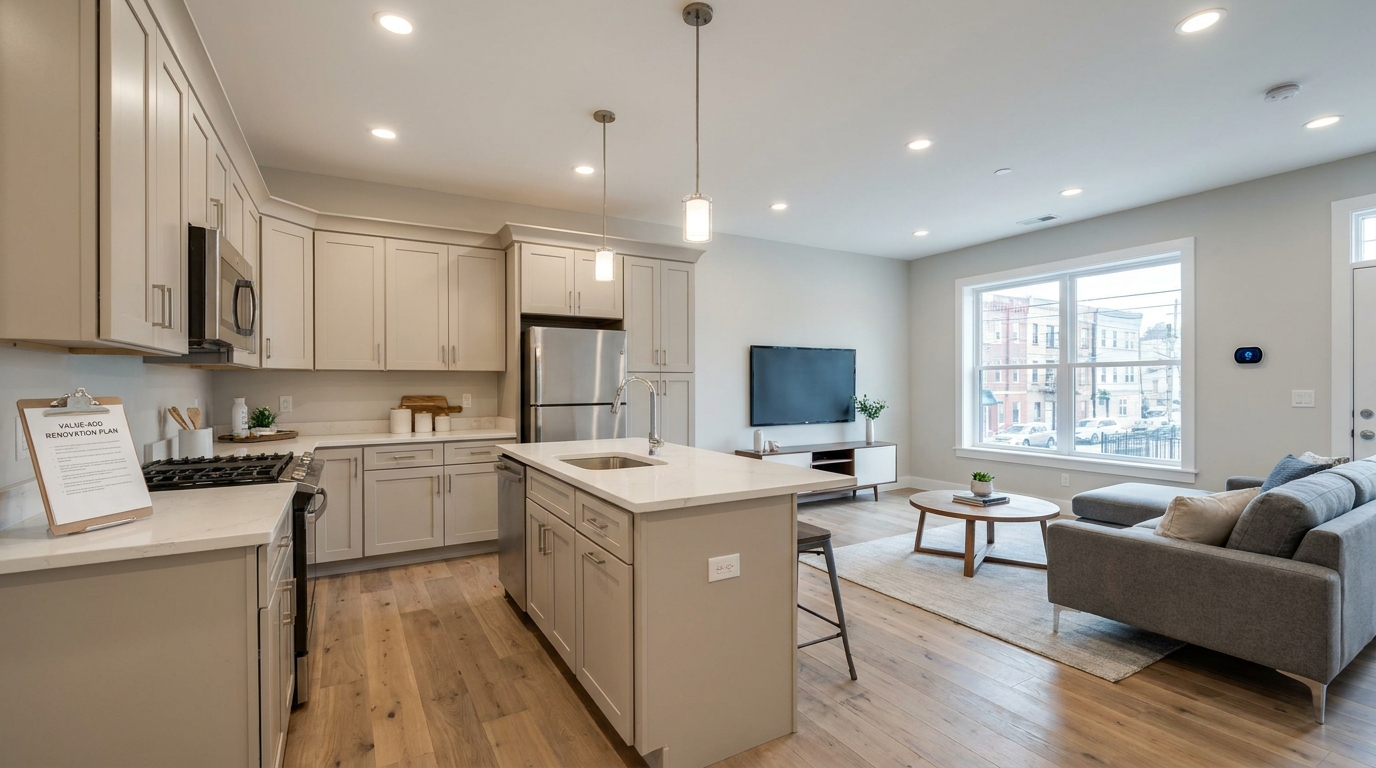
Renovation quality is another decisive factor, but only when it is aligned with neighborhood expectations. An elegant, high-end upgrade package in a mid-market neighborhood does not automatically create equivalent value. In many cases, over-improving a property simply narrows the buyer pool or pushes pricing above what comparable sales can support. Functional upgrades typically create more reliable value than purely decorative spending. Updated kitchens, improved bathrooms, modern systems, durable flooring, efficient lighting, and better layout flow tend to outperform luxury flourishes with limited practical benefit.
Condition and deferred maintenance also affect appreciation more than many investors realize. Properties that are consistently maintained preserve buyer confidence and reduce the discount that future purchasers apply for uncertainty. A neglected roof, aging HVAC system, moisture issues, or poor exterior presentation can undermine value growth even in a rising market. Appreciation can be thought of as both a market outcome and a confidence outcome. Buyers pay more for assets that feel secure, efficient, and predictable.
Intangible factors that shape pricing power
Intangible drivers are less visible but often just as powerful. Perceived safety, neighborhood identity, community reputation, and future infrastructure expectations all influence willingness to pay. Two neighborhoods with similar housing stock can perform very differently if one is seen as upwardly mobile and the other as stagnant. Investors who understand this dynamic often outperform by identifying improving submarkets before those changes are fully reflected in pricing.
Buyer psychology matters as well. Demand is not driven only by spreadsheets. It is influenced by emotion, aspiration, and narrative. A neighborhood associated with strong schools, walkability, parks, coffee shops, and visible investment often commands a premium because buyers imagine a better lifestyle there. That premium can persist even when strict numerical comparisons suggest limited differences. Intangible value is still value, and investors who ignore it can miss important appreciation signals.
Future public and private investment should also be studied carefully. Planned transit expansions, streetscape upgrades, institutional investment, retail revitalization, and zoning reform can materially shift long-term demand. These changes do not guarantee appreciation, but they often improve the probability of sustained pricing strength. The key is to distinguish between credible development with funding and timelines, and speculative announcements that may never translate into meaningful change.
How to Evaluate Appreciation Potential Before You Buy
The strongest appreciation strategy usually begins before acquisition. Buying well matters more than trying to rescue a weak decision later. Investors should approach every potential purchase with a structured framework that combines market data, property analysis, and future demand indicators. The goal is not to predict exact price movement. The goal is to identify conditions that increase the odds of durable value growth while reducing downside risk.
A disciplined pre-purchase review starts with market fundamentals. Job growth should be a priority because employment expansion supports household formation, migration, and housing demand. A market with a diversified employer base is generally preferable to one dependent on a single dominant industry. Investors should also review population inflows, wage trends, and demographic shifts. Younger professional inflows, family formation, and retiree migration can each support appreciation, but they often affect different neighborhoods and product types.
Supply pipeline analysis is equally important. Appreciation is often strongest where demand is resilient and new supply is difficult to add quickly. Barriers can include land scarcity, zoning limits, infrastructure constraints, construction costs, or entitlement complexity. If a neighborhood is seeing rapid new development, that is not automatically negative, but investors need to understand whether incoming supply is likely to satisfy pent-up demand or create pricing pressure. Strong appreciation often occurs where quality inventory remains structurally limited.
Transit investment and access to daily essentials can substantially improve long-term value. Properties near reliable transportation options, major road corridors, employment hubs, and neighborhood retail tend to maintain broader appeal. School quality, parks, healthcare access, and walkability can all support desirability across cycles. Historical index performance should also be reviewed, not as a guarantee, but as context. Markets with stable long-term demand often show better resilience during weaker periods, even if they are not always the fastest growers during booms.
A practical acquisition framework can include the following criteria:
- Demand resilience: stable employment, migration inflows, and broad buyer or renter appeal
- Supply discipline: limited overbuilding risk and clear barriers to excessive new inventory
- Location quality: transit, schools, amenities, access to jobs, and neighborhood reputation
- Property upside: visible opportunities to improve layout, condition, efficiency, or curb appeal
- Comparable support: recent sales that validate current pricing and future positioning
- Exit depth: a large enough future buyer pool to support liquidity when selling
Comparative market analysis is especially important at this stage. Investors should compare the target asset against recent local sales, active competition, and pending transactions. That analysis helps identify whether the property is being acquired below replacement value, below neighborhood quality standards, or below the level supported by strategic improvements. It also prevents a common mistake, which is underwriting future appreciation from a price that was already too high.
Forced Appreciation Versus Market Appreciation
Appreciation comes in two broad forms. The first is market appreciation, which occurs when the surrounding market rises due to broader economic and housing conditions. The second is forced appreciation, which results from investor action that improves the property’s utility, condition, or income profile. Sophisticated investors aim to benefit from both, but they do not confuse them. Market appreciation is partly outside the owner’s control. Forced appreciation is where strategy and execution matter most.
Forced appreciation is strongest when improvements solve real functional problems. Reconfiguring a poor layout, adding a bedroom where legally feasible, modernizing an outdated kitchen, replacing inefficient systems, or improving curb appeal can make a property more competitive and increase its perceived and market value. In multifamily or rental settings, forced appreciation can also come from operational improvements such as better management, lower turnover, strategic amenity upgrades, or utility efficiency measures that support net income and marketability.
However, one of the most persistent misconceptions in real estate is that every renovation adds value equal to or greater than its cost. That is rarely true. Many upgrades recover only part of the money spent, and some recover very little. The outcome depends on local comparables, target buyer expectations, product type, and whether the improvements are consistent with neighborhood standards. A premium appliance package may impress a seller, but if local buyers care more about parking, storage, or an extra bathroom, the investment may underperform badly.
The best way to think about renovation ROI is through the lens of highest and best use. Ask what the market is actually willing to pay for in that specific location. Then align capital with those priorities. In many cases, simple improvements such as paint, flooring, lighting, landscaping, and minor layout refinements can deliver stronger marginal returns than highly customized finishes. Premium strategy is not about spending more. It is about spending with precision.
Strategic Improvements That Tend to Support Appreciation
Not all improvements have the same effect on long-term value growth. The strongest projects are usually those that improve functional utility, reduce future maintenance risk, and enhance broad buyer appeal. In practical terms, that means investors should favor upgrades that make the property easier to live in, less expensive to operate, and more consistent with what the local market expects.
Energy efficiency is becoming a more important value driver across North America. Buyers and renters increasingly respond to lower utility costs, better insulation, efficient windows, modern HVAC systems, and smart home controls. These upgrades can strengthen both immediate marketability and long-term desirability. They may not always create dramatic headline premiums, but they improve the quality of the asset and can support resilience during slower markets when buyers become more selective.
Curb appeal remains one of the simplest but most effective appreciation tools. Exterior presentation influences first impressions, online click-through rates, showing activity, and the emotional tone of the entire buying experience. Fresh landscaping, exterior maintenance, updated entryways, and clean hardscaping often create a disproportionate effect relative to cost. In neighborhoods where buyers compare several similar homes, small exterior advantages can meaningfully improve perceived value.
Layout optimization is another high-impact strategy. Opening an awkward floor plan, creating better bedroom separation, adding workspace, or improving storage can materially raise utility without requiring luxury-level budgets. This matters because modern demand increasingly values flexibility. Work-from-home patterns, multigenerational living, and lifestyle expectations have increased the premium on practical space planning. A property that feels adaptable tends to age better in the market than one that merely looks stylish in photos.
Investors should also think in terms of timing and sequencing. It is often smarter to address core systems and maintenance first, then complete cosmetic work after the property is structurally sound. This protects value, reduces unpleasant surprises during resale, and prevents the common error of investing heavily in finishes while ignoring issues that later trigger inspection renegotiations. Appreciation is easiest to preserve when the property is strong beneath the surface as well as visually compelling.
Location Intelligence: The Real Edge in Appreciation Strategy
If there is one factor that consistently separates average real estate investing from exceptional investing, it is location intelligence. That does not simply mean buying in a major city or a desirable suburb. It means understanding the specific submarket dynamics that influence demand over time. Investors who maximize appreciation usually know where future demand is strengthening before pricing fully reflects it.
Micro-market analysis has become increasingly valuable because broad regional averages can hide meaningful opportunities and risks. One neighborhood may benefit from a new transit connection, school improvement, or business district expansion while another nearby area stagnates under oversupply or weaker demographic trends. The quality of the street, proximity to amenities, noise levels, school boundaries, and development pattern can all influence price trajectories. In some cases, moving just a few blocks can materially change long-term upside.
Supply-constrained markets deserve particular attention. Areas with strong demand but limited room for new inventory often support more resilient appreciation. This can occur in urban cores with entitlement constraints, mature suburbs with little vacant land, or desirable school districts with restricted housing turnover. In these environments, even moderate demand growth can produce meaningful pricing support because replacement options remain scarce.
Neighborhood change should also be interpreted carefully. Gentrification, retail improvement, public realm upgrades, and institutional investment can all signal appreciation potential, but they should be evaluated through evidence rather than assumption. Investors should study permit activity, infrastructure budgets, private development commitments, and local absorption patterns. Confidence should come from verified momentum, not from branding language or social media enthusiasm.
Real estate gains are often earned at the neighborhood level, not the national level. The investor who studies streets, school lines, transit maps, and permit pipelines will usually outperform the investor who follows only housing headlines.
Common Misconceptions That Can Undermine Returns
Misunderstanding appreciation often leads to poor investment decisions. One widespread misconception is that all renovations produce a dollar-for-dollar increase in value. In reality, many projects recover only a portion of cost, and some overcapitalized improvements can reduce ROI by pushing the property beyond neighborhood pricing norms. Successful renovation strategy depends on local evidence, not personal taste.
Another misconception is that high rent growth automatically means high appreciation. Rental yield and capital appreciation are related but not identical. Some markets offer strong cash flow but limited appreciation because supply is more elastic or owner-occupier demand is weaker. Other markets deliver strong appreciation but lower immediate cash yield because buyers are willing to pay a premium for location, scarcity, or lifestyle value. Investors need to decide where they sit on the spectrum between current income and future price growth.
A third misconception is that appraised value always matches real-time market value. FHFA research indicates that appraised values tend to lag market prices, which means investors should not assume that a recent appraisal fully captures current appreciation. This is especially relevant when refinancing, selling quickly after improvements, or trying to mark portfolio value. Appraisals are important, but they are not a perfect real-time reflection of market sentiment.
There is also a persistent belief that the most expensive house in a neighborhood appreciates the fastest. In many cases, the opposite can be true. The top-priced asset may face a smaller buyer pool, stricter comparable limits, and greater vulnerability to over-improvement. Properties positioned comfortably within the mainstream of local demand often appreciate more efficiently because they appeal to a broader market. Liquidity matters. The easier an asset is to understand and afford, the more durable its demand can be.
Market Trends Shaping Appreciation in the United States and Canada
Recent North American housing conditions have reinforced the need for disciplined underwriting. The post-pandemic period brought extraordinary appreciation in many markets, but that pace has moderated and become more uneven. Mortgage rates, affordability pressure, and buyer sensitivity have all increased. At the same time, low inventory continues to support values in many U.S. markets, limiting downside in areas with solid demand fundamentals.
FHFA reported that low inventory remained an important support for appreciation in 2024. That dynamic continues to matter because even when affordability weakens, a shortage of quality listings can maintain pricing resilience. Still, the broad takeaway from recent data is dispersion rather than uniform strength. Some divisions and states continue to outperform while others cool materially. Investors should expect wider variation in outcomes and avoid using one national narrative to justify every acquisition.
Canada presents a similarly nuanced picture. Statistics Canada and Bank of Canada indicators show that new housing price changes can turn negative in some periods, highlighting the impact of financing costs and demand pressure on appreciation. This does not mean Canadian real estate lacks long-term growth potential. It means timing, segment selection, and localized analysis are essential. Investors need to underwrite renovation budgets, financing assumptions, and hold periods with more caution than during periods of easy macro tailwinds.
In this environment, appreciation strategy is shifting from passive optimism to active selection. Investors are increasingly relying on micro-market data, transit plans, affordability screens, and supply pipeline analysis to identify appreciation pockets. The edge now comes from precision. Those who buy quality assets in resilient locations and manage them intelligently are still well positioned. Those who assume broad market momentum will fix weak acquisitions face far more risk.

Protecting Appreciation After Acquisition
Buying well is only the first step. Preserving and enhancing appreciation after acquisition requires ongoing attention to maintenance, positioning, and periodic reinvestment. Investors sometimes focus intensely on finding a deal and then become too passive during ownership. That approach can allow small issues to compound into larger value erosion. Appreciation is easier to protect than to rebuild after neglect.
Routine maintenance should be treated as a strategic function, not a cost center. Roofing, exterior finishes, drainage, mechanical systems, and moisture control are all central to preserving buyer confidence and minimizing future discounting. Preventive maintenance often produces stronger return than reactive repairs because it avoids accelerated deterioration and supports smoother resale execution later. A well-maintained property also photographs better, shows better, and feels more trustworthy.
Periodic renovations should be timed to market expectations rather than personal preference. If competing properties in the area increasingly offer modern kitchens, updated baths, energy-efficient features, or better outdoor living spaces, an investor may need to refresh the asset to maintain its competitive position. Appreciation can stall when a property falls behind neighborhood standards, even if the broader market remains healthy. The goal is not to chase every trend. The goal is to stay relevant to the target buyer or tenant base.
For rental properties, tenant quality and occupancy stability also influence appreciation indirectly. Properties with better maintenance, stronger presentation, and responsive management often attract more stable tenants and experience less wear, fewer turnover costs, and cleaner operating history. That can support pricing at sale, especially for income-producing assets where operational quality influences buyer confidence. Asset management and value appreciation are not separate disciplines. In well-run portfolios, they reinforce each other.
Appreciation, Taxes, and the Reality of Realized ROI
Investors should never evaluate appreciation in isolation. A property can rise significantly in value and still produce a disappointing realized return if financing costs, taxes, holding expenses, or poor execution erode gains. Appreciation is one component of total return alongside cash flow, principal paydown, tax treatment, and eventual sale strategy. Premium investors think in terms of after-tax, risk-adjusted outcomes rather than surface-level market gains.
Tax planning is especially important over longer hold periods. In the United States, owners and investors face different treatment of capital gains, depreciation, and improvement basis. NAR has highlighted how long ownership periods can push gains far beyond the fixed capital gains exclusion framework created in an earlier market environment. That means appreciation can materially affect tax outcomes at sale, particularly in high-growth markets or after long holds. Strategic recordkeeping around capital improvements and cost basis becomes essential.
Depreciation creates valuable tax benefits during ownership for many investors, but it can also influence the economics of disposition through recapture considerations. Capital improvements may increase basis and reduce taxable gain, while routine repairs may be treated differently. These are not technical details to defer until closing. They should shape investment planning from the start. Investors who understand the tax dimension of appreciation are better positioned to compare hold-versus-sell decisions with clarity.
Exit strategy matters as much as entry strategy. If appreciation has compressed cap rates in an area, a sale may produce exceptional pricing even if cash flow has become less compelling. In other cases, holding longer may be the better decision if location quality remains strong and tax friction from selling is high. There is no universal answer. The right move depends on financing, basis, portfolio objectives, local demand, and the availability of better redeployment opportunities.
A Strategic Framework for Maximizing Appreciation
For investors seeking a clear operating model, appreciation can be approached as a sequence of strategic decisions. First, select markets where demand is durable and supply is constrained. Second, acquire assets at a basis that leaves room for both market and forced appreciation. Third, improve the property in ways that increase utility, efficiency, and broad market appeal without overcapitalizing. Fourth, protect the asset through disciplined maintenance and periodic upgrades. Finally, manage financing and tax considerations so the appreciation you create becomes appreciation you keep.
This framework also requires intellectual discipline. Investors should be skeptical of broad narratives, careful with renovation assumptions, realistic about holding costs, and precise about neighborhood analysis. The strongest returns often come from avoiding unforced errors rather than from making dramatic bets. Paying too much, over-improving, underestimating supply, or neglecting tax planning can all reduce the benefits of appreciation that would otherwise appear attractive on paper.
At the same time, investors should not become so cautious that they miss opportunity. Real estate remains one of the few asset classes where local knowledge, negotiation skill, operational execution, and strategic capital improvements can meaningfully influence performance. Appreciation is not guaranteed, but it is also not random. Investors who combine data with judgment can improve their odds significantly.
- Buy for fundamentals: prioritize employment, migration, supply discipline, schools, and transit.
- Underwrite locally: use neighborhood comparables and micro-market evidence rather than national averages.
- Create value selectively: focus on function, condition, efficiency, and layout before luxury flourishes.
- Protect the asset: maintain systems, curb appeal, and competitive positioning through ownership.
- Plan the exit early: understand taxes, basis, financing, and the likely buyer pool before you need to sell.
Conclusion: Appreciation Favors Strategy, Not Assumption
Maximizing value appreciation in real estate investments is not about hoping the market does the work. It is about making a series of informed decisions that position an asset for stronger long-term demand, better competitive relevance, and more efficient resale potential. Tangible factors such as location, condition, layout, maintenance, and renovation quality matter deeply. Intangible factors such as safety perception, neighborhood identity, infrastructure expectations, and buyer psychology matter just as much. The strongest investors understand both sides of that equation.
In today’s market, that strategic mindset is essential. U.S. and Canadian data both show that appreciation can slow, soften, or diverge materially by market and segment. Low inventory may support pricing in some regions while affordability constrains it in others. New housing price measures can turn negative even in countries with strong long-run growth narratives. These realities do not weaken the case for real estate. They strengthen the case for precision.
The opportunity remains substantial for investors who buy well, improve intelligently, and hold with discipline. Real estate appreciation is still one of the most effective mechanisms for building wealth over time, but it rewards analysis, not assumption. If your goal is lasting ROI optimization, focus less on chasing broad trends and more on owning the right asset in the right location with the right plan. That is where appreciation becomes a strategy rather than a hope.

No Comment! Be the first one.