

Why the Ontario Line’s Tunnel Breakthrough Is a Housing Story, Not Just a Transit One
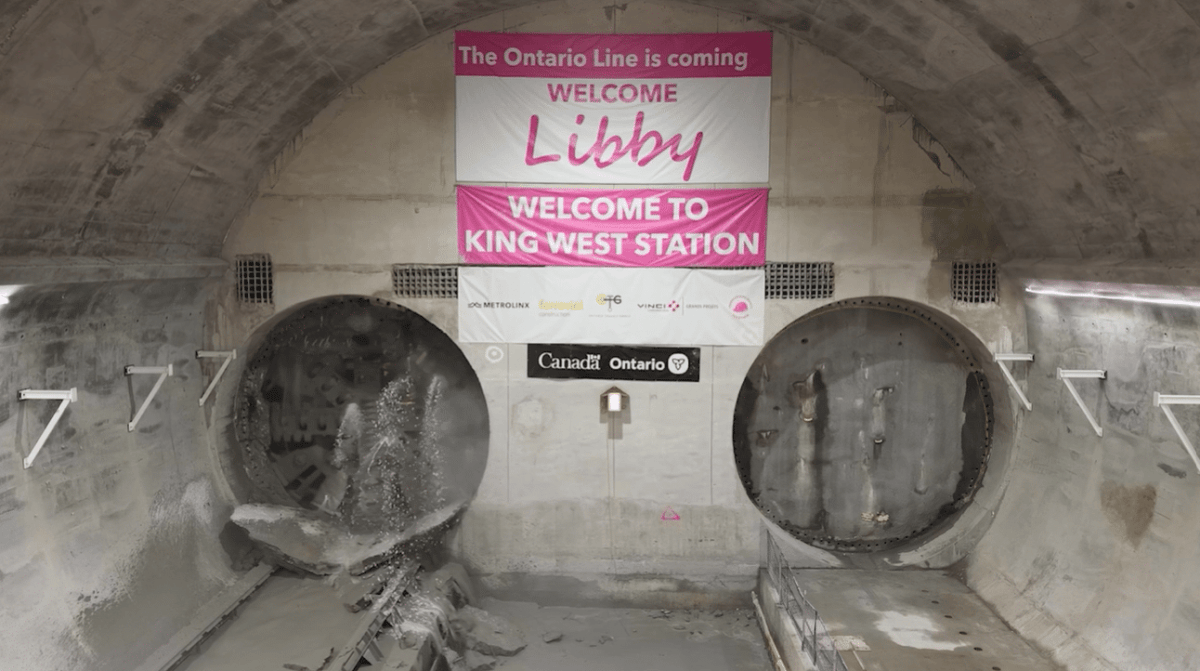
When a tunnel boring machine breaks through to a new station, most coverage treats it as an engineering milestone. I see something else: a land value event. The machine nicknamed Libby has just reached the future King West Station on Toronto’s Ontario Line, roughly 1.3 kilometres from its launch shaft near Exhibition Station, after installing about 780 tunnel lining rings since tunnelling began in April 2026. That is a construction fact. The development fact underneath it is bigger.
Transit infrastructure and housing supply are not separate conversations anymore, and this project proves it directly. The province has already attached a transit-oriented community plan to King West Station, with nearly 680 new homes slated for delivery around it as part of a wider $236-billion capital plan. That is the real story for anyone thinking about long term urban growth in Toronto: a subway station is being built with the housing project already designed into the site, not bolted on afterward.
This sequencing matters more than people realize. Land near future transit nodes behaves differently than land near existing ones. Once a station is confirmed and under physical construction, rather than merely planned on paper, the surrounding parcels re-rate. Developers, investors, and municipal planners start treating proximity to King West Station as a fixed input rather than a speculative one. The timeline also compresses risk: with the second TBM, Corkie, expected to reach the same station by December, the certainty around this corridor is accelerating faster than typical infrastructure builds.
There is also a broader supply argument worth making to readers who think about housing at the city scale. The Ontario Line is projected to cut travel times across Toronto by as much as 40 minutes and reduce crowding on the busiest stretch of Line 1 by up to 15 per cent during peak periods. Reduced commute friction expands the radius of land that functions as viable, desirable housing stock. Neighbourhoods that were previously considered too far from downtown become newly competitive the moment transit access improves. That is how infrastructure investment quietly becomes housing policy.
A station is never just a stop. It is a signal to the market about where the next decade of housing demand will concentrate.
The federal government’s contribution of more than $4 billion toward construction underscores how seriously this corridor is being treated as core infrastructure, not a discretionary project. For developers and planners watching the GTA, King West Station is a useful case study in what transit-anchored housing strategy looks like when the public capital commitment is real and the construction timeline is visible, ring by ring, rather than theoretical.
Source: Ontario Construction News.