

Toronto’s Next Housing Push: Reading the Real Signal Behind 9,000 New Rental Units
Every large city eventually reaches a point where incentives alone decide whether supply gets built or stalls on paper. Toronto just signaled where it stands. Mayor Olivia Chow opened her second term by unveiling the second phase of the city’s Purpose-Built Rental Housing Incentives stream, a program projected to unlock more than 9,000 new rental units, including over 2,000 affordable, rent-controlled homes. For anyone tracking how cities translate policy into actual construction, this is the detail worth studying.
What makes this phase strategically interesting is not the headline number, it is the mechanism. Nineteen projects across twelve wards will receive an indefinite deferral of development charges, a lever that directly changes project feasibility at the pro forma stage. Development charges are often the single largest fixed cost standing between a site acquisition and a shovel in the ground. Removing that barrier, even temporarily, shifts the timing calculus for builders who were otherwise waiting out higher financing costs.
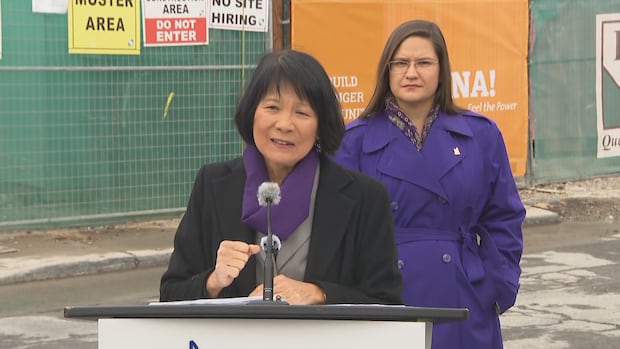
Chow made the announcement at a Mount Dennis construction site that will eventually deliver close to 450 rental homes, a deliberate choice that ties policy to a visible, physical outcome. That instinct matters for how this phase should be read. The city says it prioritized projects ready to begin construction within the year, which suggests this round was built around execution speed rather than long term pipeline building. For developers evaluating where to position the next acquisition, that is a meaningful data point about how the city is now screening for readiness, not just intent.
The first phase of this program, launched in 2024, is already supporting construction of over 7,000 rental homes, with roughly 3,365 currently underway. That track record gives phase two more credibility than a typical policy announcement, because it shows the incentive structure has already converted into physical starts rather than stalling at approval. Combined with city data showing construction has started on over 84,000 residential units since 2022, Toronto is building a longer runway of supply than headlines usually credit.
Strong development strategy is never just about announcing units. It is about whether the financing conditions behind them actually hold.
The caveat worth flagging to anyone underwriting a Toronto project right now is that this second phase depends on a $1.5-billion development charge agreement with the federal and provincial governments, one that is funded in principle but still needs to be finalized before the city can formally approve these specific projects. Chow expressed confidence the deal will close, pointing to the federal budget’s broader commitment to housing supply. For developers and land strategists, that final step is the real thing to watch, because the difference between a policy framework and a financing guarantee is exactly where projects either accelerate or quietly slip.
Toronto’s rental pipeline is growing, the incentive architecture is maturing, and the city appears to be favoring execution over volume. For land strategy purposes, this is a market still worth leaning into, provided the finalized funding agreement lands as expected.
Source: CBC News