

Toronto’s $894-Million Bet on Rental Supply Shows What Disciplined Housing Strategy Looks Like
Cities talk about housing targets constantly. Few back that talk with nearly a billion dollars in direct financial incentives. Toronto just did, and the scale of the move deserves a closer look from anyone who studies how large urban centres actually turn policy into shovels in the ground.
The city has selected 19 rental housing developments for the second phase of its Purpose-Built Rental Housing Incentives program, projects expected to deliver 9,667 new units, including 2,059 affordable, rent-controlled homes. Those 19 were chosen from 58 applications representing roughly 27,000 proposed rental homes, which tells you two things at once: demand to build is far outpacing what any single incentive round can support, and the city is being deliberate about which projects get the advantage of public support first.
That deliberateness is the real story here. Toronto prioritized developments that can move into construction quickly, and it attached teeth to that priority. Selected projects must begin construction within 12 months or lose eligibility for the support. For a city that has spent years fighting the perception that approvals and incentives sit on shelves, that is a meaningful structural choice. It converts a subsidy program into a forcing mechanism for delivery.
The mechanics matter for anyone reading this as a development strategy case study. Incentives include an indefinite deferral of development charges on market-rate units, waived building permit fees, and property tax exemptions on the affordable component, with eligibility requiring at least 20 percent of units be designated affordable and rent-controlled. That mix lowers carrying costs at precisely the stage of a project, pre-construction through lease-up, when capital is most exposed. It is the kind of structuring that changes feasibility math on projects that might otherwise sit at the margin.
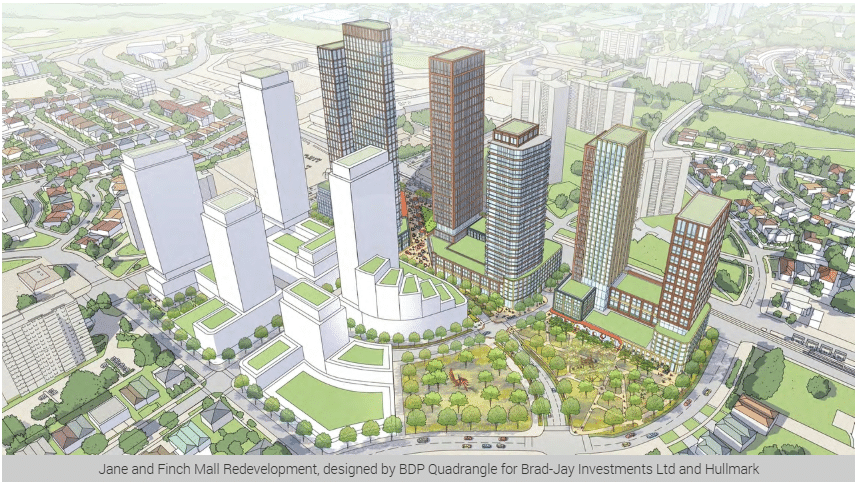
Context from the first phase supports the thesis. Launched in November 2024, phase one backed 15 developments with 7,219 rental homes, including 1,787 affordable units, and eight of those projects are already under construction. The city estimates about one in four rental housing starts in Toronto between January 2025 and August 2026 were supported by that first round. That is not a marginal policy footnote. That is a program meaningfully shaping the supply pipeline of Canada’s largest rental market.
Across both phases, Toronto is now providing roughly $894.2 million in incentives behind 34 developments expected to deliver more than 13,000 market-rate homes and over 3,800 affordable units.
For developers and planners watching other municipalities, this is a model worth studying closely. It pairs provincial and federal capital, drawn here from the $1.5 billion Development Charges Reduction Program, with a locally administered selection process that rewards readiness over ambition alone. Twelve wards saw projects selected, spreading the intensification rather than concentrating it, which matters for infrastructure planning, transit demand, and community absorption.
The bigger question for the sector is whether this approach scales and whether other major Canadian cities facing the same rental supply gap adopt similarly structured, delivery-conditioned incentive programs rather than softer commitments. Toronto’s second phase suggests that when a city ties real financial relief to construction milestones, developers respond, and supply actually moves.
Source: Ontario Construction News