Indigo Interiors: Why Denim Is the Season’s Most Sophisticated Textile
There is a quiet arrogance to denim. It has spent more than a century being dismissed as a working fabric, something for barns and back pockets, and yet it has always carried within it the memory of something far grander. Indigo, the dye that gives denim its soul, has moved through Mediterranean courts, Japanese textile houses, West African looms, and Mesoamerican traditions long before a bolt of cotton twill was ever called denim. To bring it into the home now is not a novelty. It is a return.
What draws me to this moment is the restraint it demands. Indigo is a colour that refuses to shout. A tailored denim upholstery reads architectural, almost sculptural, on a clean sofa silhouette, while a washed, softened indigo brings warmth and texture to a room without ever tipping into rustic cliché. This is the tension that makes denim so compelling as an interior material. It can be disciplined or relaxed, formal or lived in, depending entirely on how it is cut and placed. That range is rare in a single textile, and it is exactly why designers are reaching for it now, in kitchen banquettes, oversized sofas, and quiet corners of otherwise minimal rooms.
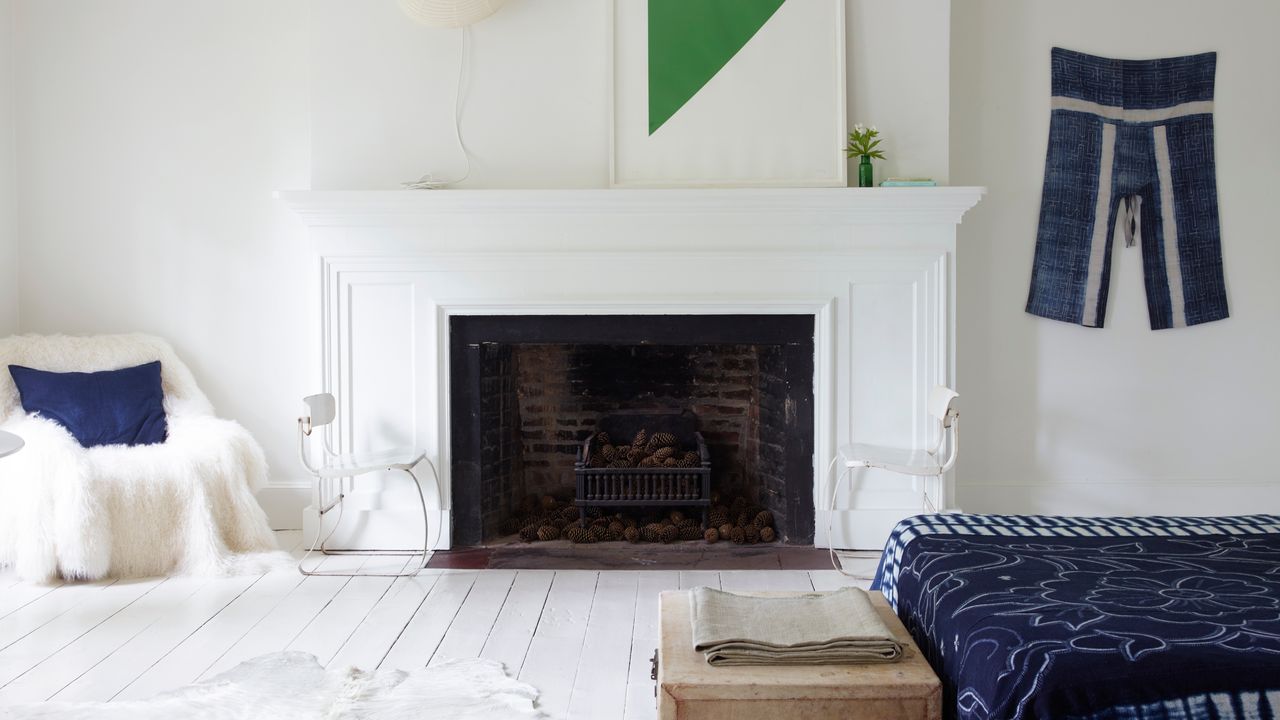
The Japanese sensibility toward indigo is instructive here. Rather than treating the colour as cold or industrial, it is handled with an elevated subtlety, layered rather than flattened, so that the depth of the dye becomes part of the room’s atmosphere. This is the opposite of trend chasing. It is closer to the French instinct I was raised with, where a single considered material is allowed to carry a whole room, and the Lebanese instinct alongside it, where texture and history are never separated from beauty. Denim, in this light, becomes less about casual comfort and more about narrative. A sofa upholstered in heavy indigo canvas is not simply furniture. It is a small archive of dye routes and trade histories, sitting quietly in a Manhattan high rise or a beach house by the coast.
Indigo is a material that transcends geography and time, continuously reinterpreted from the ceremonial to the everyday.
For KG Design readers, the lesson is less about denim specifically and more about what it represents: the growing appetite for materials with genuine provenance. We are moving past interiors that perform luxury through surface alone, toward spaces that carry real depth, whether that comes from an ancient dye tradition or an honest, well worn textile. Indigo simply happens to be a particularly elegant vehicle for that shift. It photographs beautifully, ages gracefully, and resists ever feeling dated because it was never really tied to a single decade in the first place.
Used with intention, whether in a single upholstered piece or as a recurring tone through a room’s textiles, denim brings a kind of quiet confidence that few materials manage. It does not need to compete with the architecture around it. It simply deepens it.
Source: Vogue, “Denim Interiors Are a Stroke of Design Jean-ius”