The Intelligence Layer Behind the Listing: What ZipISA’s Brokerage Rollout Signals for Real Estate Data
Every housing cycle produces a new layer of infrastructure, and this one is being built out of seller signals. ZipISA, an AI platform that identifies and contacts likely home sellers, is now packaging that system for entire brokerages rather than individual agents, selling exclusive rights to one brokerage brand per ZIP code. The mechanics of the rollout matter less than what they reveal: the real differentiator in residential real estate is quietly shifting from who has the best agents to who has the best data pipeline feeding those agents.
The numbers are worth sitting with. Since launching in June, the platform has identified more than 160,000 homeowners showing signs they may sell across nearly 5,000 ZIP codes, and contacted over 80,000 of them through more than 155,000 emails sent in agents’ own names. Of those contacts, close to 19,000 were passed into agent CRMs, more than 10,000 website visitors were identified by name, and about 150 calls were booked directly onto agents’ calendars. That is a four month window producing a measurable, trackable funnel from raw signal to booked appointment, which is exactly the kind of structured output that turns a marketing tool into a genuine intelligence system.
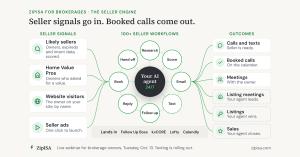
What makes the brokerage version interesting from a data standpoint is the architecture behind each seat. More than 100 workflows draw on expired listings, intent data, named website visitors, and home value lookups from the company’s own valuation site, where each participating agent is positioned as the local point of contact for a ZIP. That data then routes into whatever CRM the brokerage already runs, whether Follow Up Boss, Lofty, or kvCORE and BoldTrail. In other words, this is not a standalone chatbot. It is a data layer designed to sit underneath existing systems and keep working without requiring agents to change how they operate.
Data does not remove judgment from housing decisions. It improves judgment. When the right signals are organized clearly, buyers, builders, investors, and developers can see patterns that are easy to miss on instinct alone.
The exclusivity model is the piece that deserves the most scrutiny. By granting one brokerage brand control of three ZIP codes and nine seats, with no further seats sold to competitors in that territory, ZipISA is effectively turning geographic data coverage into a scarce asset. That is a familiar pattern in proptech, but applying it at the ZIP code level, tied to a continuously updating seller signal feed, raises the stakes for independent brokerages. With a typical Realtor completing a median of nine transaction sides last year and existing home sales running near a 3.98 million seasonally adjusted annual rate, according to NAR figures cited in the announcement, the margin for inefficiency is thin. A brokerage locked out of its own ZIP’s data advantage is competing with one hand behind its back.
None of this replaces the work of winning a listing appointment. What it changes is which firms even get the at bat. As larger brands continue funding proprietary technology arms, the gap between data-equipped and data-blind brokerages looks set to widen, and that is a trend worth tracking closely in the quarters ahead.
Source: National Law Review