



Why Ottawa’s $1.5-Billion Rental Protection Fund Is a Development Strategy, Not Just a Subsidy
Every city planner knows the uncomfortable truth about housing supply: it is far cheaper to lose an affordable building than to build a new one. That is the logic behind the newly launched Canada Rental Protection Fund, a $1.5-billion initiative that could preserve roughly 7,000 affordable rental homes across the country over five years. On the surface it reads as a housing announcement. Underneath, it is a land and asset strategy, and one that developers, municipalities, and investors should be paying close attention to.
The fund, launched September 22 under Build Canada Homes, will be administered by the newly formed Canadian Housing Acquisition Fund, a body built by the Canadian Housing and Renewal Association, National Indigenous Collaborative Housing Inc., the Co-operative Housing Federation of Canada, and the BC Rental Protection Fund. Its mandate is deceptively simple: give non-profit, co-operative, and Indigenous housing organizations the capital to buy existing rental buildings before they are redeveloped, flipped, or repriced out of affordability.
This is where the strategy gets interesting. Most federal housing dollars chase new construction. This fund chases existing inventory, using a blend of repayable and forgivable loans to close the gap between what a community housing provider can finance and what a property actually costs to acquire and renew. In development terms, that is a preservation play layered on top of an acquisition strategy, and it treats the existing rental stock as an asset class worth protecting rather than a problem to be redeveloped around.
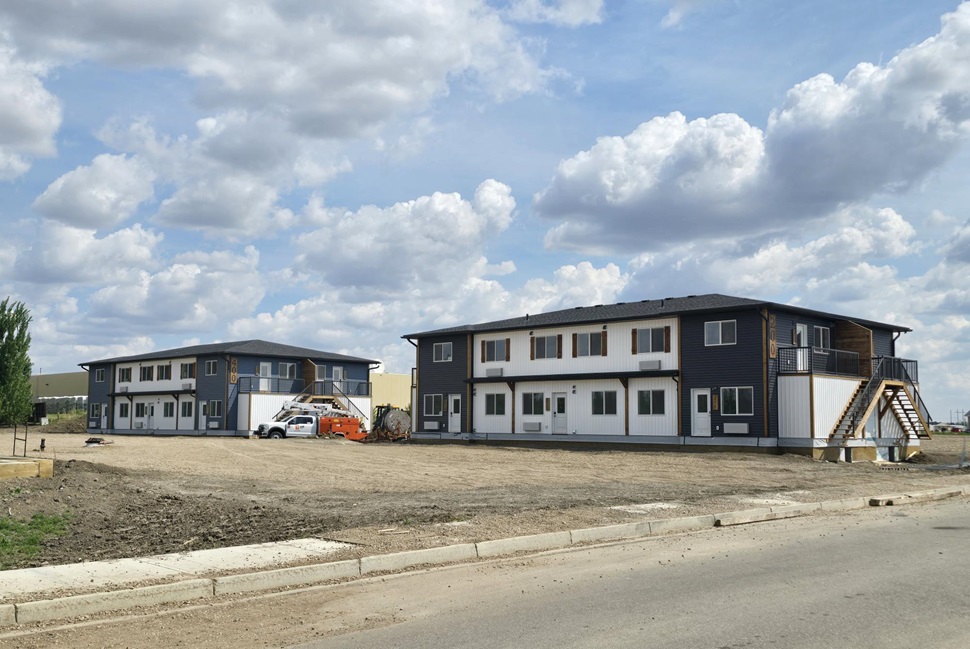
The model is not untested. It scales an approach already running in British Columbia, where the BC Rental Protection Fund has preserved nearly 2,200 affordable units by helping community groups outbid conventional buyers on rental properties at risk of conversion. Federal Housing and Infrastructure Minister Gregor Robertson, who championed the program’s expansion, framed it as a way to keep people in their communities rather than displacing them through redevelopment cycles. CHAF board chair Ray Sullivan put the long game plainly, noting that every home acquired becomes part of Canada’s permanent community housing stock rather than a one-time fix.
Every home acquired becomes part of Canada’s community housing stock for the long term, creating lasting affordability and a stronger foundation for communities across the country.
What should catch the attention of anyone working in land strategy is the governance shift. Rather than Ottawa dictating where capital lands, CHAF’s independent investment committee, staffed with financial and real estate expertise, will evaluate properties and organizational readiness before funding is approved. Applications for pre-qualification are open now, with eligible properties entering investment consideration through regular intake periods starting in October 2026. That is a sector-led deployment model, closer to how an institutional fund evaluates deals than how a traditional grant program operates.
For smaller and mid-sized markets, including communities well outside the major metros, this creates a genuine opening. Rental buildings in tighter markets are often the first to be sold off or redeveloped simply because alternative supply is scarce. A fund built to compete for those acquisitions, rather than waiting for new construction to catch up, changes the calculus for what gets preserved and what gets lost. No specific allocations have been confirmed for any particular region yet, but the intake structure means local housing providers now have a real mechanism to act before properties change hands.
The bigger takeaway for the development community is this: supply strategy is no longer just about where the next tower gets permitted. It is also about which buildings get protected from the market forces that would otherwise erase them. A fund of this scale, backed by sector expertise and real underwriting discipline, deserves a place in how we think about long-term housing capacity, not as a side program, but as part of the core infrastructure of growth.
Source: West Central Online




