



For many homeowners, sustainable living still sounds larger, more expensive, and more technical than it needs to be. The conversation often jumps straight to solar panels, deep retrofits, or futuristic smart homes, when the real opportunity is often much more grounded. In everyday housing, the most effective climate decisions usually begin with a simple question: how can a home use less energy while staying comfortable, healthy, and affordable to run? Increasingly, artificial intelligence is helping answer that question in practical ways.
Table Of Content
- Why the Home Is Such an Important Climate Lever
- What AI Climate Optimization Actually Means in a Home
- The Most Useful AI Applications for Home Sustainability Today
- Smart Thermostats
- Home Energy Management Systems
- Smart Electrical Panels
- Appliance and Load Automation
- Why AI Works Best When the Home Itself Is Efficient
- Small Changes, Large Collective Benefits
- Demand Response, Grid Flexibility, and Why Timing Matters
- Resilience Is Becoming Part of the Sustainability Conversation
- What Homeowners Should Know About Costs, Incentives, and Accessibility
- Common Misconceptions About AI and Sustainable Homes
- How to Approach AI Climate Optimization in a Practical Sequence
- Questions to Ask Before You Buy
- The Future of Sustainable Living Will Likely Feel Quiet
AI climate optimization at home is not about turning every house into a science experiment. It is about using intelligent software, connected devices, and responsive controls to help homes waste less energy and make better use of the systems they already have. In many cases, that starts with familiar tools such as smart thermostats, but the concept is growing to include home energy management systems, smart electrical panels, appliance automation, and better coordination between heating, cooling, hot water, electric vehicles, and battery storage. This matters because homes are a significant part of the climate equation. According to the International Energy Agency, buildings account for around 30% of global energy demand, and the residential sector makes up about 70% of building energy demand. In advanced economies, about 70% of home energy use goes to space heating and water heating. That means even modest improvements in the way homes manage temperature, timing, and equipment loads can create meaningful reductions in energy demand and emissions.
There is also a reassuring truth in this: homeowners do not need to do everything at once. Sustainable technology is often most effective when it is layered thoughtfully, one improvement at a time. A smarter thermostat, better insulation, a heat pump, lower standby waste, or a schedule that shifts energy use to less carbon intensive or lower cost hours can all add up. AI does not replace the basics of efficiency, but it can make those basics work harder and more gracefully.
What follows is a practical look at how AI is already being used in everyday home management, where it delivers the most value, what limits it, and how homeowners can approach climate optimization in a way that feels realistic rather than overwhelming. The encouraging takeaway is that sustainable living does not have to begin with radical change. Often, it begins with a better informed home.
Key perspective: AI is best understood as a force multiplier for home efficiency, not a substitute for good insulation, air sealing, efficient equipment, and sensible energy habits.
Why the Home Is Such an Important Climate Lever
Climate discussions can sometimes feel abstract, but residential energy use is very tangible. We feel it every month in utility bills and every season in the way our homes respond to heat, cold, humidity, and changing weather. The systems that keep a home comfortable are often the same systems that drive a large share of its environmental footprint. That is one reason the building sector has become such an important focus for energy policy, technology development, and decarbonization strategies.
The IEA notes that buildings have contributed around 20% of the growth in total energy demand since 2019. Within homes, heating and hot water are especially important. In Canada, Natural Resources Canada says space heating and cooling represent nearly two thirds of home energy costs. If those costs can be reduced without making a home less comfortable, homeowners gain a direct financial benefit while also lowering emissions and reducing strain on the grid.
This is where AI becomes useful. It can identify patterns that people may not notice, such as how fast a home loses heat on a windy day, how occupancy changes by weekday, or when electricity rates spike in the evening. Instead of relying on fixed schedules and static assumptions, AI enabled systems can respond dynamically. They can learn routines, adapt to weather forecasts, and recommend or automate actions that improve efficiency while preserving comfort.
That kind of optimization is especially valuable as homes become more electrified. When heating shifts from fossil fuel systems to heat pumps, when water heating becomes electric, and when electric vehicles and batteries are added to the home, energy management becomes more complex. The good news is that digital tools can help coordinate that complexity. In a well designed setup, the home begins to act less like a collection of separate devices and more like an integrated system.
What AI Climate Optimization Actually Means in a Home
The phrase AI climate optimization can sound broad, so it helps to make it concrete. In a residential context, it usually refers to software driven control systems that gather information, identify patterns, and make energy related decisions or recommendations. That might mean adjusting heating and cooling based on occupancy, preheating water when electricity is cheaper, shifting appliance use to off peak hours, or detecting when a system is running inefficiently.
Unlike traditional programmable controls, AI based systems are generally more adaptive. A basic thermostat follows the schedule you enter. A smart thermostat can often learn when the home is occupied, compare indoor performance against outdoor weather, and fine tune operation over time. A more advanced home energy management system can look across multiple devices and prioritize which loads should run, when they should run, and how they interact with utility rates or backup power constraints.
These systems vary widely in sophistication. Some are relatively simple consumer products, while others are part of broader electrification and resilience strategies. The practical value for homeowners lies in the middle ground, where the technology quietly improves performance without requiring constant attention. Ideally, it should reduce friction rather than add it.
It is also worth noting that AI optimization is not only about savings. Comfort, predictability, and resilience matter as well. A home that cools more intelligently during a heat wave, staggers loads during peak pricing, or preserves battery power before an expected outage is doing more than trimming a bill. It is becoming more responsive to both climate realities and household needs.
The Most Useful AI Applications for Home Sustainability Today
Smart Thermostats
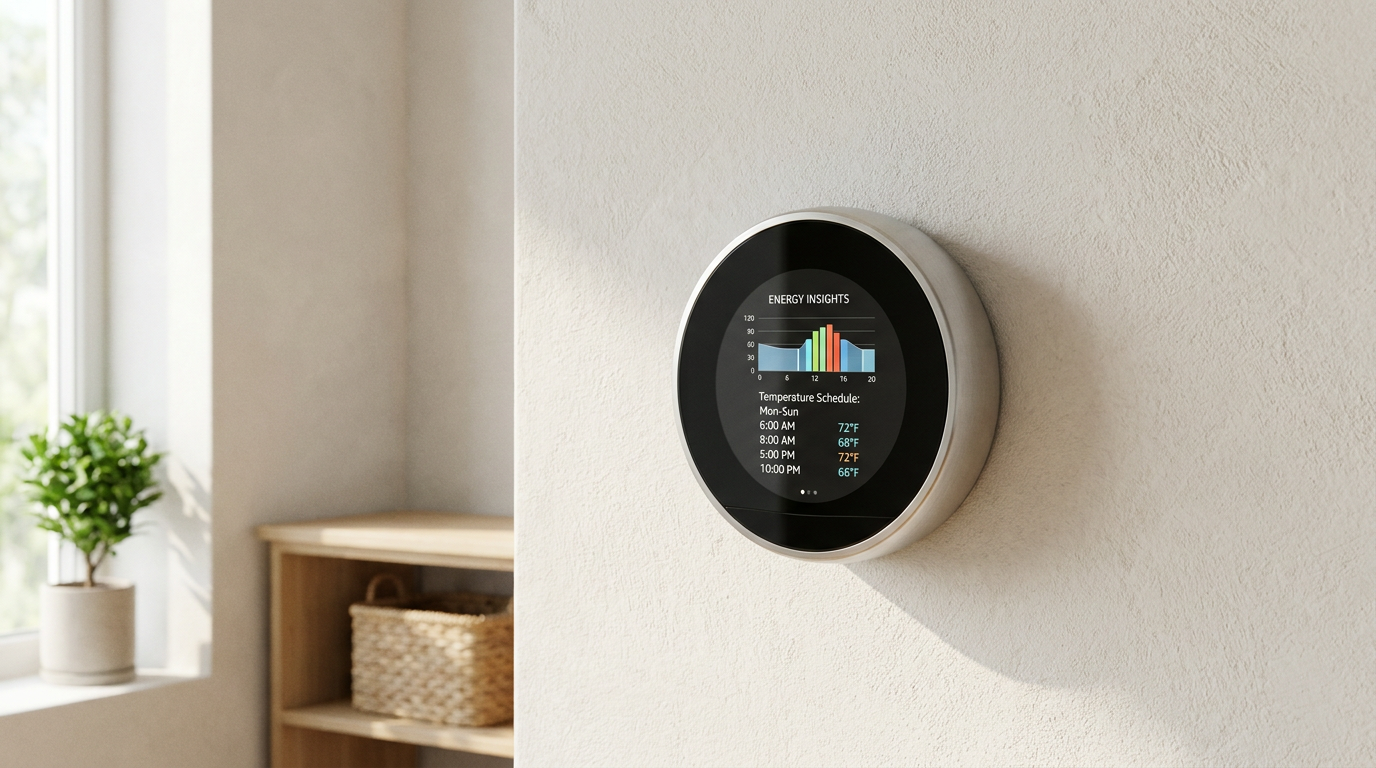
Smart thermostats remain the clearest entry point for most households, and for good reason. Heating and cooling represent a large share of household energy costs, and thermostat control affects that energy use every day. Natural Resources Canada notes that ENERGY STAR certified smart thermostats can learn household routines, provide usage data, and allow remote control of heating and cooling. NRCan also says average savings can be around 8% of heating and cooling costs.
That percentage may sound modest at first, but it becomes more meaningful in context. If one device can trim costs on one of the largest energy categories in the home, the effect adds up. NRCan’s infographic goes further, stating that if everyone used an ENERGY STAR certified smart thermostat, the combined benefits would include 11 petajoules of energy savings, $248 million per year, and 774 kilotonnes of greenhouse gas emissions avoided. This is a very helpful reminder that small changes across many homes can produce large environmental benefits.
The reason smart thermostats work is not mysterious. They reduce the mismatch between how people actually live and how HVAC systems are often controlled. Many homes are heated or cooled when nobody is there, or they return to comfort settings too early, or they keep running inefficiently because no one has the data to notice what is happening. By learning routines, integrating weather information, and making small timing adjustments, a smart thermostat can reduce wasted runtime without making the home feel neglected.
Still, it is important to stay realistic. Smart thermostats do not save the same amount in every home. Results depend on climate, occupancy patterns, insulation, HVAC system type, and setup quality. They are most effective when installed correctly and paired with a home that is already reasonably sound from an envelope and equipment standpoint.
Home Energy Management Systems
Home energy management systems, often shortened to HEMS, take a broader view than a thermostat alone. Rather than focusing only on indoor temperature, they coordinate multiple energy loads across the house. The IEA describes smart thermostats and home energy management systems as established residential flexibility tools, with much greater deployment expected under net zero pathways. In practical terms, these systems help homes respond more intelligently to pricing signals, weather conditions, and demand response events.
A HEMS might decide, for example, to precool a house before expensive evening electricity rates begin, delay the dishwasher until later at night, or prioritize water heating during lower cost hours. If the household has solar panels, battery storage, or an electric vehicle, the system can become even more valuable by aligning generation, storage, and consumption. Instead of each device operating independently, the whole home can begin to optimize around a shared goal.
For homeowners, this can translate into lower bills, smoother electricity demand, and less guesswork. For the grid, it can reduce peak load and improve flexibility. This is an important point because decarbonization is not only about using cleaner electricity. It is also about using electricity more strategically, especially as more homes electrify heating and transportation.
Smart Electrical Panels
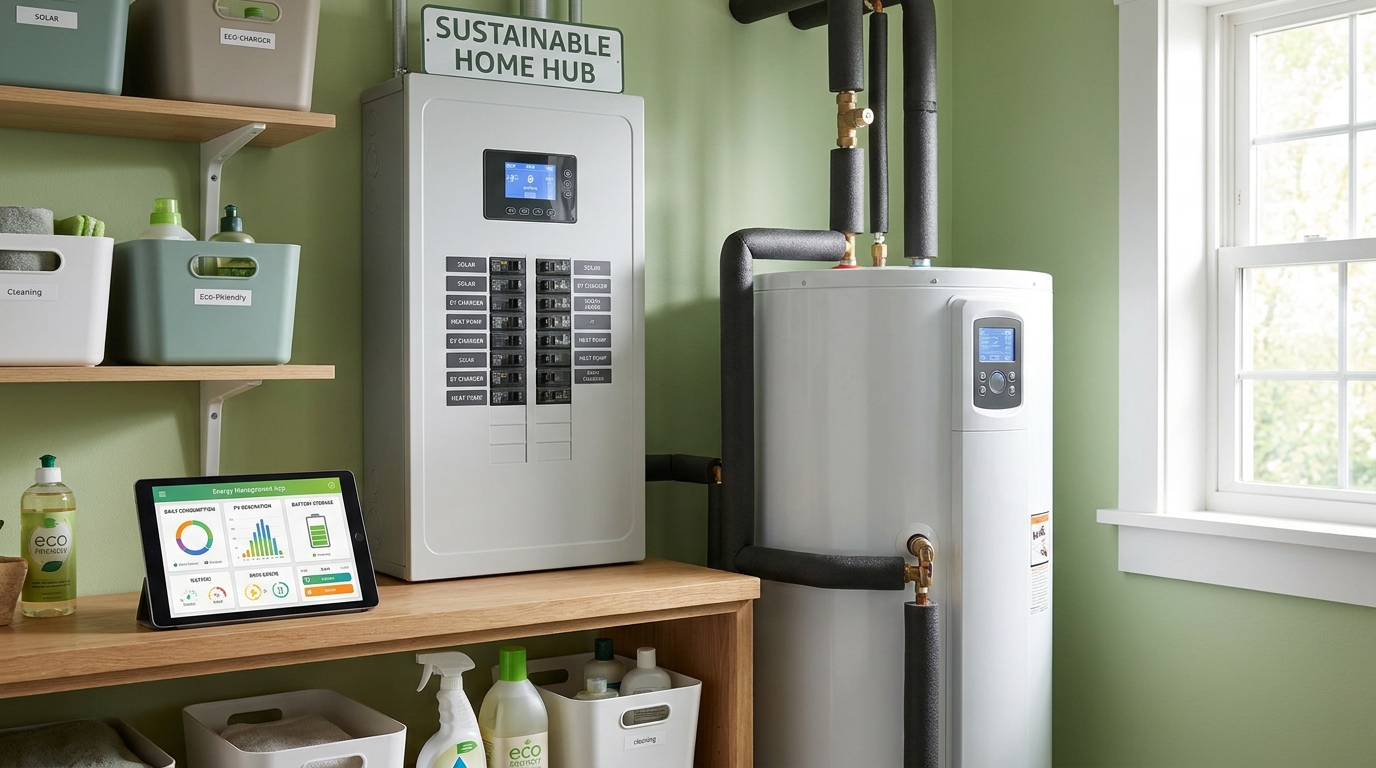
Another emerging category is the smart electrical panel. The U.S. Department of Energy describes smart panel based home energy management systems that can optimize household loads under time of use, real time pricing, or demand charge plans while improving resilience and reducing emissions. This is one of the more interesting developments in home sustainability because it moves intelligence closer to the home’s electrical backbone.
Traditional electrical panels distribute power, but they do not actively help manage it. Smart panels can monitor circuits, offer real time visibility into energy use, and automate decisions about which loads run when. During periods of high electricity prices or grid stress, they can help shift flexible loads. During outages or severe weather, they can support resilience by preserving backup power for essential circuits.
This is especially relevant for households adding heat pumps, induction cooking, EV chargers, and home batteries. As electrification increases, the challenge is no longer only about consuming less. It is also about consuming more intelligently. Smart panels help homeowners understand where energy is going and whether loads can be sequenced or adjusted in ways that reduce both cost and emissions.
Appliance and Load Automation
Some of the most practical climate optimization happens through ordinary devices used at better times. Water heaters, dishwashers, laundry equipment, pool pumps, EV chargers, and dehumidifiers can all become part of a smarter energy strategy when connected to schedules, occupancy signals, weather forecasts, or utility price data. These may seem like small categories compared with heating, but they matter because they shape how energy demand peaks and how well a home aligns with a cleaner grid.
Load automation can be very simple. A water heater can be encouraged to run when rates are lower. A charger can avoid the highest demand window in the evening. A dryer can wait until rooftop solar is producing, or until an overnight off peak period begins. AI improves on basic scheduling by adapting these decisions to changing conditions rather than following a rigid timer.
For households with variable routines, this adaptability matters. The system can distinguish between flexibility and inconvenience. It should know, for example, when delaying the dishwasher is harmless and when hot water should be prioritized because multiple people are home. Good automation feels almost invisible because it reflects real life rather than imposing a technical ideal on it.
Why AI Works Best When the Home Itself Is Efficient
There is an understandable temptation to see smart technology as a shortcut. If a home is poorly insulated, drafty, or heated by outdated equipment, it is easy to hope that smarter controls will compensate. In practice, the best results come when AI is layered onto a home that already has strong fundamentals. The IEA and IPCC both emphasize that inefficient heating technologies and poorly insulated buildings are central barriers to emissions reduction, while efficient retrofits and electrification can deliver large climate and comfort gains.
That means climate optimization should begin with the building envelope and major systems. Air sealing, insulation, efficient windows where appropriate, balanced ventilation, heat pumps, and efficient water heating all create the conditions for intelligent controls to work well. If a house loses heat quickly, the thermostat has less to optimize. If the heating system is inefficient or oversized, software can improve operation but not transform the underlying performance.
In other words, AI is a force multiplier. It can help an efficient home become even more efficient, and it can help an electrified home operate more smoothly and affordably. But it should not be confused with the core retrofit work that reduces demand in the first place. A calm, realistic sustainability plan usually combines both: improve the home’s physical performance, then add controls that refine how energy is used day to day.
For many households, this sequencing is financially sensible as well. If a homeowner is already planning to air seal, replace old HVAC equipment, or install a heat pump, that is often the right moment to think about smart controls and energy management. The technologies support each other best when they are designed as part of a system rather than purchased as isolated gadgets.
Small Changes, Large Collective Benefits
One of the most encouraging aspects of home AI optimization is that the climate value does not depend on any single household doing something dramatic. The gains are cumulative. A thermostat that trims heating runtime here, a shifted EV charging schedule there, a water heater that avoids expensive peak periods somewhere else. None of these actions has to feel heroic to be meaningful. The power comes from repetition and scale.
That is why the NRCan smart thermostat numbers are so compelling. Universal adoption of ENERGY STAR certified smart thermostats would save 11 petajoules of energy, $248 million per year, and avoid 774 kilotonnes of greenhouse gas emissions. Those are system level results built on ordinary household decisions. They illustrate a broader truth in sustainability: elegant progress often comes from many people making practical improvements that fit naturally into everyday life.
There is also a cultural benefit to this kind of adoption. When sustainable living is framed only around major investments or highly committed environmental identities, many people feel excluded. But when the entry point is comfort, savings, convenience, and resilience, adoption becomes more accessible. Homeowners begin with a smart thermostat or a utility rebate, then gradually become more open to insulation upgrades, heat pumps, or broader electrification.
This is one reason digitally enabled devices matter beyond their direct energy savings. The IEA has noted that devices such as smart thermostats can support behavioral change and efficiency investment. In a quiet way, they help people pay attention. They make energy visible, give feedback, and turn a hidden utility system into something that can be understood and improved.
Demand Response, Grid Flexibility, and Why Timing Matters
Energy efficiency is often discussed in terms of total consumption, but timing matters too. A home that uses electricity at cleaner, less congested, or lower cost times can reduce stress on the grid even if its total daily use changes only slightly. This is where the concept of demand response becomes important. The IEA describes demand response as a key pathway for flexibility in electrified energy systems, and homes are increasingly part of that picture.
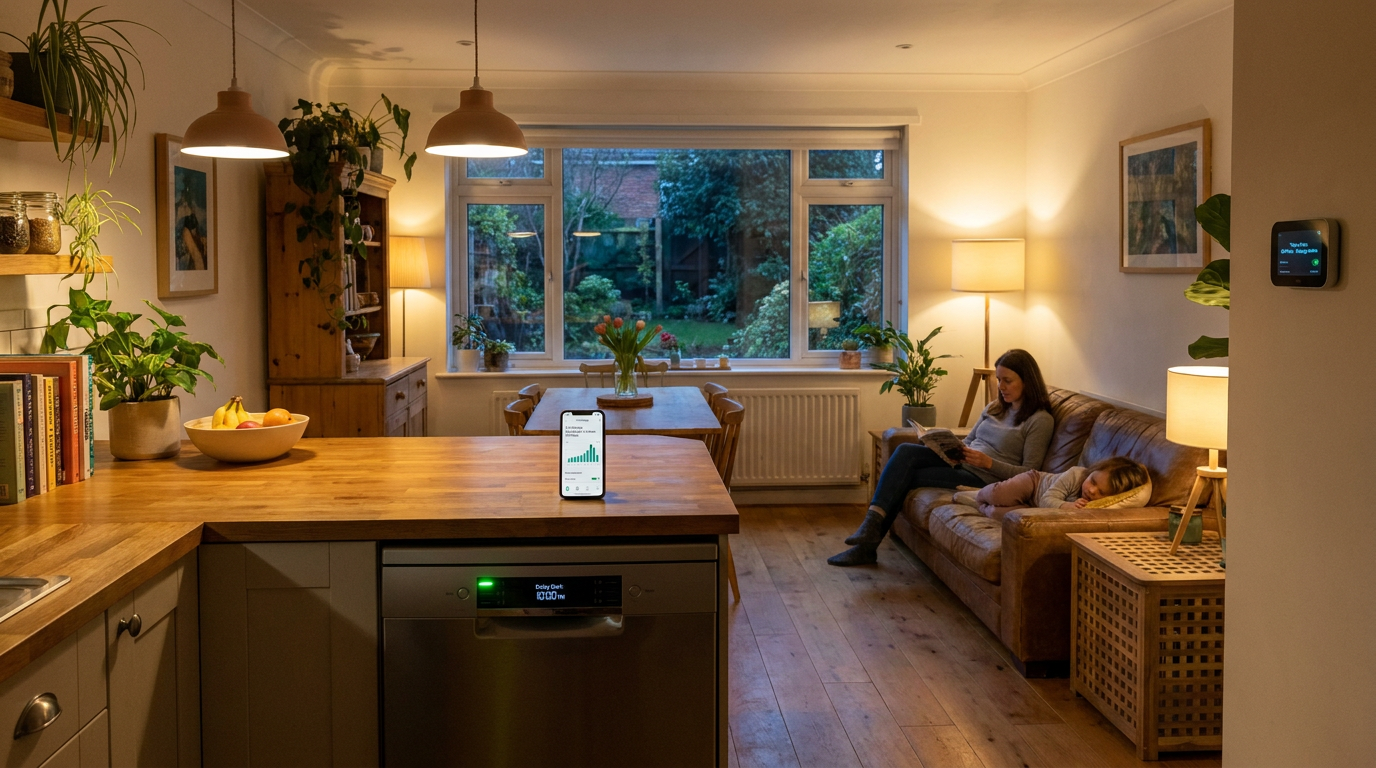
AI helps because people do not want to manually monitor prices, weather, and grid conditions throughout the day. Software can do that in the background and make measured adjustments. It can precool or preheat a home before peak pricing, delay nonessential loads, or coordinate with utility programs that reward temporary reductions in demand. For households on time of use rates, these adjustments can meaningfully affect monthly costs.
Grid flexibility also has climate implications. In many regions, the carbon intensity of electricity changes hour by hour based on what sources are generating power. As systems add more wind and solar, there is growing value in shifting flexible demand toward periods when renewable electricity is abundant. AI can support that alignment. It gives homes the ability to respond to conditions that are too dynamic for static schedules to handle well.
For homeowners, this does not need to feel technical. The practical takeaway is simple: a smart home can use energy not only more efficiently, but more strategically. Over time, that can improve bill predictability, make electrification easier to live with, and support a cleaner, more resilient power system.
Resilience Is Becoming Part of the Sustainability Conversation
Climate conscious housing is no longer only about reducing emissions. It is also about preparing homes for more frequent heat waves, cold snaps, wildfire smoke events, and grid disruptions. In this context, AI optimization has an additional role to play. It can help homes become more resilient by managing energy in ways that preserve comfort and critical functions during extreme conditions.
A smart thermostat connected to weather forecasts can prepare a home before a temperature spike. A home energy management system can preserve battery storage by limiting nonessential loads when outage risk is high. A smart panel can direct available power toward refrigeration, communications, and a few key rooms. These capabilities do not replace structural resilience measures, but they can make a home more adaptable when conditions are unstable.
This is especially important as more households depend on electricity for heating and transportation. Electrification is essential for decarbonization, but it also increases the value of thoughtful load management. Homeowners need systems that are not only efficient on ordinary days, but also dependable when weather becomes more severe. AI, used well, supports that transition by bringing more intelligence and flexibility into the home.
Seen this way, smart home technology is not just a convenience feature. It is part of the broader architecture of future ready housing. The most useful systems help a home conserve energy in normal times and use that energy wisely in difficult times.
What Homeowners Should Know About Costs, Incentives, and Accessibility
The promise of home AI optimization is real, but it is not evenly accessible yet. Benefits depend on digitalization, utility rate structures, device compatibility, and the kinds of heating and cooling systems a home already has. Some households can install a smart thermostat in an afternoon and see immediate value. Others may live in homes with incompatible equipment, limited internet access, or rental arrangements that make upgrades difficult.
Upfront cost remains a practical consideration, especially when smart controls are bundled with larger retrofit work. The encouraging part is that incentives are beginning to improve. NRCan notes that utilities or efficiency programs in some areas offer rebates on ENERGY STAR certified smart thermostats, and eligible thermostat measures may also be bundled with other retrofit measures under Canada Greener Homes Initiative rules. Similar utility and efficiency programs exist in parts of the United States as well.
Still, adoption barriers deserve honest attention. Renters may not control equipment choices. Landlords may not directly benefit from lower tenant utility bills. Lower income households may struggle with both device costs and the larger envelope upgrades that make smart controls more effective. These are not side issues. They shape whether climate optimization becomes a mainstream housing strategy or remains concentrated among more affluent, tech comfortable homeowners.
A balanced view is important here. The technology should not be dismissed because access is uneven, but neither should equity concerns be minimized. Good policy design, transparent rebates, installer education, and simple user interfaces can all help broaden participation. Practical sustainability works best when it is easy to understand and realistic to adopt.
Common Misconceptions About AI and Sustainable Homes
As interest grows, a few misconceptions are worth clearing up. The first is that AI alone can make a home sustainable. It cannot. If the home leaks heat, uses outdated equipment, or relies on inefficient systems, software can help but only within those limits. The strongest results come when AI supports a home that has already addressed insulation, air sealing, efficient heating, and efficient water heating.
The second misconception is that smart thermostats always save money for everyone in the same way. They often help, but outcomes vary. A mild climate, unusual occupancy pattern, poor installation, or a complex HVAC setup can affect performance. Savings depend on how the device is used, whether the system is compatible, and how much avoidable runtime existed in the first place.
A third misconception is that home AI optimization is only for luxury homes. That may have been closer to the truth in the early days of smart home technology, but it is increasingly outdated. Many connected devices are now mainstream consumer products, and when paired with utility rebates or retrofit programs, they can become more attainable. The most useful version of this technology is not extravagant. It is quiet, practical, and integrated into ordinary housing decisions.
Finally, there is the assumption that more data automatically means better sustainability. Data is helpful, but quality matters more than volume. Privacy, interoperability, control logic, and ease of use all shape results. A poorly configured system can underperform, frustrate users, or create unnecessary complexity. Good climate optimization should feel clear and trustworthy, not invasive or exhausting.
How to Approach AI Climate Optimization in a Practical Sequence
For homeowners who are interested but unsure where to begin, a measured sequence usually works best. Start by understanding where energy is currently going. Utility bills, basic energy audits, and thermostat or plug load data can reveal obvious patterns. In many homes, the largest opportunity remains space heating and cooling, followed by hot water and then the timing of flexible electrical loads.
Once the broad picture is clear, it helps to prioritize foundational efficiency first. Air sealing and insulation often provide strong returns because they reduce demand permanently. If major equipment is aging, consider efficient replacements such as heat pumps or heat pump water heaters. Then add intelligent controls that help those systems run in a more refined way.
From there, homeowners can think in layers rather than leaps.
- Begin with visibility. Use a smart thermostat, energy monitor, or utility app to understand patterns in heating, cooling, and major loads.
- Strengthen the envelope. Reduce waste through air sealing, insulation, and other sensible retrofit work.
- Upgrade equipment thoughtfully. Efficient heating, cooling, and water heating create better conditions for optimization.
- Add coordination. Consider a home energy management system or smart panel if the home includes multiple electrified loads.
- Align with rates and resilience needs. Time of use pricing, battery storage, EV charging, and outage planning all increase the value of smart controls.
This kind of progression keeps the process practical. It also prevents the common disappointment of expecting one piece of technology to solve problems that really belong to the building shell or core mechanical systems. Sustainability tends to work best when each improvement supports the next.
Questions to Ask Before You Buy
Not every smart home device is equally useful, and not every household needs a complex setup. Before purchasing any AI enabled energy technology, it is worth slowing down and asking a few grounded questions. What systems in the home consume the most energy? Is the existing heating and cooling equipment compatible? Does the household have time of use rates or demand response incentives? Will the technology save effort, or simply create another interface to manage?
Homeowners should also ask about data privacy, software support, and interoperability. A device may be attractive on paper but frustrating if it does not integrate with major systems or if the app is difficult to use. Products with strong certification, good utility partnerships, and a clear reputation for reliability are often the safer starting point. ENERGY STAR certification, where applicable, provides one useful signal.
It is equally important to think about the household itself. A retired couple at home most days may use a thermostat differently than a family with school schedules, shift work, and an EV charger. The best smart systems adapt to the rhythms of real households. They should support comfort and convenience first, because technologies that create daily friction are unlikely to stay optimized for long.
- What are my biggest energy loads today?
- Is my home reasonably well sealed and insulated?
- Will this device work well with my HVAC system or electrical setup?
- Do local rebates or utility programs lower the cost?
- Can the system help with resilience, not just savings?
- Will it make life simpler or more complicated?
The Future of Sustainable Living Will Likely Feel Quiet
There is a tendency to imagine the future of home sustainability as dramatic and highly visible. In reality, the most successful systems may feel almost invisible. They will keep homes comfortable, lower bills gradually, reduce waste in the background, and make electrification easier to live with. Their success will come not from spectacle, but from integration.
That quiet future is already beginning to take shape. Smart thermostats are mainstream. Home energy management systems are improving. Smart panels are creating new ways to coordinate loads, especially as heat pumps, EVs, and batteries become more common. Utilities are offering more programs that reward flexibility. Retrofit incentives are helping some households connect efficiency upgrades with intelligent controls. The pieces are starting to align.
There is still work to do around affordability, interoperability, and equitable access. But the overall direction is promising because it reflects a practical understanding of how people live. Most households do not want to become energy experts. They want homes that are comfortable, efficient, resilient, and reasonably simple to manage. AI can support that goal when it is applied thoughtfully and paired with sound building choices.
In the end, climate optimization at home is not really about making houses smarter for its own sake. It is about making everyday living lighter on the grid, lighter on the climate, and easier on household budgets. That is part of what makes this moment encouraging. Sustainable living does not have to begin with pressure or perfection. It can begin with one useful upgrade, one better control system, and one home that learns to work a little more wisely each day.



No Comment! Be the first one.