



Value-add investing in real estate sits at the intersection of acquisition discipline, renovation strategy, and operational execution. It is not simply about buying something tired, making it look better, and hoping the market rewards the effort. The real objective is to purchase an asset with measurable upside, improve the property in ways that the market values, increase income or reduce inefficiency, and create a stronger asset that is worth more because it performs better.
Table Of Content
- What Value-Add Investing Really Means
- Why the Strategy Remains Attractive in North America
- Where Returns Actually Come From
- How to Identify the Right Value-Add Opportunity
- Key questions to ask during acquisition
- The Most Effective Value-Add Improvements
- The Rising Importance of Energy Efficiency
- Underwriting the Renovation Like an Investor, Not a Dreamer
- A practical underwriting framework
- Execution Is the Real Edge
- Common Mistakes That Destroy Returns
- Value-Add by Property Type
- Building a Repeatable Value-Add Strategy
- The Strategic Outlook for Investors
- Conclusion
For investors pursuing higher returns, this strategy remains especially relevant in today’s market. Across North America, aging housing stock, limited housing mobility, and affordability pressure are sustaining renovation demand. The National Association of Home Builders reported that the average age of a U.S. home increased from 31 years in 2006 to 41 years in 2023, a data point that reinforces just how large the renovation opportunity set has become. Older properties often contain both the problem and the potential, which is exactly where disciplined value-add investors can create an edge.
The opportunity, however, is not automatic. Strong returns come from buying well, underwriting correctly, executing efficiently, and aligning every dollar of capital with a specific increase in rent, occupancy, tenant appeal, or operating performance. Renovation alone does not create wealth. Forced appreciation comes from turning underperformance into stronger net operating income, better tenant retention, and a more competitive asset in its local market.
This guide explains how value-add investing works, where the returns come from, which improvements typically matter most, and how investors can approach renovations without falling into the common traps of overspending, overestimating rent growth, or underpricing execution risk. Whether you are evaluating a single-family rental, a duplex, or a multifamily apartment building, the principles remain remarkably consistent.
What Value-Add Investing Really Means
At its core, value-add investing means acquiring a property that is not operating at its full potential and then taking deliberate action to improve it. That potential might be physical, financial, or operational. Perhaps units are outdated and renting below market. Perhaps expenses are poorly controlled. Perhaps vacancy is elevated because the building looks neglected or the leasing process is weak. In each case, the investor is not waiting passively for appreciation. The investor is creating it.
This distinction matters because value-add is often confused with cosmetic flipping. Cosmetic flipping focuses heavily on appearance and a resale event. Value-add investing, by contrast, is usually centered on income growth, vacancy reduction, and asset repositioning. Paint and flooring can help, but they are only useful if they support stronger leasing, better resident satisfaction, lower turnover, or a higher exit valuation.
In multifamily properties, value-add often involves raising under-market rents after unit renovations, modernizing common areas, adding laundry or storage revenue, improving management systems, or reducing utility waste. In single-family rentals, the strategy may focus more on functionality, durability, energy efficiency, and market-ready upgrades that improve tenant quality and reduce maintenance calls. In both cases, the real return comes from narrowing the gap between what the property is and what it could become.
That is why value-add should be viewed as both a financial strategy and an operational discipline. The spreadsheet and the construction plan must work together. If the acquisition basis is too high, even a good renovation can produce mediocre returns. If the renovation plan is poorly managed, projected upside can disappear through delays, vacancy loss, and cost overruns. Successful investors understand that the deal is won before closing, protected during construction, and realized through post-renovation performance.
Why the Strategy Remains Attractive in North America
Several structural trends are supporting the case for value-add investing. The first is age. A large portion of North American housing stock is simply getting older, and older housing creates renovation demand almost by default. Systems wear out, layouts become dated, and energy performance falls behind modern expectations. As this inventory ages, investors who know how to improve buildings intelligently can unlock value that less disciplined buyers overlook.
The second trend is affordability. Many households cannot easily upgrade to newer housing, especially in higher-cost markets. Rising purchase prices and elevated financing costs have made moving less practical for both owners and renters. This supports demand for improved existing housing rather than entirely new product. It also means that a renovated older property can become highly competitive if it offers a better quality-to-price equation than newer alternatives.
The third trend is industry strength. NAHB expects residential remodeling activity to increase by 3 percent in 2026 and another 2 percent in 2027 in inflation-adjusted terms. It also reported that the home improvement share of residential construction rose from 33 percent in 2007 to 45 percent in the third quarter of 2025. This is a meaningful shift. It suggests that renovation is not a niche side segment of housing. It is becoming a more central part of how the market adapts to aging inventory and constrained affordability.
Canada reflects a similar pattern, though with its own execution considerations. Statistics Canada reported that residential renovation costs rose 0.5 percent in the fourth quarter of 2024, the smallest quarterly increase since the second quarter of 2020. That moderation is helpful, but it does not remove the need for caution. Alberta recorded the largest quarterly renovation cost increase at 1.2 percent, followed by Saskatchewan at 1.1 percent, which highlights the regional nature of cost pressure. Investors operating in tighter contractor markets need stronger contingency planning and more realistic scheduling assumptions.
Where Returns Actually Come From
Many investors talk about renovation returns in broad terms, but the return mechanics are quite specific. In value-add investing, there are usually four main sources of upside: higher rent, better occupancy, lower operating costs, and a higher exit value supported by improved income. Every renovation decision should connect to at least one of these outcomes. If it does not, it may be a preference rather than an investment.
The most direct source of return is rent growth. If a dated unit rents for less than comparable renovated units in the same area, a targeted improvement plan can close that gap. The key word is targeted. Investors do not need luxury finishes in every market. They need finishes that match tenant expectations, support faster leasing, and justify a higher rent relative to nearby alternatives.
Occupancy improvement is often underestimated. A property that looks tired, photographs poorly, or creates uncertainty during tours may sit vacant longer than it should. Strategic upgrades to kitchens, bathrooms, hallways, lighting, entryways, and exterior presentation can reduce days on market and improve retention. Faster leasing and lower turnover can materially improve net income, especially in multifamily properties where vacancy drag compounds quickly.
Expense reduction is another overlooked source of value. Older buildings often waste money through inefficient lighting, outdated HVAC systems, poor insulation, water leaks, or reactive maintenance patterns. Energy-efficiency upgrades can improve tenant appeal while also lowering utility costs and future capital strain. CMHC survey data has shown that many consumers renovate to increase property value or improve energy efficiency, and 78 percent of homeowners who renovated for energy efficiency reported seeing savings on their energy bills. For investors, that combination of cost control and marketability can be compelling when underwritten carefully.
The final layer of return is valuation. In income-producing real estate, especially multifamily, asset value is often tied to net operating income and market cap rates. If renovations lift annual NOI, the property may be worth significantly more even before market appreciation is considered. This is the essence of forced appreciation. The investor is not relying on broad market momentum alone. The investor is improving the cash flow profile in a way that the market can price.
How to Identify the Right Value-Add Opportunity
Finding a true value-add opportunity starts with recognizing underperformance that can be fixed at a reasonable cost. That means looking beyond cosmetic wear and asking sharper questions. Are rents below market because units are outdated, or because the location is weak? Is vacancy high because management is poor, or because the floor plan no longer works? Are expenses elevated because systems are inefficient, or because the property has a one-time maintenance backlog? Each answer changes the investment case.
One of the best signals is a rent gap between the subject property and renovated comparable properties nearby. If renovated two-bedroom units in the same submarket are leasing for meaningfully more, there may be room to invest in selective improvements and capture that spread. The analysis should include not just asking rent, but achieved rent, days on market, concessions, and tenant profile. A paper rent premium that only applies after heavy discounts is not true upside.
Physical condition should be evaluated with equal discipline. A property with old finishes but solid structure may support a light or moderate rehab that is highly efficient. A property with foundation issues, major envelope deficiencies, or extensive mechanical replacement needs may drift into heavy rehab territory, where execution risk increases quickly. Investors should understand the difference between a project that needs smart repositioning and one that is fundamentally distressed.
Market fit also matters. The best value-add deals are tailored to actual local demand. An investor should know who the likely tenant or buyer is, what that person values, and what level of finish the market will reward. In many neighborhoods, durable mid-market improvements outperform luxury upgrades because they produce a stronger return on capital and a broader renter pool. The right plan is not the most expensive one. It is the one that matches neighborhood economics.
Key questions to ask during acquisition
- What is the current rent relative to renovated comparable properties?
- Which improvements are necessary to close that rent gap?
- How much vacancy or downtime will the work create?
- What permits, inspections, or zoning constraints apply?
- Is the local contractor market stable, or are schedules likely to slip?
- Can the property support a refinance or stronger appraisal after improvements?
- What is the downside case if rents rise more slowly than expected?
These questions protect investors from one of the most common mistakes in value-add investing, which is confusing visible potential with profitable potential. A property may look like a blank canvas, but if the required capital is too high, the disruption too severe, or the neighborhood ceiling too low, the opportunity may be less attractive than it appears.
The Most Effective Value-Add Improvements
Not all renovations produce equal returns. The strongest value-add projects usually solve functional problems first and aesthetic issues second. That order matters because tenants and buyers respond most consistently to improvements that make daily living better, more efficient, and easier to maintain. Visual appeal still plays a major role, but it is most powerful when attached to usability and reliability.
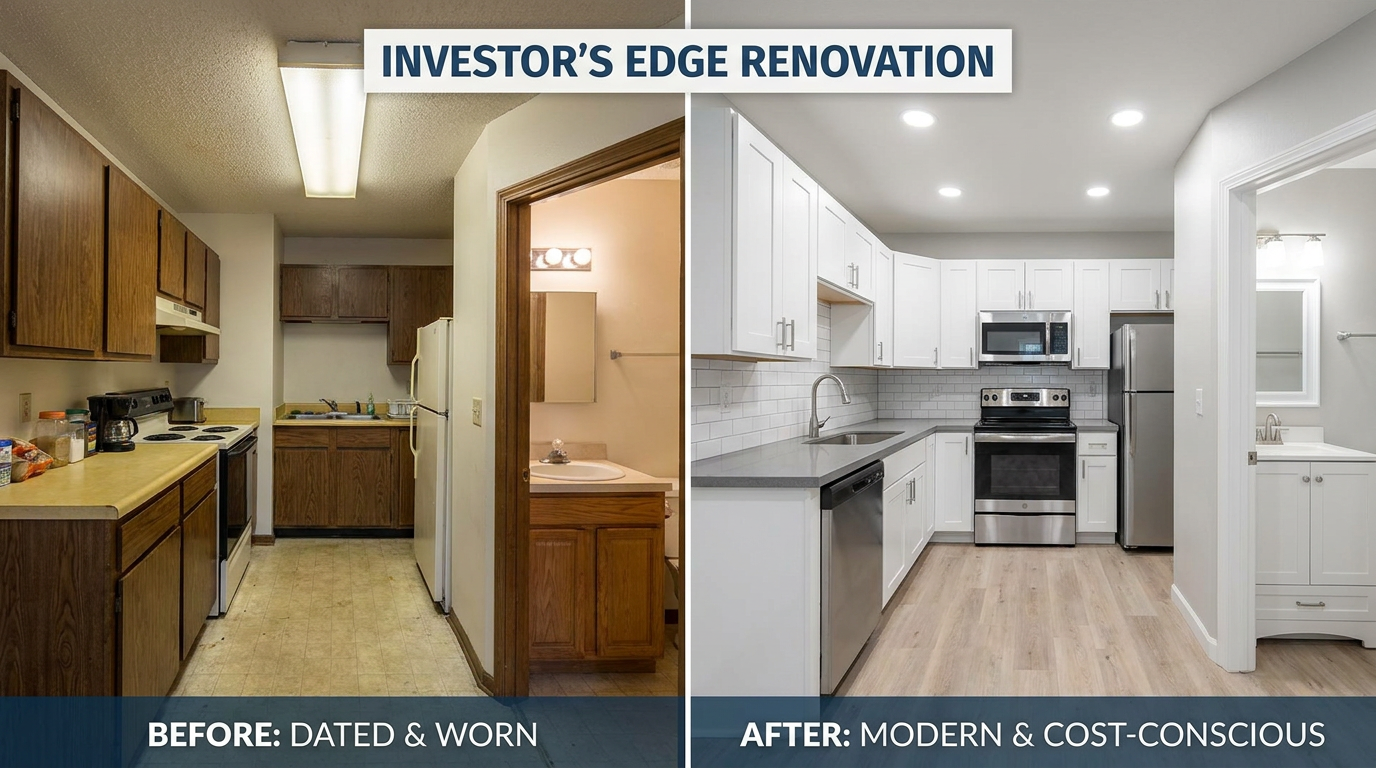
Kitchens and bathrooms remain among the highest-impact areas in many residential assets. NAHB’s remodeling data continues to show that bathroom remodels, kitchen remodels, and whole-house renovations rank among the most common project types. In rental housing, these spaces carry disproportionate weight because they shape first impressions and influence whether a unit feels current or outdated. Investors do not need custom luxury execution. They need clean, durable, attractive upgrades that improve perceived quality and support rent growth.
Unit turns are another core value-add lever. Replacing worn flooring, refreshing paint, upgrading lighting, installing durable fixtures, and modernizing appliances can improve leasing speed and reduce maintenance issues. In many cases, the return comes not only from the rent increase but from the fact that the unit spends less time vacant and attracts more stable residents. Over a portfolio, that operational benefit becomes significant.
Common-area improvements also deserve attention, particularly in multifamily buildings. Hallways, lobbies, laundry rooms, storage areas, and exterior entries influence how residents feel about the entire property. If common areas create a stronger impression of care and security, tenants may be more willing to renew and prospective residents may perceive the building as better managed. Small shifts in retention can materially affect annual cash flow.
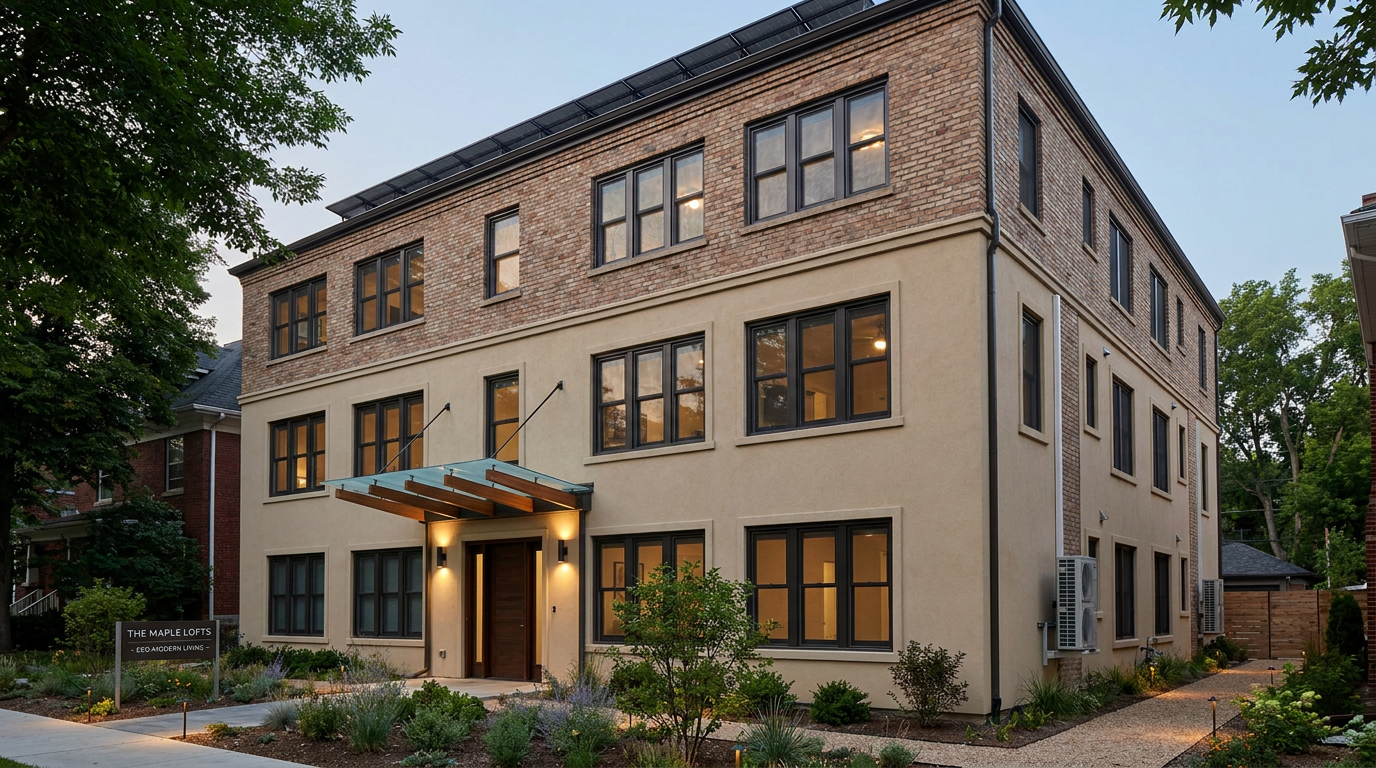
Exterior and curb appeal improvements often offer excellent leverage. Landscaping, signage, lighting, paint, parking lot repairs, and upgraded entryways do more than beautify an asset. They support safety perception, reduce friction during tours, and help reposition the property in the market. A tenant often makes an emotional judgment before stepping inside. Investors who ignore the exterior can weaken the impact of every interior dollar they spend.

The Rising Importance of Energy Efficiency
Energy-efficiency upgrades are becoming a more strategic part of value-add investing rather than an optional sustainability layer. This is especially true in older buildings where outdated systems create both tenant discomfort and avoidable operating costs. Improvements such as LED lighting, low-flow fixtures, insulation upgrades, better windows where justified, smart thermostats, and HVAC modernization can improve the tenant experience while reducing utility pressure.
Canadian survey data adds weight to this trend. CMHC has found that many consumers renovate to improve energy efficiency, and a large share of those who complete energy-focused improvements report satisfaction and savings. This matters because tenant and buyer preferences are shifting in practical ways. People increasingly notice energy costs, indoor comfort, and building performance, especially when affordability is tight and monthly expenses are under pressure.
For investors, the financial case should remain disciplined. Energy retrofits should be underwritten against realistic utility savings, local incentives where available, tenant retention benefits, and any appraisal recognition the improvements may receive. They should not be assumed to pay back automatically in every market. But when integrated intelligently into a broader repositioning plan, these upgrades can support both margin and marketability.
There is also a branding advantage. A building that feels efficient, well maintained, and professionally improved often competes better than one that simply looks renovated on the surface. In a market where many properties chase visual upgrades, operational quality can be a differentiator. Investors who combine modernized finishes with lower running costs are often building a stronger long-term asset, not just a cleaner-looking one.
Underwriting the Renovation Like an Investor, Not a Dreamer
The difference between a strong value-add deal and a disappointing one often comes down to underwriting precision. Investors need to budget not just the visible renovation scope, but the full cost of execution. That includes labor, materials, permit fees, design or engineering where needed, financing carry, insurance impacts, vacancy loss, leasing costs, and contingency reserves. A project that looks profitable on a simple construction estimate can become far less attractive once downtime and overruns are included.
Contingency planning is particularly important in markets where labor supply is tight or pricing is volatile. Statistics Canada’s renovation pricing data shows that costs continue to vary by region, and skilled-labor shortages remain relevant in some markets. That means investors should not rely on best-case contractor timelines or assume that every project will progress without interruption. Buffering both cost and schedule is part of prudent acquisition, not pessimism.
Rent assumptions also need discipline. The best way to underwrite future rents is to study recently leased comparable units with similar finish levels and layouts, not aspirational listings. If the renovation plan includes improvements beyond neighborhood norms, the additional spend may not translate into a meaningful rent premium. Investors should also consider whether tenants in the target market value luxury touches, or whether they care more about in-unit laundry, efficient cooling, parking, security, and durable finishes.
Exit assumptions deserve the same scrutiny. If the strategy depends on refinancing or selling after stabilization, investors must understand how appraisers and lenders will view the completed asset. CMHC’s mortgage insurance framework recognizes that certain improvements can add value, which is a useful institutional signal that well-planned upgrades can be financeable and appraisable. Still, financing outcomes vary by property type, market, and execution quality, so they should be modeled conservatively.
A practical underwriting framework
- Estimate current in-place income and stabilized market income.
- Define the exact renovation scope required to bridge that gap.
- Price hard costs, soft costs, financing carry, and contingency.
- Model lease-up pace and vacancy disruption realistically.
- Stress test slower rent growth and higher construction costs.
- Evaluate refinance or exit value based on conservative NOI assumptions.
- Proceed only if the margin of safety remains attractive after stress testing.
This process may feel rigorous, but it is essential. Value-add investing rewards precision. Investors are not paid for optimism. They are paid for accurate judgment.
Execution Is the Real Edge
In a strong remodeling environment, many investors can identify an outdated property. Fewer can execute a repositioning plan with speed, cost control, and tenant sensitivity. That is why execution has become such an important competitive edge. NAHB reported that remodeler net profit margin averaged 6.3 percent in 2024, the highest since 1996, and that its Remodeling Market Index remained above the break-even level of 50 for 24 consecutive quarters. Demand is healthy, but that also means good contractors are busy and mistakes can be expensive.
Execution starts with scope clarity. A vague renovation plan invites change orders, timeline creep, and budget drift. Investors should know exactly what finishes, systems, and standards they are installing before work begins. This helps with bidding, scheduling, and consistency, especially if the strategy involves repeating unit turns across multiple apartments.
Contractor management is equally important. The cheapest bid is not always the most economical choice if it leads to delays or quality issues. Investors should verify insurance, references, prior project experience, and communication standards. In occupied properties, they should also assess how a contractor handles noise, cleanliness, safety, and resident interaction. Poor site management can damage tenant retention and increase turnover during renovation.
Project pacing matters as well. In some buildings, it makes sense to renovate units as they turn in order to minimize disruption and preserve occupancy. In others, a faster common-area and exterior push may help reposition the property quickly, even before all units are upgraded. The right sequencing depends on financing, tenant profile, available crews, and how the market responds to visible improvements.
Value-add returns are built through disciplined execution. The best investors treat construction, leasing, and operations as one integrated plan rather than three separate tasks.
Common Mistakes That Destroy Returns
One of the most common mistakes in value-add investing is over-renovating relative to the market. Investors sometimes assume that spending more will produce proportionally higher rents or resale value. In reality, every market has a ceiling. If the upgraded product exceeds what local tenants are willing to pay for, the extra capital becomes difficult to recover. Premium finishes are only valuable when the surrounding demand base supports them.
Another major error is underestimating downtime. A renovation budget may look reasonable until vacancy loss, delayed leasing, and financing carry are added. This is particularly important in multifamily repositioning, where taking too many units offline at once can disrupt cash flow. Investors need a renovation strategy that aligns with the property’s income needs, not just its physical wish list.
Permitting and compliance issues can also derail returns. Seemingly simple projects may trigger code upgrades, inspection delays, or zoning questions, especially in older buildings. Investors should conduct permit and zoning diligence before closing rather than discovering constraints mid-project. Time is a real cost in value-add investing, and regulatory surprises often hit both schedule and budget.
A further mistake is focusing too heavily on aesthetics while ignoring functionality. The highest-return upgrades are often the ones that improve livability, maintenance profile, energy performance, and leasing speed. A beautiful backsplash does not compensate for poor lighting, weak HVAC, or an impractical layout. Durable value comes from solving the issues that matter most to occupants.
Finally, some investors buy with too little basis margin. If acquisition pricing already reflects the post-renovation story, there may be little room left for forced appreciation. Renovating a property does not guarantee wealth creation if the entry price is too high or if rent growth assumptions are unrealistic. The renovation can be excellent and the investment can still disappoint.
Value-Add by Property Type
The strategy looks different across asset classes, and investors should adapt accordingly. In single-family rentals, value-add often emphasizes broad tenant appeal, durability, and reduced future maintenance. Flooring, kitchens, bathrooms, exterior presentation, and energy-saving upgrades usually matter more than luxury detailing. Because turnover costs can be substantial in this segment, improvements that increase tenant retention can have an outsized impact.
In small multifamily properties such as duplexes, triplexes, and fourplexes, the investor often has more direct control over both physical upgrades and management quality. These properties can respond well to unit standardization, common utility improvements, laundry additions, storage monetization, and better curb appeal. Since smaller properties are often more operationally inconsistent, even modest process improvements can enhance returns.
Larger multifamily assets offer the clearest path to forced appreciation because improvements can be repeated across many units and reflected in NOI. Unit interiors, common areas, amenities, parking strategy, security enhancements, and utility efficiency all become scalable levers. But larger assets also require stronger systems, better contractor coordination, and more deliberate tenant communication. Operational discipline becomes increasingly important as the project size grows.
There is also relevance for BRRRR-style investors. In a buy, rehab, rent, refinance, repeat model, value-add execution directly influences whether refinance proceeds return enough capital to support the next acquisition. This makes appraisal support, lease-up quality, and cost control especially important. A BRRRR investor is not simply chasing cosmetic improvement. The goal is to create a stronger rent roll and enough post-rehab value to recycle capital efficiently.
Building a Repeatable Value-Add Strategy
The most successful investors do not approach value-add as a one-off creative exercise. They build a repeatable system. That system includes market selection, deal sourcing criteria, standardized renovation packages, vetted contractors, underwriting templates, leasing benchmarks, and a clear view of target returns. Repeatability reduces decision fatigue and improves execution consistency across projects.
Market selection is the first layer. Investors should focus on locations where demand is stable, comparables are visible, and there is enough pricing spread between unrenovated and renovated product to justify the work. Neighborhoods with aging stock, steady renter demand, and limited new supply often present attractive value-add conditions. The exact opportunity may differ by city, but the pattern remains the same.
Standardization is another major advantage. If each renovation is reinvented from scratch, costs rise and timelines become harder to control. Investors who standardize cabinet styles, flooring specifications, fixture packages, paint colors, and appliance tiers can improve purchasing efficiency and reduce project complexity. Standardization also helps create a recognizable product that tenants understand and trust.
Performance tracking closes the loop. Investors should measure renovation cost per unit, lease-up speed, rent lift achieved, maintenance trends after upgrades, resident retention, and variance against underwriting. Over time, this turns value-add from an idea into an operating model. The data reveals which upgrades truly create value and which simply consume capital.
The Strategic Outlook for Investors
The case for value-add investing remains strong, but the strategy is maturing. In the past, some investors could rely on broad market appreciation and loose assumptions to produce acceptable outcomes. Today, the market is less forgiving. Strong returns increasingly depend on sourcing discipline, realistic underwriting, local market knowledge, and operational control. The edge is not renovation by itself. The edge is precision.
That is precisely why the opportunity still exists. Many properties remain under-managed, under-improved, and mismatched with current tenant expectations. At the same time, North America’s aging housing stock, constrained affordability, and continued remodeling demand create a durable backdrop for investors who can improve existing assets intelligently. NAHB’s expectation of remodeling growth into 2026 and 2027, combined with rising housing age, reinforces that this is not a short-term theme.
For Canadian investors, the opportunity is equally real, though regional cost variation and labor availability require stronger planning. For U.S. investors, the scale of aging inventory and renovation demand remains substantial. In both markets, the best projects will be those that improve function, efficiency, and income rather than simply chasing expensive visual upgrades.
There is also a broader strategic lesson here. Real estate wealth is often built not by finding perfect properties, but by recognizing mispriced potential and executing with discipline. Value-add investing rewards investors who can see past surface condition and evaluate assets through the lens of income, risk, and operational improvement. In that sense, it is one of the most active and skill-based paths to stronger real estate returns.
Conclusion
Value-add investing is one of the clearest ways to create wealth in real estate because it allows investors to influence the outcome directly. By purchasing underperforming assets, making improvements that the market genuinely values, and tightening operations, investors can increase rent, reduce vacancy, improve NOI, and reposition properties for stronger long-term performance. The strategy is practical, scalable, and highly relevant in an environment defined by aging housing stock and sustained renovation demand.
But the winners in this space are rarely the ones who renovate the most. They are the ones who underwrite carefully, buy at the right basis, prioritize functional improvements, control execution risk, and stay aligned with what local tenants or buyers actually want. In other words, they treat value-add not as a design exercise, but as a business model.
For both new and experienced investors, the takeaway is straightforward. If you want higher returns from real estate, look for assets where thoughtful capital can create measurable income and operational improvement. Then execute with discipline. That is how value-add investing moves from a promising concept to a repeatable engine of portfolio growth.



No Comment! Be the first one.