



There is something deeply appealing about the idea of living in a place that feels both beautifully personal and meaningfully shared. As housing costs rise, loneliness becomes more common, and climate concerns shape everyday choices, more people are asking a simple but powerful question: could our communities work better for real life? That question sits at the heart of the growing interest in autonomous communities, a future living model that feels less like a distant concept and more like a thoughtful evolution of home.
Table Of Content
- What Are Autonomous Communities, Really?
- Why This Model Feels So Relevant Right Now
- The Different Forms Autonomous Communities Can Take
- Cohousing
- Housing Co-operatives
- Community Land Trusts
- Ecovillages and Sustainability-Focused Communities
- Mixed-Tenure Communities
- How Autonomous Communities Can Improve Quality of Life
- Affordability Without Sacrificing Dignity or Beauty
- The Environmental Promise of Living More Collectively
- Why Belonging May Be the Most Important Benefit of All
- What Homeowners and Renters Should Know
- The Role of Public Policy and Partnerships
- Challenges Worth Acknowledging, and Why They Do Not Diminish the Promise
- A Glimpse of the Future of Living
Autonomous communities are housing developments intentionally designed so residents share some degree of governance, infrastructure, resources, and daily life, not, despite the futuristic name, isolated enclaves or experiments in off-grid self-sufficiency. They often include private homes paired with common spaces, shared services, and cooperative decision-making that aims to make life more affordable, connected, resilient, and sustainable.
What makes this idea especially exciting is how practical it is becoming. In Canada and across North America, autonomous community models such as cohousing, housing co-operatives, community land trusts, ecovillages, and mixed-tenure developments are moving closer to the mainstream. Governments, housing agencies, non-profits, and residents are increasingly treating them as part of a smarter housing future rather than a niche lifestyle choice.
This shift matters because it speaks to more than architecture or land use. It touches how we raise children, age gracefully, build friendships, manage expenses, and care for the environment. It suggests that the future of living may not only be smarter homes filled with technology, but also smarter neighborhoods shaped around belonging, shared responsibility, and everyday ease.
In the most optimistic sense, autonomous communities invite us to imagine housing that does more than shelter us. They create the possibility of home as a supportive system, one that helps people feel safer, more connected, and more capable of living well. That is why this model is drawing attention from homeowners, renters, planners, and families who want a future that feels both grounded and hopeful.
What Are Autonomous Communities, Really?
The term autonomous communities can sound abstract at first, so it helps to begin with what it usually means in real housing terms. These are communities where residents take an active role in shaping how the place functions, whether through shared ownership, collective governance, common amenities, or community-managed services. They are designed with the understanding that some parts of life work better when resources and responsibilities are shared thoughtfully.
In North America, the phrase often overlaps with concepts many people already know in part, such as cohousing, housing co-operatives, community land trusts, and intentional communities. Each has a different legal and financial structure, but they share a family resemblance. The common thread is that residents are not simply passive occupants. They help shape the social and physical environment in ways that support long-term well-being.
According to the Canada Mortgage and Housing Corporation, cohousing is a living environment that is designed and managed collectively, with private units arranged around shared spaces to encourage social ties and shared use of objects and services. That definition captures the emotional elegance of the model. People keep their own private homes and boundaries, but they gain access to a richer layer of common life that can make home feel more supportive and less isolating.
It is also important to clear up a few misconceptions. Autonomous communities are not the same as political independence, secession, or withdrawing from mainstream society. They are also not always rural, remote, or off-grid. Many are urban or suburban, connected to transit, schools, public programs, and local services, while simply organizing housing and daily life in more collaborative ways.
Perhaps most importantly, autonomy here does not mean going it alone. Most successful communities work in partnership with municipalities, lenders, housing agencies, and professional development teams. Their autonomy is about having meaningful local control over the way a place is lived in and cared for, not about cutting themselves off from the broader systems that help housing succeed.
Why This Model Feels So Relevant Right Now
The appeal of autonomous communities is growing because they respond to several modern pressures at once. Housing affordability remains one of the defining concerns of our time, especially for younger buyers, renters, families, and older adults on fixed incomes. At the same time, many people feel disconnected from their neighbors and overburdened by the cost and complexity of maintaining private lifestyles that duplicate everything from guest rooms to tools to outdoor space.
Autonomous communities offer a different path. Rather than asking each household to carry the full burden of land cost, maintenance, amenities, and social support independently, they distribute some of those needs across the community. That can lower costs, reduce waste, and create a gentler rhythm of living that feels more aligned with how many people actually want to live.
There is also a growing awareness that environmental resilience cannot rest only on individual choices. Efficient homes matter, but so do neighborhood design, shared energy systems, walkability, and collective stewardship of land and resources. Autonomous communities make room for these larger decisions, allowing sustainability to be woven into daily life rather than treated as a separate effort.
Then there is the emotional layer. Many households are rethinking what home should provide beyond square footage. They want support during busy seasons, casual social connection, safer spaces for children, and environments where aging relatives can remain engaged instead of isolated. The future of living is increasingly about how a home feels, and autonomous communities respond to that desire with unusual warmth.
The numbers around community-based housing help reinforce that this is not a fringe idea. Community Housing Canada estimates there are just over 655,000 units of community housing in Canada, including social housing, affordable housing, and co-operative housing. CMHC’s 2025 annual report also says it supported the creation, repair, or acquisition of 348,240 housing units across the country in that reporting cycle. These broader figures show that community-oriented housing is already part of the real housing landscape, and its influence is likely to grow.
The Different Forms Autonomous Communities Can Take
One of the most helpful ways to understand autonomous communities is to see them as a spectrum rather than a single formula. Some are designed primarily around affordability, some around sustainability, some around shared parenting or aging in place, and some around a blend of all these goals. That flexibility is part of their promise, because different people and places need different versions of community life.
Cohousing
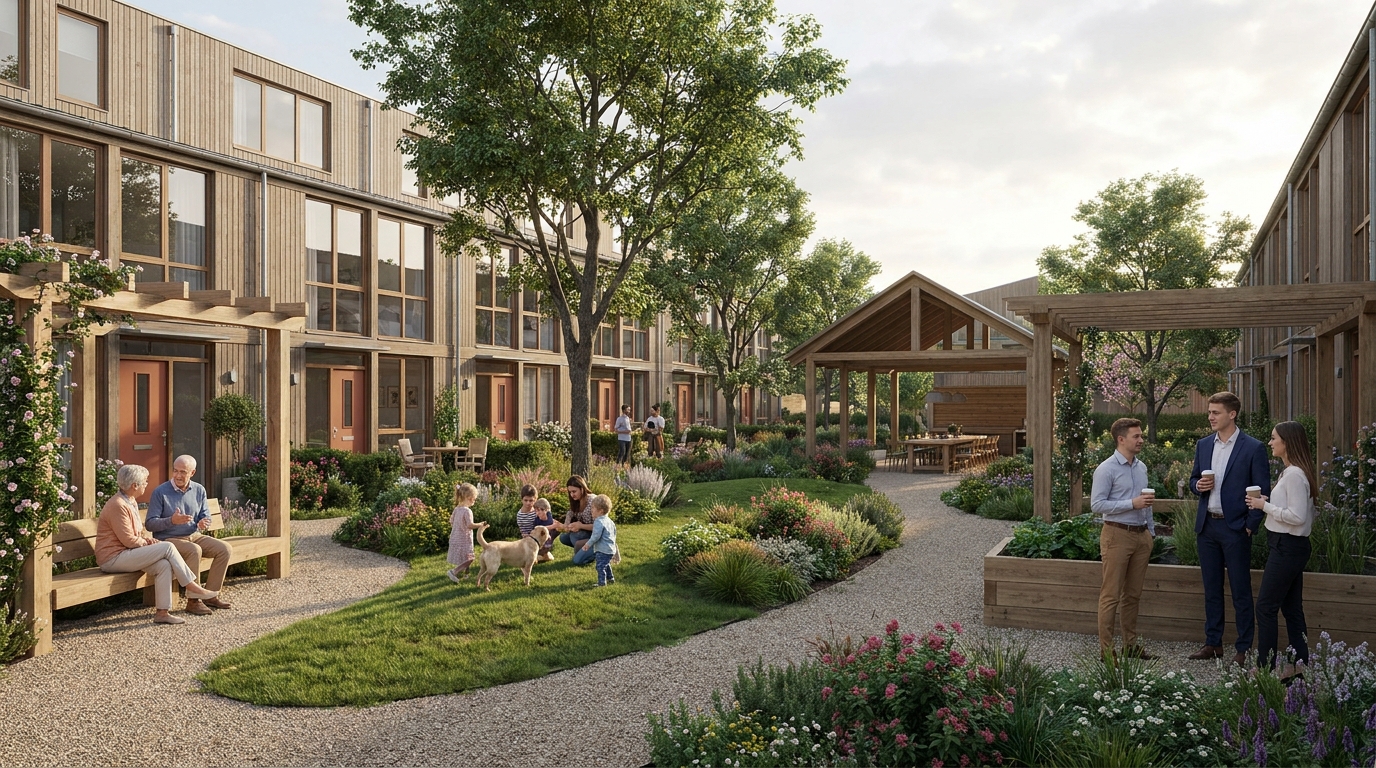
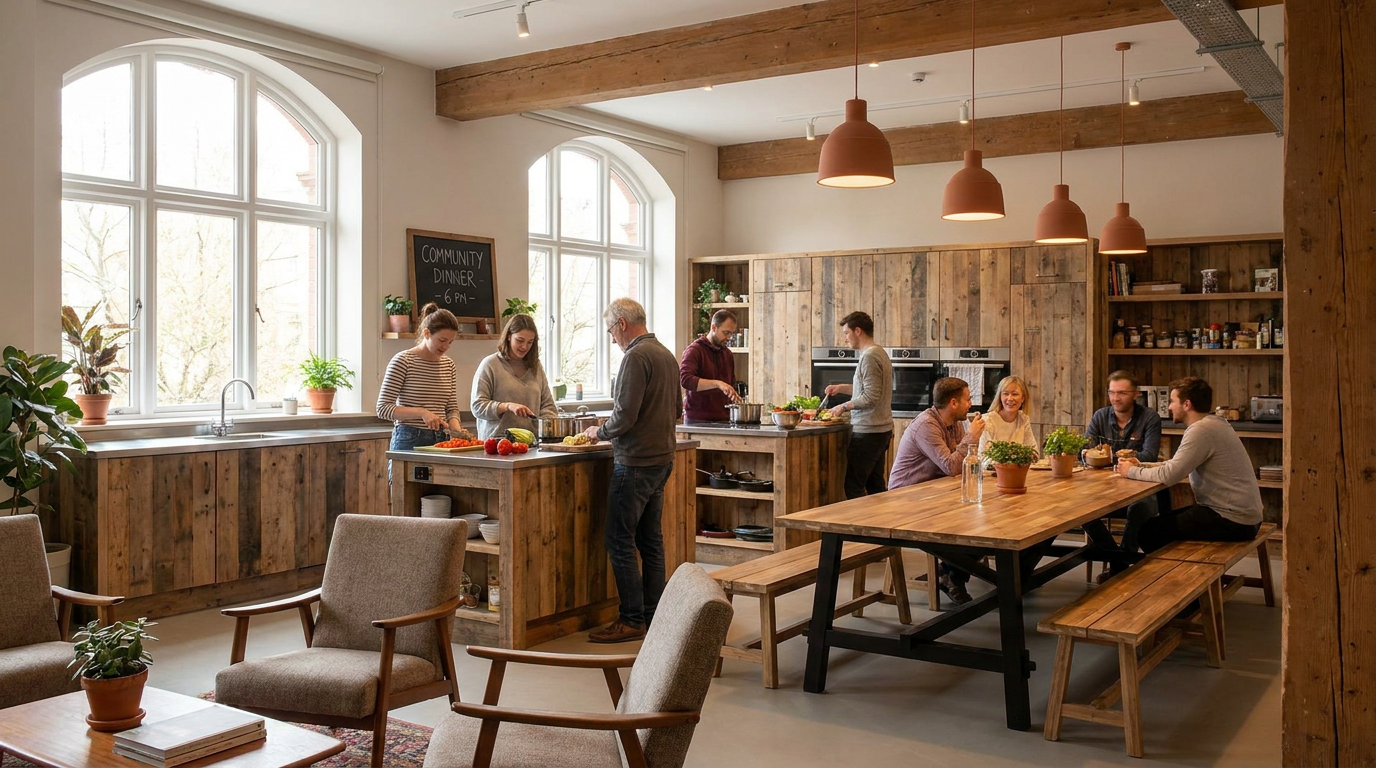
Cohousing is perhaps the most recognizable model for many people interested in future living. Residents typically have fully private homes or apartments, but those homes are arranged around shared spaces such as courtyards, gardens, common kitchens, lounges, workshops, or play areas. The design encourages natural interaction without forcing it, which is one reason cohousing often appeals to people who value privacy just as much as community.
In practice, cohousing can make daily life feel lighter. A child can play near other families, an older resident can stay socially engaged, and neighbors can share occasional meals, tools, or rides without requiring constant togetherness. This kind of design respects the fact that belonging works best when it is built into the environment gently and beautifully.
Housing Co-operatives
Housing co-operatives are another important branch of the autonomous community landscape. In a co-op, residents usually do not own their individual unit in the same way they would a conventional condo. Instead, they are members of a cooperative that collectively owns or manages the property, and they participate in governance and decision-making. This can create greater stability and a stronger culture of shared responsibility.
For many residents, the value of co-op living is not only financial. It is the sense of being part of a place that belongs to its people in a meaningful way. That feeling can reshape how neighbors care for one another, how conflicts are handled, and how a building evolves over time.
Community Land Trusts
Community land trusts, often called CLTs, address one of the hardest parts of the housing crisis: land speculation. In this model, land is held in trust for community benefit, while homes on that land may be sold or rented under rules designed to preserve long-term affordability. By separating land value from housing value, CLTs help limit speculative price increases and keep homes accessible across generations.
This matters enormously in expensive markets where even well-designed affordable housing can become unaffordable over time. Canadian community land trust projects are specifically designed to keep housing prices below market levels over the long term by holding land in trust and limiting speculation. For homeowners and renters alike, that creates a more stable relationship with housing, one rooted in use and community rather than rapid price escalation.
Ecovillages and Sustainability-Focused Communities
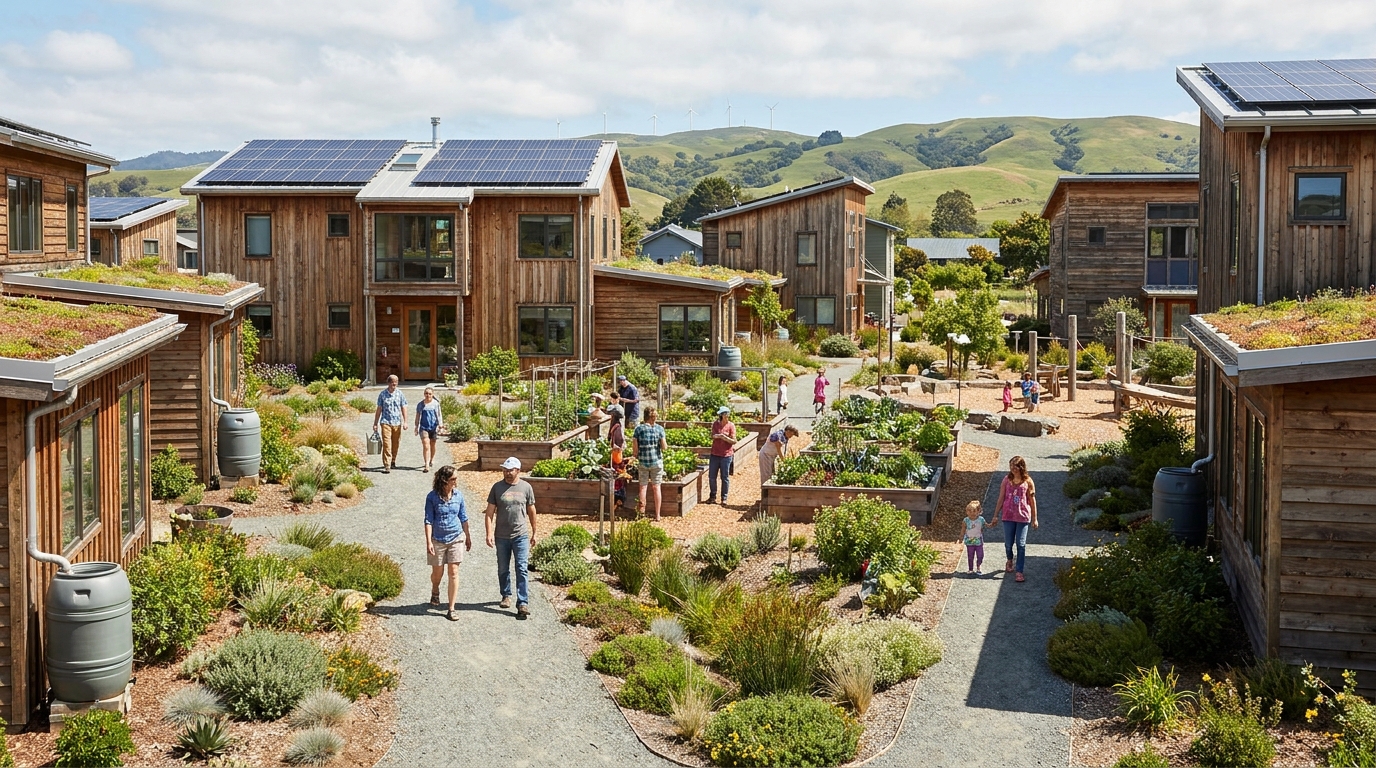
Some autonomous communities place environmental stewardship at the center of their identity. These may include ecovillages or other sustainability-focused developments where food growing, renewable energy, shared transport, low-impact construction, and ecological design shape the way people live. While they are sometimes imagined as remote or alternative, many sustainability-led communities are practical, well-connected, and highly livable.
Their broader lesson is that green living becomes easier when it is designed at the community scale. A shared garden, for example, is often more productive and social than many separate small gardens. A neighborhood path that supports walking and cycling can influence health and emissions more effectively than a single household trying to make better transport choices alone.
Mixed-Tenure Communities
A particularly important emerging trend is the rise of mixed-tenure communities that combine ownership, affordable rental, and non-market units in one place. This approach reflects the reality that vibrant communities are made stronger by a range of incomes, ages, and housing needs. It also opens the door to autonomous community models for people who are not in a position to buy a home.
Recent Canadian examples point in this direction. A 58-unit cohousing development in Lachine, Québec, includes nearly 10,000 square feet of shared indoor and outdoor space and offers both ownership and non-market rental units. That kind of project signals a future where shared living is not reserved for one income bracket or life stage, but designed as a flexible housing ecosystem.
How Autonomous Communities Can Improve Quality of Life
For all the conversation around policy and planning, the true beauty of autonomous communities lies in the details of everyday living. They have the potential to make life feel less fragmented and more supported. Instead of each household functioning like a small island, residents gain the comfort of a nearby network that can share space, skills, and care in organic ways.
Consider the emotional effect of living somewhere that naturally encourages familiar faces and easy interaction. It can mean children have more freedom and security, because adults know one another and shared spaces are designed for visibility and connection. It can mean that a new parent has a neighbor to lean on, an older adult is not facing long stretches of loneliness, and a single renter still feels part of a real neighborhood culture.
These communities can also enrich practical routines. Shared guest suites can reduce the pressure to maintain extra bedroom space in every private home. A common laundry area, workshop, kitchen, or garden can lower costs while adding real lifestyle value. Instead of paying for duplicate amenities that sit unused much of the time, residents can enjoy better versions of them together.
There is a quiet luxury in that arrangement. Luxury, after all, is not only about more square footage or more possessions. It is also about ease, time, beauty, and support. A thoughtfully designed autonomous community can provide all four by shifting some burdens away from the individual household and into a well-organized common life.
That is one reason these communities appeal to so many different demographics. Families appreciate the child-friendly environment and the chance for casual support. Older adults are drawn to the potential for aging in place with social connection nearby. Young professionals and renters may value affordability, flexibility, and the feeling of living somewhere with intention rather than anonymity.
Affordability Without Sacrificing Dignity or Beauty
When people hear the word affordable housing, they sometimes imagine compromise, whether in design quality, location, privacy, or long-term comfort. One of the most compelling aspects of autonomous communities is that they challenge that assumption. They suggest that affordability can come from smart structure and shared value, not from lowering the quality of life.
Community land trusts and housing co-operatives are especially powerful in this regard because they address affordability at a structural level. By limiting speculation and separating land value from the home itself, they create conditions where prices remain more stable over time. That helps residents build security without tying the future of housing entirely to volatile market forces.
Shared amenities also play a meaningful role. When residents have access to common rooms, gardens, guest spaces, storage, workshops, or play areas, private homes do not need to be oversized to feel complete. This can make entry into homeownership or long-term renting more realistic, especially in expensive regions where every square foot matters.
The result is often a gentler, more humane form of affordability. People are not simply paying less. They are participating in a housing model that gives them more value in the form of connection, resource access, and environmental quality. That is a different and more uplifting story than the usual language of housing scarcity.
For policymakers and developers, this is part of why autonomous communities are drawing serious interest. They do not only relieve financial pressure. They can help produce neighborhoods that remain stable, attractive, and socially healthy over time. In that sense, affordability becomes not just a housing outcome, but a foundation for better living.
The Environmental Promise of Living More Collectively
If the future of home must also be the future of sustainability, autonomous communities are especially promising. They make it easier to design compact, energy-efficient, walkable environments where resources are used more intelligently. Rather than treating sustainability as a private lifestyle choice layered onto conventional housing, they build it into the bones of the community itself.
Compact design reduces land consumption and can support better transit access, easier walking, and stronger neighborhood cohesion. Shared amenities mean fewer duplicate appliances, rooms, tools, and materials across households. Bulk purchasing and community-level management can also reduce waste while making sustainable upgrades more practical.
Energy resilience is another important part of the story. Federal and provincial programs in Canada increasingly emphasize net-zero housing, retrofits, and community-scale energy solutions. In the United States, the Department of Energy’s Community Microgrid Assistance Partnership supports microgrids to improve affordability, reliability, and electricity security in remote communities. These trends point to a future where communities may not just consume energy more efficiently, but manage it more intelligently together.
That has emotional value as well as environmental value. During extreme weather or grid disruptions, local resilience matters. A community that has thought ahead about energy, water, cooling, green space, and mutual aid is often more secure and less stressful to live in. Climate adaptation can feel overwhelming at the individual level, but at the community level it becomes more tangible and more hopeful.
There is also something inspiring about sustainability that is visible and shared. Rooftop solar, native landscaping, edible gardens, stormwater-sensitive design, bike storage, and shaded walking routes all shape daily experience. They remind residents that living well and living responsibly do not need to be separate ambitions.
Why Belonging May Be the Most Important Benefit of All
For many people, the most profound promise of autonomous communities is not financial or environmental, though both matter greatly. It is social. In a time when many neighborhoods feel increasingly private and transactional, these communities are designed to support trust, familiarity, and mutual care. That may be one of the most valuable forms of future living we can create.
Research and housing profiles in Canada increasingly highlight the social impact of cohousing and related models. Shared areas and co-management encourage relationships to develop more naturally, while participatory design helps residents feel emotionally invested in the place. This can reduce isolation and strengthen a sense of empowerment, because people are not only living somewhere, they are helping shape it.
That matters for families, where a child growing up with a circle of trusted adults may feel more secure and socially grounded. It matters for older adults, who often want to remain independent but not isolated. It matters for renters, newcomers, and singles, who may otherwise struggle to find long-term neighborhood connection in conventional housing.
Belonging also changes the tone of everyday life. Neighbors who know one another are more likely to share practical help, notice when someone needs support, and invest in keeping common spaces beautiful. Small interactions, like chatting in a courtyard, tending a shared garden, or gathering for a seasonal meal, create a rhythm of warmth that can be hard to manufacture in standard developments.
Autonomous communities are not about retreating from society. At their best, they are about redesigning home so that housing, relationships, and environmental care strengthen one another.
In lifestyle terms, this is what makes the model feel so compelling. It reflects the idea that a good home is not only measured by finishes or floor plans, but by how supported and at ease you feel in the life unfolding there. The future may well belong to places that understand this emotional truth.
What Homeowners and Renters Should Know
Autonomous communities can be meaningful for both homeowners and renters, though the experience may look slightly different depending on the model. For homeowners, these communities may offer more stable pricing structures, lower maintenance burdens through shared systems, and access to high-value amenities that would be expensive to create alone. They can also provide a stronger sense of agency over how the community evolves.
For renters, the advantages may be just as significant. Mixed-tenure and non-market models create access to high-quality, community-oriented living without requiring a home purchase. In some developments, renters can participate in community governance or social life in ways that feel much more inclusive than a typical landlord-tenant arrangement.
Privacy is often one of the first concerns people raise, and understandably so. Yet most successful autonomous communities are very intentional about balancing privacy with openness. Private units remain private, and participation in communal life is usually flexible rather than mandatory. The goal is not to erase personal boundaries, but to make connection more available when residents want it.
Another concern is whether this style of living is only suited to people with similar values or lifestyles. In reality, some of the strongest communities are intergenerational and mixed in income, background, and life stage. Shared governance does require communication and patience, but that can also become part of the strength of the place. Residents are not aiming for sameness. They are building enough trust to live well together.
For anyone considering this kind of future, it helps to think beyond the home itself and ask broader questions. How much autonomy do residents have in decisions? What shared spaces exist, and how often are they used? What is the financial structure? How is affordability protected over time? How are maintenance, conflict resolution, and participation handled? Those questions reveal whether a community is simply branded as collaborative or truly designed to support it.
The Role of Public Policy and Partnerships
One of the most encouraging signs for the future of autonomous communities is that they are increasingly being recognized by public institutions. CMHC-supported projects and broader housing initiatives show that community-led and community-governed models are not standing outside the housing system. They are beginning to influence how the system evolves.
This matters because community living models often need land access, financing, zoning flexibility, and development expertise to succeed. Public policy can make those conditions easier to achieve, especially in cities where conventional market pressures push against affordability and experimentation. Municipal partnerships, non-profit collaboration, and lending tools all help translate a hopeful idea into a durable place to live.
The optimistic view here is not that autonomous communities will replace every other housing type. It is that they can broaden the menu of choices available to residents and cities. A healthy housing future is rarely built on one model alone. It grows from a diverse ecosystem of options that respond to different incomes, needs, and lifestyles.
Seen this way, autonomous communities are not an escape hatch from mainstream housing. They are a design and governance innovation within it. They show how private life and public support can work together more creatively, producing neighborhoods that are both deeply human and structurally smarter.
Challenges Worth Acknowledging, and Why They Do Not Diminish the Promise
No housing model is perfect, and autonomous communities are no exception. Collaborative governance takes time. Decision-making can be slower than in conventional developments. Financing can be complex, particularly for emerging ownership structures or projects trying to preserve permanent affordability. And not every resident will want the same level of participation.
Yet these challenges do not erase the model’s promise. If anything, they highlight why thoughtful design and good partnerships matter so much. The strongest communities tend to be those that combine resident vision with professional support, clear governance systems, and realistic expectations. They understand that community is not accidental. It is cultivated.
There is also a broader cultural adjustment involved. For decades, much housing design has centered on private ownership, private space, and private responsibility as the ideal. Autonomous communities ask us to reconsider whether some forms of sharing might actually create a richer, calmer, and more resilient life. That shift can feel unfamiliar, but it is increasingly resonant in a world that asks more cooperation from us than ever before.
Importantly, the model does not demand that everyone live the same way. Some people will always prefer fully independent housing, and that is part of a healthy housing ecosystem too. The value of autonomous communities lies in creating another option, one that better reflects the needs of people seeking affordability, sustainability, flexibility, and connection in the same place.
A Glimpse of the Future of Living
If we look ahead honestly, the homes and neighborhoods that thrive will likely be those that do more with less while making people feel more supported, not less. They will need to handle economic pressure, climate realities, changing family structures, and the emotional toll of isolation. Autonomous communities are compelling because they meet these challenges with a spirit of design, care, and practical optimism.
Imagine neighborhoods where beautiful private homes open onto vibrant shared courtyards, where extra space is collective rather than wasteful, where housing remains affordable because speculation is limited, and where energy systems are designed for resilience. Imagine children growing up with more freedom and elders growing older with more dignity. Imagine daily life that feels lighter because support is closer, resources are smarter, and community is part of the architecture.
This future does not require fantasy. Many elements already exist in cohousing projects, co-ops, land trusts, and mixed-tenure developments across North America. What is changing now is the level of interest, evidence, and institutional support behind them. That momentum suggests we are moving toward a more expansive understanding of what home can be.
For homeowners, renters, policymakers, and designers, the question is no longer whether people want a stronger sense of belonging and a more sustainable way to live. They do. The more interesting question is how quickly we can build places that make those desires possible in everyday life. Autonomous communities offer one of the clearest and most hopeful answers.
In the end, the future of living may not be defined by how independently we can live from one another, but by how beautifully we can live alongside one another. That is the quiet revolution autonomous communities invite us to consider. Not a rejection of modern life, but a more thoughtful version of it, one where comfort, sustainability, and connection finally feel like they belong in the same place.

No Comment! Be the first one.