



Lean construction is one of those terms that sounds technical at first, but the idea behind it is straightforward. It is a way of planning and managing design and construction work so a project delivers more of what the owner actually values, while cutting down on waste, delay, confusion, and rework. In plain language, lean construction is about getting the right work done at the right time, by the right people, with fewer surprises along the way.
Table Of Content
- What lean construction actually means
- Why lean matters in today’s building industry
- The core principles of lean construction in practical terms
- Value
- Flow
- Pull
- Continuous improvement
- Respect for people
- The Last Planner System and why it gets so much attention
- How lean construction helps homeowners during renovations
- How builders and contractors apply lean on real projects
- Common waste in construction and how lean reduces it
- Lean is not just for big projects
- Lean construction and digital tools
- Prefabrication, modular building, and why they pair well with lean
- What homeowners should ask before hiring a builder
- What builders can do this month to start using lean better
- Misconceptions that cause confusion
- The Canadian and North American outlook
- Final thoughts
That matters because construction has struggled with productivity for a long time. McKinsey reports that global construction labor productivity growth averaged about 1 percent annually over the past two decades, compared with 2.8 percent for the total economy and 3.6 percent for manufacturing. McKinsey also reports that construction productivity declined 8 percent globally from 2020 to 2022. Those numbers help explain why owners, contractors, trades, and public agencies are paying closer attention to better planning systems and more reliable workflows.
For homeowners, lean construction is not just a big commercial project idea. It applies directly to home renovations, additions, custom homes, and multifamily residential work. Renovation projects in particular are highly sensitive to coordination problems because one late material delivery, one missed inspection, or one trade working out of sequence can ripple through the whole job and create extra cost. Lean construction gives both homeowners and builders a practical framework for avoiding that kind of mess.
This guide explains the core principles of lean construction, how they work in real projects, where the most common misunderstandings come from, and what homeowners and builders can do to put these ideas to work. The goal is not to make every reader into a lean expert. The goal is to give you a clear understanding of how better construction planning and collaboration can improve quality, predictability, and value.
Lean construction is not mainly about cutting cost. Its real purpose is to improve value, flow, coordination, and reliability while reducing waste across the full project process.
What lean construction actually means
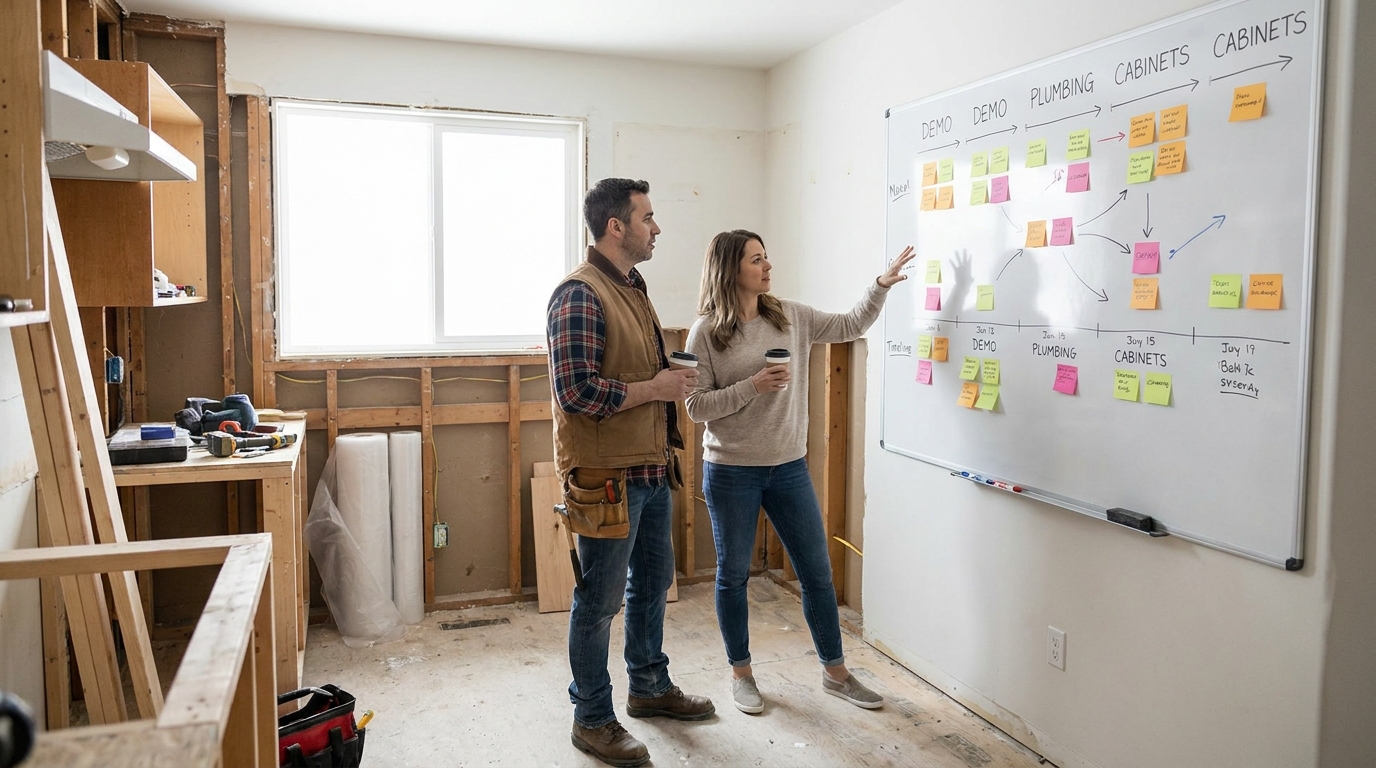
The Lean Construction Institute describes lean construction as a production management approach that focuses on creating value for the customer while eliminating waste across the full design and construction process. That wording is important because it shows lean is not limited to the jobsite. It affects design decisions, procurement, scheduling, trade coordination, inspections, handoffs, and closeout. A project can have skilled trades and good materials, but if the planning and workflow are weak, the job will still suffer.
In construction, waste is not only scrap material thrown in a dumpster. Waste also includes waiting for the previous trade to finish, crews showing up before an area is ready, unnecessary movement of workers or materials, overordering, excessive handling, avoidable design revisions, and rework caused by poor communication. Every one of those problems adds time, adds friction, and usually adds cost. Lean construction tries to identify those weak points early and design the process so they happen less often.
At the heart of lean construction are a few simple ideas. First, define value from the customer’s point of view. Second, create flow so work can move through the project with fewer stops and starts. Third, use pull planning so tasks happen when prerequisites are actually ready, not just because the master schedule said so. Fourth, improve continuously by measuring what was promised versus what got done and then figuring out why plans missed. Fifth, respect the people doing the work, because reliable projects depend on practical input from the field, not just top down instructions.
That last point is one of the most useful parts of lean. Construction often breaks down when planning is done too far away from the actual work. Lean construction pushes planning closer to the trades, supervisors, and project teams who know what is realistic. It values practical constraints, real site conditions, and honest communication instead of optimistic schedules that look fine on paper but do not hold up in the field.
Why lean matters in today’s building industry
Construction projects today are under pressure from all directions. Material lead times can shift, labor availability can tighten, design expectations keep rising, and owners want more certainty on budget and schedule. On top of that, projects are more interconnected than they used to be. Mechanical systems, structural work, energy performance, finish sequencing, and inspections all interact, which means a mistake in one area can delay several others.
Traditional project management often responds to these issues by trying to push harder. Teams work longer hours, stack more trades into the same area, or keep revising schedules after the fact. That can create activity, but it does not always create progress. Lean construction takes a different approach by looking at the system itself. It asks whether the workflow is dependable, whether teams are making realistic commitments, and whether the project is set up to reduce avoidable disruption.
For homeowners, this matters because the effects of poor coordination are easy to feel. A renovation that was supposed to take twelve weeks drifts into sixteen. The drywall crew arrives before inspections are complete. Cabinets show up before the floor is protected. A plumbing change forces finished tile to be opened again. These are not rare problems. They are exactly the kind of issues lean methods are designed to reduce.
For builders and trades, lean matters because margin and reputation are both tied to reliability. Projects that run with fewer handoff problems and less rework are easier to manage, less stressful for the field, and more predictable financially. Lean construction is not a magic fix, but it does create a structure for solving recurring problems instead of just reacting to them every time they appear.
The core principles of lean construction in practical terms
Value
Value starts with a simple question: what matters most to the owner or customer? In a home renovation, value might mean staying within budget, minimizing disruption to daily life, finishing before a school term starts, or achieving a certain level of energy efficiency and durability. In a commercial job, value may include occupancy dates, tenant fit out needs, operating cost targets, or long term maintenance concerns. Lean construction keeps those priorities visible so the project team does not confuse activity with value.
When value is defined early, teams can make better decisions. If a homeowner cares most about a predictable move back in date, that should shape sequencing, material ordering, and contingency planning. If quality detailing in a kitchen matters more than shaving a few days off the schedule, the team can protect that work instead of forcing rushed installation. Lean works best when the project is built around actual priorities rather than assumptions.
Flow
Flow means work moves from one step to the next with fewer interruptions. In a healthy workflow, framing finishes and inspection follows on time, then mechanical rough in, then insulation, then drywall, then finishes, each supported by the work before it. In a poor workflow, crews wait, areas are not ready, materials are missing, or completed work gets disturbed by later tasks. That stop start pattern is one of the biggest drivers of waste in construction.
Good flow does not happen by accident. It requires realistic sequencing, clean handoffs, and enough preparation that crews can complete work without constant obstruction. Builders who improve flow often see gains that do not always show up in a simple line item estimate, such as reduced stress, fewer callbacks, and better use of labor time. Homeowners benefit because the site feels more controlled and the schedule becomes easier to trust.
Pull
Pull planning is a lean concept that reverses the usual habit of pushing tasks forward regardless of readiness. Instead of asking who can start next, it asks what conditions must be true for the next task to succeed. For example, a flooring crew should not be scheduled just because the calendar reached that date. They should be scheduled when moisture conditions are acceptable, substrate prep is complete, materials are on site, and no other trade will disrupt the installation area.
This may sound obvious, but many projects still rely too heavily on high level schedules that do not reflect daily readiness. Pull planning improves reliability because work is released when prerequisites are met. That reduces clashes, false starts, and the expensive cycle of sending crews away and bringing them back again.
Continuous improvement
Lean construction treats every missed plan as useful information. If a crew could not finish what was promised for the week, the question is not simply who failed. The better question is why the plan missed and what should change next week. Maybe a submittal was late, maybe access was blocked, maybe material delivery was incomplete, or maybe the task was overpromised from the start. Once teams understand the reason, they can improve the planning system instead of repeating the same miss.
This is where lean becomes practical rather than theoretical. Small improvements made consistently can make a major difference over the life of a project. Teams that learn from misses, tighten handoffs, and remove recurring constraints tend to become more dependable over time.
Respect for people
Lean construction depends on the knowledge of the people closest to the work. That includes site supervisors, foremen, estimators, designers, and trade crews. Respect in this context means involving the right people in planning, listening to practical concerns, and making commitments that are realistic. It does not mean endless meetings or soft management. It means recognizing that reliable work comes from collaboration grounded in field reality.
Projects often improve when experienced trades are asked early about access, sequence, staging, tolerances, and installation conditions. Many rework issues could be reduced if those voices were heard sooner. Homeowners may not see this side of the process directly, but they benefit when the people doing the work are brought into planning instead of being handed impossible expectations.
The Last Planner System and why it gets so much attention
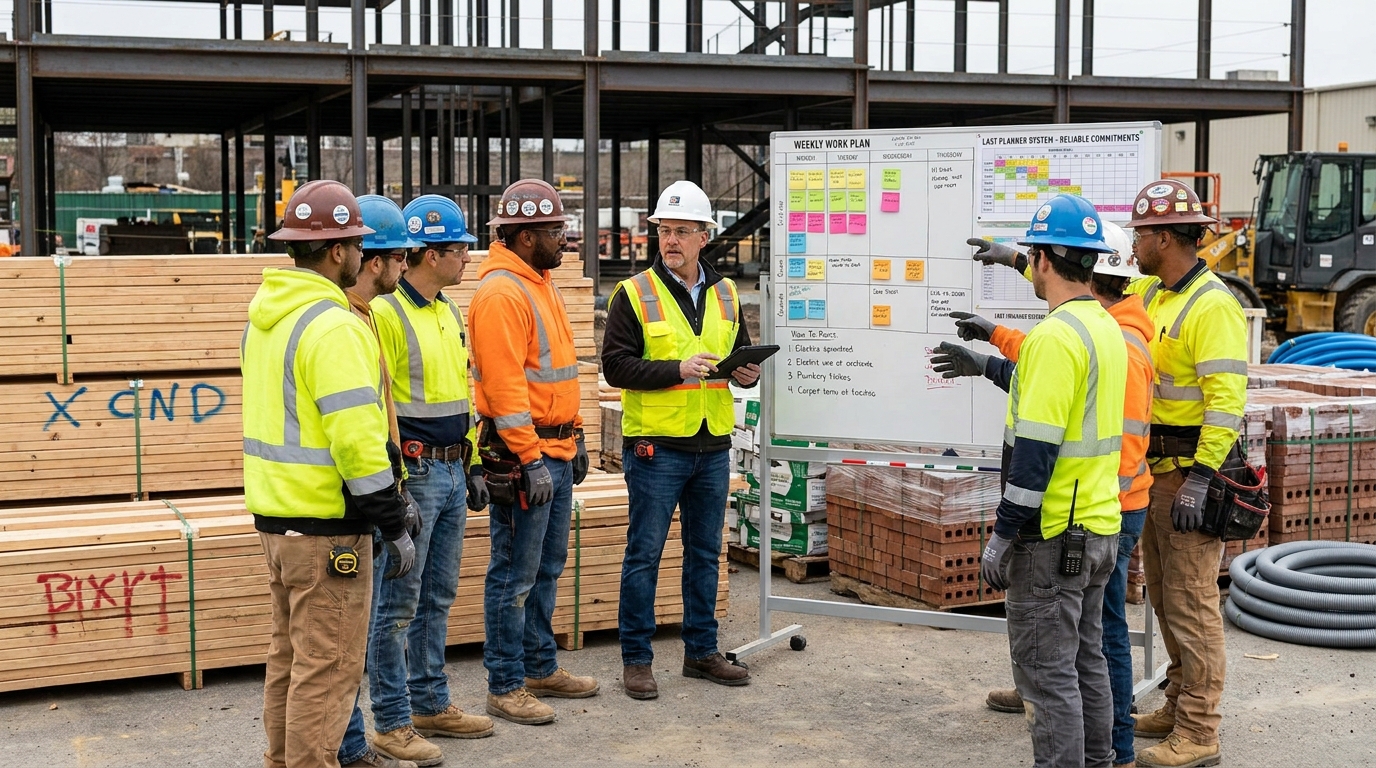
The most widely discussed lean construction tool is the Last Planner System, often shortened to LPS. This system moves planning closer to the people responsible for completing the work. Rather than relying only on a master schedule created far in advance, LPS uses a layered approach that includes milestone planning, phase planning, make ready planning, weekly work planning, and learning from results. The main idea is to create reliable commitments instead of broad intentions.
Make ready planning is where teams identify and remove constraints before a task is scheduled for execution. Those constraints may include missing approvals, unavailable materials, site access conflicts, incomplete predecessor work, or labor shortages. A task is considered ready only when those barriers are cleared. This simple step can prevent a lot of wasted effort and false starts.
Weekly work planning focuses on what can truly be done in the coming week. Teams make commitments based on current conditions, crew capacity, and actual readiness. That makes the weekly plan more grounded and more useful than a generic look ahead schedule that assumes everything will fall into place. When the field plan reflects reality, coordination improves and surprises tend to decline.
One of the main metrics used in LPS is Percent Plan Complete, or PPC. This measures the share of planned assignments completed as promised. Lean Construction Institute materials describe high performing teams as often landing around 75 percent to 90 percent PPC. The target itself matters less than the learning behind it. A team with a lower PPC that studies the reasons and improves its process can become more reliable than a team that simply reports optimistic numbers.
How lean construction helps homeowners during renovations
Homeowners usually experience construction in a very personal way. The work affects daily routines, privacy, noise levels, access to rooms, and cash flow. That is why lean construction can be especially useful in residential renovation. Renovation work is full of unknowns, hidden conditions, specialty lead times, and tight trade dependencies. Better planning is not a luxury in that environment. It is often the difference between a project that feels controlled and one that feels chaotic.
A lean approach starts by clarifying priorities. If the family needs one bathroom operational at all times, that affects sequencing. If the kitchen must be usable by a certain holiday, that shapes procurement and inspection timing. If budget control is more important than scope expansion, then design decisions should be locked before demolition reaches a point where late changes cause rework. Lean does not eliminate hard choices, but it helps make them earlier and more clearly.
Another practical benefit is shorter planning cycles. Instead of setting a broad schedule at the beginning and only revisiting it when trouble appears, lean projects use regular look ahead and weekly planning. That helps identify issues while there is still time to adjust. For example, if tile delivery slips, the team can reshuffle tasks before the schedule collapses. Without that habit, the delay may not be addressed until crews are already standing by.
Lean thinking also helps protect finished work and reduce disturbance. In a lived in renovation, unnecessary movement and poor staging can create damage, dust spread, and repeated access conflicts. A lean team will think about material flow, work zones, protection measures, and trade overlap in a more deliberate way. Homeowners often notice the difference in how organized the site feels, even if they never hear the term lean construction used on site.
How builders and contractors apply lean on real projects
For builders, lean construction is best understood as a management system and a jobsite behavior system. It is not just a set of slogans. It changes how teams plan, how information flows, how constraints are removed, and how performance is reviewed. Some companies use lean on large institutional and infrastructure work, but the same principles can be scaled to custom homes, multifamily developments, and small commercial jobs.
One practical application is better preconstruction coordination. Builders can involve key trades earlier to review drawings, identify likely clashes, discuss staging, and plan procurement based on sequence instead of generic purchasing timelines. This reduces the chances of discovering major install conflicts after crews are mobilized. It also helps align the field reality with the estimating and design assumptions before those assumptions become expensive.
Another application is daily and weekly control of workflow. Rather than simply tracking whether the overall project is behind or ahead, lean teams watch whether near term tasks are workable. They ask whether the area is ready, whether the preceding trade is complete, whether materials are in hand, and whether the task can be completed without interruption. Those questions sound basic, but answering them consistently is where a lot of schedule performance is won or lost.
Builders also use lean to improve handoffs between trades. Many quality issues come from rough transitions between one scope and the next. Surfaces are not prepared properly, tolerances are not checked, documentation is incomplete, or access is not coordinated. Lean planning creates clearer conditions of satisfaction for each handoff so the next crew receives workable, verified conditions instead of assumptions.
Common waste in construction and how lean reduces it
Waste in construction shows up in more forms than most owners realize. Material scrap is the visible part, but many of the bigger losses are hidden in time, labor inefficiency, and rework. Lean construction makes those losses easier to see and address. Once a team starts looking at work this way, the same recurring problems tend to stand out on almost every project.
- Waiting: Crews idle because inspections are delayed, materials are missing, or previous work is incomplete.
- Rework: Finished work is redone because of design changes, errors, poor coordination, or missed quality checks.
- Excess inventory: Materials arrive too early, get stored poorly, and become damaged or hard to access.
- Unnecessary movement: Workers spend time walking, searching, handling materials repeatedly, or working around clutter.
- Overprocessing: Teams do more work than needed because scope was unclear or approvals were not aligned.
- Handoff errors: One trade leaves incomplete or unsuitable conditions for the next trade.
Lean does not eliminate all of these problems, but it reduces them by treating workflow as something to be designed and maintained. Better staging reduces movement. Better make ready planning reduces waiting. Better design coordination reduces rework. Better sequencing and communication reduce handoff errors. The gains can be modest on any single task, but they add up quickly across a full project.
Lean is not just for big projects
One of the most common misconceptions is that lean construction only belongs on giant hospitals, airports, or public infrastructure jobs. Those projects do use lean, but the method is just as relevant on smaller work. In fact, many smaller jobs can benefit quickly because even a single coordination mistake has a large impact when schedules are tight and crews are limited.
A bathroom renovation, for example, has a narrow sequence with little room for trade conflict. Demolition, framing repair, plumbing rough in, electrical changes, waterproofing, tile, fixtures, and finish work all depend on each other. If one step slips or is done out of order, the delay is immediate. That is exactly the kind of environment where short interval planning and clear readiness checks help.
The same applies to custom homes and multifamily builds. Repeated unit layouts create opportunities for standardization, takt style sequencing, prefabrication, and better material flow. Builders who learn from one phase can carry improvements into the next. Lean is not about project size. It is about managing the work so the process is more reliable.
Lean construction and digital tools
Lean construction is not software by itself, but digital tools can support it well. This is where current industry trends are heading. Canada’s National Research Council has launched a 2023 to 2029 Construction Sector Digitalization and Productivity Challenge program that aims to improve innovation and productivity through digital technology, BIM across the value chain, modular construction, and advanced practices. That is a strong sign that lean thinking is becoming part of a broader shift in how projects are delivered.
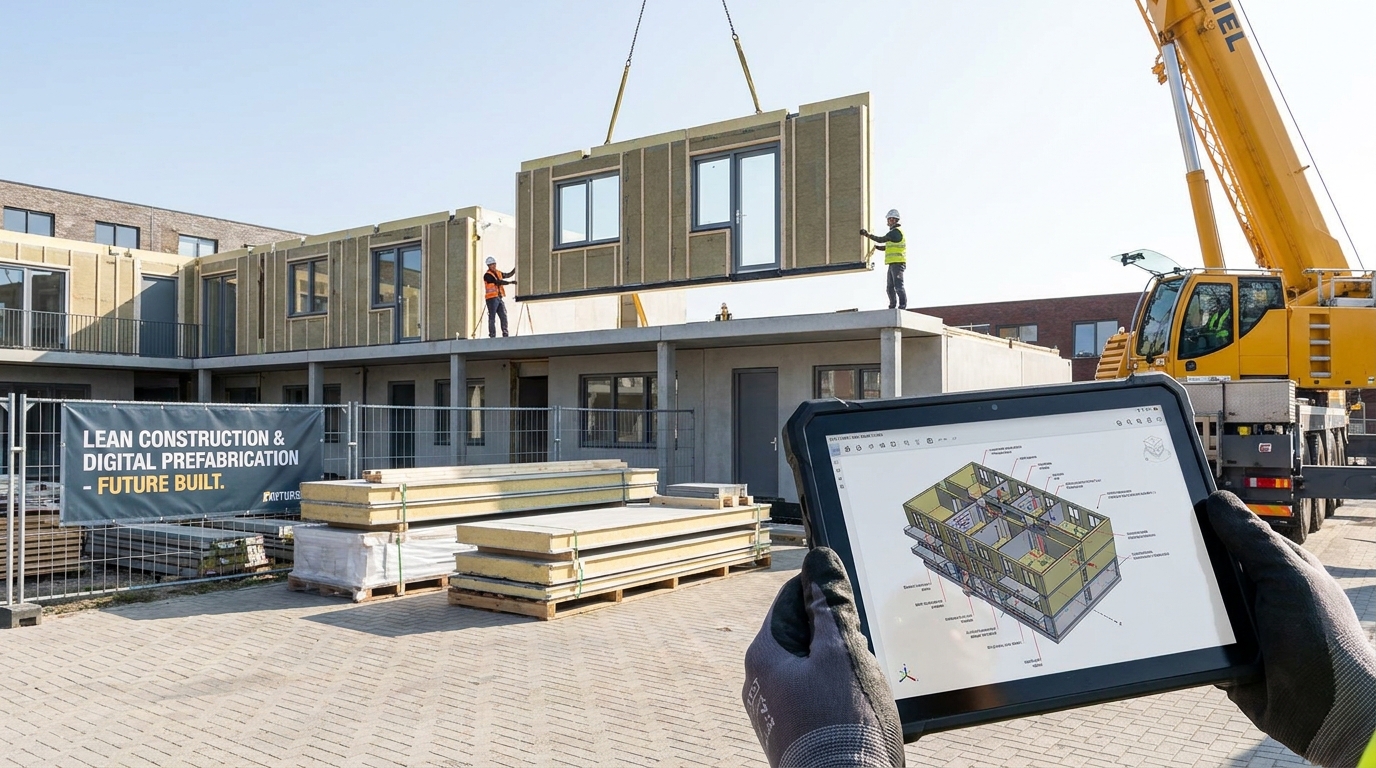
BIM, or Building Information Modeling, can improve lean planning by helping teams identify clashes earlier, visualize sequence, and coordinate trades before work reaches the field. Digital project controls can make look ahead planning more transparent and easier to update. Automated planning workflows can support Last Planner practices by tracking constraints, commitments, and completion data more consistently.
For homeowners, the practical point is simple. If your builder uses digital tools, ask how they improve coordination and decision making, not just how fancy they look. A tablet with a model is useful only if it helps crews install work correctly and on time. Lean reminds us that tools should support better process, not replace it.
Prefabrication, modular building, and why they pair well with lean
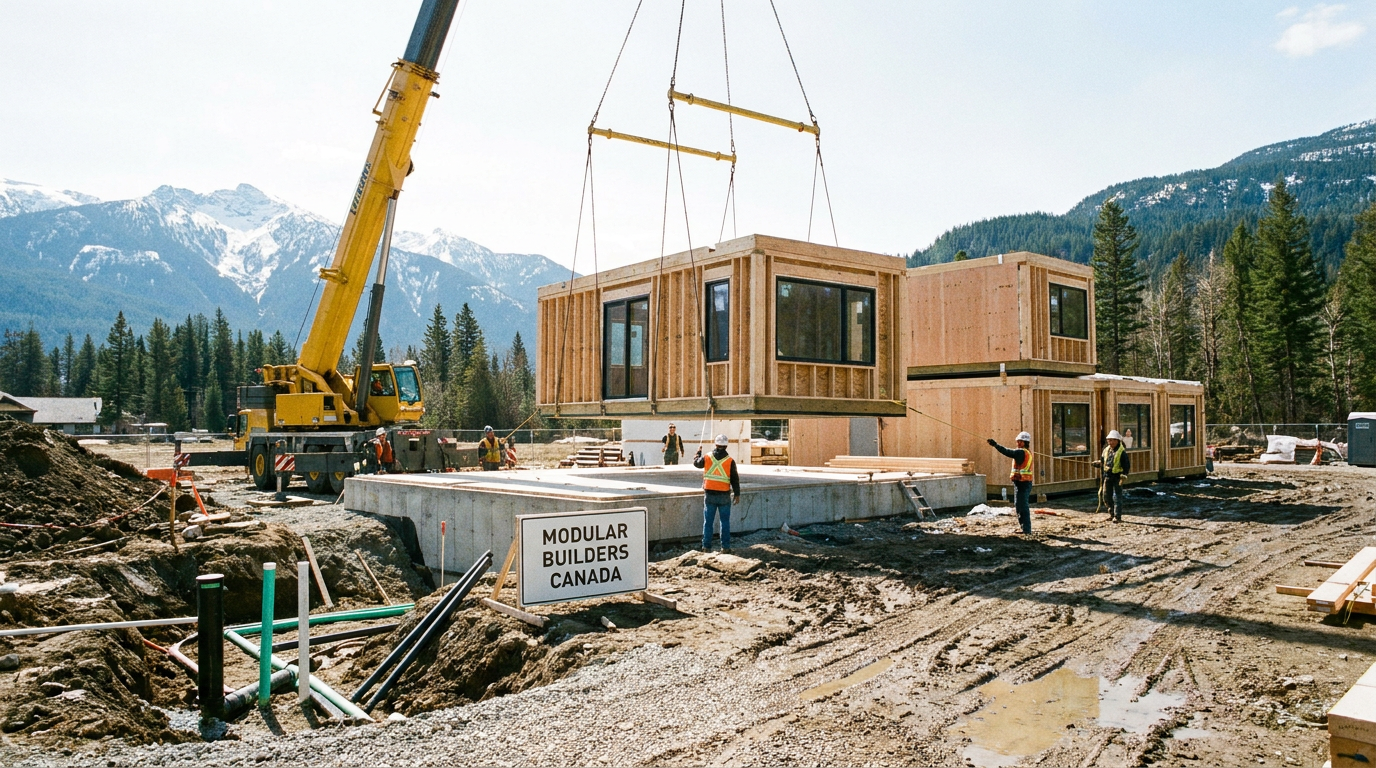
Prefabrication and modular construction fit naturally with lean principles because they move work into more controlled environments and reduce variability on site. Wall panels, bathroom pods, mechanical racks, and other assemblies can be built with better quality control, then delivered when the site is ready for installation. That supports flow and reduces congestion, weather exposure, and site handling.
This does not mean prefabrication is automatically the right choice for every job. It requires early design decisions, tighter tolerances, and well planned logistics. But when those conditions are met, prefabrication can cut waste significantly. It can also improve safety and reduce the amount of temporary storage and repeated movement on site.
Builders who combine lean planning with prefabrication often see gains in schedule reliability because more of the work is defined and coordinated earlier. Homeowners may see this in faster enclosure, cleaner sites, and fewer on site improvisations. The broader trend across North America is clear: lean, digital coordination, and off site fabrication increasingly work together rather than as separate ideas.
What homeowners should ask before hiring a builder
If you are planning a renovation or new build, you do not need to interview contractors using lean jargon. What matters is whether they manage work in a way that reflects lean principles. A good builder should be able to explain how they plan weekly work, how they coordinate trades, how they handle long lead materials, and how they reduce the chance of rework. If the answer is vague, the schedule may be vague too.
It also helps to ask how the builder deals with design changes. Changes are common, but the issue is whether they are controlled early or allowed to drift into active construction. A lean minded builder will explain the effect of a change on sequence, budget, and lead time before the change reaches the field. That protects both quality and predictability.
Ask who is involved in short term planning. If trade foremen or site supervisors are part of the planning process, that is usually a good sign. Ask how the team knows whether planned work is actually being completed. A builder may not use the term PPC in a homeowner meeting, but they should have some way of measuring reliability and learning from missed commitments.
- How do you plan work week by week once construction starts?
- How do you make sure trades are not scheduled into areas that are not ready?
- How do you track long lead materials and approvals?
- How do you reduce rework and protect finished work?
- How do you communicate schedule changes and their cause?
- How do you handle coordination between design decisions and field execution?
What builders can do this month to start using lean better
Lean construction does not require a complete company overhaul on day one. Most teams start by improving the reliability of near term planning. A practical first step is holding a weekly planning meeting that includes the people responsible for executing the work, not just the people reporting on it. Keep the focus on what is ready, what constraints remain, and what each trade can honestly commit to for the coming week.
Another useful step is tracking reasons for plan failure. If a task did not happen, record why. Over a few weeks, patterns usually emerge. Missing approvals, incomplete predecessor work, poor material readiness, labor bottlenecks, and unclear scope definitions often show up repeatedly. Once that happens, management can solve root causes instead of blaming symptoms.
Builders can also improve site organization. Cleaner staging, clearer material zones, and fewer obstructions reduce wasted movement and confusion. This overlaps with 5S style thinking, which focuses on organizing the workplace to support efficient and safe work. It is not glamorous, but it often has immediate benefits.
Finally, bring key trades into planning earlier. If framing, mechanical, electrical, and finish trades can review critical sequences before work starts, many later conflicts can be prevented. Lean is built on this kind of respect for practical knowledge. The field usually knows where the trouble spots are if someone asks early enough.
Misconceptions that cause confusion
One misconception is that lean construction is just aggressive cost cutting with a new label. That is not accurate. Poorly applied cost cutting often leads to understaffing, rushed work, and more rework. Lean aims for something different. It tries to improve value and reliability by removing non value added effort, not by stripping out what the project needs to succeed.
Another misconception is that lean means doing everything faster. Speed can improve when flow improves, but lean is not the same as rushing. In fact, rushing without readiness often creates the exact problems lean tries to prevent. Reliable sequence usually outperforms chaotic urgency over the length of a real project.
A third misconception is that software alone makes a project lean. Digital tools can help, but they are support systems. If commitments are weak, communication is poor, and field realities are ignored, no software platform will fix that. Lean starts with management behavior and team coordination, then uses tools to reinforce those habits.
The Canadian and North American outlook
In Canada and across North America, lean construction is becoming part of a larger push toward productivity, digitalization, advanced practices, and better project delivery. NRC Canada’s programs around digitalization, BIM, modular construction, and productivity show that this is not a fringe idea. It reflects a wider recognition that the industry needs more dependable systems, especially as projects become more technical and performance expectations rise.
Standards and documentation also matter in this picture. NRC’s Canadian National Master Construction Specification provides a national framework for construction and renovation contract documents, with a broad library of master specifications in English and French. While specifications alone do not create lean delivery, clear documentation supports better coordination and fewer field ambiguities. Lean works best when design intent, procurement, planning, and execution are aligned rather than disconnected.
For owners, this means better delivery methods are becoming more accessible even outside major institutional work. For builders, it means the market is slowly rewarding reliability, coordination, and data informed planning rather than just low bid instincts. The companies that adapt to this shift are likely to be in a stronger position over time.
Final thoughts
Lean construction is best understood as a practical way to make building projects work better. It helps teams define what matters, remove obstacles before they stall work, and create more dependable flow from one step to the next. For homeowners, that can mean fewer unpleasant surprises, less disruption, and a better chance of finishing on time with the quality promised. For builders, it can mean less rework, stronger trade coordination, and more predictable performance.
The main takeaway is simple. Better projects are not just built with better materials or more effort. They are built with better systems of planning, communication, and execution. Lean construction provides a tested framework for doing that. It is not reserved for mega projects, and it is not a buzzword when applied properly. It is a grounded, useful approach for anyone who wants construction to run with more clarity and less waste.
If you are a homeowner planning a renovation, ask your builder how they create reliable workflow and manage trade coordination. If you are a builder, start by improving weekly planning, removing constraints earlier, and learning from missed commitments. Lean construction works when it moves from concept into daily habits. That is where better projects actually come from.


No Comment! Be the first one.