



For many people, the idea of an intelligent home once belonged to the world of science fiction. It sounded sleek and impressive, but also a little distant, a little cold, and perhaps too technical for everyday life. Today, that picture is changing in a much more human direction. AI-driven homes are no longer simply about gadgetry or novelty. They are increasingly about comfort, calm, personalization, and the subtle ways a home can support the people living inside it.
Table Of Content
- The New Meaning of a Smart Home
- How AI Enhances Comfort in Everyday Routines
- Comfort That Feels Personal
- Smarter Kitchens and More Relaxed Household Management
- AI and the Feeling of Safety at Home
- Safety for Families, Children, and Aging Loved Ones
- Wellness at Home: A More Supportive Environment
- Personalization and the Rise of Homes That Know You
- Energy Efficiency Without Sacrificing Warmth
- What Homeowners and Renters Should Consider Before Getting Started
- The Emotional Future of Home
- Frequently Asked Questions About AI-Driven Homes
- Are AI-driven homes only for luxury properties?
- Can renters use AI home technology too?
- Does AI in the home make life too dependent on technology?
- What is the best first step for creating an AI-driven home?
What makes this moment so compelling is that artificial intelligence is beginning to blend into domestic life in ways that feel less mechanical and more intuitive. Instead of asking homeowners to adapt to technology, AI is gradually learning how to adapt to people. It notices routines, responds to preferences, and helps create living environments that feel softer, smoother, and better aligned with real life. That emotional shift matters because home is never just a structure. It is where mornings begin, where children settle after school, where dinners unfold, and where people look for rest at the end of a long day.
AI-driven homes are residences that use artificial intelligence to learn a household’s routines and adjust automatically, rather than requiring constant manual control. They redefine daily living across five main areas: comfort, security, wellness, personalization, and energy efficiency. On the comfort side, lighting, climate control, and kitchen appliances adapt to morning and evening routines without repeated input. For security, AI-based cameras and locks distinguish between expected activity and genuine risks, sending alerts only when something is actually unusual. For wellness, AI coordinates temperature, lighting, and air quality to support better sleep and focus. Personalization lets different household members keep their own lighting, temperature, and entertainment preferences in shared spaces. Energy efficiency comes from systems that heat, cool, and light only the rooms actually in use. Together, these capabilities let a home respond to the people living in it instead of asking people to manage it, making daily routines feel calmer, safer, and more supported.
This is why the conversation around smart homes is becoming more personal. Homeowners and renters are not only asking what technology can do. They are asking how it can make daily living feel better. They want homes that feel secure without seeming harsh, efficient without feeling clinical, and connected without becoming intrusive. AI is opening the door to exactly that kind of experience, one where technology works in the background to make everyday life more comfortable, more organized, and more responsive.
In this article, we will look at how AI-driven homes are redefining daily living through comfort, security, wellness, personalization, and ease. Rather than focusing only on technical features, we will explore the emotional and lifestyle value of these systems and why they are becoming such an important part of future living. For people who care deeply about how a home feels, this is where innovation becomes truly exciting.
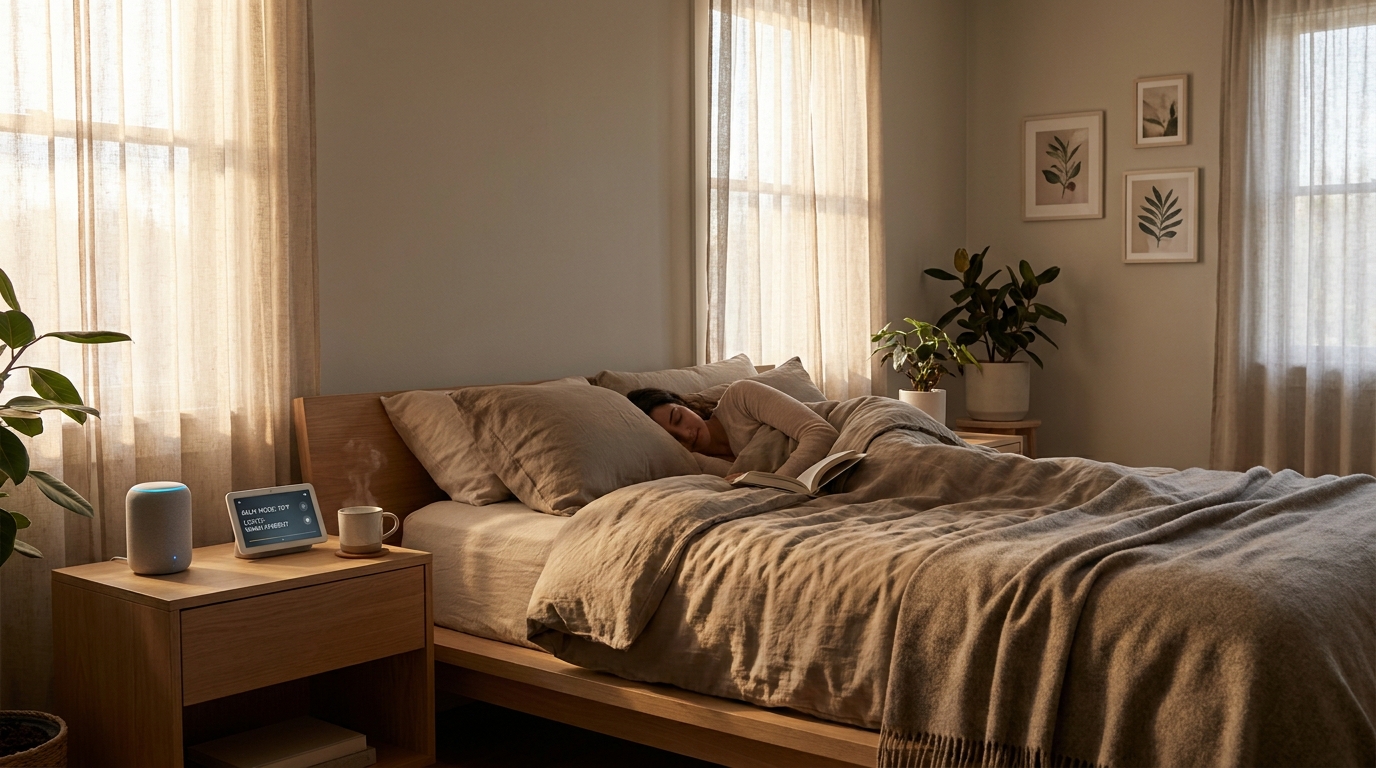
The New Meaning of a Smart Home
Not long ago, a smart home usually meant a collection of connected devices. A speaker that answered questions, a thermostat controlled by an app, a video doorbell, or lights that could be switched on from a phone all fit that description. Those features are still useful, but AI is adding a new layer that changes the experience in a more profound way. It is not just about remote control anymore. It is about learning, anticipating, and responding with a sense of timing that feels surprisingly natural.
That shift is what turns a connected home into an AI-driven one. Instead of waiting for every command, systems can begin to understand patterns and help automate them thoughtfully. If your home notices that you usually dim the lights around nine in the evening, lower the temperature before sleep, and play soft music while tidying up, it can start offering those settings automatically. The result is not a futuristic spectacle. It is a home that quietly supports your rhythm.
This distinction matters because most people do not want to manage dozens of devices all day. They want a home that feels easier to live in. True convenience comes when technology reduces mental load rather than adding to it. AI-driven homes are appealing because they move away from constant manual control and toward systems that feel almost invisible in their usefulness. The best technology in a home often does not call attention to itself. It simply makes daily life run more smoothly.
There is also something deeply reassuring about a house that feels attentive. When lights transition gently as the day changes, when your entryway responds to your arrival, or when your heating and cooling system adapts to the weather before the house becomes uncomfortable, the atmosphere of home becomes more supportive. That support can influence mood more than we often realize. Small adjustments in light, temperature, sound, and order can shape how rested, productive, or peaceful a person feels.
AI-driven living is therefore less about replacing human habits and more about honoring them. The technology becomes most powerful when it reflects the life already happening in a home. It learns whether a household is busy and energetic, quiet and restorative, or somewhere in between. It can then help create an environment that feels more aligned with those needs, making home life feel not just efficient, but more personally cared for.
How AI Enhances Comfort in Everyday Routines
Comfort is often the first emotional benefit people notice when they begin using AI at home. This comfort is not only physical, although climate control and lighting play a large role. It is also mental. A home that remembers your preferences can remove dozens of tiny decisions from the day. Over time, that reduction in effort can make daily routines feel calmer and less fragmented.
Take mornings, for example. They are often rushed, especially for families or busy professionals. An AI-driven home can begin the day in a way that feels gentle rather than abrupt. Shades can rise gradually, bedroom lights can warm slowly instead of turning on harshly, and the kitchen can become active before anyone fully arrives. Coffee machines, smart kettles, and connected speakers can all work together to create a smoother start. Even if the savings are only a few minutes here and there, the emotional impact is real because mornings set the tone for the entire day.
Evenings can benefit just as much. After hours of work, commuting, errands, or parenting, most people crave a feeling of exhale when they come home. AI can support that transition beautifully. It can recognize arrival through geolocation or schedules and prepare the environment in advance. Entry lighting can come on, the thermostat can shift to a preferred setting, and a favorite playlist can begin softly in the background. These details may seem small in isolation, but together they create a sense of being welcomed by your own space.
Seasonal comfort is another area where AI makes a noticeable difference. Traditional heating and cooling systems often react after a room becomes too warm or too chilly. AI-enabled climate systems can do more by learning occupancy patterns, weather conditions, and room usage. They can keep commonly used spaces comfortable at the right times while reducing energy use elsewhere. This creates a home that feels thoughtfully managed rather than uniformly controlled, which is both more efficient and more pleasant to live in.
The same is true of lighting. Light has a powerful effect on mood, energy, and relaxation, yet many homes rely on static settings that do not reflect the time of day or what people are doing. AI-driven lighting systems can shift color temperature and brightness naturally from morning to evening, supporting alertness when needed and softness when it is time to wind down. In this way, comfort becomes layered. It is not only about brightness. It is about how the entire atmosphere of a room responds to life as it unfolds.
Comfort That Feels Personal
One of the most appealing aspects of AI in the home is that comfort can become deeply individualized. Different people in the same household rarely want exactly the same environment. One person likes cooler bedrooms, another prefers warmer living spaces, and children may need different routines than adults. AI can help bridge these preferences without making the home feel chaotic or overmanaged.
As these systems learn, they can support zones, times, and individual habits in ways that feel remarkably considerate. A reading corner can have a preferred evening glow. A nursery can stay at a steadier temperature overnight. A home office can receive brighter, cooler light during working hours and become softer afterward. Instead of forcing every room to function the same way, AI allows homes to become more nuanced and emotionally intelligent.
This is where technology begins to feel less like equipment and more like hospitality. The home becomes better at receiving the people who live there. It meets them where they are, whether that means supporting concentration, easing stress, or creating an atmosphere for connection. For many households, this is the true luxury of AI-driven living. It is not extravagance for its own sake. It is the feeling of being more deeply at ease in your own home.
Smarter Kitchens and More Relaxed Household Management
The kitchen is one of the most active spaces in any home, which makes it a natural place for AI to add value. This room often holds the weight of schedules, nutrition, family gatherings, and household decision making. When technology becomes more responsive here, it can ease a surprising amount of daily pressure. The goal is not to remove the human warmth from cooking and gathering. It is to make the practical side of it all feel less overwhelming.
AI-enabled appliances can already assist with meal planning, energy efficiency, inventory tracking, and cooking precision. Refrigerators may help track groceries or alert users to expiring food. Ovens can suggest settings based on what is being prepared. Dishwashers can optimize cycles according to load size and timing. These features may sound practical, and they are, but they also support a more relaxed household rhythm. Less guesswork, less waste, and fewer interruptions can make the kitchen feel more functional and more enjoyable.
For households trying to eat well amid busy routines, this can be especially helpful. AI can support grocery organization, recipe suggestions based on ingredients at home, and reminders that prevent food from being forgotten in the back of the refrigerator. It can bring a sense of flow to meal preparation that many people have long wanted. Instead of opening the fridge at six in the evening and feeling immediate stress, people can make choices with a little more clarity and support.
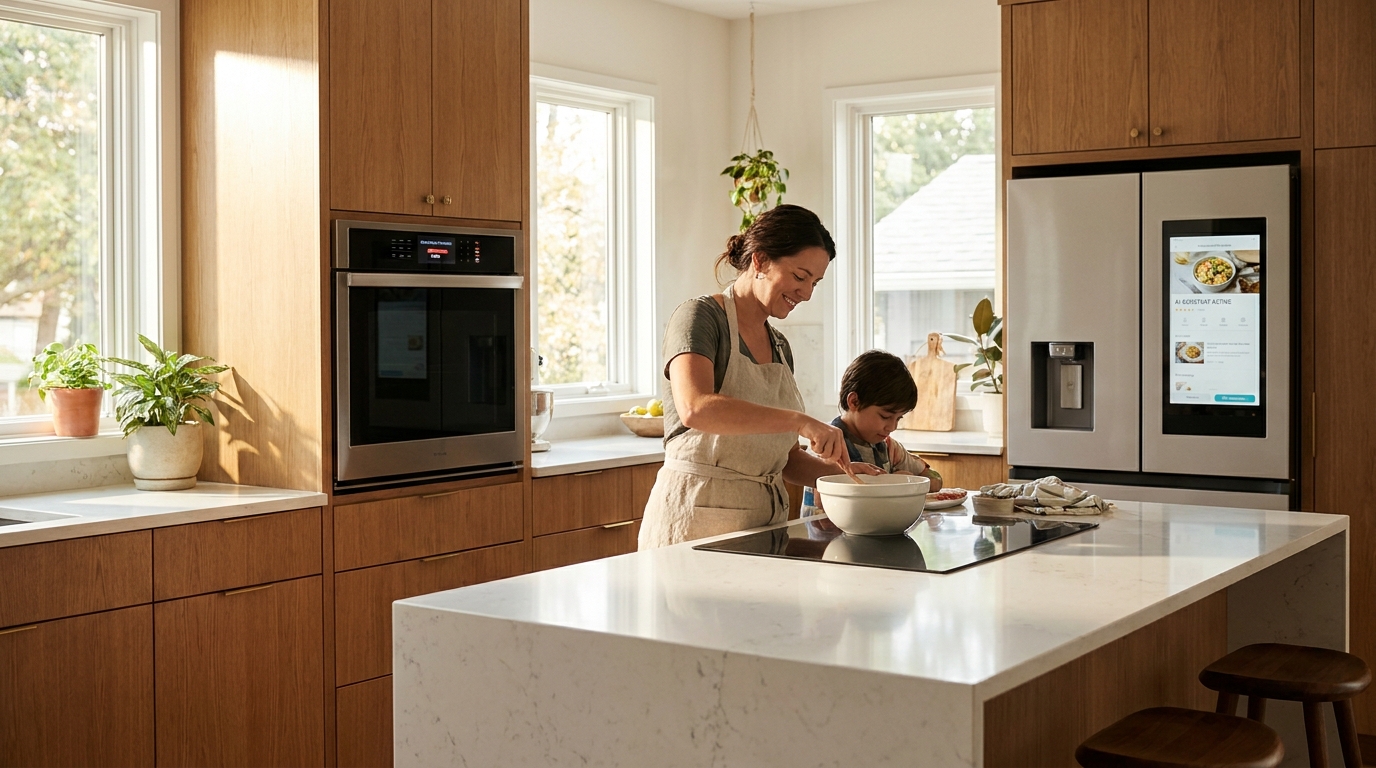
Families may also appreciate how AI can help coordinate activity in this part of the home. Shared calendars, shopping reminders, and voice-assisted routines can reduce the amount of mental tracking that usually falls on one or two members of a household. This is an often overlooked emotional benefit of home technology. When responsibilities become easier to share and manage, the home can feel more balanced and less dependent on constant remembering.
There is a wider lifestyle effect too. A kitchen that works more efficiently can encourage people to use it more often and more creatively. When cooking feels easier, home meals may become more frequent. When cleanup feels simpler, gathering can feel more inviting. Over time, that can strengthen some of the most meaningful experiences a home offers, including conversation, nourishment, and connection around the table.
AI and the Feeling of Safety at Home
Security is one of the strongest reasons people explore AI-driven home systems, and with good reason. Home should be the place where people feel most at ease. When safety feels uncertain, it can affect sleep, concentration, travel, and the basic ability to relax. AI is helping security systems become more responsive and more refined, creating a kind of protection that feels active without always being visually intrusive.
Traditional home security often relied on alarms that reacted only after a problem occurred. AI-based systems can do more by learning patterns, identifying unusual activity, and distinguishing between expected and unexpected events. Cameras may recognize whether movement is caused by a family member, a familiar delivery, a pet, or a stranger. Smart locks can track entries, issue alerts, and support temporary access for guests or service providers. These features do not just collect information. They help homeowners respond with more confidence and less panic.
This matters emotionally because uncertainty is often more stressful than risk itself. If a person hears a sound outside at night, sees a late alert, or wonders whether the garage door was left open, AI can provide faster clarity. A quick glance at a phone, a voice command, or an automatic notification can answer the question and restore peace of mind. In practical terms, that may save a trip downstairs or a call to a neighbor. In emotional terms, it can make a home feel more protective and dependable.
There is also comfort in the way AI security can support absence. Travel, workdays away from home, and even long afternoons out become easier when a home can monitor itself intelligently. Systems can detect unusual movement, water leaks, smoke, or doors left ajar and notify the homeowner right away. For people who split time between properties or care for older family members remotely, this layer of attentiveness can feel especially valuable. It offers reassurance not through fear, but through awareness.
The most successful security systems are those that help people feel secure without making the home feel tense. That balance is important. Good home security should preserve warmth, not replace it. AI has the potential to make that possible by becoming more accurate, more contextual, and less disruptive. Instead of creating constant false alarms and stress, it can create a quiet background of protection that lets daily life continue with greater confidence.
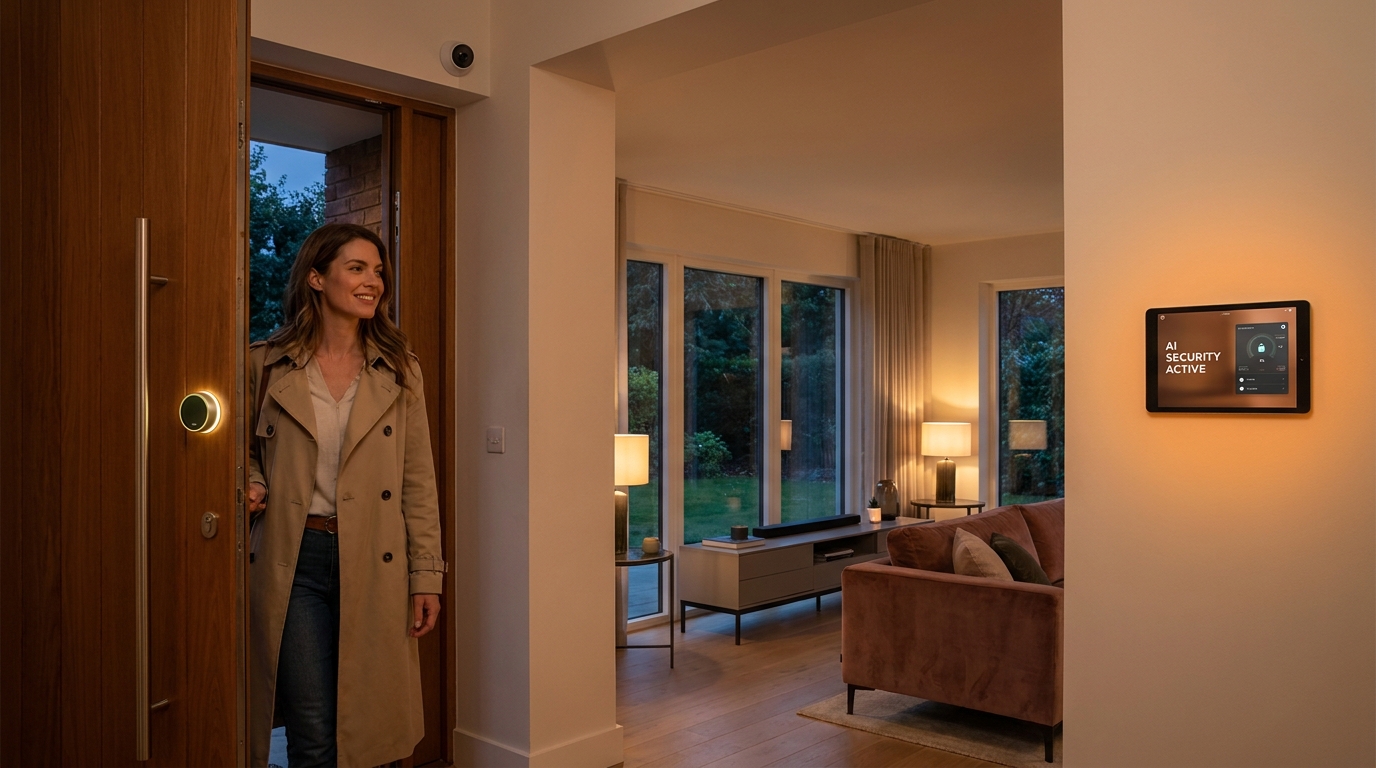
Safety for Families, Children, and Aging Loved Ones
For families, safety often means more than security from outside threats. It also includes the everyday wellbeing of the people inside the home. AI-driven systems can support this in ways that feel practical and compassionate. Parents may appreciate notifications when children arrive home, doors are opened at unusual times, or indoor air quality changes. These details create a stronger sense of connection without requiring constant hovering.
For households supporting older adults, AI can offer particularly meaningful help. Smart sensors and monitoring tools may identify unusual inactivity, temperature issues, or environmental risks like smoke or water leaks. While no technology replaces human care, these systems can reduce anxiety and help families stay informed. They can also support independence, which is often just as emotionally important as safety itself.
There is a dignity in a home that helps care for its residents gently. Whether it is a grandparent living independently, a child coming home from school, or a partner arriving late from work, AI can help people feel noticed in a reassuring way. That feeling can deepen trust in the home itself. Instead of being simply a place where life happens, the home becomes an active partner in protecting it.
Wellness at Home: A More Supportive Environment
Wellness has become one of the most important design values in modern living, and AI is increasingly part of that conversation. People are paying closer attention to the way home affects sleep, stress, focus, and physical comfort. They want spaces that restore them, not just shelter them. AI can support that goal by helping the environment respond more intelligently to the body and mind.
One of the clearest examples is sleep. Bedrooms function best when they feel cool, dark, quiet, and calming, yet many people struggle to create those conditions consistently. AI can help by coordinating temperature changes, blackout shades, and lighting transitions before bedtime and again in the morning. Rather than asking people to think through every step, the home can create a more predictable rhythm for rest. Over time, these consistent cues can support healthier sleep habits and a gentler start to each day.
Air quality is another growing area of concern. Homes today are often sealed tightly for energy efficiency, but that can mean indoor air quality matters more than ever. AI-enabled systems can monitor humidity, allergens, carbon dioxide levels, and pollutants, then adjust ventilation or filtration automatically. While the mechanics behind this may be technical, the lived result is simple. A home can feel fresher, more balanced, and easier to breathe in, which has a direct impact on comfort and wellbeing.
Lighting, sound, and room usage can also contribute to wellness in subtle ways. AI may support a home office with better conditions for focus during the day, then help that same room transition to a softer, restorative setting later. Meditation spaces, reading nooks, bathrooms, and bedrooms can all benefit from scenes designed around mood and recovery. When these adjustments happen seamlessly, they encourage better routines without making wellness feel like one more chore on the list.
The emotional value here is significant. Wellness at home is not only about ideal settings or perfect routines. It is about feeling that your environment is working with you, not against you. In a fast-moving world, a responsive home can become a quiet source of steadiness. It can help people reset, recharge, and care for themselves in ways that feel realistic rather than aspirational.
A truly intelligent home does not simply respond to commands. It learns how to support the moments that matter most, from rest and focus to safety and connection.
Personalization and the Rise of Homes That Know You
Perhaps the most intriguing promise of AI-driven living is personalization. For years, homeowners have tailored spaces through furniture, finishes, art, and layout. AI adds a new kind of customization, one that is dynamic rather than fixed. Instead of shaping only how a home looks, it helps shape how a home behaves.
This can include everything from preferred wake-up routines to entertainment choices, room temperature, music, privacy settings, and schedules. A household can have multiple users with distinct profiles, allowing common spaces to shift depending on who is present and what time of day it is. That flexibility can make a home feel more considerate and more layered. It acknowledges that daily life is not static and that comfort means different things at different moments.
For renters, this can be especially exciting because many forms of personalization do not require major renovation. Smart lamps, speakers, plugs, sensors, blinds, and portable hubs can make even temporary homes feel more tailored. AI is helping personalization become more accessible, allowing people to shape atmosphere and routine without owning every wall or system in the property. That matters because emotional attachment to home is not reserved for owners alone. Renters also want spaces that feel supportive, beautiful, and distinctly theirs.
There is also an emotional elegance in having a home that remembers. It remembers how bright you like the kitchen in the morning, when you tend to lower shades in the afternoon, which room becomes your refuge after a difficult day, and what kind of environment helps you concentrate. These memories are expressed through settings rather than sentiment, but the result can still feel remarkably personal. The home begins to reflect the people inside it with greater sensitivity.
Still, personalization works best when it remains respectful. People want convenience, but they also want trust. The future of AI in the home will depend not only on what systems can learn, but on how transparently and safely they do it. When homeowners feel in control of data, permissions, and privacy, personalization becomes a pleasure rather than a concern.
Energy Efficiency Without Sacrificing Warmth
Sustainability and comfort are often discussed separately, but AI is helping bring them together. Many people want homes that are both kinder to the environment and more pleasant to live in. Historically, efficiency could sometimes feel restrictive, requiring visible sacrifice or constant monitoring. AI offers a more graceful approach by optimizing energy use quietly in the background.
Heating, cooling, lighting, and appliance use can all become more efficient when systems learn occupancy patterns and daily rhythms. Rooms do not need to be lit when empty. Temperatures do not need to remain constant in unused areas. Appliances can run at better times, and energy loads can be balanced more intelligently. What makes this appealing is that the homeowner does not have to manage every detail actively. The home participates in efficiency on its own.
That kind of support is valuable not only for utility bills but also for peace of mind. Many people feel tension between wanting comfort and wanting to be responsible with resources. AI can ease that tension by helping households waste less without feeling deprived. The thermostat can remain pleasant while still being thoughtful. Lighting can feel beautiful while still being efficient. This balance is one of the most attractive aspects of future living because it aligns values with daily experience.
There is also a larger cultural shift underway. Luxury is increasingly being defined not just by abundance, but by intelligence, restraint, and care. A well-run home that adapts naturally, saves energy, and supports wellbeing feels modern in a meaningful sense. It suggests that beauty and responsibility do not need to compete. They can coexist, and AI can help make that coexistence feel effortless.
What Homeowners and Renters Should Consider Before Getting Started
For anyone curious about AI-driven living, the good news is that it does not require a complete overhaul. Many of the most satisfying benefits begin with small, practical changes. A learning thermostat, a voice assistant, smart lighting, or a connected security system can create a noticeable difference without turning the home into a high-tech experiment. The key is to start with real lifestyle needs rather than trying to adopt every device at once.
It helps to ask a few simple questions. Where does daily life feel most rushed or repetitive. Which moments at home feel less comfortable than they could. What would make mornings smoother, evenings calmer, or travel less stressful. These are useful starting points because they keep the focus on lived experience. Technology should support the life you want, not push you into habits that feel unnatural.
Compatibility is another important consideration. Before buying devices, homeowners and renters should think about whether systems work well together and whether they can grow over time. A home functions best when its technology feels cohesive. Choosing products that integrate smoothly can make the experience feel simpler and more intuitive in the long run. It can also prevent frustration, which is the quickest way for useful technology to lose its appeal.
Privacy should remain part of the conversation as well. AI-powered systems often rely on data to learn preferences and patterns, so it is wise to understand what information is being collected, where it is stored, and how settings can be controlled. A warm and trustworthy home environment depends on transparency. People should feel empowered to decide what level of automation and data sharing feels comfortable for them.
Most of all, it is worth remembering that future living does not have to happen all at once. The most beautiful homes tend to evolve, and the same is true of intelligent ones. A few thoughtful additions can begin to transform the way a home feels. Over time, those changes can build into a living experience that is not only more advanced, but more restful, more secure, and more supportive of everyday life.
The Emotional Future of Home
The conversation about AI often becomes dominated by performance, speed, and innovation, but at home, the most lasting measure of success is emotional. Does the space feel easier to live in. Does it support the people inside it with more grace. Does it reduce stress, improve comfort, and help daily routines unfold with less friction. These are the questions that matter most because they get to the heart of why people invest in home at all.
AI-driven homes are redefining daily living not by replacing human presence, but by making room for more of it. When repetitive tasks fade into the background, there is more space for rest, conversation, creativity, and connection. When safety becomes more responsive, people can relax more fully. When comfort becomes more personalized, home begins to feel less generic and more deeply aligned with the lives unfolding inside it.
This future is not about cold perfection. It is about warmer, better living. It is about homes that understand when to brighten, when to quiet down, when to protect, and when to simply let life happen more easily. The most compelling promise of AI is not that it makes homes smarter in a technical sense. It is that it can make them feel more humane.
For homeowners and renters alike, that is an exciting shift. It suggests a future where intelligence and comfort are no longer separate ideas. They come together in the rooms we wake up in, gather in, and retreat to at the end of the day. As AI becomes a more natural part of domestic life, the home of the future may be defined less by its devices and more by the feeling it creates. That feeling, at its best, is one of ease, security, wellness, and belonging.
Frequently Asked Questions About AI-Driven Homes
Are AI-driven homes only for luxury properties?
Not at all. While some high-end homes feature fully integrated systems, many AI-driven benefits are now available through affordable products like smart thermostats, lighting, speakers, locks, and cameras. The experience can begin small and still feel meaningful. What matters most is choosing tools that support your routine and improve how your home feels day to day.
Can renters use AI home technology too?
Yes, many renters can enjoy AI-driven living without making permanent changes. Portable smart devices such as lamps, plugs, speakers, sensors, air purifiers, and cameras can add comfort, convenience, and security in a very flexible way. Renters can often create a surprisingly personalized environment with systems that move with them from one home to the next.
Does AI in the home make life too dependent on technology?
It can if it is adopted without intention, but when used thoughtfully, AI should reduce dependence on constant effort rather than create new forms of stress. The best systems work quietly in the background and remain easy to override manually. A well-designed AI home experience feels supportive, not controlling. It gives people more freedom to focus on living rather than managing small tasks.
What is the best first step for creating an AI-driven home?
A strong first step is to identify one daily friction point, such as uncomfortable temperatures, rushed mornings, or concerns about security. From there, choose a single solution like a learning thermostat, smart lighting routine, or AI-enabled camera system. Starting with a real lifestyle need makes the technology feel useful right away and helps build confidence for future upgrades.



No Comment! Be the first one.