



Adapting to Water Scarcity at Home Without Losing Comfort
Water scarcity can sound like a distant problem until it begins to affect local reservoirs, seasonal restrictions, utility bills, or the reliability of everyday routines at home. In reality, adapting to water scarcity is not only for dry climates or rural properties. Across Canada and North America, drought is now treated as a serious resilience issue, and official guidance increasingly encourages households to prepare before shortages become urgent. That shift matters because the most effective home adaptations are usually easier, more affordable, and less disruptive when they are planned in advance.
Table Of Content
- Why water scarcity adaptation belongs in everyday home planning
- Start with the simplest high-impact move: find and fix leaks
- Upgrade fixtures that save water without lowering performance
- How to make upgrades feel manageable
- Rethink outdoor water use, where the largest savings may be hiding
- Designing for beauty and durability
- Use water more deliberately indoors without making life harder
- Consider rainwater harvesting and reuse where appropriate
- Maintain plumbing and infrastructure before they become stress points
- Follow local drought conditions and plan before restrictions arrive
- A room-by-room and zone-by-zone strategy for a water-resilient home
- Simple priorities to act on first
- Why comfort and conservation are not in conflict
- The broader value of household action
- Conclusion: build resilience through steady, practical choices
The good news is that a water-efficient home does not have to feel austere or inconvenient. In fact, the best strategies tend to improve how a home functions by reducing waste, modernizing fixtures, and making outdoor spaces easier to manage. When water use becomes more deliberate, comfort often stays the same or even improves, especially when old equipment is replaced with better-performing products. This is one reason water efficiency has moved from a niche sustainability topic into mainstream home design, renovation, and climate resilience planning.
Federal guidance in both Canada and the United States supports this practical approach. Canada identifies drought as a hazard that can develop slowly, last for a season or more, and carry significant economic costs. Canada also points households to the Canadian Drought Monitor as the primary national reference for tracking conditions. In the United States, the EPA encourages water-saving practices and equipment that make sense even when drought is not severe, which is a useful framing for homeowners who want improvements that remain valuable year after year.
This article takes that balanced view. Adapting to water scarcity at home means combining a handful of practical measures rather than making one dramatic change: repairing leaks promptly, since even small drips can waste thousands of gallons a year; replacing outdated toilets, showerheads, and faucets with WaterSense-labeled fixtures that perform just as well while using less water; redesigning irrigation and landscaping so lawns and gardens use water more precisely instead of by default; maintaining plumbing, valves, and pressure regulators before they fail; and, where appropriate, adding rainwater or greywater reuse to reduce reliance on treated supply. It also means tracking local drought conditions so these changes happen before restrictions take hold, not after. None of these steps require sacrificing comfort. Rather than focusing on sacrifice, the goal is a home that uses water wisely, responds better during dry periods, and supports long-term resilience without making daily life harder.
Water scarcity adaptation works best when it becomes part of normal home maintenance. Much like insulation, smoke alarms, or weatherproofing, the smartest changes are often the ones you put in place before an emergency arrives.
Why water scarcity adaptation belongs in everyday home planning
Many people still assume that water scarcity is mostly an issue for desert regions, but that misconception no longer fits the realities of climate variability and aging infrastructure. Conditions can differ sharply by province, watershed, municipality, and season. A region may appear water-rich overall and still experience local stress due to drought, low river flows, groundwater pressure, or infrastructure limitations. That is why water adaptation should be thought of regionally and practically, not as an abstract national issue.
Canada’s environmental reporting tracks water quantity and drought conditions through official indicators and annual monitoring. That kind of monitoring sends a clear message to homeowners: water supply reliability is being watched because it matters. Drought can develop slowly, and by the time restrictions arrive, the easiest opportunities for savings may already have been missed. A household that has already repaired leaks, updated fixtures, and improved outdoor watering is in a much better position than one scrambling to react.
There is also a financial case for preparing early. Water efficiency can reduce utility costs, but it can also protect a household from the compound effects of drought, such as stricter watering rules, stressed landscaping, and avoidable plumbing waste. In many homes, the hidden costs are larger than expected. Small leaks can persist for months, inefficient irrigation can quietly overwater the yard, and older fixtures can consume far more water than newer alternatives while offering no meaningful comfort benefit.
Perhaps most importantly, adaptation is becoming a normal part of resilient housing. Public agencies now talk not only about conservation, but also about drought preparedness, rainwater harvesting, water reuse, and green infrastructure. That broader language reflects a shift in thinking. Water use is no longer just a personal habit. It is also part of how homes interact with wider infrastructure, local ecosystems, and long-term climate risks.
Start with the simplest high-impact move: find and fix leaks
If there is one place to begin, it is leak detection. The EPA estimates that the average American uses about 82 gallons of water per day at home, and that household leaks waste about 9,400 gallons annually per family on average. It also reports that 5% to 10% of U.S. homes have easy-to-fix leaks that drip 90 gallons a day or more. These numbers matter because leak repair is one of the rare home improvements that is inexpensive, immediate, and almost entirely invisible in daily life.
Leaks often hide in places homeowners do not check often enough. Running toilets, worn flappers, dripping faucets, outdoor hose bibs, irrigation valves, humidifier lines, and under-sink connections can all waste water over time. Because these problems are so familiar, they are easy to normalize. A faucet that drips a little or a toilet that occasionally runs may not feel urgent, yet over weeks and months the losses add up. In a period of drought or restrictions, that wasted water becomes even harder to justify.
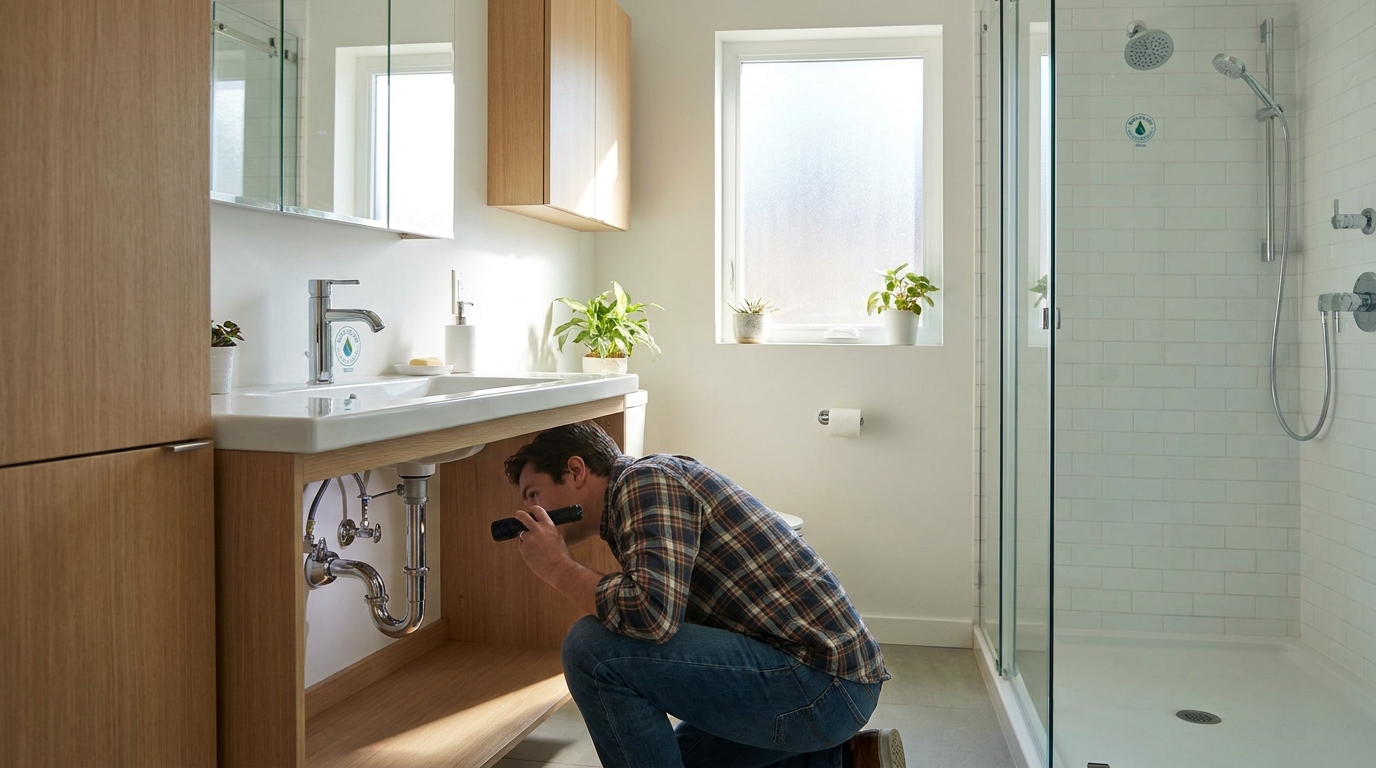
A practical leak check can be done without specialized expertise. Start by reviewing recent water bills for unusual spikes. Then inspect toilets by listening for intermittent refilling, checking the bowl for movement, or using a simple dye test in the tank. Look under sinks for dampness, inspect showerheads and tub spouts for drips after use, and check appliance connections behind dishwashers and washing machines if accessible. Outdoors, examine hose connections and irrigation heads for pooling, misting, or broken seals.
For households that want a more precise approach, a home water audit can be extremely useful. This does not need to be complicated. Record meter readings at a time when no water should be in use and watch for movement. Compare seasonal usage patterns. Note fixture ages and identify areas where water seems to disappear without a clear purpose. By treating water the way many people already treat electricity or heating, homeowners can turn a vague concern into concrete action.
Upgrade fixtures that save water without lowering performance
One of the biggest misconceptions about low-water fixtures is that they automatically feel weak or unsatisfying. That may have been true of some early products decades ago, but it is not a fair description of modern high-efficiency equipment. Today, WaterSense-labeled toilets, showerheads, faucets, and related products are designed to preserve performance while reducing water use. That balance is essential because most people will only stick with efficient systems if they work well every day.
The scale of impact is significant. The EPA reports that WaterSense-labeled products helped American businesses and homeowners save over a trillion gallons of water in 2023. It also notes that WaterSense-labeled homes are designed to be about 30% more water-efficient than typical new construction and can save a family an average of 50,000 gallons of water or more, plus about $700 per year in water and energy bills. Those figures show that efficiency is not marginal. It compounds at both household and national scale.
For existing homes, bathrooms are often the best place to start. Toilets account for a substantial share of indoor water use, and replacing an older model with a high-efficiency toilet can yield immediate savings without requiring any behavioral change. Showerheads are another strong candidate because modern efficient models can maintain a comfortable spray pattern while using less water. Faucets and aerators are usually inexpensive to upgrade and can reduce waste in kitchens and bathrooms with very little disruption.
Appliances deserve attention too. Dishwashers and clothes washers have become much more efficient over time, and older machines may use far more water than necessary. If replacement is already being considered, it makes sense to prioritize models that are recognized for water efficiency. The most practical lens is not whether every appliance must be replaced immediately, but whether each future purchase can make the home more resilient without sacrificing convenience.
How to make upgrades feel manageable
Homeowners sometimes postpone water-saving improvements because the list seems too long. A calmer way to approach it is to phase upgrades based on natural maintenance cycles. Replace the toilet when the old one needs work, change the showerhead during a bathroom refresh, and choose an efficient washer when the current one reaches the end of its useful life. This reduces financial pressure and makes adaptation feel integrated rather than burdensome.
It also helps to focus on lived experience instead of technical specifications alone. Ask whether a shower feels comfortable, whether the sink flow is adequate for cooking and cleaning, and whether the toilet flushes reliably. When efficient fixtures perform well, they quickly fade into the background, which is often the best outcome. Sustainable design is most successful when it becomes almost invisible in daily life.
Rethink outdoor water use, where the largest savings may be hiding
Many homeowners focus first on indoor habits, yet outdoor use can be the biggest opportunity of all. According to the EPA, landscape irrigation can represent 30% to 70% or more of a home’s total water use depending on location. In dry spells, that share can become especially important because lawns and ornamental plantings often consume large volumes of treated drinking water. If a household wants meaningful resilience gains, the yard should be part of the plan.
That does not mean replacing every garden with gravel or giving up on an attractive landscape. In fact, some of the most appealing yards are built around regionally appropriate planting, healthier soil, and more precise watering. A drought-tolerant landscape can still feel lush, welcoming, and family-friendly when it is designed thoughtfully. The goal is not a barren aesthetic. The goal is a landscape that looks good with less intervention.
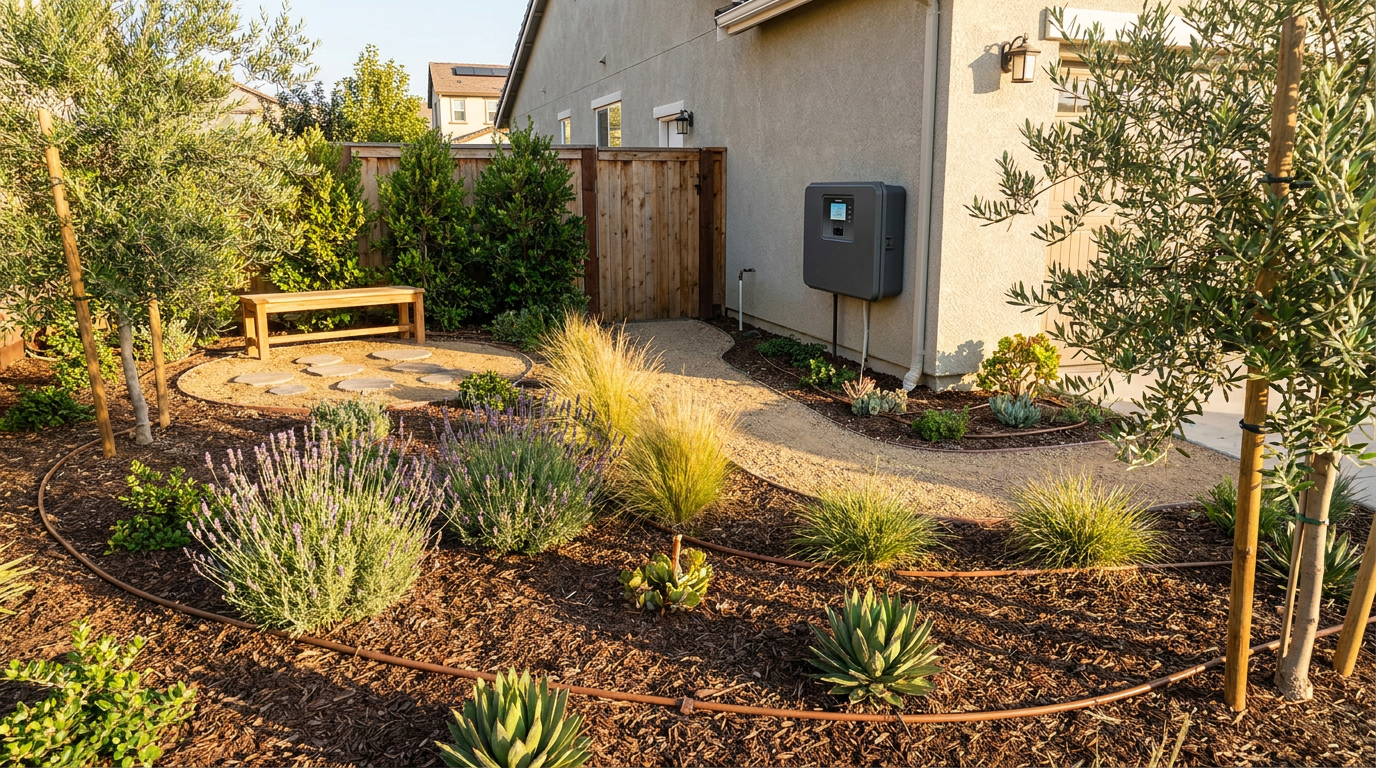
Start by evaluating whether all planted areas truly need the same amount of water. Grass, shrubs, trees, and perennial beds have different needs, yet many irrigation systems treat them as one zone. Grouping plants by water demand and updating irrigation accordingly can reduce waste while improving plant health. Mulch is another simple but effective tool because it helps hold moisture in the soil, moderates temperature, and reduces evaporation around roots.
Drip irrigation and soaker hoses are often better suited to resilient watering than conventional sprinklers, especially in beds and around shrubs. These systems apply water more directly where plants need it and reduce losses to wind and evaporation. For lawns, irrigation timing matters as much as equipment choice. Watering in the early morning is usually more efficient than watering in midday heat, and overwatering often causes shallow roots and weaker plants rather than healthier ones.
Smart irrigation controllers can add another layer of practicality. These systems use weather or soil data to adjust watering schedules, which helps avoid the common problem of running the same schedule regardless of rainfall or temperature. For busy households, automation can be one of the best ways to reduce waste because it removes guesswork. A system that waters less when conditions are cool or wet supports both convenience and conservation.
Designing for beauty and durability
A more resilient landscape starts with plant selection. Regionally appropriate trees, shrubs, and perennials are generally better adapted to local rainfall patterns and soils than water-hungry imports. Native or climate-suitable species often require less irrigation once established and can support pollinators and local biodiversity at the same time. This is one of the most elegant examples of sustainability working with natural conditions rather than against them.
Hard surfaces and grading also matter. If rainwater runs quickly off the property and into the street, the landscape misses a valuable chance to absorb moisture. Permeable surfaces, amended soil, and gently contoured planting areas can help water infiltrate where it is useful. These details may sound small, but together they make the yard more capable of handling both dry periods and heavy downpours.
Use water more deliberately indoors without making life harder
Behavior still matters, but it is most effective when paired with efficient infrastructure. Simply telling people to take shorter showers or turn off taps is not a complete adaptation strategy, especially when leaks, old fixtures, and poor irrigation are wasting far more water behind the scenes. The better approach is to combine a few easy habits with systems that already support lower use. That way, resilience does not depend on constant vigilance.
In the kitchen, running full dishwasher loads, keeping a pitcher of drinking water in the fridge instead of running the tap for cold water, and washing produce in a bowl rather than under continuous flow can all reduce waste with minimal effort. In the laundry room, selecting efficient cycles, washing full loads when possible, and replacing old hoses before they fail can improve both water use and maintenance outcomes. These are small shifts, but they become meaningful when repeated over time.
Bathrooms offer similar opportunities. Turning off water while shaving or brushing teeth is still useful, but the bigger gains usually come from a non-leaking toilet, an efficient showerhead, and sensible shower duration. Households with children may find it easier to adopt routines if the home itself supports them. A shower that warms quickly, a toilet that flushes effectively, and clearly maintained fixtures create less friction than asking everyone to compensate for inefficient equipment.
Comfort is an important part of the equation. People are more likely to embrace water-efficient living when they do not feel constantly inconvenienced. That is why the best home strategies are not based on pressure or guilt. They are based on thoughtful choices that make lower water use feel normal, seamless, and durable.
Consider rainwater harvesting and reuse where appropriate
As drought resilience guidance evolves, rainwater harvesting and water reuse are receiving more attention. These approaches are not necessary for every property, and local rules vary, but they can be valuable additions in the right context. A simple rain barrel connected to a downspout can provide water for garden beds, containers, or other non-potable outdoor uses. It will not solve all water needs, but it can reduce demand on treated supply and help homeowners think more cyclically about water.
Larger rainwater collection systems may make sense for some households, especially where outdoor water demand is high and regulations permit broader use. What matters most is realistic expectation. Rainwater harvesting is best understood as a supplemental resilience measure rather than a complete replacement for municipal or well water. Its value lies in buffering demand, capturing a resource that would otherwise run off-site, and adding flexibility during dry periods.
Greywater reuse can also be part of a future-focused conversation, though it is more complex and highly dependent on plumbing configuration and local code. In some settings, water from sinks, showers, or laundry may be redirected for approved non-potable purposes. These systems require careful planning and are not a casual retrofit, but they reflect an important trend in water adaptation: using water more than once where safe and practical. As regulations and technologies evolve, these options may become more mainstream.
Even if a household never installs a sophisticated reuse system, the idea is still useful. It encourages a mindset shift from one-way consumption to smarter resource management. In resilience terms, that is a meaningful cultural change. Homes that are designed to make better use of water are often better prepared for future variability.
Maintain plumbing and infrastructure before they become stress points
Water scarcity adaptation is not only about visible fixtures and habits. It also depends on the less glamorous systems that keep the home functioning reliably. Aging plumbing, neglected valves, failing pressure regulators, and poorly maintained irrigation equipment can all undermine efficiency. Because these issues often stay hidden until something breaks, they deserve more attention in preventive maintenance planning.
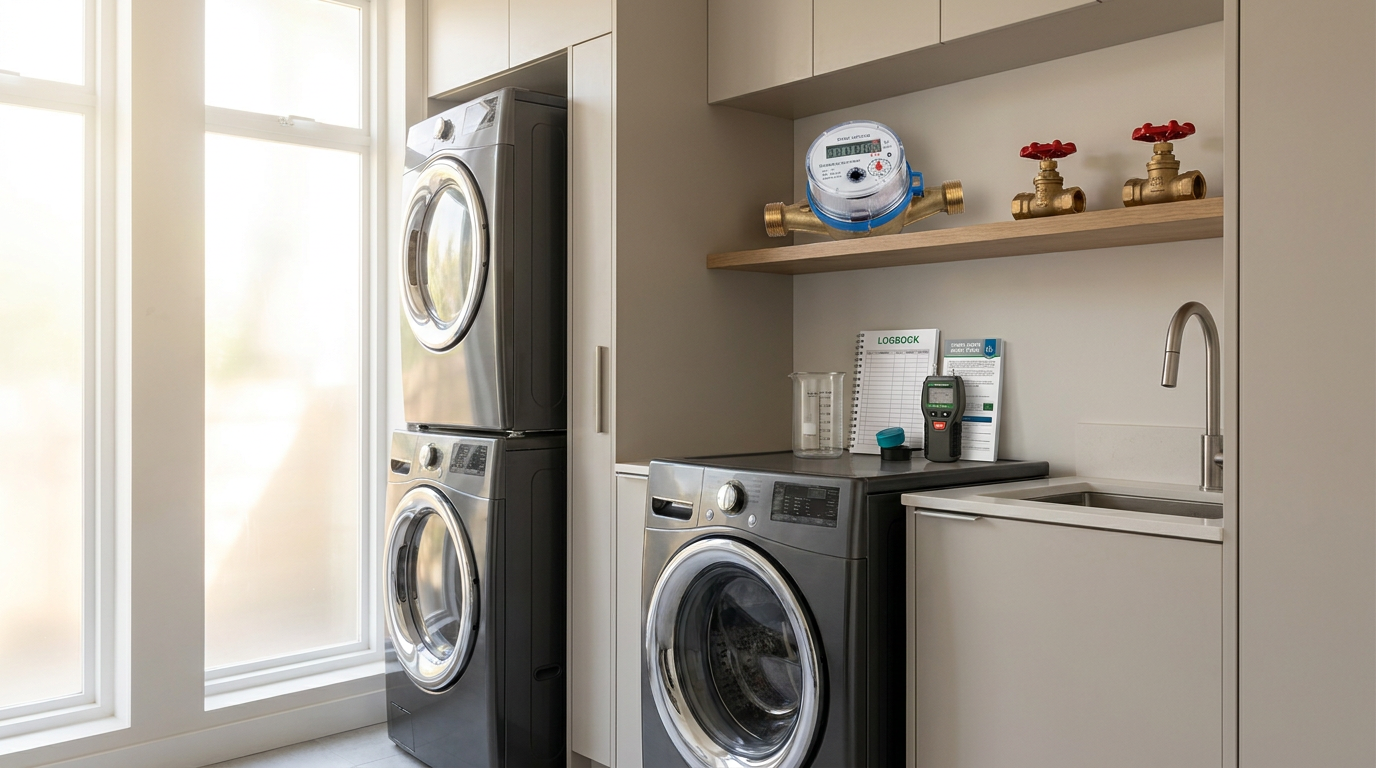
A sensible first step is to know where your main shutoff valve is and confirm that it works properly. This is useful for emergencies, but it also reflects a broader principle of home resilience: systems should be understood before they are stressed. Check visible supply lines for corrosion or wear, inspect caulking and seals around fixtures, and service irrigation systems at the start of the watering season rather than after obvious problems emerge. Small maintenance tasks often prevent both water waste and larger repair bills.
Pressure is another overlooked factor. Water pressure that is unnecessarily high can increase wear on plumbing fixtures and may contribute to wasted water. A plumber can assess whether pressure is within a sensible range and identify opportunities to improve system performance. This kind of tune-up is especially worthwhile in older homes where incremental inefficiencies have accumulated over decades.
For households on private wells, resilience planning should also include awareness of groundwater conditions and pump system health. Drought affects wells differently depending on local geology and aquifer conditions, so monitoring changes in yield or water quality is essential. While municipal and private systems face different risks, both benefit from the same principle: manage water infrastructure early, not only when supply becomes uncertain.
Follow local drought conditions and plan before restrictions arrive
Adaptation works best when it is informed by local conditions. In Canada, the Canadian Drought Monitor is the main national reference for tracking drought. Municipalities, utilities, and watershed agencies may also issue seasonal updates, watering rules, and conservation guidance that are more specific to local realities. Paying attention to these sources helps homeowners move from generic awareness to practical decision-making.
This regional lens is important because no single water strategy fits every household. A dense urban townhouse with no yard will have different priorities than a suburban property with irrigation zones or a rural home on a well. Seasonal timing also matters. Some areas experience prolonged summer dryness, while others face low-flow concerns tied to snowpack, river conditions, or multi-season precipitation patterns. The more closely a household aligns its choices with local context, the more effective those choices become.
Waiting for official restrictions is rarely the best moment to start. By then, landscapes may already be stressed, water habits may be hard to change quickly, and desired products or contractors may be in higher demand. A better approach is to build a gradual response plan in advance. For example, a household might decide which parts of the yard get priority during dry periods, when to reduce irrigation schedules, and which upgrades to make before the next warm season begins.
The practical question is not whether your area is always dry. It is whether your home is ready to function well when conditions become drier than usual.
A room-by-room and zone-by-zone strategy for a water-resilient home
For homeowners who prefer a structured approach, it can be helpful to think of water resilience in zones. In the bathroom, focus on toilets, showerheads, faucet aerators, and leak checks. In the kitchen, look at faucet efficiency, dishwasher performance, and habits around rinsing and food prep. In the laundry area, consider washer efficiency, hose maintenance, and load management. Outdoors, prioritize irrigation design, plant selection, mulch, and drainage.
This zone-based method works because it turns a broad climate concern into manageable home decisions. You do not need to solve everything at once. You can simply improve the places where water moves through your home every day. Over time, these small interventions add up to a system that is easier to live with and better prepared for drought, pricing changes, or restrictions.
It can also be helpful to prioritize by return on effort. Leak repair and irrigation adjustment are often among the fastest wins. Fixture upgrades are usually next, especially where aging equipment is already due for replacement. Larger steps like rainwater harvesting, landscape redesign, or greywater planning can come later if they fit the property and budget. This sequencing keeps the process grounded and achievable.
Simple priorities to act on first
-
Check for indoor and outdoor leaks, then repair the easiest ones immediately. This is often the quickest path to meaningful savings.
-
Replace the least efficient fixtures first, especially older toilets, showerheads, and faucets that use more water without improving comfort.
-
Review irrigation timing, coverage, and plant needs. Outdoor water use is often the largest and least visible source of waste.
-
Add mulch, improve soil moisture retention, and consider drought-tolerant planting in any landscape refresh.
-
Track local drought information and build a household response plan before seasonal stress begins.
Why comfort and conservation are not in conflict
One reason people delay water-saving improvements is the fear that efficient living will feel like a step backward. That concern is understandable, especially if memories of older low-flow products still shape expectations. But modern resilience strategies are less about restriction than refinement. A well-designed water-efficient home delivers the same essential services with less waste, and often with better consistency and lower operating costs.
This is a useful place to reframe the conversation. Comfort does not come from high water use in itself. Comfort comes from reliable showers, effective appliances, healthy landscapes, predictable bills, and a home that functions smoothly in changing conditions. Waste does not create comfort. It simply exposes households to more cost and more vulnerability when supply becomes stressed.
That is why many of the strongest measures are almost invisible once they are in place. A leak-free toilet does not announce itself. A WaterSense showerhead that feels good simply becomes the new normal. A smarter irrigation schedule quietly protects the yard without overwatering it. In each case, adaptation preserves quality of life while making the home more resilient.
The broader value of household action
It is easy to wonder whether one household’s choices matter in the context of regional drought or infrastructure strain. They do, especially when multiplied across neighborhoods and cities. The EPA’s reporting on WaterSense savings shows how individual product choices scale up to enormous water savings nationally. Household action is not a substitute for better infrastructure or policy, but it is part of the same resilience ecosystem.
This broader view is becoming more visible in public planning. Drought resilience research increasingly highlights the links between water conservation, infrastructure performance, and groundwater stress. Federal support for drinking-water reliability and resilience projects reinforces the idea that adaptation is now a mainstream infrastructure issue. Homes sit within that bigger system, and every reduction in unnecessary demand helps create breathing room.
For homeowners, this perspective can be reassuring rather than burdensome. You do not need to fix the entire water system on your own. You simply need to make your home less wasteful and more prepared. That is an achievable contribution, and it carries direct benefits in the form of lower bills, reduced risk, and greater confidence during dry periods.
Conclusion: build resilience through steady, practical choices
Adapting to water scarcity at home does not require a dramatic lifestyle overhaul. In most cases, it begins with modest, high-return changes such as repairing leaks, choosing efficient fixtures, improving irrigation, and paying closer attention to how water moves through the property. These are practical steps, not extreme ones, and they work best when implemented steadily over time. The result is a home that feels just as comfortable while using water more intelligently.
That is ultimately the most useful way to think about water scarcity adaptation. It is not a temporary response to a bad season. It is a long-term improvement in how a home performs under normal conditions and stressful ones alike. Just as homeowners invest in insulation, air sealing, and fire safety before they are urgently needed, water resilience deserves a place in everyday housing decisions.
If you start anywhere, start with what is easiest to control today. Fix the drip. Replace the outdated fixture. Reprogram the sprinkler. Add mulch. Check local drought conditions before summer arrives. These are not glamorous actions, but they are effective, and effectiveness is what builds resilience. Over time, practical choices like these can protect comfort, reduce waste, and make sustainable living feel not only possible, but refreshingly normal.


No Comment! Be the first one.