



Land development succeeds or fails long before the first shovel enters the ground. The earliest decisions about site selection, density, servicing, drainage, access, environmental constraints, and community fit often determine whether a project moves efficiently toward approval or becomes trapped in redesign, delay, and public opposition. In that context, environmental assessments are not a side exercise. They are one of the most important strategic tools available to developers, planners, municipalities, investors, and communities seeking better long term outcomes.
Table Of Content
- Why Environmental Assessments Matter So Much in Land Development
- From Compliance Exercise to Strategic Planning Instrument
- How Environmental Assessments Reduce Costly Setbacks
- The Critical Role of Early Planning
- What a Strong Environmental Assessment Actually Examines
- Environmental Assessments as a Driver of Better Design
- Building Community Trust and Social License
- Cumulative Effects and the Bigger Regional Picture
- Environmental Assessments and Project Feasibility
- Common Misconceptions That Continue to Hurt Projects
- Best Practices for Developers, Landowners, and Municipalities
- The Long Term Value of Sustainable Assessment Practices
- Conclusion
- Sources and References
Across Canada and North America, environmental assessments exist to identify, predict, and evaluate likely environmental effects before major decisions are made. That timing matters. Canadian federal guidance has consistently emphasized that assessment should begin as early as possible so project proponents can revise designs, incorporate mitigation, and reduce the risk of environmental harm, cost overruns, and schedule disruption. In practical terms, this means the best environmental assessments are not written after a project concept is fixed. They are integrated into the planning logic of the project itself.
For land development, this early discipline is increasingly essential. Urban growth is colliding with climate risk, habitat loss, water management pressures, infrastructure constraints, and heightened public expectations about transparency and accountability. At the same time, housing demand and economic growth require more projects to move forward, not fewer. The strategic challenge is not whether to develop. It is how to develop responsibly so projects remain feasible, communities remain livable, and environmental systems remain functional over the long horizon.
This is where a strong assessment process adds value. It helps teams understand the real conditions of the land, the cumulative pressures shaping the region, and the tradeoffs embedded in design choices. It allows proponents to compare alternatives, anticipate regulatory concerns, identify mitigation measures, and engage communities from a position of substance rather than public relations. In many cases, that work does more than prevent costly setbacks. It actively improves project quality and strengthens the case for approval.
In today’s market, where financing, entitlement risk, and community trust are all under scrutiny, environmental assessments should be viewed as part of the project viability framework. They inform not only environmental outcomes but also timing, cost certainty, reputational strength, and the long term resilience of the asset being created. That is why they remain central to sustainable land development.
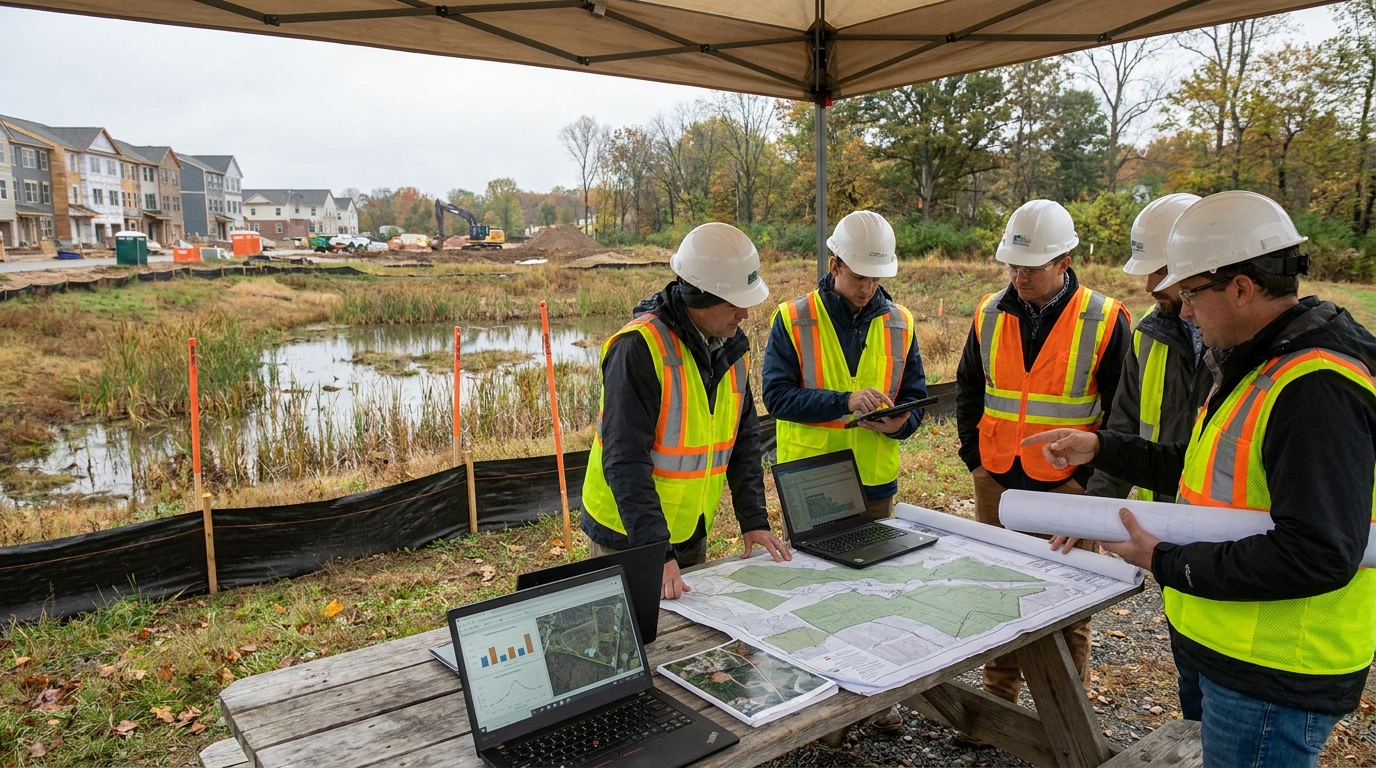
Why Environmental Assessments Matter So Much in Land Development
Land is never just land on a spreadsheet. Every parcel sits within a larger system of ecology, infrastructure, public expectations, legal rights, and future growth patterns. A site may appear developable from a distance, yet contain wetlands, flood vulnerabilities, contaminated soils, species habitat, unstable slopes, drainage constraints, or adjacency issues that materially change what is feasible. Without a rigorous assessment process, these realities are often discovered late, when design work is advanced, political positions have hardened, and project economics are already exposed.
Environmental assessments bring discipline to that uncertainty. They create a structured process for examining how a proposed development may affect water, air, land, biodiversity, human health, and surrounding communities. In Canada, federal guidance also identifies key factors such as cumulative effects, accidents and malfunctions, public comments, mitigation measures, alternative means, and impacts on Indigenous rights. This broader scope reflects a basic truth of contemporary development. The consequences of a project are rarely confined to its property lines.
That wider lens is particularly important in growth markets. A single project might increase runoff into a stressed watershed, add traffic to an already constrained corridor, remove tree canopy in a heat vulnerable area, or fragment habitat that has already been reduced by years of incremental expansion. On paper, each effect may appear manageable in isolation. In reality, the cumulative impact can be significant. Environmental assessment provides a formal mechanism to study that interaction and to design around it before commitments become too costly to unwind.
There is also a credibility benefit that should not be underestimated. Communities often judge a development proposal not only by what is being built, but by whether the proponent appears to understand the consequences of building it. A project supported by real baseline studies, transparent analysis, and clearly explained mitigation measures signals professionalism and seriousness. A project that arrives with assumptions, incomplete data, or dismissive engagement often loses trust early, and once trust is lost, even technically sound proposals become harder to advance.
Environmental assessments are not anti-development tools. They are decision tools that help land development happen with better information, lower risk, and stronger long term performance.
From Compliance Exercise to Strategic Planning Instrument
One of the most persistent misconceptions in the industry is that environmental assessment is simply a bureaucratic hurdle. That view is understandable in projects where teams treat the process as an isolated requirement to be completed after the main development strategy is already decided. But it is also one of the costliest misunderstandings in land development. When environmental review is reduced to paperwork, it cannot do its most valuable job, which is shaping better decisions early enough to matter.
Canadian guidance has moved clearly toward early planning under the current impact assessment framework, with stronger emphasis on better project descriptions, early screening, public participation, and broader sustainability outcomes. This evolution reflects practical experience. The sooner a proponent understands a site and the likely concerns around it, the more flexibility exists to change layout, density distribution, grading approaches, access points, stormwater systems, and phasing strategies. The later those issues emerge, the more expensive each adjustment becomes.
Strategic developers already understand this principle in other forms. They complete market studies before finalizing product mix. They review servicing capacity before locking in density assumptions. They test entitlement risk before committing to aggressive underwriting. Environmental assessments belong in that same category of early stage intelligence. They are part of project feasibility, not something separate from it.
When used properly, the process can sharpen almost every major decision. It can reveal where buildable area should be concentrated and where land should remain undisturbed. It can indicate whether low impact stormwater features will outperform conventional infrastructure in cost and resilience. It can identify where remediation is viable and where contamination risk may impair value. It can also clarify whether public benefits, environmental restoration, or design modifications can improve the approval path enough to justify changes in the pro forma.
In this sense, environmental assessment is a planning instrument with financial consequences. It helps distinguish between apparent land value and realizable land value. For sophisticated proponents, that distinction is everything.
How Environmental Assessments Reduce Costly Setbacks
Every development project carries uncertainty, but not all uncertainty is equal. Some risks are manageable through normal design refinement. Others can materially alter viability. Environmental assessments are especially powerful because they help expose high consequence risks while there is still time to respond intelligently. Official Canadian guidance specifically notes that environmental assessment can reduce project costs and delays and lower the probability of environmental harm or disaster. That is not a theoretical benefit. It is a direct business advantage.
Consider the most common sources of delay in land development. A site may require redesign because the original grading plan increases downstream flooding. Permits may stall because the ecological study is incomplete or habitat impacts were underestimated. Public opposition may intensify because traffic, noise, drainage, or tree loss concerns were not addressed credibly. Construction costs may rise because contaminated soils were not fully characterized early enough. Financing may tighten because approval uncertainty increases carrying costs and compresses lender confidence. These outcomes are familiar across the industry, and many of them are avoidable.
A thorough assessment process improves the project team’s ability to identify constraints before they become crises. Baseline studies can reveal seasonal water patterns, groundwater conditions, habitat sensitivity, or floodplain interactions that are not visible during a superficial site review. Alternatives analysis can show that one road alignment, lot configuration, or servicing approach carries materially lower environmental and regulatory risk than another. Mitigation planning can convert a contentious issue into a manageable condition of approval rather than a reason for refusal.
There is also an important sequencing benefit. Strong early analysis often helps proponents prepare more complete project descriptions, which can support faster initial decisions on whether a full assessment is required and what level of review may follow. That upfront clarity saves time because it reduces procedural confusion later. It also improves coordination among planners, engineers, environmental consultants, municipal staff, legal advisors, and capital partners, all of whom depend on a stable understanding of project risk.
Projects do not become more bankable simply because a study exists. They become more bankable when the study translates into better decisions, clearer mitigation, and a more realistic path to approvals. That is the real value of environmental assessment in development economics.
The Critical Role of Early Planning
If there is one principle that separates high performing development teams from reactive ones, it is timing. The earlier environmental work starts, the more influence it has over project success. Federal guidance in Canada explicitly supports beginning assessment as early as possible, and the logic is straightforward. Early planning creates optionality. Late planning creates friction.
At the concept stage, a proponent still has freedom to adjust building envelopes, preserve sensitive edges, relocate access, reduce impervious cover, or rethink stormwater strategy. Once land acquisition is complete, consultant drawings are advanced, and community expectations are forming around a published concept, those same changes become politically, financially, and emotionally harder. Teams then start defending assumptions instead of improving them.
Early planning also strengthens internal alignment. Development, planning, engineering, environmental, and finance teams often operate with different definitions of risk. An environmental assessment process conducted early enough can create a common fact base that aligns those disciplines. That matters because project success depends not just on solving environmental issues, but on integrating those solutions into design, scheduling, budgeting, and communications.
In the best cases, early assessment leads to a fundamentally better scheme. A project may preserve a natural drainage corridor and turn it into an amenity rather than burying the problem in oversized pipes. It may protect existing tree canopy and use that landscape identity to enhance market appeal. It may avoid construction in the most sensitive area and instead concentrate density where services and access are strongest. These are not merely defensive outcomes. They are examples of environmental intelligence producing stronger development strategy.
What a Strong Environmental Assessment Actually Examines
Many people hear the term environmental assessment and assume it focuses narrowly on ecology. In reality, contemporary assessment frameworks are much broader. Canadian and U.S. practice both recognize that development decisions affect not just natural systems, but also people, culture, health, infrastructure, and economic conditions. This wider understanding is one reason assessments have become so central to responsible land development.
At a practical level, the scope often includes baseline conditions related to land, water, air, vegetation, habitat, drainage, and existing site uses. It may also include human health considerations, noise, traffic interactions, built form compatibility, public safety, accident and malfunction scenarios, and the cumulative effects of the project when combined with other past, present, or reasonably foreseeable activities in the area. Depending on the jurisdiction and project context, impacts on Indigenous rights and the use of Indigenous knowledge can also be essential parts of the process.
Alternatives analysis is another critical component. A strong assessment does not merely ask whether impacts exist. It asks whether different approaches could reduce them. Could stormwater be handled with a lower impact design? Could the road network shift away from a sensitive area? Could phasing be adjusted to protect seasonal habitat periods? Could a more compact development form preserve more open space while still achieving the project’s economic goals? These questions are strategic because they tie environmental performance directly to planning and feasibility.
Mitigation is equally important. Once likely effects are identified, the assessment should explain how they will be avoided, minimized, restored, or offset where necessary. This mitigation hierarchy matters because approval agencies, communities, and investors are all more confident when a project demonstrates not only awareness of impacts but a credible plan for managing them throughout the life of the development.
Environmental Assessments as a Driver of Better Design
One of the most underappreciated outcomes of a good assessment is improved design quality. Too often, sustainability is discussed as if it were an external objective imposed on development. In reality, many of the design moves that make a project environmentally stronger also make it operationally smarter, more resilient, and more attractive over time.
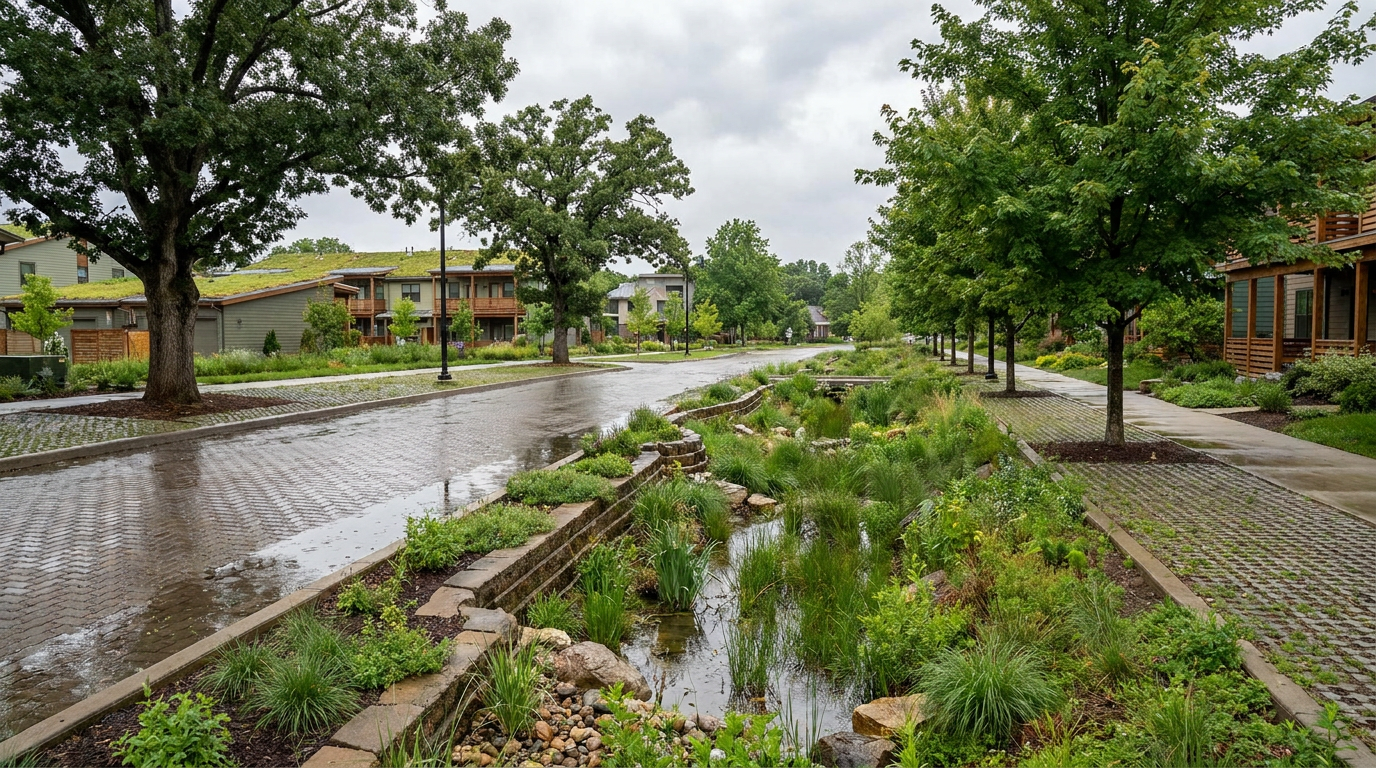
The clearest example is stormwater management. U.S. Environmental Protection Agency resources have long emphasized that green infrastructure, including plants, soils, and natural systems, can reduce localized flooding, improve water quality, decrease heat island effects, and lower dependence on expensive gray infrastructure. In development terms, that can translate into rain gardens, vegetated swales, permeable pavement, riparian buffers, soil retention strategies, and tree canopy preservation. These interventions are not cosmetic landscaping. They are part of the infrastructure logic of the site.
Development patterns have direct effects on runoff quantity and quality, especially where impervious surfaces increase pollutant transport and overwhelm local drainage systems. An environmental assessment can identify these issues early and influence the design response. Instead of maximizing hard surface area and solving the consequences later, teams can shape grading, open space, road widths, building placement, and surface materials in ways that work with the site’s hydrology rather than against it.
The same principle applies to habitat and open space planning. Preserving ecological corridors, retaining mature trees, or buffering watercourses may appear at first to reduce usable area, but those moves can also create amenity value, improve microclimate, support resilience, and differentiate the project in the market. In urban and suburban communities where residents increasingly care about livability and environmental performance, this kind of design intelligence can strengthen both approvals and absorption.
What matters is not whether every project becomes a showcase of environmental innovation. What matters is that the assessment process reveals where design choices can generate multiple benefits at once. That is the essence of sustainable development strategy.
Building Community Trust and Social License
No land development project exists in a political vacuum. Even where formal approvals are technically achievable, social resistance can create delay, redesign, reputational damage, and, in some cases, project failure. Environmental assessments help reduce that risk because they create a structured basis for engagement with communities, public agencies, and Indigenous Peoples. The process is not just about documentation. It is about legitimacy.
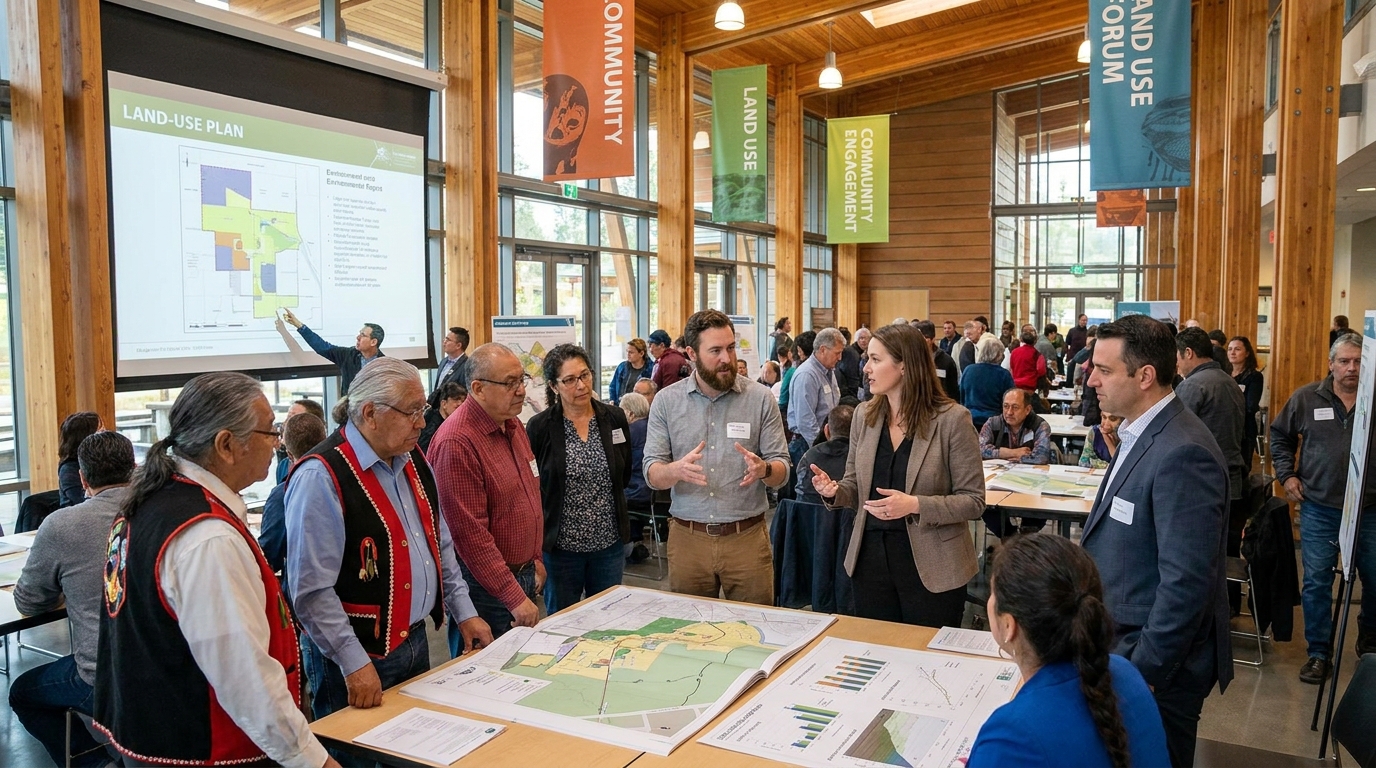
Canada’s impact assessment framework places strong emphasis on meaningful participation by the public and Indigenous communities, with early planning intended to surface issues before positions become entrenched. This is a strategic advantage when approached sincerely. Residents often raise concerns about traffic, drainage, noise, biodiversity, flooding, land use compatibility, and long term neighborhood character. If those concerns are acknowledged early and addressed with evidence, proponents have a far better chance of maintaining trust.
Trust does not come from promising that a project will have no impact. Communities understand that growth changes places. Trust comes from demonstrating that the project team has done the work to understand those impacts, evaluate alternatives, and incorporate mitigation into the actual design. It also comes from showing that input can shape outcomes. When people see changes in buffering, access, stormwater features, tree preservation, or public realm design that respond to consultation, the process gains credibility.
For Indigenous engagement, this principle is even more significant. Contemporary assessment practice increasingly recognizes Indigenous rights, knowledge, and interests as integral rather than peripheral. That means proponents must move beyond checkbox consultation and toward respectful, informed engagement that considers cultural values, land use patterns, ecological knowledge, and rights-based impacts. In many cases, this not only improves process integrity but also strengthens the quality of environmental understanding itself.
Cumulative Effects and the Bigger Regional Picture
One of the most important shifts in modern environmental review is the move away from looking at projects in isolation. Land development is cumulative by nature. One subdivision, logistics hub, mixed use node, or industrial expansion may seem manageable on its own, yet the regional outcome of many such decisions can be watershed stress, habitat fragmentation, infrastructure overload, urban heat intensification, and declining environmental quality. That is why cumulative effects assessment has become increasingly important in both policy and practice.
For developers, this wider perspective can feel challenging because it requires attention to conditions beyond the site boundary. But it is also useful. Understanding the regional context helps proponents anticipate where regulators and communities are most sensitive, where infrastructure capacity is tightening, and where mitigation needs will likely be strongest. It also supports better conversations with municipalities about phasing, servicing, road networks, open space systems, and growth management.
Regional awareness is especially relevant in fast growing urban areas. Housing supply pressures can create urgency to accelerate development, yet poorly coordinated growth can create environmental deficits that later become expensive to correct. Flood prone subdivisions, degraded creeks, canopy loss, and fragmented open space systems are often the result of decisions that made sense parcel by parcel but failed at the regional scale. Environmental assessment provides a mechanism to connect individual projects to broader sustainability outcomes.
Strategically, this matters because long term land value is tied to regional performance. A project located in a district with worsening flood risk, declining environmental quality, and increasing infrastructure strain may encounter future costs that were not obvious at approval. Conversely, projects that fit within a resilient regional growth pattern are more likely to hold value over time. Assessment helps reveal which path a project is actually on.
Environmental Assessments and Project Feasibility
In the development business, feasibility is often framed in financial terms, but financial feasibility rests on planning reality. A site can look attractive based on density assumptions, comparable land values, and market demand, yet become far less compelling once environmental constraints are priced in. That does not mean constrained sites should never be developed. It means feasibility analysis must reflect what the land can reasonably support, what approvals will require, and what mitigation will cost.
Environmental assessments improve that realism. They help determine whether contamination remediation is manageable, whether flood resilience measures are required, whether habitat protection will reduce net developable area, whether stormwater treatment needs additional land, and whether design changes will affect yield or phasing. These are not marginal details. They can materially change underwriting assumptions and acquisition strategy.
Strong assessment work also supports lender and investor confidence. Capital markets reward predictability. A project that can demonstrate robust due diligence, a clear mitigation framework, and an informed approvals strategy is generally in a stronger position than one carrying unresolved environmental uncertainty. Even where the assessment identifies challenges, clarity is often preferable to ambiguity because it allows those challenges to be priced, staged, and managed.
There is a broader strategic lesson here. Sustainable development is not a charitable add on to feasibility. In many cases, it is a condition of feasibility. As standards rise and climate pressures intensify, projects that ignore environmental realities are more likely to suffer delay, redesign, litigation, operating inefficiencies, and reputational harm. Projects that internalize those realities early are more likely to remain viable from planning through occupancy.
Common Misconceptions That Continue to Hurt Projects
Several misconceptions continue to undermine development outcomes. The first is that environmental assessments are only necessary for very large industrial projects. In fact, many land development projects can trigger review or related studies if they affect water, habitat, floodplains, regulated features, or culturally sensitive areas. Even where a full formal assessment is not required, the underlying discipline of environmental analysis remains critical for good planning.
The second misconception is that an environmental assessment is the same as a permit. It is not. The assessment informs decisions, approval conditions, and the design of mitigation measures, but separate permits, technical approvals, and ongoing compliance obligations may still apply. Developers who confuse these stages often underestimate schedule complexity and leave themselves exposed to downstream approval problems.
The third misconception is that public consultation is optional or cosmetic. In reality, official guidance across jurisdictions makes public and Indigenous participation a built in part of the assessment process. When consultation is treated as a formality, communities tend to respond in kind, often with distrust and organized opposition. When it is treated as a substantive part of project planning, it can surface issues early enough to solve them productively.
The final misconception is that environmental assessments are anti-growth. The opposite is closer to the truth. In a world of rising climate risk, stronger public scrutiny, and more complex urban systems, assessments are one of the tools that make durable growth possible. They help ensure that the projects advancing today do not create the failures that cities will spend decades trying to fix tomorrow.
Best Practices for Developers, Landowners, and Municipalities
The strongest outcomes usually come from alignment rather than conflict. Developers, landowners, consultants, and municipalities all benefit when environmental assessment is integrated into project strategy from the start. That begins with realistic site screening before acquisition or at the earliest concept stage. Teams should understand not only zoning and servicing but also ecological sensitivity, hydrology, topography, contamination risk, and the broader policy environment.
It also requires high quality baseline data. Decisions are only as strong as the information behind them, and weak baseline work often leads to false confidence. Seasonal field conditions, watershed context, species timing, and cumulative effects all matter. A rushed study may satisfy a short term internal deadline while creating far larger problems during approvals.
Another best practice is to examine alternatives seriously. Too many projects present a preferred concept and then defend it through the review process. A more strategic approach is to test multiple configurations early and determine which one offers the best combination of environmental performance, planning fit, and financial viability. This reduces the risk of late stage redesign and demonstrates to approval authorities that the proponent has approached the project responsibly.
Municipalities also play a major role. Clear guidance, coordinated review, and transparent expectations help proponents submit better applications and reduce avoidable delay. Where local governments support integrated planning, including green infrastructure, flood resilience, and cumulative effects awareness, they improve not only environmental outcomes but also the efficiency of development review. Good policy should not create uncertainty for its own sake. It should create clarity about how better projects can move forward.
The Long Term Value of Sustainable Assessment Practices
When environmental assessments are done well, their value extends far beyond approvals. They contribute to developments that perform better over time, adapt more effectively to climate stress, and fit more comfortably within the communities around them. A project with well managed stormwater, preserved natural features, credible mitigation, and strong community buy in is more likely to retain value than one that reaches construction quickly but carries unresolved environmental or social liabilities.
This long term perspective is essential in city building. Development is not just a transaction. It is a permanent intervention in land, infrastructure, and public life. The quality of decisions made at the front end can shape municipal costs, environmental resilience, and neighborhood experience for decades. That is why sustainable development cannot be separated from rigorous assessment. The two are intertwined.
There is also a governance dimension. As public expectations evolve, the development industry increasingly needs to demonstrate competence not only in construction and finance but in stewardship. Projects that can show thoughtful environmental planning, meaningful engagement, and design responses grounded in evidence will be better positioned in that environment. They will encounter fewer surprises, stronger relationships, and more resilient outcomes.
In this sense, environmental assessment is becoming part of the competitive standard for serious land development. It helps answer the questions that matter most. Can the land support the vision? Can the project withstand regulatory scrutiny? Can it earn trust? Can it perform over time? Those are not peripheral concerns. They are the foundation of successful growth.
Conclusion
The role of environmental assessments in sustainable land development projects is both practical and strategic. Practically, they identify risks, clarify constraints, support mitigation, and reduce the likelihood of costly delays or redesign. Strategically, they improve design quality, strengthen public legitimacy, support Indigenous engagement, inform feasibility, and connect individual projects to the broader resilience of cities and regions.
For developers and landowners, the lesson is clear. The earlier environmental assessment enters the decision making process, the more value it can create. For municipalities and communities, strong assessment practices help ensure that growth does not come at the expense of environmental function, public trust, or long term livability. And for investors and project teams, these evaluations provide the kind of grounded intelligence that turns uncertainty into informed action.
As Canada and North America continue to grow, the pressure to deliver housing, infrastructure, and economic development will only increase. The answer is not to weaken environmental assessment or treat it as delay by another name. The answer is to use it better, earlier, and more strategically. When that happens, environmental assessments stop being seen as barriers and start being recognized for what they truly are: one of the most effective tools for making land development more sustainable, more credible, and more viable over the long term.
Sources and References
-
Impact Assessment Agency of Canada. Basics of Environmental Assessment. Available at: https://www.canada.ca/en/impact-assessment-agency/services/policy-guidance/basics-environmental-assessment.html
-
Impact Assessment Agency of Canada. About the Agency. Available at: https://www.canada.ca/en/impact-assessment-agency.html
-
Impact Assessment Agency of Canada. Impact Assessment Process. Available at: https://www.canada.ca/en/impact-assessment-agency/programs/impact-assessments-101/impact-assessment-process.html
-
Impact Assessment Agency of Canada. Project Proponents Guidance. Available at: https://www.canada.ca/en/impact-assessment-agency/corporate/our-impact/impact-assessments-that-work/project-proponents.html
-
Government of Canada. Cumulative Effects. Available at: https://www.canada.ca/en/services/environment/conservation/assessments/environmental-reviews/environmental-assessment-processes/cumulative-effects.html
-
U.S. Army Corps of Engineers. Defining the Environment Under NEPA. Available at: https://www.usace.army.mil/Media/News/NewsSearch/Article/2025083/defining-the-environment-under-nepa/
-
U.S. Environmental Protection Agency. Green Infrastructure Program. Available at: https://www.epa.gov/climate-change-water-sector/green-infrastructure-program
-
U.S. Environmental Protection Agency. Smart Growth and Water. Available at: https://www.epa.gov/smartgrowth/smart-growth-and-water
-
U.S. Environmental Protection Agency. Environmental Justice Guidance Under NEPA. Available at: https://www.epa.gov/sites/default/files/2015-02/documents/ej_guidance_nepa_epa0498.pdf



No Comment! Be the first one.