



For many people, sustainable living still sounds like something that requires major lifestyle changes, expensive renovations, or a level of technical knowledge that feels out of reach. Artificial intelligence is beginning to change that perception. In the home, AI is not only about futuristic gadgets or voice assistants. Increasingly, it is showing up in practical systems that help ordinary households use less energy, reduce waste, and make more efficient decisions with less effort. When it is applied thoughtfully, AI can make eco-friendly living feel less overwhelming and far more achievable.
Table Of Content
- Why AI matters in the sustainability conversation now
- Smart thermostats are the clearest household example
- What smart temperature control looks like in real life
- Home energy management is moving beyond single devices
- Where heat pumps and electrification fit in
- AI can also reduce food waste at home
- From smarter shopping to better leftovers
- Waste management is becoming smarter and more circular
- The environmental limits of AI should not be ignored
- How ordinary households can adopt AI without feeling overwhelmed
- A simple adoption framework
- Common misconceptions about AI and eco-friendly living
- What the future may look like
- The practical takeaway
That matters because the climate challenge is increasingly tied to the choices we make every day. The way we heat and cool our homes, use appliances, buy food, and throw things away all adds up. At the same time, people are busy, budgets are real, and sustainability advice can sometimes feel abstract. AI offers a different path. Rather than asking households to monitor every detail manually, it can support better habits in the background by learning patterns, spotting inefficiencies, and suggesting small adjustments that lead to meaningful long-term gains.
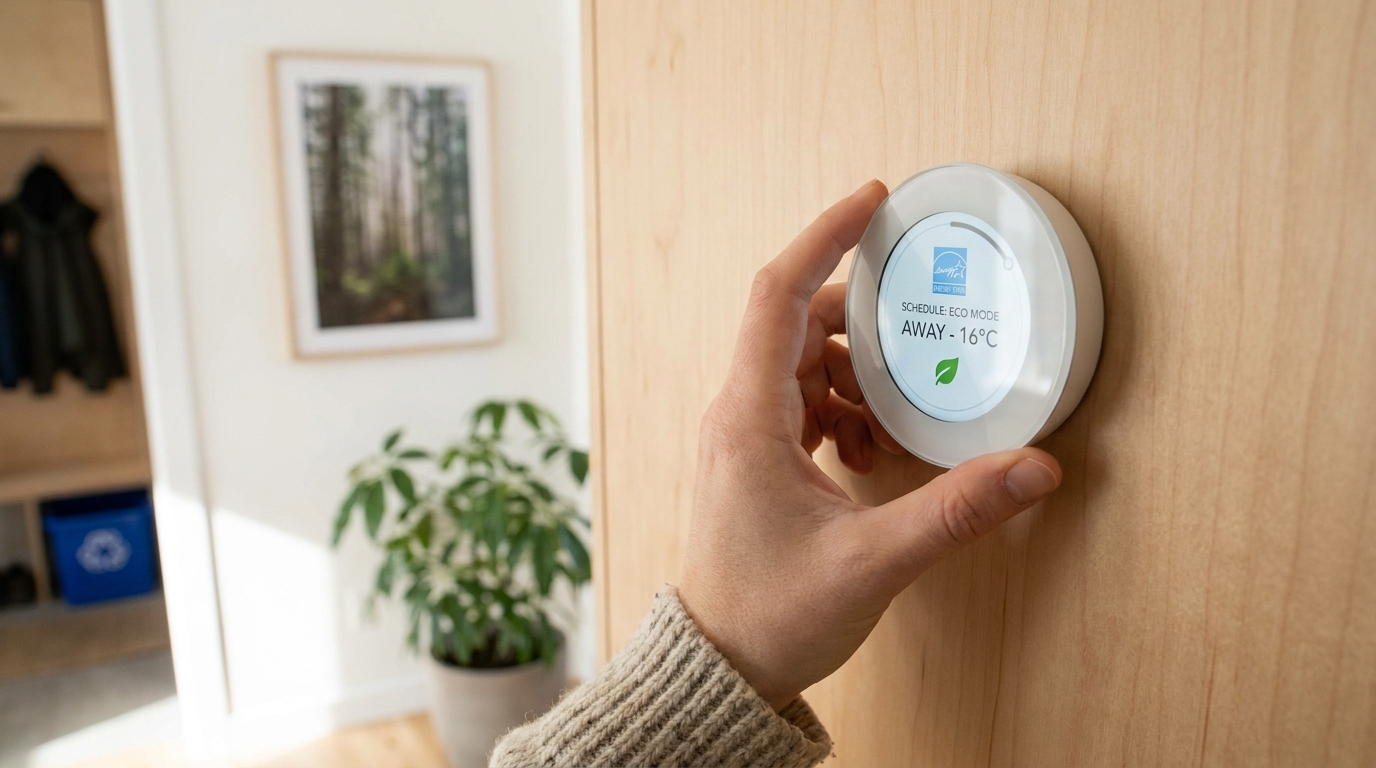
AI climate optimization is the use of artificial intelligence to help homes manage heating, cooling, and electricity use more efficiently, without requiring people to track every detail themselves. In Canada, the opportunity is especially clear in the home energy sector: Natural Resources Canada notes that heating and cooling account for nearly two-thirds of household energy use, so even a modest improvement in how indoor temperatures are managed can make a real difference. ENERGY STAR certified smart thermostats are one of the clearest examples of AI-enabled optimization already available to the public, learning a household’s patterns and adjusting temperatures automatically. They show how climate-conscious technology works best when it is practical, measured, and easy to live with, rather than demanding constant attention from the people living in the home. This is one of the clearest, most measurable ways AI already supports eco-friendly living today.
Still, a balanced conversation is important. AI is not automatically sustainable simply because it is digital. Connected devices require materials, data centers consume electricity, and convenience can sometimes lead to higher consumption if systems are poorly configured. The best way to think about AI is not as a guaranteed climate solution, but as a tool. Its environmental value depends on how it is designed, how it is used, and whether it is helping people reduce more waste and emissions than it creates.
This is why the most useful conversation about AI and eco-friendly living is not about replacing human judgment. It is about supporting it. The goal is not to automate every corner of domestic life. The goal is to make wiser energy use, smarter purchasing, and lower-waste routines easier to maintain. When people start with one device, one habit, or one upgrade at a time, AI becomes much less intimidating and much more relevant to everyday sustainability.
Why AI matters in the sustainability conversation now
AI has entered the sustainability discussion at a time when efficiency matters more than ever. The International Energy Agency reports that global progress on energy efficiency remained weak in 2024, with primary energy-intensity improvement at around 1 percent, roughly half the average annual pace seen from 2010 to 2019. That is a useful reminder that broad climate goals cannot be met by intention alone. We need systems that help homes and buildings operate better in real conditions, especially as electrification increases and weather extremes place more pressure on the grid.
Heat waves are one clear example. According to the IEA, more than 40 countries representing nearly 70 percent of global electricity demand reached new peak-demand records during heat waves in 2024. For households, that translates into a simple reality. There are moments when millions of people are asking for cooling, comfort, and electricity at the same time. AI-enabled systems such as smart thermostats, home energy management platforms, and appliance scheduling tools can help shift some demand away from those critical peaks without sacrificing quality of life.
This shift is important because climate-friendly living is increasingly about timing as much as total consumption. Running a dishwasher or charging an electric vehicle at a different hour can support grid stability. Pre-cooling or pre-heating a well-insulated home before peak demand can reduce both costs and emissions. These decisions are difficult to coordinate manually every day, which is where AI can be genuinely useful. It can recognize patterns, factor in weather or utility pricing, and make quiet adjustments that add up over time.
Just as importantly, AI helps translate sustainability from a moral burden into a design question. Instead of asking whether people care enough to remember every energy-saving action, AI asks whether homes can be set up to make the better choice easier by default. This is not a complete answer to the climate challenge, but it is an important one. Practicality often determines whether good intentions become durable habits.
Smart thermostats are the clearest household example
If there is one place where AI already has a direct and measurable role in eco-friendly living, it is home temperature control. In Canada, heating and cooling represent nearly two-thirds of home energy use, which makes climate control one of the most important places to improve. Smart thermostats do this by learning occupancy patterns, offering remote access, tracking consumption, and shifting temperatures toward energy-saving settings at times when comfort is less affected. Rather than requiring constant manual adjustment, they help the home respond more intelligently to how people actually live.
Natural Resources Canada points out that ENERGY STAR certified smart thermostats are independently certified and can reduce at-home energy use. The potential scale of that impact is significant. NRCan says that if everyone used a certified smart thermostat, the savings could reach 11 petajoules of energy and avoid 774 kilotonnes of greenhouse-gas emissions. Those are large numbers, but the bigger lesson is quite simple. A common household device, when adopted widely and used properly, can become a serious climate tool.
What makes smart thermostats appealing is that they sit at the intersection of comfort, cost savings, and emissions reduction. Many people are understandably more motivated by monthly bills than abstract carbon metrics, and that is perfectly reasonable. A well-chosen smart thermostat can support both goals at once. It can lower unnecessary heating or cooling when nobody is home, improve temperature consistency, and provide clearer visibility into how much energy is being used.
That said, the most responsible message is not that smart thermostats are magic. NRCan notes that savings can vary depending on user behavior. A thermostat cannot compensate for poor insulation, drafty windows, or unrealistic settings. If a household heats empty rooms all day or keeps indoor temperatures much higher or lower than necessary, the technology may not perform as well as expected. AI works best when it is paired with basic efficiency measures and sensible habits.
For homeowners and renters alike, this is encouraging rather than discouraging. It means the most effective approach is incremental. A smart thermostat is more valuable when combined with sealing air leaks, using blinds strategically, servicing HVAC equipment, and understanding occupancy routines. In other words, AI supports good building practice. It does not replace it.
AI is most powerful in the home when it reduces friction. The best systems do not ask people to become energy analysts. They make efficient choices easier to maintain day after day.
What smart temperature control looks like in real life
In practice, AI-enabled climate control is often far less dramatic than people expect. It may mean the house gently lowers its temperature after everyone leaves for work and school, then returns to a comfortable level shortly before the first person gets home. It may mean adjusting for a sudden weather shift or recognizing that weekends follow a different pattern than weekdays. It may also mean giving a household a clearer dashboard that shows where energy is being used and how scheduling changes affect consumption.
These are modest interventions, but that is precisely why they work. Sustainable living becomes more durable when it is woven into routine rather than treated like an ongoing test of willpower. People do not need to think about emissions every hour. They need homes that help them stay comfortable while avoiding obvious waste. Smart thermostats, especially certified models linked to efficient heating and cooling systems, are one of the clearest ways AI is already delivering that balance.
Home energy management is moving beyond single devices
The next phase of AI in eco-friendly living goes beyond thermostats and into broader home energy management. The IEA identifies smart appliances, home energy management systems, demand response, and connected flexibility tools as increasingly important for households and grids. This reflects a larger shift in how homes use power. As more households adopt electric vehicles, heat pumps, induction cooking, and battery systems, the question is no longer just how much electricity a home uses. It is also when and how that electricity is used.
A home energy management system can act like a quiet coordinator. It may schedule laundry for lower-cost hours, delay water heating until demand falls, or prioritize power flows if solar panels and battery storage are part of the household setup. AI helps by processing more variables than most people want to manage manually. Time-of-use pricing, local weather, occupancy, historical patterns, and peak demand windows can all be incorporated into simple recommendations or automated actions.
For the average household, this does not need to feel technical. In fact, the most user-friendly systems are usually the ones that keep things simple. A family might only interact with a few settings, such as preferred comfort range, appliance windows, or notification thresholds. The intelligence works mostly in the background. This is a useful reminder that the real goal is not complexity. It is thoughtful coordination.
Demand response programs are another area where AI can help households participate in sustainability without added stress. These programs encourage consumers to reduce or shift electricity use during times of high demand. In return, people may receive lower rates, bill credits, or other incentives. AI can make participation much easier by anticipating the best moments to adjust household loads while protecting comfort. If a system can cool the home slightly before a peak period or postpone an appliance cycle until later in the evening, the household contributes to grid stability with minimal effort.
This becomes even more important in a warming climate. Peak electricity demand during heat waves can strain infrastructure and increase reliance on more carbon-intensive generation. Flexible homes are valuable homes. A household that can modestly shift its energy use at the right times is supporting a cleaner and more resilient system overall.
Where heat pumps and electrification fit in
AI climate optimization also becomes more relevant as homes electrify. Heat pumps, for example, are an increasingly important low-carbon heating and cooling technology, but they perform best when integrated into an efficient building and managed well. AI can help optimize run times, identify unusual performance patterns, and coordinate temperature settings with utility pricing or occupancy. It can also help households understand whether a system is working efficiently or needs maintenance.
That matters because sustainability investments are strongest when they are actually used well. Buying an efficient appliance or installing a cleaner system is an important step, but operation matters just as much. AI has the potential to protect those investments by helping people use advanced equipment more effectively without requiring them to become experts in HVAC design or utility economics.

AI can also reduce food waste at home
Energy often gets the most attention in conversations about AI and sustainability, but food waste is another major area where digital tools can make a real difference. Households waste food for many familiar reasons. We forget what is in the fridge, overbuy produce, misunderstand date labels, or lose track of leftovers until they spoil. These are ordinary problems, not signs of carelessness. They are exactly the kind of small, repetitive inefficiencies that AI can help address.
In Canada, Agriculture and Agri-Food Canada’s Food Waste Reduction Challenge has highlighted AI-driven solutions, including sensor systems that can predict defects, contaminants, and shelf life. While some of these innovations are aimed at farms, processors, and retailers, the underlying principle has clear relevance for households. Better prediction leads to better decisions. If digital tools can improve shelf life estimates, inventory movement, or quality detection upstream, they can also support smarter shopping and meal planning at home.
Consumer-facing tools are beginning to reflect this logic. A fridge app that tracks what is already in the kitchen, reminds users when ingredients are nearing expiration, or suggests recipes based on soon-to-be-used items can reduce waste without adding much effort. AI can also learn household purchasing patterns and help create more accurate grocery lists. That means fewer duplicate items, fewer forgotten perishables, and a better chance that food gets eaten while it is still fresh.
This is one of the most approachable sustainability wins because it often saves money immediately. Reducing food waste is not only about environmental responsibility. It is also about respecting household budgets. When AI helps people use what they already have, avoid unnecessary purchases, and plan meals more realistically, the benefits are tangible. That makes the behavior easier to sustain over time.
From smarter shopping to better leftovers
A balanced way to think about AI in the kitchen is to focus on assistance, not perfection. Most households do not need a fully instrumented smart refrigerator. They may benefit far more from a simple app that tracks pantry basics, reminds them about produce, or helps transform leftovers into practical meals. A system that notices recurring waste, such as salad greens that spoil weekly or duplicate dairy purchases, can offer much more value than a flashy feature that never gets used.
AI can also help clarify decision-making around freshness and timing. Many people throw away food prematurely because they are uncertain. Tools that combine storage guidance, household patterns, and more accurate shelf-life information can build confidence and reduce unnecessary disposal. Over time, this kind of feedback supports better purchasing habits and a more intuitive understanding of what a household actually consumes.
When viewed this way, AI becomes a gentle form of resource management. It helps households make the most of what they already bring home. That is a core sustainability principle, and it is one that often feels more humane and realistic than asking people to pursue zero waste perfectly from the start.
Waste management is becoming smarter and more circular
Beyond energy and food, AI is also beginning to influence how waste is sorted, collected, and reduced. Public-facing systems do not always advertise themselves as AI-enabled, but much of the progress in modern waste management depends on better data, prediction, and pattern recognition. In Canada, environmental indicators track solid waste diversion and disposal, while federal producer-responsibility measures are helping move the country toward a more circular plastics economy. These frameworks create the conditions where AI can have practical impact.
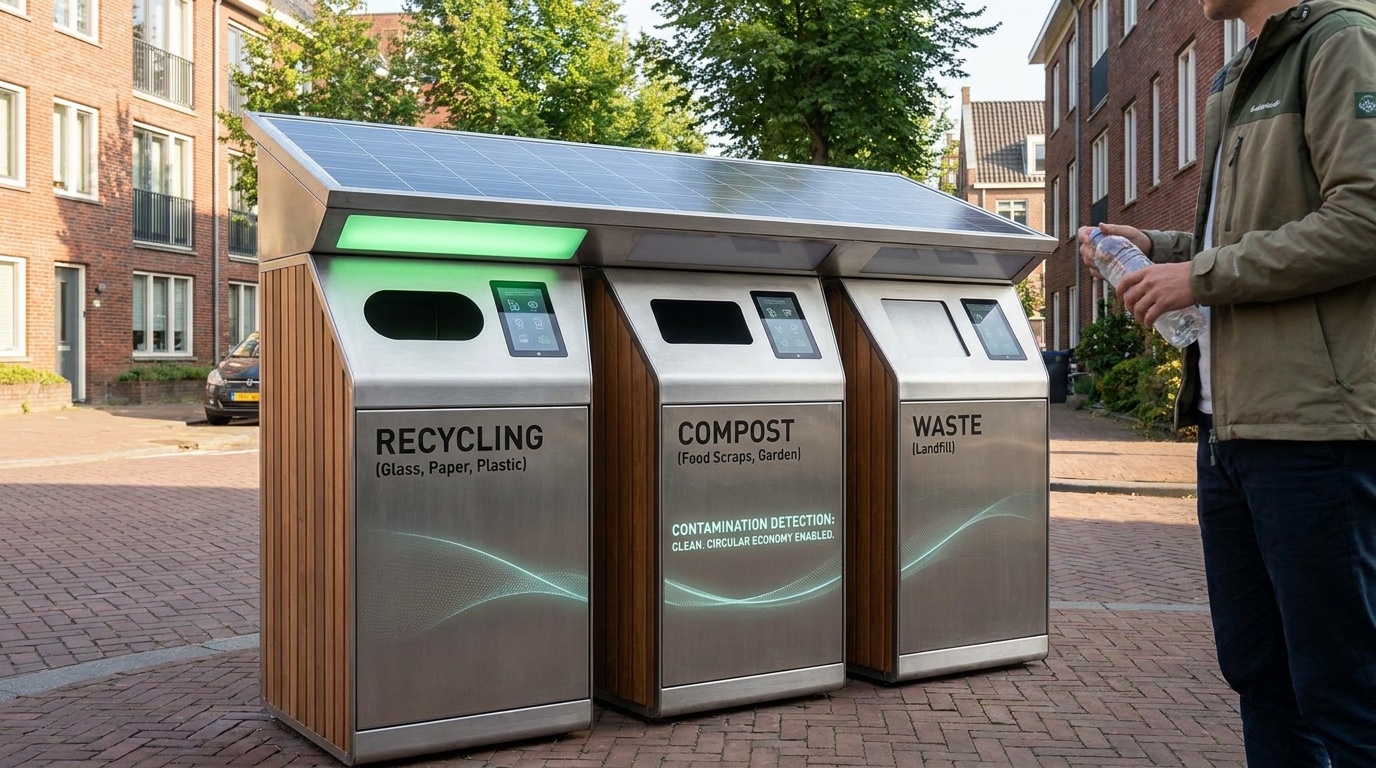
At the system level, AI can improve sorting accuracy, detect contamination in recycling streams, forecast waste volumes, and optimize collection routes. UNEP’s Global Waste Management Outlook 2024 reinforces the idea that waste should be treated as a resource within circular economy systems. That approach fits well with AI because machine learning is particularly strong at identifying patterns in complex flows of materials. If a sorting facility can distinguish recyclables more accurately or a city can route collection vehicles more efficiently, fewer resources are wasted and fewer emissions are generated.
Households are part of this story too, even if indirectly. Better municipal systems can make recycling and organics programs more effective, but residents still need clearer information and easier participation. AI-powered apps or scanning tools may eventually help households understand local waste rules more accurately, reducing contamination and improving diversion rates. In the near term, even simple digital guidance can help people sort materials correctly and avoid wish-cycling, which is the well-intentioned but often harmful act of placing non-recyclables in the recycling bin.
It is also important to remember that waste reduction begins before disposal. One common misconception is that sustainability in waste systems is mostly about recycling. In reality, preventing waste upstream is usually far more effective. AI can support this by improving inventory forecasting, reducing packaging errors, optimizing supply chains, and helping consumers buy more intentionally. The less waste generated in the first place, the less pressure there is on sorting, transport, and disposal systems later on.
The environmental limits of AI should not be ignored
Any honest article about AI and sustainability needs to acknowledge a tension at the center of the discussion. AI can help reduce emissions and waste, but it also depends on energy-hungry infrastructure, physical devices, and material supply chains of its own. Data centers consume electricity. Sensors, routers, and connected appliances require manufacturing and replacement. Some digital services create hidden environmental costs that are easy to overlook because they feel intangible.
The IEA has emphasized that many outcomes of AI in energy systems are still difficult to quantify beyond case studies. That does not mean AI lacks value. It means broad claims should be treated carefully. A smart home device is not sustainable simply because it is labeled smart. Its environmental benefit depends on whether it actually reduces more energy use, waste, or emissions than it adds over its lifetime.
This is where rebound effects matter. If a household saves money through efficiency but then uses more energy elsewhere, some of the climate benefit can disappear. If connected devices are installed but left poorly configured, idle energy use may rise. If people buy more gadgets than they need because sustainability is packaged as a lifestyle upgrade, the material footprint can grow faster than the benefits. Thoughtful adoption matters more than novelty.
There is also a design question about simplicity. The greenest AI tools are often the least theatrical ones. A thermostat that works reliably for years, an appliance scheduler that nudges loads to lower-impact hours, or a food planning app that cuts weekly waste may be far more beneficial than a sprawling ecosystem of rarely used devices. Sustainability tends to improve when technology is durable, efficient, and aligned with real behavior patterns.
AI is a tool for sustainability, not a guarantee of it. Its value is highest when it supports efficient homes, sensible routines, and policies that reward real savings rather than digital novelty.
How ordinary households can adopt AI without feeling overwhelmed
The reassuring news is that eco-friendly living with AI does not require a complete smart home overhaul. In fact, the easiest path is often the best one. Most households benefit more from one or two well-chosen tools than from an overcomplicated system. Incremental adoption allows people to test what works, understand the benefits, and avoid spending money on devices they do not actually need.
A practical starting point is to focus on areas with the clearest impact. In Canada, because heating and cooling dominate home energy use, a certified smart thermostat is often the first upgrade worth considering. From there, households can add smart plugs for high-use devices, explore utility demand-response programs, or use home energy dashboards that show where electricity is going. The goal is not to automate everything. The goal is to reduce obvious waste and improve visibility.
Food systems are another low-friction place to begin. A basic kitchen inventory app, expiry reminder system, or recipe planner that uses ingredients already on hand can reduce waste and make weeknight decisions easier. These are the kinds of changes that support sustainability while also easing household mental load, which is part of why they tend to stick.
For households that want a little more structure, it can help to think in terms of stages rather than products. Start by understanding current use, then choose one friction point to improve, then review the outcome. This is calmer and usually more effective than trying to optimize everything at once.
A simple adoption framework
- Identify the biggest source of waste or inefficiency in the home. For many households, this is space heating and cooling. For others, it may be food spoilage or appliances running at expensive peak hours.
- Choose one tool that directly addresses that issue. A certified smart thermostat, a utility-linked scheduling feature, or a food inventory app is often enough to begin.
- Set clear preferences and realistic goals. AI performs better when households define comfort ranges, schedules, and notification settings thoughtfully rather than leaving everything vague.
- Pair the tool with a low-tech habit. Good insulation, air sealing, leftovers planning, and correct waste sorting still matter. AI amplifies these basics.
- Review results after a few months. Look at energy bills, comfort, food waste, and ease of use. Keep what helps and ignore what adds friction.
This measured approach respects both sustainability and practicality. It avoids the trap of treating climate-conscious living as an all-or-nothing identity. Instead, it allows households to build confidence through visible results.
Common misconceptions about AI and eco-friendly living
One of the biggest misconceptions is that AI is automatically green. It is not. Benefits depend on implementation, electricity sources, device quality, and user behavior. A well-designed system in an efficient home can reduce emissions significantly, while a poorly chosen setup can create more clutter and consumption without delivering much benefit.
Another misconception is that smart thermostats or connected devices are set-it-and-forget-it solutions. In reality, the best performance comes from a mix of technology and good building practice. Sensible temperature settings, insulation, maintenance, and occupancy awareness still matter. AI improves decision-making, but it does not exempt households from the physical realities of how homes lose and use energy.
Some people also assume AI is only relevant for utilities, municipalities, or large companies. That is increasingly out of date. Households already interact with AI through thermostat learning, appliance scheduling, energy dashboards, and food management tools. The most useful forms of AI in the home are often quiet and familiar rather than dramatic.
Finally, there is a tendency to think waste reduction is mostly about recycling. Recycling matters, but prevention matters more. AI can help before waste ever appears by improving shopping accuracy, predicting food freshness, reducing contamination, and supporting more efficient systems. That upstream role is one of the most valuable aspects of AI climate optimization.
What the future may look like
Looking ahead, the future of eco-friendly living will likely involve homes that are more responsive, more transparent, and better connected to the systems around them. Instead of isolated devices, households may rely on coordinated platforms that manage temperature, ventilation, appliances, and storage with a clearer understanding of weather, occupancy, grid conditions, and cost. These systems could help households make lower-impact choices almost invisibly, especially as electrification grows.
We may also see AI become more useful in maintenance and diagnostics. Rather than simply controlling devices, home systems could identify declining equipment performance, spot unusual consumption patterns, and recommend repairs before energy waste becomes expensive. For renters and homeowners alike, that kind of predictive insight could make sustainable housing decisions feel more practical and less reactive.
In kitchens and waste systems, the future may include better integration between retailers, households, and municipalities. Expiry estimates could become more accurate, grocery planning more personalized, and waste sorting more intuitive. The strongest versions of these tools will likely be the ones that reduce decision fatigue rather than add to it. Good sustainable technology should feel quietly supportive, not demanding.
At the policy level, consumer tools will probably work best when backed by broader systems such as utility incentives, efficiency standards, producer responsibility, and circular economy infrastructure. Household action matters, but it becomes more effective when the surrounding systems reward lower waste and smarter energy use. AI can help bridge the gap between personal intention and system-level efficiency, but it cannot replace public policy or strong building standards.
The practical takeaway
AI is shaping the future of eco-friendly living not by making homes look futuristic, but by making sustainable choices more manageable. Its greatest strength is often its quietest one. It can reduce the mental effort required to save energy, waste less food, and respond more intelligently to the systems our homes depend on. For ordinary households, that is where the promise becomes real.
The most encouraging part is that meaningful adoption does not have to be dramatic. A certified smart thermostat, a demand-response enrollment, a few appliance scheduling habits, or a food management app can all be worthwhile starting points. In each case, the principle is the same. Use technology where it supports clear, everyday improvements, and avoid complexity that does not deliver lasting value.
There is also something refreshing about this more balanced view of sustainability. It leaves room for comfort, budget realities, and imperfect routines. It recognizes that people are more likely to keep climate-friendly habits when those habits fit naturally into daily life. AI, at its best, helps create that fit.
Eco-friendly living does not need to begin with a total reinvention of the home. It can begin with one thermostat, one app, one better-timed appliance cycle, or one fewer bag of spoiled groceries. Those small choices may seem ordinary, but multiplied across households, they are exactly how larger environmental progress becomes possible. In that sense, AI is not replacing the human side of sustainable living. It is helping more people participate in it with confidence, clarity, and less friction.



No Comment! Be the first one.