



Construction has always depended on observation, experience, and timing. Good supervisors walk the site, check the weather, read the schedule, listen to subcontractors, and catch problems before they spread. That approach still matters, and no piece of technology replaces a capable crew or a sharp superintendent. What sensor-based monitoring does is give those people better information, faster and with less guesswork.
Table Of Content
- What Sensor-Based Monitoring Actually Means on a Construction Project
- Why Interest in Construction Sensors Has Grown So Quickly
- The Main Types of Sensors Used in Construction
- How Sensor-Based Monitoring Improves Quality Control
- How Monitoring Supports Safety on the Jobsite
- Project Management Benefits That Owners and Contractors Actually Notice
- Common Misconceptions About Construction Monitoring Technology
- Where Sensor-Based Monitoring Makes the Most Sense
- How Homeowners Can Use Sensor Monitoring Without Getting Lost in the Technical Side
- How Contractors Should Approach Implementation on Real Projects
- Cost Factors and Return on Investment
- Challenges and Limits You Should Expect
- A Practical Step-by-Step Approach to Getting Started
- The Future of Sensor-Based Monitoring in Construction
- Final Takeaway
For many homeowners and even some professionals, sensors can sound more complicated than they really are. People hear terms like real-time monitoring, wireless devices, dashboards, and alerts, then assume the system is expensive, difficult to manage, or only useful on large commercial work. In practice, sensor-based monitoring can be simple, targeted, and practical. It can help on a home renovation, a new custom house, a multifamily project, or a large commercial build, depending on what problem the team is trying to solve.
At its core, sensor-based monitoring means placing devices on a site, inside a structure, or within building systems to measure conditions as work moves forward. Those devices can track temperature, humidity, moisture, vibration, movement, air quality, dust, noise, concrete curing conditions, equipment use, occupancy, or structural behavior. The value is not in collecting data for its own sake. The value is in using that data to protect quality, improve safety, reduce delays, and make better decisions while there is still time to act.
This guide breaks the topic down in plain terms. It explains what sensor-based monitoring is, where it fits into real projects, what benefits it delivers, what common misconceptions get in the way, and how to implement it without turning a straightforward job into a technology experiment. If you want a practical understanding of what is behind the sales language, this is the place to start.
What Sensor-Based Monitoring Actually Means on a Construction Project
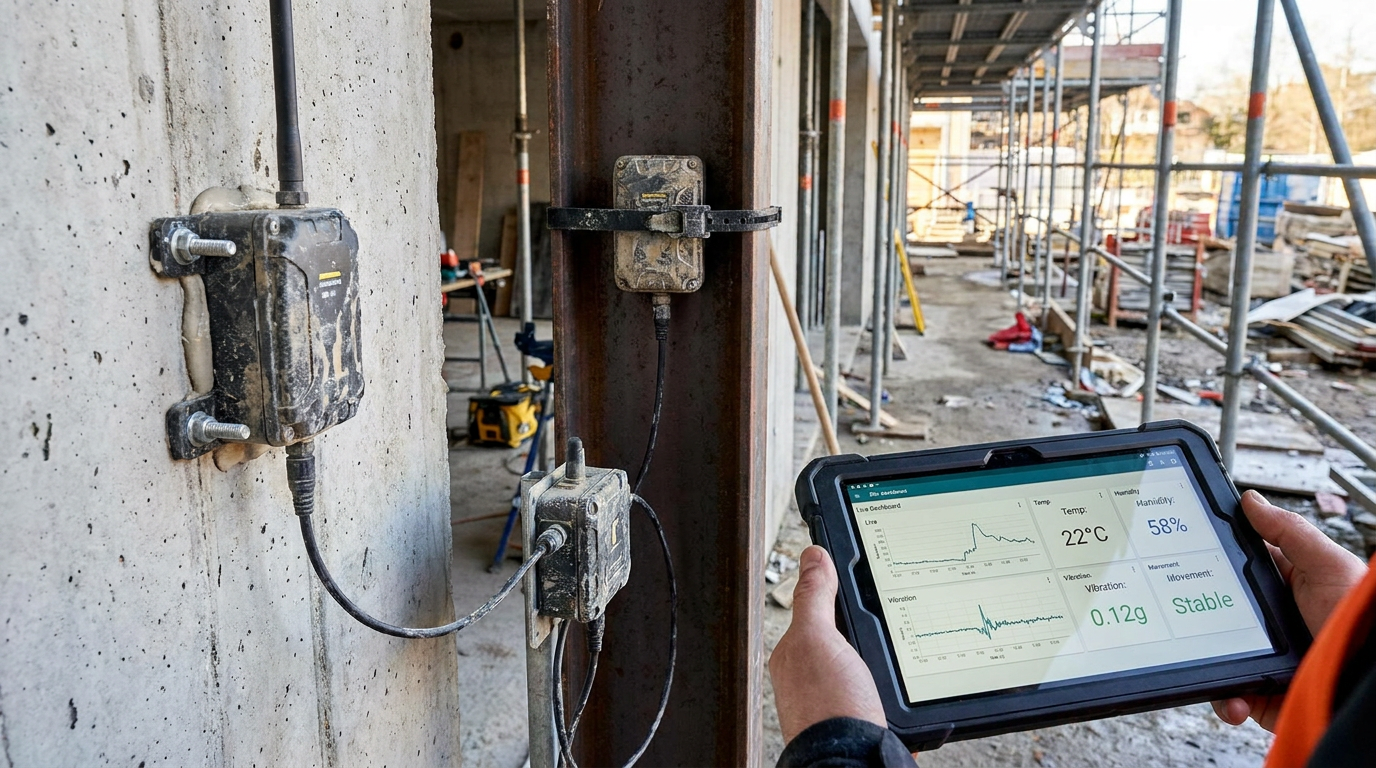
A sensor is simply a device that measures a physical condition and reports it. In construction, that could be as basic as a temperature sensor inside a concrete pour area or as advanced as a structural movement sensor mounted on a bridge component. Some sensors store data locally. Others send it wirelessly to a phone, tablet, or cloud dashboard. The setup depends on the project, the budget, and how quickly the team needs to respond.
Most systems used in construction are not futuristic or experimental. They are practical tools designed to answer practical questions. Is the slab curing under the right conditions? Is moisture building up in wall assemblies before drywall goes in? Are vibration levels near an adjacent building staying within acceptable limits? Is dust getting too high during demolition? Is temporary heating keeping materials in the required range during winter work? These are real jobsite issues, and sensors help measure them instead of relying only on assumptions.
Sensor-based monitoring also covers temporary and permanent use. Some devices are only needed during construction. Others stay in place after occupancy and become part of long-term building management. A moisture sensor hidden in a vulnerable area, for example, may help detect a future leak years after the project is complete. That overlap is important because it connects construction quality with building performance over the long haul.
In most cases, the sensor itself is only one part of the system. There is usually a communication method, a software platform, and a reporting process behind it. Good implementation means making sure the information reaches the right person in a useful form. A sensor that generates readings nobody reviews is not helping the project. Technology has to fit the workflow, not the other way around.
Why Interest in Construction Sensors Has Grown So Quickly
Several changes in the industry have pushed sensor-based monitoring into more projects. One is tighter performance expectations. Owners want better energy efficiency, better air quality, tighter building envelopes, and fewer callbacks after turnover. Those expectations make hidden conditions more important. Moisture, temperature swings, air leakage, and installation errors can all cause trouble later, and teams are under more pressure to catch them early.
Another factor is cost. Delays are expensive, rework is expensive, and claims are expensive. If a sensor system can warn the team about an issue before materials are damaged or before work needs to be redone, it can pay for itself quickly. That does not mean every project needs a full sensor package. It means more teams now see monitoring as a tool for controlling risk rather than as an unnecessary add-on.
There is also a labor reality. Experienced supervisors and skilled tradespeople remain the backbone of construction, but many markets are dealing with labor shortages and thinner management coverage. Sensors do not replace field experience, but they help extend it. A superintendent cannot stand in every room or watch every area all day. A monitoring system can keep watch in the background and flag a condition that deserves a closer look.
Finally, the technology itself has improved. Devices are smaller, batteries last longer, wireless connectivity is more reliable, and dashboards are easier to understand than they were a decade ago. The barrier to entry has come down. That is one reason sensor-based monitoring is showing up not just on major infrastructure work but also in residential renovations, restoration projects, and everyday commercial construction.
The Main Types of Sensors Used in Construction
Not every project uses the same equipment, but most construction monitoring falls into a few broad categories. Environmental sensors are among the most common. These track temperature, humidity, dew point, and sometimes air pressure. They are useful wherever materials or finishes are sensitive to conditions, including concrete work, flooring installation, painting, drywall finishing, and temporary enclosure management.
Moisture monitoring is another major category. Moisture sensors can be used in wood framing, concrete slabs, roof assemblies, wall cavities, and below-grade conditions. Excess moisture leads to mold risk, adhesion problems, flooring failures, rot, corrosion, and interior finish damage. On renovation work, moisture monitoring is especially useful because existing buildings often have hidden leaks or drying challenges that are not obvious during an initial walkthrough.
Movement and vibration sensors are common on projects where structural behavior matters or where nearby properties could be affected. These devices help track settlement, tilt, deflection, cracking, or vibration from excavation and heavy equipment. They are often used around urban infill work, historic renovations, bridge rehabilitation, deep foundations, and work near sensitive neighboring structures.
Air quality and dust sensors have become more important as health, occupant protection, and indoor environmental quality receive more attention. During demolition or renovation, these sensors can help teams track particulate levels and adjust containment, ventilation, or cleaning practices. On occupied projects, that can be the difference between a smooth phase of work and a shutdown caused by complaints or unsafe conditions.
Some projects also use sensors tied to equipment, access control, fuel use, energy consumption, or occupancy. These support logistics, operations, and post-construction performance. For example, sensors can confirm whether temporary heaters are running as planned, whether a space is being conditioned consistently, or whether installed systems are performing close to design intent after turnover.
How Sensor-Based Monitoring Improves Quality Control
Quality problems in construction often start quietly. A slab may hold too much moisture before finish flooring goes down. Wall cavities may trap humidity during a schedule push. An exterior assembly may be closed in before materials have stabilized. In many cases, the visible failure appears later, after the crew has moved on and the cause is harder to trace. Sensors help by creating a record of actual conditions during critical stages of work.
Concrete is a good example. Curing conditions affect strength development, cracking risk, and schedule planning. If the team is relying only on general weather data or a rough time estimate, decisions about protection and formwork removal may be less precise than they should be. Embedded or surface sensors can provide direct readings that help the contractor manage curing more confidently. That can improve both quality and production.
Flooring and finishes are another area where monitoring earns its keep. Adhesives, coatings, wood products, and finish materials all react to temperature and moisture. When conditions are out of range, failure may not show up until after handover. By using sensors in the space and, when needed, in the substrate, teams can confirm whether the area is actually ready for installation instead of making assumptions based on the calendar alone.
Good quality control is not just about catching failure. It is also about documenting the work. Sensor data can provide evidence that conditions met the required range at key milestones. That matters when disputes arise over responsibility. Clear records help teams show that materials were stored properly, environmental conditions were maintained, and installation timing was based on measured information rather than best guesses.
How Monitoring Supports Safety on the Jobsite
Construction safety still starts with planning, training, supervision, and disciplined site practices. Sensors do not replace any of that. What they do is add another layer of awareness, especially where conditions can change quickly or where exposure is not easy to see in real time. In that role, they are most valuable when tied to a response plan that crews understand.
Environmental monitoring can support worker safety in enclosed or partially enclosed areas. High heat, poor ventilation, dust buildup, and certain airborne contaminants can put workers at risk before anyone realizes conditions are getting worse. Sensors can alert the team early enough to improve ventilation, change work sequencing, increase cleaning, or pause operations until the space is safe again.
Vibration and structural movement monitoring can also reduce risk when crews are working near excavation, shoring systems, adjacent buildings, or aging structural elements. These conditions require engineering judgment first, but sensors add a continuous check. If movement exceeds a set threshold, the project team can investigate immediately instead of waiting for visible signs that may appear too late.
There is also a practical safety benefit in reducing rushed rework. When quality issues are missed early, crews often return under schedule pressure to open finished work, relocate materials, and correct damage. That creates extra exposure and often puts more trades in the same area at the same time. Better monitoring helps prevent those situations from developing in the first place.
Project Management Benefits That Owners and Contractors Actually Notice
One reason sensor-based monitoring is gaining traction is that it helps with everyday project management, not just technical oversight. Construction schedules depend on timing and handoffs. If one activity moves forward before conditions are ready, several trades can be affected. Sensors give managers a more objective basis for sequencing work, approving installations, and planning inspections.
For example, if drying conditions in a building are being tracked room by room, the superintendent can prioritize areas that are truly ready instead of moving crews into spaces that only appear ready. That reduces stop-and-start production. It also helps subcontractors trust the information they are getting, which matters on jobs where schedule coordination is tight.
Monitoring can also improve communication with owners and design teams. When questions come up about delays, conditions, or protective measures, data can back up the explanation. A contractor who can show actual temperature and humidity trends during a weather event is in a stronger position than one relying on general statements. That does not remove every conflict, but it makes discussions more grounded and less emotional.
On complex or occupied projects, remote monitoring is especially helpful. Decision-makers do not have to be physically present to understand site conditions. A facilities manager, owner representative, or off-site project executive can review dashboards and receive alerts without disrupting the work. That saves time and often speeds up approvals and corrective action.
Common Misconceptions About Construction Monitoring Technology
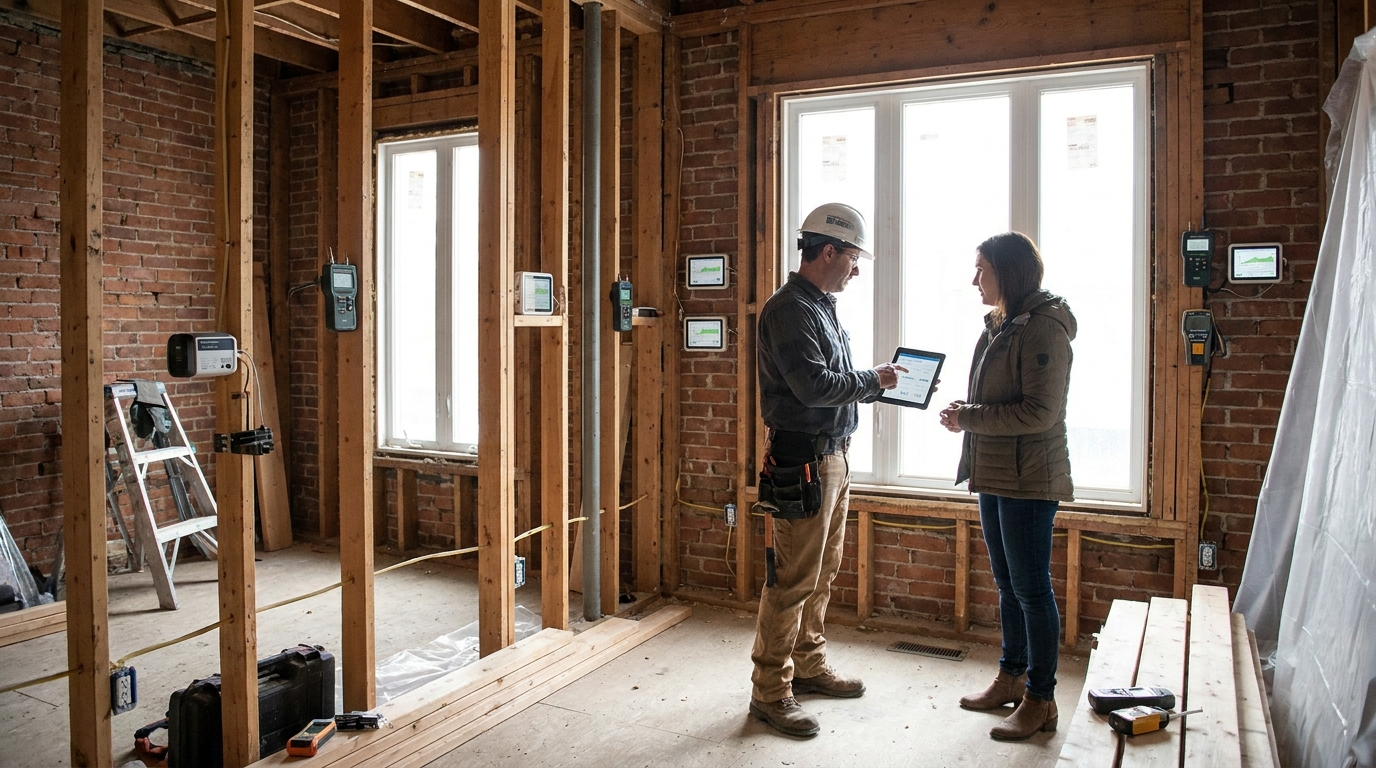
The first misconception is that sensors are only for large, expensive projects. In reality, many systems can be scaled to a specific concern. A homeowner doing a major renovation may only need moisture and environmental monitoring in a few critical areas. A commercial contractor might deploy a broader setup across multiple floors. The right question is not whether the technology is big enough for the project. The right question is whether it solves a real problem at a reasonable cost.
The second misconception is that more data automatically means better results. It does not. Too much unfiltered information can distract the team and create alert fatigue. Effective monitoring focuses on a short list of conditions that matter to the job. A small number of well-placed sensors with clear thresholds will usually outperform a complicated setup that nobody has time to interpret properly.
A third misconception is that sensor systems replace field inspections. They do not. Sensors are tools, not substitutes for experience. If a moisture sensor shows an unusual reading, someone still needs to inspect the area, understand the assembly, and determine the cause. The technology helps direct attention where it is needed. It does not eliminate the need for judgment.
Some people also assume the system must be difficult to install and maintain. That can be true with specialized structural setups or heavily integrated platforms, but many construction sensors are straightforward. They can be attached temporarily, calibrated with basic guidance, and monitored through an app or dashboard that is no more complicated than other software teams already use.
Practical rule: If a sensor system is harder to manage than the problem it is supposed to solve, it is probably the wrong system for that job.
Where Sensor-Based Monitoring Makes the Most Sense
Not every project needs a sensor strategy, but some conditions make the value much clearer. Renovation work is high on that list because existing buildings come with unknowns. Hidden moisture, unpredictable air movement, occupied spaces, aging structures, and partial demolition all create conditions that benefit from closer tracking. Sensors can help teams work more carefully without slowing the whole project down.
Projects with moisture-sensitive materials are another strong fit. Wood flooring, resilient flooring, millwork, specialty coatings, and high-performance envelope systems all depend on controlled conditions. If a failure in those materials would lead to expensive removal or owner dissatisfaction, monitoring is worth serious consideration. The same is true in cold-weather or high-humidity climates where environmental control can shift quickly.
Urban sites near neighboring buildings also benefit from sensor use. When excavation, pile driving, demolition, or heavy equipment could affect adjacent structures, movement and vibration monitoring provide a level of accountability that visual checks alone cannot match. Historic buildings are especially sensitive because damage may not be obvious until it becomes a serious issue.
Sensor-based monitoring is also useful in projects with aggressive schedules. Fast-track work often compresses drying times, enclosure milestones, and finish installation sequences. That pressure increases the risk of building in moisture or proceeding before assemblies are ready. Objective data helps the team avoid short-term schedule gains that turn into long-term rework.
How Homeowners Can Use Sensor Monitoring Without Getting Lost in the Technical Side
Homeowners usually do not need to become experts in construction technology to benefit from monitoring. What they do need is a basic understanding of where hidden risk lives in a project. In most residential jobs, that means water, humidity, temperature, and sometimes air quality during demolition or interior finish work. Those are the conditions most likely to affect comfort, durability, and future repair costs.
If you are remodeling a basement, adding on to a house, replacing a roof, or rebuilding after a leak, moisture monitoring is often the most practical place to start. A contractor may use temporary sensors to confirm that framing, subfloors, or enclosed spaces have dried adequately before finishes are installed. That protects the work and gives the homeowner more confidence that the project is not simply being rushed closed.
During occupied renovations, air quality and dust monitoring may also matter. Homeowners with children, older adults, or respiratory concerns often want reassurance that containment measures are working. Sensors do not replace proper barriers and ventilation, but they can help verify whether conditions are staying under control as demolition and reconstruction move from room to room.
The best approach for homeowners is to ask simple questions. What condition are we monitoring, why does it matter for this project, who will review the data, and what action will be taken if readings go out of range? Clear answers to those questions are more useful than a long list of technical features. Good builders should be able to explain the system in plain language.
How Contractors Should Approach Implementation on Real Projects
For contractors, the smartest way to begin is with a defined problem, not with a device catalog. If your projects regularly struggle with concrete curing in winter, start there. If renovation work keeps uncovering moisture issues, focus there. If neighboring property concerns come up on urban sites, vibration or movement monitoring may be the right entry point. A targeted use case is easier to manage and easier to evaluate honestly.
It also helps to assign ownership from the start. Someone needs to decide where sensors go, how often data will be reviewed, what thresholds matter, and who gets notified when there is an issue. Too often, monitoring is set up as a side task without clear responsibility. Then the data comes in, but nobody acts on it in a timely way. Technology only works when it is built into project operations.
Training matters, though it does not have to be complicated. Field staff should understand what the devices are measuring, what normal readings look like, and what to do when readings shift. Subcontractors should know whether monitoring affects when they can begin work. If the flooring crew arrives and is told the substrate is not ready based on live data, that should not come as a surprise. Good communication prevents friction.
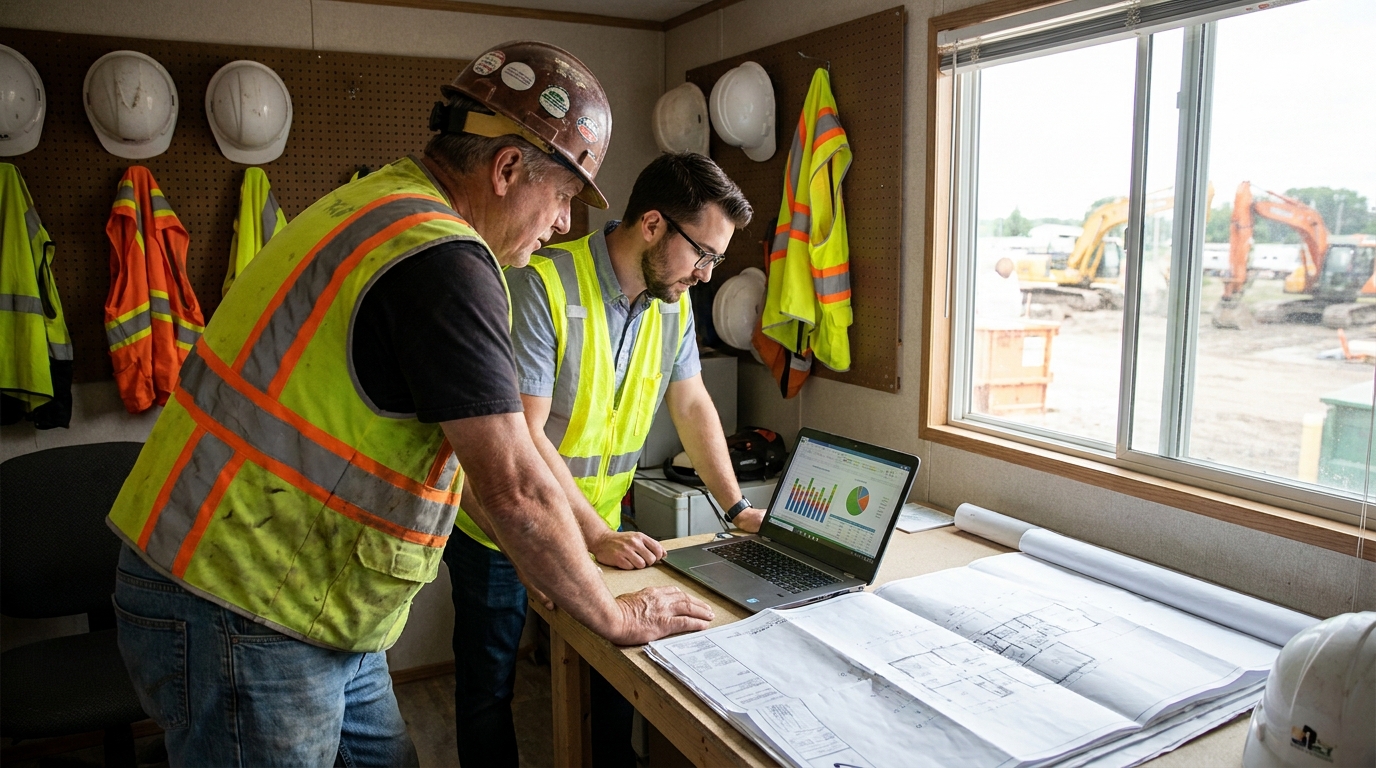
Contractors should also think about documentation. Sensor data is most useful when linked to daily reports, photos, weather conditions, and milestone decisions. A clean record showing why a pour was protected, why a finish was delayed, or why a space required extra drying can be valuable later. It supports claims management, owner communication, and internal lessons learned.
Cost Factors and Return on Investment
Cost is usually the first concern, and fairly so. Sensor-based monitoring is not free, and the value depends on the project. Costs can include devices, software subscriptions, setup time, calibration, data access, and sometimes outside support. On simple jobs, that can feel like an extra layer that is hard to justify. The real comparison, however, is not just against zero cost. It is against the cost of failure, delay, uncertainty, and rework.
A single flooring failure, moisture-related wall repair, or disputed delay can cost far more than a well-planned monitoring package. The same goes for damage claims involving adjacent properties or shutdowns caused by poor dust control in occupied spaces. That does not mean sensors always save money. It means the return is strongest where one avoidable problem would be expensive and disruptive.
Return on investment also shows up in less obvious ways. Better documentation can reduce arguments. Faster decisions can improve labor efficiency. More precise scheduling can help crews move through work with fewer interruptions. Owners may also see value in the transition from construction monitoring to ongoing building performance tracking, especially in higher-end homes or facilities with strict operating requirements.
The practical way to evaluate cost is to ask what risk you are buying down. If the answer is vague, the purchase is probably premature. If the answer is specific and tied to known project challenges, the technology may be a smart use of money. Good construction spending is not about buying every available tool. It is about choosing the right tool before a predictable problem becomes an expensive one.
Challenges and Limits You Should Expect
Sensor systems have limits, and it is better to be clear about them than to oversell the idea. Devices can fail, batteries can die, readings can drift, wireless connections can drop, and placement can be poor. A sensor in the wrong location may give a false sense of confidence or miss the very condition it was meant to catch. Proper setup matters as much as the hardware itself.
There is also a human limit. Data has to be interpreted in context. A temperature reading may be acceptable for one material and a problem for another. A moisture trend may point to normal drying or to an active leak, depending on the assembly and recent work conditions. This is where experienced field leadership and, when needed, input from consultants or manufacturers still matter.
Another challenge is integration. Some teams already use project management software, quality control systems, and daily reporting tools. If the sensor platform sits apart from everything else, information may not flow efficiently. That does not mean full integration is always necessary, but it does mean the reporting process should be simple enough that the data actually gets used.
Privacy and responsibility can also come into play, especially in occupied buildings or when systems continue after turnover. The scope of monitoring should be clearly defined. Teams should know what is being measured, who can see the data, and how long records will be kept. Straightforward communication helps avoid confusion and builds trust.
A Practical Step-by-Step Approach to Getting Started
If you are considering sensor-based monitoring, start by identifying the failure you are trying to prevent. That may be moisture in enclosed assemblies, schedule uncertainty around curing, dust exposure during renovation, or movement near neighboring structures. Once the risk is clear, define what needs to be measured and what decision the data will support. This step keeps the system focused and useful.
Next, choose the smallest setup that can answer the question reliably. It is usually better to start with a targeted program and expand later than to roll out a broad system without a clear management plan. Decide where sensors will go, how often readings will be checked, what thresholds trigger action, and who owns the response. Those decisions matter more than brand names or dashboard graphics.
Then make sure the monitoring plan is communicated to everyone it affects. Field supervisors, subcontractors, and owners should understand the purpose. If readings might delay an installation, that possibility should be built into expectations ahead of time. When people know how the data will be used, they are more likely to trust it and less likely to treat it as an obstacle.
Finally, review the results after the project or after a major phase. Did the sensors catch anything useful? Did they improve timing, reduce callbacks, or strengthen documentation? Were there too many alerts, poor placement choices, or gaps in follow-up? Like any construction process, monitoring improves when teams treat it as part of continuous learning rather than as a one-time gadget purchase.
The Future of Sensor-Based Monitoring in Construction
Looking ahead, sensor-based monitoring will likely become more common not because it is fashionable, but because construction keeps demanding tighter control over hidden conditions. As buildings become more energy efficient and more dependent on precise envelope performance, the cost of getting details wrong goes up. Data that helps verify those details during construction becomes more valuable.
We are also likely to see stronger connections between jobsite monitoring and long-term building operations. A project may begin with sensors for moisture protection, curing, and environmental control, then transition into occupancy monitoring, leak detection, and energy tracking after completion. That continuity can help owners understand how construction choices affect real building performance over time.
At the same time, the most successful use of this technology will remain grounded and selective. Construction does not need more complexity for its own sake. It needs tools that help teams build better, safer, and with fewer surprises. The winners will be the contractors and owners who use sensors to support craftsmanship and decision-making, not to bury the project in unnecessary data.
Sensor-based monitoring is best understood as a practical extension of good construction management. It does not replace site walks, trade knowledge, or sound sequencing. It helps those things work better. When applied with a clear purpose, it can improve quality, support safety, protect schedules, and give both homeowners and professionals a clearer view of what is happening behind the walls and under the surface.
Final Takeaway
If you strip away the buzzwords, the case for sensor-based monitoring is simple. Construction problems are easier and cheaper to solve when they are detected early. Sensors help detect conditions that people cannot constantly watch or cannot easily judge by eye alone. That makes them useful on projects where moisture, temperature, movement, dust, curing, or air quality can affect results in a meaningful way.
For homeowners, this technology can provide reassurance and help protect against hidden failures. For contractors and project managers, it can sharpen decision-making and reduce avoidable risk. The key is to stay practical. Start with a real problem, choose the right measurements, assign responsibility, and use the information to guide action. Done that way, sensor-based monitoring is not a gimmick. It is a solid construction tool that fits the way good projects are already supposed to run.



No Comment! Be the first one.