Inside the Château Blueprint: What Tyler Perry’s Georgia Estate Teaches Us About Living as Architecture
Some estates are simply large. Others are composed, the way a piece of music is composed, with movements, pacing, and a clear point of view. Tyler Perry’s $100 million property outside Atlanta belongs firmly to the second category. Set across 2,100 acres, the residence borrows its bones from the French château tradition, and the result is a lesson in what happens when architecture is allowed to dictate lifestyle, rather than the other way around.
What draws my eye here is not the acreage or the eight bedrooms and twelve bathrooms, impressive as they are on paper. It is the discipline of the design. Symmetry, manicured grounds, and a restrained European silhouette give the property what one interior expert, Jordana Ashkenazi, described to Supercar Blondie as a look that “genuinely looks like it needs its own postcode.” That is the language of architecture that understands proportion is more persuasive than scale alone.
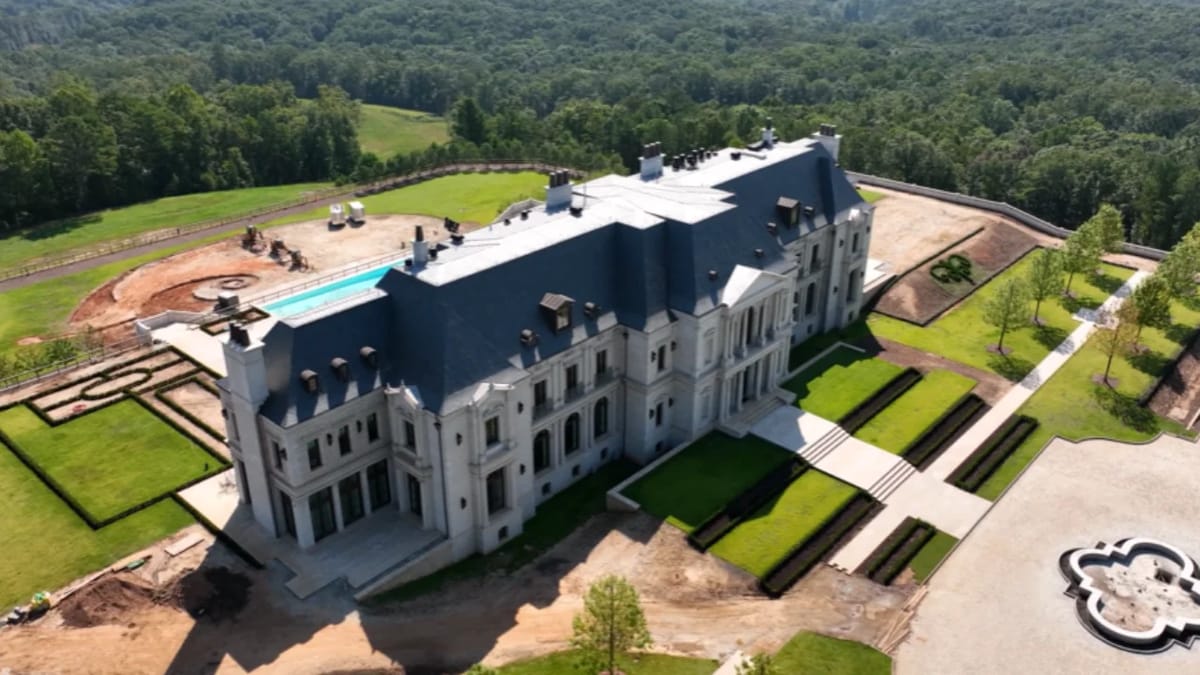
The interior program reads like a study in intentional zoning rather than excess for its own sake. A spa, a home theatre, a gym, a library, a wine cellar, and a grand foyer are not simply amenities sprinkled through the floor plan. They are declarations that a home can absorb every function of a life, so there is little reason to ever leave its walls. Ashkenazi put it plainly when she called the estate “a completely self-contained luxury estate,” noting that it feels closer to a private resort than a traditional family residence.
Luxury is no longer measured by the number of bedrooms and bathrooms, but by the lifestyle a home creates.
That distinction matters for anyone thinking seriously about design today, not just those with 2,100 acres to work with. The shift Ashkenazi describes, from square footage as status symbol to atmosphere and self-sufficiency as status symbol, is quietly reshaping how architects and designers approach even modest luxury projects. A wine cellar or a library is no longer a flourish. It is part of a coherent narrative about how a household actually wants to spend its hours.
The grounds extend that narrative outward. A lap pool, horse stables, an organic farm, and a private airstrip complete a self-contained estate, and even a hangar built for hobby aircraft rather than the owner’s Gulfstream III speaks to the same instinct: every corner of the land has been assigned a purpose, right down to leisure. That is the difference between a big house and a designed world.
What Perry’s estate ultimately demonstrates is that European architectural language, symmetry, stone facades, formal grounds, can be transplanted into an American context without losing its emotional weight. It is a reminder that the most memorable properties are not built by adding more, but by committing fully to a singular architectural idea and letting every room and every acre serve it.
Source: Supercar Blondie