



Future aesthetics in interior design refers to the values shaping homes over the next decade, including quiet AI-assisted technology, sustainable and honest materials, wellness-focused environments, and adaptable, inclusive layouts. This future is not arriving as a single style, nor as a rigid visual formula. It is emerging as a more thoughtful design language, one shaped by intelligence, restraint, environmental awareness, and a renewed sensitivity to how people actually live. In the years ahead, beautiful interiors will be expected to do more than impress at first glance. They will need to support well-being, adapt to changing needs, use resources responsibly, and still deliver the emotional richness that makes a space feel memorable. This is where future aesthetics become especially fascinating, because they ask design to be both poetic and practical at once.
Table Of Content
- Future Aesthetics Are Becoming a Design Ethos, Not a Decorative Trend
- AI and Science-Led Design Will Influence Beauty Behind the Scenes
- Why Invisible Technology Feels More Elegant
- Sustainability Is Moving From Surface Style to Core Design Logic
- Material Honesty and the Return of Tactility
- Health, Well-Being, and Calm Environments Are Redefining What Looks Beautiful
- The Aesthetic Value of Light, Air, and Acoustics
- Accessibility and Inclusion Are Becoming Part of High Design
- Renovation Realities in Canada and North America Will Shape What Feels Current
- Why Adaptive Reuse Will Feel Increasingly Luxurious
- The Future Will Be Cleaner in Form but Richer in Texture
- Misconceptions About Future Interior Design Worth Leaving Behind
- How to Interpret These Trends at Home
- Practical Priorities That Reflect Future Aesthetics
- A New Elegance for the Next Decade
For decades, aesthetic trends were often discussed in terms of color palettes, furniture silhouettes, or decorative movements. Today, the conversation is broadening. New technologies are changing how interiors are imagined and managed, while climate realities and economic pressures are changing how they are built and renewed. In North America, where many homes are being renovated rather than replaced, design innovation is becoming deeply tied to cost-awareness, durability, and adaptive thinking. The result is an elegant shift away from purely ornamental design and toward spaces that feel quieter, healthier, more tactile, and more enduring.
According to recent commentary from the World Economic Forum, artificial intelligence and science-led design are increasingly influencing the built environment by helping teams make more data-driven decisions about comfort, daylight, air quality, performance, and environmental impact. That insight is especially meaningful for interiors, where the future of beauty is becoming inseparable from measurable quality. At the same time, LEED v5 and wider healthy-building standards are placing stronger emphasis on indoor environmental quality, accessibility, resilience, and human well-being. Together, these forces suggest that the next decade of interior design will be less about novelty for its own sake and more about a sophisticated synthesis of sustainability, usability, and emotional resonance.
This is good news for anyone who loves refined interiors. Future aesthetics are not cold, clinical, or stripped of character. If anything, they are becoming richer in texture, more honest in material expression, and more deeply connected to everyday life. They favor spaces that look calm yet feel intelligent, that appear effortless yet are carefully responsive beneath the surface. In this evolving landscape, elegance is no longer defined only by luxury objects or dramatic gestures. It is increasingly defined by atmosphere, intention, and the grace of a space that performs beautifully over time.
Future Aesthetics Are Becoming a Design Ethos, Not a Decorative Trend
One of the most important shifts to understand is that future aesthetics are less about a recognizable look and more about a set of values. In the past, a trend forecast might have promised a season of terrazzo, a return to maximalism, or a renewed appetite for monochrome minimalism. While visual tendencies still matter, the strongest design currents now run deeper than styling. They are rooted in how a space is conceived, how it supports daily life, and how responsibly it uses materials, energy, and technology.
This means that the interiors of the future may vary widely in appearance. One home may feel modern and restrained, another nostalgic and layered, another softly organic and sculptural. What will connect them is not a single aesthetic code, but a shared intelligence. They will likely prioritize healthier air, softer acoustics, daylight access, flexible layouts, and materials chosen for both beauty and lifecycle impact. A room may look simple, but behind its serenity could be a sophisticated set of decisions related to thermal comfort, embodied carbon, and long-term adaptability.
That is why the phrase future aesthetics deserves to be understood in an expanded way. It refers not just to what interiors will look like, but to what they will value. It invites us to imagine beauty as something informed by science, shaped by climate consciousness, and refined by empathy. In practice, this produces interiors that are cleaner in form but richer in sensory experience, and more technologically advanced without appearing visually crowded by devices.
The most compelling interiors of the next decade will not announce their intelligence loudly. They will reveal it quietly through comfort, clarity, adaptability, and material depth.
AI and Science-Led Design Will Influence Beauty Behind the Scenes
Much of the public conversation around future interiors tends to focus on visible smart-home features, yet the more consequential transformation may happen behind the scenes. AI-assisted planning and science-led design processes are already beginning to help designers analyze layout efficiency, environmental performance, occupancy behavior, and material options with a level of precision that was once difficult to achieve. Rather than replacing creativity, these tools can sharpen it. They allow designers to make more informed decisions about how a room should function, feel, and endure.
Imagine a living space where the placement of seating is informed not only by visual balance but also by daylight patterns across the day. Imagine a bedroom where acoustic treatments are selected for elegance and performance, or a kitchen planned through analytics that improve circulation and reduce wasted square footage. These are not futuristic fantasies. They are early expressions of a more responsive design culture, one in which aesthetic choices are increasingly supported by evidence about how spaces affect comfort and health.
The World Economic Forum has framed AI and science-led design as a major force in the built environment, and that influence will likely become more visible in interior design over the next decade. Yet visibility is perhaps the wrong word, because the most advanced spaces may actually look less technological, not more. A future aesthetic of intelligence is likely to be discreet. Lighting controls may disappear into architecture. Sensors may become nearly invisible. Climate response systems may work silently in the background. The visual result is not gadget-heavy futurism, but a more composed and effortless atmosphere.
For homeowners and design clients, this shift matters because it changes the very meaning of luxury. True sophistication may no longer lie in the conspicuous display of new devices. It may lie in a room that always seems to feel right without demanding attention for the systems making it possible. The air feels fresh, the light softens when needed, glare is reduced, acoustics are gentle, and the layout supports the rhythm of everyday life. This kind of refined intelligence is likely to define the most desirable interiors of the coming years.
Why Invisible Technology Feels More Elegant
There is a growing preference for technology that integrates rather than interrupts. The future home will still be smart, but its intelligence will be woven into cabinetry, lighting schemes, window treatments, and climate systems with far greater subtlety. This is particularly significant for luxury and design-conscious interiors, where visible clutter can quickly diminish a sense of calm. Seamless controls, hidden charging, integrated speakers, and discreet automation all support a more polished aesthetic language.
What emerges is a paradox that feels distinctly contemporary. The more advanced the interior becomes, the less technological it may appear. This is not a retreat from innovation. It is a maturing of it. As digital systems become more embedded into architecture and furnishings, the eye is freed to appreciate texture, proportion, light, and craftsmanship. In that sense, invisible technology is not merely convenient. It is aesthetically liberating.
Sustainability Is Moving From Surface Style to Core Design Logic
Sustainability was once too often reduced to a shorthand visual vocabulary. It might have meant rough wood, earthy tones, or a certain degree of minimal restraint. Today, the conversation is more rigorous and more exciting. Sustainable design is increasingly understood not as a style category, but as a core logic that shapes material sourcing, construction choices, renovation decisions, and long-term use. This is one of the clearest drivers of future aesthetics, because it changes not only how spaces look, but why they look that way.
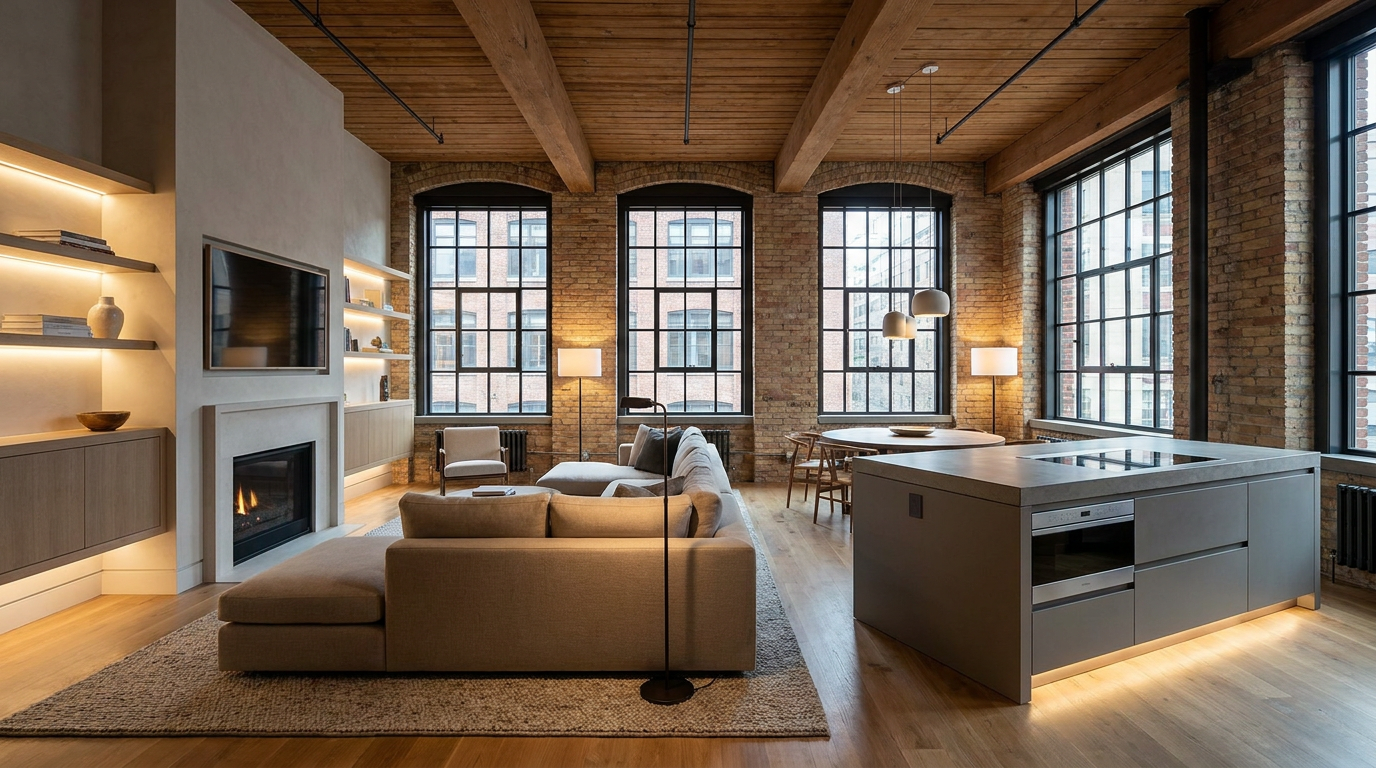
Recent design commentary, including ArchDaily’s 2025 trend coverage, points to creative reuse, raw materials, nostalgia, and historic revival as prominent directions. These are not isolated visual preferences. They reflect a larger movement toward circularity and material honesty. Instead of replacing everything with flawless new finishes, many designers are choosing to preserve, adapt, and celebrate what already exists. This may include exposed structural elements, restored flooring, recovered timber, recycled metals, or carefully repaired architectural details that carry memory and texture into the present.
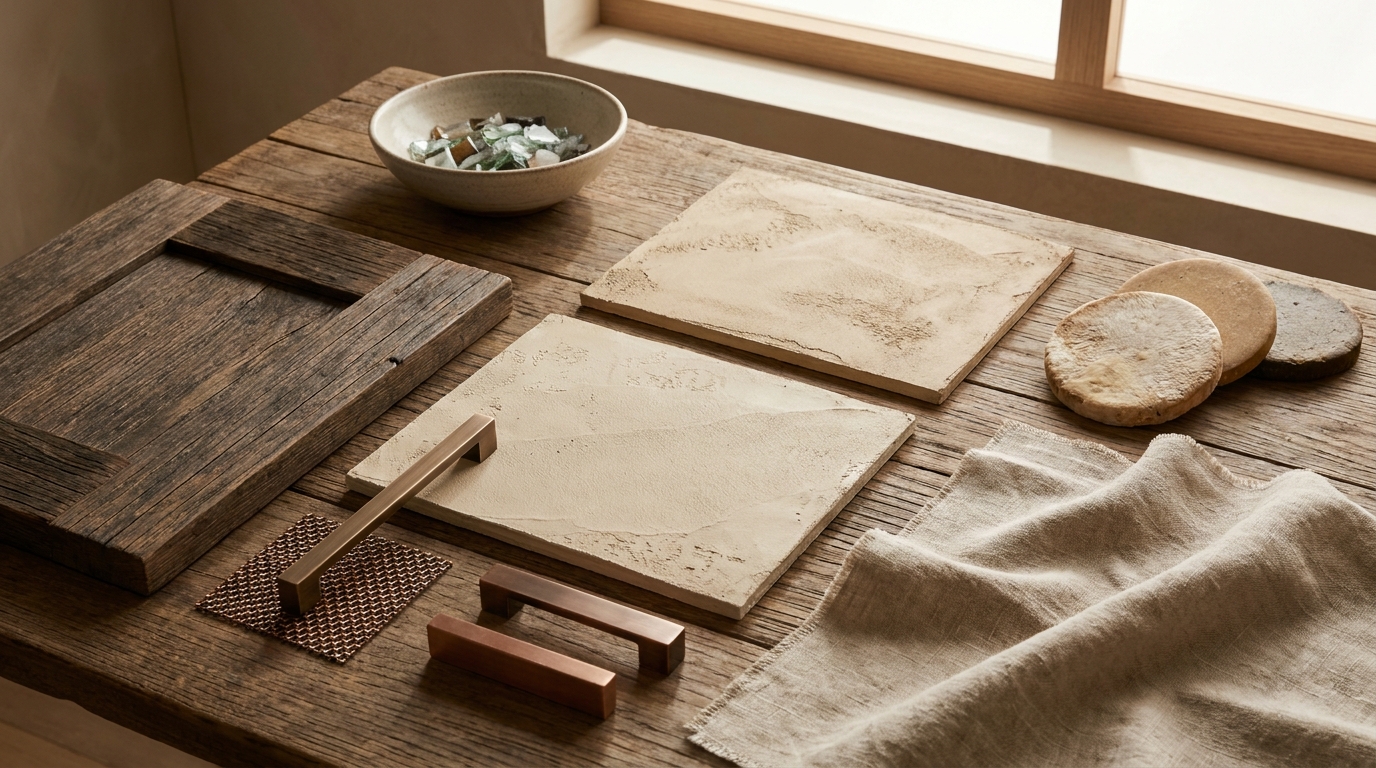
The aesthetic effect of this shift is remarkably rich. Spaces feel less generic and more grounded. Surfaces show grain, patina, and irregularity. Materials communicate their origin and age rather than concealing them under uniform perfection. Natural plasters, low-carbon composites, limewash, reused stone, and biomaterials can create interiors that are deeply contemporary while still feeling warm and human. Rather than sterile perfection, the future may favor rooms with narrative depth and tactile complexity.
This also helps correct one of the most persistent misconceptions about sustainable design, which is the idea that environmental responsibility requires aesthetic sacrifice. In truth, some of the most beautiful interiors now emerging are sustainable precisely because they are layered, textural, and materially expressive. Their beauty comes from restraint in replacement, intelligence in sourcing, and confidence in letting materials speak honestly. This is sustainability with soul.
Material Honesty and the Return of Tactility
As digital life becomes more immersive, physical environments are gaining importance as sensory counterpoints. People are increasingly drawn to interiors that feel tangible and comforting, not merely visually polished. Material honesty answers that desire. Wood should feel like wood, stone should reveal its subtle variation, textiles should soften acoustics as well as the eye, and metals should age gracefully rather than imitate something they are not. These qualities create intimacy and permanence.
In many ways, future aesthetics may be less about visual spectacle and more about sensory refinement. A room with matte plaster walls, recycled bronze accents, woven natural fibers, and softly reflective light can feel more luxurious than one filled with glossy finishes and overt excess. The difference lies in emotional register. Tactile interiors create a slower, more grounded experience of space. They encourage presence, which may be one of the greatest luxuries of all.
Health, Well-Being, and Calm Environments Are Redefining What Looks Beautiful
Another defining aspect of future aesthetics is the rise of wellness-centered design. Standards such as LEED v5 place greater emphasis on indoor environmental quality, accessibility, inclusion, resilience, and human well-being. This has profound aesthetic implications. It means that the next decade’s most admired interiors may not be those that are visually dramatic at any cost, but those that create comfort with remarkable consistency. Light, air, acoustics, and spatial ease become part of the visual story.
The World Economic Forum has also noted significant growth in real estate assessed under WELL certification, citing approximately 250% growth since 2021 based on IWBI data referenced in 2024. This signals a broadening commitment to environments that actively support health. For interiors, this could mean more attention to low-toxicity materials, better ventilation, humidity management, reduced glare, and softer soundscapes. Such choices may seem technical, but they profoundly affect how a room is perceived. Comfort itself has an aesthetic presence.
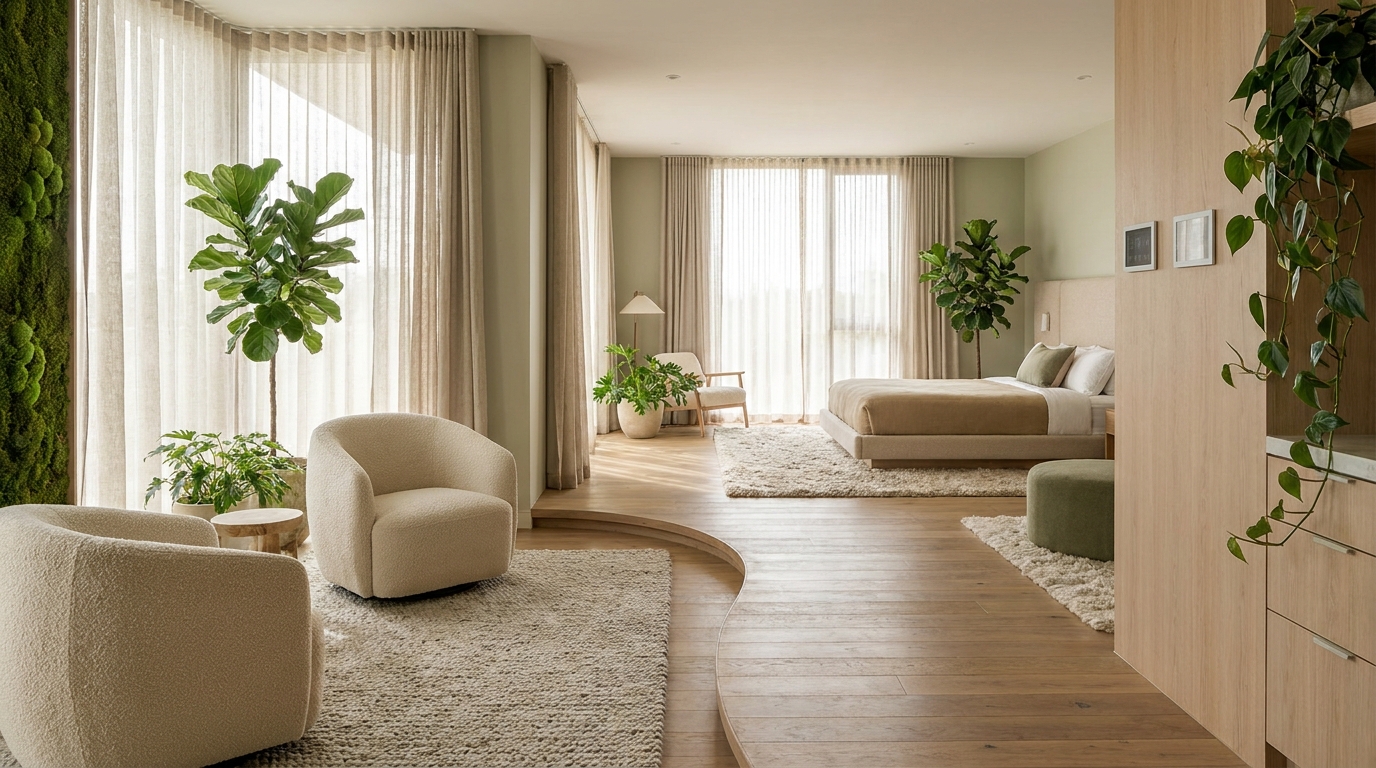
We are likely to see a growing preference for calmer visual environments, not because design is becoming bland, but because overstimulation is increasingly recognized as a form of stress. Rooms that use gentle tonal contrast, layered natural light, tactile textiles, and well-managed acoustics can feel expansive and restorative. Beauty in this context is not only visual pleasure. It is also nervous-system ease. A future aesthetic of wellness is composed, breathable, and emotionally intelligent.
Biophilic design will remain central to this movement. Plants, natural materials, views to the outdoors, water-inspired palettes, and forms that echo organic rhythms all contribute to interiors that feel alive. Yet biophilia in the future is likely to become more sophisticated than simply placing greenery in corners. It will involve thoughtful integration of daylight, airflow, textures, and patterns that reconnect people to nature in subtle ways. The result is not rustic imitation, but modern serenity.
The Aesthetic Value of Light, Air, and Acoustics
Some of the most important design decisions of the future may be nearly invisible in photographs, yet unmistakable in person. A room with balanced daylight feels different from one with glare. A home with good acoustic layering invites conversation and rest more easily than one with hard, echoing surfaces. Thermal comfort changes whether a space feels tranquil or agitating. These are sensory conditions, but they also shape aesthetic perception. When a room performs well, it appears more resolved.
Designers are increasingly treating these performance qualities as integral to beauty. Curtains may be selected not only for elegance but also for acoustic softness and daylight modulation. Wall finishes may be chosen for low emissions as much as visual depth. Layouts may prioritize window access and sightlines to support mood and orientation. In future aesthetics, these choices are not technical afterthoughts. They are central design gestures.
Accessibility and Inclusion Are Becoming Part of High Design
For a long time, accessibility was unfairly discussed as if it existed outside the world of beautiful interiors. That separation is rapidly dissolving. Future aesthetics are being shaped by a stronger emphasis on universal design, inclusive planning, and spaces that support a wider range of bodies, ages, and abilities. This is not a compromise in design quality. It is an expansion of what design quality truly means.
LEED v5’s attention to accessibility and inclusion reflects a broader cultural shift. Homes and public interiors alike are being asked to serve more diverse users with dignity and ease. That may include wider circulation paths, better lighting for aging eyes, lever hardware, curbless showers, adaptable storage, varied seating heights, and layouts that are easier to navigate. When these elements are integrated gracefully, they produce spaces that feel generous, not institutional. They create openness, fluidity, and confidence in movement.
Design for aging in place will become especially influential in North America, where demographic shifts and housing pressures make long-term adaptability more important. A future-forward home may therefore be one that anticipates change without looking medical or temporary. It may use subtle spatial planning, durable finishes, intuitive controls, and layered lighting to support a resident across different life stages. This kind of foresight is profoundly elegant because it treats time as part of the design brief.
Inclusivity also expands the emotional appeal of a space. Rooms that are easier to use tend to feel more welcoming to everyone. They lower friction, reduce anxiety, and increase comfort for guests and residents alike. In this sense, accessibility has an aesthetic dimension of its own. It creates a visual and spatial generosity that is immediately felt, even if not always consciously named.
Renovation Realities in Canada and North America Will Shape What Feels Current
Future aesthetics are not being shaped by ideals alone. They are also being shaped by economic realities. In Canada, Statistics Canada reported that residential renovation costs rose 0.5% in Q4 2024 following a 0.6% increase in Q3 2024. From Q2 2018 to Q2 2024, the composite average of eight tracked residential renovation project types increased by more than half, at 55.4%. Statistics Canada also reported that 7.3% of households in the provinces were living in housing in need of major repairs in 2022, while homeowners’ maintenance and repair expenditures increased by nearly one-fifth, or 19.2%, from September 2018 to September 2024.
These figures matter because they ground the future of design in renovation economics. Across Canada and much of North America, the most relevant interior transformations are likely to happen in existing housing stock. That means the future aesthetic will often be retrofit-friendly, adaptive, and mindful of budget without abandoning beauty. Durable finishes, modular elements, strategic preservation, and phased upgrades will become more important than expensive decorative overhauls.
There is a particular elegance to this constraint-aware design. Instead of demolishing and replacing indiscriminately, future-minded interiors may work with existing floor plans, improve function through targeted interventions, and reveal character through selective restoration. A dated apartment can become radiant through better lighting, healthier materials, improved storage, and a carefully edited palette. A small kitchen can feel luxurious through spatial discipline, material integrity, and integrated technology rather than excess square footage.
This practical dimension is essential to understanding where design is heading. Future aesthetics are not only relevant to elite custom projects. They are increasingly shaped by ordinary housing needs, renovation costs, and the demand for resilient solutions that can scale. As a result, the next decade’s most meaningful trends may be those that make interiors more livable, repairable, and adaptable while still maintaining a sense of refinement.
Why Adaptive Reuse Will Feel Increasingly Luxurious
Adaptive reuse is often discussed at an architectural scale, but its principles are equally powerful inside the home. Preserving original millwork, reworking existing cabinetry, refinishing quality surfaces, or reinterpreting historic details can produce interiors with depth that new construction sometimes lacks. In a world increasingly conscious of waste, restoration and reinvention carry cultural value as well as aesthetic appeal.
There is also something emotionally resonant about continuity. When a space acknowledges what came before while making room for contemporary life, it feels more layered and intelligent. This may explain the renewed appeal of nostalgia and historic revival in current design discourse. Future aesthetics are not only about the new. They are often about creating a sophisticated dialogue between memory and innovation.
The Future Will Be Cleaner in Form but Richer in Texture
One of the most intriguing paradoxes in emerging interior design is the simultaneous movement toward visual clarity and sensory richness. Many future-forward interiors will likely appear more edited, more spacious, and less cluttered than the trend-saturated rooms of the past. Yet this does not necessarily lead to austerity. Instead, pared-back forms are being balanced by tactile materials, nuanced tonal palettes, crafted details, and sculptural silhouettes that invite closer attention.
This balance is especially important as homes continue to absorb multiple functions. Living rooms may also host work, recovery, conversation, and digital leisure. Bedrooms may need to support sleep quality as well as flexible routines. Kitchens may become social, productive, and restorative spaces simultaneously. Under these conditions, visual overload is exhausting. Clean forms bring clarity, while texture brings warmth. Together, they create interiors that can support complexity without appearing chaotic.
Expect to see a continuation of warm neutrals, mineral tones, softened contrasts, and materials that diffuse rather than intensify light. Plaster, wool, brushed metals, reclaimed timber, hand-finished tiles, and natural stone will likely remain central because they add dimension without demanding loud color or pattern. This does not mean color disappears. Rather, color may be used with more intention, often through earthy pigments, botanical greens, muted clays, or deep accent tones that feel grounded and lasting.
The future aesthetic, then, is not flat minimalism. It is a more sensual restraint. It relies on composition rather than accumulation, and on atmosphere rather than ornament alone. In the best interiors, every surface contributes to the whole, and every detail feels considered but not overworked.
Misconceptions About Future Interior Design Worth Leaving Behind
As the design world looks ahead, a few common misconceptions are worth gently setting aside. The first is that future interiors will be dominated by conspicuous gadgets and overtly futuristic styling. In reality, some of the most important developments are likely to come from improved health standards, better material choices, and more adaptable layouts. The future may feel smarter, but it will not necessarily look mechanical.
The second misconception is that sustainability requires visual austerity. On the contrary, sustainable interiors are increasingly warm, textured, expressive, and deeply atmospheric. Reused materials, natural finishes, and circular design strategies often produce rooms with greater richness and individuality than conventional replacements. Sustainability, when handled thoughtfully, can heighten beauty rather than limit it.
A third misconception is that accessibility belongs to a separate category from luxury or style. Contemporary standards and inclusive design thinking are proving the opposite. A well-lit, intuitive, flexible, and universally usable space often feels more generous and more sophisticated. Ease of use is not an aesthetic deficiency. It is a mark of care.
Finally, it is important to reject the idea that future aesthetics only matter in high-budget projects. Rising renovation costs, aging housing stock, and growing repair needs mean that practical and scalable design solutions are more relevant than ever. The future of interior design will be shaped as much by thoughtful upgrades and careful retrofits as by headline-making flagship spaces. Beauty must meet reality, and in doing so it becomes more meaningful.
How to Interpret These Trends at Home
For homeowners, renters, renovators, and design enthusiasts, future aesthetics need not feel abstract. They can be interpreted through a series of thoughtful priorities rather than expensive gestures. Start with how a space performs. Is there enough natural light, and can it be softened when needed. Do materials contribute to calm, comfort, and durability. Can furniture be arranged to support multiple uses without crowding the room. These questions are often more valuable than chasing a trend color or a viral object.
Then consider materials through the lens of longevity and honesty. Choose finishes that age well, are easy to maintain, and reveal authentic texture. Where possible, preserve elements with character rather than replacing them automatically. Integrate technology discreetly so that convenience supports the room instead of dominating it. And think of accessibility as a refinement tool, not a limitation. More generous circulation, easier controls, and better lighting improve the daily experience for nearly everyone.
If there is one overarching lesson, it is that future beauty is deeply connected to thoughtful restraint. A room does not need to do everything visually. It needs to feel coherent, supportive, and alive. The most lasting interiors are often those that leave space for breath, for texture, and for change over time.
Practical Priorities That Reflect Future Aesthetics
- Design for adaptability by choosing layouts and furnishings that can evolve with work, family, and aging needs.
- Prioritize indoor environmental quality through ventilation, low-emission materials, layered lighting, and acoustic softness.
- Select materials with integrity such as reclaimed wood, recycled metal, natural stone, limewash, wool, and durable textiles.
- Use technology discreetly so controls, lighting, and charging integrate into the background of the design.
- Value repair and reuse by preserving character-rich elements and upgrading only what improves performance or function.
- Create calm through composition with fewer but better pieces, tactile surfaces, and a nuanced, enduring palette.
A New Elegance for the Next Decade
As we approach the next decade, interior design is moving toward a more mature and meaningful definition of aesthetic value. Technology is becoming quieter. Sustainability is becoming more materially expressive. Wellness is becoming visible through calm, breathable spaces. Inclusion is becoming inseparable from quality. And renovation realities are encouraging a more grounded form of creativity, one that values adaptability and substance over short-lived spectacle.
This evolution is not a loss of glamour. It is a refinement of it. The interiors that endure in memory are rarely those that rely only on trend. They are the ones that feel complete, generous, and emotionally attuned. They understand how light moves, how surfaces age, how sound settles, and how people change. They carry intelligence lightly. They offer comfort without sacrificing beauty. They make room for both aspiration and reality.
In that sense, the future aesthetic is profoundly hopeful. It suggests that beautiful spaces can also be healthier, more inclusive, more resilient, and more responsible. It invites us to expect more from design without losing the pleasure of atmosphere, craftsmanship, and visual poetry. The next era of interiors will not be defined by a single look, but by a graceful balance of sustainability, usability, and emotional resonance. That balance, perhaps, is the most elegant trend to watch of all.


No Comment! Be the first one.