



When people talk about a home feeling welcoming, they often mention light, texture, color, and comfort. Yet one of the most powerful parts of atmosphere is often the least visible. Scent can change the emotional tone of a room within seconds, making a space feel restful, crisp, cozy, nostalgic, or quietly luxurious. It is not simply decoration for the air. It is part of how we experience belonging, routine, and ease.
Table Of Content
- Why Scent Has Such a Powerful Emotional Effect at Home
- The Modern Rule for Home Fragrance: Use Scent with Intention
- Start with Clean Air, Not Just Good Fragrance
- How to Choose a Home Scent That Matches Your Style
- Scent Zoning: Why Different Rooms Need Different Fragrance Logic
- Low-Emission Ways to Scent a Home Beautifully
- What to Know About Candles, Incense, Plug-Ins, and Aerosols
- Creating a Signature Home Scent Without Overpowering the Space
- How to Make Home Scent Work for Families, Guests, Pets, and Sensitive Households
- Seasonal Scent Styling for a Home That Feels Alive
- Common Home Fragrance Mistakes to Avoid
- A Simple Routine for Building a Blissful Scent Environment
- The Quiet Luxury of a Home That Smells Thoughtfully Lived In
That emotional effect is deeply human. Smell is closely tied to memory and feeling, which is why the scent of cedar can remind someone of a family cabin, why citrus can make a kitchen feel brighter, or why lavender on fresh bedding can signal that the day is winding down. A thoughtfully scented home can support rituals that matter, from peaceful mornings to calm evenings, from welcoming guests to creating a bedroom that feels genuinely restorative.
At the same time, modern home fragrance deserves a more thoughtful conversation than simply making a house smell nice. Candles, incense, aerosol sprays, plug-ins, and strongly fragranced products can affect indoor air quality. Public health guidance from Health Canada recommends minimizing scented products such as plug-in or aerosol deodorizers because they typically produce volatile organic compounds, also known as VOCs. The EPA also notes that burning candles and incense indoors should be done with proper ventilation because combustion creates particulate matter and other harmful by-products.
This is why the most helpful approach is not more fragrance. It is scent with intention. A blissful home scent environment is one that reflects your personal style, supports emotional comfort, and respects the health needs of the people who live there. It should feel integrated into daily life rather than forced onto it. In that sense, scent becomes part of comfort engineering, where beauty and well-being work together.
In this guide, we will explore how scent affects mood, how to choose fragrances that align with your interiors, and how to use them in ways that are softer, safer, and more sustainable. Whether you love a clean linen bedroom, a warm and woodsy living room, or a fresh kitchen scented with herbs and citrus, the goal is the same. You want your home to smell like itself, only better.
Why Scent Has Such a Powerful Emotional Effect at Home
There is a reason scent can feel more intimate than almost any other design choice. Olfaction is uniquely connected to areas of the brain involved in emotion and autobiographical memory. That means a smell is often not just a smell. It becomes a feeling, a memory, or a signal that tells the body what kind of experience to expect. In a home setting, that can be incredibly powerful.
A soft scent in the entryway can create a first impression that says this home is calm and cared for. A crisp fragrance in the kitchen can subtly communicate cleanliness and energy. A comforting note in the bedroom can support a sense of rest, privacy, and emotional softness. Because these responses happen quickly and often subconsciously, scent can influence how a room feels before we have fully registered its visual details.
This is also why a signature home scent can feel personal in a way that paint color or furniture sometimes does not. It becomes part of the emotional language of the home. Guests may remember it long after they leave, and family members may begin to associate it with safety, routine, and comfort. In a very real sense, scent can help shape the mood memory of a space.
Still, the experience is highly individual. What smells clean and uplifting to one person may feel sharp or overwhelming to another. A vanilla note may feel warm and nostalgic in one home and overly sweet in another. Fragrance preferences are influenced by culture, memory, personal sensitivity, and even the season of life someone is in. That is why the best scent environments are not based on trends alone. They are built around how the people in the home actually want to feel.
The most beautiful home scent is not the strongest one. It is the one that quietly supports the life being lived there.
The Modern Rule for Home Fragrance: Use Scent with Intention
In the past, home fragrance was often treated as a simple finishing touch. If a room felt stale or ordinary, the instinct was to add more scent. Today, that approach feels outdated. More homeowners are paying attention to indoor air quality, wellness design, fragrance sensitivity, and the reality that many scented products can introduce unnecessary pollutants into enclosed spaces.
Health Canada notes that most VOC levels in Canadian homes do not usually pose a significant health risk, but exposure can still cause symptoms like headaches, dizziness, irritation, and breathing problems in some people. Children, seniors, pregnant people, and people with asthma or other respiratory conditions are among those who may be more vulnerable. The EPA also reports that VOC concentrations can be higher indoors than outdoors, with some common organic pollutants measured at two to five times higher indoors in EPA TEAM studies.
For a comfort-minded household, this does not mean fragrance has to disappear. It means choosing it more carefully. Ventilation and source reduction are the most useful principles. Instead of masking a room with heavy spray or a constantly active plug-in, it is often better to improve airflow, reduce odor sources, and use lower-emission fragrance methods sparingly. This creates a home that feels fresher in an authentic way, not artificially perfumed.
Intentional scenting also means thinking about context. A small powder room may need far less fragrance than an open-plan living area. A home with a baby, a pet, or a family member with headaches or asthma may need a much lighter touch. A holiday scent that feels charming for an evening gathering may become tiring if it lingers every day. Good home fragrance is not static. It adapts to space, season, and sensitivity.
Start with Clean Air, Not Just Good Fragrance
One of the most common misconceptions about home scenting is that fragrance creates freshness. In reality, many products simply cover odors instead of addressing them. If a room consistently smells musty, stale, or heavy, the first step is not a stronger scent. It is understanding what is causing the odor and improving the baseline environment.
Open windows when weather and outdoor conditions allow. Use kitchen and bathroom exhaust fans consistently. Wash textiles regularly, especially throws, curtains, bath mats, and upholstery covers that can hold onto cooking smells and everyday life. Remove garbage promptly, clean soft pet areas often, and pay attention to hidden moisture issues. A naturally fresher home requires less fragrance, which immediately reduces the risk of overwhelming the space.
There is also a psychological advantage to beginning with clean air. Fragrance tends to feel more elegant and believable when it layers onto an already cared-for environment. A room that is bright, ventilated, and tidy can carry even the faintest scent beautifully. In contrast, a heavily fragranced room can sometimes suggest compensation rather than comfort. Subtlety reads as confidence.
For anyone trying to create a signature home scent, this foundation matters. Think of clean air as the canvas and fragrance as the soft brushstroke. The scent should complement the space, not do all the work on its own.
How to Choose a Home Scent That Matches Your Style
Choosing a fragrance for your home can feel surprisingly similar to choosing fabrics, paint, or lighting. It shapes atmosphere, expresses personality, and influences how the home is experienced day to day. The easiest place to begin is by thinking less about product names and more about mood families. What do you want your home to feel like when you walk in the door?
If your style leans minimal, airy, and clean, citrus, neroli, green tea, or very light linen-inspired scents often fit beautifully. They bring brightness without too much density and tend to suit homes with simple palettes, open shelving, pale woods, and uncluttered surfaces. In these spaces, the goal is usually freshness with restraint.
If your interiors are warm, layered, and grounded, woods and resinous notes such as cedar, sandalwood, amber, or soft patchouli can create a sense of depth and intimacy. These fragrances tend to suit homes with textured rugs, rich neutrals, deeper paint tones, and natural materials. They can make a room feel cocooning, especially in the evening or cooler months.
If your bedroom or reading nook is intended as a retreat, softer herbal and floral notes can support that atmosphere. Lavender, chamomile, iris, and gentle musks are often associated with calm. They pair well with linen bedding, soft lighting, muted tones, and quiet nighttime rituals. Their strength lies in suggestion, not intensity.
Season also matters. Vanilla, spice, clove, and warm gourmand notes can feel inviting in fall and winter, while herbs, citrus, fig leaf, eucalyptus, and watery florals often feel better suited to spring and summer. Rather than using one all-purpose scent year-round, many people find it more satisfying to shift gently with the seasons, much as they do with textiles, candles on the dining table, or the flowers in the kitchen.
A helpful way to narrow your direction is to ask yourself a few simple questions.
- Do I want this room to feel energizing, calming, cozy, or crisp?
- Do I prefer scents that are airy and clean or warm and enveloping?
- Will this fragrance support daily life, or will it compete with cooking, sleep, or entertaining?
- How do other people in the home respond to fragrance?
Answering these honestly can prevent the most common mistake in home fragrance, which is choosing a scent because it smelled appealing in a store but feels too strong or disconnected once it is in your own space.

Scent Zoning: Why Different Rooms Need Different Fragrance Logic
One of the most useful ideas in wellness-oriented interiors is scent zoning. Instead of making the entire house smell the same, you allow each room to carry a slightly different emotional purpose. This can create a more supportive rhythm throughout the day and helps prevent fragrance fatigue, where a scent becomes so constant that it loses its effect or becomes tiring.
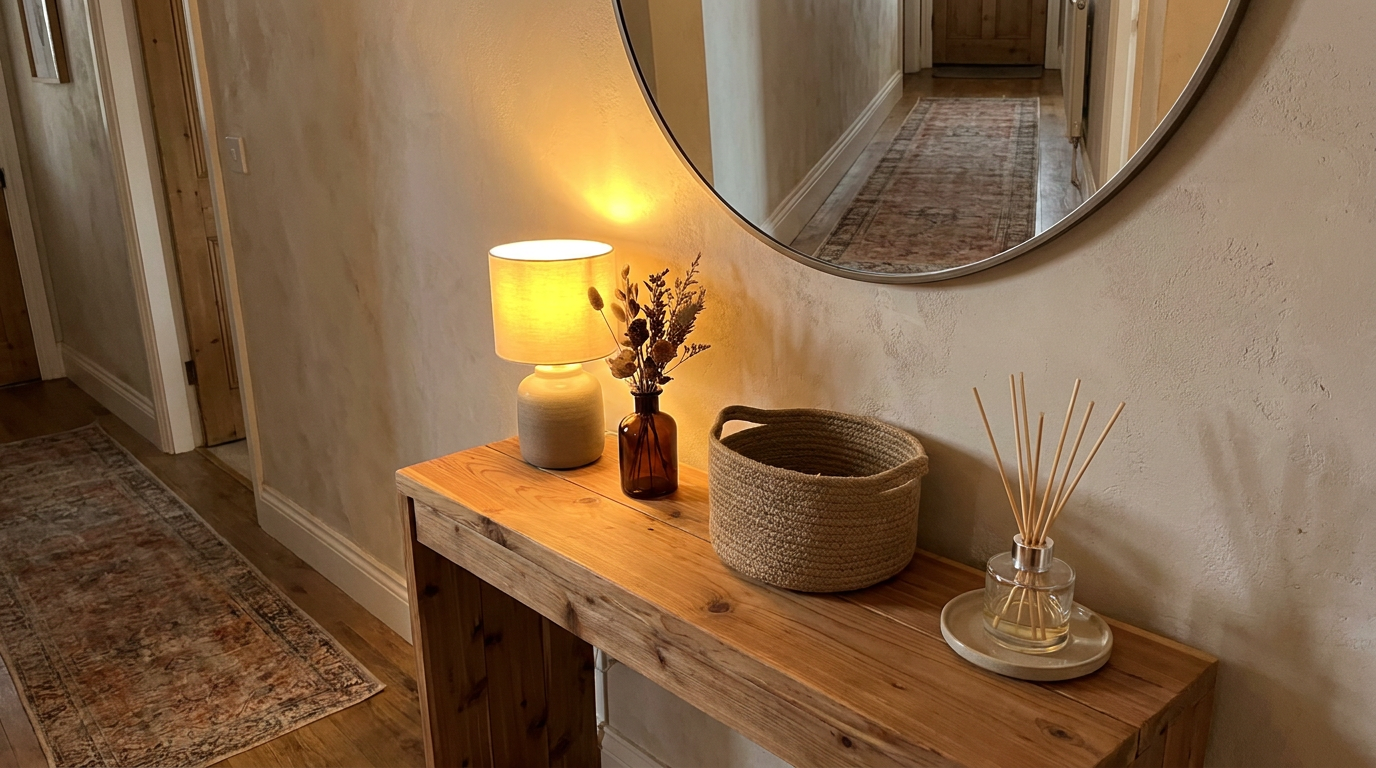
The entryway is often the best place for a first impression fragrance. This should be subtle, welcoming, and clean rather than dramatic. Soft woods, light citrus, or an airy botanical note can work well here. The goal is to create a gentle sense of arrival without overwhelming anyone the moment they come in.
The living room tends to benefit from comfort-driven scents that feel social and relaxed. This might be something lightly woody, softly amber, or linen-inspired depending on the season. In a family home, the living room scent should usually be restrained enough to coexist with snacks, pets, movie nights, and real life. It should feel like background atmosphere, not a performance.
Bedrooms call for softness. Since this is the room where the body resets, calming and low-intensity fragrance tends to work best. Lavender, chamomile, iris, clean musk, or a very delicate linen note can support a bedtime atmosphere. If someone in the home is scent-sensitive, the bedroom is often the place to go lightest of all or even keep scent-free except for freshly laundered textiles.
Kitchens are a special case because food aromas already do much of the sensory work. Strong fragrance in the kitchen can clash with cooking and create confusion rather than comfort. This is where natural cues often feel best. Fresh citrus on the counter, herbs by a sunny window, or a quick ventilation routine can leave the room feeling beautifully fresh without imposing a separate scent identity.
Bathrooms and powder rooms are often where people overcompensate, using heavy deodorizers or aerosol sprays. Yet these are exactly the products Health Canada suggests minimizing. Instead, good ventilation, regular cleaning, fresh hand towels, and a very light passive scent method can feel much more polished. The result is cleaner, quieter, and healthier.
Low-Emission Ways to Scent a Home Beautifully
If you want your home to smell lovely without relying on high-intensity products, there are several gentle approaches worth considering. These methods often feel more refined because they scent the home as part of living, not as a chemical correction.
Reed diffusers are one of the easiest non-combustion options. They can provide a quiet, continuous fragrance without flames or smoke. The key is choosing a quality formula, placing it in a room with reasonable airflow, and resisting the urge to oversaturate the space. A single diffuser in the right spot usually does more than multiple diffusers scattered everywhere.
Linen sprays can also be lovely when used lightly. A mist on bedding, curtains, or a throw blanket creates a personal scent experience that stays close to textiles instead of filling the entire room. This can be especially useful for bedrooms and guest spaces, where atmosphere matters but intensity should remain low.
Laundered textiles are one of the most understated scent tools in the home. Clean sheets, sun-dried pillowcases, freshly washed slipcovers, and neatly folded towels all create an impression of freshness that reads as luxurious. Even a lightly scented detergent or an unscented laundry routine paired with fresh air can achieve more than many overt fragrance products.
Natural scenting through everyday ingredients can be especially charming in kitchens and living areas. A bowl of lemons, a vase of eucalyptus, a pot of rosemary on a windowsill, or herbs clipped into water can all contribute a quiet sensory note. In cooler months, a stovetop simmer with citrus peels and spices can feel festive, though it should always be attended and ventilated properly.
Another often overlooked approach is to make fewer things scented overall. If your hand soap, surface spray, floor cleaner, laundry products, candles, and plug-ins all carry different fragrances, the result can feel muddled and far stronger than intended. A more elegant strategy is to keep most household products scent-free or lightly fragranced, then introduce one intentional scent moment where it matters most.

What to Know About Candles, Incense, Plug-Ins, and Aerosols
Many beloved home fragrance products do create a beautiful mood. A candle glowing on a coffee table can make a room feel instantly softer. Incense can feel ceremonial and grounding. A plug-in may seem convenient. Aerosols offer speed. But each of these methods comes with trade-offs that are worth understanding if your goal is both comfort and well-being.
The EPA states that burning candles and incense should be done with proper ventilation because combustion indoors produces particulate matter and harmful by-products. Candles also come with safety concerns. Canada’s candle-safety guidance reports that candles caused an estimated average of nearly 800 fires per year in Canada between 1999 and 2008, with yearly averages of 8 fire deaths, 115 fire injuries, and $26.2 million in property damage. This does not mean candles must be avoided entirely, but they should be used with care, limited duration, and real attention.
Incense tends to be particularly strong and smoky, which may not suit households with asthma, headaches, pets, or children. Plug-ins and aerosol deodorizers are convenient, but Health Canada recommends minimizing scented products such as these because they typically produce VOCs. A product that seems passive can still add a steady fragrance load to the home over time.
If you do use candles, choose them intentionally. Burn them for shorter periods in larger, ventilated rooms. Trim the wick, never leave them unattended, and keep them away from drapery, children, and pets. Think of them as an occasional ambiance ritual rather than the foundation of your home scent strategy. That shift in mindset alone can lead to a healthier and more sophisticated fragrance environment.
The same idea applies to all stronger methods. Save intensity for brief, meaningful moments rather than making it the permanent backdrop of the house. Home should feel breathable.
Creating a Signature Home Scent Without Overpowering the Space
A signature home scent does not have to mean every room smells identical. More often, it is a consistent thread, a feeling that quietly repeats itself through materials, textiles, and a few fragrance notes. The best signature scents are memorable because they are cohesive, not because they are loud.
Start by choosing one scent family that feels most like your home. Maybe it is citrus and green herbs for a light, clean, sunlit mood. Maybe it is cedar and amber for warmth and softness. Maybe it is lavender and linen for calm and comfort. Once you have that direction, support it with subtle layers instead of multiple competing fragrances.
For example, if your chosen mood is clean and airy, you might keep cleaning products unscented or lightly scented, use a delicate citrus reed diffuser in the entryway, and rely on fresh laundry and open windows elsewhere. If your home leans warm and cocooning, perhaps the entryway carries a gentle cedar note, the living room includes wood-toned materials and seasonal branches, and the bedroom stays soft with neutral textiles rather than a heavier fragrance.
The key is consistency in character. You want the home to feel like it is speaking one design language. That does not require sameness. It requires harmony. Guests may not identify every note, but they will feel the coherence.
It can also help to test one scent at a time rather than introducing several at once. Live with it for a week or two. Notice whether it still feels comforting after a full day at home. Pay attention to how it interacts with cooking, weather, and textiles. A scent that seems beautiful for ten minutes in a showroom may feel very different on a rainy Tuesday evening in your own living room.
How to Make Home Scent Work for Families, Guests, Pets, and Sensitive Households
A truly welcoming home scent environment takes other people into account. This is where fragrance moves beyond aesthetics and becomes part of thoughtful hosting and family comfort. A scent that feels ideal to one person may trigger headaches, asthma symptoms, nausea, or discomfort in someone else. In a shared home, gentleness is often the kindest design choice.
If someone in the household has respiratory concerns, migraines, allergies, or chemical sensitivities, consider keeping large areas of the home minimally scented or scent-free. You can still create atmosphere through fresh air, clean textiles, flowers, greenery, and low-intensity scent moments in specific zones. This often results in a calmer environment overall.
For families with children, it is wise to be selective. Health Canada identifies children among the groups at greater risk from VOC exposure. Bedrooms, play areas, and enclosed spaces are especially good candidates for a lighter touch. In many homes, the coziest feeling for children comes less from fragrance and more from routine, softness, and familiar textures anyway.
Pet households also benefit from caution. Animals experience scent differently, and strong products can be stressful or irritating. Ventilation matters, and so does avoiding overuse. If you share your home with pets, subtle passive methods and clean fabrics usually make more sense than aggressive deodorizers or frequent burning products.
Guest comfort is another reason to avoid making your scent profile too strong. Hospitality-inspired homes feel considered, but they also allow room for the comfort of others. A guest should notice that your home smells lovely without feeling trapped inside someone else’s fragrance choice. The goal is warmth, not dominance.
Seasonal Scent Styling for a Home That Feels Alive
One of the easiest ways to make a home feel emotionally in sync with the year is to let scent shift slightly with the seasons. This does not require a dramatic overhaul. Often, a small adjustment in fragrance can make familiar spaces feel renewed and more connected to the moment.
In spring, fresh greens, neroli, lilac, and airy citrus notes can wake up a home that has been closed up through winter. Pair them with lighter textiles, vases of branches, and more open windows. The mood becomes clean, hopeful, and lifted. Spring scenting should feel almost translucent.
Summer often works best with herbs, lemon, basil, fig leaf, sea-inspired notes, and the natural smell of washed cotton. Because heat can intensify fragrance, restraint matters even more. Let freshness come from ventilation, produce on the counter, and a cleaner rhythm of everyday life.
Autumn invites more depth. Soft woods, cardamom, clove, tea, and amber can make a home feel grounded and cozy. The shift can be especially lovely in living rooms and entryways, where people begin to crave warmth and ritual. A seasonal scent here can support evenings that feel slower and more intimate.
Winter tends to welcome richness, but this is also the time people are most likely to overdo fragrance because windows stay closed. Vanilla, spice, pine, cedar, and resinous notes can feel festive and soothing, but lower intensity is still important. A home should feel warm and breathable, not saturated. Often the most luxurious winter scent is simply one that appears briefly and beautifully, then gives the room space again.
Common Home Fragrance Mistakes to Avoid
Even people with wonderful taste can accidentally make scent choices that diminish comfort rather than enhance it. The first mistake is assuming that if a little fragrance is good, more must be better. In practice, too much scent flattens a space. It can make the home feel smaller, heavier, and less restful. The best scent environments leave room for air, food, fabric, and everyday life.
The second mistake is layering too many unrelated products. A floral plug-in, spicy candle, citrus floor cleaner, and heavily scented laundry routine can create sensory clutter. Instead of one refined impression, the home ends up smelling confused. Simplifying your fragrance landscape usually makes the entire house feel more polished.
The third mistake is using fragrance to hide unresolved odor issues. If a room repeatedly needs strong scenting, there may be ventilation, moisture, textile, garbage, or pet-care routines that need attention. Solving the source almost always creates a more lasting result than masking it.
The fourth mistake is assuming natural automatically means harmless. Essential oils, incense, candles, and botanical products can still emit VOCs or particulates depending on how they are used. Pleasant does not necessarily mean risk-free. This is why gentle use, good ventilation, and awareness of household sensitivities matter so much.
The final mistake is forgetting that your own nose adapts. When you stop noticing a scent, the answer is not always to add more. It may mean the fragrance is already doing its job and your senses have adjusted. Visitors and family members may still perceive it clearly. Trust subtlety.
A Simple Routine for Building a Blissful Scent Environment
If you want a practical way to begin, keep the process simple and livable. Start by deciding what emotional tone you want your home to carry. Clean and bright, soft and sleepy, warm and cocooning, or fresh and natural are all valid directions. Let that choice guide everything else.
Next, reduce background fragrance clutter. Swap a few everyday products for unscented or lighter options so your chosen scent has room to breathe. Improve ventilation habits, wash textiles, and identify any rooms that need a fresher baseline. This creates the calm foundation that subtle fragrance needs.
Then choose one main scent method for one key zone. Perhaps that is a reed diffuser in the entryway, a linen spray in the bedroom, or fresh herbs in the kitchen. Live with it before adding anything else. Notice whether it supports the room’s purpose and whether everyone in the household feels comfortable with it.
Finally, review seasonally. Fragrance preferences change. So do household needs, routines, and weather patterns. What feels perfect in October may feel too dense by May. Let your scent environment evolve as naturally as your home does.
A useful rhythm can look like this:
- Keep the home well ventilated whenever possible
- Address odor sources directly instead of masking them
- Use low-emission, non-combustion scent methods first
- Choose one main fragrance family for cohesion
- Keep intensity lower than you think you need
- Adjust for season, room size, and household sensitivity
The Quiet Luxury of a Home That Smells Thoughtfully Lived In
In the end, the most memorable home scent environments are rarely the most dramatic. They are the ones that feel believable, breathable, and aligned with the people who live there. They smell like fresh air moving through linen curtains, herbs clipped for dinner, a polished entryway, a just-made bed, and maybe one lovely fragrance note that ties it all together. This kind of atmosphere feels generous because it is attentive, not excessive.
There is something deeply comforting about walking into a home that has its own gentle sensory identity. It tells you the space is being cared for. It turns routine into ritual. It helps a house feel settled and emotionally legible. Even more importantly, it can support well-being when scenting is approached with restraint, ventilation, and awareness.
Creating a blissful home scent environment is not about chasing perfection or luxury for its own sake. It is about understanding that the way a home smells becomes part of how life unfolds inside it. Morning coffee, folded towels, open windows, a quiet bedroom, guests at the table, children coming in from outside, an evening lamp switched on. Scent can hold all of this softly, enhancing the mood without ever taking it over.
If there is one principle worth remembering, it is this: let your home smell like comfort, not effort. Choose fragrance with care. Use it lightly. Let clean air lead. The result will be a home that feels warmer, calmer, and more distinctly yours.



No Comment! Be the first one.