



Luxury bedding has a way of capturing the imagination. It suggests a bed that feels impossibly soft at the end of a long day, a bedroom that looks polished without trying too hard, and a kind of comfort that lingers long after the lights go out. Yet the true value of luxury bedding is not only visual. It lives in the quiet, deeply personal experience of falling asleep more easily, waking up less often, and feeling genuinely restored in a room that supports both body and mind.
Table Of Content
- Why Luxury Bedding Feels So Different
- What a Luxury Bedding System Actually Includes
- The Materials That Matter Most
- Long-staple cotton
- Linen
- Wool
- Silk
- Down and down alternatives
- Eucalyptus-derived fabrics and other performance-oriented options
- The Three Comfort Pillars: Temperature, Texture, and Support
- Common Misconceptions About Luxury Bedding
- How to Choose the Right Luxury Bedding System for Your Home
- A simple way to think through your choices
- Designing a Bedroom That Supports Rest
- Seasonal Layering for Year-Round Comfort
- Is Luxury Bedding Worth the Investment?
- Final Thoughts: Luxury as a Form of Care
A luxury bedding system is the complete layered combination of elements, including sheets, pillows, duvet inserts, mattress toppers, protectors, and blankets, that work together to shape how a bed feels, how warm or cool it stays overnight, and how restorative the bedroom becomes night after night. Rather than a single high-end product, it is best understood as a coordinated set of choices built around three things: temperature regulation, tactile comfort, and physical support. This systems view matters because sleep quality is shaped by many small physical cues, especially warmth, texture, pressure relief, and emotional ease, and even the mattress itself is part of that system. When these layers align, the bed stops being ordinary furniture and becomes one of the most important wellness spaces in the home, supporting both body and mind through the night.
There is also a practical reason more people are paying attention to sleep comfort. Public health guidance consistently reminds us that adults need meaningful rest. The CDC says most adults need at least seven hours of sleep per night, while public health guidance in Canada recommends seven to nine hours for adults ages 18 to 64 and seven to eight hours for adults 65 and older. Even so, many people struggle to get enough sleep or to stay asleep comfortably, which makes the quality of the sleep environment more relevant than ever.
According to recent CDC data, 30.5 percent of U.S. adults averaged less than seven hours of sleep in a 24-hour period. Statistics Canada reported that adults averaged 7.2 hours of sleep in 2020, and one in four said they had trouble going to sleep or staying asleep most or all of the time. Those numbers make one thing very clear. Better sleep is not a niche luxury issue. It is a daily quality of life issue, and the environment we create around rest can either support us or quietly work against us.
This guide explores luxury bedding through that lens. Rather than focusing on status labels or marketing language, we will look at what truly affects comfort: breathable materials, temperature regulation, tactile softness, pressure support, moisture management, and the feeling of being cocooned without being overheated. We will also talk honestly about what luxury bedding can and cannot do. Expensive linens alone will not fix a room that is too hot, a mattress that no longer supports the body, or habits that keep the mind overstimulated. But thoughtful bedding choices can absolutely elevate sleep quality and transform the atmosphere of the bedroom into something calmer, softer, and more restorative.
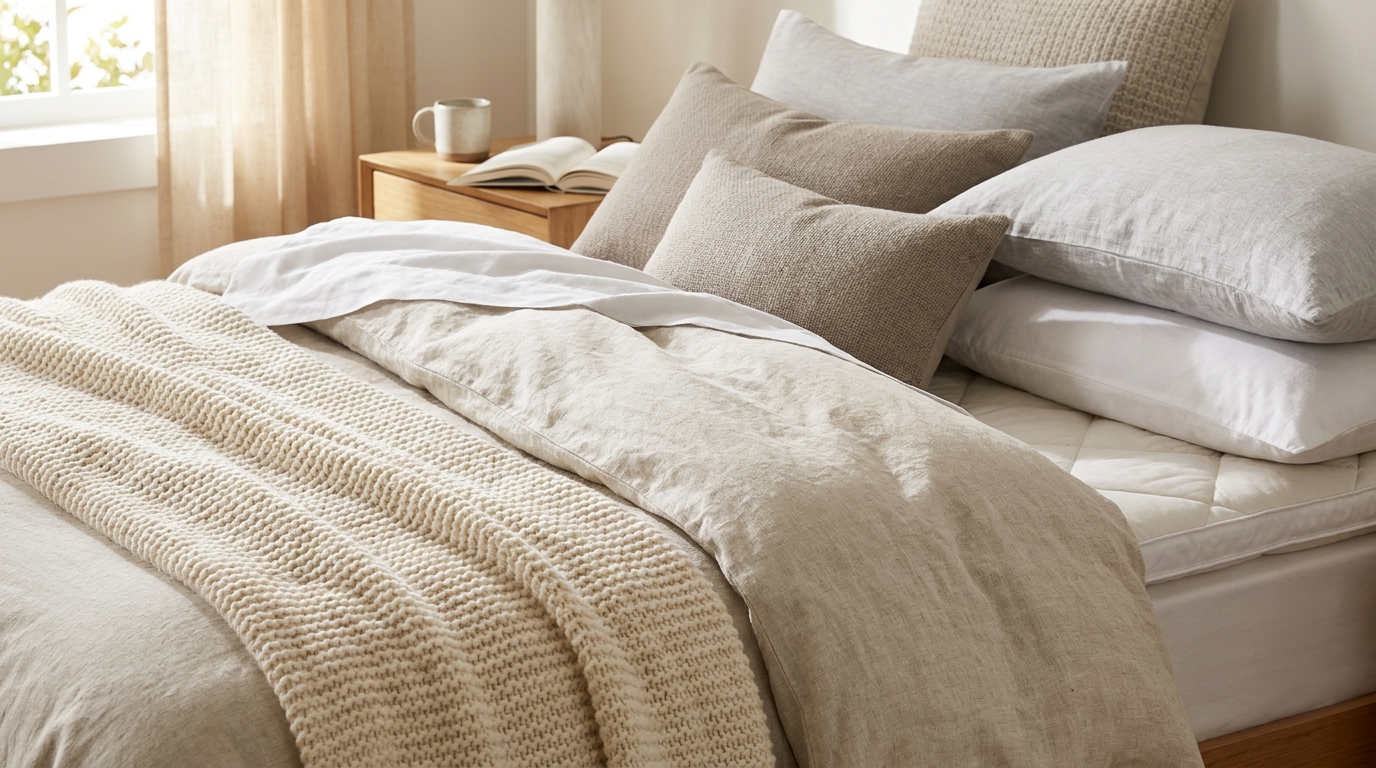
Why Luxury Bedding Feels So Different
The first difference most people notice in luxury bedding is sensory. The fabric touches the skin in a way that feels smoother, lighter, crisper, or more enveloping depending on the material. The pillow may cradle the head more comfortably. The comforter may loft gently around the body instead of collapsing flat or trapping excess heat. These sensations create an immediate emotional response, and that response matters more than many people realize because comfort is not purely physical. Feeling safe, calm, and at ease is part of the sleep experience too.
There is also a research-based explanation for why some bedding feels more sleep-friendly than others. A 2024 systematic review concluded that bedding and sleepwear fiber types can affect sleep quality by influencing skin temperature and thermal comfort. Sleep onset is tied to changes in body temperature, and people tend to sleep better when they are not too warm, too cold, or damp from trapped humidity. In other words, the best bedding helps the body do what it naturally wants to do at bedtime.
That is one reason luxury bedding increasingly emphasizes performance rather than thread count alone. Today, informed shoppers are looking for breathability, moisture-wicking, thermoregulation, and adaptable layering. The goal is not just a bed that looks expensive. It is a bed that creates a more stable, inviting sleep climate across seasons and throughout the night. For anyone who wakes up sweaty, fights with blankets, or sleeps differently depending on the weather, this systems approach can feel genuinely life-changing.
Another often overlooked benefit is the way better bedding improves the atmosphere of the bedroom during waking hours. A beautifully made bed can make the whole room feel cleaner, quieter, and more intentional. It becomes easier to maintain a bedtime ritual when the environment itself feels soothing. In that way, luxury bedding supports sleep not only through material performance but also through the emotional language of the room. It signals rest, care, and softness before you even climb in.
What a Luxury Bedding System Actually Includes
A luxury bedding system is not just one item with a premium label attached. It is a layered combination of elements that work together. At the foundation is the mattress, because no amount of fine linen can compensate for a sleeping surface that causes pressure points or poor spinal support. Above that, many people add a mattress topper for softness, contouring, or seasonal temperature control. Then come a mattress protector, fitted sheet, flat sheet if preferred, blanket or coverlet, duvet insert or comforter, duvet cover, and pillows chosen for sleeping style rather than appearance alone.
Thinking in layers gives you more control over comfort. It allows you to fine-tune warmth, softness, and texture instead of relying on a single heavy comforter or one sheet set to solve everything. This is especially useful in climates with changing seasons, where a bed may need to feel cool and airy in summer and cozy without stuffiness in winter. Layering also makes luxury bedding more practical because it lets you invest gradually, starting with the pieces that influence your sleep most directly.
When people imagine a high-end bed, they often think first of sheets. Sheets are important because they sit closest to the skin and play a major role in tactile comfort and moisture handling. But pillows are just as significant because they affect neck alignment and perceived support. A duvet insert shapes the bed’s warmth and loft. A topper can soften a too-firm mattress or add cushioning to pressure-prone areas. The best luxury bedding systems succeed because no layer is treated in isolation.
This systems mindset also helps prevent common buying mistakes. For example, someone who sleeps hot may buy expensive heavy bedding and still feel uncomfortable because the problem was not quality but layering strategy. Another person may choose glamorous silk pillowcases but ignore a worn-out mattress or lumpy insert. True comfort comes from harmony. Each layer should contribute to the overall experience of restful, breathable, body-friendly sleep.
The Materials That Matter Most
Long-staple cotton
Long-staple cotton remains one of the most beloved luxury bedding materials for good reason. It can feel smooth, crisp, and breathable while also being durable enough for everyday use. High-quality cotton sheets often become softer over time rather than thinning quickly, which gives them the kind of lived-in elegance people associate with a well-loved home. They are also versatile, making them a strong choice for those who want year-round comfort without a steep learning curve.
What matters more than a dramatic thread count is the actual fiber quality and weave. Percale cotton tends to feel cool, fresh, and matte, which many warm sleepers love. Sateen feels silkier and slightly warmer, with a subtle sheen that adds visual richness. Neither is universally better. The right choice depends on whether you prefer crispness or drape, coolness or cocooning softness.
Linen
Linen has a relaxed beauty that suits both classic and modern homes. It is airy, textured, and naturally breathable, which is one reason it has gained such strong visibility in luxury bedding and wellness-focused design. Linen tends to excel at moisture management and can feel especially comfortable in warmer weather or for sleepers who dislike anything clingy. Over time, it develops a softness that feels casual rather than polished, which many people find deeply inviting.
Emotionally, linen changes the mood of a bedroom in a lovely way. It makes the bed look effortless, soft, and undone in the best sense. For households that want luxury without stiffness, linen often delivers that balance beautifully. It is worth noting, though, that its signature texture is part of the appeal. People expecting ultra-silky smoothness may prefer cotton or silk instead.
Wool
Wool is one of the most interesting materials in luxury bedding because it offers warmth without the dense heaviness many people associate with winter bedding. It can help regulate temperature and manage moisture, making it an excellent layer for changing seasons and colder climates. In practical terms, a wool-filled comforter or mattress topper can create a cozy, dry, breathable sleep environment that feels insulating yet not suffocating.
Wool is also part of the growing shift toward performance-oriented bedding. It is often appreciated by people who want more natural temperature regulation and less dependence on synthetic-feeling heat traps. As with any material, quality and construction matter. A well-made wool layer feels refined and balanced, while a poorly made one may feel bulky or too warm for your needs.
Silk
Silk brings a very specific kind of luxury. It feels smooth, cool to the touch, and elegant in a way few other textiles do. Silk pillowcases are especially popular for their sleek hand-feel and the elevated look they bring to a bed. For some sleepers, silk feels almost ceremonial, turning bedtime into something softer and more indulgent.
Still, silk is not the universal answer to luxury bedding. It can require more delicate care, and full silk bedding is often a larger investment. It is best understood as a specialty material that adds refinement and sensory pleasure, particularly for those who love a sleek sleeping surface and are happy to maintain it carefully.
Down and down alternatives
When it comes to duvet inserts and comforters, fill matters just as much as shell fabric. Down is prized for its loft, lightness, and ability to create warmth without excessive weight. A quality down duvet can make the bed feel airy yet enveloping, which is one of the great signatures of a truly luxurious sleep setup. Fill power, construction, and season rating all influence how that warmth is experienced.
Down alternatives have improved significantly and can be excellent for people with allergies, ethical preferences, or specific maintenance needs. Some are engineered for cooling, while others aim to mimic the lofty cloud-like feel of traditional down. This is a good reminder that natural does not always mean better for every sleeper. Performance should be judged by how the material behaves in your room, on your body, and across your routine.
Eucalyptus-derived fabrics and other performance-oriented options
One of the strongest current trends in luxury bedding is the rise of eucalyptus-derived fibers and other materials promoted for cooling and moisture-wicking performance. These options appeal to shoppers who want a smooth feel, visible sustainability messaging, and measurable comfort benefits such as breathability or lower heat retention. They are part of a broader shift in bedding marketing toward claims that relate more directly to sleep experience than to prestige language.
This category can be especially appealing for hot sleepers or for households in mixed climates where year-round adaptability matters. The key is not to assume that any trendy fabric will automatically feel perfect. Body temperature regulation differs from person to person, and room conditions matter too. Luxury works best when it is personalized, not when it is trend-driven alone.
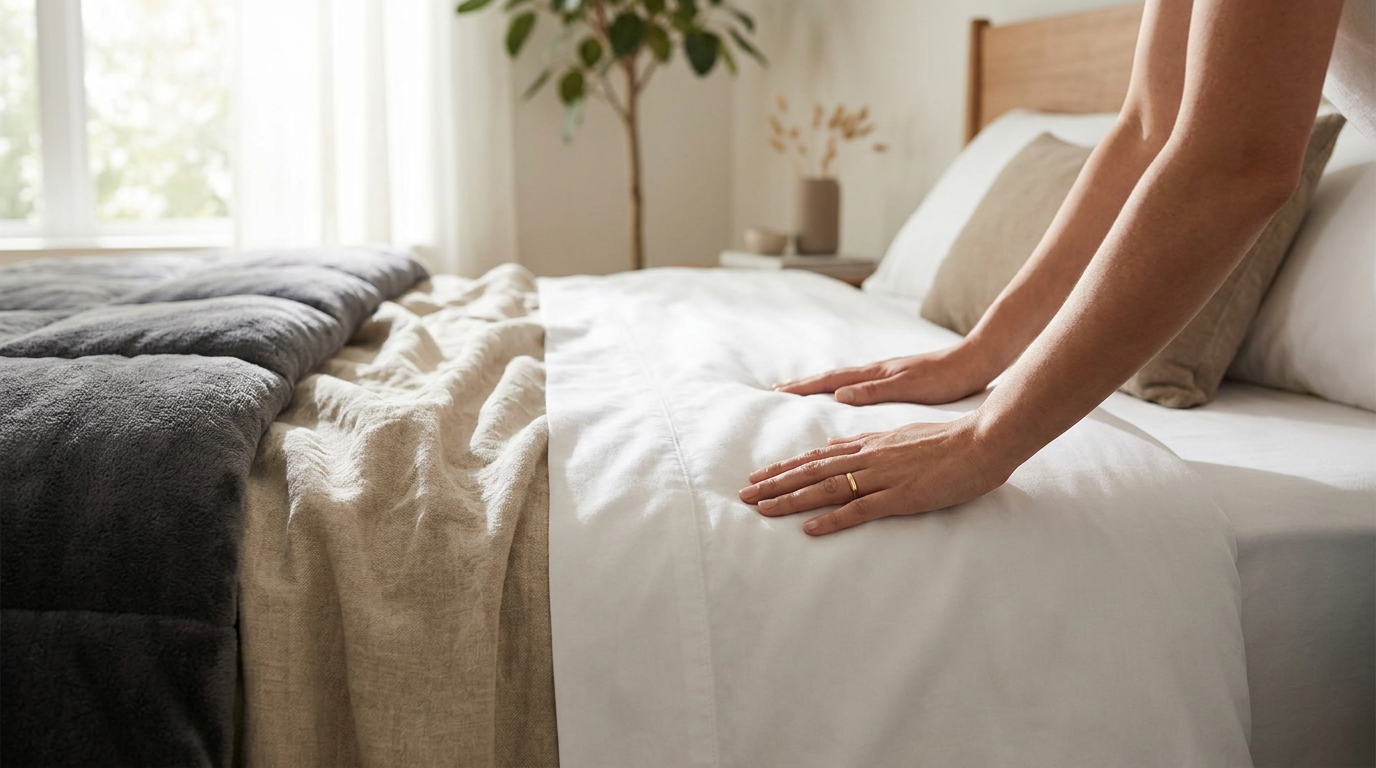
The Three Comfort Pillars: Temperature, Texture, and Support
If there is one useful way to simplify luxury bedding choices, it is to focus on three comfort pillars: temperature, texture, and support. Nearly every bedding decision fits into one or more of these categories. Temperature includes breathability, insulation, moisture-wicking, and the ability to stay comfortable through the night. Texture refers to the hand-feel of fabric and the emotional comfort it creates. Support relates to pressure relief, pillow height, mattress layering, and overall body alignment.
Temperature often has the greatest impact on sleep continuity. Many sleep disruptions are not dramatic enough to be remembered in the morning, but they still reduce restfulness. If bedding traps too much heat or moisture, the body works harder to stay comfortable. Materials that improve airflow and thermal balance can support a more settled night, which is why research on bedding and thermal comfort is so relevant for everyday home decisions.
Texture shapes how safe and soothed the bed feels. Some people relax best in crisp cotton that feels freshly pressed and cool. Others want the softened drape of linen or the smooth glide of sateen. These preferences are not superficial. The skin is constantly reading the environment, and the right tactile experience can make bedtime feel more welcoming and less stimulating.
Support is where bedding intersects with comfort engineering most directly. A mattress topper can redistribute pressure. A better pillow can reduce morning stiffness. Layering can soften hard edges in the sleep environment and create a more tailored feel. This is especially important for side sleepers, combination sleepers, or anyone whose body no longer feels comfortable on a basic sleep setup. Luxury is not simply softness. It is thoughtful support expressed beautifully.
Luxury bedding works best when it supports the body quietly, regulates temperature gently, and makes the bedroom feel emotionally restful before sleep even begins.
Common Misconceptions About Luxury Bedding
The most persistent misconception is that thread count tells you everything you need to know. In reality, thread count is only one small part of the story, and it can be used in misleading ways. Fiber quality, staple length, weave, finishing, and durability matter far more. A beautifully woven long-staple cotton sheet with a moderate thread count can feel dramatically better than a high-count sheet made from lower-quality fibers.
Another common myth is that natural fibers are always superior. Natural materials can be wonderful, but they are not automatically the best choice in every case. Some synthetics and blended fabrics perform very well for cooling, durability, or easier care. What matters most is how the bedding supports your own comfort priorities, whether that means less heat retention, simpler washing, allergy management, or longer wear.
There is also the belief that expensive bedding guarantees better sleep. It does not. If the room is too warm, the mattress is unsupportive, or bedtime routines are inconsistent, luxury bedding may improve the feel of the bed without solving the deeper issue. Better sleep tends to come from a combination of environmental quality, physical support, and healthy habits. Bedding is an important part of that picture, but it is not the entire picture.
Finally, many people assume there is one best bedding material for everyone. There is not. The right choice depends on climate, body temperature, age, allergies, maintenance preferences, aesthetic style, and sensory comfort. A hot sleeper in a city apartment may need something entirely different from a cold sleeper in a drafty country home. True luxury is not about chasing one universal answer. It is about choosing intentionally for your real life.
How to Choose the Right Luxury Bedding System for Your Home
The most helpful place to start is with your own sleep pattern. Ask yourself a few honest questions. Do you wake up hot, cold, or sweaty. Do you sleep mostly on your side, back, or stomach. Does your current bed feel too firm, too flat, or too heavy. Do you love a crisp hotel-bed feeling, or do you prefer a softer, more relaxed texture. When you answer these questions clearly, the right materials and layers become easier to identify.
Next, consider your climate and your home’s indoor temperature patterns. In colder regions, layered systems with breathable insulation can be ideal because they create warmth without overheating. In warmer or highly heated homes, cooling sheets and a lighter insert may be the better investment. This is one reason luxury bedding should be approached as a system. A single premium item may sound appealing, but coordinated layering usually serves comfort far more effectively across the year.
Maintenance should also be part of the decision. Some premium bedding involves added costs such as special laundering or dry cleaning, especially with delicate materials or high-loft inserts. There is no benefit in owning beautiful bedding that feels stressful to care for. The best luxury choices fit naturally into your routines, allowing you to enjoy them regularly instead of preserving them for rare occasions.
If you are building your bedding wardrobe from scratch, it can help to prioritize by impact. For many people, the smartest order is mattress support first, then pillows, then sheets, then duvet or comforter layers. This sequence addresses the basics of alignment and temperature before decorative finishing touches. Once the core comfort pieces are working well, the bed becomes much easier to style beautifully.
A simple way to think through your choices
- Start with sleep issues you actually experience, such as overheating, stiffness, pressure points, or poor layering.
- Choose your foundation, including mattress condition, topper needs, and pillow support.
- Select the sheet fabric that best matches your preferred feel and temperature profile.
- Pick a duvet or comforter based on climate, loft preference, and maintenance tolerance.
- Add flexible layers like blankets or coverlets so the bed can adapt across seasons.
- Make sure the full setup supports the mood you want your bedroom to hold, whether that is airy, cocooning, tailored, or softly undone.
Designing a Bedroom That Supports Rest
Luxury bedding reaches its full potential when the bedroom itself supports sleep. This is where comfort engineering meets lifestyle design in a very human way. A well-made bed feels more effective in a room that is calm, softly lit, and not overloaded with visual noise. The atmosphere around the bed influences how quickly the nervous system begins to relax, which is why bedding should be considered part of a broader bedroom wellness design.
Color, texture, and sensory consistency all play a role. Muted neutrals, gentle layers, and natural materials tend to create a visual softness that helps the room feel settled. That does not mean every luxury bedroom must be beige. It simply means the bed should feel like a place of exhale. If the fabrics are beautiful, the lighting is gentle, and the room is not working too hard, rest becomes easier to imagine and to practice.
Indoor thermal comfort matters too. Bedding can support temperature regulation, but it cannot fully counteract a room that is consistently too warm. If possible, pair your bedding choices with thoughtful ventilation, shading, seasonal layering, and evening routines that cool the body gradually. This is where the emotional and physical sides of comfort come together. The body settles more easily when the room feels quietly prepared for sleep.
There is also something deeply nurturing about turning down a bed that looks and feels cared for. It signals that rest is not an afterthought. In busy households, especially family homes where every room serves multiple needs, the bedroom can become a rare place of softness and repair. Luxury bedding contributes to that feeling not by being flashy, but by making comfort tangible in the most ordinary and important moments.
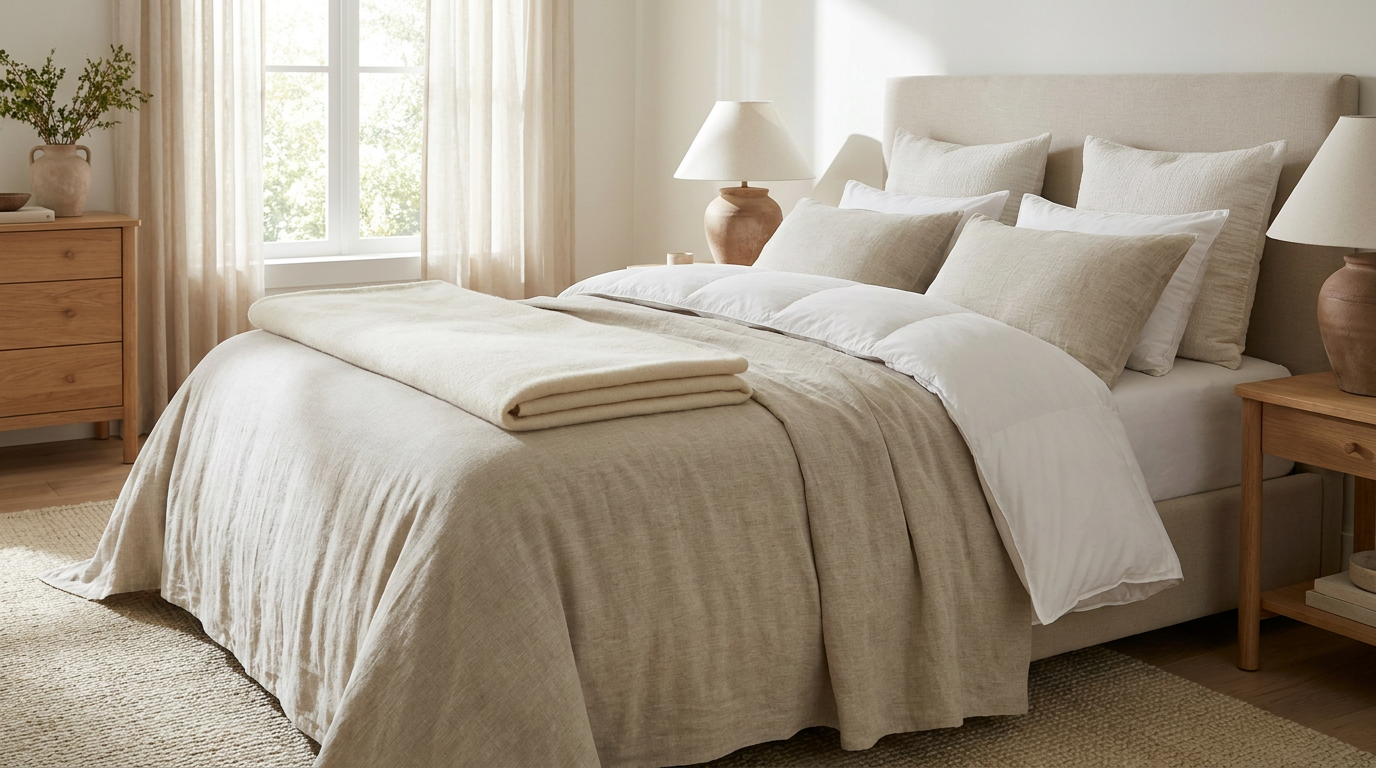
Seasonal Layering for Year-Round Comfort
One of the best ways to make luxury bedding feel truly useful is to design it for all four seasons. Rather than relying on one heavy bed setup year-round, think in flexible layers that can be added or removed easily. This makes the bed more responsive to weather, indoor heating, and personal temperature changes, all of which can shift more than people expect. It also protects your investment because each layer can do its job more effectively.
In warmer months, many people do well with breathable cotton or linen sheets, a lightweight coverlet, and a lighter duvet insert or blanket that can be folded down. In cooler months, that same base can be enriched with a wool blanket, a warmer duvet, or a topper that adds insulation and softness. The beauty of this approach is that it feels both luxurious and intelligent. You are not forcing one setup to solve every problem.
Seasonal adaptability matters especially in North America, where homes can move between humid summers, dry winters, air-conditioning, central heating, and fluctuating shoulder seasons. A bed that can respond to those changes supports more consistent comfort, and consistency is one of the quiet foundations of better sleep. When the body trusts the sleep environment, bedtime can feel less like adjustment and more like release.
From a design perspective, seasonal layering also keeps the bedroom visually alive without needing a full makeover. Different textures can shift the emotional tone of the room in subtle ways. Crisp percale and linen feel light and breezy. Plush duvet loft and wool accents feel grounding and cocooning. These transitions bring pleasure to everyday life, which is one of the loveliest gifts of investing in the home thoughtfully.
Is Luxury Bedding Worth the Investment?
For many households, the answer is yes, but not for the reasons advertising sometimes suggests. Luxury bedding is worth the investment when it improves your everyday comfort, lasts well over time, and helps turn sleep into a more restorative part of life. It is less about status than about use. A set of sheets that helps you sleep cooler, a pillow that reduces neck strain, or a duvet that creates breathable warmth can offer value night after night in a very real way.
That said, value depends on buying wisely. A premium price does not always reflect premium performance. Some luxury pieces are priced for image more than engineering, while others genuinely deliver better materials, better construction, and greater longevity. It is worth reading details about fiber content, weave, fill, care requirements, and return or trial policies. The current bedding market is much better than it once was at educating consumers, and that is a welcome shift.
It is also worth remembering that not every upgrade has to happen at once. You can create a luxurious sleep environment gradually. Sometimes replacing old pillows and choosing breathable sheets makes a more noticeable difference than purchasing an elaborate new set all at once. The point is not to own the most expensive bed. The point is to create the bed your body genuinely wants to come home to.
There is emotional value in that too. Homes feel better when they support the daily rituals that sustain us. A bedroom with thoughtful bedding does not just photograph beautifully. It gives something back every evening. It softens the transition from activity to rest. It makes ordinary life feel more cared for, and that kind of luxury is often the most enduring of all.
Final Thoughts: Luxury as a Form of Care
When we talk about luxury bedding systems, it is easy to picture opulence first. But the deeper meaning of luxury at home is often much quieter. It is the comfort of sheets that breathe well against the skin, the reassurance of a pillow that truly supports you, the simple pleasure of slipping into a bed that feels balanced and beautifully prepared. These are not frivolous details. They shape how we recover, how we wake, and how we move through our days.
Research supports the idea that bedding materials and thermal comfort can influence sleep quality, and public health guidance continues to underscore how essential adequate sleep is for overall well-being. Against that backdrop, better bedding becomes more than a style choice. It becomes part of how we care for ourselves and for the emotional tone of our homes. In a world that asks a lot of us, creating a bedroom that gently supports rest is a meaningful act.
If you are considering an upgrade, start with curiosity rather than pressure. Notice what your body responds to. Pay attention to temperature, texture, and support. Build in layers, choose for your actual lifestyle, and let comfort guide your decisions more than labels do. The best luxury bedding system is not the one with the loudest prestige. It is the one that helps you breathe out, settle in, and sleep like your home truly understands you.
In the end, that is what ultimate comfort really means. It is not excess. It is alignment between beauty, performance, and everyday life. And when your bed offers that kind of harmony, sleep becomes not just a necessity, but one of the most restorative pleasures your home can give you.



No Comment! Be the first one.